The worksheet
About this worksheet
Students learn to sequence events and add showing details. They build a paper-chain story and draft a short narrative scene. This Grade 6 ELA worksheet gives students (ages 11–12) six pages of practice on creative writing: narratives, part of the writing unit. It goes with our free Creative writing: narratives lesson, which has the slides and a timed lesson plan.
What it covers
By the end, students should be able to:
- Students will sequence real or imagined events from exposition to resolution clearly.
- Students will use dialogue and action as effective technique to move events forward.
- Students will add relevant sensory details that show experience instead of telling it.
How to use it
- Teaching - show and talk (11 minutes): Guide pairs to start Worksheet Task A adding dialogue that shows feelings.
- Main activity (22 minutes): Use Worksheet Task B thinking to check consequences: what happens after the zipper breaks and what happens next.
- Support: Label five strips with exposition, rising action, climax, falling action, and resolution to guide placement.
- Stretch: Add a second colorful detail strip to two links that shows color, sound, or texture.
- The answer sheet is the last page, so you can print it on its own or let students check their own work.
Key vocabulary
- narrative: a story about real or imagined events
- event sequence: the order things happen in
- descriptive details: words that show what can be seen, heard, and felt
- dialogue: talking between people in a story
- climax: the biggest, most exciting moment in a story
Mistakes to watch for
- Listing events out of order with no build to a climax. Re-sort using exposition to resolution order and ask what builds tension to the biggest moment.
- Telling feelings instead of showing senses and actions. Rewrite with show not tell to help readers see, hear, and feel what happened.
- Dialogue that only talks and does not move action. Add action beats and specific word choice, since dialogue, characters, and plot work together.
What's on the worksheet
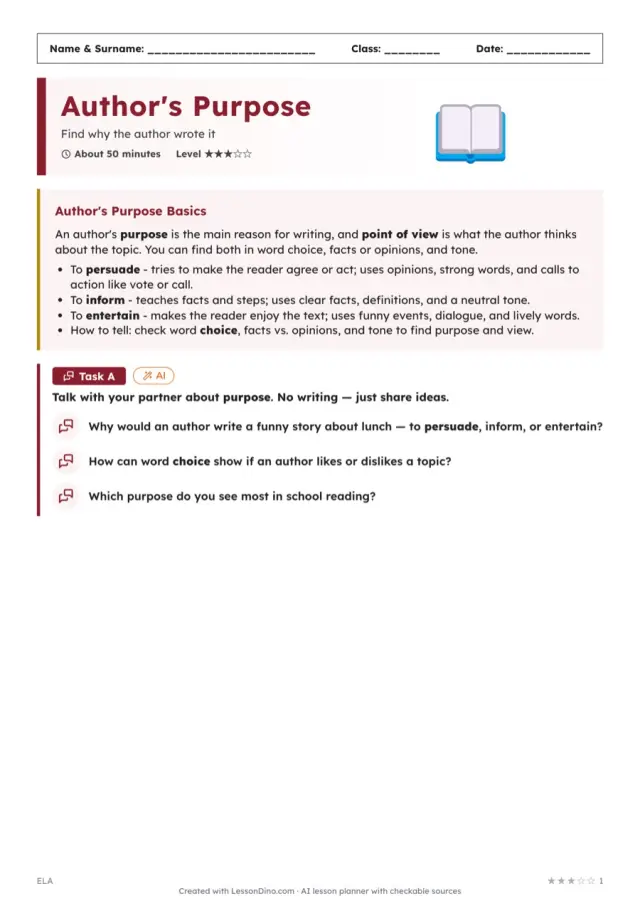
Stories That Feel Real
Learn what makes a narrative work, then finish a writing chat.
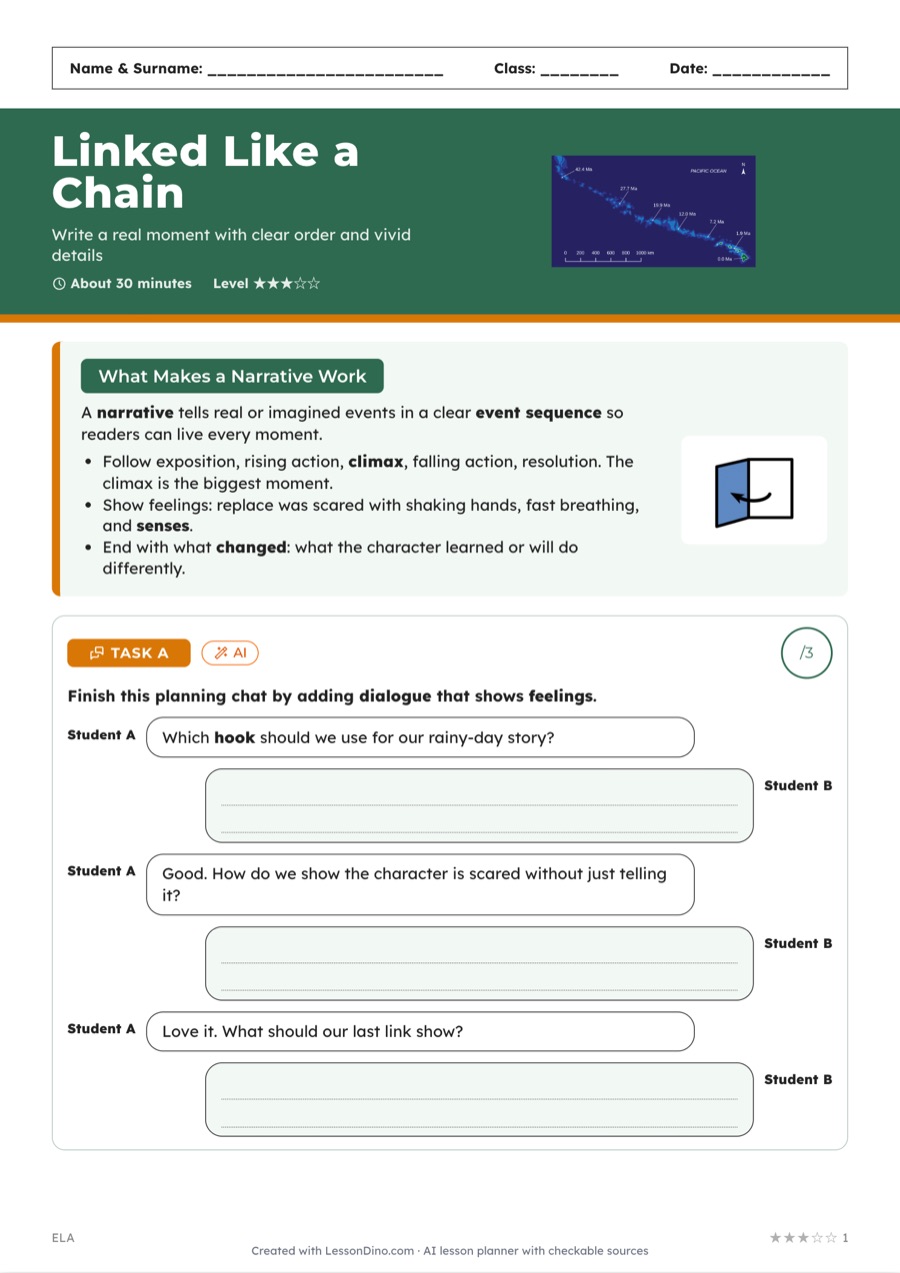
What Makes a Narrative Work
- A narrative tells real or imagined events in a clear event sequence so readers can live every moment.
- Follow exposition, rising action, climax, falling action, resolution. The climax is the biggest moment.
- Show feelings: replace was scared with shaking hands, fast breathing, and senses.
- End with what changed: what the character learned or will do differently.
Finish this planning chat by adding dialogue that shows feelings.
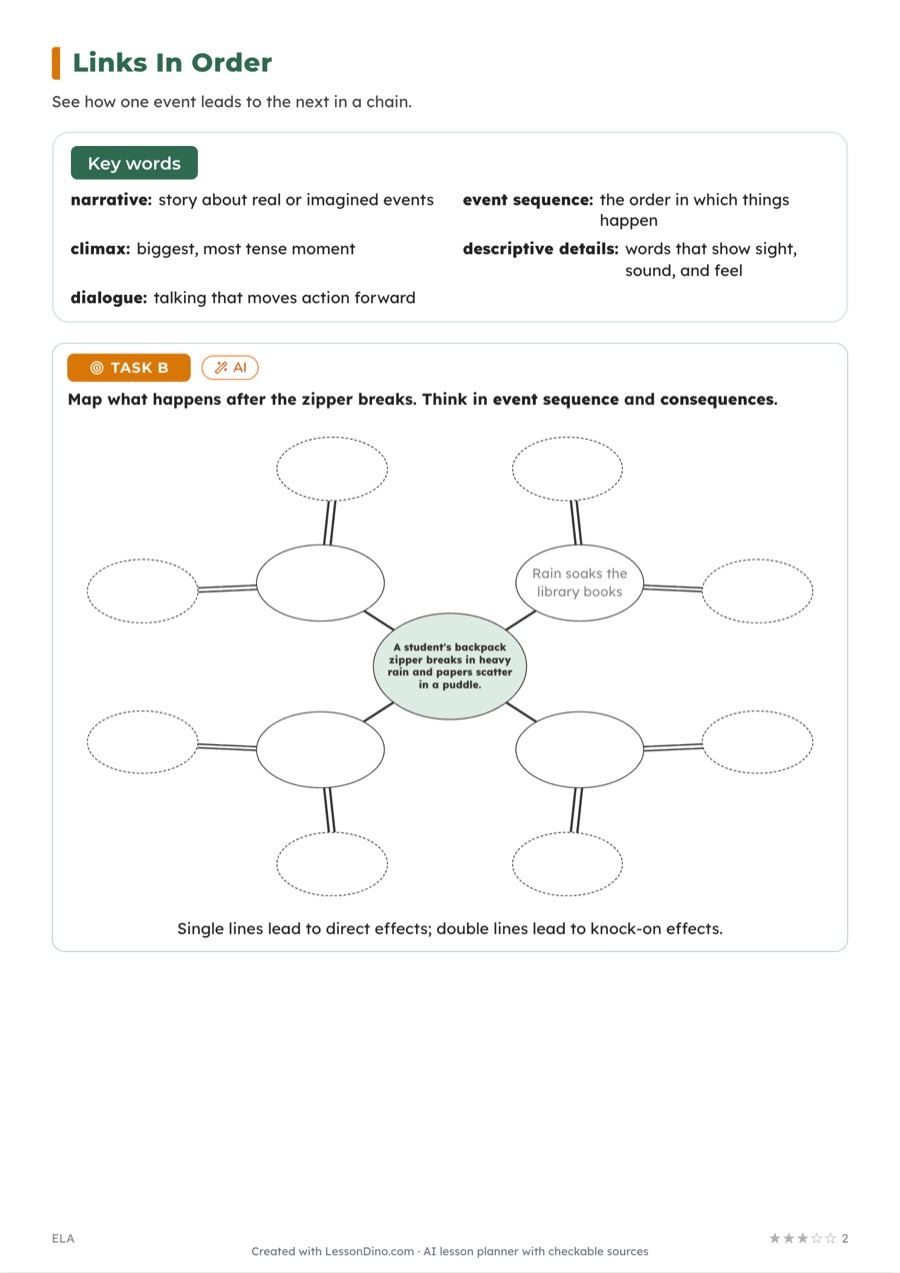
Links In Order
See how one event leads to the next in a chain.
| Word | Meaning |
|---|---|
| narrative | story about real or imagined events |
| event sequence | the order in which things happen |
| climax | biggest, most tense moment |
| descriptive details | words that show sight, sound, and feel |
| dialogue | talking that moves action forward |
Map what happens after the zipper breaks. Think in event sequence and consequences.
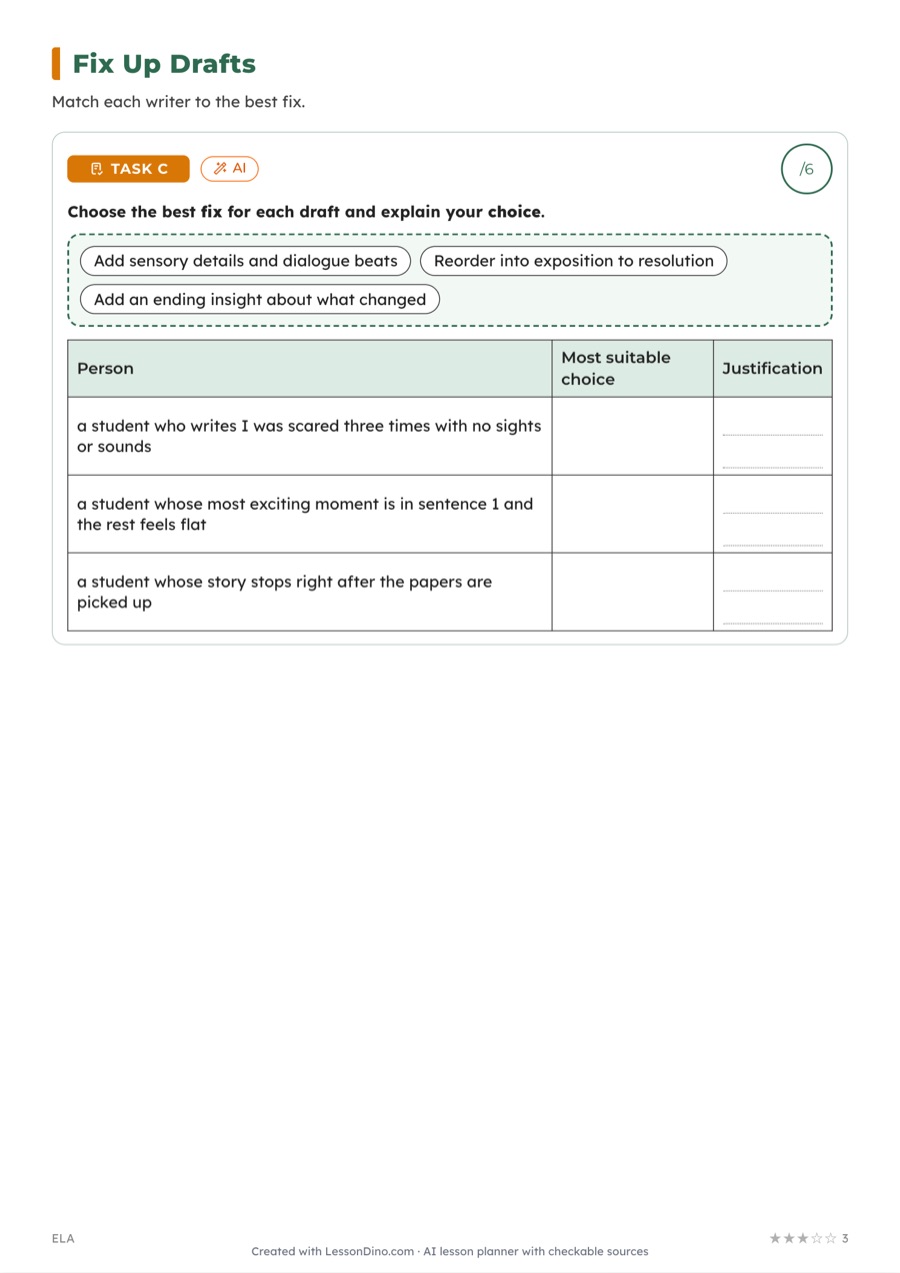
Fix Up Drafts
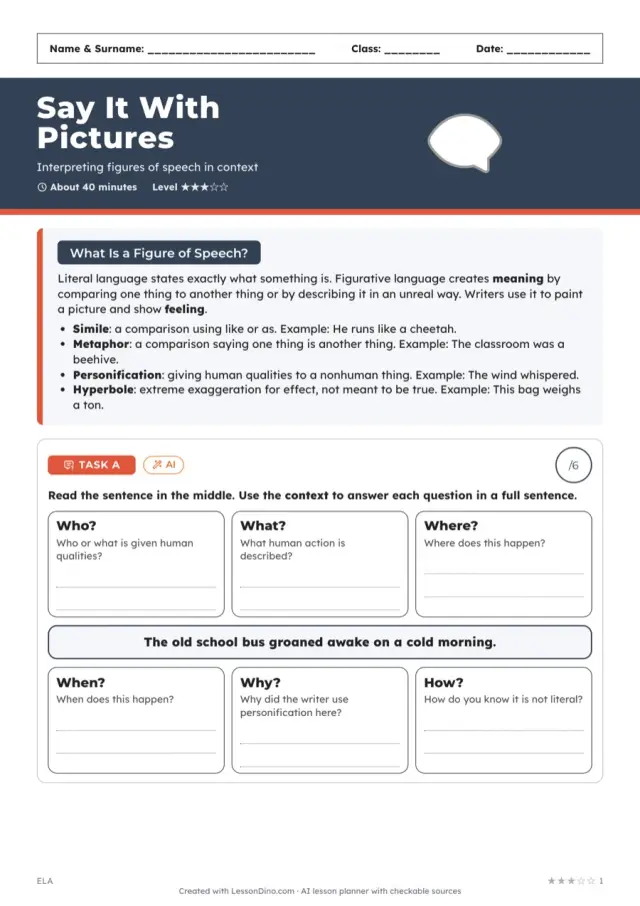
Match each writer to the best fix.
Choose the best fix for each draft and explain your choice.
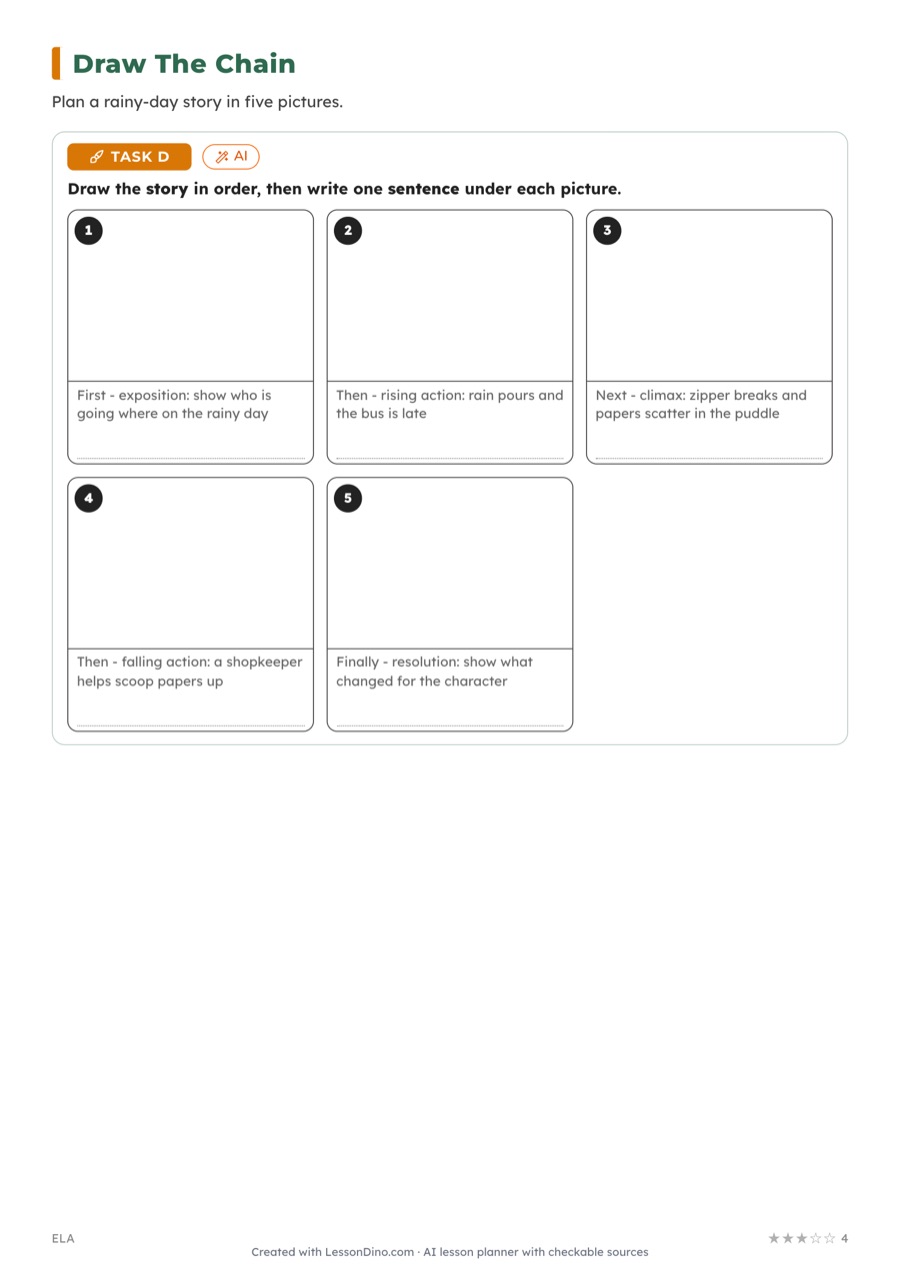
Draw The Chain
Plan a rainy-day story in five pictures.
Draw the story in order, then write one sentence under each picture.
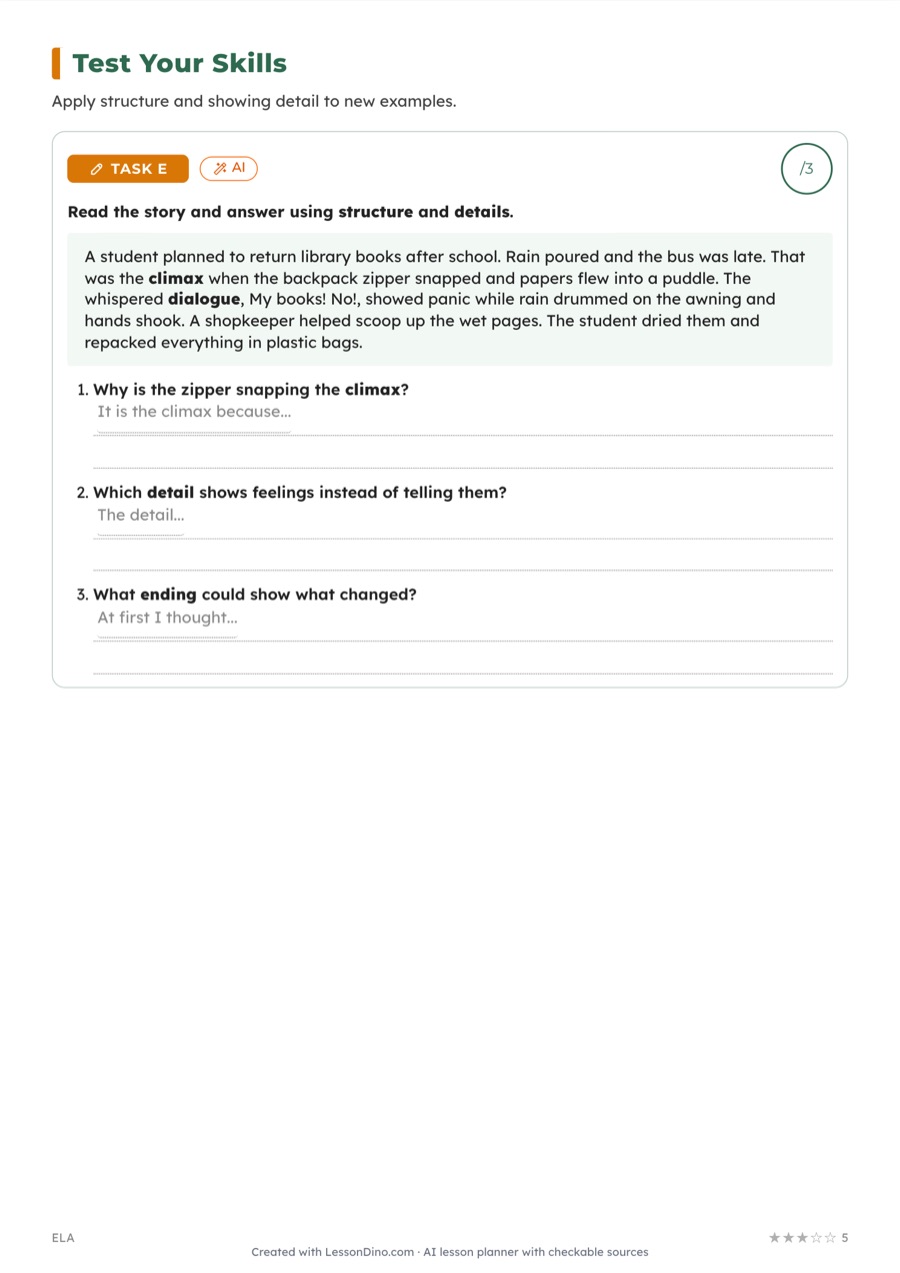
Test Your Skills
Apply structure and showing detail to new examples.
Read the story and answer using structure and details.
- Why is the zipper snapping the climax?
- Which detail shows feelings instead of telling them?
- What ending could show what changed?
Page 6
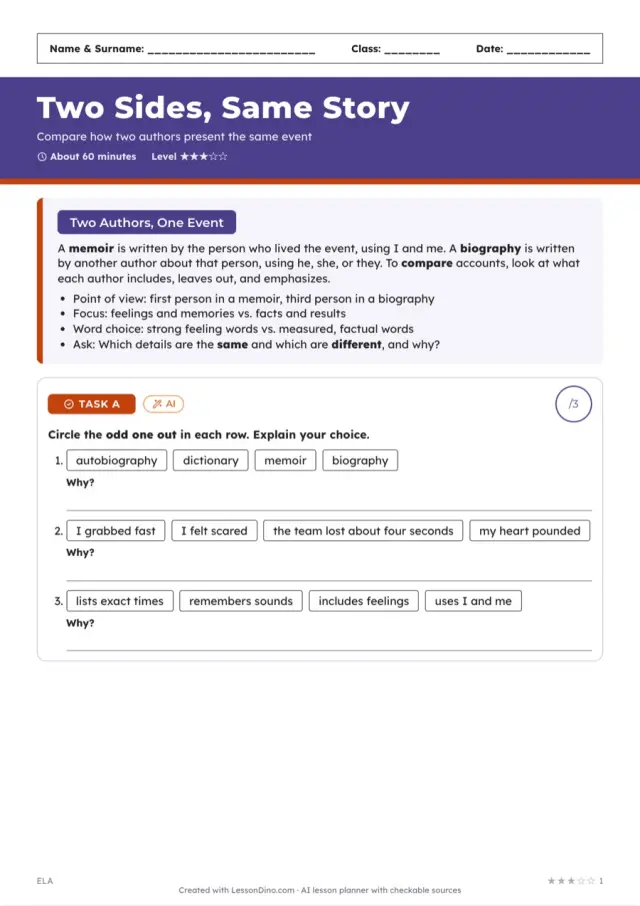
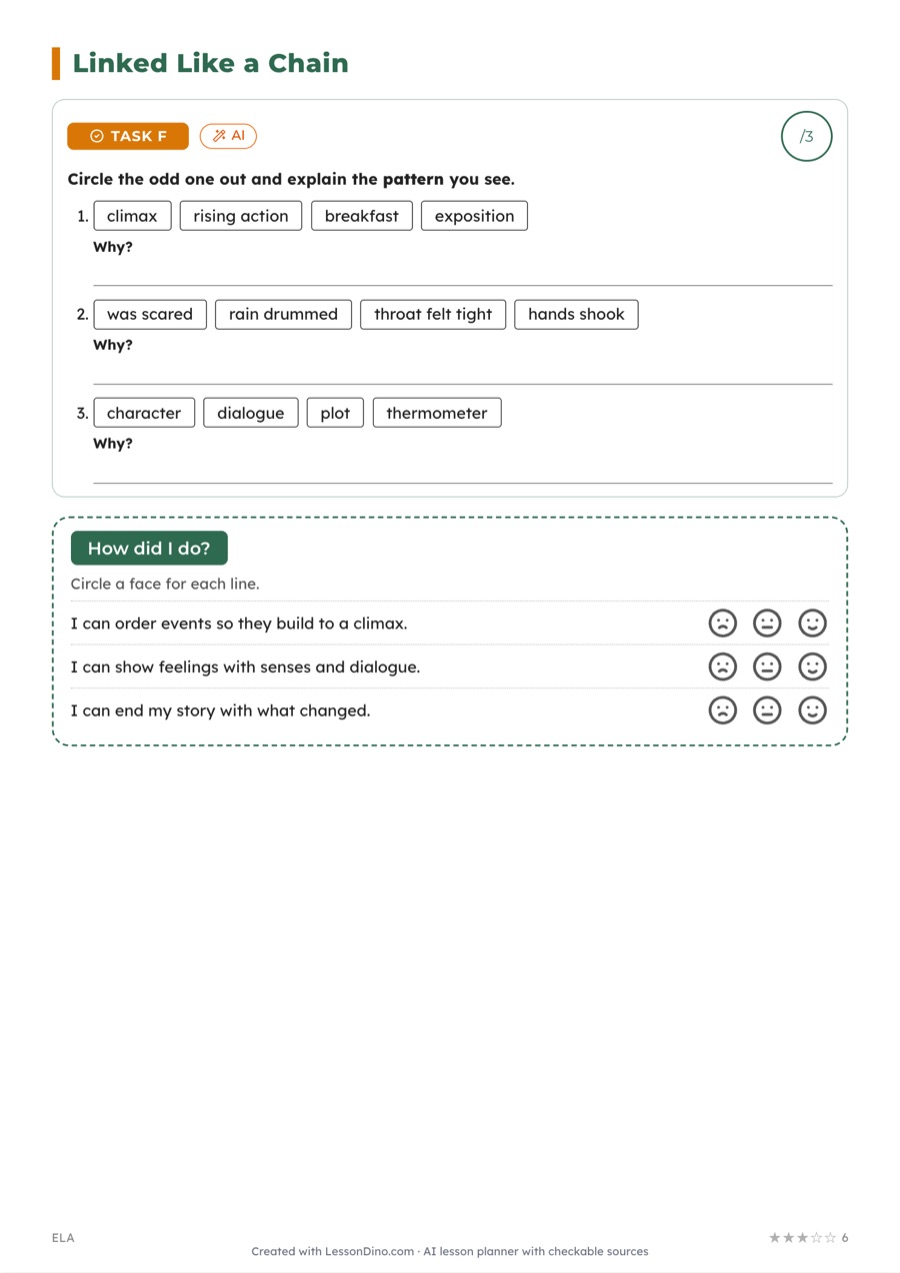
Circle the odd one out and explain the pattern you see.
Answers
Show the answers
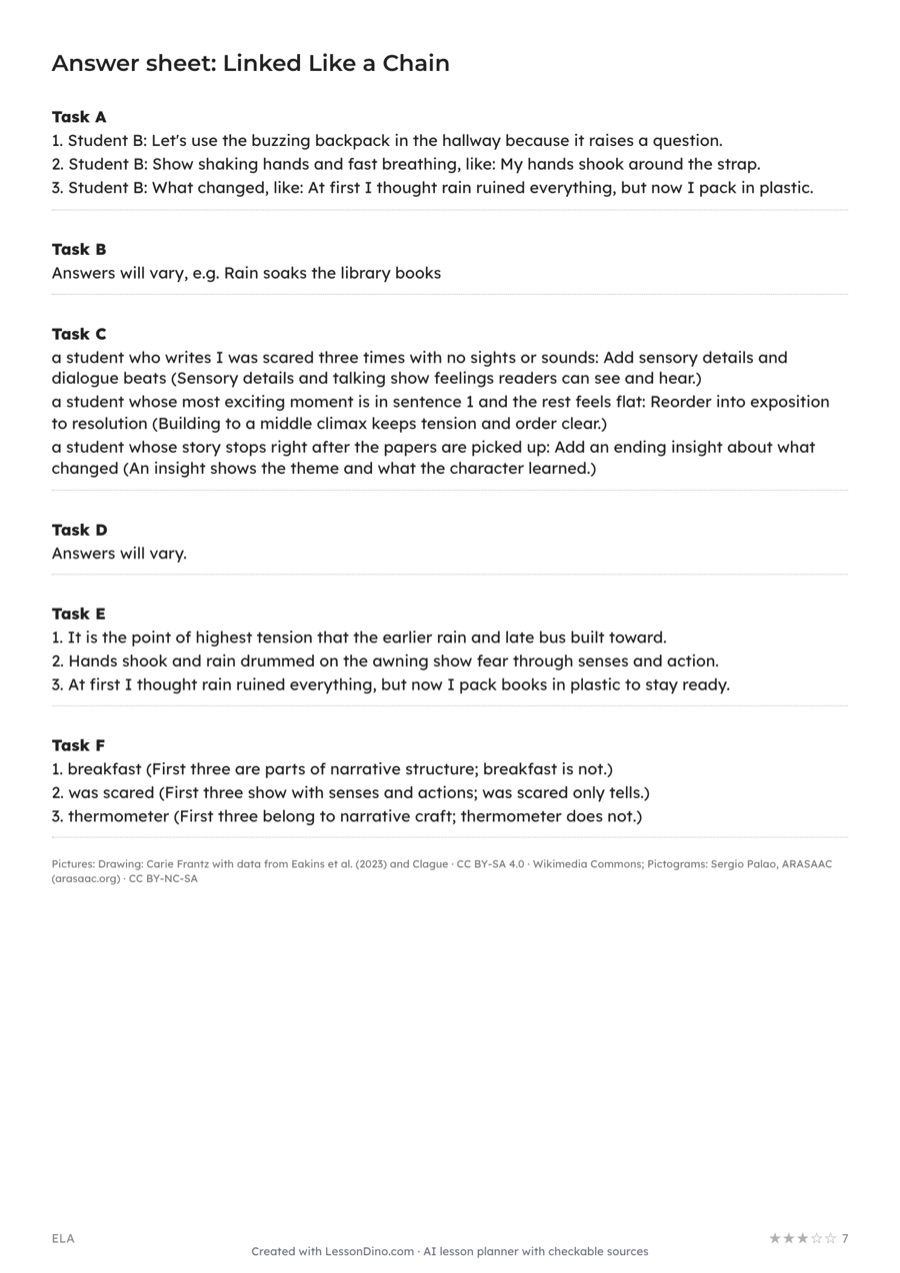
- Why is the zipper snapping the climax? It is the point of highest tension that the earlier rain and late bus built toward.
- Which detail shows feelings instead of telling them? Hands shook and rain drummed on the awning show fear through senses and action.
- What ending could show what changed? At first I thought rain ruined everything, but now I pack books in plastic to stay ready.
The answer sheet is the last picture above.
Curriculum
Write narratives to develop real or imagined experiences or events using effective technique, relevant descriptive details, and well-structured event sequences.
Made with Lesson Dino's AI on 17 October 2026. AI can make mistakes, so check the answers and facts against the sources before you teach.