The worksheet
About this worksheet
Students learn to name purpose and point of view and spot how authors show it. They hunt for clues with magnifiers and prove ideas with evidence. This Grade 6 ELA worksheet gives students (ages 11–12) seven pages of practice on author's purpose, part of the reading informational text unit. It goes with our free Author's purpose lesson, which has the slides and a timed lesson plan.
What it covers
By the end, students should be able to:
- Students will determine author's purpose or point of view using text details.
- Students will explain how word choice and text features convey that purpose.
- Students will support ideas about purpose with evidence from the text.
How to use it
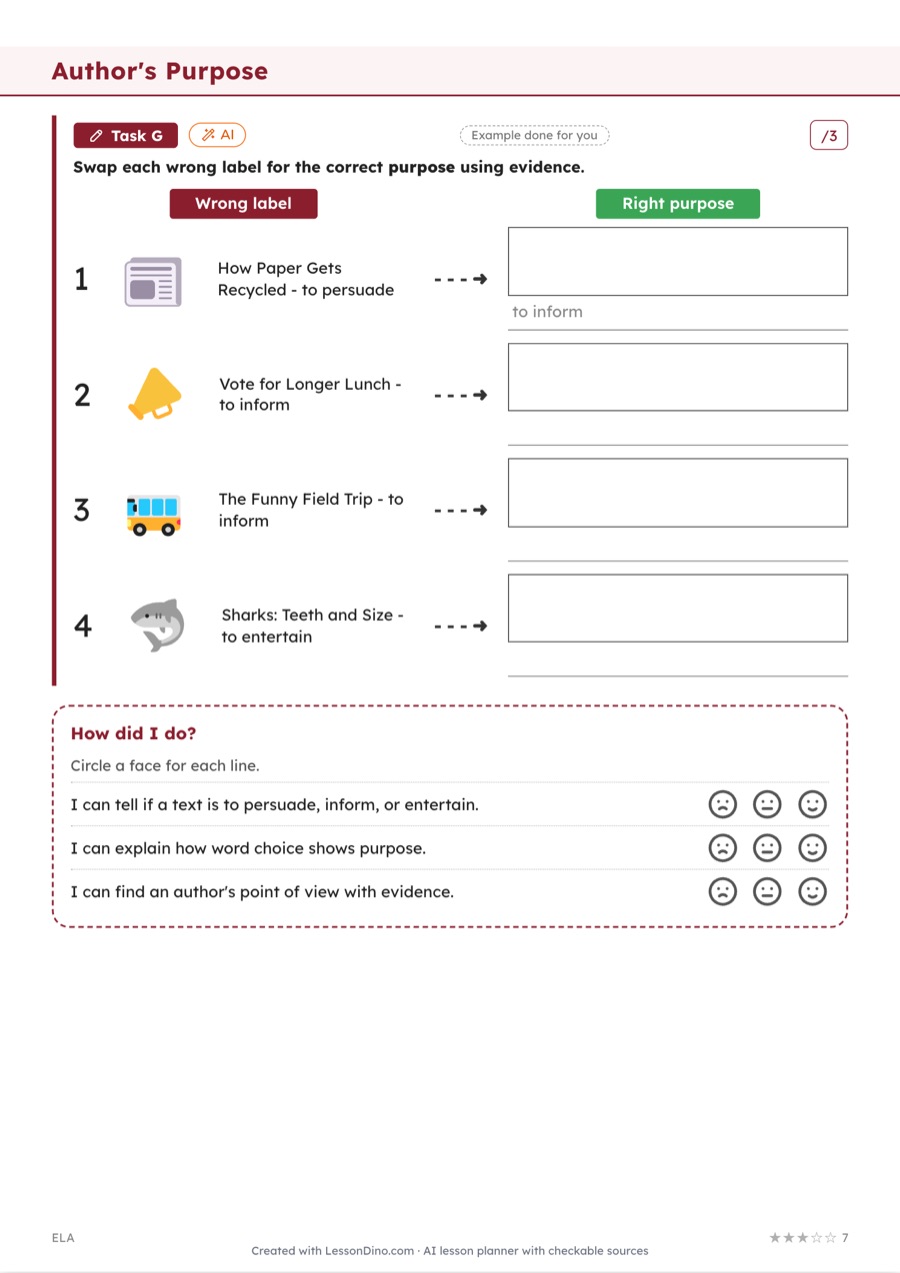
- Plenary (15 minutes): Hand out Worksheet Task G Swap it and have students swap each wrong label for correct purpose using evidence.
- Support: Give students who need help a checklist with examples of fact language and persuasion language to tick off.
- Stretch: Ask ready teams to compare two texts on the same topic with different purposes and chart the contrasts.
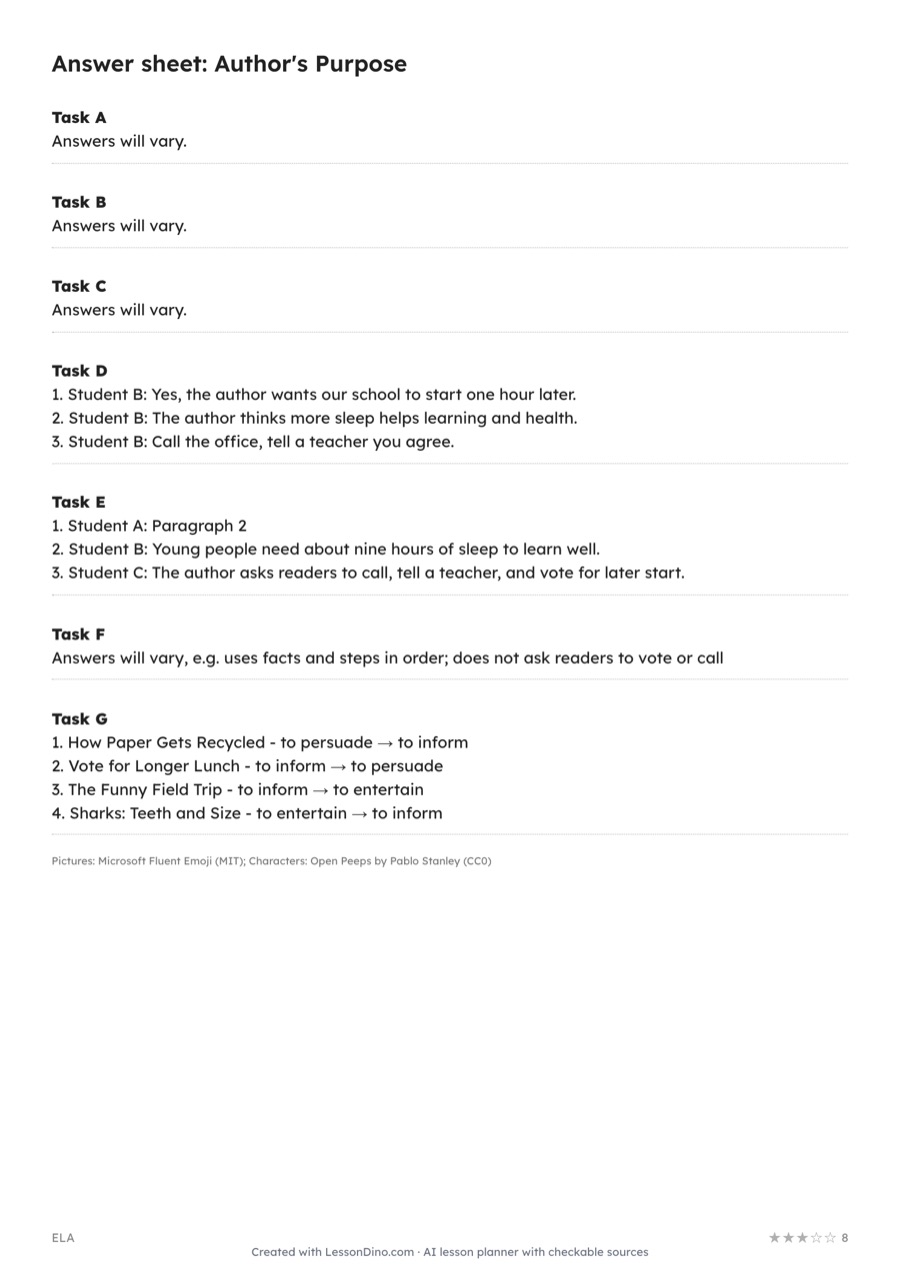
- The answer sheet is the last page, so you can print it on its own or let students check their own work.
Key vocabulary
- purpose: the reason someone writes something
- point of view: what a writer thinks or feels about a topic
- persuade: to get someone to do or believe something
- inform: to give facts and explain something clearly
- entertain: to make someone enjoy with a funny or exciting story
- evidence: a detail from the text that proves an idea
Mistakes to watch for
- Mixing up purpose (why) and point of view (what author thinks). Restate frames: Purpose is to persuade; point of view is author thinks later start is healthier.
- Thinking topic is purpose, e.g., purpose is recycling. Ask: Did author explain steps to inform or push action to persuade? Point to facts vs should/must language.
- Thinking any fact means inform. Show facts can serve persuade; check tone and action words like must, vote, call that convey push.
What's on the worksheet
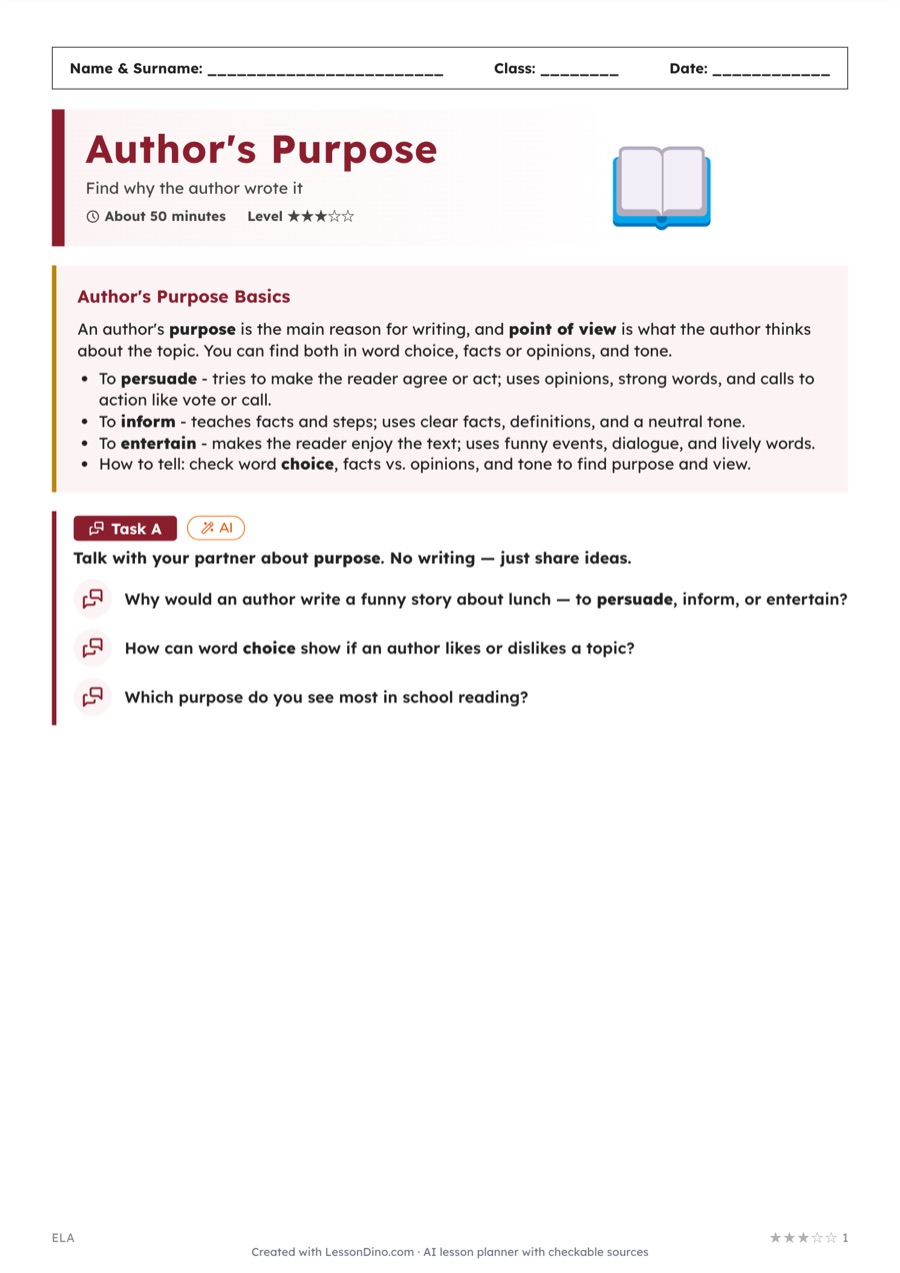
Why Authors Write
Learn the three main purposes and how authors show them.
Author's Purpose Basics
- An author's purpose is the main reason for writing, and point of view is what the author thinks about the topic. You can find both in word choice, facts or opinions, and tone.
- To persuade - tries to make the reader agree or act; uses opinions, strong words, and calls to action like vote or call.
- To inform - teaches facts and steps; uses clear facts, definitions, and a neutral tone.
- To entertain - makes the reader enjoy the text; uses funny events, dialogue, and lively words.
- How to tell: check word choice, facts vs. opinions, and tone to find purpose and view.
Talk with your partner about purpose. No writing — just share ideas.
- Why would an author write a funny story about lunch — to persuade, inform, or entertain?
- How can word choice show if an author likes or dislikes a topic?
- Which purpose do you see most in school reading?
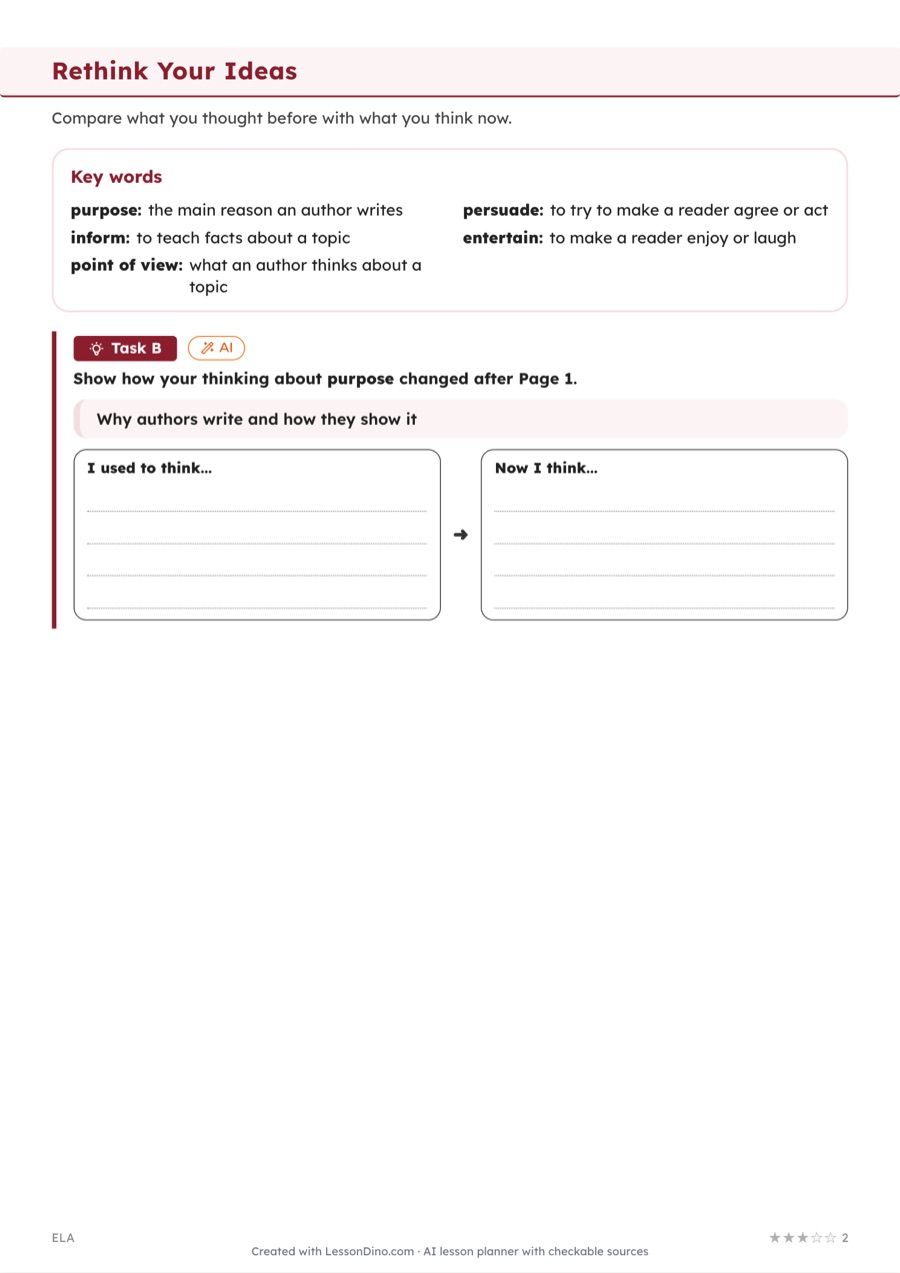
Rethink Your Ideas
Compare what you thought before with what you think now.
| Word | Meaning |
|---|---|
| purpose | the main reason an author writes |
| persuade | to try to make a reader agree or act |
| inform | to teach facts about a topic |
| entertain | to make a reader enjoy or laugh |
| point of view | what an author thinks about a topic |
Show how your thinking about purpose changed after Page 1.
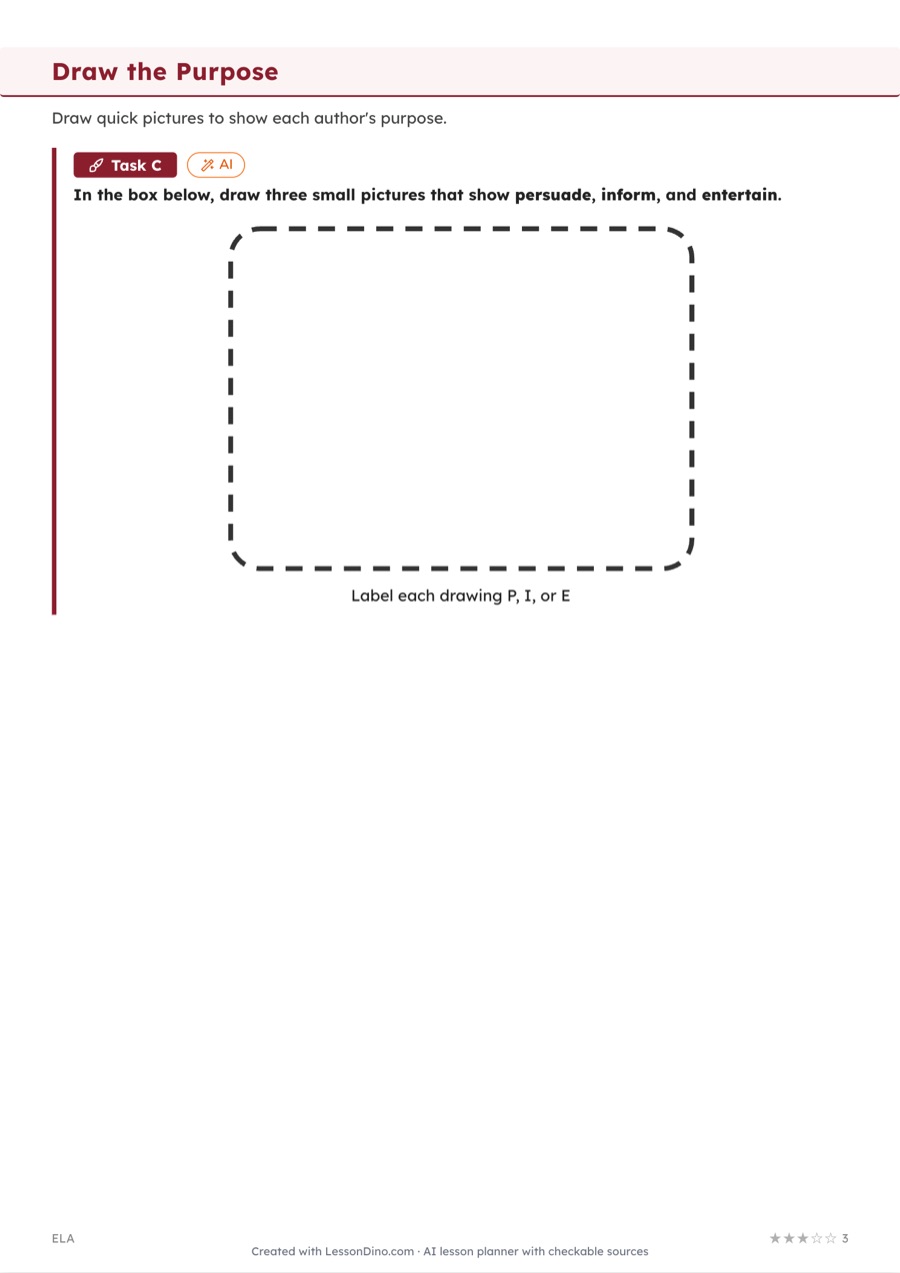
Draw the Purpose
Draw quick pictures to show each author's purpose.
In the box below, draw three small pictures that show persuade, inform, and entertain.
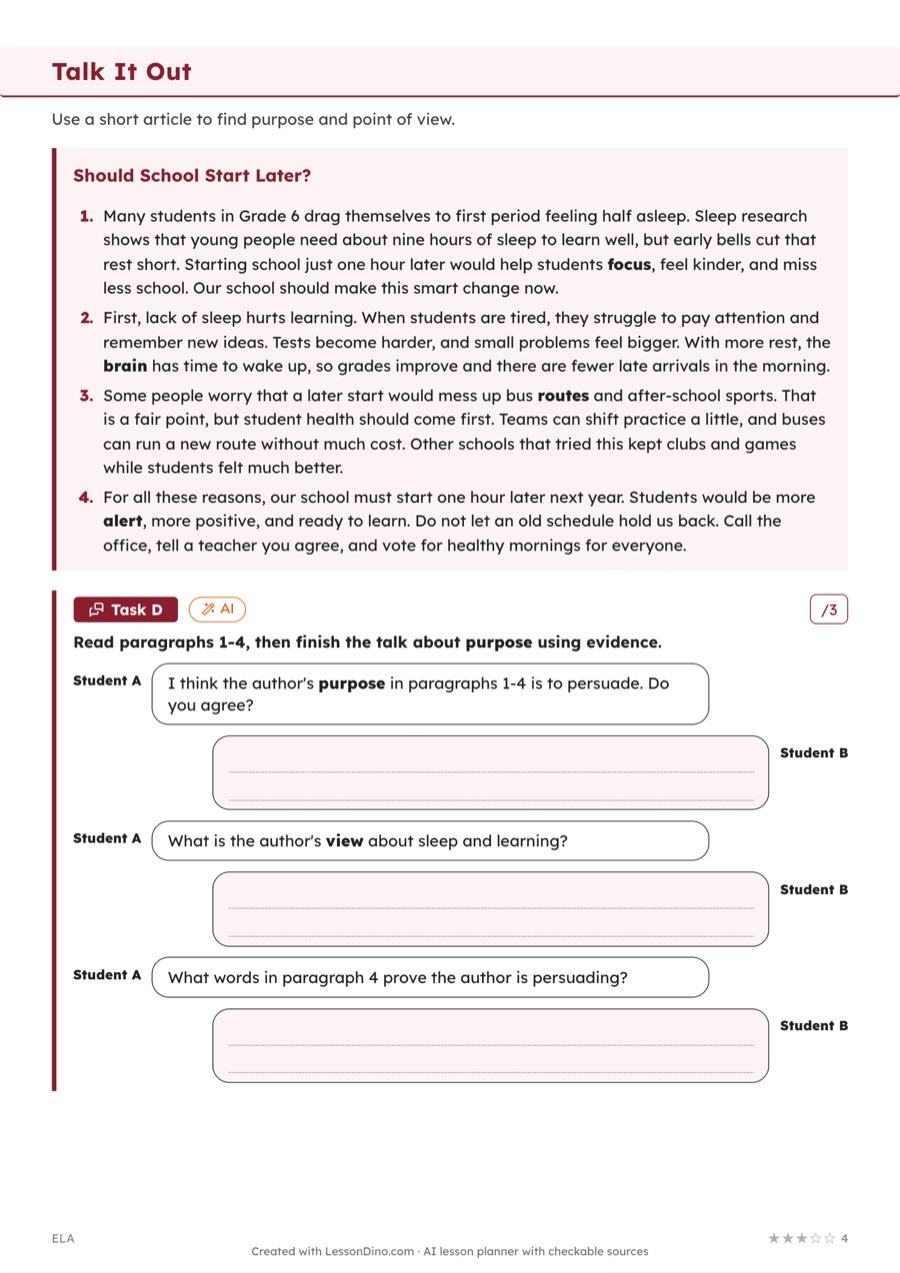
Talk It Out
Use a short article to find purpose and point of view.
Should School Start Later?
Read paragraphs 1-4, then finish the talk about purpose using evidence.
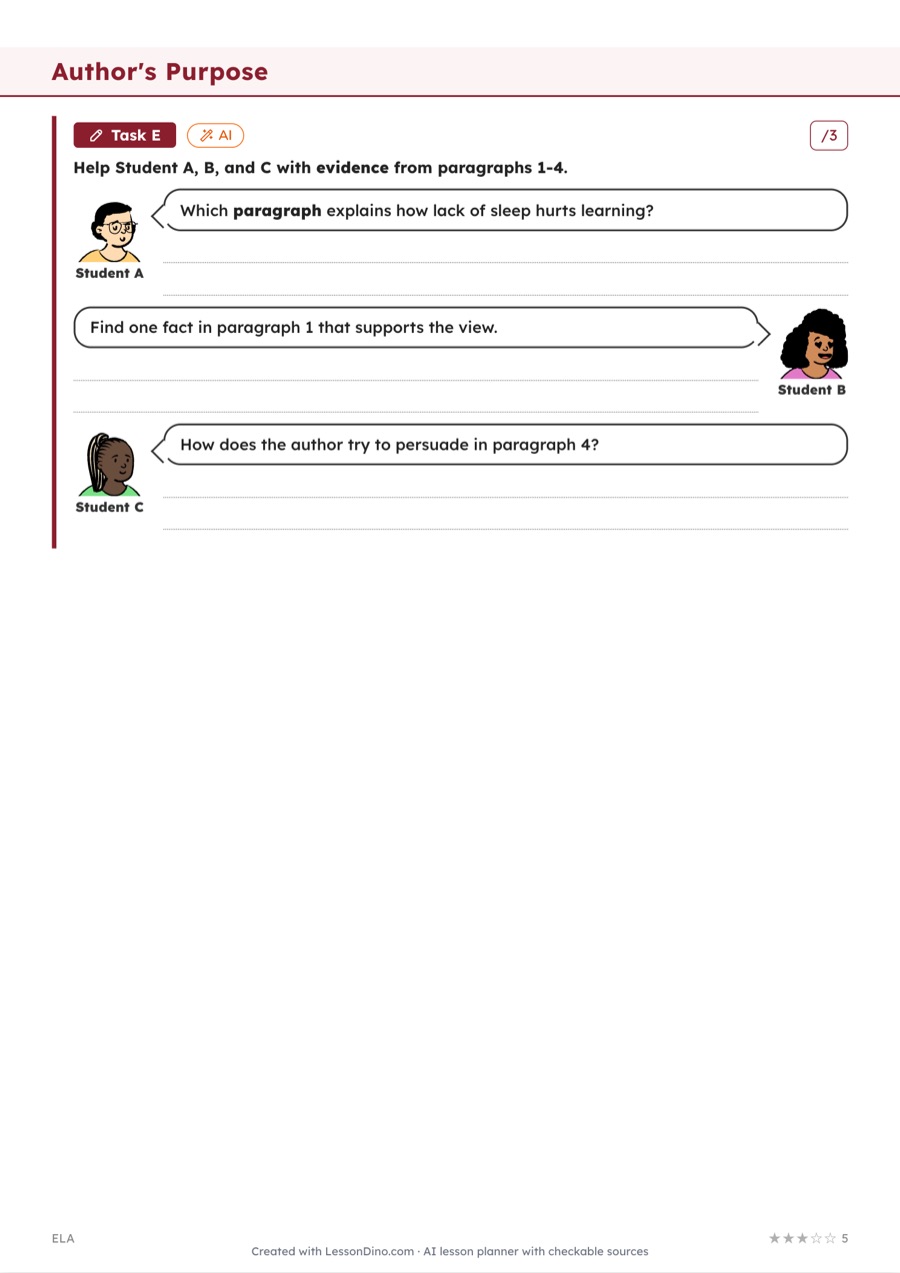
Page 5
Help Student A, B, and C with evidence from paragraphs 1-4.
Why It Matters
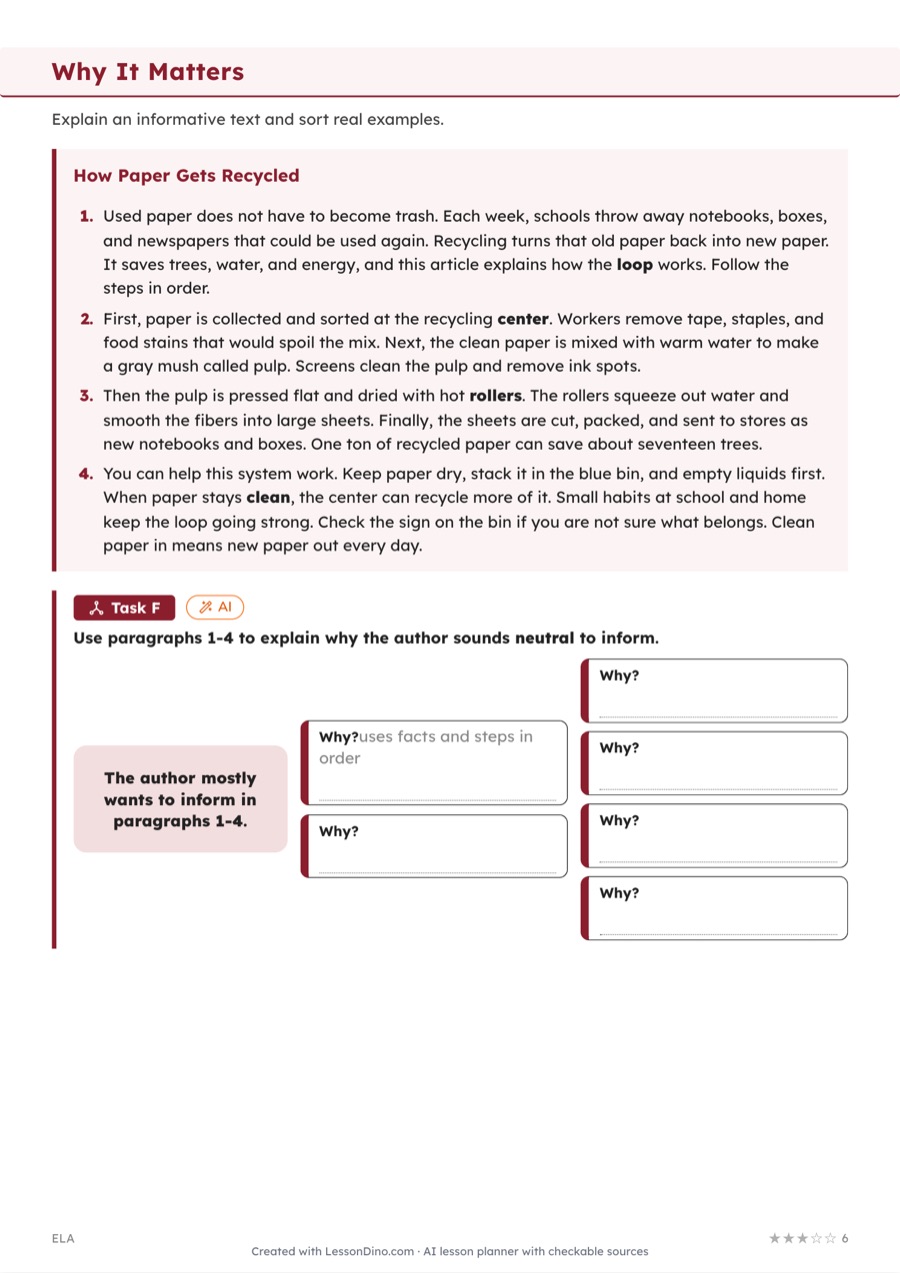
Explain an informative text and sort real examples.
How Paper Gets Recycled
Use paragraphs 1-4 to explain why the author sounds neutral to inform.
Page 7
Swap each wrong label for the correct purpose using evidence.
Answers
Show the answers
The answers are on the answer sheet, the last picture above.
Curriculum
Determine an author's point of view or purpose in a text and explain how it is conveyed in the text.
Made with Lesson Dino's AI on 17 October 2026. AI can make mistakes, so check the answers and facts against the sources before you teach.