The worksheet
About this worksheet
Students learn plants build most weight from air and water. They weigh plants and argue with evidence. This Grade 5 Science worksheet gives students (ages 10–11) five pages of practice on where plants get their food, part of the from molecules to organisms: structures and processes unit. It goes with our free Where plants get their food lesson, which has the slides and a timed lesson plan.
What it covers
By the end, students should be able to:
- Students will explain in simple words how plants make sugar food.
- Students will use weighing evidence to show growth comes chiefly from air and water.
- Students will support an argument about plant growth with two evidence pieces.
How to use it
- Argument writing (12 minutes): Give Worksheet Task B and read the letter frame together.
- Support: Pre-filled weight table in ounces with pictures; students circle bigger and smaller change.
- Stretch: Predict and defend growth if air flow was blocked but soil stayed the same.
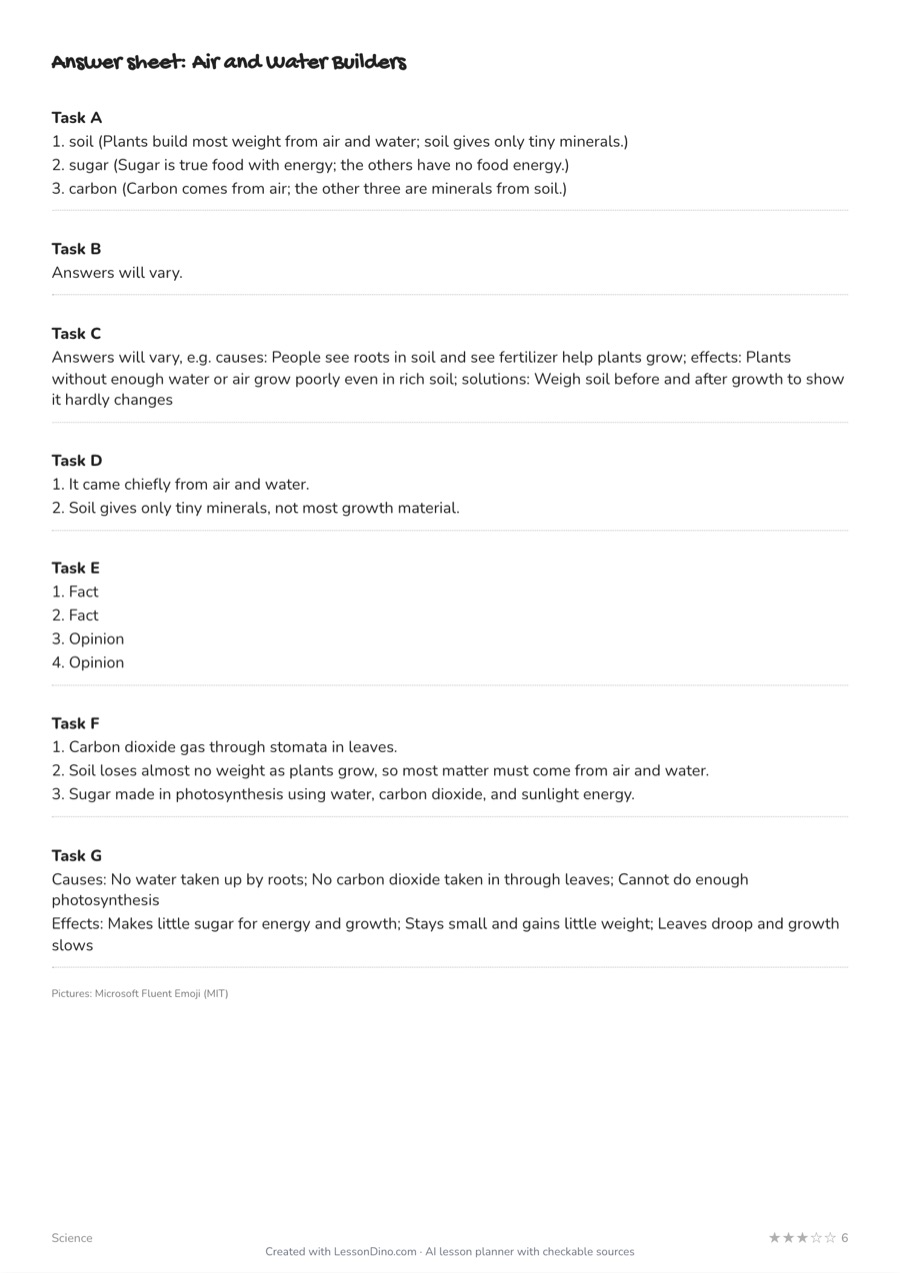
- The answer sheet is the last page, so you can print it on its own or let students check their own work.
Key vocabulary
- photosynthesis: how green leaves use light, air gas and water to make sugary food
- carbon dioxide: an unseen gas in the air that leaves take in to make food
- stomata: tiny holes, mostly on leaves, where gases move in and out
- minerals: tiny helpful bits from soil that keep plants healthy
- evidence: something you see or measure that helps prove an idea is true
Mistakes to watch for
- Thinking soil turns into plant mass and dirt disappears as plants grow. Recheck weighing: soil barely changed while plant grew, so gain came largely from carbon dioxide and water.
- Calling water, carbon dioxide or soil minerals food by themselves. Explain they do not contain usable energy in Calories, plants use them as materials to make sugar food.
- Thinking sunlight or fertilizer adds most weight. Restate sunlight powers making sugar food and minerals help health but air and water supply most building matter.
What's on the worksheet
Plants Grow Big
Learn where a plant's extra weight really comes from.
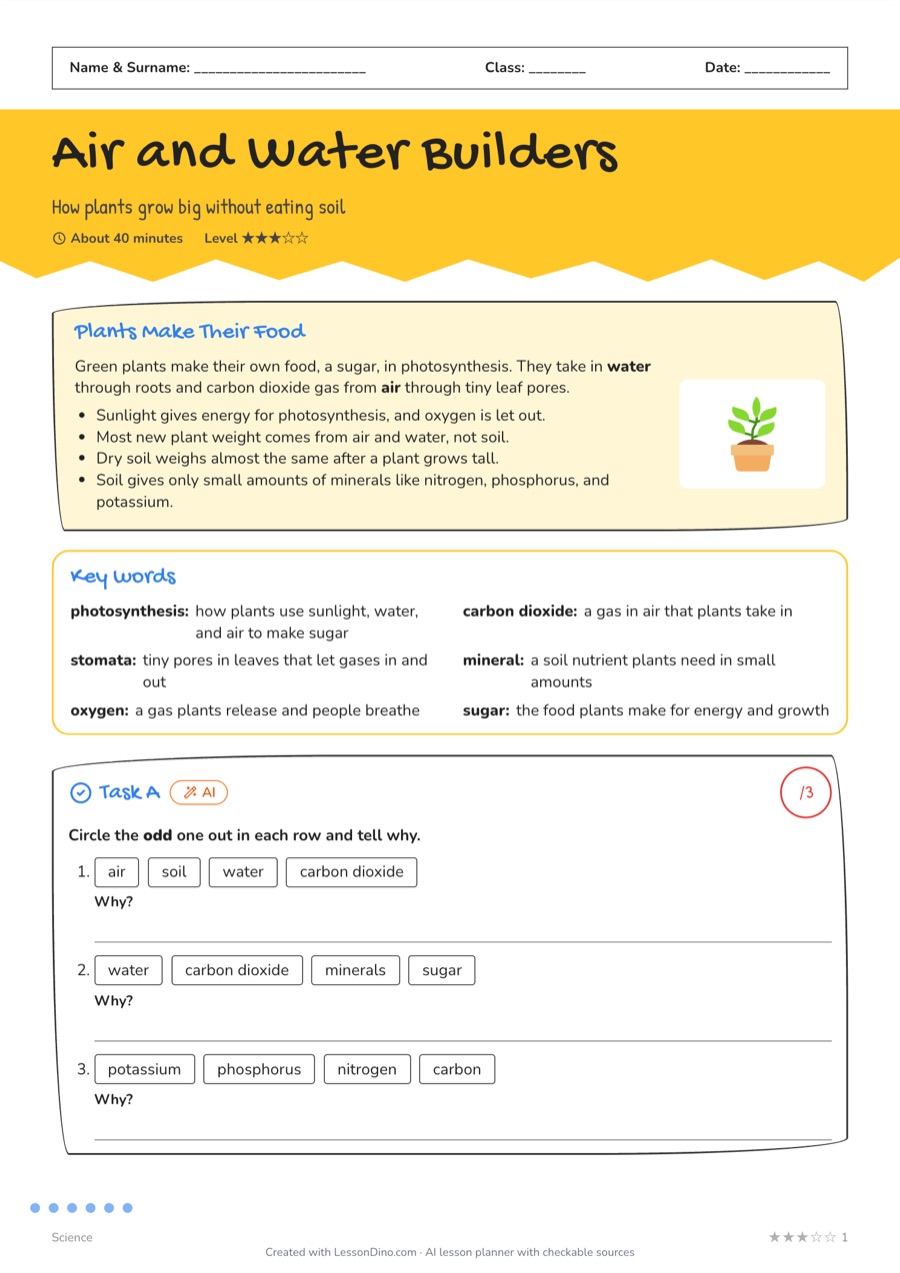
Plants Make Their Food
- Green plants make their own food, a sugar, in photosynthesis. They take in water through roots and carbon dioxide gas from air through tiny leaf pores.
- Sunlight gives energy for photosynthesis, and oxygen is let out.
- Most new plant weight comes from air and water, not soil.
- Dry soil weighs almost the same after a plant grows tall.
- Soil gives only small amounts of minerals like nitrogen, phosphorus, and potassium.
| Word | Meaning |
|---|---|
| photosynthesis | how plants use sunlight, water, and air to make sugar |
| carbon dioxide | a gas in air that plants take in |
| stomata | tiny pores in leaves that let gases in and out |
| mineral | a soil nutrient plants need in small amounts |
| oxygen | a gas plants release and people breathe |
| sugar | the food plants make for energy and growth |
Circle the odd one out in each row and tell why.
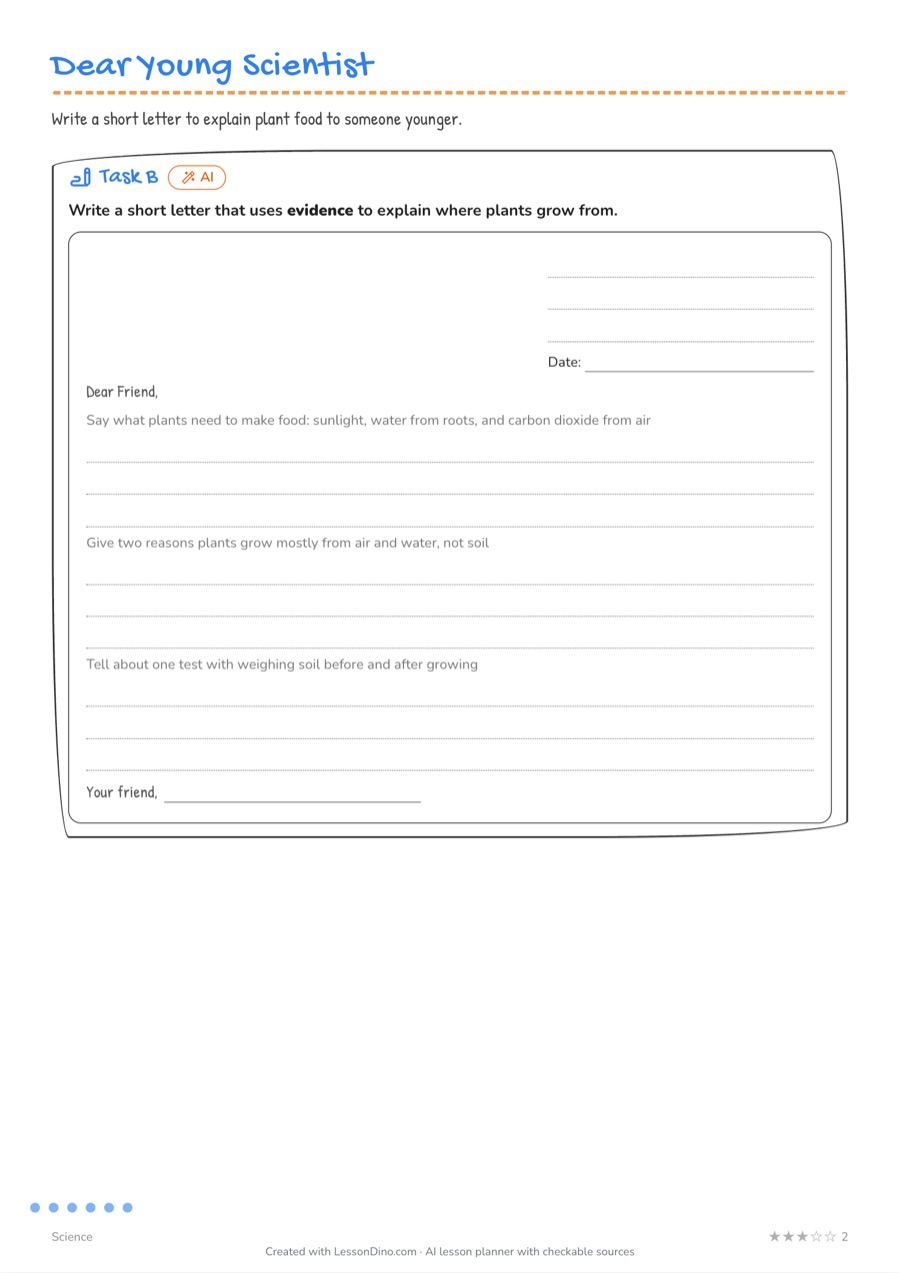
Dear Young Scientist
Write a short letter to explain plant food to someone younger.
Write a short letter that uses evidence to explain where plants grow from.
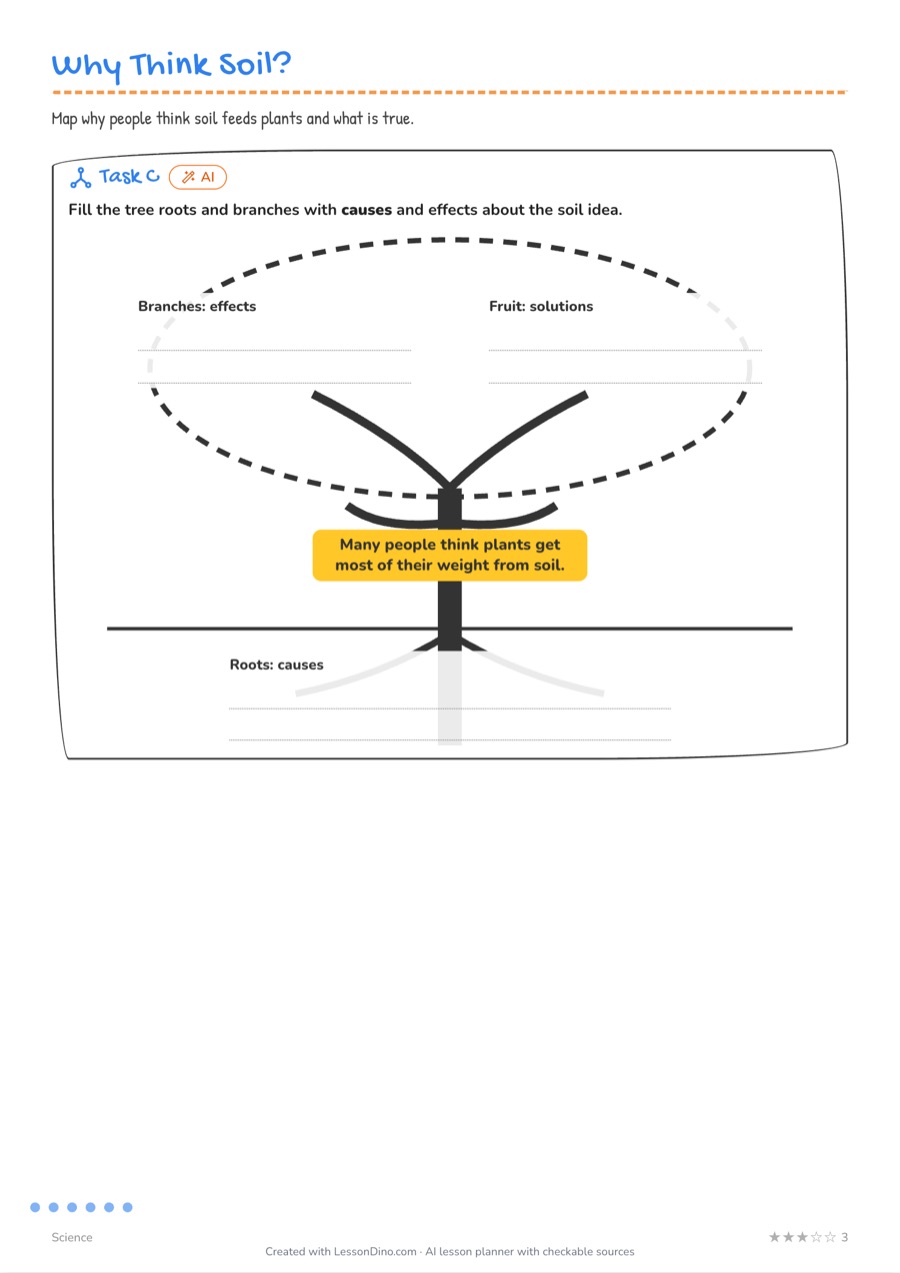
Why Think Soil?
Map why people think soil feeds plants and what is true.
Fill the tree roots and branches with causes and effects about the soil idea.
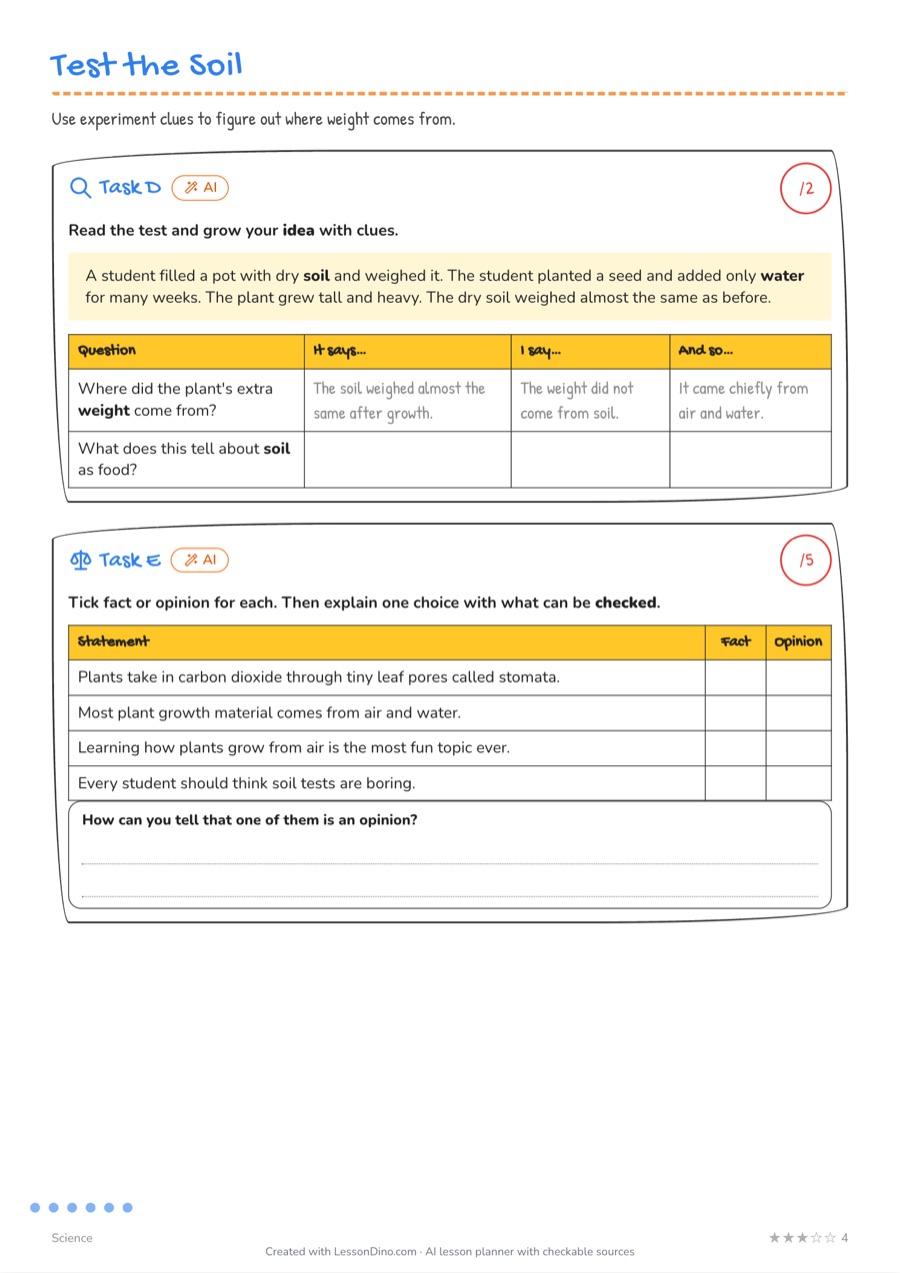
Test the Soil
Use experiment clues to figure out where weight comes from.
Read the test and grow your idea with clues.
- A student filled a pot with dry soil and weighed it. The student planted a seed and added only water for many weeks. The plant grew tall and heavy. The dry soil weighed almost the same as before.
- Where did the plant's extra weight come from?
- What does this tell about soil as food?
Tick fact or opinion for each. Then explain one choice with what can be checked.
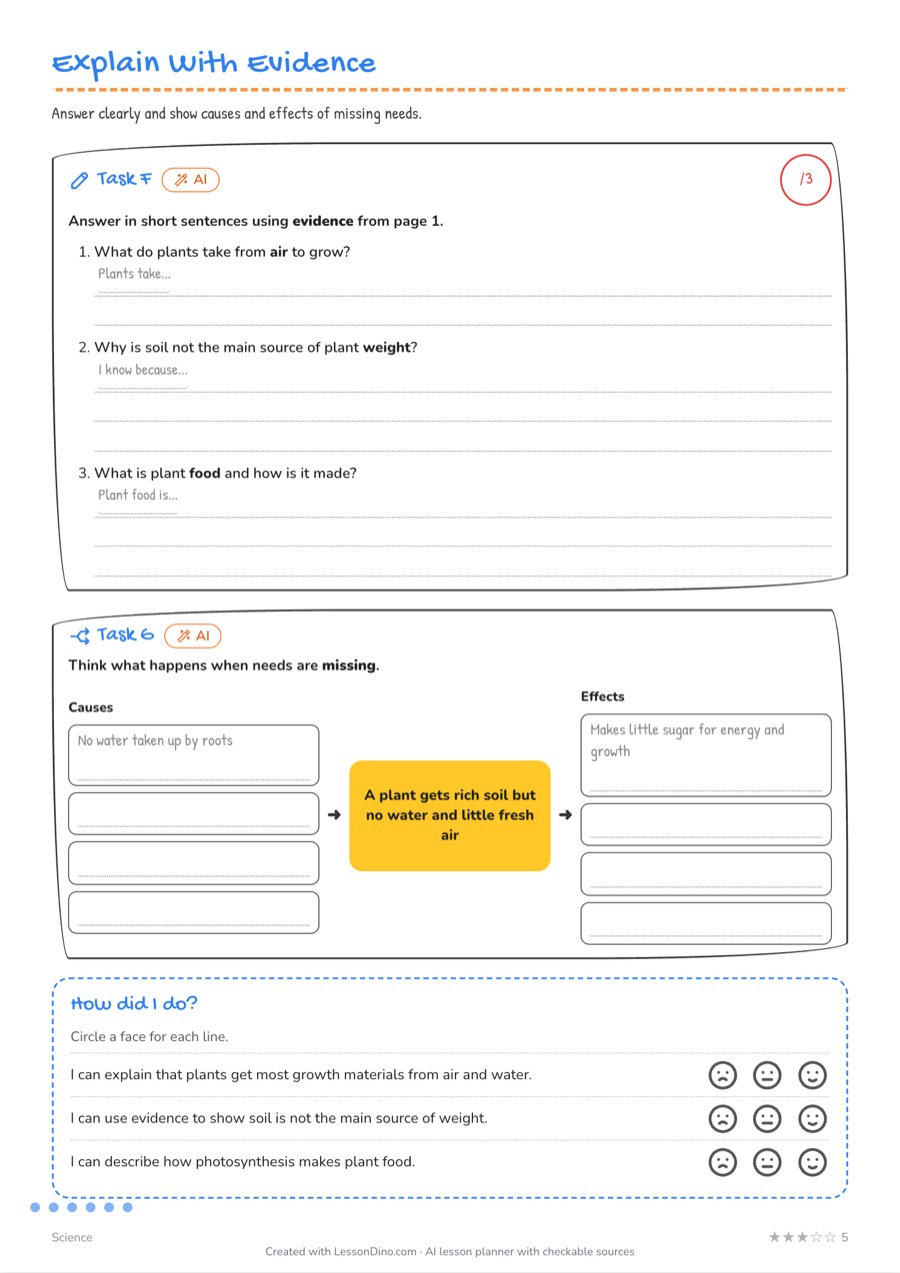
Explain With Evidence
Answer clearly and show causes and effects of missing needs.
Answer in short sentences using evidence from page 1.
- What do plants take from air to grow?
- Why is soil not the main source of plant weight?
- What is plant food and how is it made?
Think what happens when needs are missing.
Answers
Show the answers
- What do plants take from air to grow? Carbon dioxide gas through stomata in leaves.
- Why is soil not the main source of plant weight? Soil loses almost no weight as plants grow, so most matter must come from air and water.
- What is plant food and how is it made? Sugar made in photosynthesis using water, carbon dioxide, and sunlight energy.
The answer sheet is the last picture above.
Curriculum
Support an argument that plants get the materials they need for growth chiefly from air and water.
Made with Lesson Dino's AI on 16 October 2026. AI can make mistakes, so check the answers and facts against the sources before you teach.