Slides
Lesson plan
Mostly Air and Water
Students learn plants build most weight from air and water. They weigh plants and argue with evidence.
Objectives
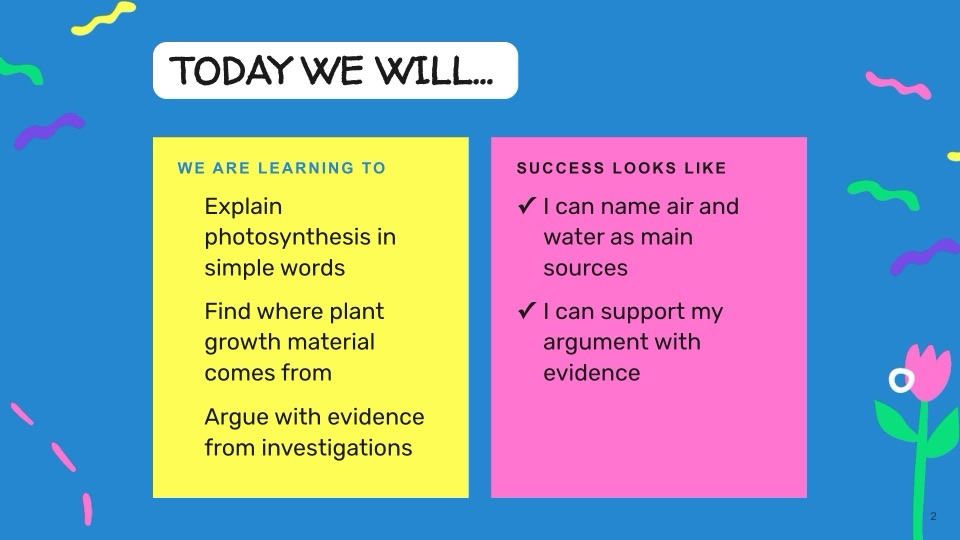
- Students will explain in simple words how plants make sugar food.
- Students will use weighing evidence to show growth comes chiefly from air and water.
- Students will support an argument about plant growth with two evidence pieces.
Success criteria
- I can name air and water as the main builders of plants.
- I can explain soil mass barely changes while plants gain mass.
- I can write a claim with two pieces of evidence.
Key words
| Word | Meaning |
|---|---|
| photosynthesis | how green leaves use light, air gas and water to make sugary food |
| carbon dioxide | an unseen gas in the air that leaves take in to make food |
| stomata | tiny holes, mostly on leaves, where gases move in and out |
| minerals | tiny helpful bits from soil that keep plants healthy |
| evidence | something you see or measure that helps prove an idea is true |
Timed plan (60 minutes)
| Time | Stage | What happens |
|---|---|---|
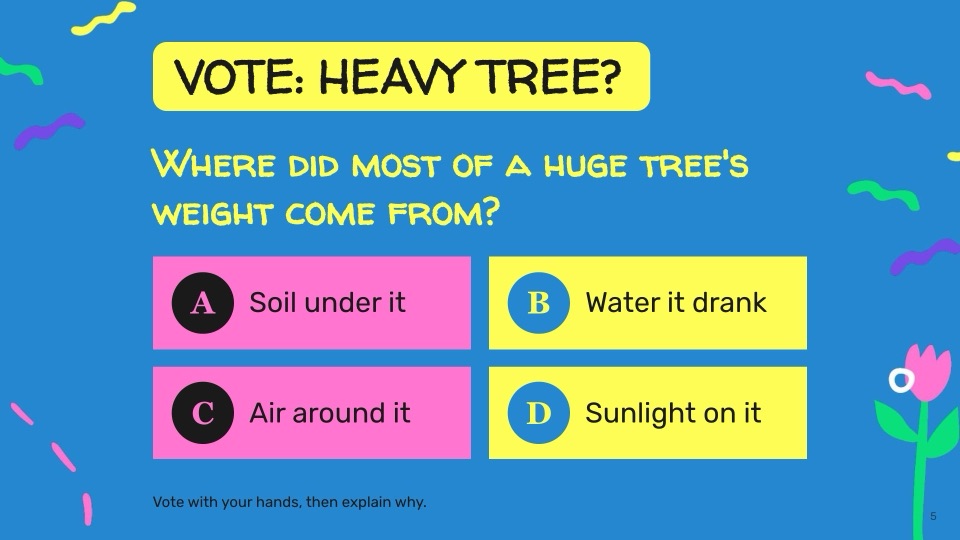
| 5 min | Starter | Hook curiosity about where new plant weight comes from and set the goal. Show Slide 1 title and hold up the bigger bean plant in its cup. Say the hook question and let partners whisper a guess for 30 seconds. Show Slide 2 objectives and read the I can lines together. Take a quick show of hands vote for soil, water, air or sunlight. |
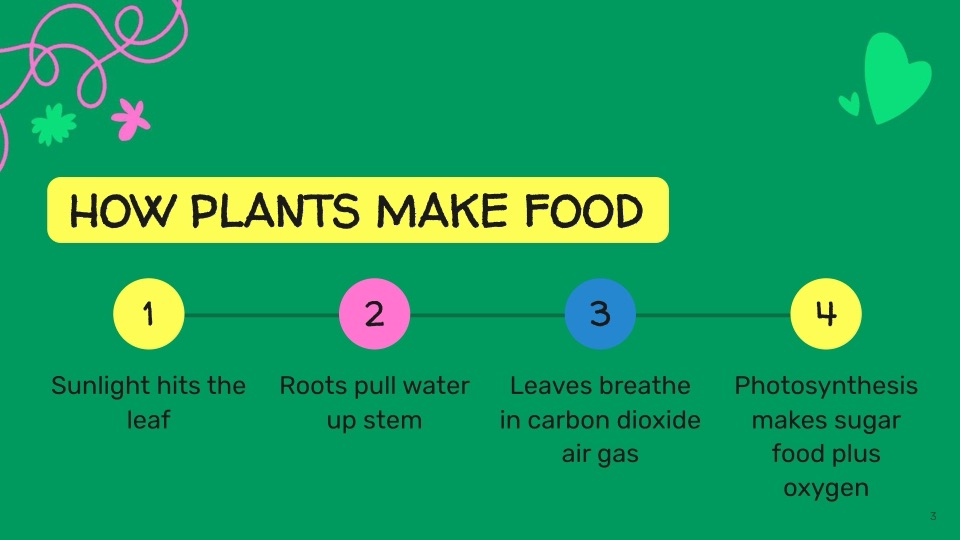
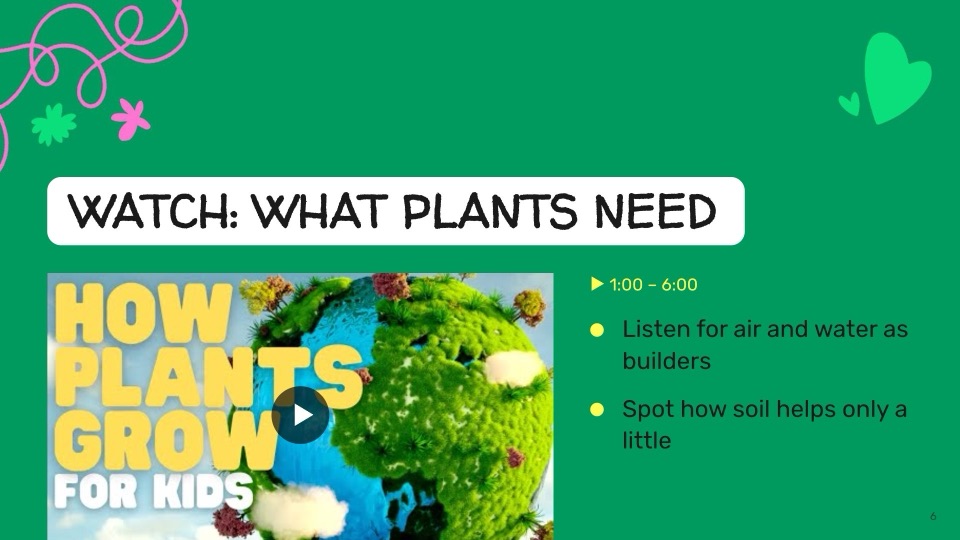
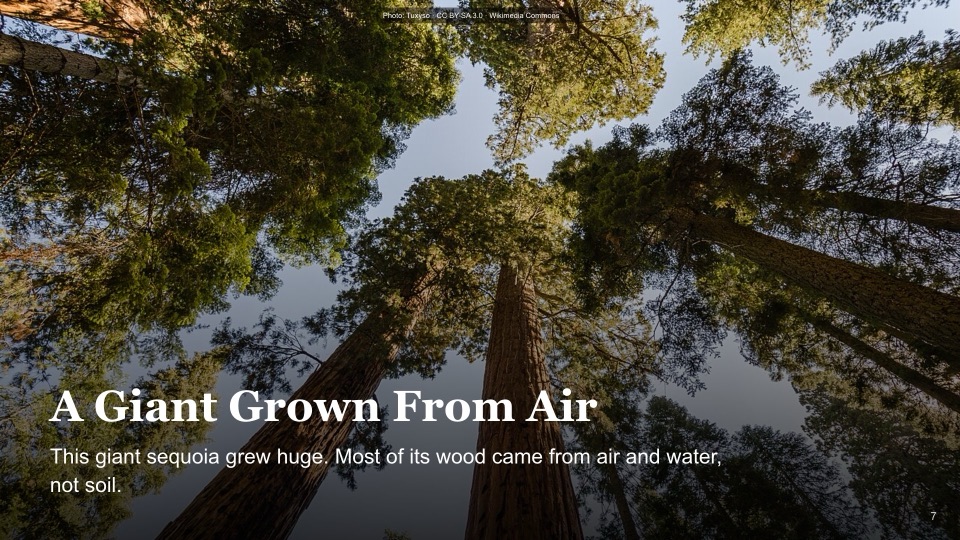
| 15 min | Teaching | Explain photosynthesis and the weighing evidence that soil does not supply most mass. Show Slides 3-5 and model the steps: light hits leaf, roots pull water up stem, leaves breathe in air gas. Show Slide 6 and play Video clip 1 (1:00-6:00), ask students to listen for air and water as builders. Explain an early test showed new wood did not come from soil and a tree gains huge weight but soil barely changes. Model the argument sentence and point to the word wall: air, water, carbon dioxide, soil. |
| 20 min | Main activity | Use weighing evidence to argue most plant mass does not come from soil. Demo weighing each 8-oz cup on the scale in ounces and record with the class. Hand out lens and pre-filled weight table; guide looking at roots and stems. Talk through how gain came largely from matter made from carbon dioxide and water, so most tree weight comes from air. Give half-sheet and model finishing the claim sentence with because. |
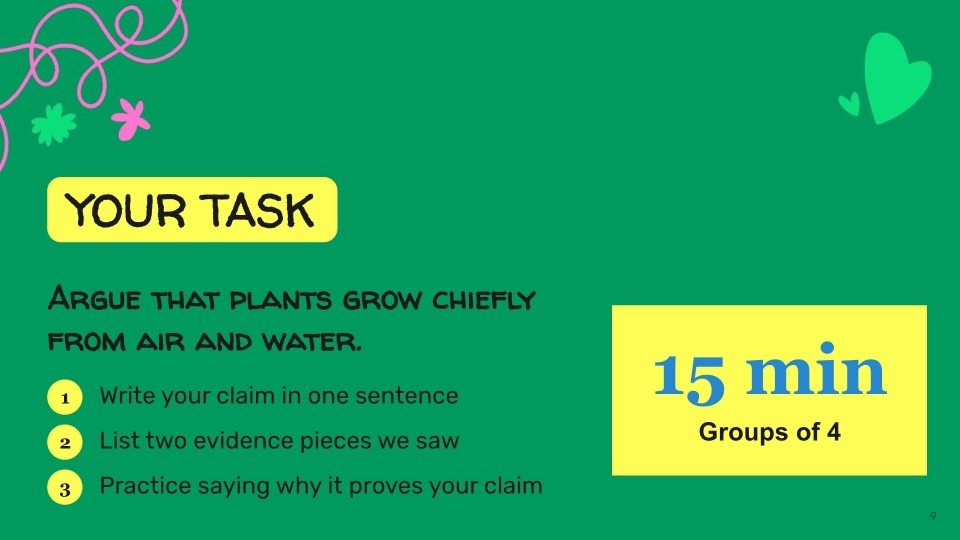
| 12 min | Argument writing | Write and speak a short evidence-based argument for air and water. Show Slide 9 task: one-sentence claim, list two evidence pieces, practice saying why. Give Worksheet Task B and read the letter frame together. Model one letter opening using weighing and leaf-gas evidence. Time 7 minutes writing, then 3 minutes partner practice saying why it proves the claim. |
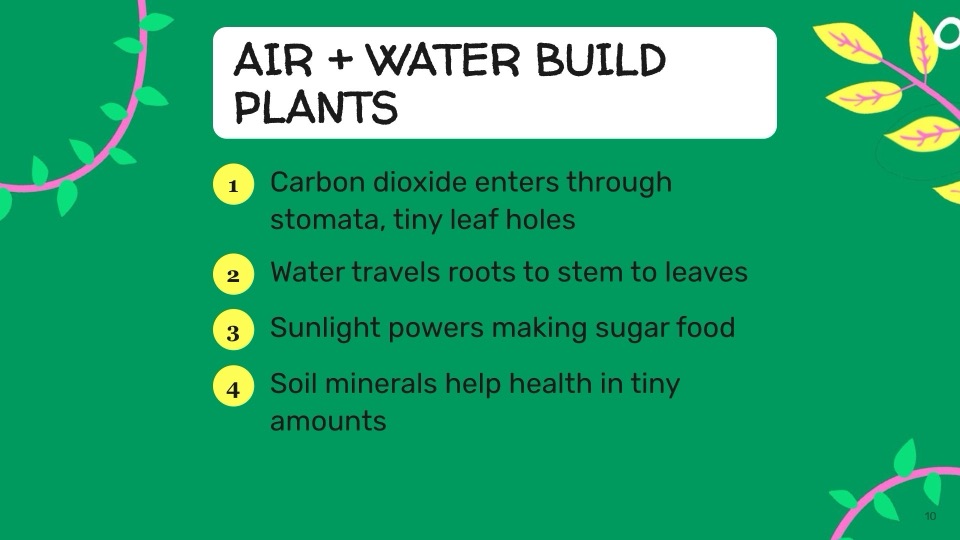
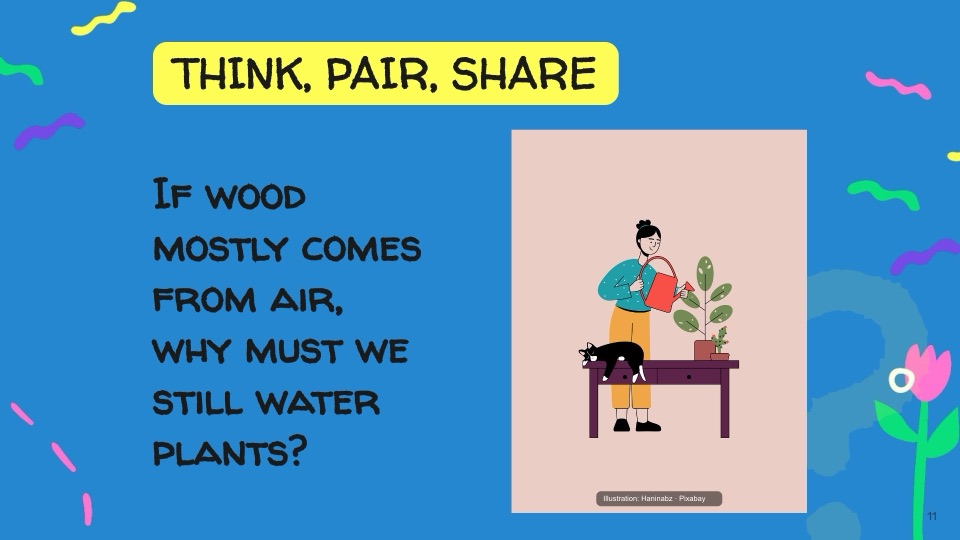
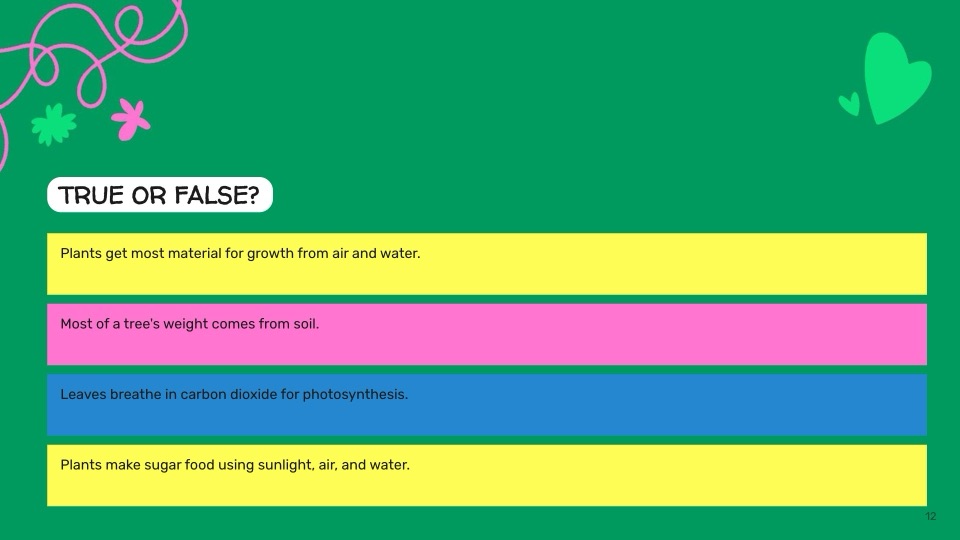
| 8 min | Plenary | Confirm air plus water build plants and check the success lines. Show Slide 10 bullets and restate: gas enters through stomata, water travels roots to stem to leaves, light powers sugar making. Show Slide 11 and run Think, pair, share: If wood mostly comes from air, why must we still water plants? Show Slide 12 true-or-false and vote with paddles or thumbs. Link back to I can lines and set homework. |
Common mistakes
- Thinking soil turns into plant mass and dirt disappears as plants grow
How to spot it: Claims soil loss equals plant gain or votes soil only on Slide 5
Recheck weighing: soil barely changed while plant grew, so gain came largely from carbon dioxide and water - Calling water, carbon dioxide or soil minerals food by themselves
How to spot it: Writes water is food or minerals are food without making sugar
Explain they do not contain usable energy in Calories, plants use them as materials to make sugar food - Thinking sunlight or fertilizer adds most weight
How to spot it: Says light becomes wood or more fertilizer equals more wood alone
Restate sunlight powers making sugar food and minerals help health but air and water supply most building matter
Support
- Pre-filled weight table in ounces with pictures; students circle bigger and smaller change
- Sentence starters and word wall: air, water, carbon dioxide, soil
Stretch
- Predict and defend growth if air flow was blocked but soil stayed the same
- Write a rebuttal to the soil-only idea using weighing evidence
Check questions
- Where do plants get most materials for growth?
Answer: Chiefly from air and water. - What weighing evidence shows soil is not the main source?
Answer: Plant gained a lot while dry soil mass barely changed. - How does carbon dioxide get into the plant?
Answer: Through stomata, tiny holes mostly on leaves.
Curriculum
Support an argument that plants get the materials they need for growth chiefly from air and water.
Video clips
Clips on YouTube, from the start and end times we chose. Check each one before you show it.
-
What plants need to grow strong from 1:00 to 6:00
Learn Bright: How Plants Grow for Kids | Learn about photosynthesis and what plants need to grow strong
Directly links growth to air and water with clear examples at the right pace and vocabulary for ages 10-11 in Grade 5.
-
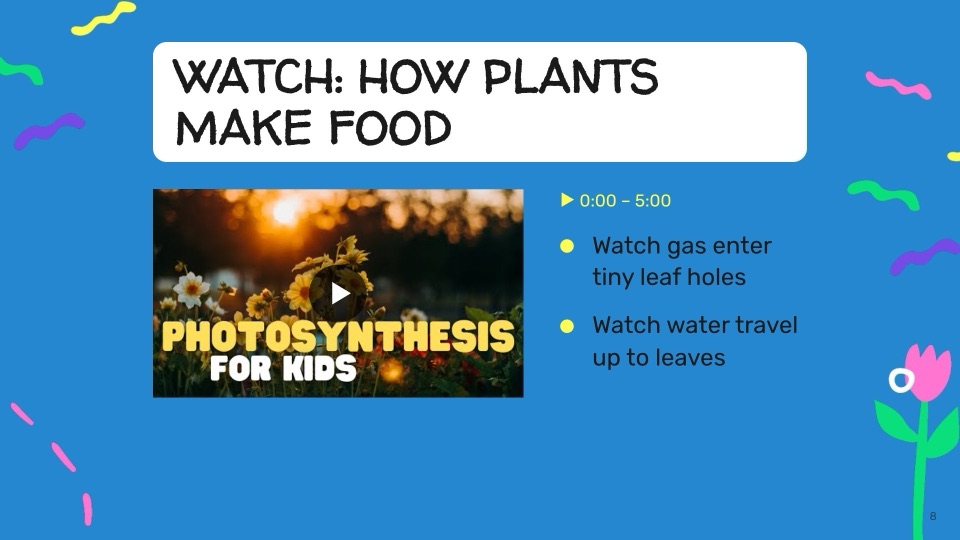
How plants make food from 0:00 to 5:00
Learn Bright: Photosynthesis for Kids | Learn how plants MAKE their own food
Explains photosynthesis as plants making food from air and water with kid-friendly visuals perfect for ages 10-11.
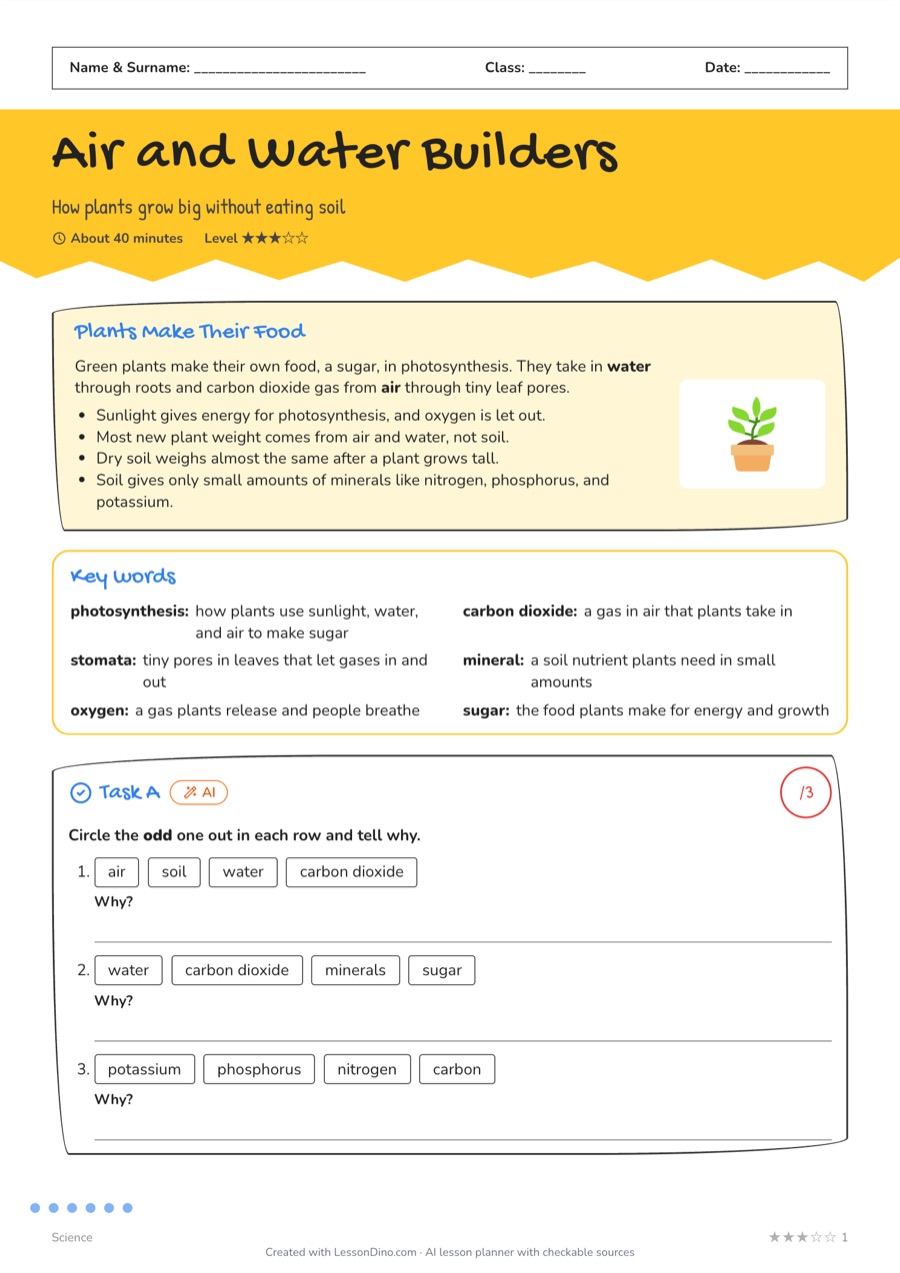
Worksheet
Sources
- Science cps.edu
- Why math in a science curriculum? inquiryproject.terc.edu
- Movement of Food in Plants: Storage And Cells cpp.edu
- Where Do Plants Get Their Food? - University of Delaware www1.udel.edu
- Plant nutrition Facts for Kids kids.kiddle.co
- Plant physiology Facts for Kids kids.kiddle.co
- Plants and water - KS2 Science curriculum - BBC Bitesize bbc.co.uk
- Science for Kids: Food Chain and Web - Ducksters ducksters.com
Picture credits
Made with Lesson Dino's AI on 16 October 2026. AI can make mistakes, so check facts against the sources before you teach.