Slides
Lesson plan
Where Does Matter Go? Modeling the Food Web Loop
Students learn how matter moves from plants to animals to decomposers and back. They build a small box model to trace one speck of matter.
Objectives
- Students will trace matter flow among plants, animals, decomposers, soil and air.
- Students will explain how decomposers return matter for new plant growth.
- Students will build a labeled model that shows matter moving with arrows.
Success criteria
- I can trace matter from a plant to an animal to decomposers.
- I can name what decomposers leave behind for new plants.
- I can explain what one arrow in my model shows.
Key words
| Word | Meaning |
|---|---|
| producer | a plant that makes its own food using sunlight, water and carbon dioxide |
| consumer | an animal that gets energy by eating a plant or another animal |
| decomposer | a living thing like mold or bacteria that breaks down dead matter and wastes into tiny pieces |
| food web | many linked eating chains that show who eats whom in one place |
| matter | the tiny stuff that makes up living things, soil, water and air |
Timed plan (60 minutes)
| Time | Stage | What happens |
|---|---|---|
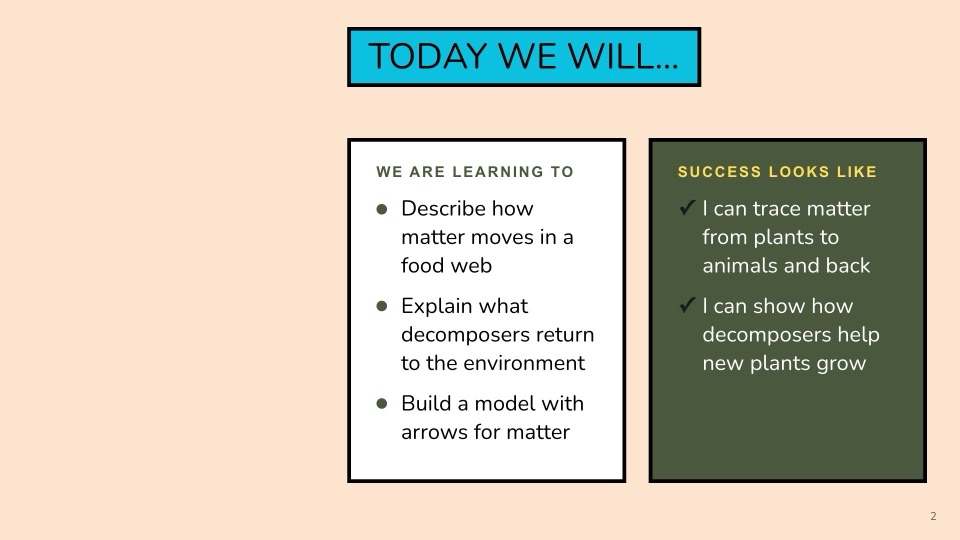
| 5 min | Starter | Hook interest in the matter loop and recall what plants and animals need. Show Slide 1 Food Webs: Where Does Matter Go? and read the title. Ask the hook: Can you fit a whole rotting log, a plant, a rabbit, and the air in one box? Show Slide 2 Today we will and read the three goals in student words. Take 3 quick answers on where fallen leaves seem to go. |
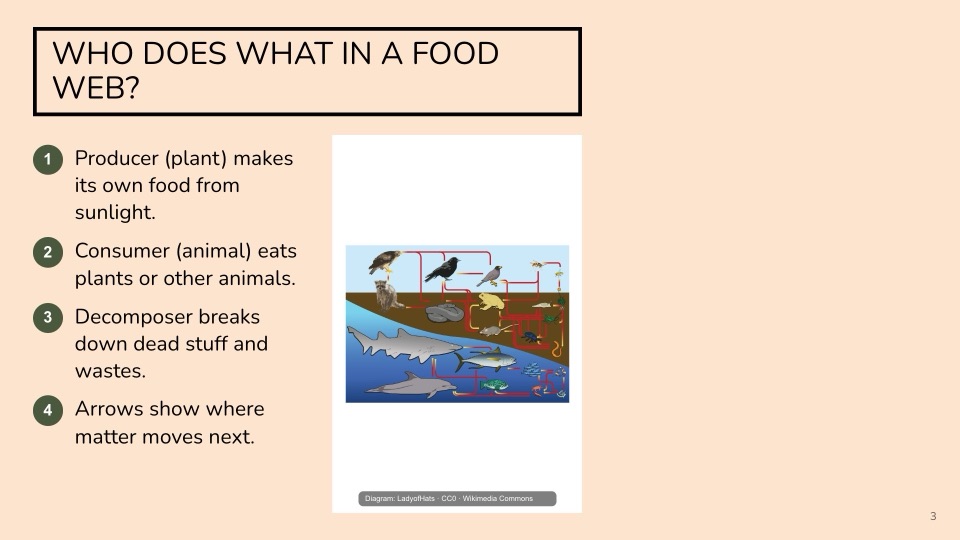
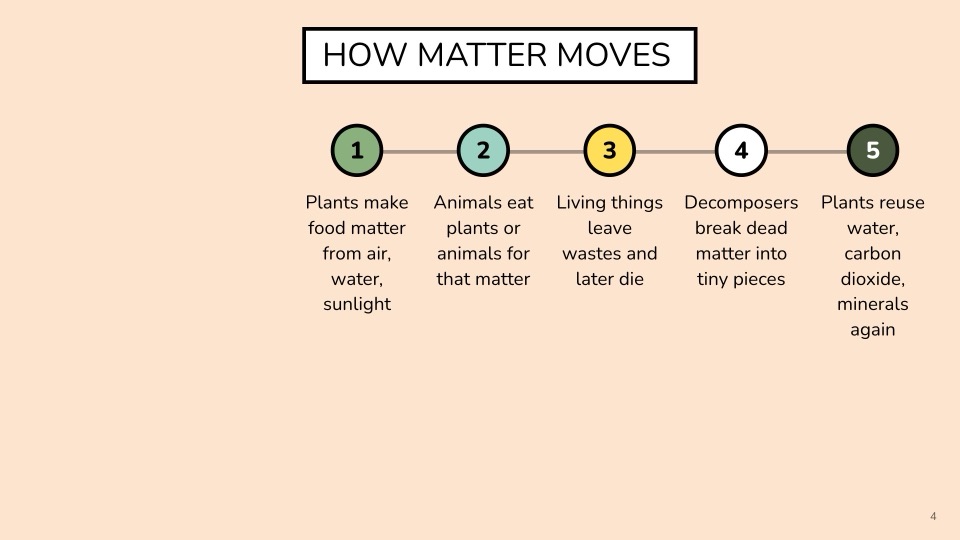
| 10 min | Teaching | Explain producer, consumer and decomposer roles and how arrows show matter flow. Show Slide 3 Who Does What in a Food Web? and define each group. Show Slide 4 How Matter Moves and walk the four steps with hand motions. Model arrow direction on the board: leaf -> rabbit -> fox. Add decomposers to the end and link them back to soil and air. |
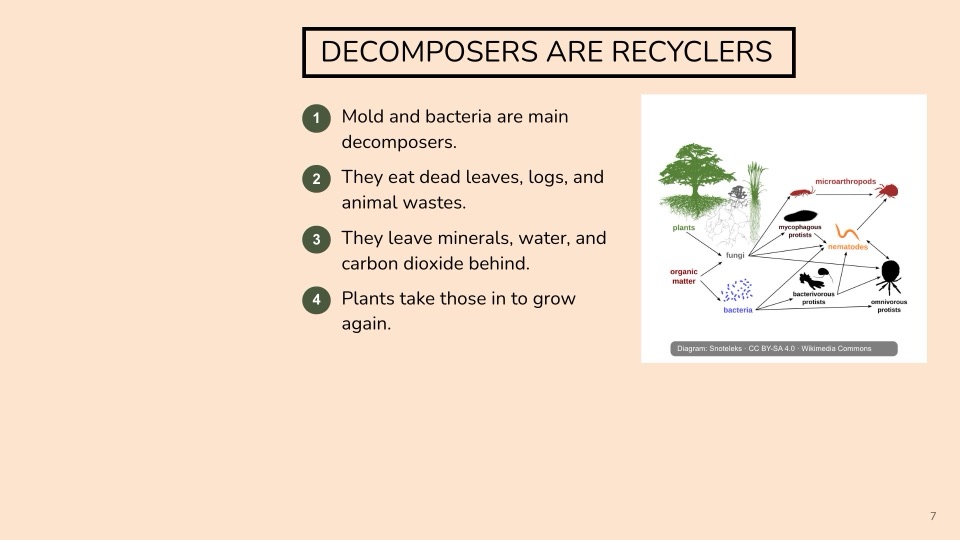
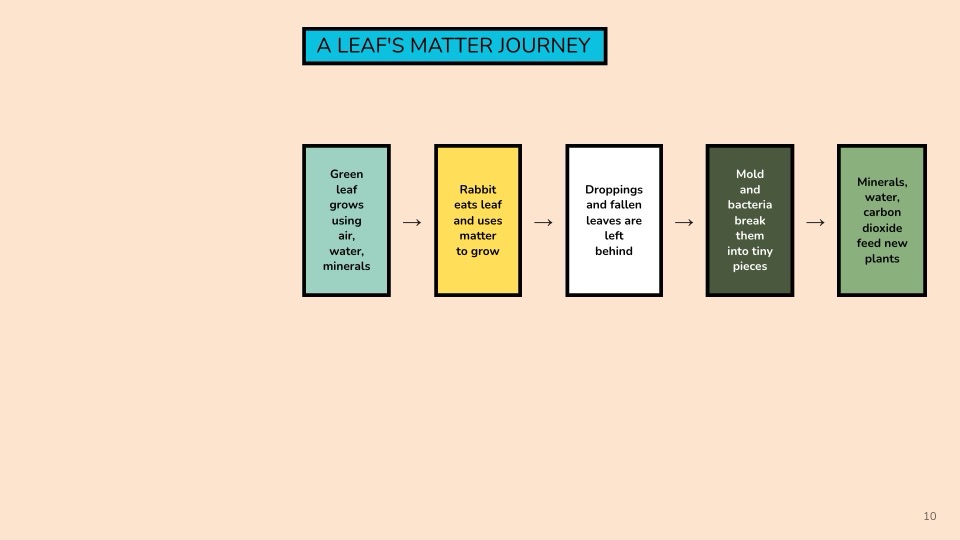
| 10 min | Decomposers | Show how mold and bacteria recycle dead matter into soil and air. Show Slide 7 Decomposers Are Recyclers and read the four bullets. Play Video clip 8 what are decomposers (0:00-2:53) to show breaking into tiny pieces. Show Slide 10 A Leaf's Matter Journey and trace the leaf to rabbit to wastes to mold. Stress that recycled matter no longer contains food energy but can be used again by plants. |
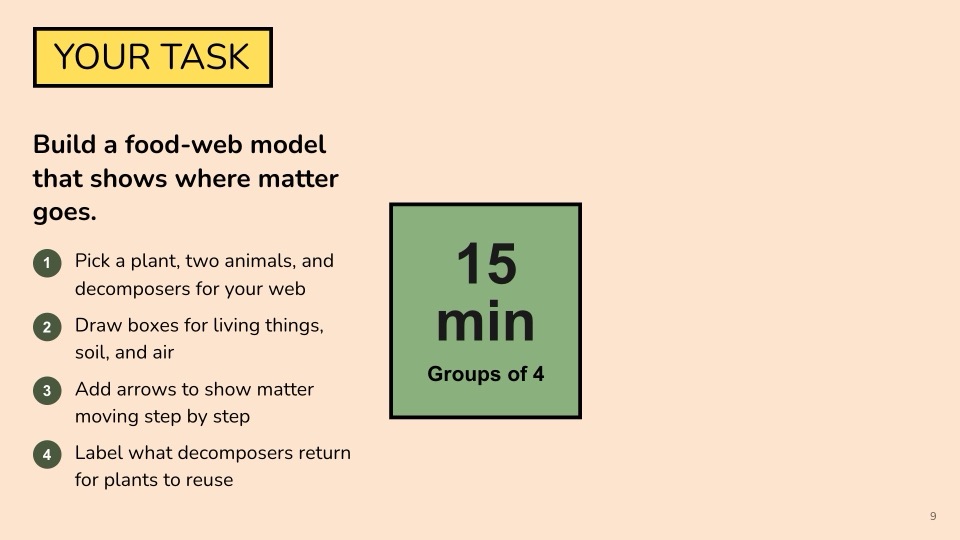
| 25 min | Main activity | Build and explain a desktop model that tracks matter through the loop. Show Slide 9 Your task and read the four steps for the web model. Demo a 1-minute tour moving one paper-ball speck from plant to rabbit to fox to mold to soil and air. Hand out shoebox or tray, pre-cut pieces, four labels, arrows and matter balls. Circulate, ask each pair to move their speck and say the route in order. |
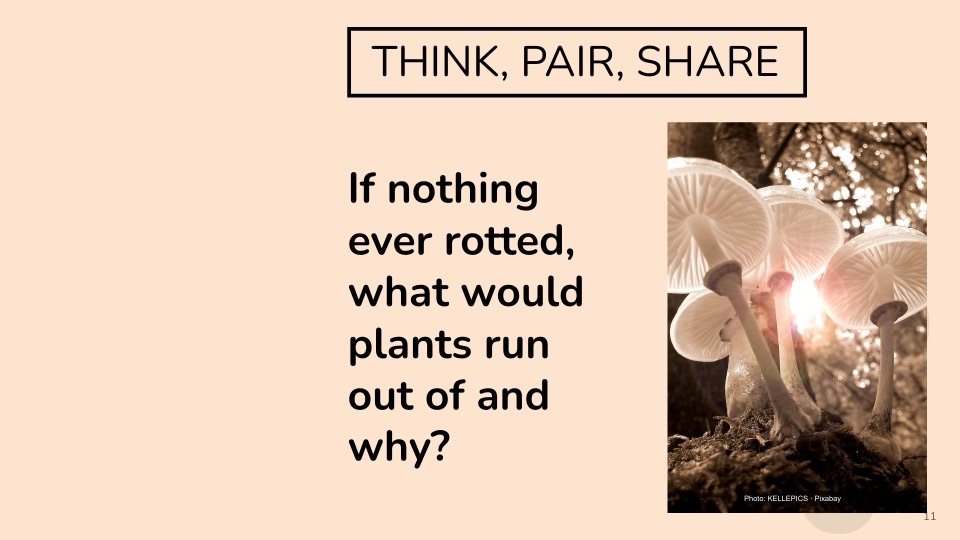
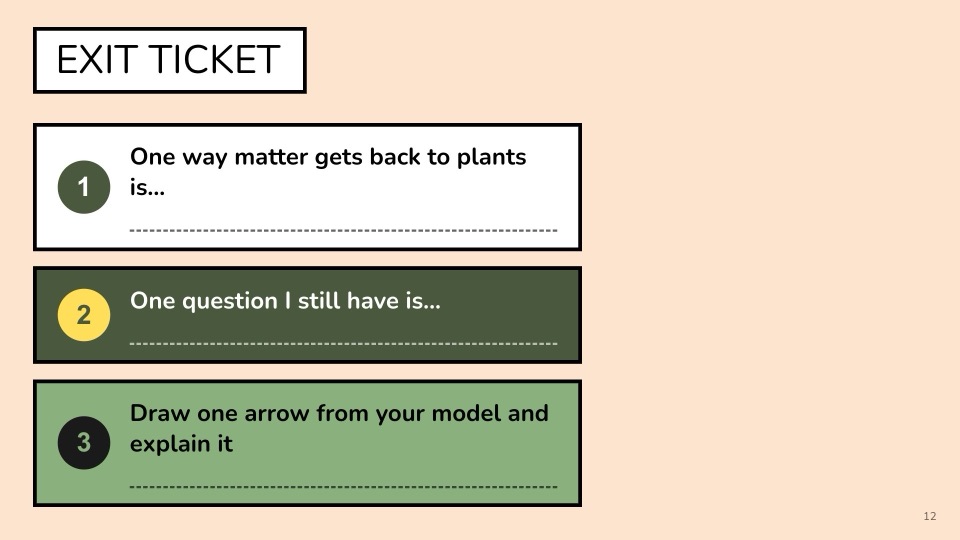
| 10 min | Plenary | Share models and check that matter cycles while energy does not return. Show Slide 11 Think, pair, share and ask: If nothing ever rotted, what would plants run out of and why? Invite two pairs to give 1-minute tours of their desktop models. Show Slide 12 Exit ticket and have students write two sentences and draw one arrow. Collect exits and link back to objectives on Slide 2. |
Common mistakes
- Arrows point from eater to food, like fox -> rabbit.
How to spot it: Model arrows face backward toward the plant.
Reteach arrows point from prey to predator because they show energy flow to the eater. - Thinking only dead animals go to decomposers.
How to spot it: Student leaves out fallen leaves, logs and droppings.
Remind that decomposers work at every level and use wastes and dead producers and consumers as food. - Thinking matter disappears when things rot.
How to spot it: Student says leaf is gone for good.
Show matter remains as minerals, carbon dioxide and water that plants reuse.
Support
- Provide pre-cut pieces and four labels: plants, animals, decomposers, air and soil, with arrow starters.
Stretch
- Have students add labels for wastes and dead matter and show two different routes to decomposers.
Check questions
- One way matter gets back to plants is...
Answer: Mold and bacteria break down dead matter and wastes and leave minerals, carbon dioxide and water plants reuse. - Draw one arrow from your model and explain it.
Answer: Arrow points from food to eater, showing energy flow from prey to predator; e.g., leaf to rabbit. - What would happen to matter if there were no decomposers?
Answer: Dead matter and wastes would pile up because nothing breaks them down to nutrients.
Curriculum
Develop a model to describe the movement of matter among plants, animals, decomposers, and the environment.
Video clips
Clips on YouTube, from the start and end times we chose. Check each one before you show it.
-
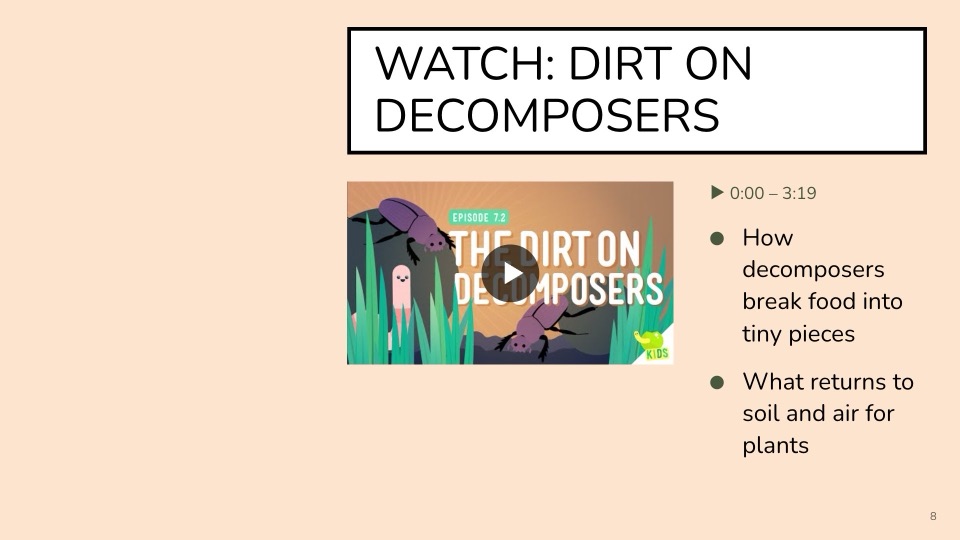
dirt on decomposers from 0:00 to 3:19
Crash Course Kids: The Dirt on Decomposers: Crash Course Kids #7.2
Perfect for 10-11-year-olds with clear vocabulary about how decomposers return matter to soil.
-
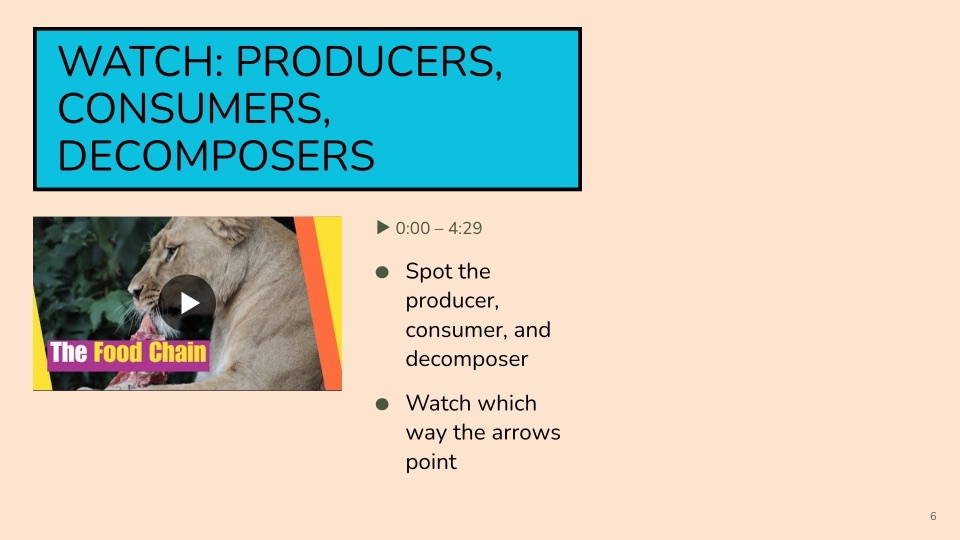
producers consumers decomposers from 0:00 to 4:29
Lesson Boosters - Kids Science and History Videos: The Food Chain for Kids | What are producers, consumers, and decomposers in the food chain?
Clear kid-friendly definitions that match 10-11-year-old vocabulary for modeling matter movement.
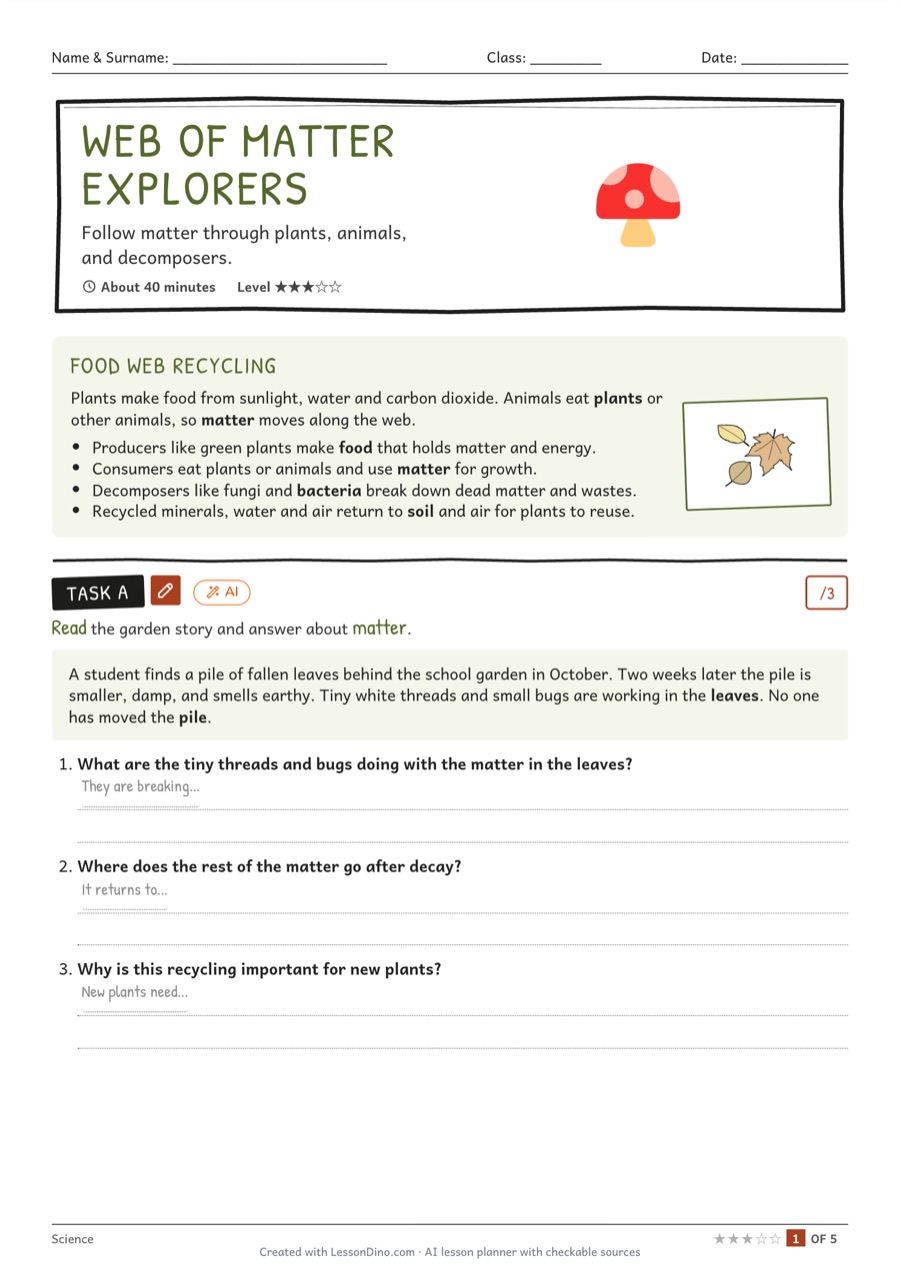
Worksheet
Sources
- Science Grade 5 - Chicago Public Schools cps.edu
- Core Science Concepts | Grade 5 Curriculum | The Inquiry Project inquiryproject.terc.edu
- Food Chains and Food Webs - U.S. Environmental Protection Agency epa.gov
- Aquatic food webs - National Oceanic and Atmospheric ... noaa.gov
- Food Webs & Interaction Webs - University of Hawaii System hawaii.edu
- Food Webs Lesson 5b: Decomposition in Food Webs cpp.edu
- Program Name: Ecosystems: The World-wide Web of Life nps.gov
- Web of Life - Teachers (U.S. National Park Service) nps.gov
- Flexi answers - Describe the role of decomposers in food webs. | CK-12 Foundation ck12.org
- Food chains and webs - Ecosystems and habitats - KS3 Biology ... bbc.co.uk
- Science for Kids: Food Chain and Web - Ducksters ducksters.com
- Food web Facts for Kids kids.kiddle.co
- food chain - Kids | Britannica Kids | Homework Help kids.britannica.com
- Food Chains - BBC Bitesize bbc.co.uk
- Food Web - National Geographic Society education.nationalgeographic.org
- Support The Soil Food Web - Landscape For Life landscapeforlife.colostate.edu
Picture credits
- Diagram: LadyofHats · CC0 · Wikimedia Commons
- Diagram: Snoteleks · CC BY-SA 4.0 · Wikimedia Commons
- Photo: KELLEPICS · Pixabay
- Microsoft Fluent Emoji (MIT)
- Pictograms: Sergio Palao, ARASAAC (arasaac.org) · CC BY-NC-SA
- AI illustration · Cloudflare
- Drawing: Alessio Damato · Public domain · Wikimedia Commons
Made with Lesson Dino's AI on 17 October 2026. AI can make mistakes, so check facts against the sources before you teach.