The worksheet
About this worksheet
Students learn how matter moves from plants to animals to decomposers and back. They build a small box model to trace one speck of matter. This Grade 5 Science worksheet gives students (ages 10–11) five pages of practice on food webs and decomposers, part of the ecosystems unit. It goes with our free Food webs and decomposers lesson, which has the slides and a timed lesson plan.
What it covers
By the end, students should be able to:
- Students will trace matter flow among plants, animals, decomposers, soil and air.
- Students will explain how decomposers return matter for new plant growth.
- Students will build a labeled model that shows matter moving with arrows.
How to use it
- Use it for practice after the teaching part of the lesson, once students have seen the worked examples on the slides.
- Support: Provide pre-cut pieces and four labels: plants, animals, decomposers, air and soil, with arrow starters.
- Stretch: Have students add labels for wastes and dead matter and show two different routes to decomposers.
- The answer sheet is the last page, so you can print it on its own or let students check their own work.
Key vocabulary
- producer: a plant that makes its own food using sunlight, water and carbon dioxide
- consumer: an animal that gets energy by eating a plant or another animal
- decomposer: a living thing like mold or bacteria that breaks down dead matter and wastes into tiny pieces
- food web: many linked eating chains that show who eats whom in one place
- matter: the tiny stuff that makes up living things, soil, water and air
Mistakes to watch for
- Arrows point from eater to food, like fox -> rabbit. Reteach arrows point from prey to predator because they show energy flow to the eater.
- Thinking only dead animals go to decomposers. Remind that decomposers work at every level and use wastes and dead producers and consumers as food.
- Thinking matter disappears when things rot. Show matter remains as minerals, carbon dioxide and water that plants reuse.
What's on the worksheet
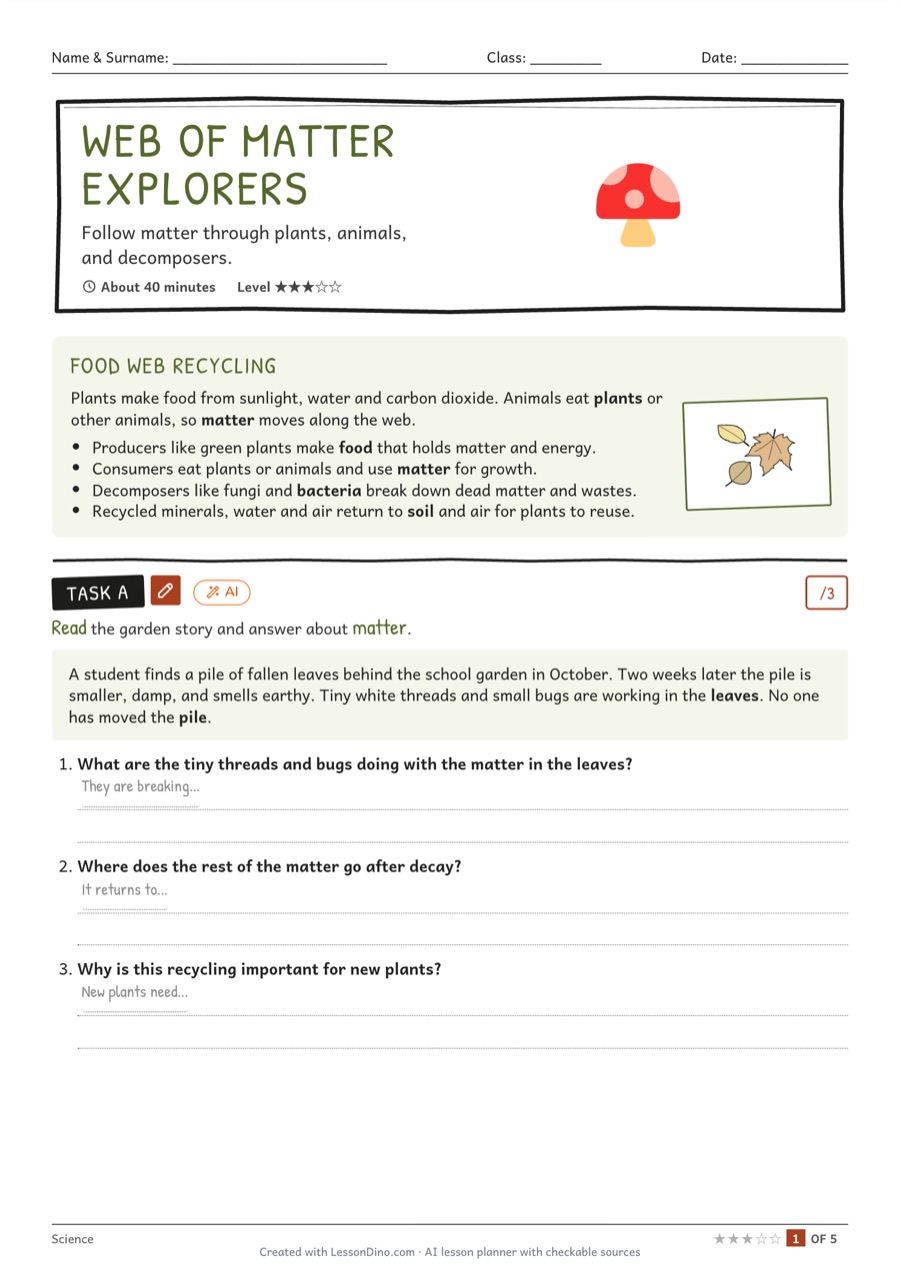
Matter on the Move
Learn how matter cycles and solve a garden mystery.
Food Web Recycling
- Plants make food from sunlight, water and carbon dioxide. Animals eat plants or other animals, so matter moves along the web.
- Producers like green plants make food that holds matter and energy.
- Consumers eat plants or animals and use matter for growth.
- Decomposers like fungi and bacteria break down dead matter and wastes.
- Recycled minerals, water and air return to soil and air for plants to reuse.
Read the garden story and answer about matter.
- What are the tiny threads and bugs doing with the matter in the leaves?
- Where does the rest of the matter go after decay?
- Why is this recycling important for new plants?
Web Words Puzzle
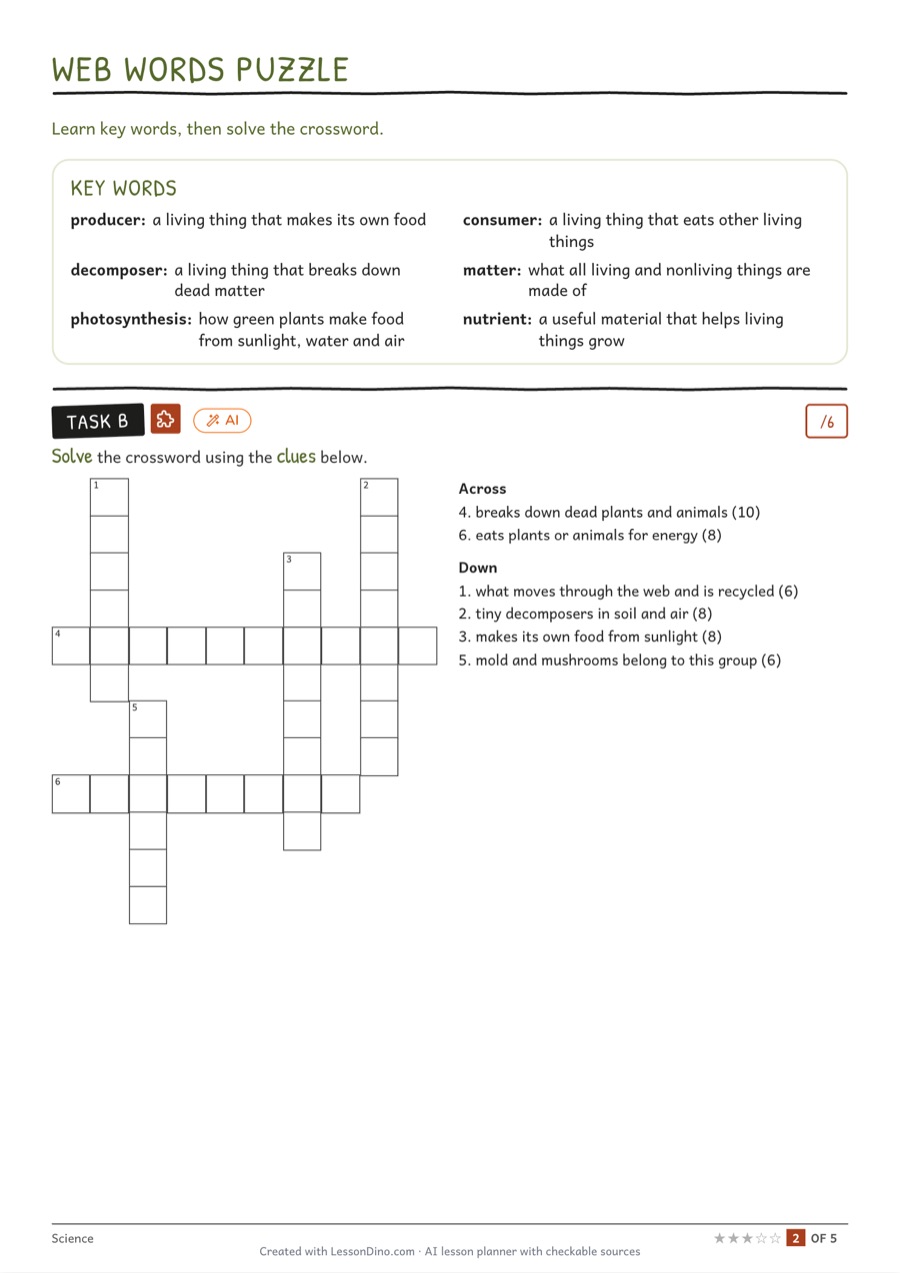
Learn key words, then solve the crossword.
| Word | Meaning |
|---|---|
| producer | a living thing that makes its own food |
| consumer | a living thing that eats other living things |
| decomposer | a living thing that breaks down dead matter |
| matter | what all living and nonliving things are made of |
| photosynthesis | how green plants make food from sunlight, water and air |
| nutrient | a useful material that helps living things grow |
Solve the crossword using the clues below.
Match the Pairs
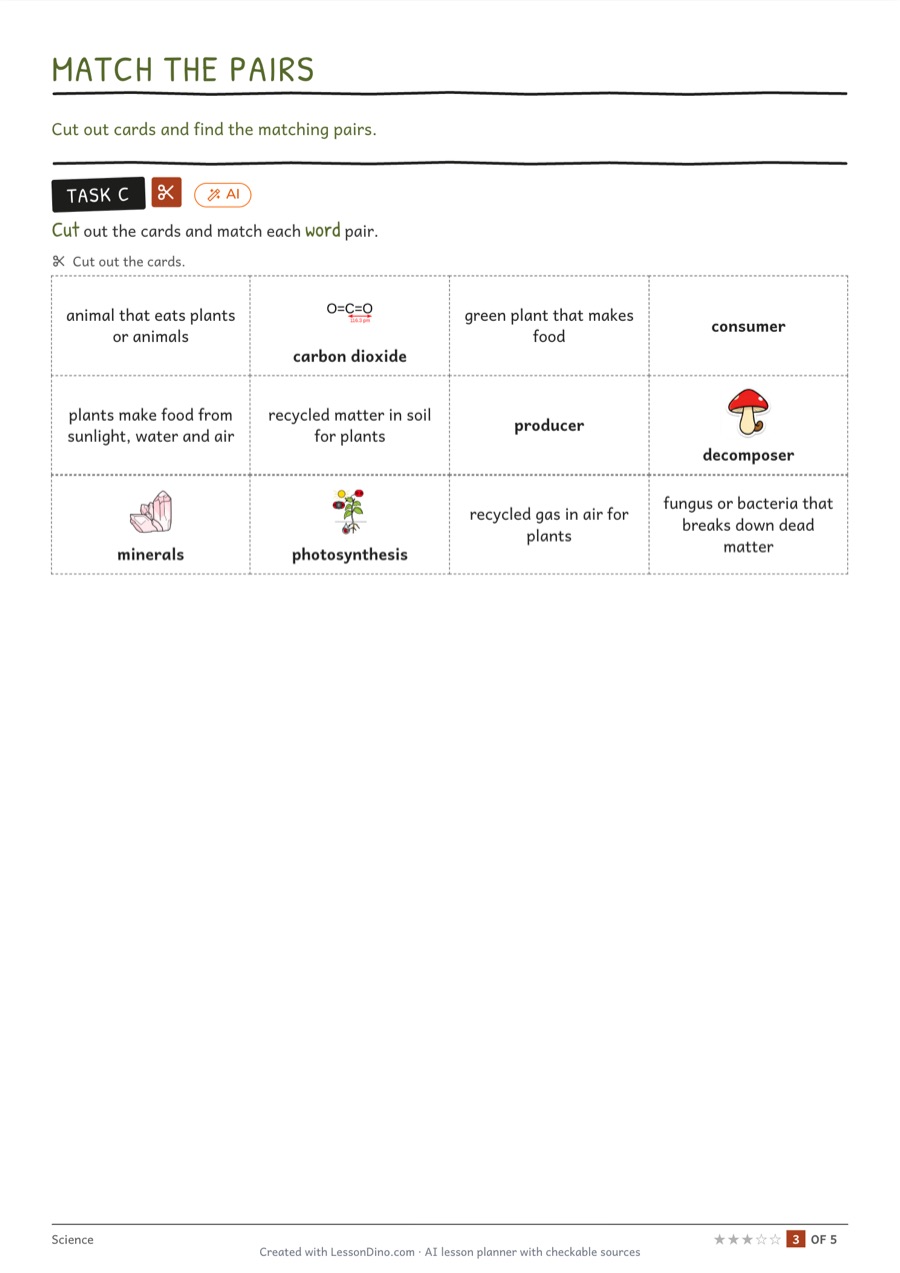
Cut out cards and find the matching pairs.
Cut out the cards and match each word pair.
If Decay Stopped
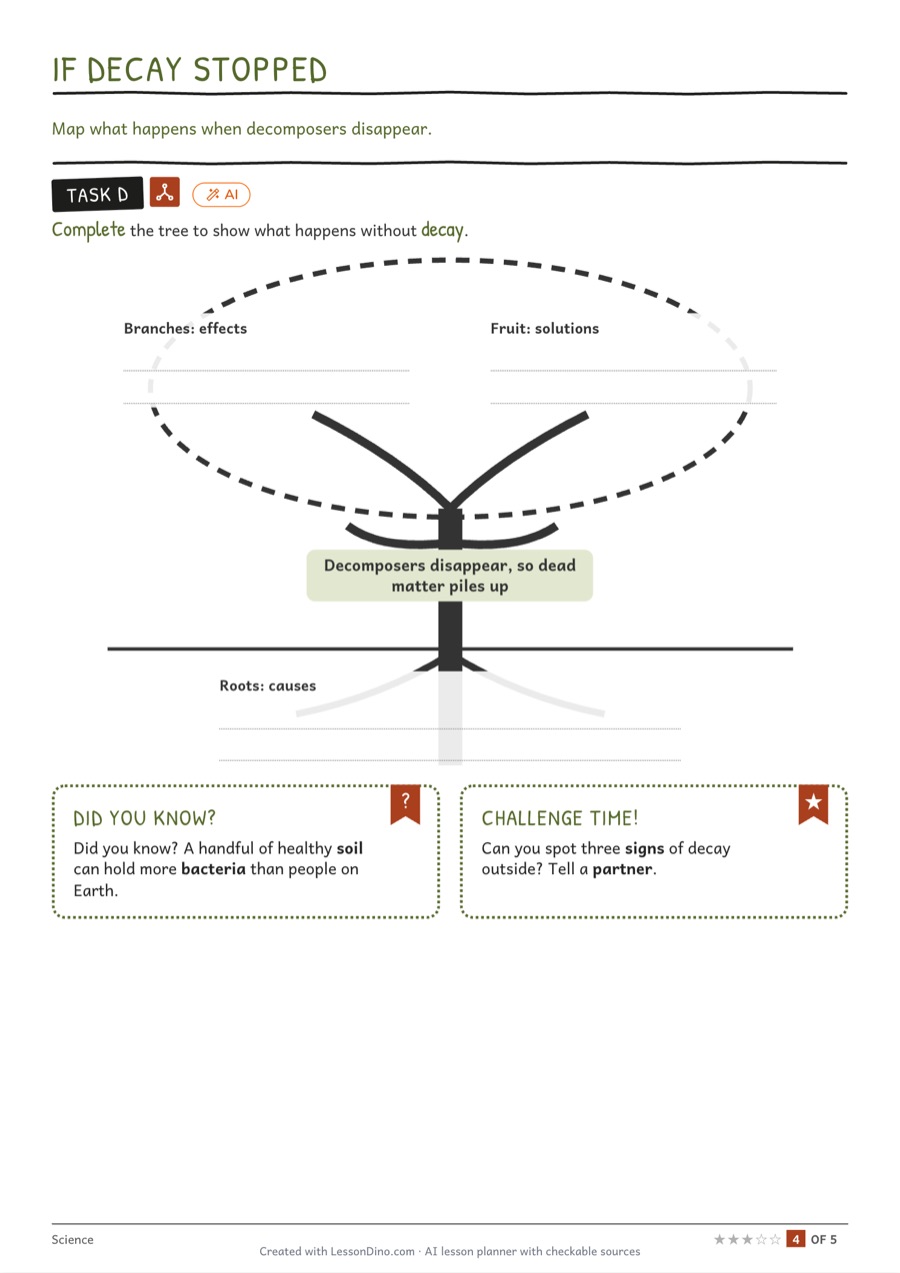
Map what happens when decomposers disappear.
Complete the tree to show what happens without decay.
- Did you know? A handful of healthy soil can hold more bacteria than people on Earth.
- Can you spot three signs of decay outside? Tell a partner.
Check Your Model
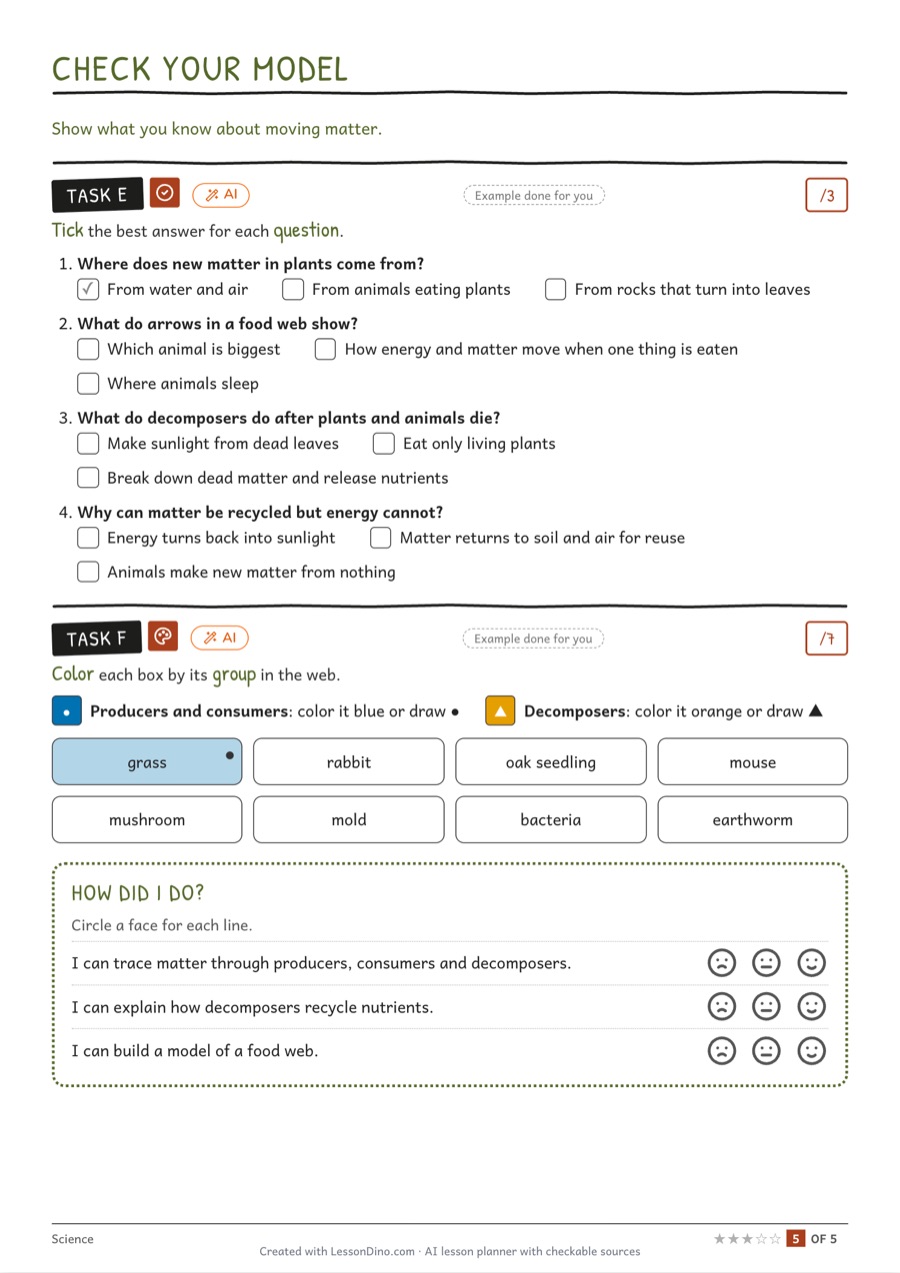
Show what you know about moving matter.
Tick the best answer for each question.
- Where does new matter in plants come from?
- What do arrows in a food web show?
- What do decomposers do after plants and animals die?
- Why can matter be recycled but energy cannot?
Color each box by its group in the web.
Answers
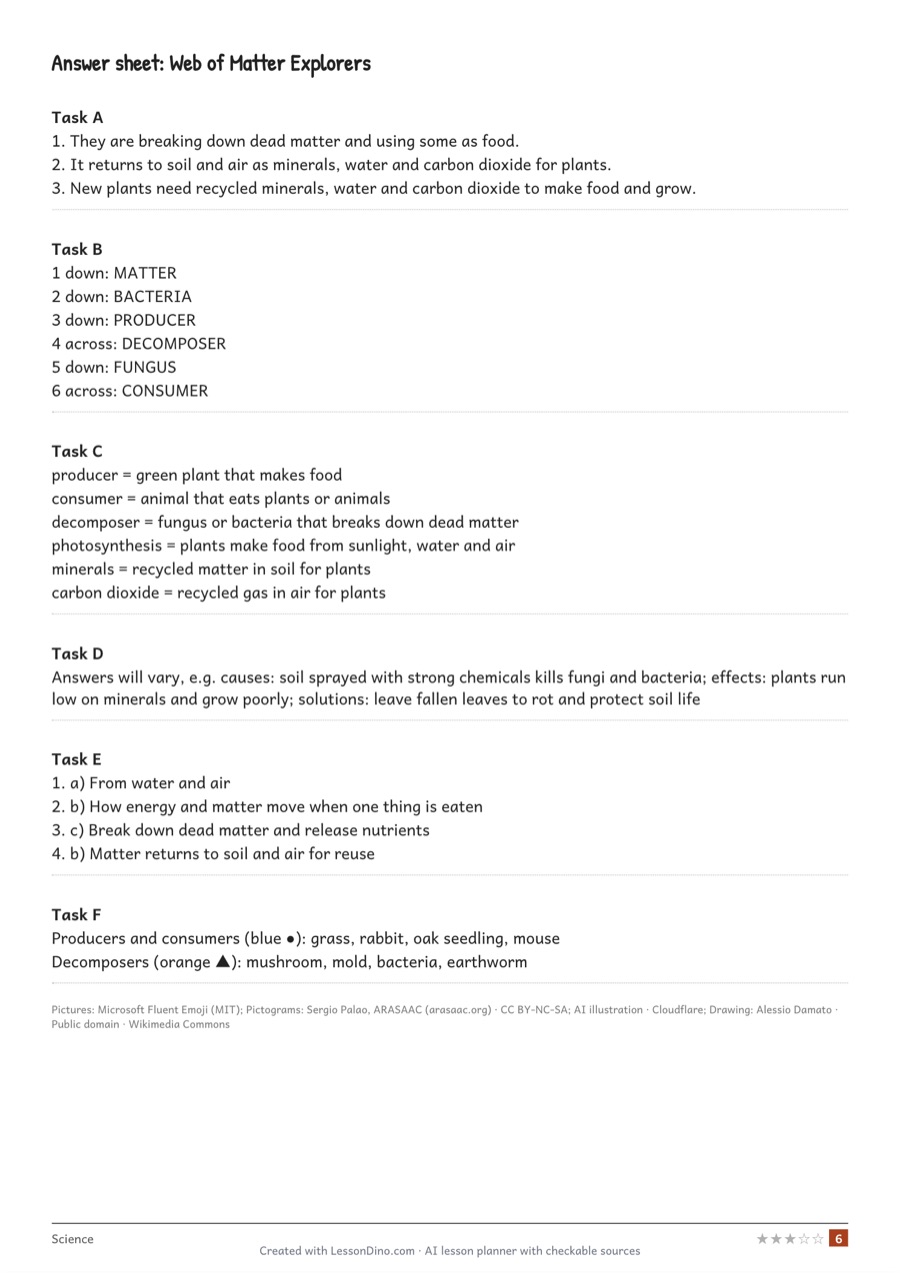
Show the answers
- What are the tiny threads and bugs doing with the matter in the leaves? They are breaking down dead matter and using some as food.
- Where does the rest of the matter go after decay? It returns to soil and air as minerals, water and carbon dioxide for plants.
- Why is this recycling important for new plants? New plants need recycled minerals, water and carbon dioxide to make food and grow.
The answer sheet is the last picture above.
Curriculum
Develop a model to describe the movement of matter among plants, animals, decomposers, and the environment.
Made with Lesson Dino's AI on 17 October 2026. AI can make mistakes, so check the answers and facts against the sources before you teach.