The worksheet
About this worksheet
Students learn how daylight changes shadow length and direction. They model the sun and graph three readings to find the pattern. This Grade 5 Science worksheet gives students (ages 10–11) six pages of practice on shadows and daylight, part of the earth's place in the universe unit. It goes with our free Shadows and daylight lesson, which has the slides and a timed lesson plan.
What it covers
By the end, students should be able to:
- Students will measure shadow length and direction and plot them in a bar graph.
- Students will describe the daily shadow pattern using evidence from their graph.
- Students will explain how spin makes day and night and shifts seasonal stars.
How to use it
- Main activity (25 minutes): Show Slide 9 task and hand out Worksheet Task B, graph paper, and measuring tools.
- Support: Give pre-drawn axes for Worksheet Task B so students only plot three bars and arrows.
- Stretch: Predict and test a 5:00 p.m. low western sun and justify the tallest bar.
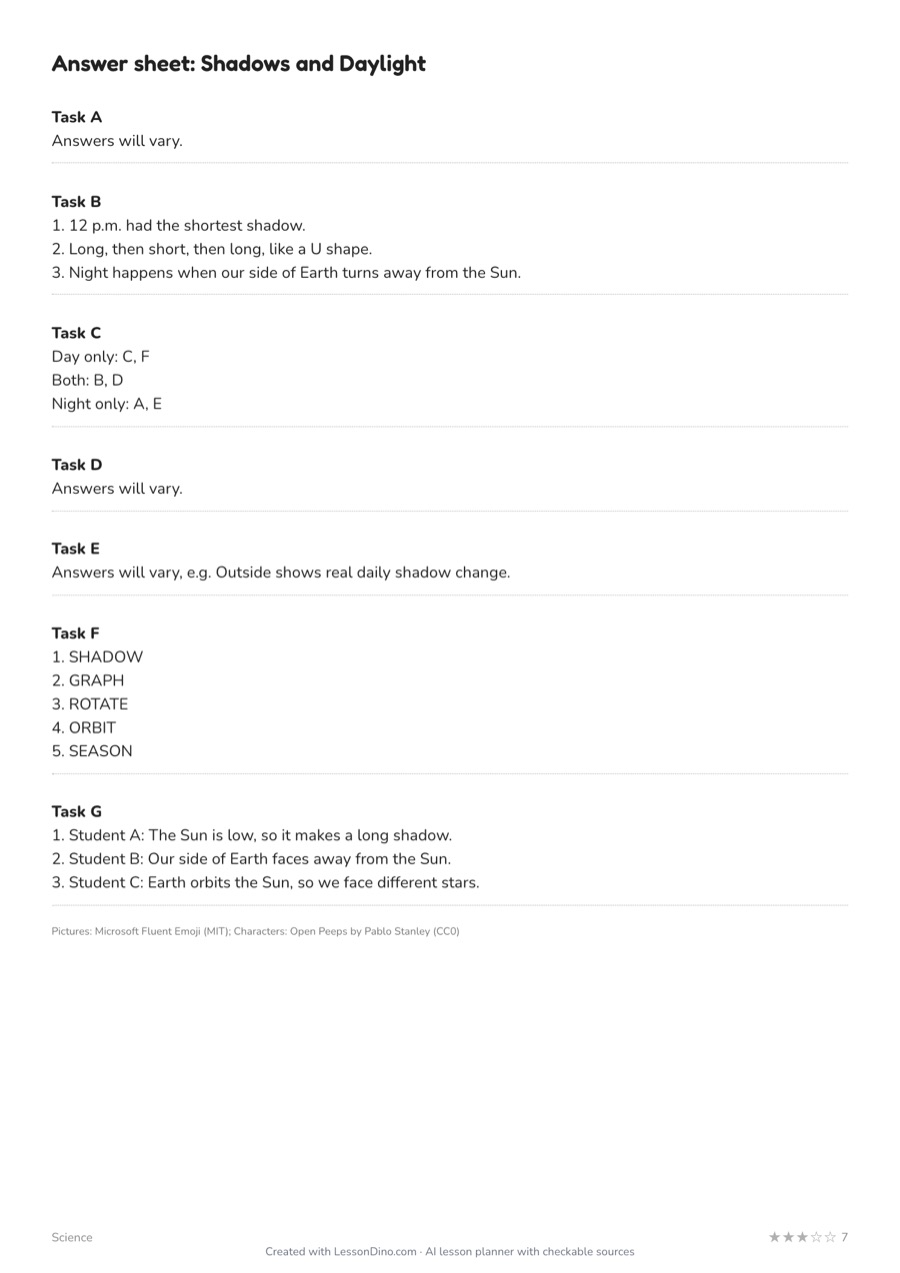
- The answer sheet is the last page, so you can print it on its own or let students check their own work.
Key vocabulary
- shadow: dark shape on the ground where light is blocked
- opaque: letting no light through, so a dark area forms behind
- direction: where something points, like east, west, north, or south
- graph: drawing with thick columns that compares amounts across times
- solstice: day with the most or fewest daylight hours in the year
- spin: turning around in one spot, which makes day and night
Mistakes to watch for
- Thinking the sun moves around Earth to make shadows move. Model spin with globe and still light to show our turn changes sun position and shadow to the opposite side.
- Plotting noon as the tallest bar. Re-measure high light versus low light to show high sun makes short shadow under the object.
- Saying a shadow is light shining. Remind that light travels straight until blocked, so the dark area behind an opaque object is the shadow.
What's on the worksheet
Sun and Shadows
Learn how shadows change and graph the pattern.
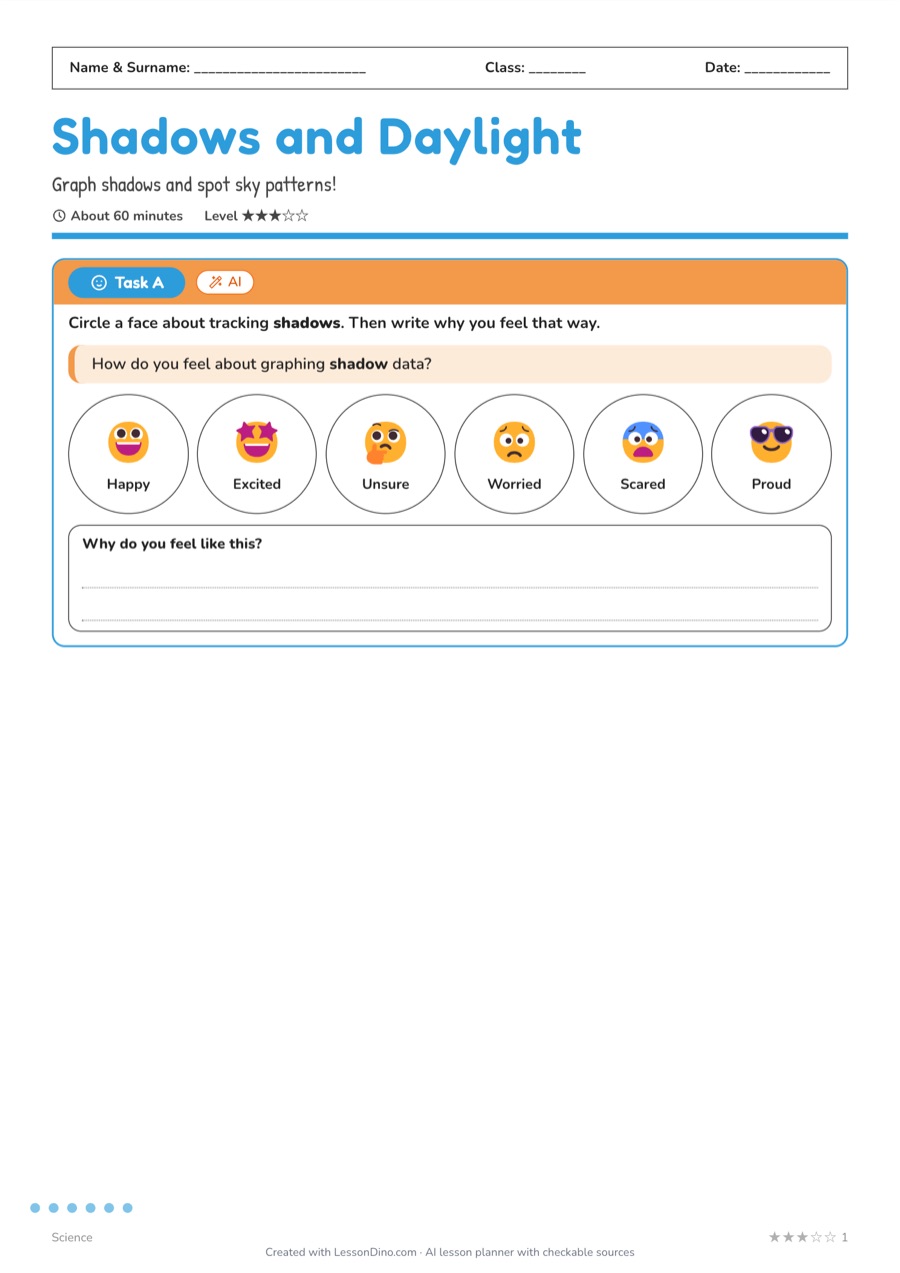
Circle a face about tracking shadows. Then write why you feel that way.
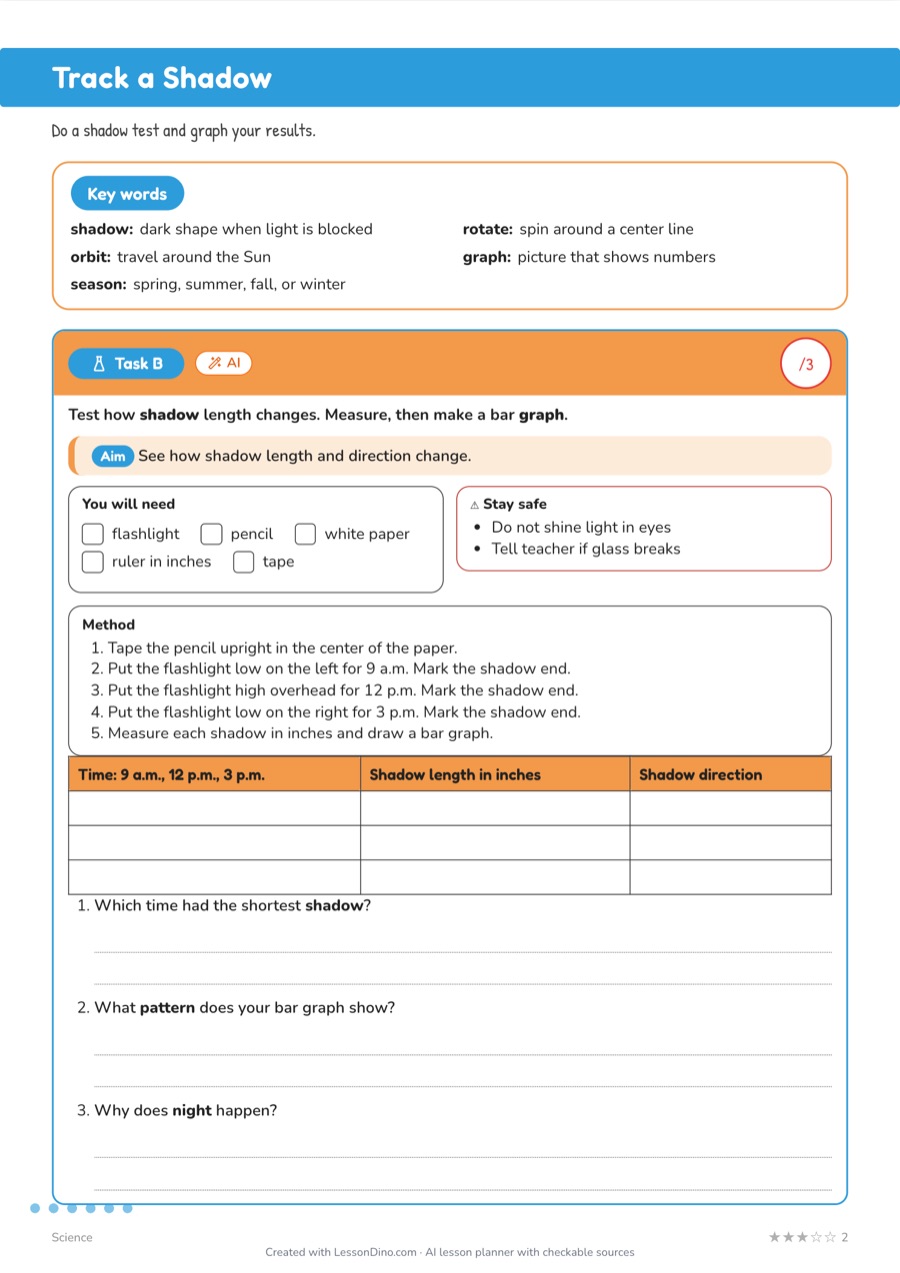
Track a Shadow
Do a shadow test and graph your results.
| Word | Meaning |
|---|---|
| shadow | dark shape when light is blocked |
| rotate | spin around a center line |
| orbit | travel around the Sun |
| graph | picture that shows numbers |
| season | spring, summer, fall, or winter |
Test how shadow length changes. Measure, then make a bar graph.
- Which time had the shortest shadow?
- What pattern does your bar graph show?
- Why does night happen?
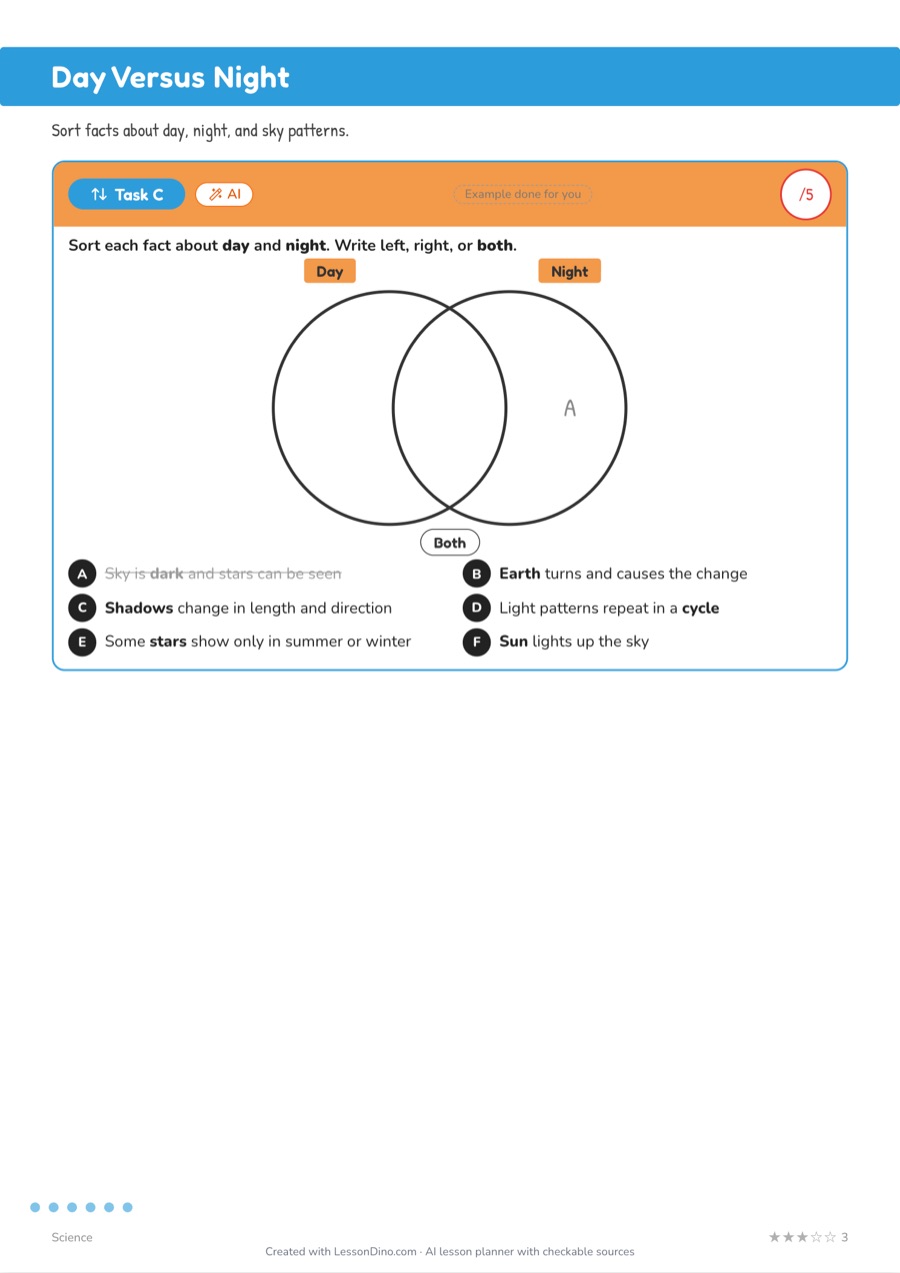
Day Versus Night
Sort facts about day, night, and sky patterns.
Sort each fact about day and night. Write left, right, or both.
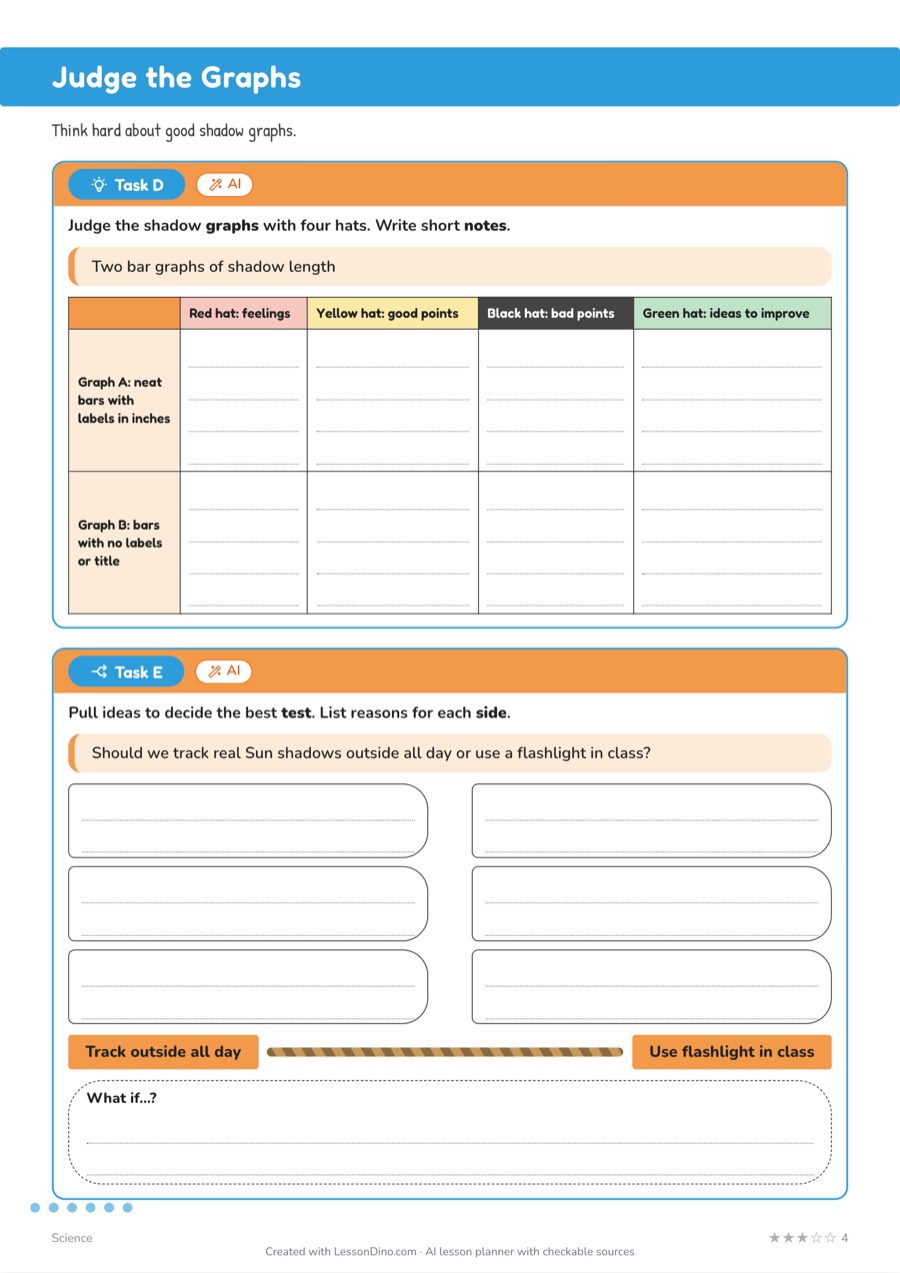
Judge the Graphs
Think hard about good shadow graphs.
Judge the shadow graphs with four hats. Write short notes.
Pull ideas to decide the best test. List reasons for each side.
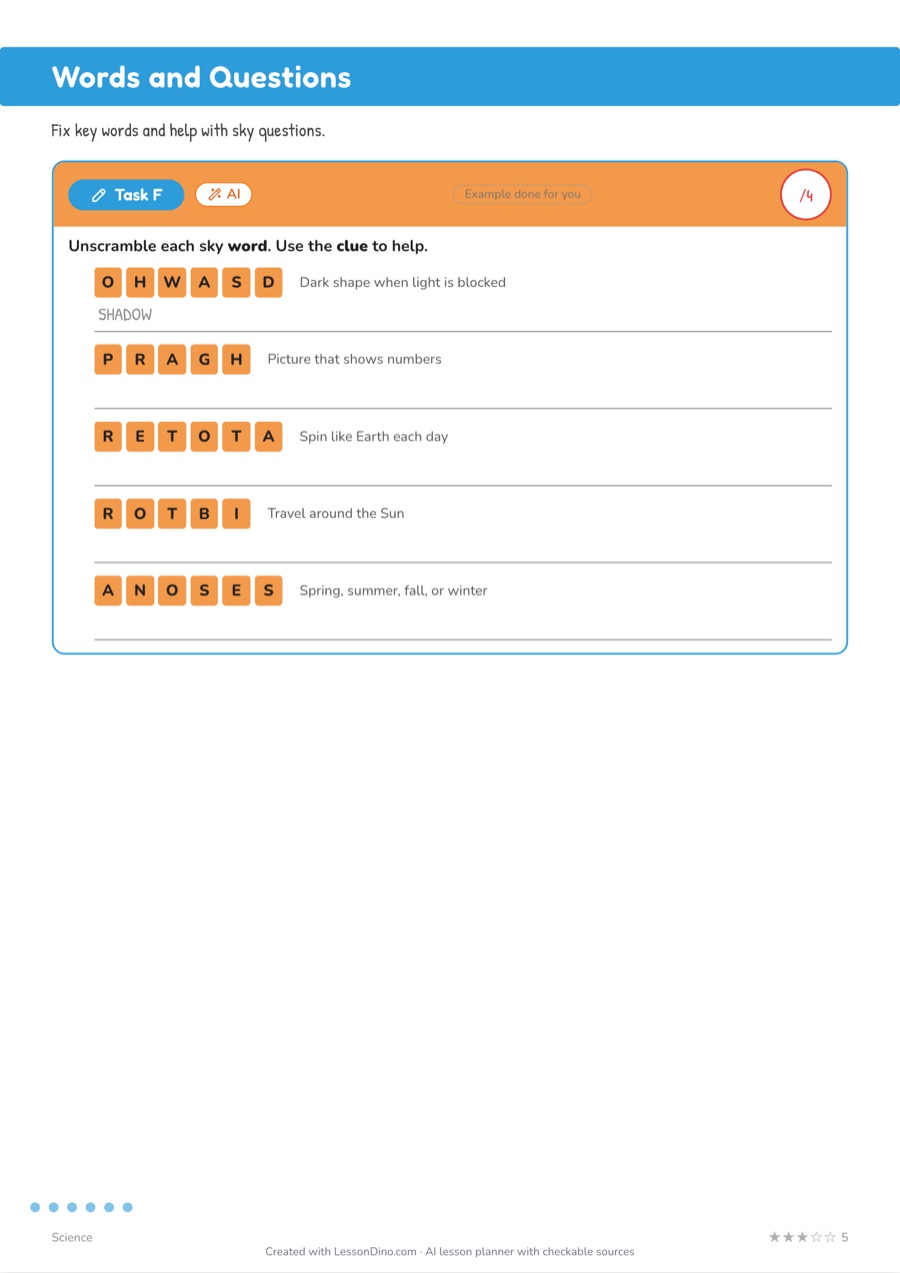
Words and Questions
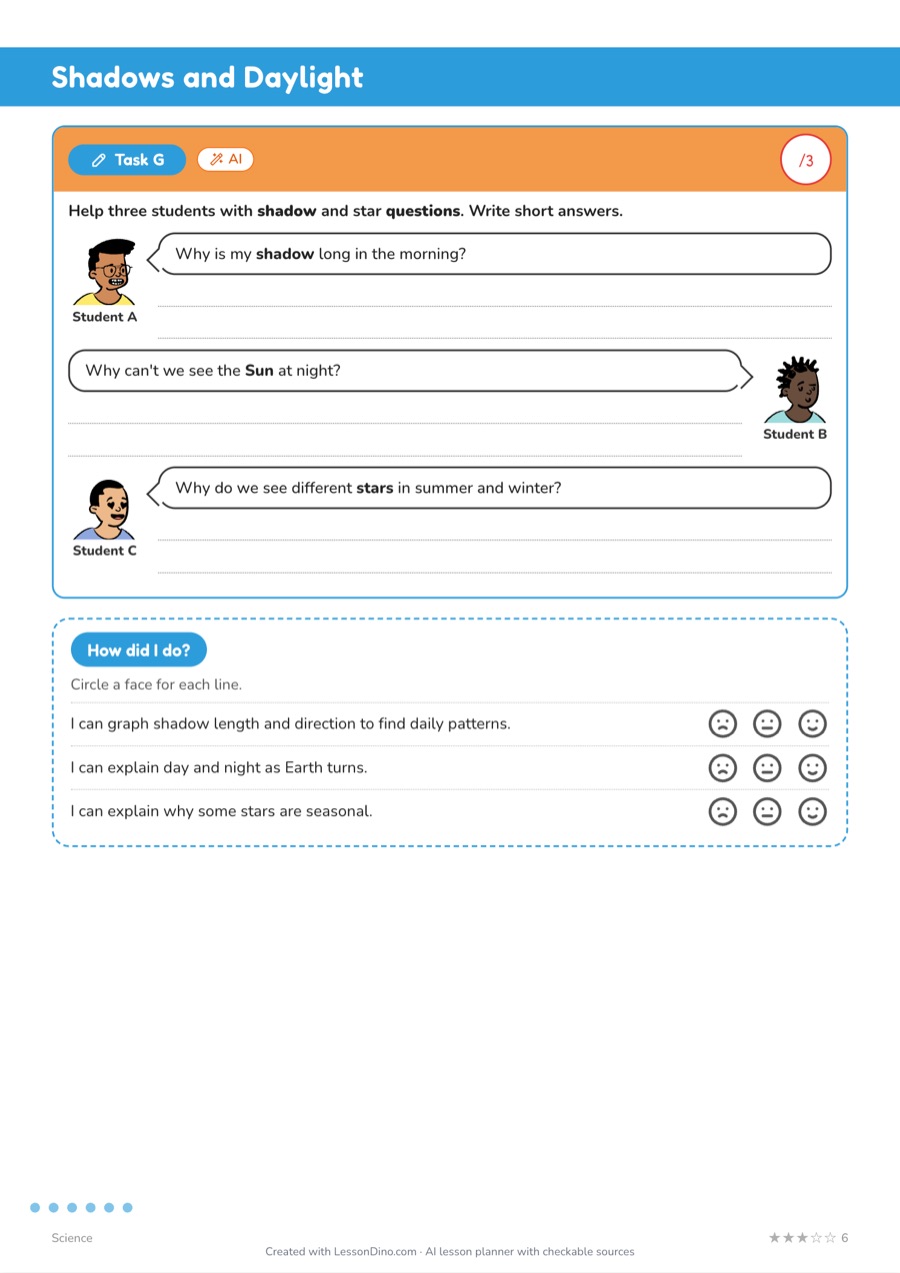
Fix key words and help with sky questions.
Unscramble each sky word. Use the clue to help.
Page 6
Help three students with shadow and star questions. Write short answers.
Answers
Show the answers
- Which time had the shortest shadow? 12 p.m. had the shortest shadow.
- What pattern does your bar graph show? Long, then short, then long, like a U shape.
- Why does night happen? Night happens when our side of Earth turns away from the Sun.
The answer sheet is the last picture above.
Curriculum
Represent data in graphical displays to reveal patterns of daily changes in length and direction of shadows, day and night, and the seasonal appearance of some stars in the night sky.
Made with Lesson Dino's AI on 17 October 2026. AI can make mistakes, so check the answers and facts against the sources before you teach.