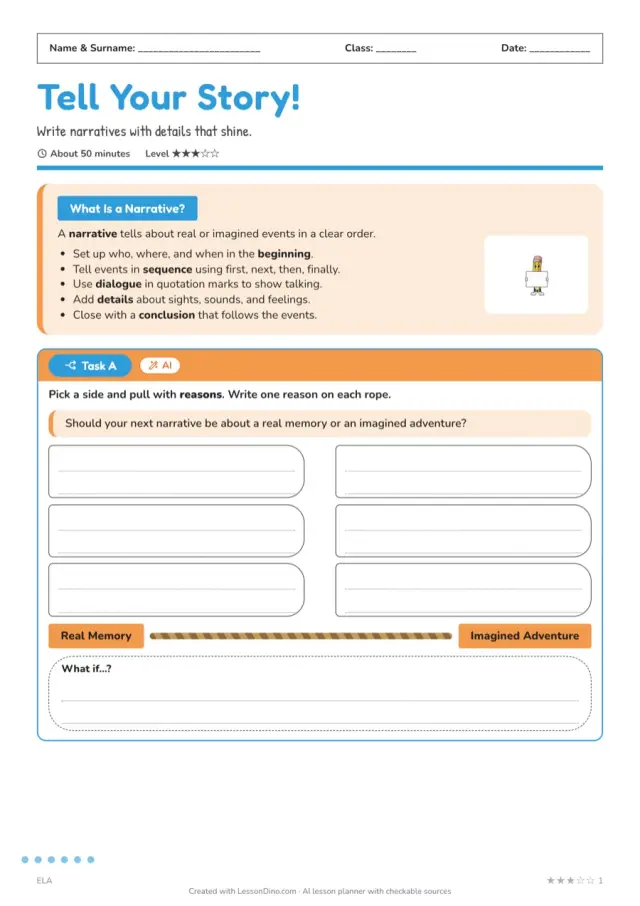
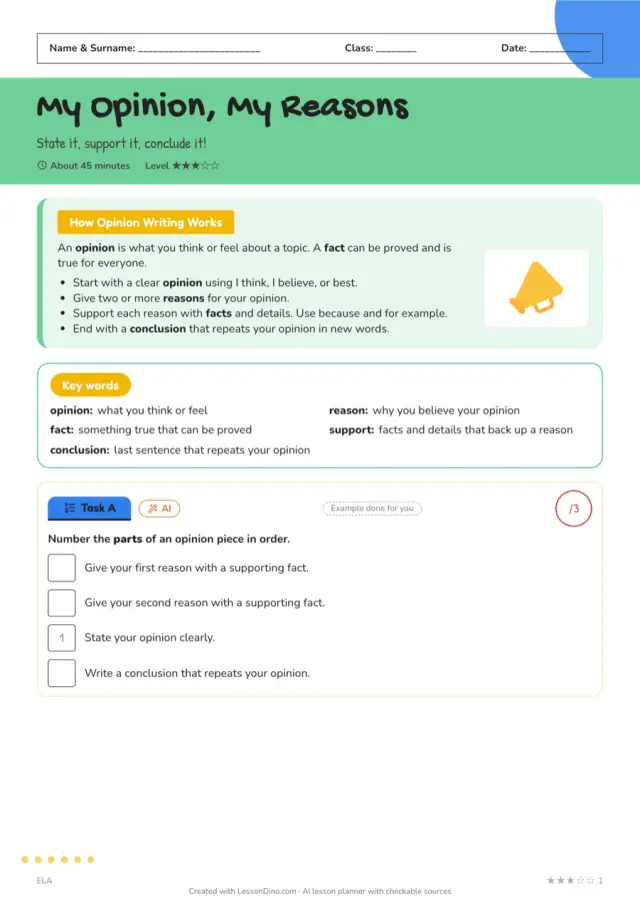
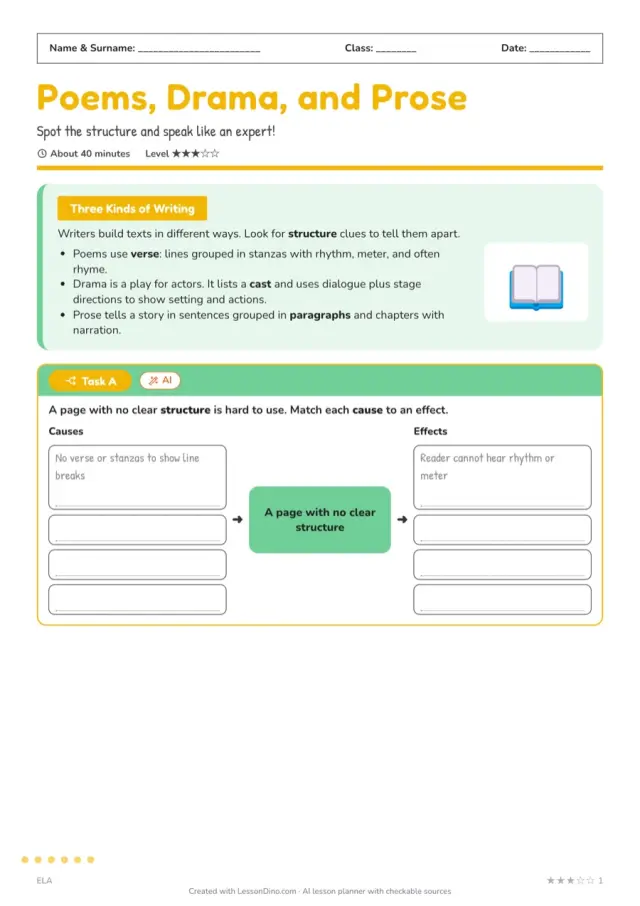
The worksheet
About this worksheet
Students learn four text structures authors use to organize ideas. They read parts of a text and make blueprint posters to name each structure. This Grade 4 ELA worksheet gives students (ages 9–10) five pages of practice on text structure, part of the reading informational text unit. It goes with our free Text structure lesson, which has the slides and a timed lesson plan.
What it covers
By the end, students should be able to:
- Students will name four text structures and what each organizes.
- Students will describe the overall structure of part of informational text.
- Students will use signal words and details to prove structure choice.
How to use it
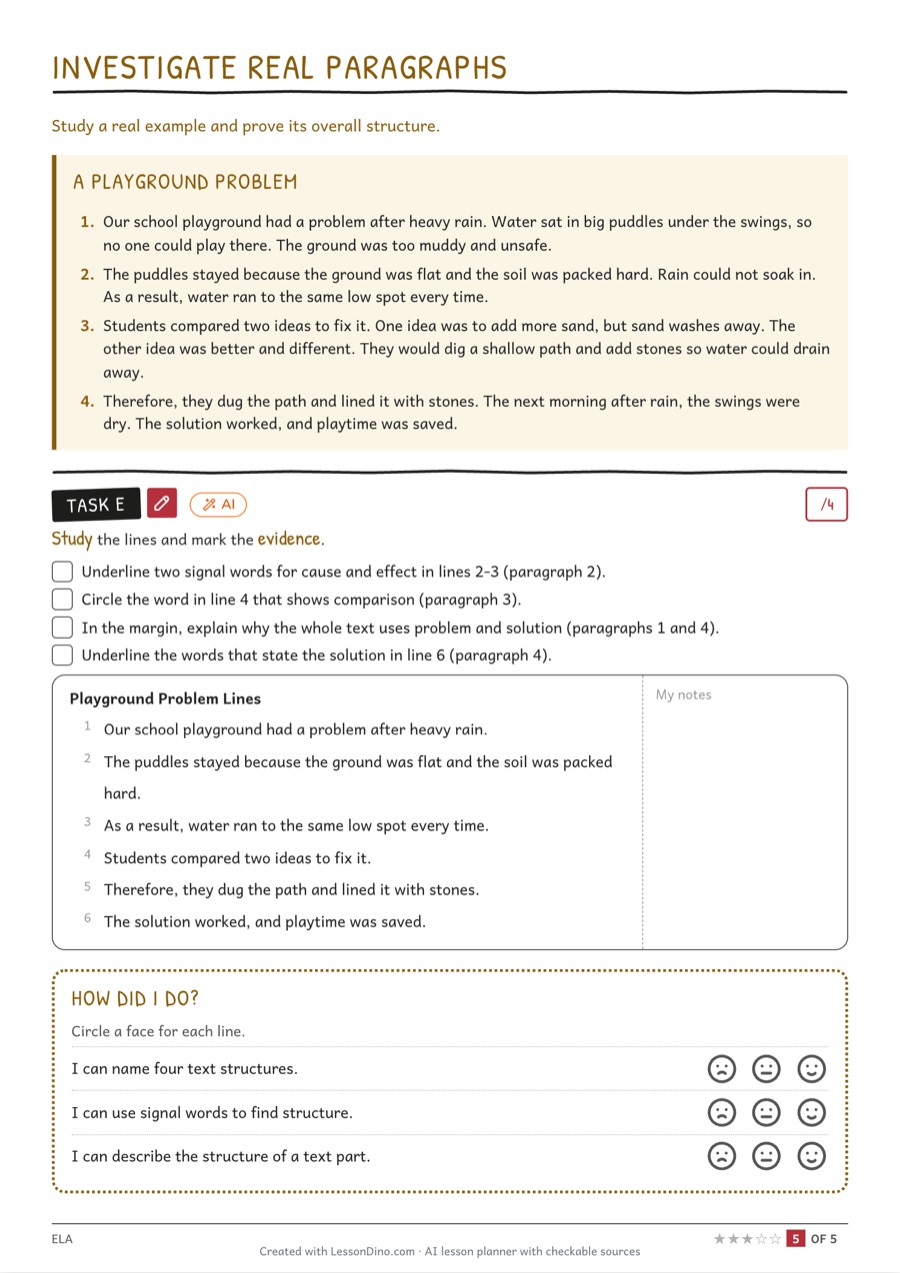
- Main Activity (25 minutes): Give each group Worksheet Task E - Annotate a text: Study the lines and mark the evidence using Passage "A Playground Problem" paragraphs 1-4 and assign one paragraph per group.
- Support: Give choice board poster starters and pre-underlined clue words for two choices first.
- Stretch: Have students add a note on why the author likely picked that structure for that part.
- The answer sheet is the last page, so you can print it on its own or let students check their own work.
Key vocabulary
- structure: how an author puts ideas in order
- chronology: events told in time order
- comparison: shows how things are same or different
- cause and effect: tells why something happened and what followed
- problem and solution: names what is wrong and how to make it right
Mistakes to watch for
- Mixing cause/effect with problem/solution. Ask: does it only explain why with because, as a result of, therefore or does it name what is wrong then fix it?
- Calling comparison only when things are different. Remind that comparison shows alike and different; check middle of Venn for shared details.
- Calling any time word chronology. Ask: can you draw it as first, second, next, finally in order? If not, look again.
What's on the worksheet
How Authors Organize
Learn the patterns writers use to organize information.
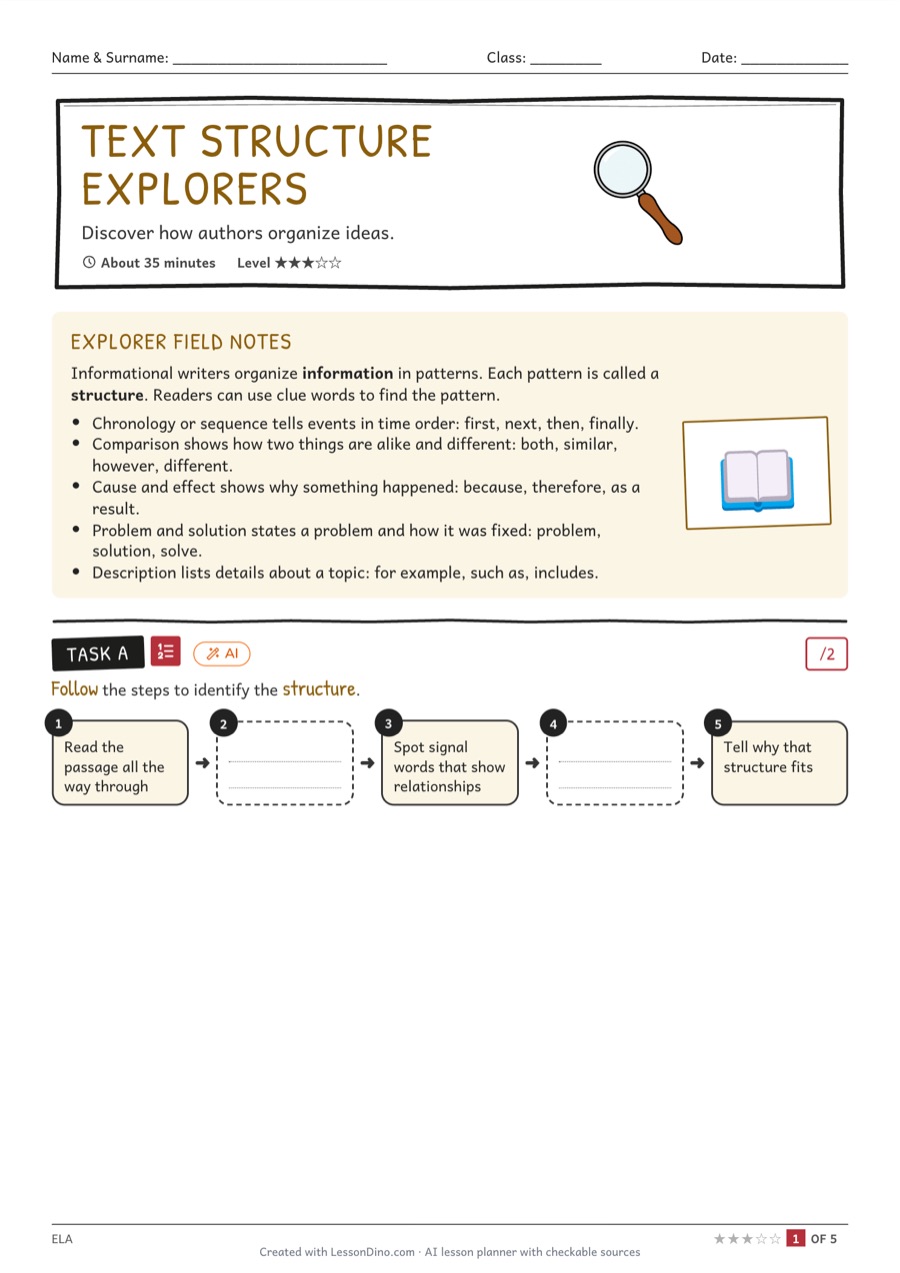
Explorer Field Notes
- Informational writers organize information in patterns. Each pattern is called a structure. Readers can use clue words to find the pattern.
- Chronology or sequence tells events in time order: first, next, then, finally.
- Comparison shows how two things are alike and different: both, similar, however, different.
- Cause and effect shows why something happened: because, therefore, as a result.
- Problem and solution states a problem and how it was fixed: problem, solution, solve.
- Description lists details about a topic: for example, such as, includes.
Follow the steps to identify the structure.
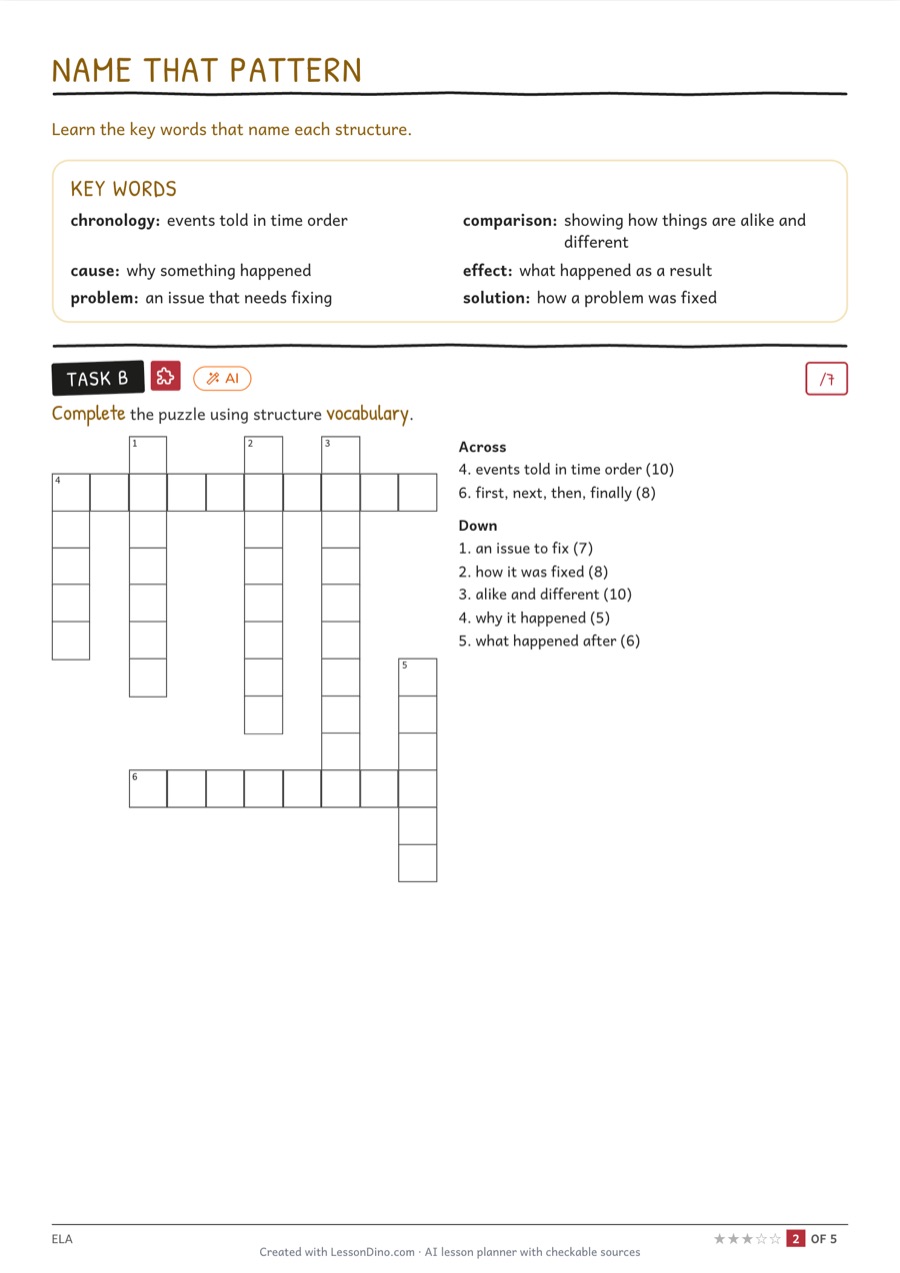
Name That Pattern
Learn the key words that name each structure.
| Word | Meaning |
|---|---|
| chronology | events told in time order |
| comparison | showing how things are alike and different |
| cause | why something happened |
| effect | what happened as a result |
| problem | an issue that needs fixing |
| solution | how a problem was fixed |
Complete the puzzle using structure vocabulary.
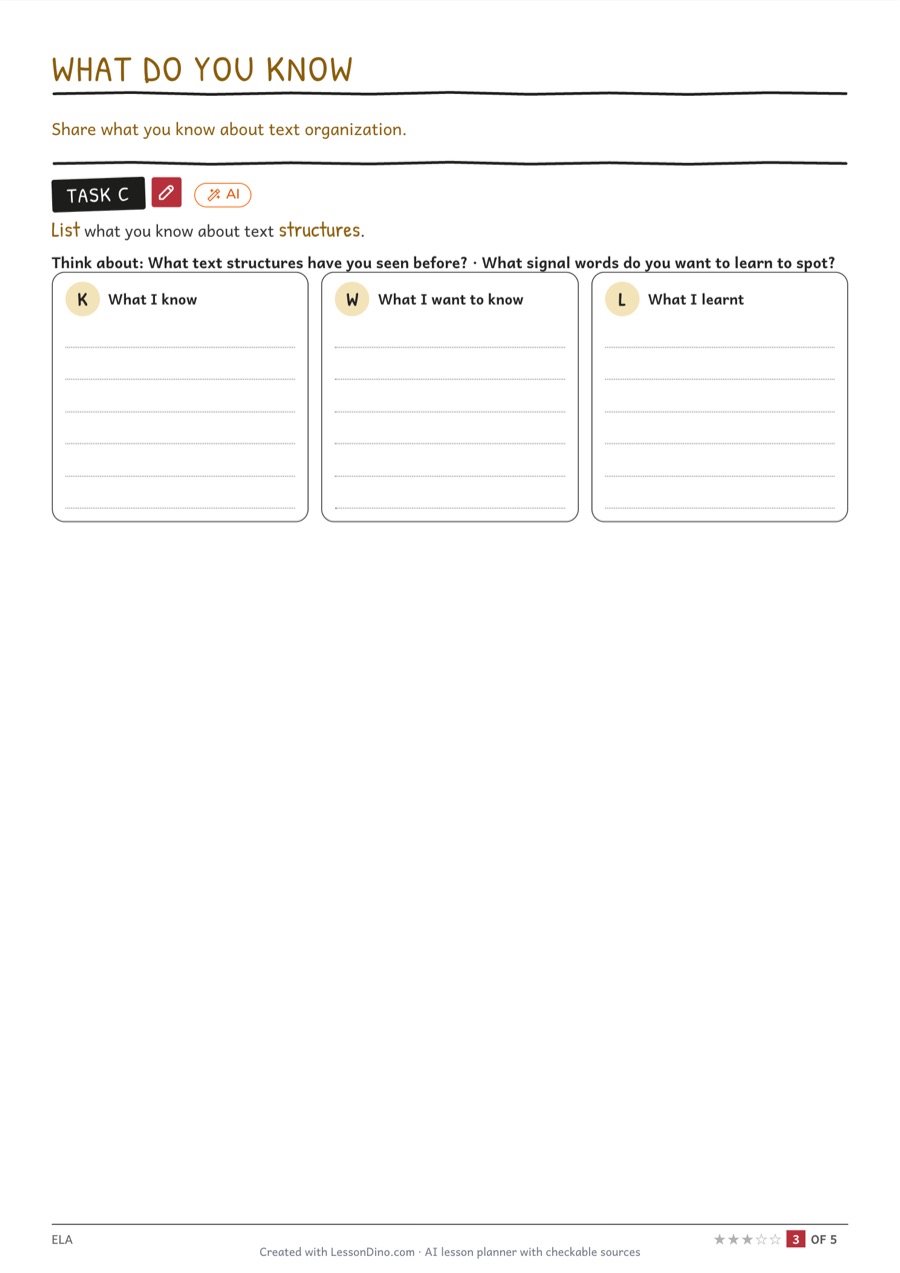
What Do You Know
Share what you know about text organization.
List what you know about text structures.
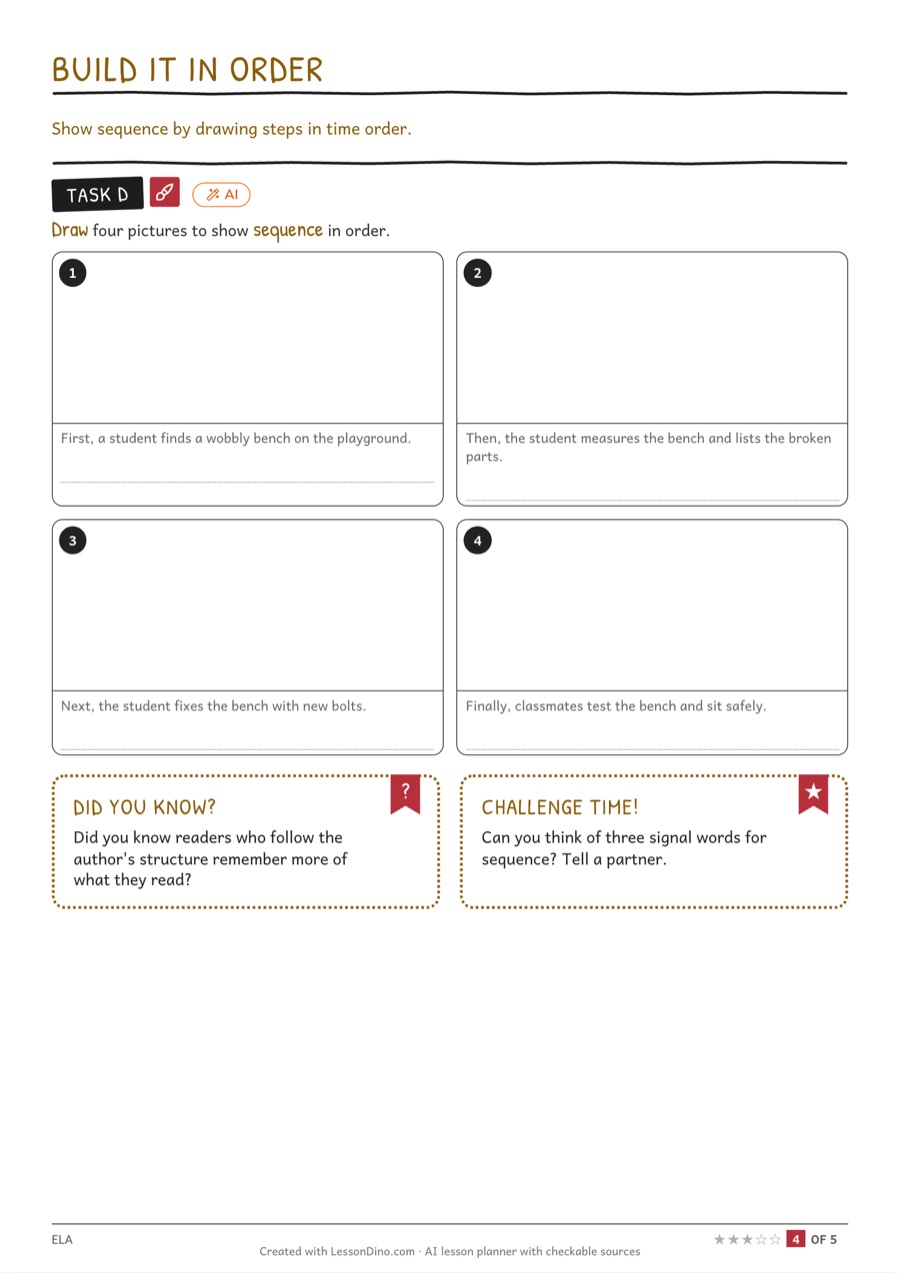
Build It In Order
Show sequence by drawing steps in time order.
Draw four pictures to show sequence in order.
- Did you know readers who follow the author's structure remember more of what they read?
- Can you think of three signal words for sequence? Tell a partner.
Investigate Real Paragraphs
Study a real example and prove its overall structure.
A Playground Problem
Study the lines and mark the evidence.
- Our school playground had a problem after heavy rain.
- The puddles stayed because the ground was flat and the soil was packed hard.
- As a result, water ran to the same low spot every time.
- Students compared two ideas to fix it.
- Therefore, they dug the path and lined it with stones.
- The solution worked, and playtime was saved.
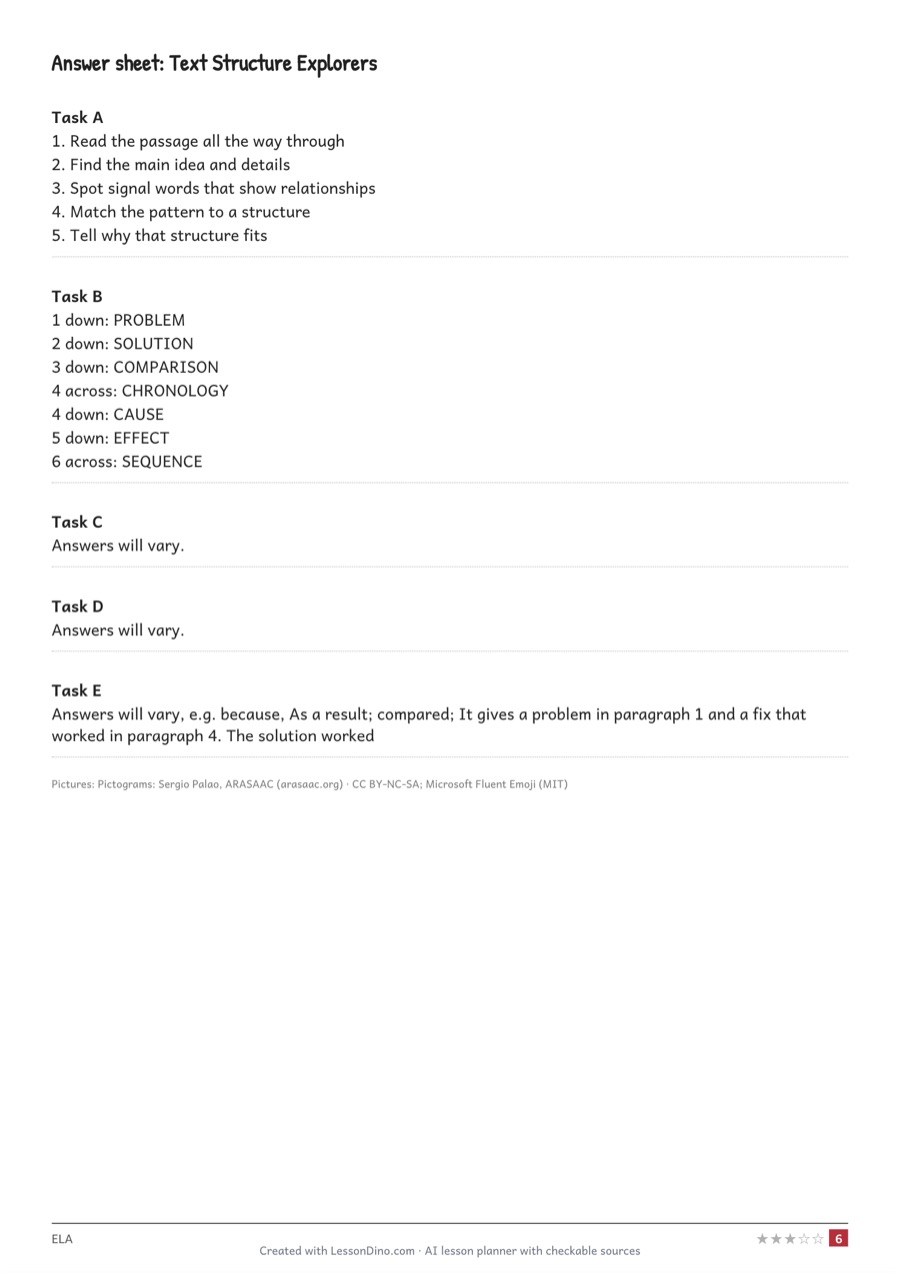
Answers
Show the answers
The answers are on the answer sheet, the last picture above.
Curriculum
Describe the overall structure (e.g., chronology, comparison, cause/effect, problem/solution) of events, ideas, concepts, or information in a text or part of a text.
Made with Lesson Dino's AI on 17 October 2026. AI can make mistakes, so check the answers and facts against the sources before you teach.