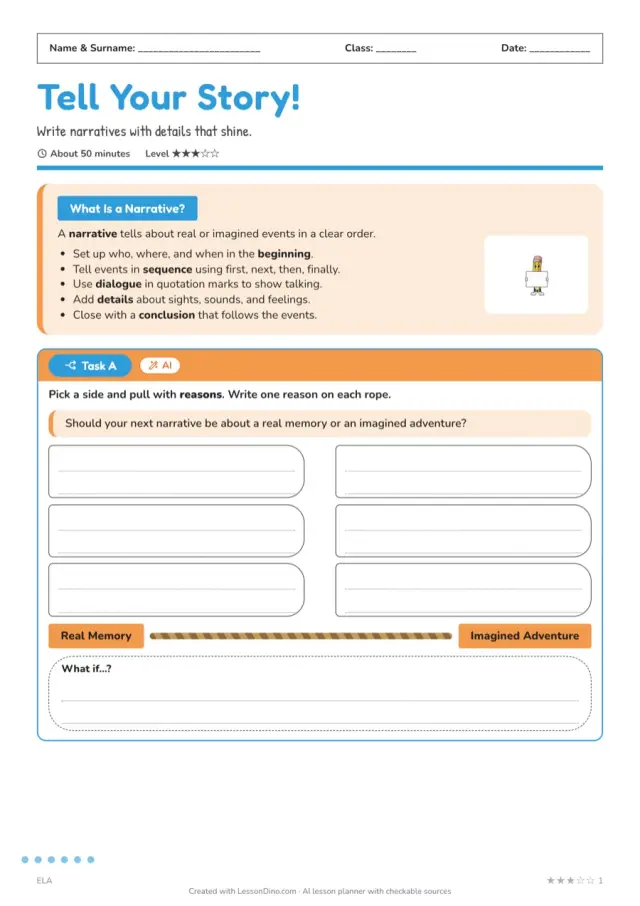
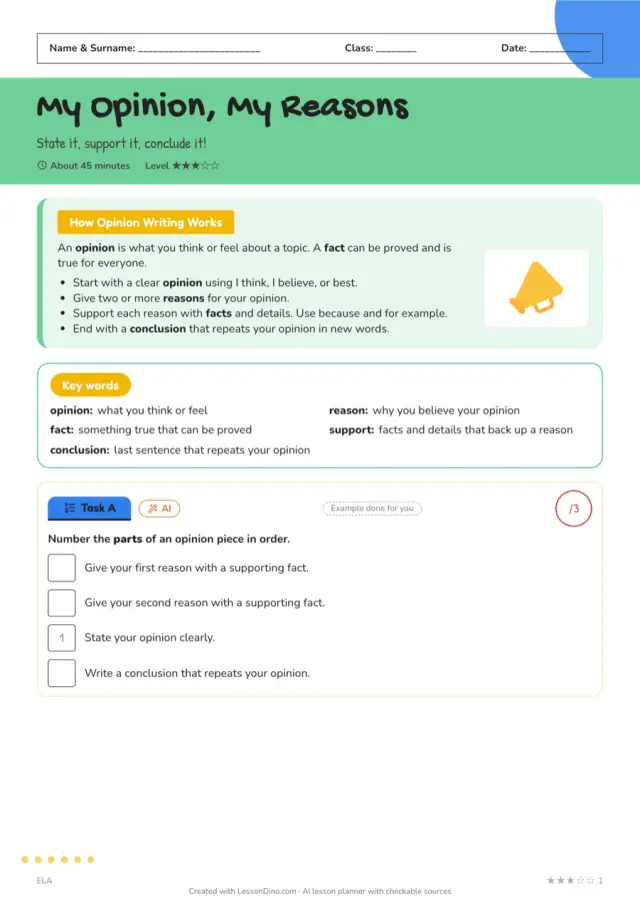
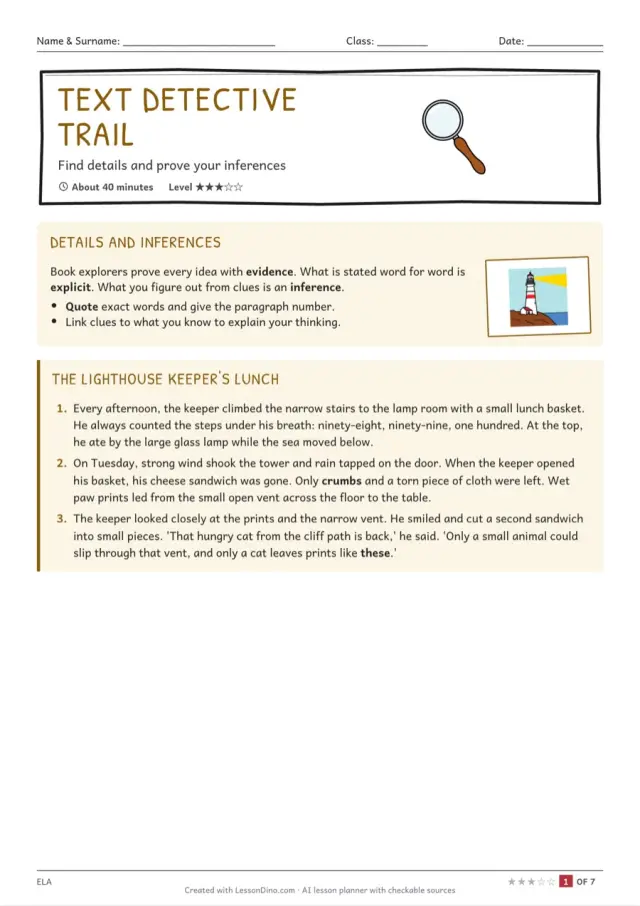
The worksheet
About this worksheet
Students learn how poems, drama, and prose look and sound different. They sort three rain texts and prove each form with structure clues. This Grade 4 ELA worksheet gives students (ages 9–10) six pages of practice on poetry and drama structure, part of the reading literature unit. It goes with our free Poetry and drama structure lesson, which has the slides and a timed lesson plan.
What it covers
By the end, students should be able to:
- Students will explain major differences between poems, drama, and prose.
- Students will identify poem parts verse, rhythm, meter and drama parts cast, setting, dialogue, stage directions.
- Students will use structure words to prove a text type in speech and writing.
How to use it
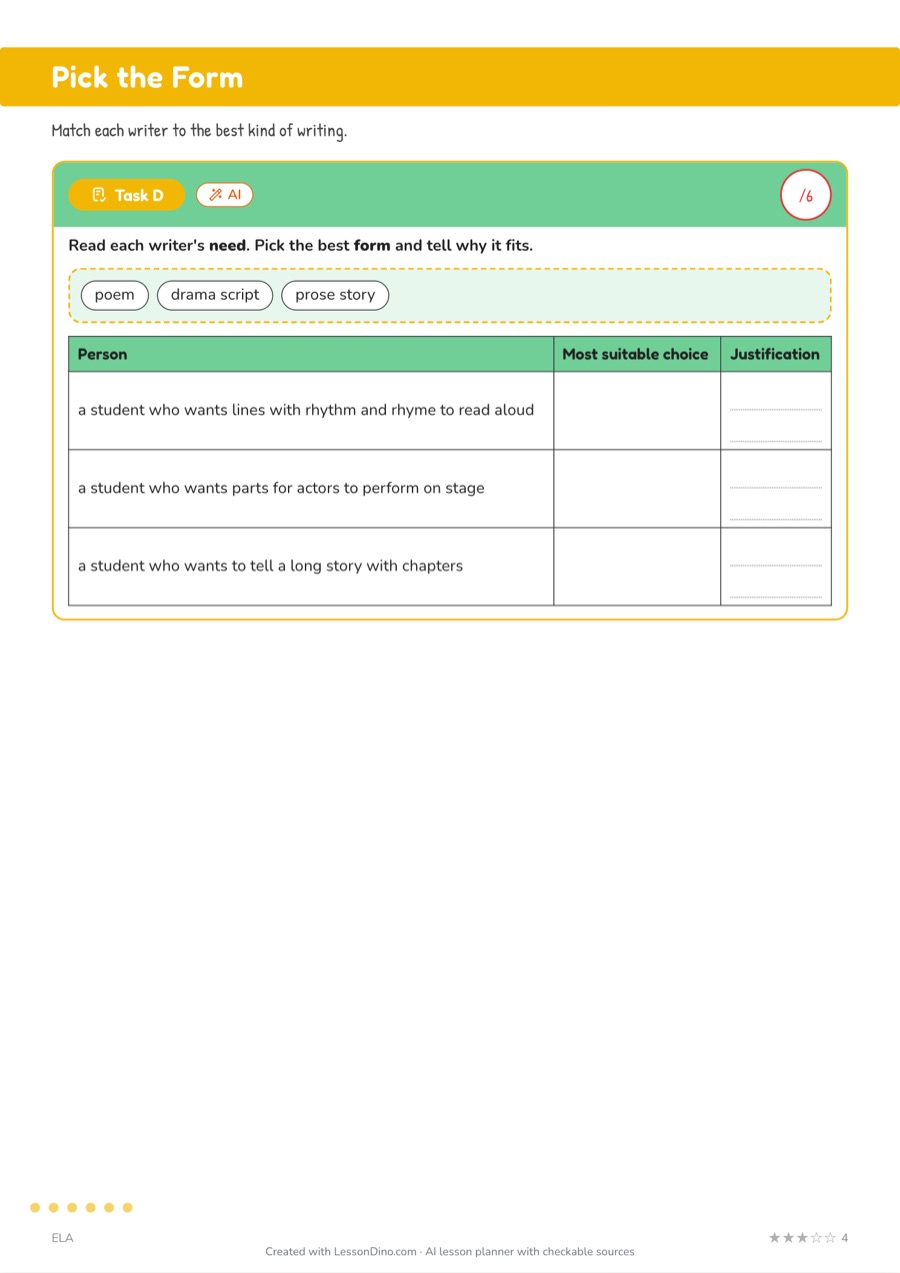
- Plenary (10 minutes): Hand out Worksheet Task D and have pairs do one writer need: pick the best form and tell why it fits.
- Support: Give pre-highlighted set where the stanza breaks, speaker names, and paragraph indent are already marked in color.
- Stretch: Ask students to add one sentence explaining how the shape changes how it sounds when read aloud.
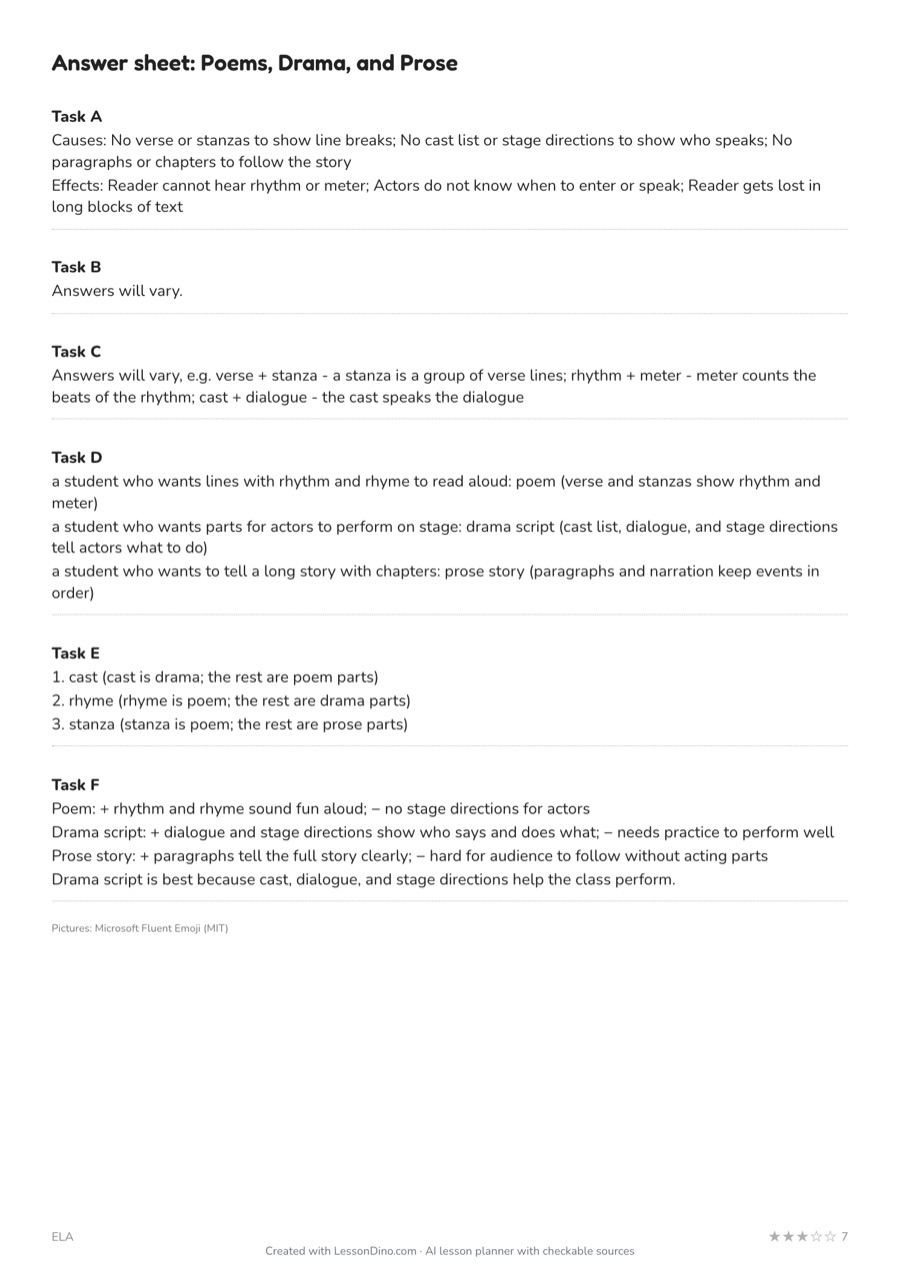
- The answer sheet is the last page, so you can print it on its own or let students check their own work.
Key vocabulary
- verse: words set in short lines that make up a poem
- rhythm: a repeated beat you can hear when you read aloud
- meter: the steady count of beats kept in the lines of a poem
- stanza: a group of lines with space around it, like a paragraph for a poem
- dialogue: the words a character says out loud to others
- stage directions: notes in parentheses that tell actors how to move or speak
Mistakes to watch for
- Thinking any short text or any lines on a page is a poem. Ask for verse and rhythm proof: check for lines and stanzas with beat, not sentences in paragraphs; stanzas separate poems into groups of lines like paragraphs in prose.
- Mixing up dialogue and stage directions. Cover speaker name, read aloud only dialogue, then read parentheses as action notes that tell how to move or speak in drama.
- Calling prose a drama because people talk. Look for cast list, setting line, speaker names and parentheses for drama versus paragraphs and narration for prose.
What's on the worksheet
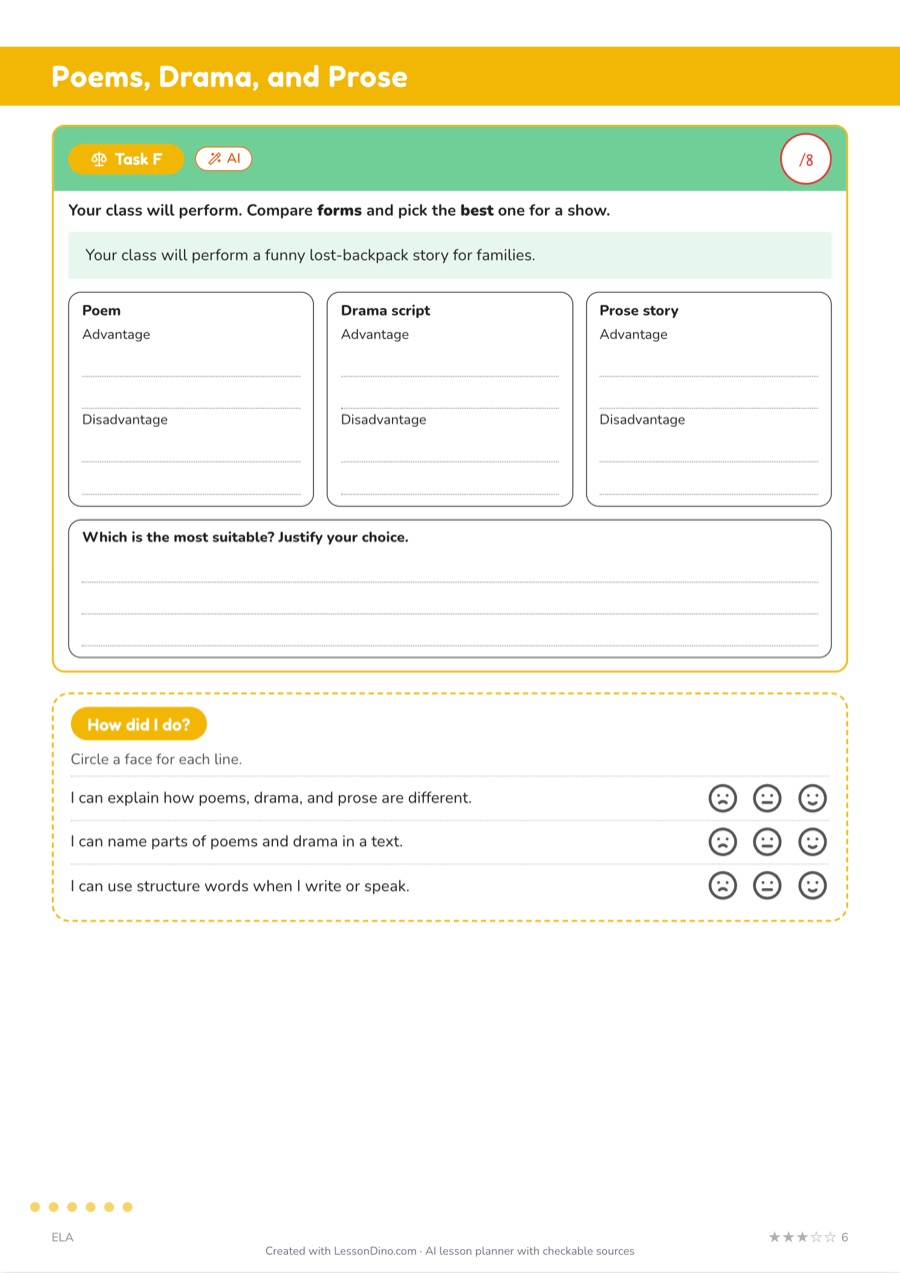
Poems, Drama, Prose
See how three kinds of writing are built.
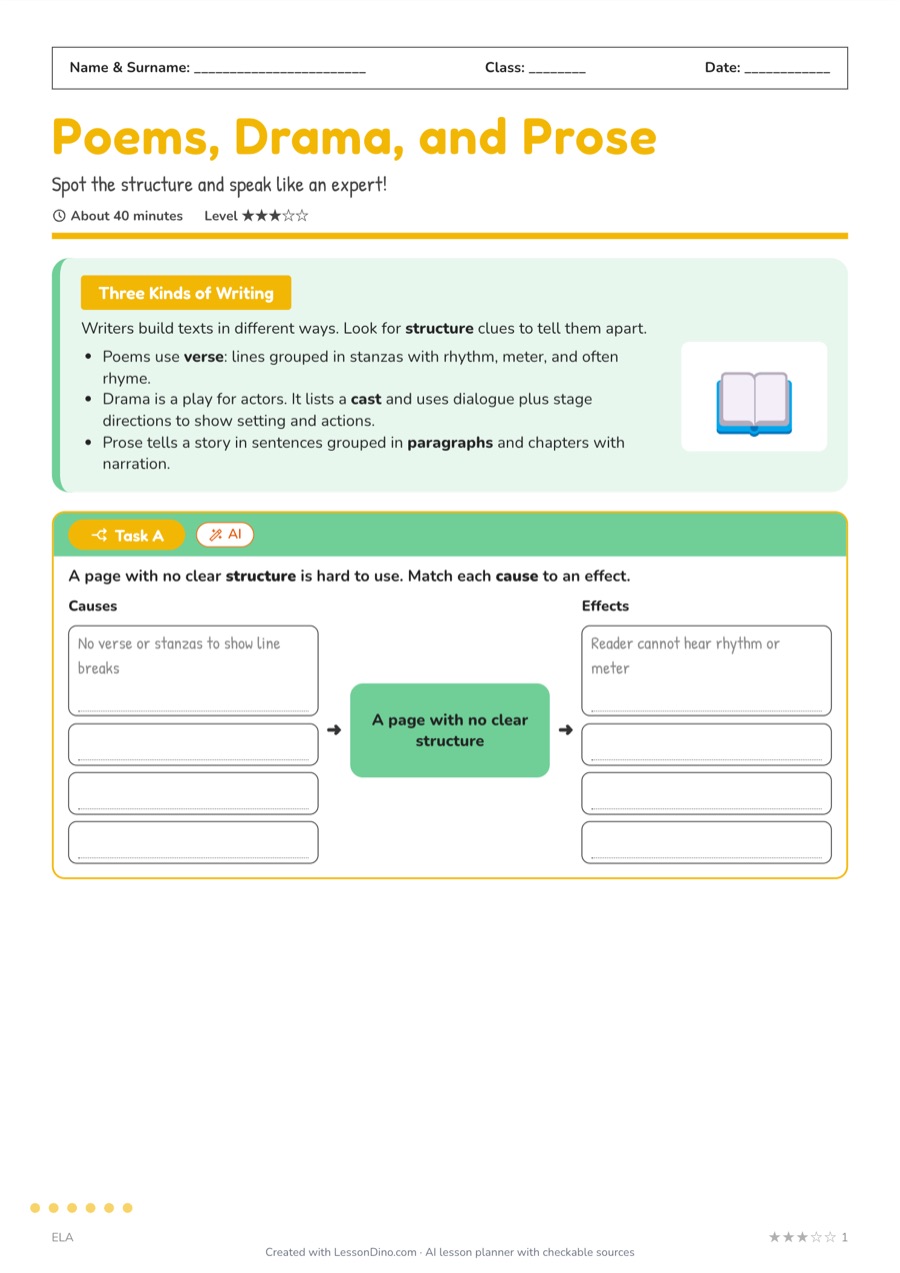
Three Kinds of Writing
- Writers build texts in different ways. Look for structure clues to tell them apart.
- Poems use verse: lines grouped in stanzas with rhythm, meter, and often rhyme.
- Drama is a play for actors. It lists a cast and uses dialogue plus stage directions to show setting and actions.
- Prose tells a story in sentences grouped in paragraphs and chapters with narration.
A page with no clear structure is hard to use. Match each cause to an effect.
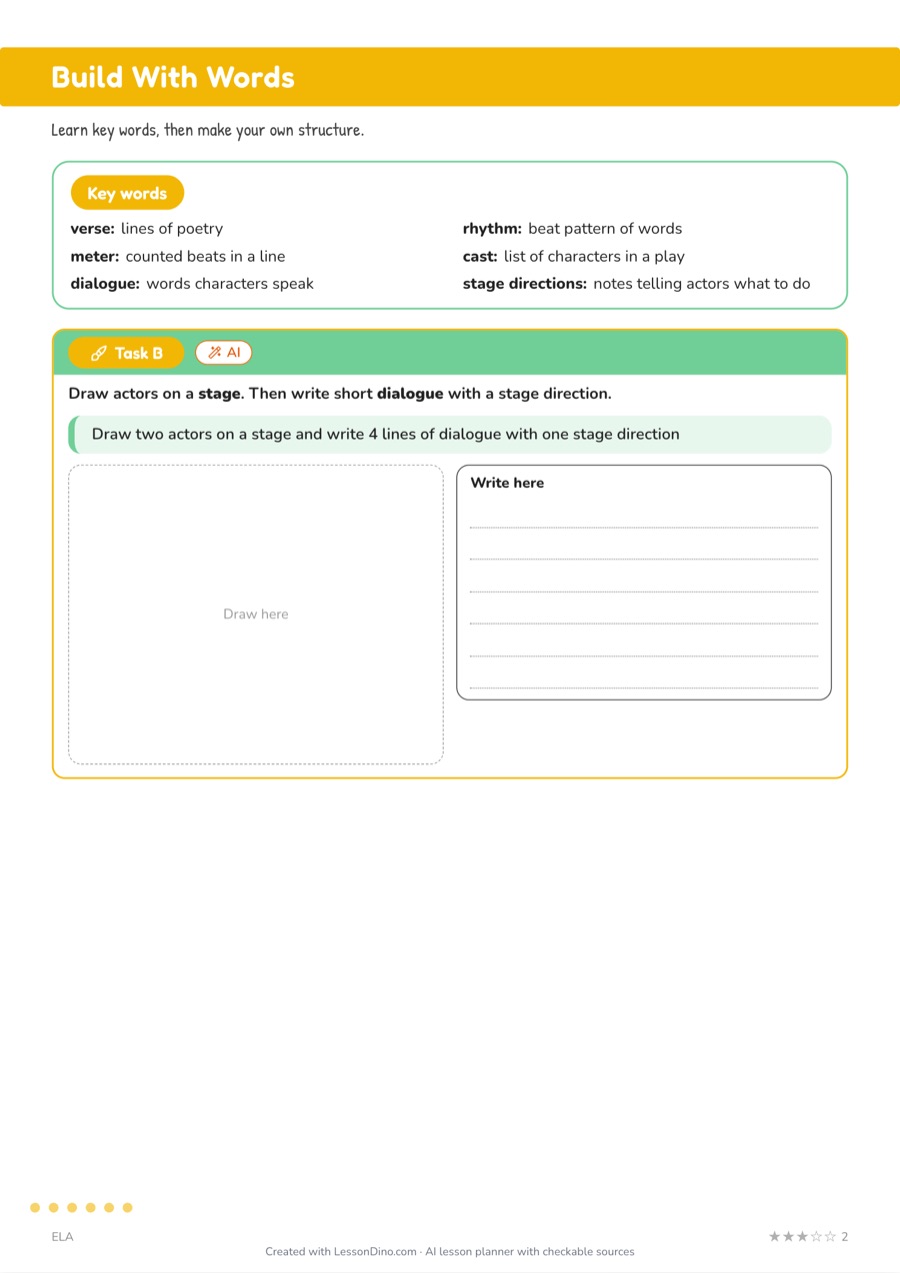
Build With Words
Learn key words, then make your own structure.
| Word | Meaning |
|---|---|
| verse | lines of poetry |
| rhythm | beat pattern of words |
| meter | counted beats in a line |
| cast | list of characters in a play |
| dialogue | words characters speak |
| stage directions | notes telling actors what to do |
Draw actors on a stage. Then write short dialogue with a stage direction.
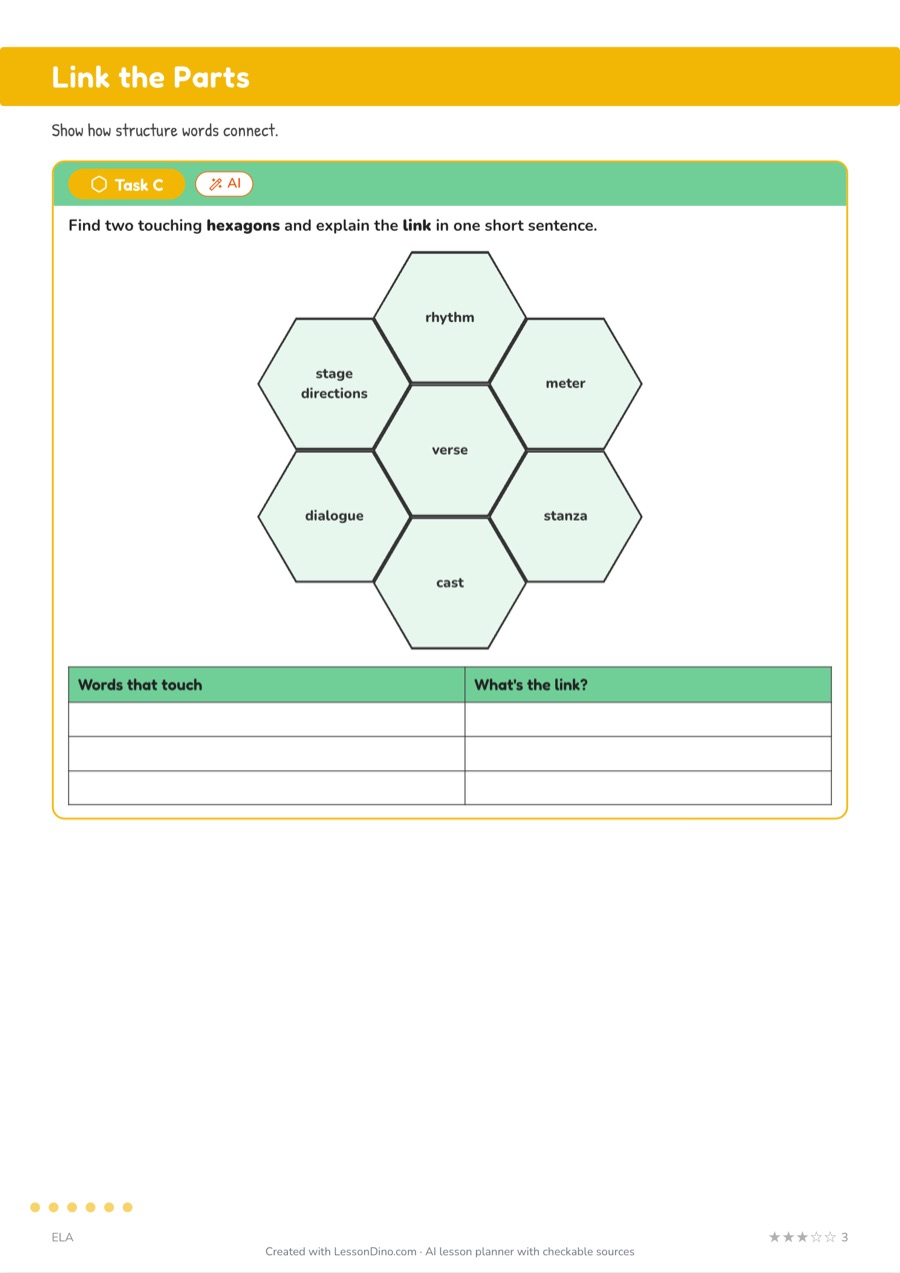
Link the Parts
Show how structure words connect.
Find two touching hexagons and explain the link in one short sentence.
Pick the Form
Match each writer to the best kind of writing.
Read each writer's need. Pick the best form and tell why it fits.
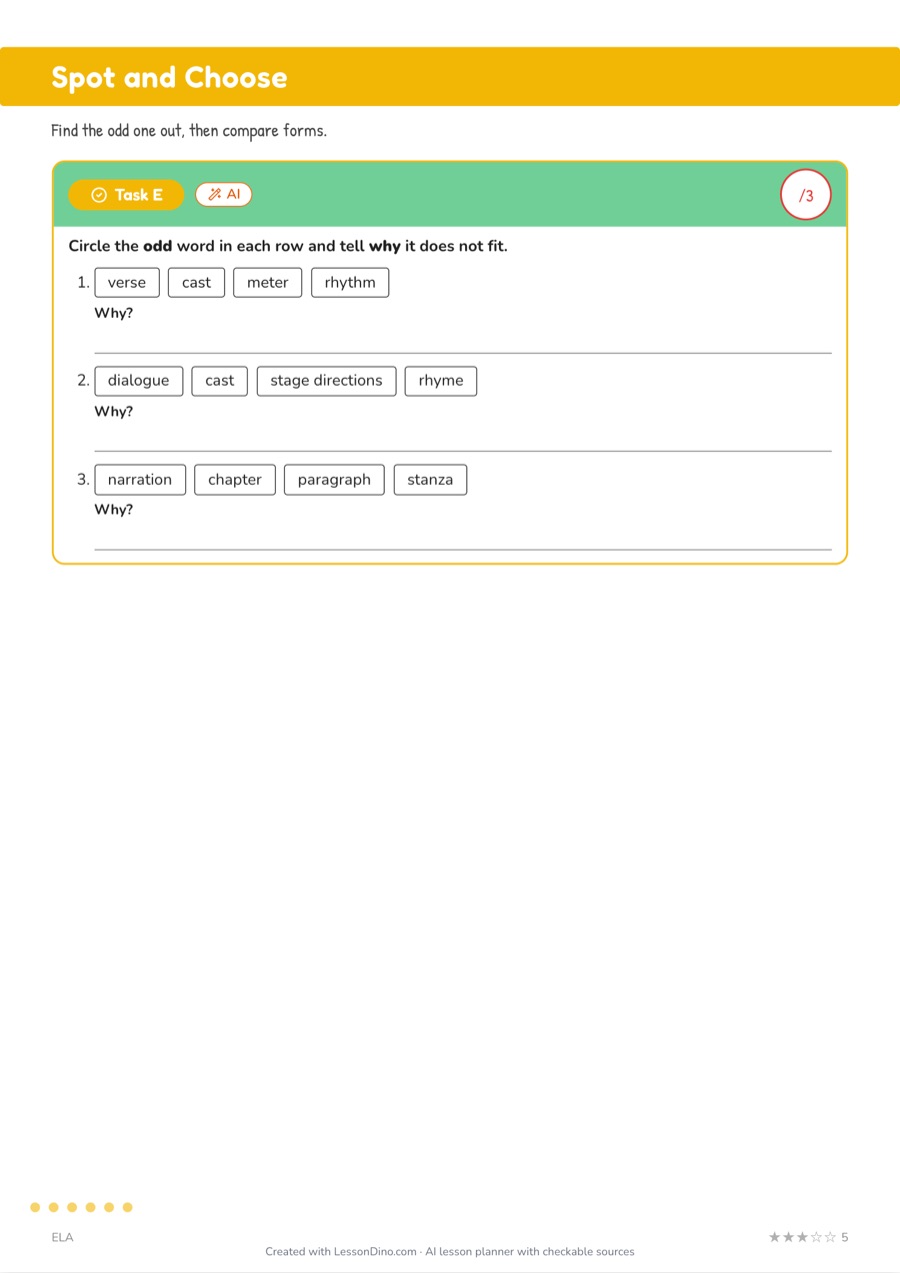
Spot and Choose
Find the odd one out, then compare forms.
Circle the odd word in each row and tell why it does not fit.
Page 6
Your class will perform. Compare forms and pick the best one for a show.
Answers
Show the answers
The answers are on the answer sheet, the last picture above.
Curriculum
Explain major differences between poems, drama, and prose, and refer to the structural elements of poems (e.g., verse, rhythm, meter) and drama (e.g., casts of characters, settings, descriptions, dialogue, stage directions) when writing or speaking about a text.
Made with Lesson Dino's AI on 17 October 2026. AI can make mistakes, so check the answers and facts against the sources before you teach.