The worksheet
About this worksheet
Students learn to build real or imagined narratives in clear order with details. They map beginning, middle, and end and start a draft with sensory details. This Grade 4 ELA worksheet gives students (ages 9–10) five pages of practice on creative writing: narratives, part of the writing unit. It goes with our free Creative writing: narratives lesson, which has the slides and a timed lesson plan.
What it covers
By the end, students should be able to:
- Students will plan a real or imagined narrative with clear beginning, middle, and end.
- Students will use descriptive details and action to develop events in sequence.
- Students will write a conclusion that fits the narrated events.
How to use it
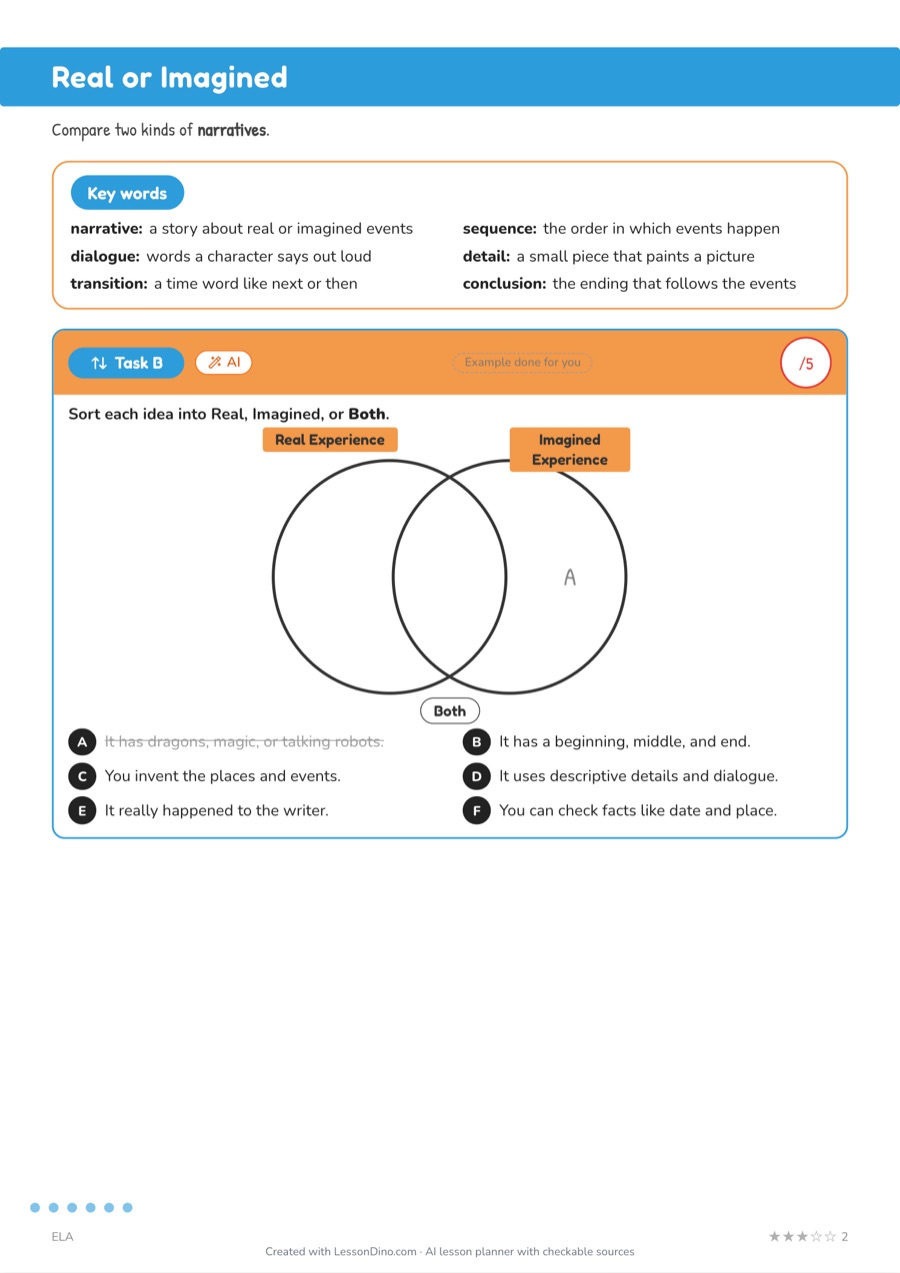
- Teaching 1 (12 minutes): Guide Worksheet Task B: students sort 4-5 short ideas into Real, Imagined, or Both and share clues.
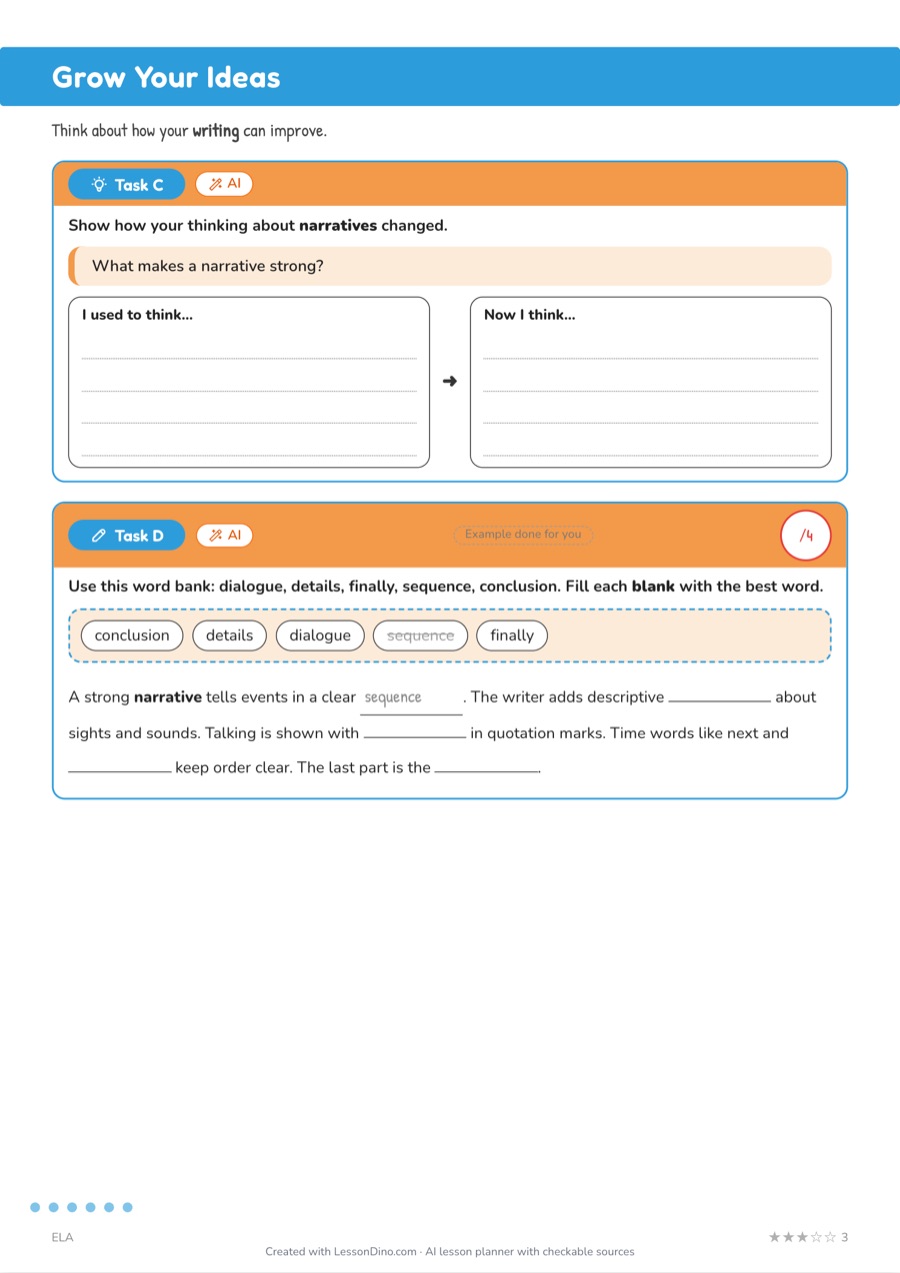
- Plenary (10 minutes): Do Worksheet Task D together orally: fill blanks with dialogue, details, finally, sequence, conclusion.
- Support: Provide a half-filled plan with character and setting done so students only add events.
- Stretch: Students add a problem and solution box under the events.
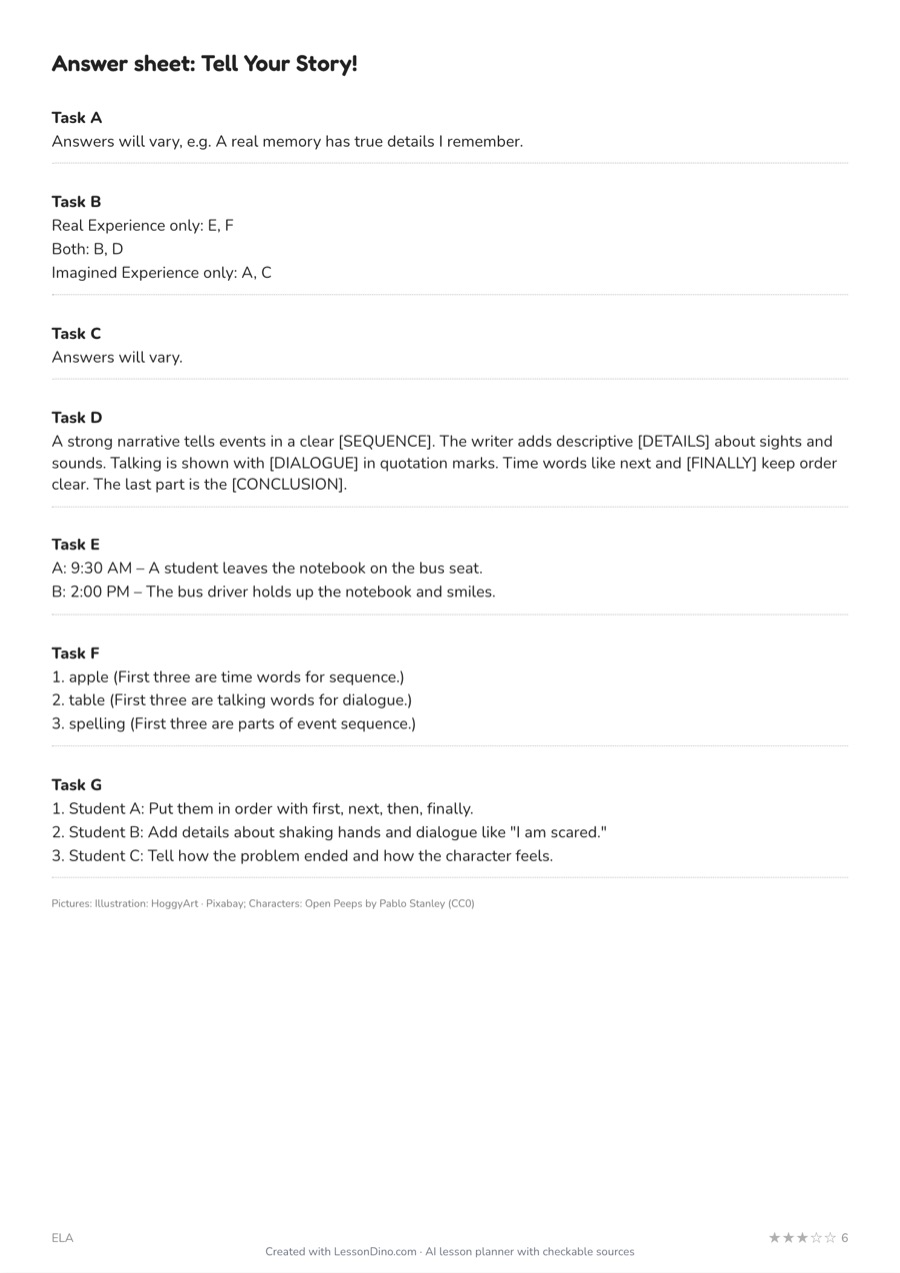
- The answer sheet is the last page, so you can print it on its own or let students check their own work.
Key vocabulary
- narrative: a story about real or made-up events told in order
- sequence: the order in which events happen in a story
- detail: a small bit you see, hear, smell, touch, or taste that paints a picture
- dialogue: the exact talk between people in a story, with quotation marks
- conclusion: the last part that fits what happened before
Mistakes to watch for
- Events out of order or missing order words. Number boxes 1-2-3 and add First, Next, Finally to lock sequence.
- Telling without details, like nice, fun, big. Add one sense word per box from the word bank and underline it.
- Ending that does not connect to the problem. Reread middle problem and rewrite ending to solve it and show feeling.
What's on the worksheet
Stories That Shine
Learn what makes a strong narrative.
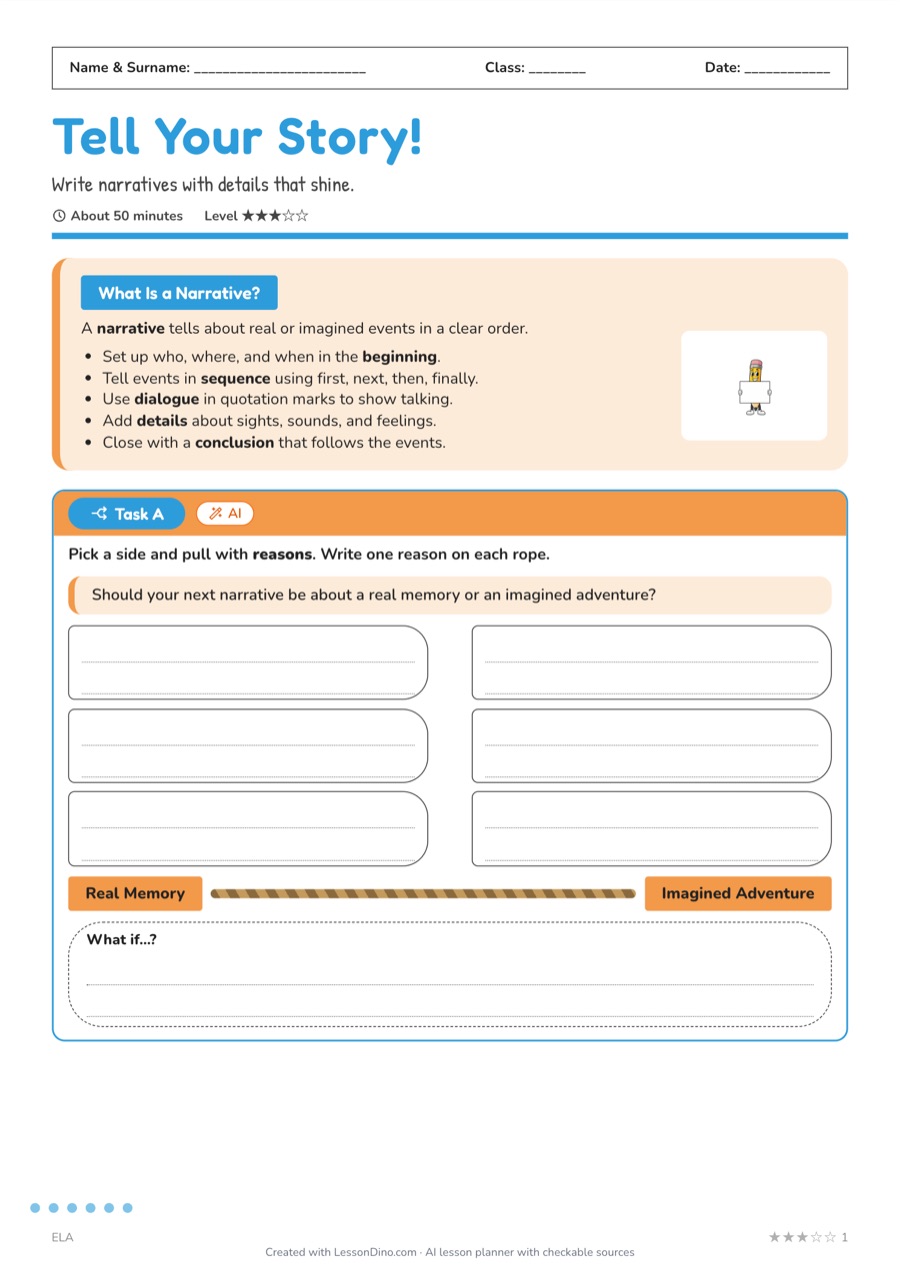
What Is a Narrative?
- A narrative tells about real or imagined events in a clear order.
- Set up who, where, and when in the beginning.
- Tell events in sequence using first, next, then, finally.
- Use dialogue in quotation marks to show talking.
- Add details about sights, sounds, and feelings.
- Close with a conclusion that follows the events.
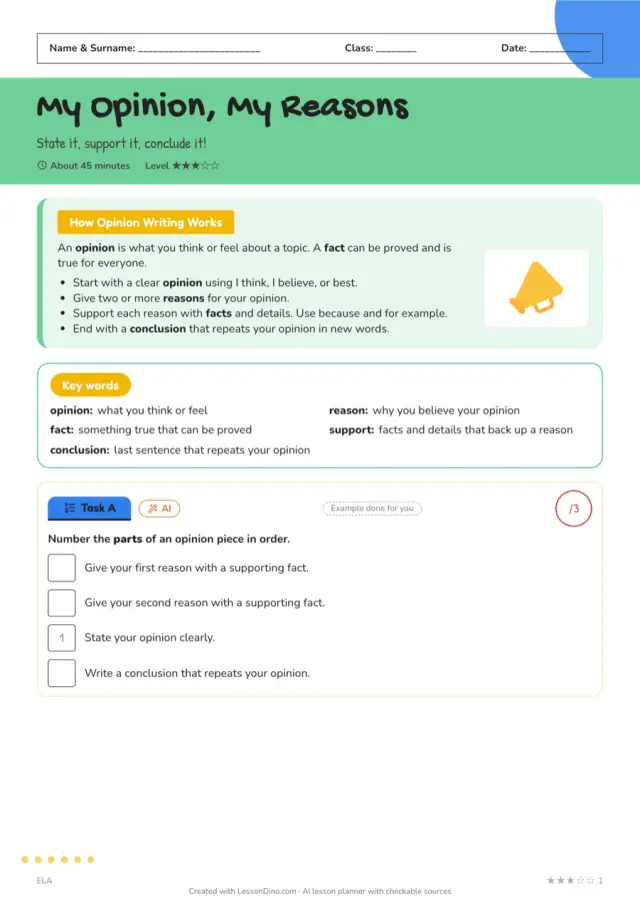
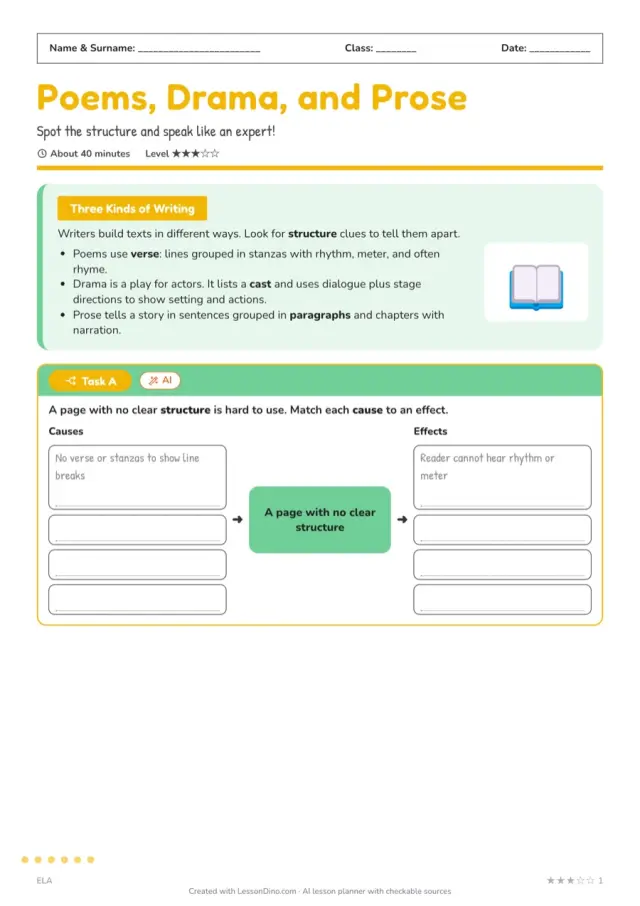
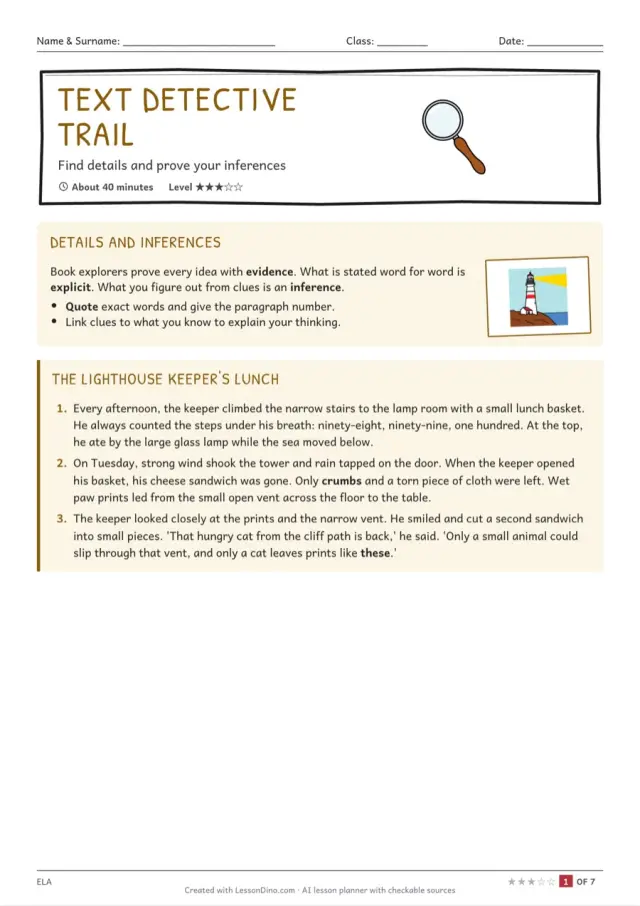
Pick a side and pull with reasons. Write one reason on each rope.
Real or Imagined
Compare two kinds of narratives.
| Word | Meaning |
|---|---|
| narrative | a story about real or imagined events |
| sequence | the order in which events happen |
| dialogue | words a character says out loud |
| detail | a small piece that paints a picture |
| transition | a time word like next or then |
| conclusion | the ending that follows the events |
Sort each idea into Real, Imagined, or Both.
Grow Your Ideas
Think about how your writing can improve.
Show how your thinking about narratives changed.
Use this word bank: dialogue, details, finally, sequence, conclusion. Fill each blank with the best word.
- A strong narrative tells events in a clear [[sequence]]. The writer adds descriptive [[details]] about sights and sounds. Talking is shown with [[dialogue]] in quotation marks. Time words like next and [[finally]] keep order clear. The last part is the [[conclusion]].
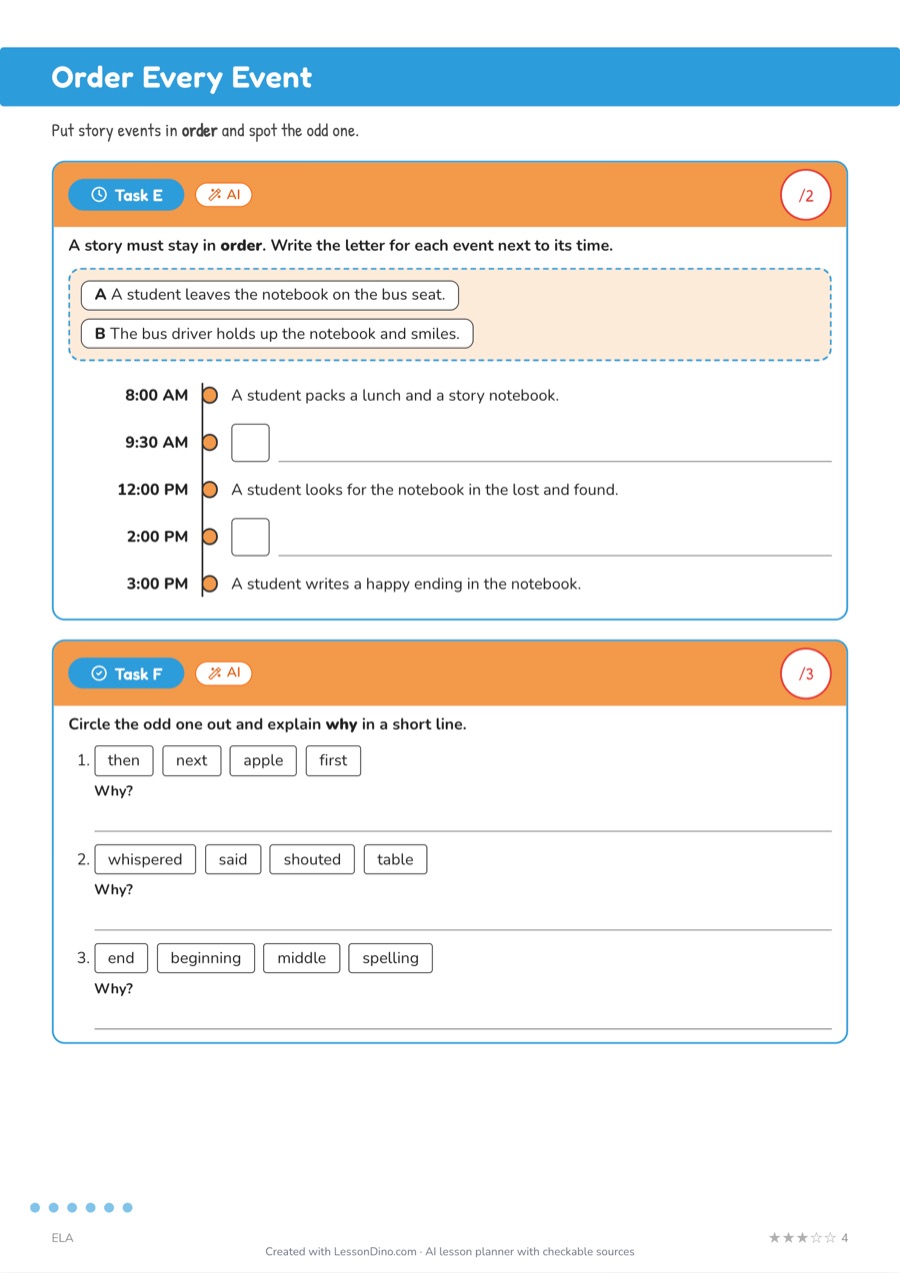
Order Every Event
Put story events in order and spot the odd one.
A story must stay in order. Write the letter for each event next to its time.
Circle the odd one out and explain why in a short line.
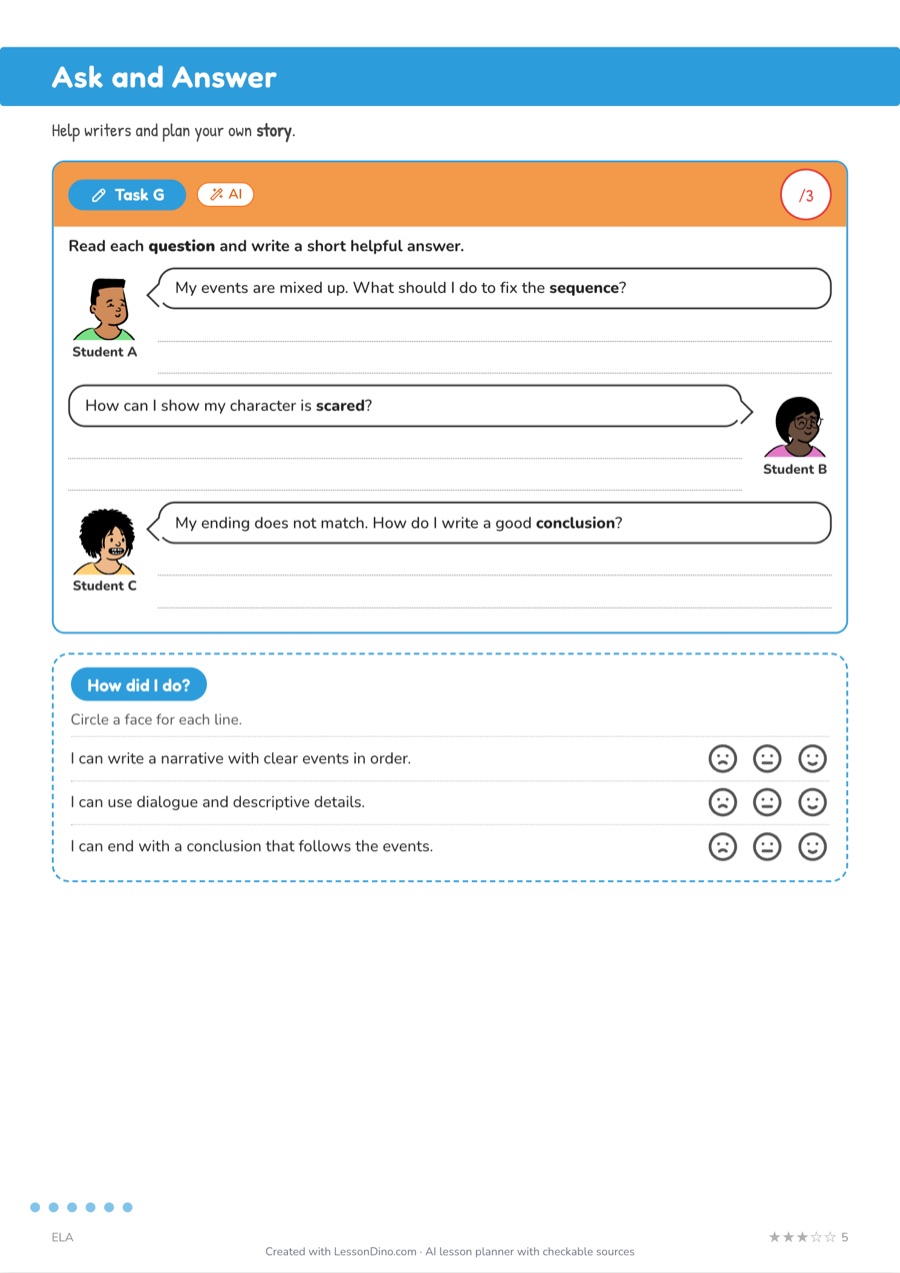
Ask and Answer
Help writers and plan your own story.
Read each question and write a short helpful answer.
Answers
Show the answers
The answers are on the answer sheet, the last picture above.
Curriculum
Write narratives to develop real or imagined experiences or events using effective technique, descriptive details, and clear event sequences.
Made with Lesson Dino's AI on 17 October 2026. AI can make mistakes, so check the answers and facts against the sources before you teach.