The worksheet
About this worksheet
Students learn to tell what the text says straight out from a smart guess. They hunt for proof words and explain one inference with two details. This Grade 4 ELA worksheet gives students (ages 9–10) seven pages of practice on reading comprehension: details and inferences, part of the reading literature unit. It goes with our free Reading comprehension: details and inferences lesson, which has the slides and a timed lesson plan.
What it covers
By the end, students should be able to:
- Students will quote exact details to show what the text says straight out.
- Students will make an inference backed by two details from the text.
How to use it
- Use it for practice after the teaching part of the lesson, once students have seen the worked examples on the slides.
- Support: Give a copy with the key sentences already underlined so the student only has to match them to the questions.
- Stretch: Have students add a second possible inference and explain which details make it weaker or stronger.
- The answer sheet is the last page, so you can print it on its own or let students check their own work.
Key vocabulary
- detail: a small piece of information the author puts in the writing
- explicit: said straight out in words you can point to
- inference: a smart guess that uses clues plus what you already know
- evidence: the exact words you copy or point to that prove an answer
Mistakes to watch for
- Paraphrasing instead of quoting exact words as proof. Have student reread and copy 4-6 words exactly, then read them aloud to match.
- Treating an inference like a wild guess with no clues. Require two blue underlines first, then finish because with those words.
- Mixing up explicit detail and inference labels. Ask: Can you point to it in one line? If you had to combine two lines, it is an inference.
What's on the worksheet
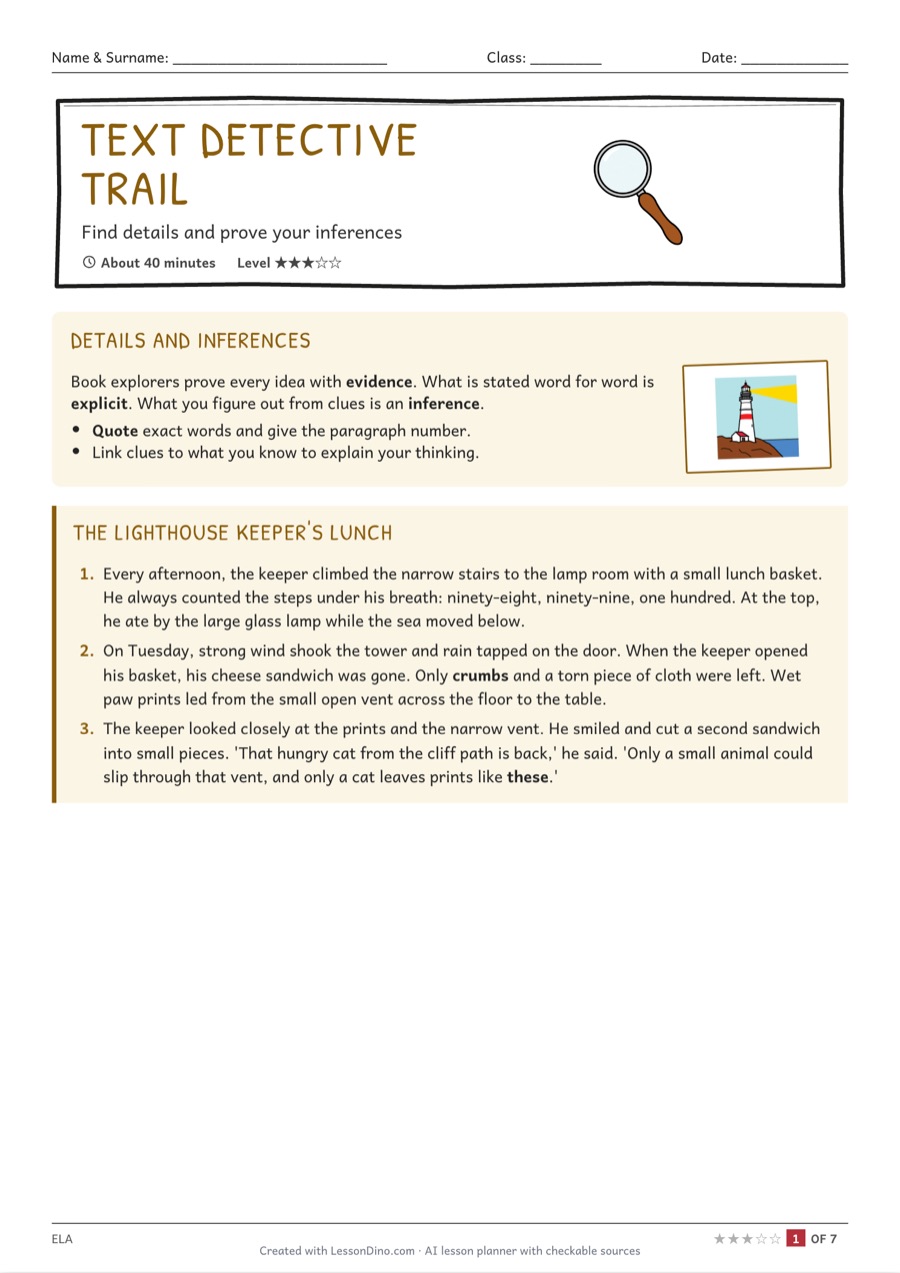
Clues in Text
Learn how to prove ideas with words from the text.
Details and Inferences
- Book explorers prove every idea with evidence. What is stated word for word is explicit. What you figure out from clues is an inference.
- Quote exact words and give the paragraph number.
- Link clues to what you know to explain your thinking.
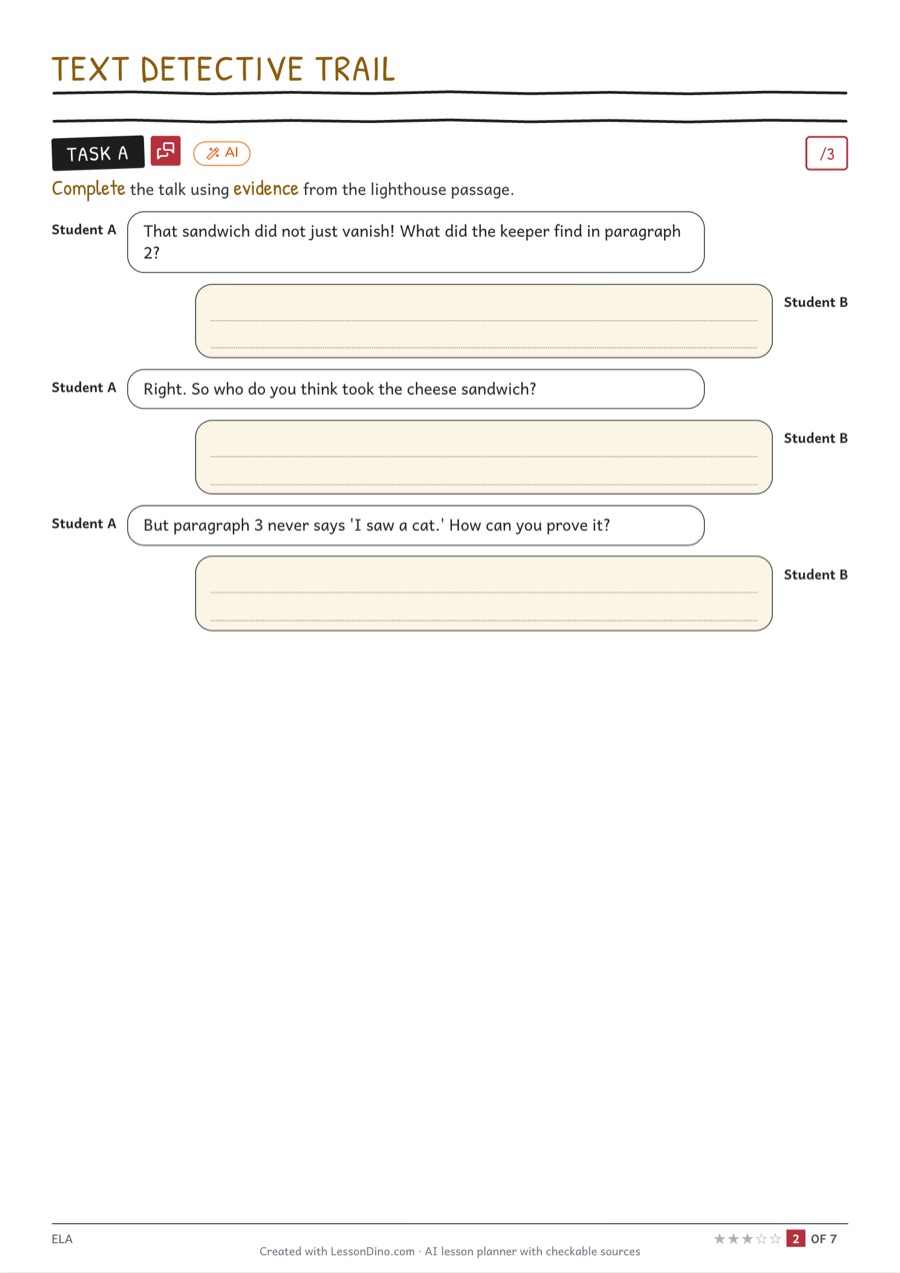
The Lighthouse Keeper's Lunch
Page 2
Complete the talk using evidence from the lighthouse passage.
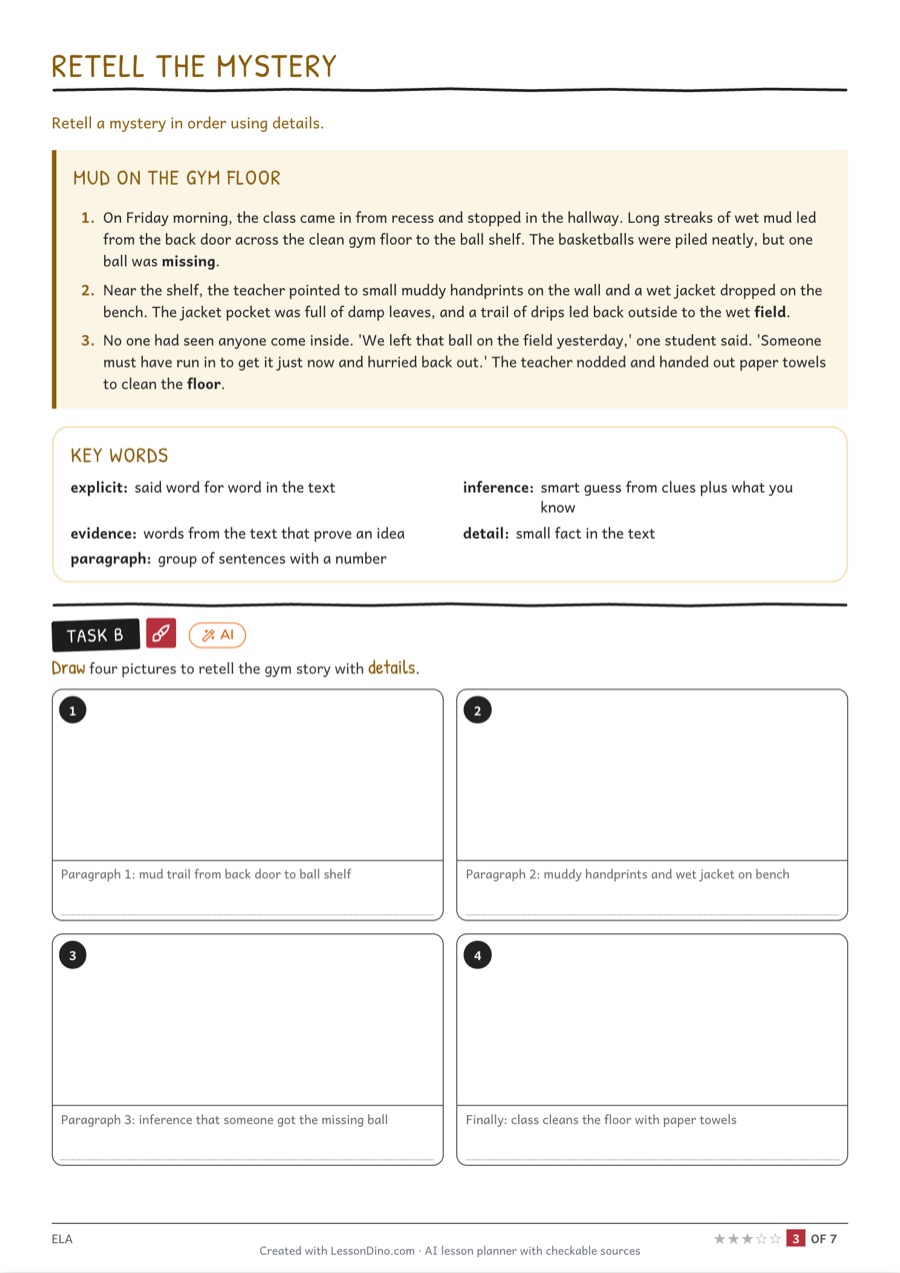
Retell the Mystery
Retell a mystery in order using details.
Mud on the Gym Floor
| Word | Meaning |
|---|---|
| explicit | said word for word in the text |
| inference | smart guess from clues plus what you know |
| evidence | words from the text that prove an idea |
| detail | small fact in the text |
| paragraph | group of sentences with a number |
Draw four pictures to retell the gym story with details.
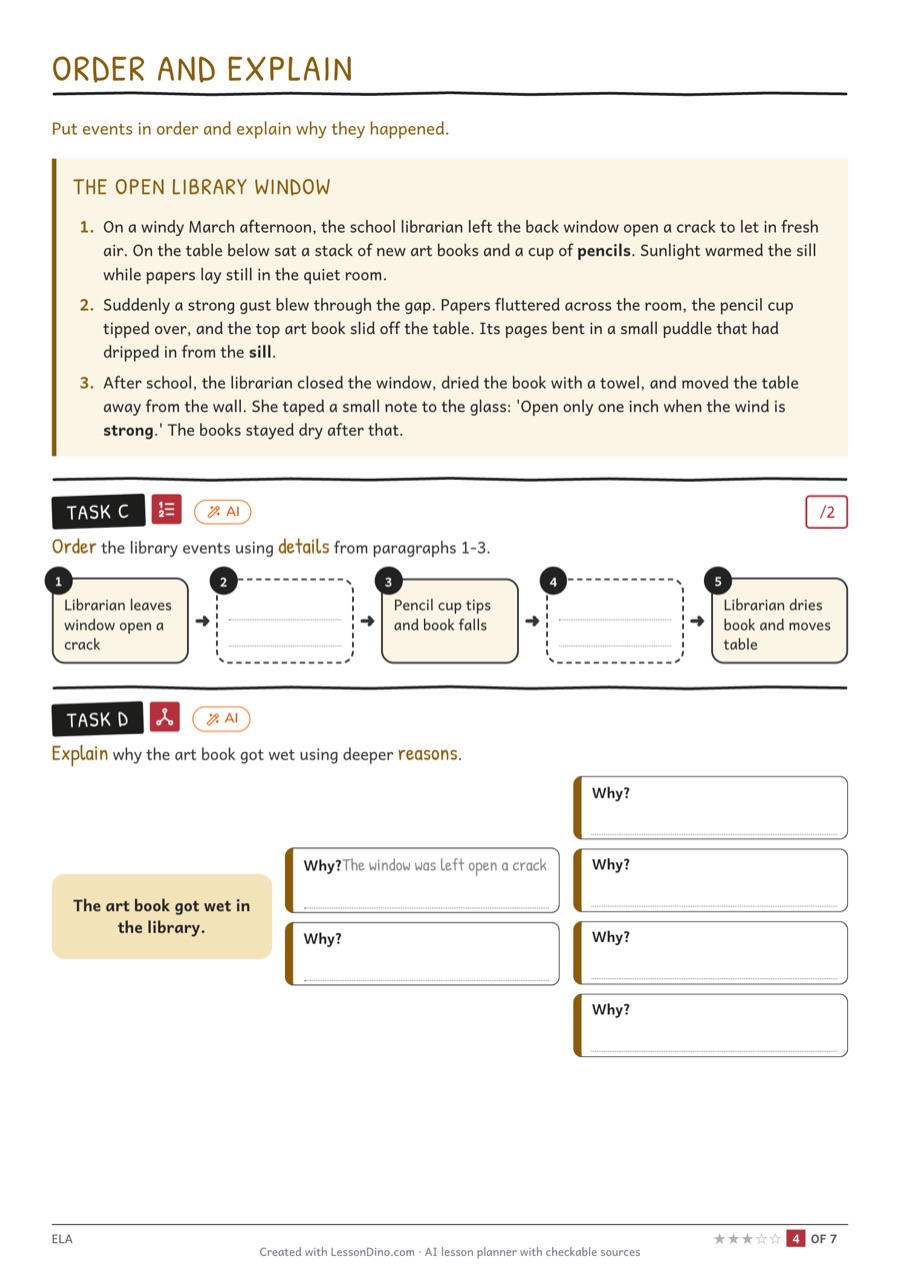
Order and Explain
Put events in order and explain why they happened.
The Open Library Window
Order the library events using details from paragraphs 1-3.
Explain why the art book got wet using deeper reasons.
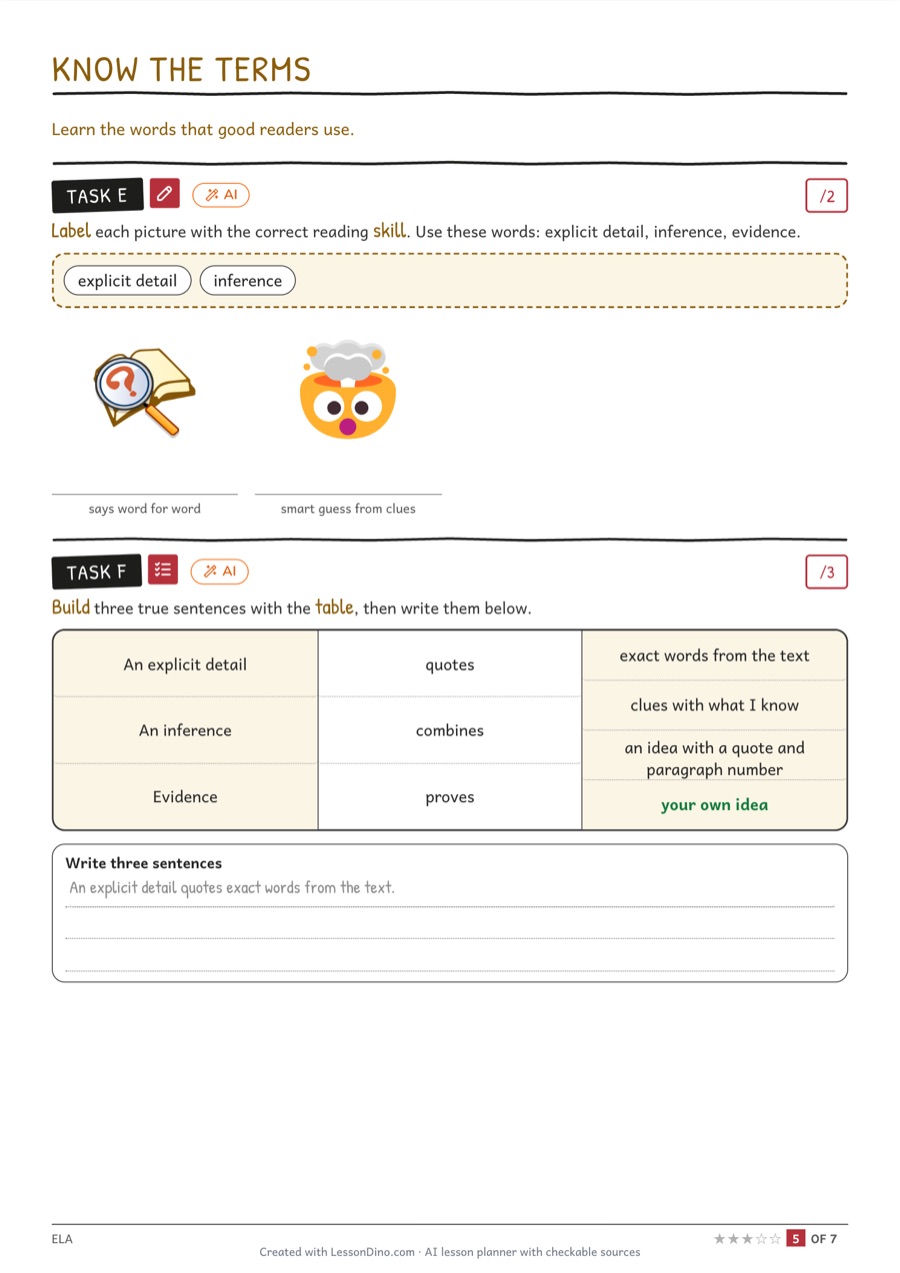
Know the Terms
Learn the words that good readers use.
Label each picture with the correct reading skill. Use these words: explicit detail, inference, evidence.
Build three true sentences with the table, then write them below.
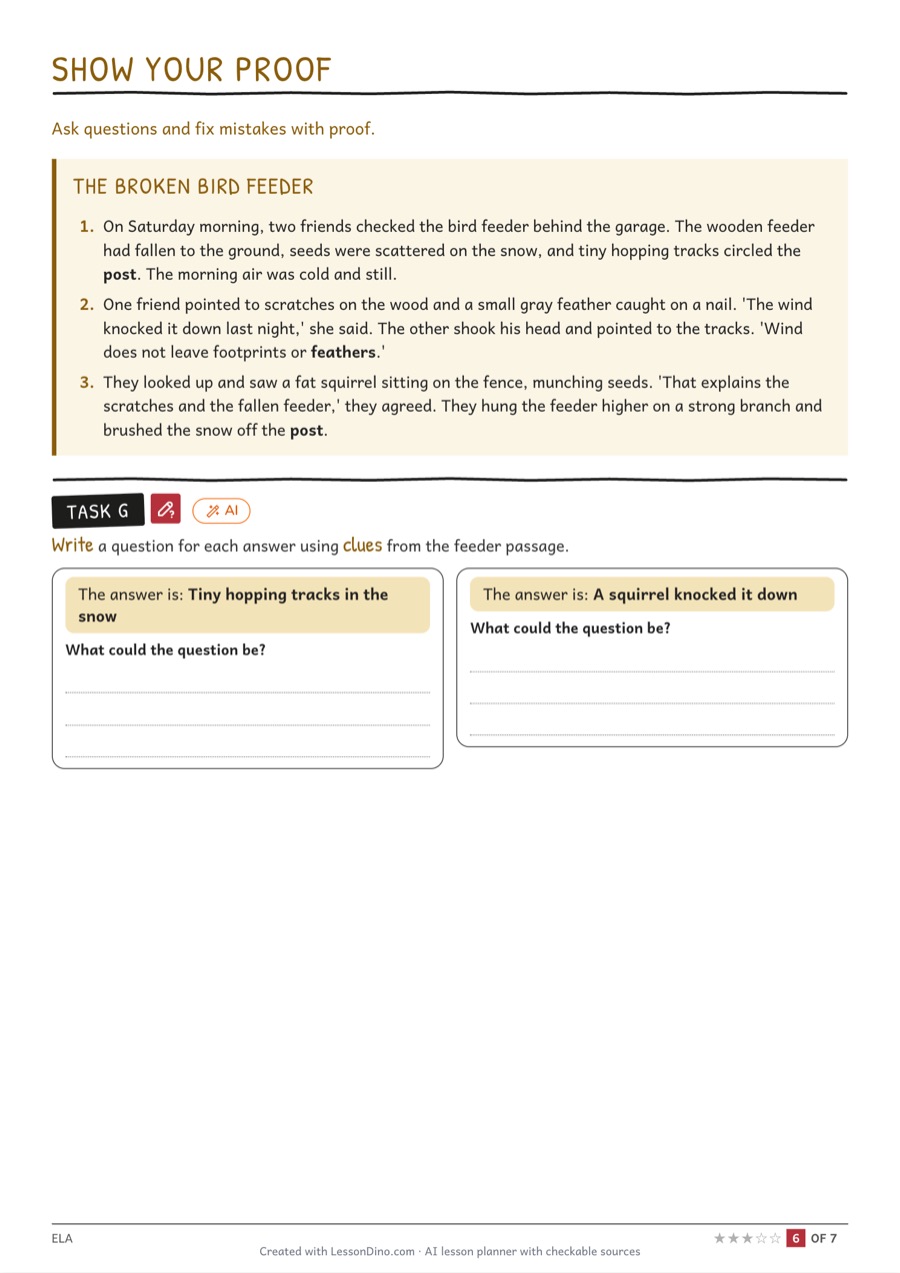
Show Your Proof
Ask questions and fix mistakes with proof.
The Broken Bird Feeder
Write a question for each answer using clues from the feeder passage.
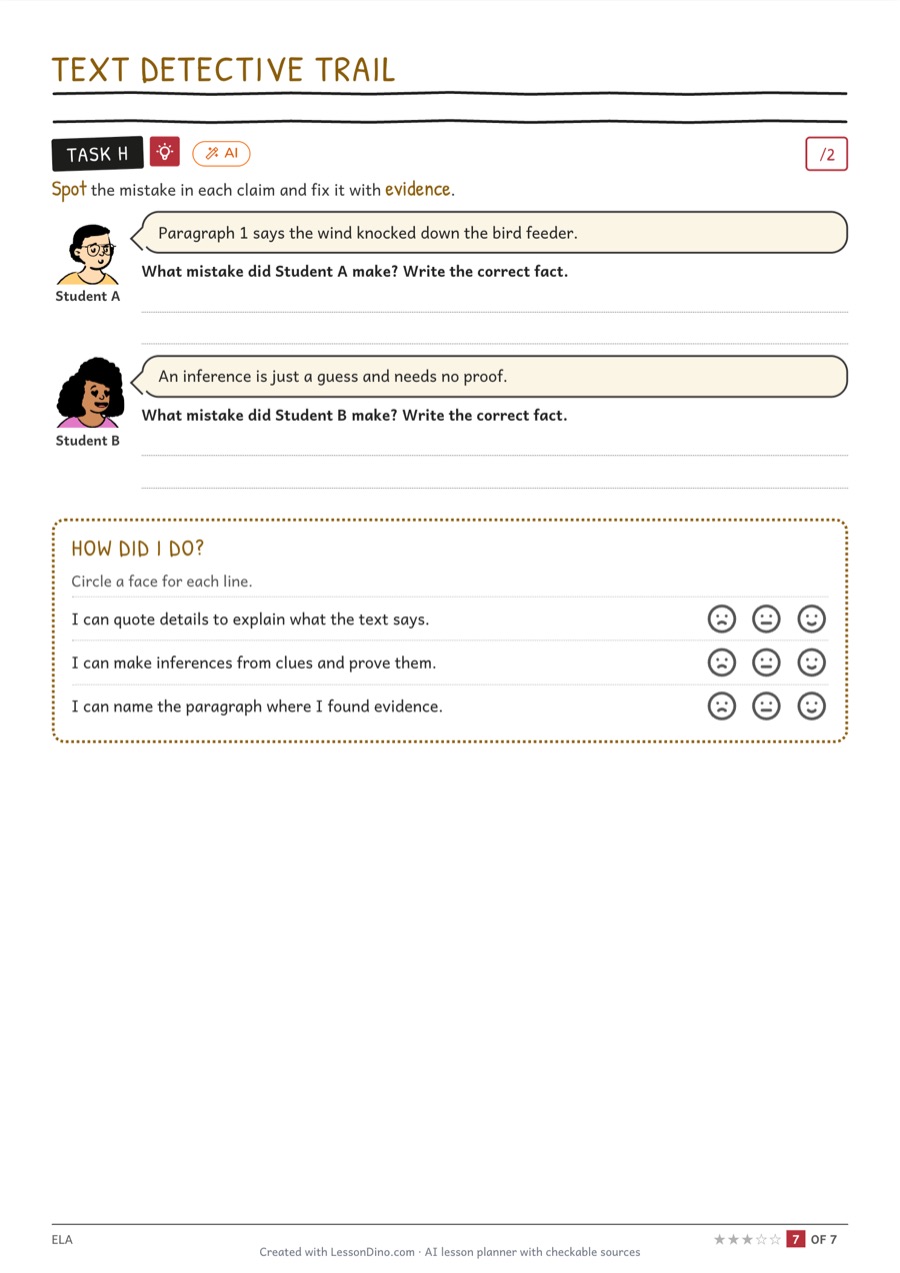
Page 7
Spot the mistake in each claim and fix it with evidence.
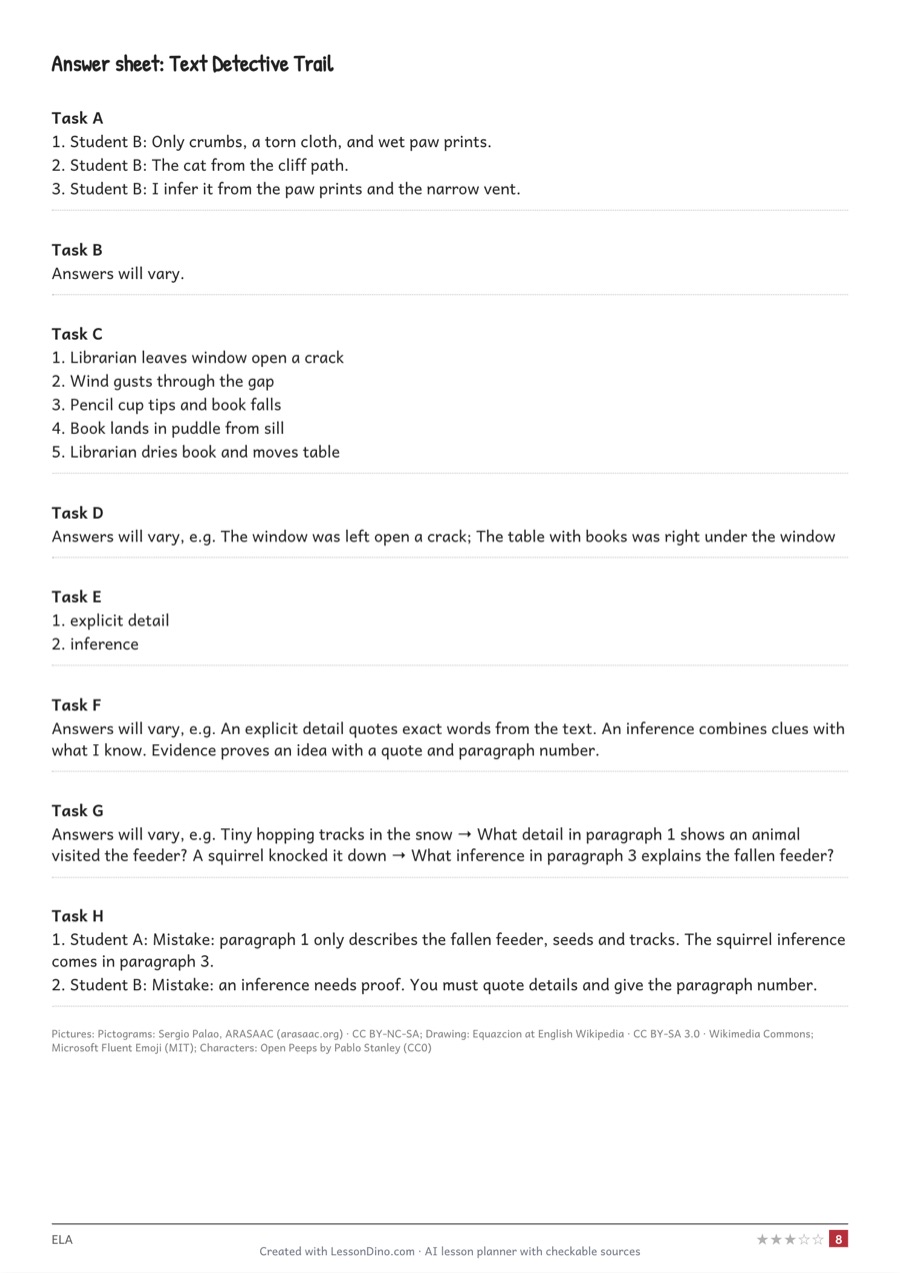
Answers
Show the answers
The answers are on the answer sheet, the last picture above.
Curriculum
Refer to details and examples in a text when explaining what the text says explicitly and when drawing inferences from the text.
Made with Lesson Dino's AI on 17 October 2026. AI can make mistakes, so check the answers and facts against the sources before you teach.