The worksheet
About this worksheet
Students learn to use relative pronouns and adverbs to add detail. They write and solve partner riddles with who, which, that, where, when and why. This Grade 4 ELA worksheet gives students (ages 9–10) six pages of practice on relative pronouns, part of the language unit. It goes with our free Relative pronouns lesson, which has the slides and a timed lesson plan.
What it covers
By the end, students should be able to:
- Students will use who, whose, whom, which, and that to tell about people and things.
- Students will use where, when, and why to tell about place, time, and reason.
- Students will join two short sentences into one smooth, complete sentence.
How to use it
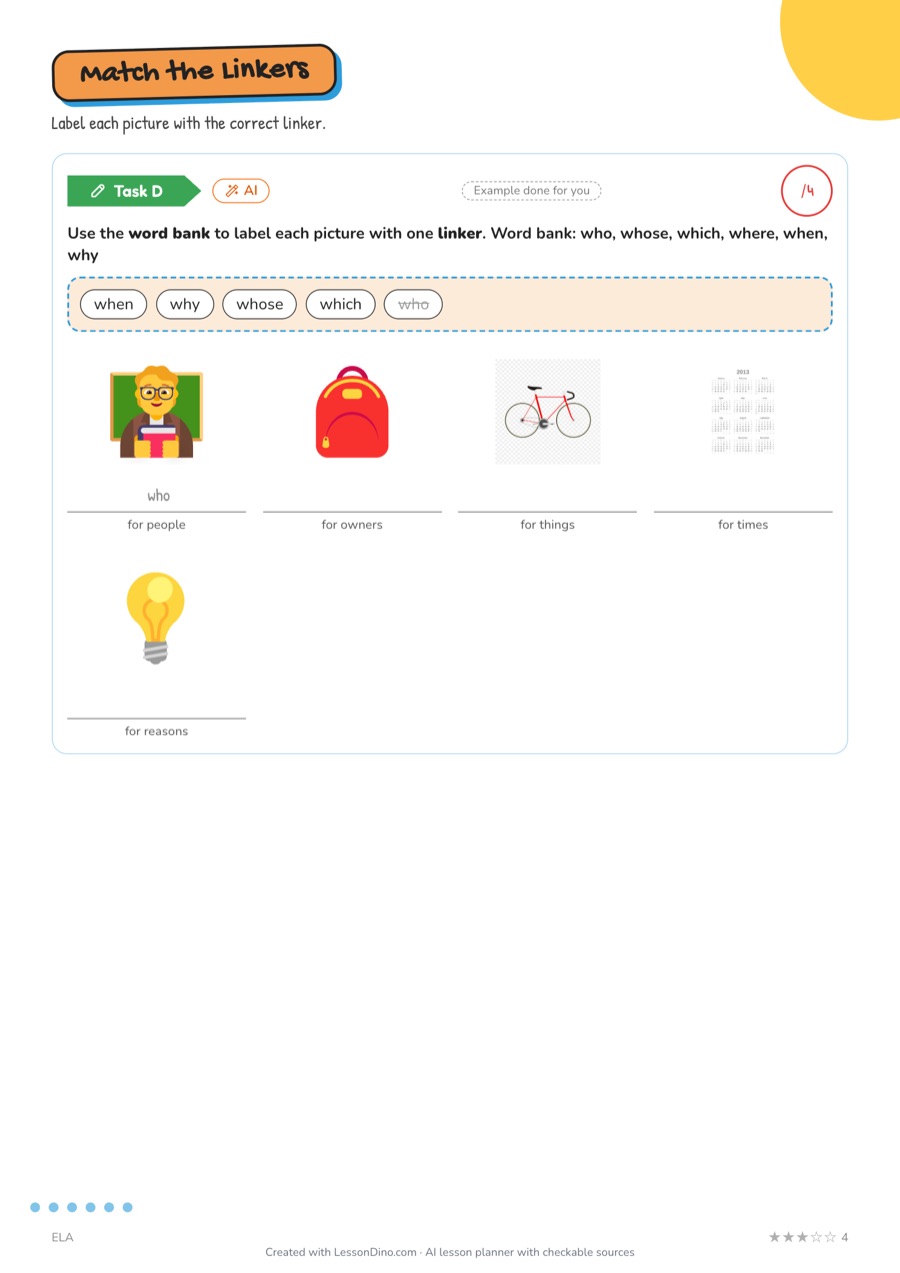
- Guided practice (10 minutes): Hand out Worksheet Task D and read the direction to label each picture with one linker from who, whose, which, where, when, why.
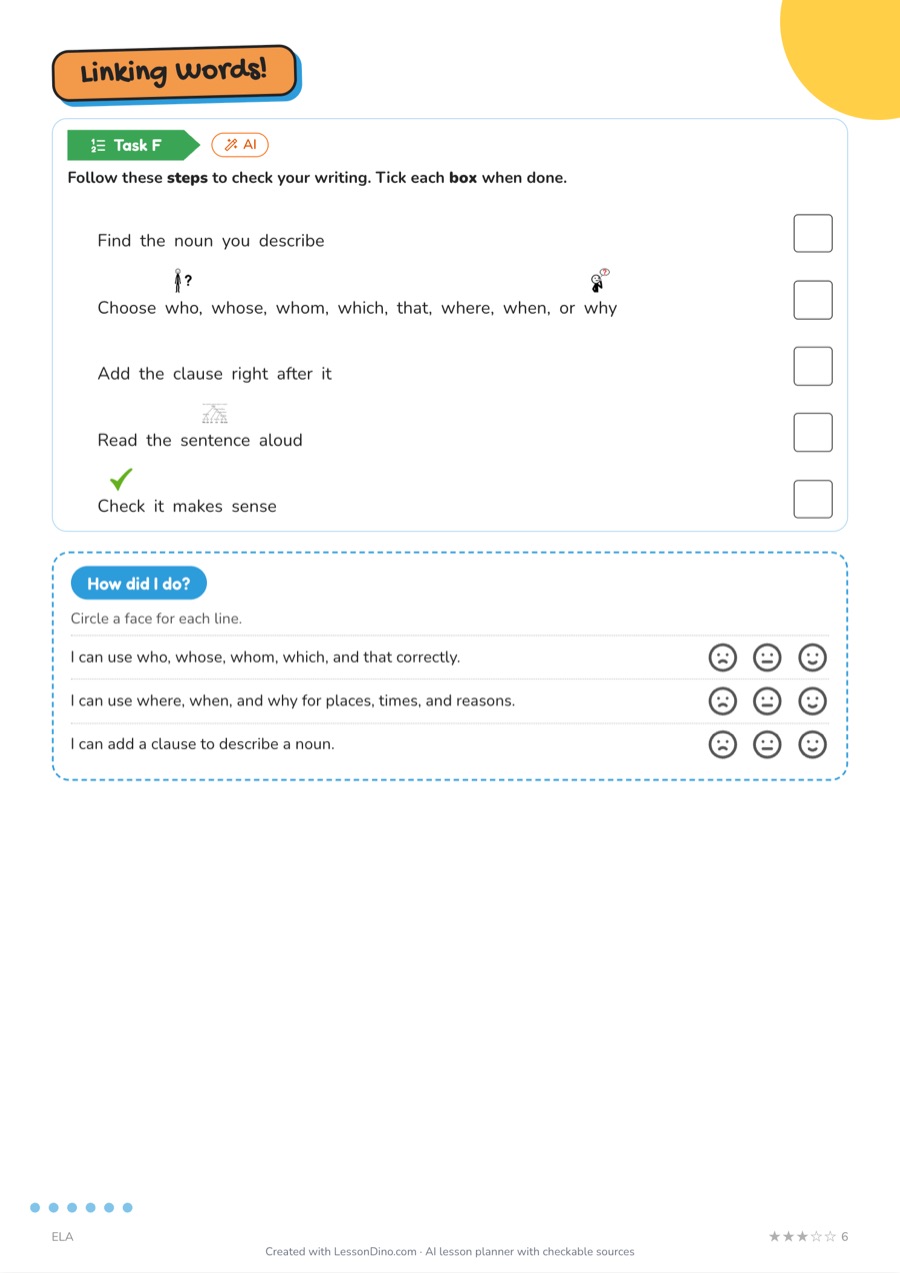
- Plenary (15 minutes): Hand out Worksheet Task F and have students tick each box as they check their riddle for a complete sentence and correct linker.
- Support: Offer riddle frames: I am a person who ___ and It is a time when ___.
- Stretch: Require a two-clue riddle that uses both a relative pronoun and a relative adverb, like It is a thing that rings when class ends.
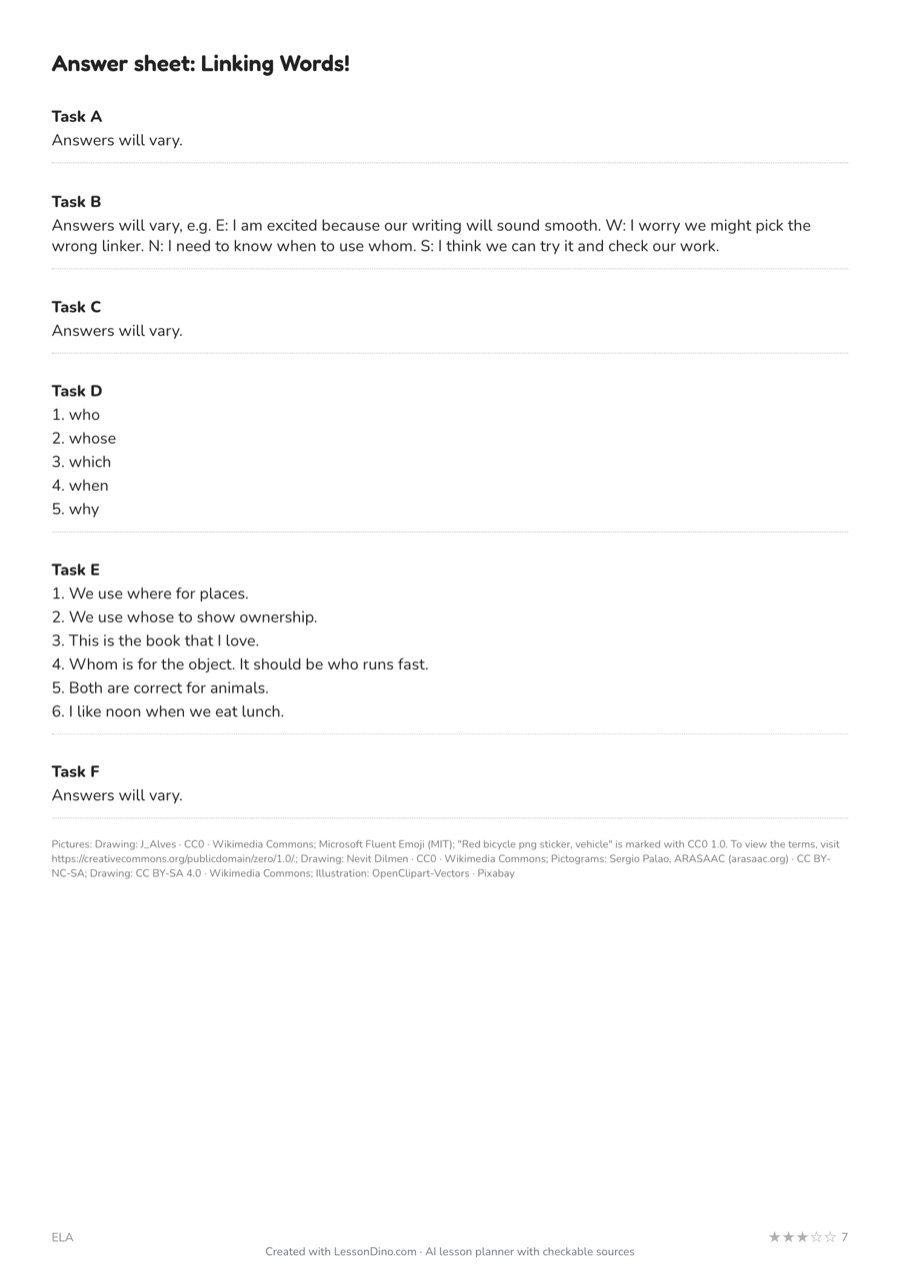
- The answer sheet is the last page, so you can print it on its own or let students check their own work.
Key vocabulary
- relative pronoun: joining word such as who, which or that that tells more about a person or thing
- relative adverb: joining word such as where, when or why that tells more about place, time or reason
- antecedent: the noun that a joining word points back to and replaces
- join: to clip two short parts together to make one smooth sentence
Mistakes to watch for
- Using who for a thing, like the pencil who broke. Ask person or thing? Use who for a person and which or that for a thing. Fix to the pencil which broke.
- Using where for time, like the day where it rained. Ask place, time, or reason? Use where for place, when for time, why for reason. Fix to the day when it rained.
- Calling where a relative pronoun in the park where we play. Restate that where, when, why are relative adverbs. Point to park as place and label where as adverb.
What's on the worksheet
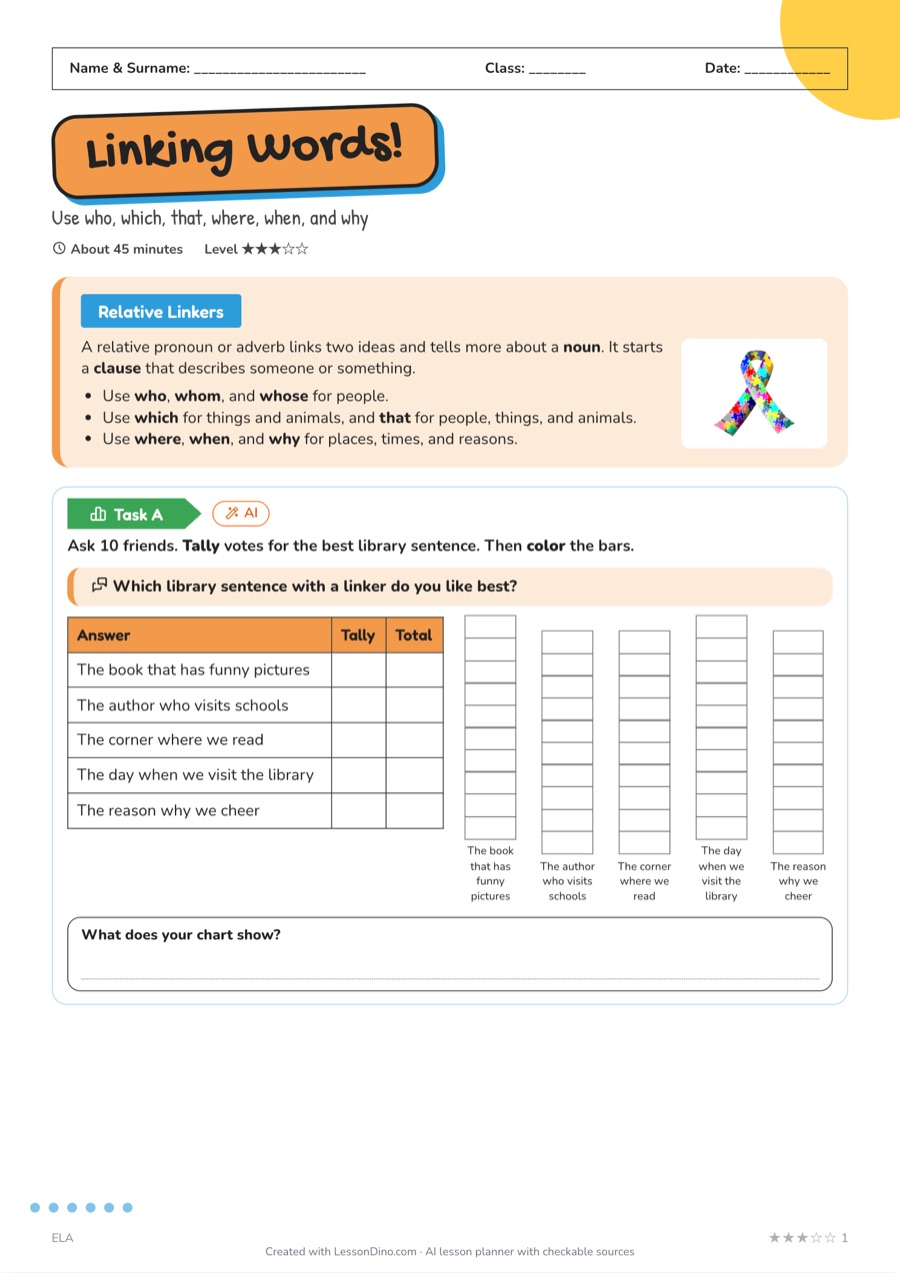
Linking Words Work!
Learn how tiny linkers join ideas into smooth sentences.
Relative Linkers
- A relative pronoun or adverb links two ideas and tells more about a noun. It starts a clause that describes someone or something.
- Use who, whom, and whose for people.
- Use which for things and animals, and that for people, things, and animals.
- Use where, when, and why for places, times, and reasons.
Ask 10 friends. Tally votes for the best library sentence. Then color the bars.
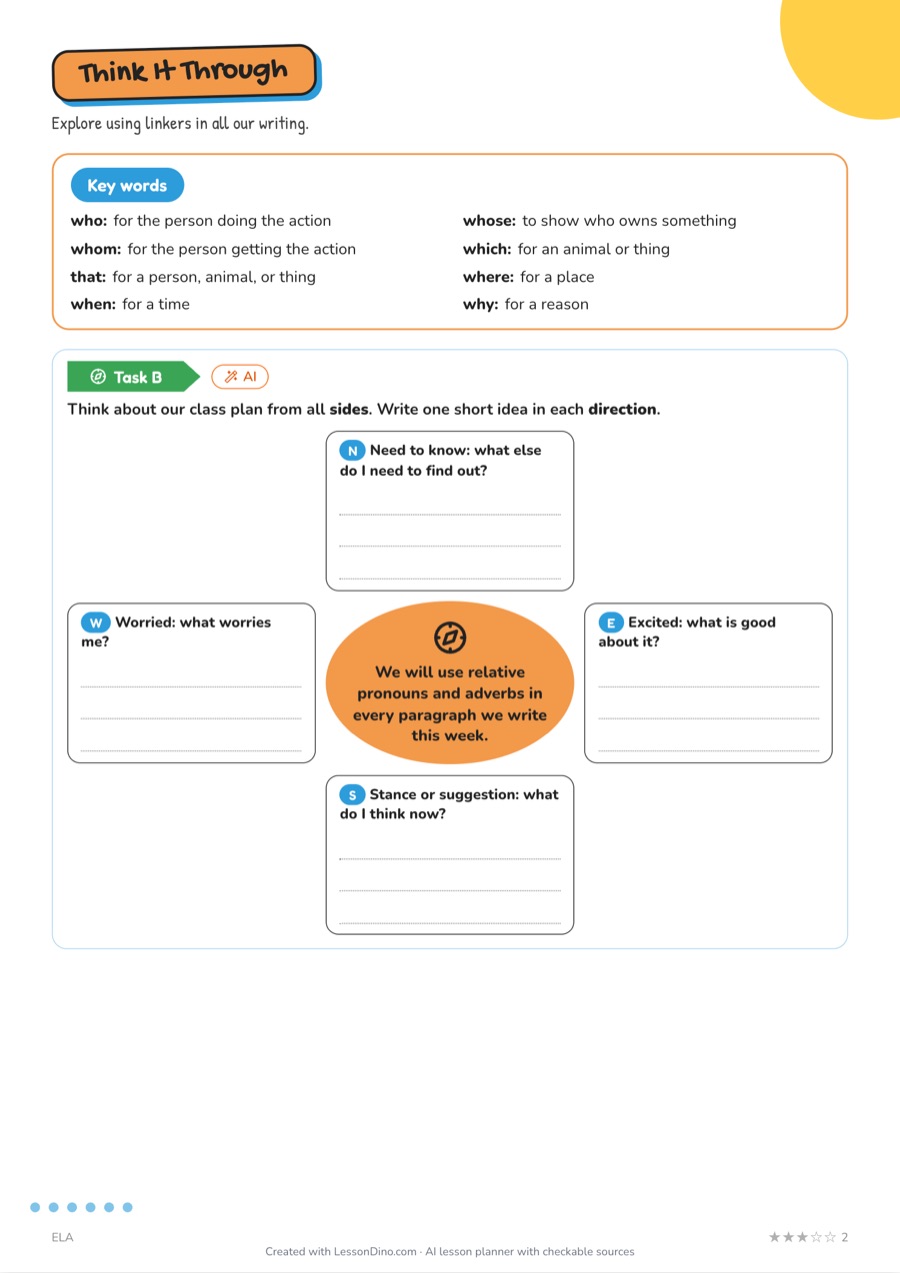
Think It Through
Explore using linkers in all our writing.
| Word | Meaning |
|---|---|
| who | for the person doing the action |
| whose | to show who owns something |
| whom | for the person getting the action |
| which | for an animal or thing |
| that | for a person, animal, or thing |
| where | for a place |
| when | for a time |
| why | for a reason |
Think about our class plan from all sides. Write one short idea in each direction.
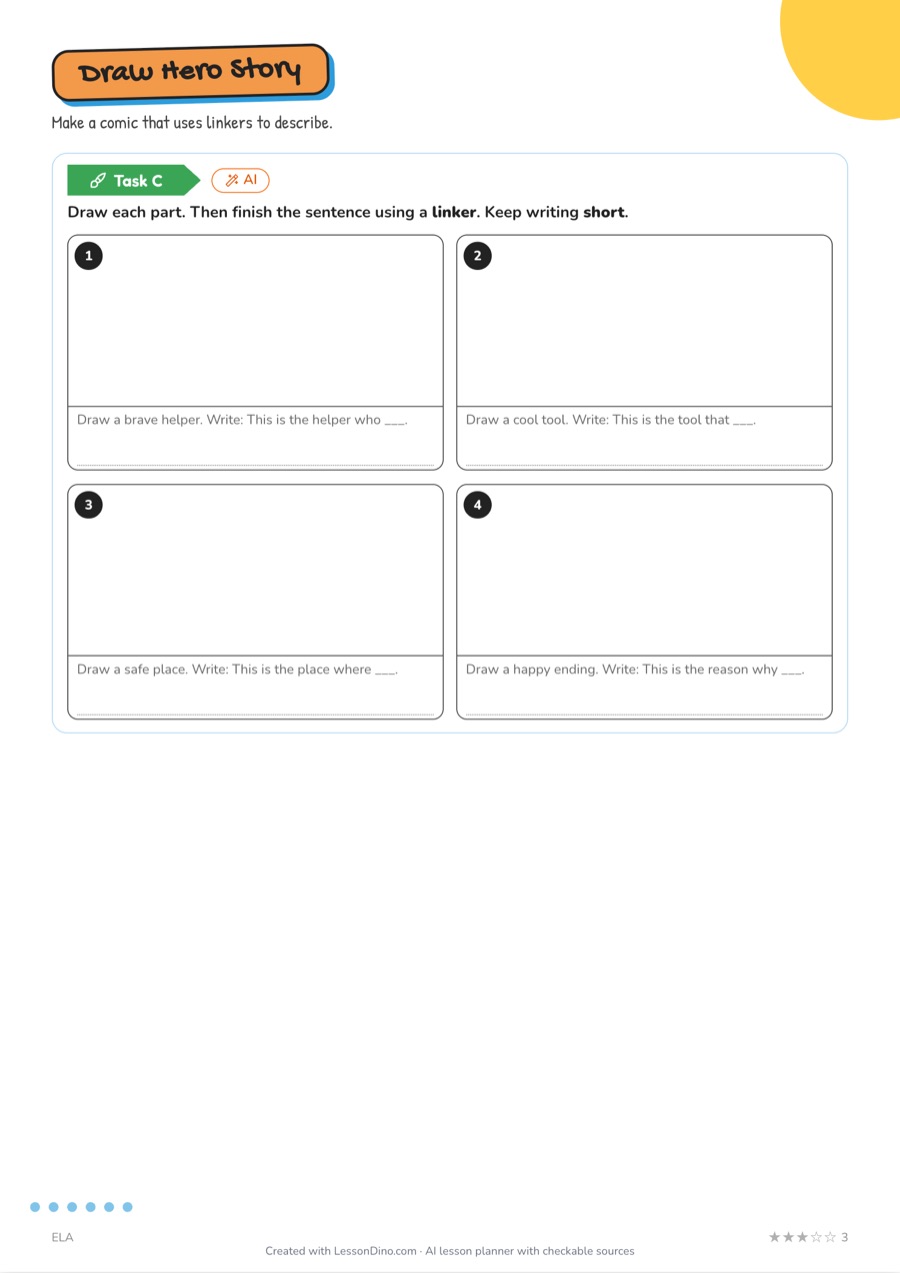
Draw Hero Story
Make a comic that uses linkers to describe.
Draw each part. Then finish the sentence using a linker. Keep writing short.
Match the Linkers
Label each picture with the correct linker.
Use the word bank to label each picture with one linker. Word bank: who, whose, which, where, when, why
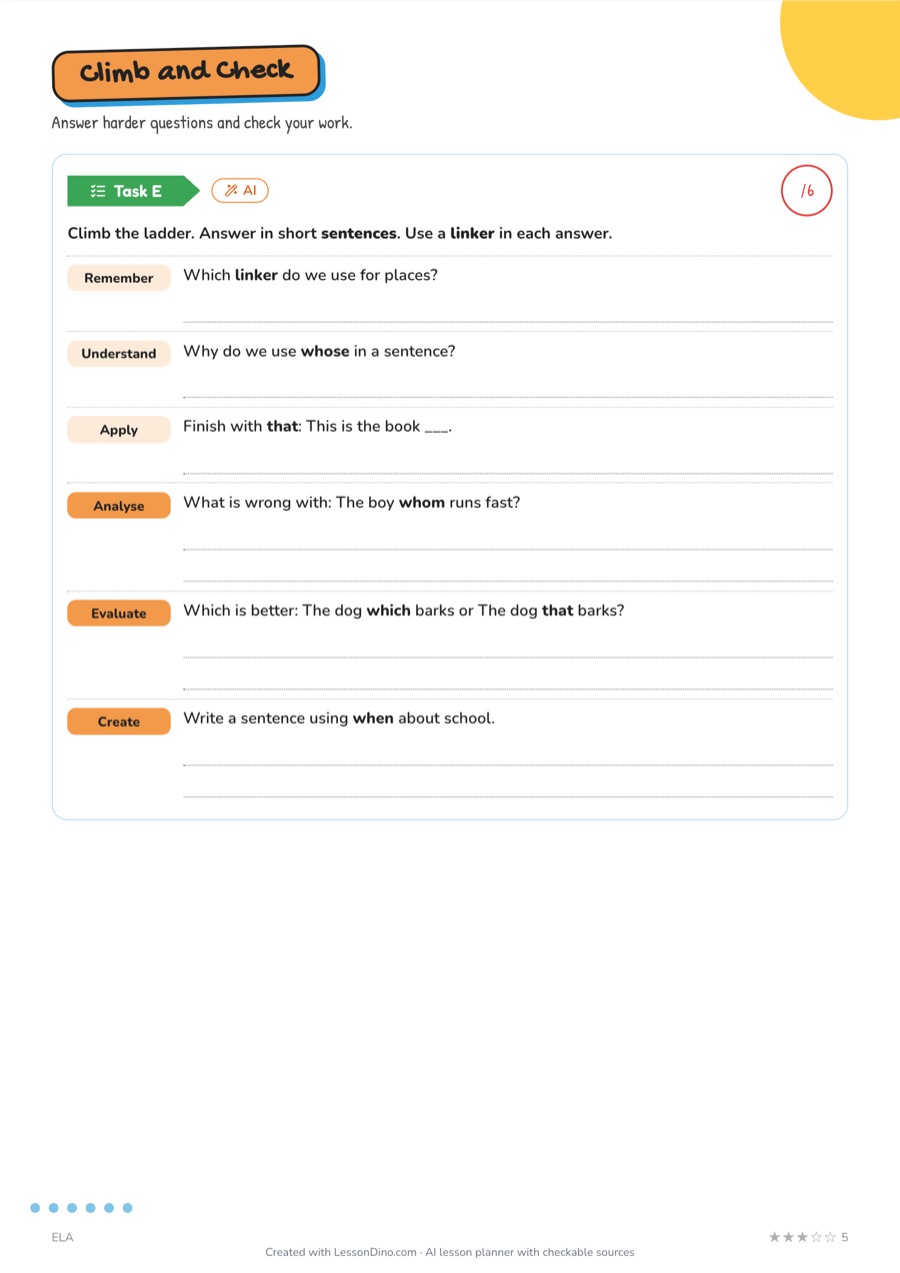
Climb and Check
Answer harder questions and check your work.
Climb the ladder. Answer in short sentences. Use a linker in each answer.
- Which linker do we use for places?
- Why do we use whose in a sentence?
- Finish with that: This is the book ___.
- What is wrong with: The boy whom runs fast?
- Which is better: The dog which barks or The dog that barks?
- Write a sentence using when about school.
Page 6
Follow these steps to check your writing. Tick each box when done.
Answers
Show the answers
- Which linker do we use for places? We use where for places.
- Why do we use whose in a sentence? We use whose to show ownership.
- Finish with that: This is the book ___. This is the book that I love.
- What is wrong with: The boy whom runs fast? Whom is for the object. It should be who runs fast.
- Which is better: The dog which barks or The dog that barks? Both are correct for animals.
- Write a sentence using when about school. I like noon when we eat lunch.
The answer sheet is the last picture above.
Curriculum
Use relative pronouns (who, whose, whom, which, that) and relative adverbs (where, when, why).
Made with Lesson Dino's AI on 17 October 2026. AI can make mistakes, so check the answers and facts against the sources before you teach.