The worksheet
About this worksheet
Students learn to tell one small event in order with actions, thoughts, and feelings. They write 4 to 5 sentences using time words and a closing feeling. This Grade 2 ELA worksheet gives students (ages 7–8) six pages of practice on creative writing: narratives, part of the writing unit. It goes with our free Creative writing: narratives lesson, which has the slides and a timed lesson plan.
What it covers
By the end, students should be able to:
- Students will write a short narrative about one real event in order.
- Students will include action, thought, and feeling details with time words.
- Students will end the narrative with a sense of closure.
How to use it
- Use it for practice after the teaching part of the lesson, once students have seen the worked examples on the slides.
- Support: Use five-line frame with starters First___, Next___, Then___, Last___ or dictate to a partner.
- Stretch: Add sound or color detail and a title that fits the problem and solution.
- The answer sheet is the last page, so you can print it on its own or let students check their own work.
Key vocabulary
- narrative: a story that tells what happened in order from start to end
- event: one thing that happens in a story
- detail: a small part that helps you see, hear, or feel what happened
- temporal word: like first, next, then, or last that shows order in time
- closure: a finished feeling at the end that shows the problem is over
Mistakes to watch for
- Events told out of order or missing time words. Use 3-box plan in order and point to each time word as you retell.
- Telling feeling only, like I was sad, with no action. Show and not just tell: add tears, hugs, shaky hands, or loud clatter.
- Story just stops with no closure. Add Finally or In the end plus closing feeling linked to the problem.
What's on the worksheet
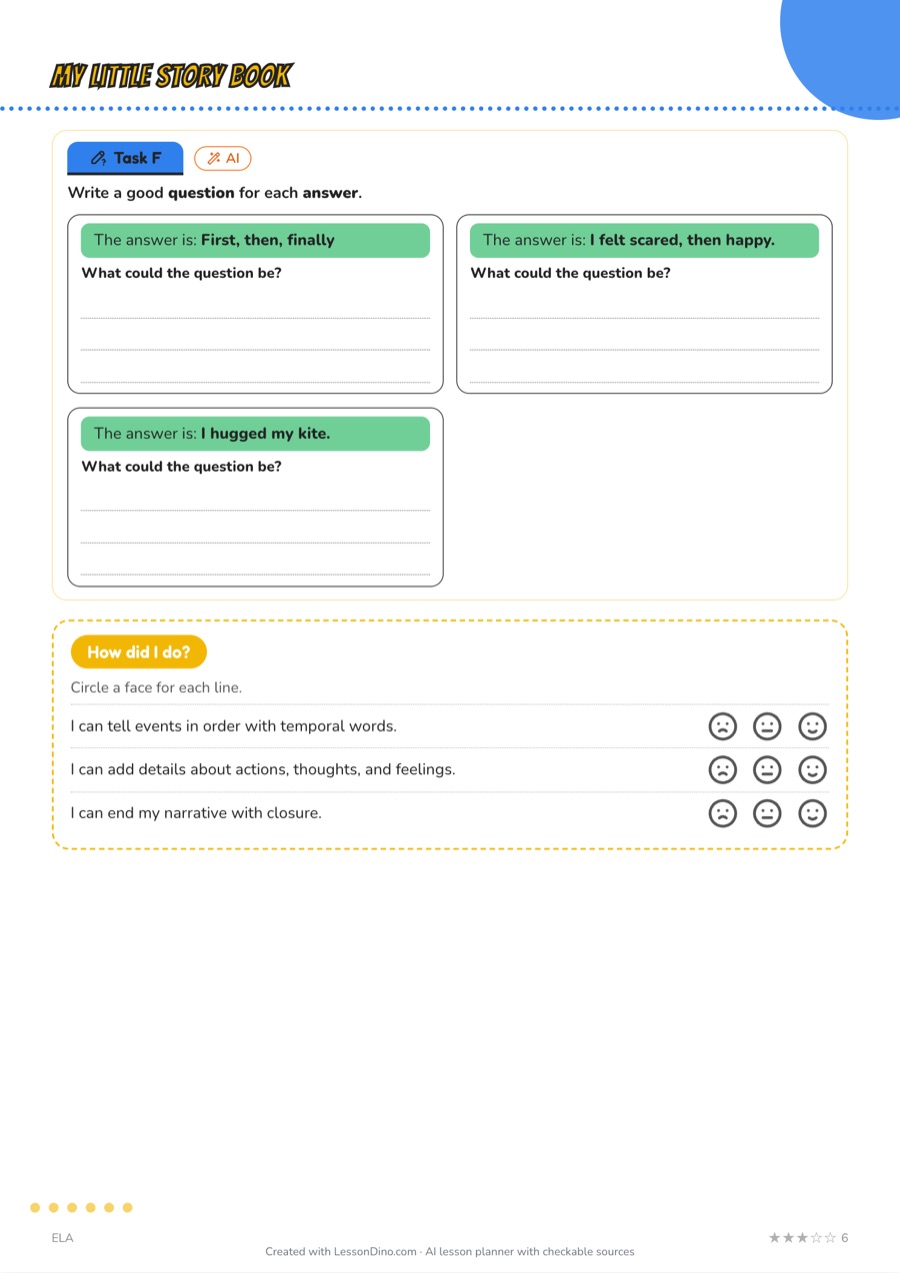
Tell Your Story
Learn what makes a strong narrative.
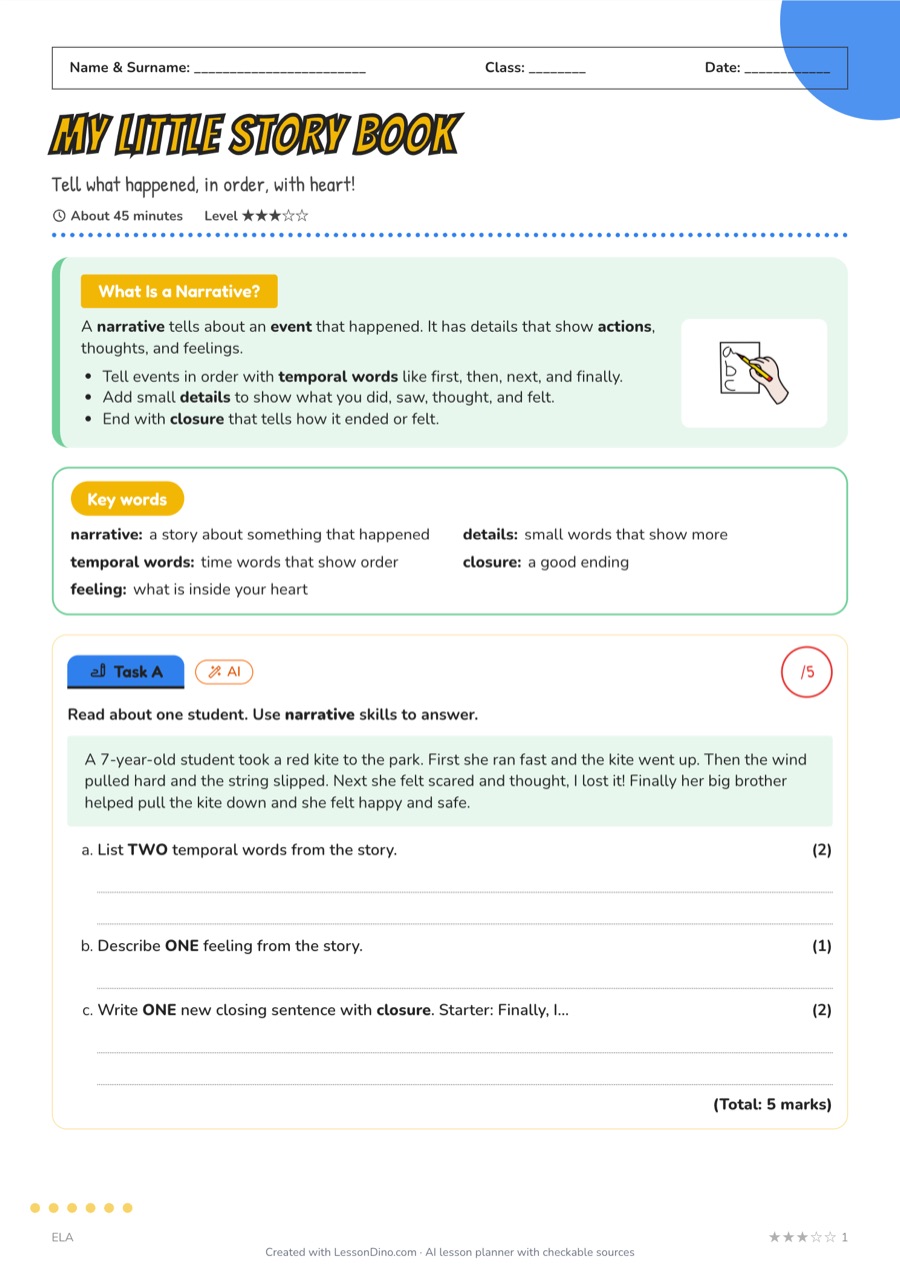
What Is a Narrative?
- A narrative tells about an event that happened. It has details that show actions, thoughts, and feelings.
- Tell events in order with temporal words like first, then, next, and finally.
- Add small details to show what you did, saw, thought, and felt.
- End with closure that tells how it ended or felt.
| Word | Meaning |
|---|---|
| narrative | a story about something that happened |
| details | small words that show more |
| temporal words | time words that show order |
| closure | a good ending |
| feeling | what is inside your heart |
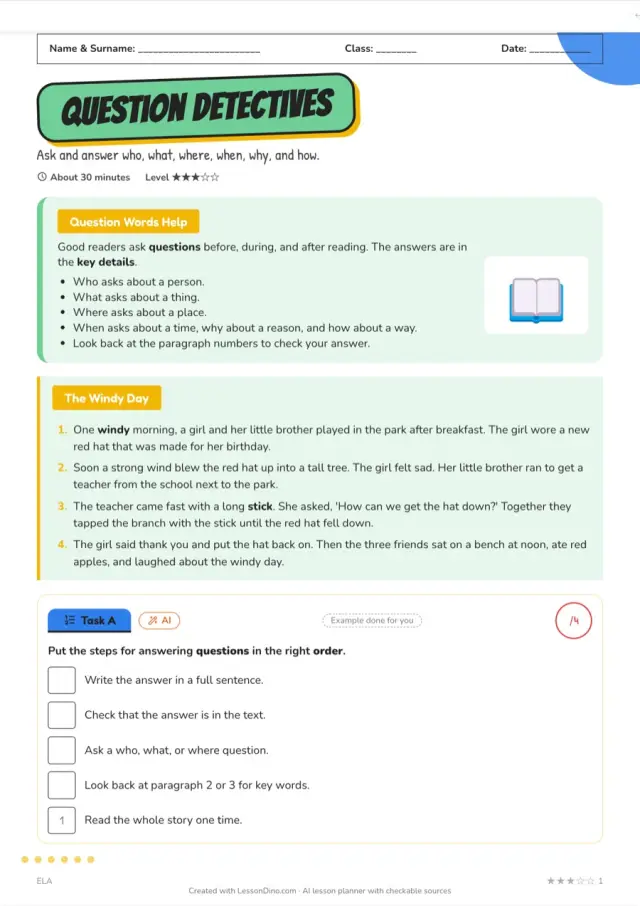
Read about one student. Use narrative skills to answer.
Draw the Moment
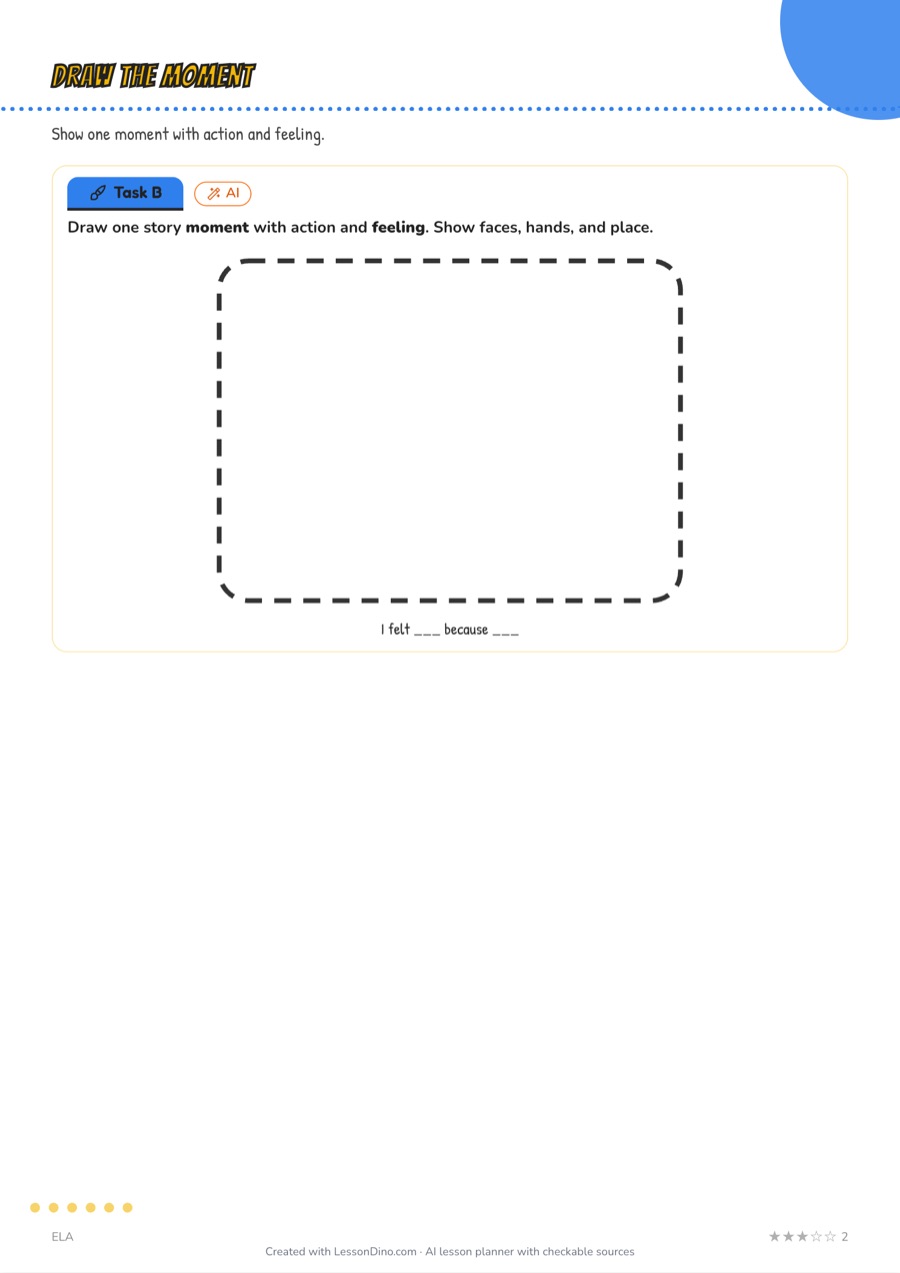
Show one moment with action and feeling.
Draw one story moment with action and feeling. Show faces, hands, and place.
Order Your Story
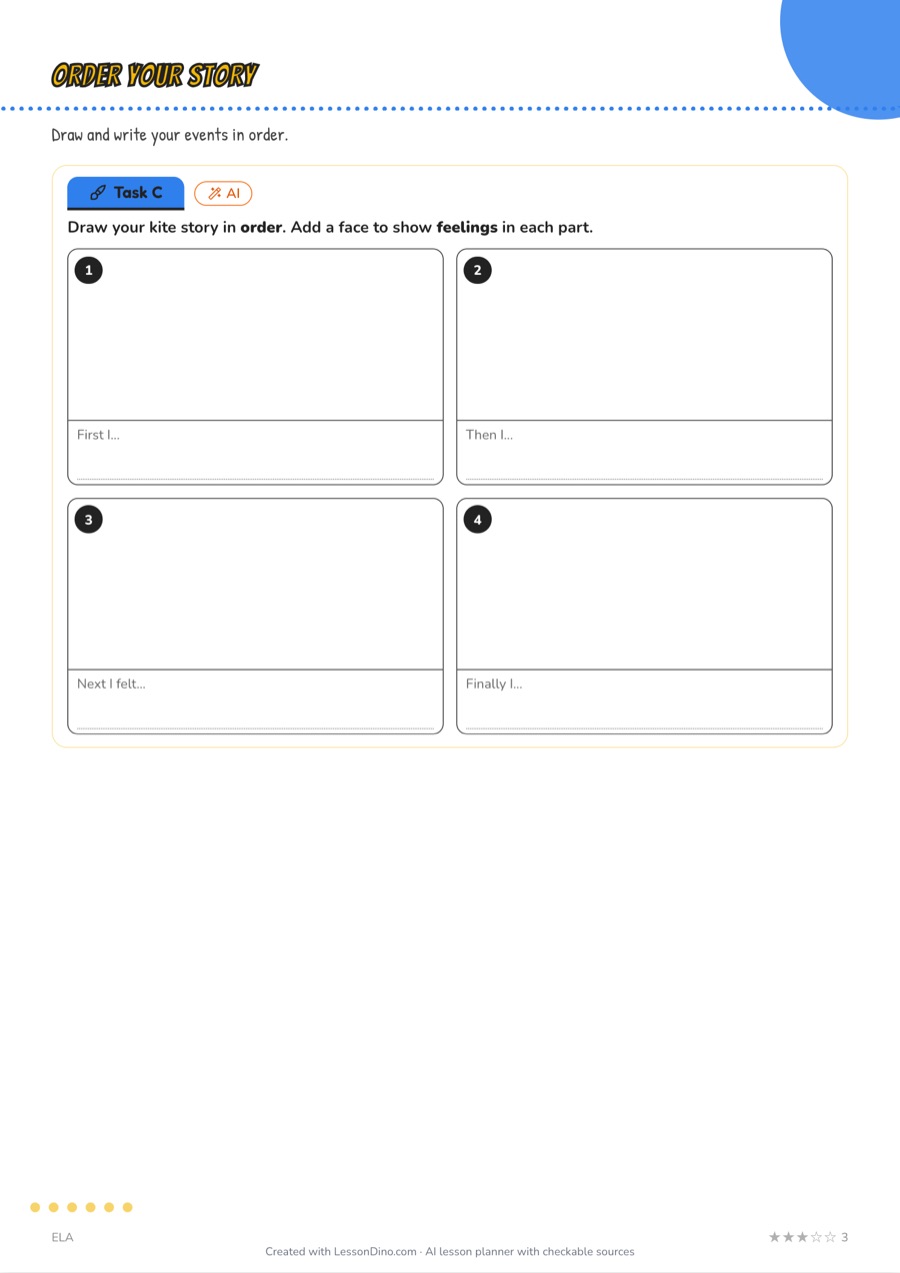
Draw and write your events in order.
Draw your kite story in order. Add a face to show feelings in each part.
Ask and Play
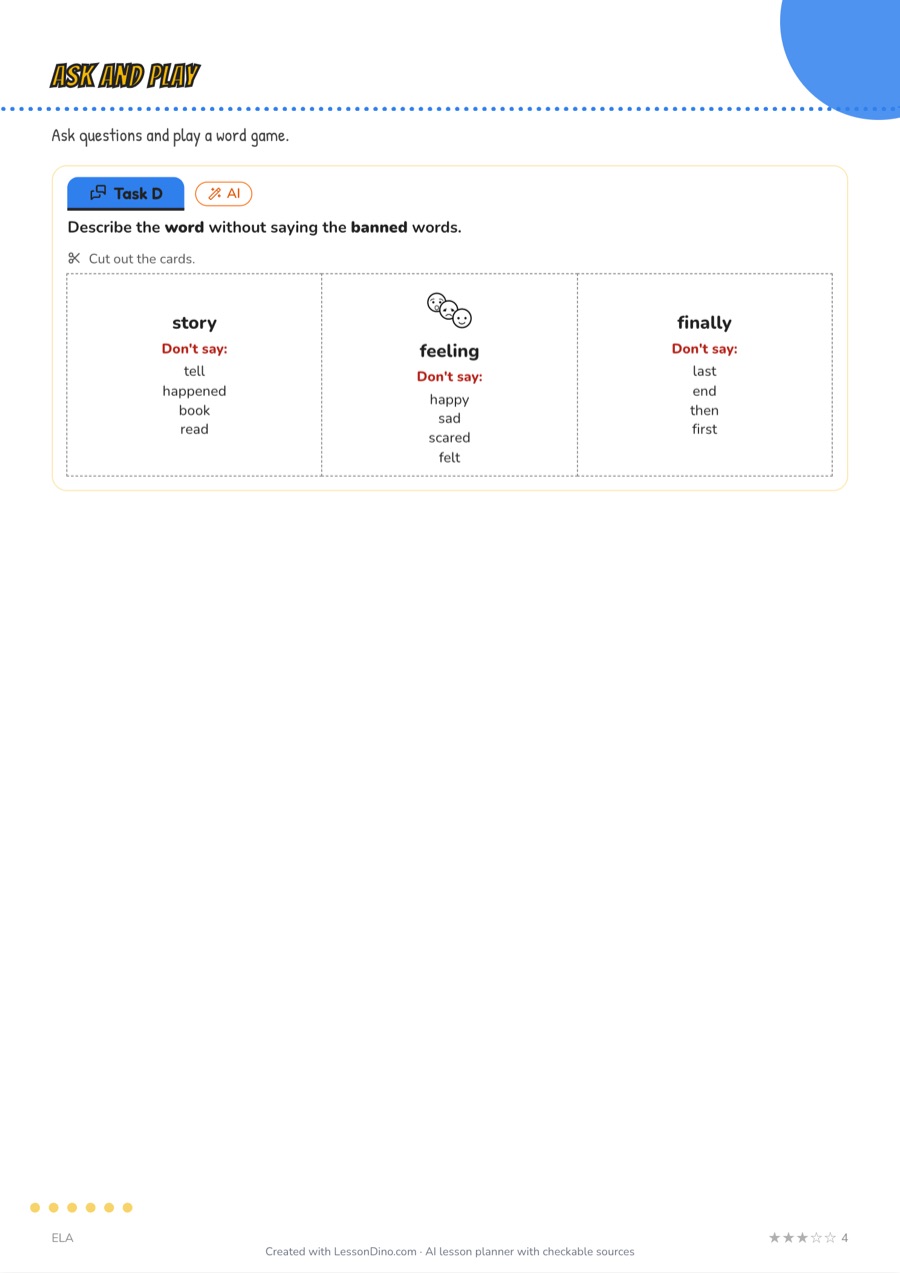
Ask questions and play a word game.
Describe the word without saying the banned words.
End With Meaning
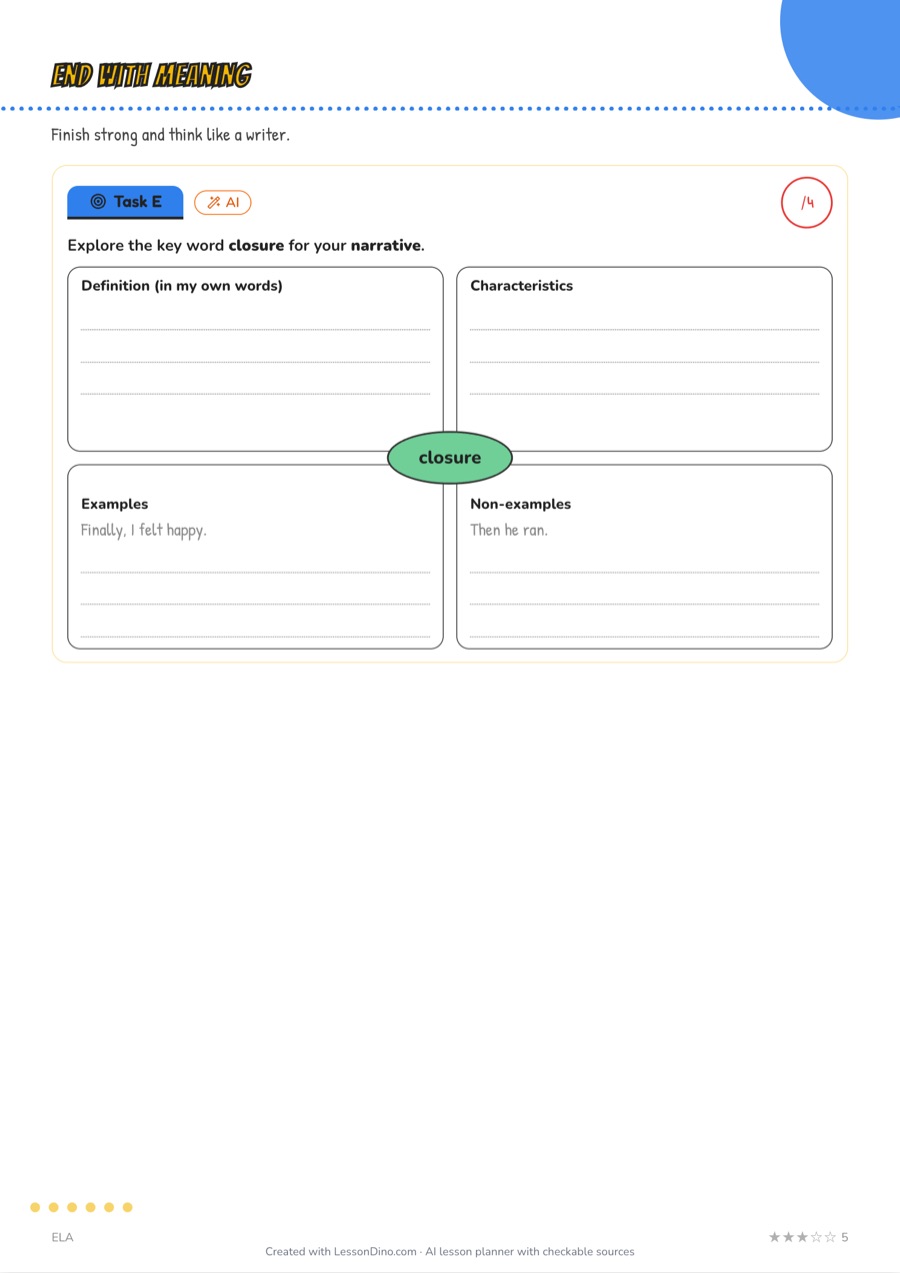
Finish strong and think like a writer.
Explore the key word closure for your narrative.
Page 6
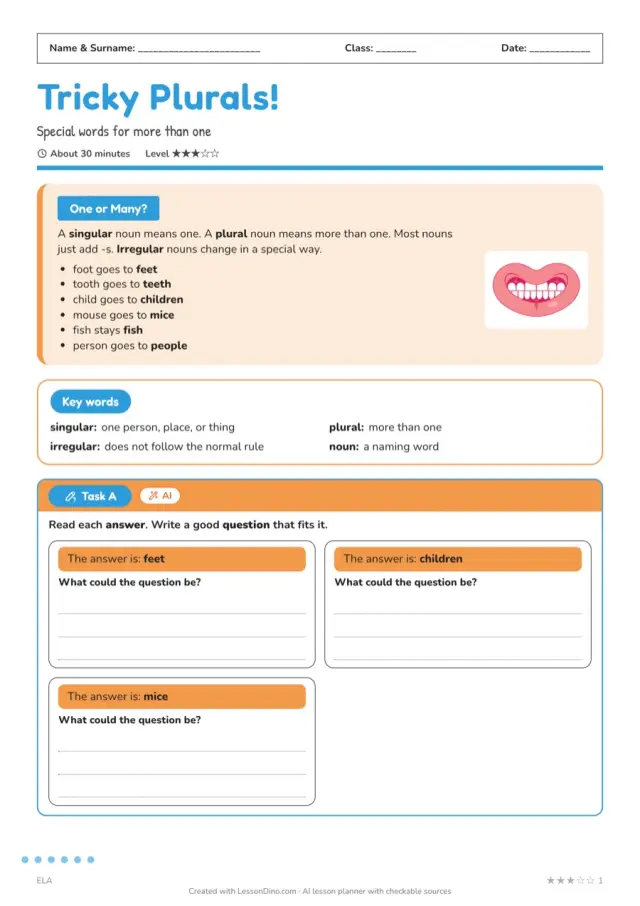
Write a good question for each answer.
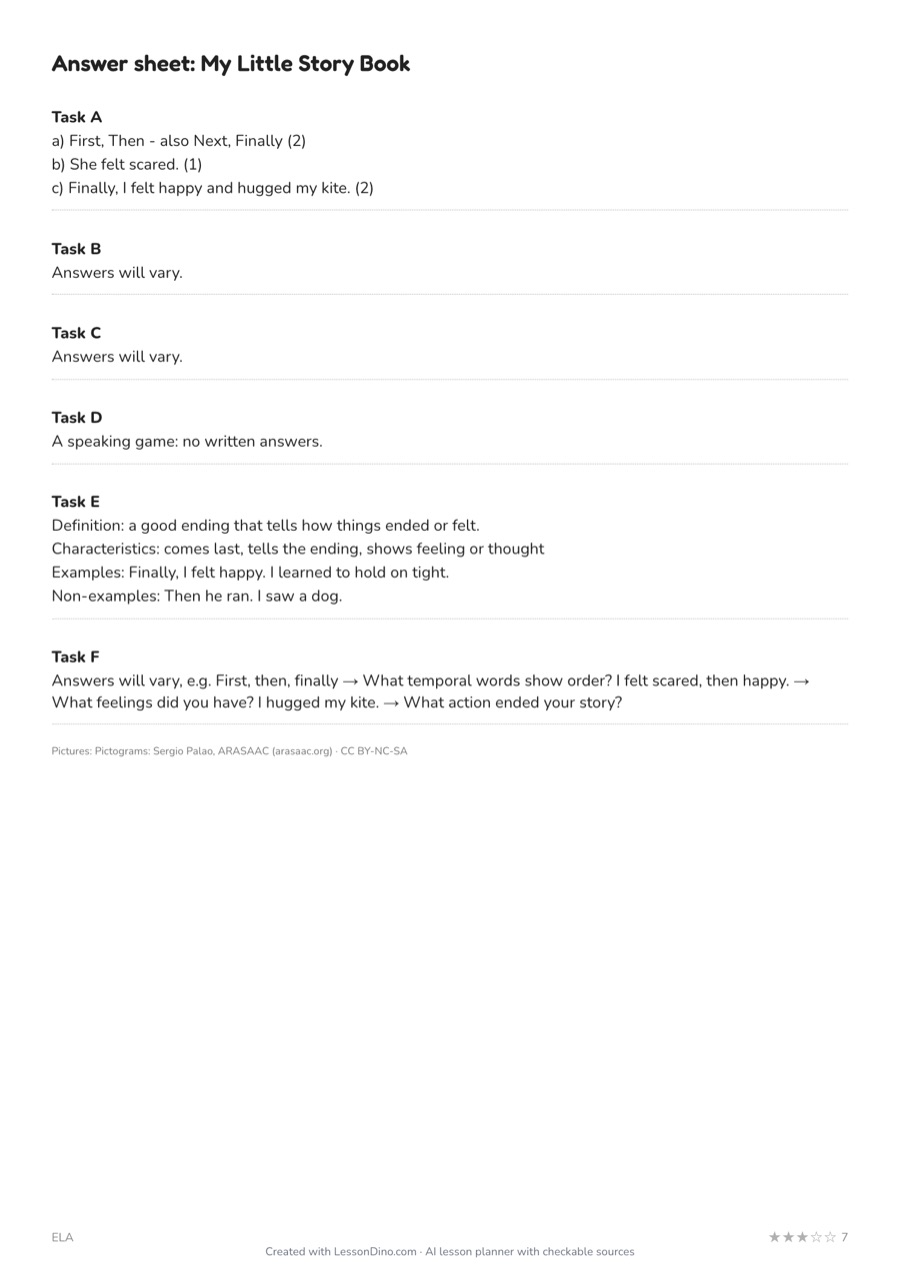
Answers
Show the answers
- List TWO temporal words from the story. First, Then - also Next, Finally
- Describe ONE feeling from the story. She felt scared.
- Write ONE new closing sentence with closure. Starter: Finally, I... Finally, I felt happy and hugged my kite.
The answer sheet is the last picture above.
Curriculum
Write narratives in which they recount a well-elaborated event or short sequence of events, include details to describe actions, thoughts, and feelings, use temporal words to signal event order, and provide a sense of closure.
Made with Lesson Dino's AI on 16 October 2026. AI can make mistakes, so check the answers and facts against the sources before you teach.