The worksheet
About this worksheet
Students retell The Tortoise and the Hare in order. They find the moral and match two more fables to lessons. This Grade 2 ELA worksheet gives students (ages 7–8) six pages of practice on fables and morals, part of the reading literature unit. It goes with our free Fables and morals lesson, which has the slides and a timed lesson plan.
What it covers
By the end, students should be able to:
- Students will recount The Tortoise and the Hare in order with key details.
- Students will answer who, what, and where to show story understanding.
- Students will determine the central moral in one short sentence.
How to use it
- Practice (10 minutes): Hand out Worksheet Task A and point to Passage Three Short Fables paragraphs 1 to 3.
- Support: Use fewer cards, starters, and picture prompts for ordering and retelling.
- Stretch: Add character thinking, compare two morals, or tell the lesson in own words.
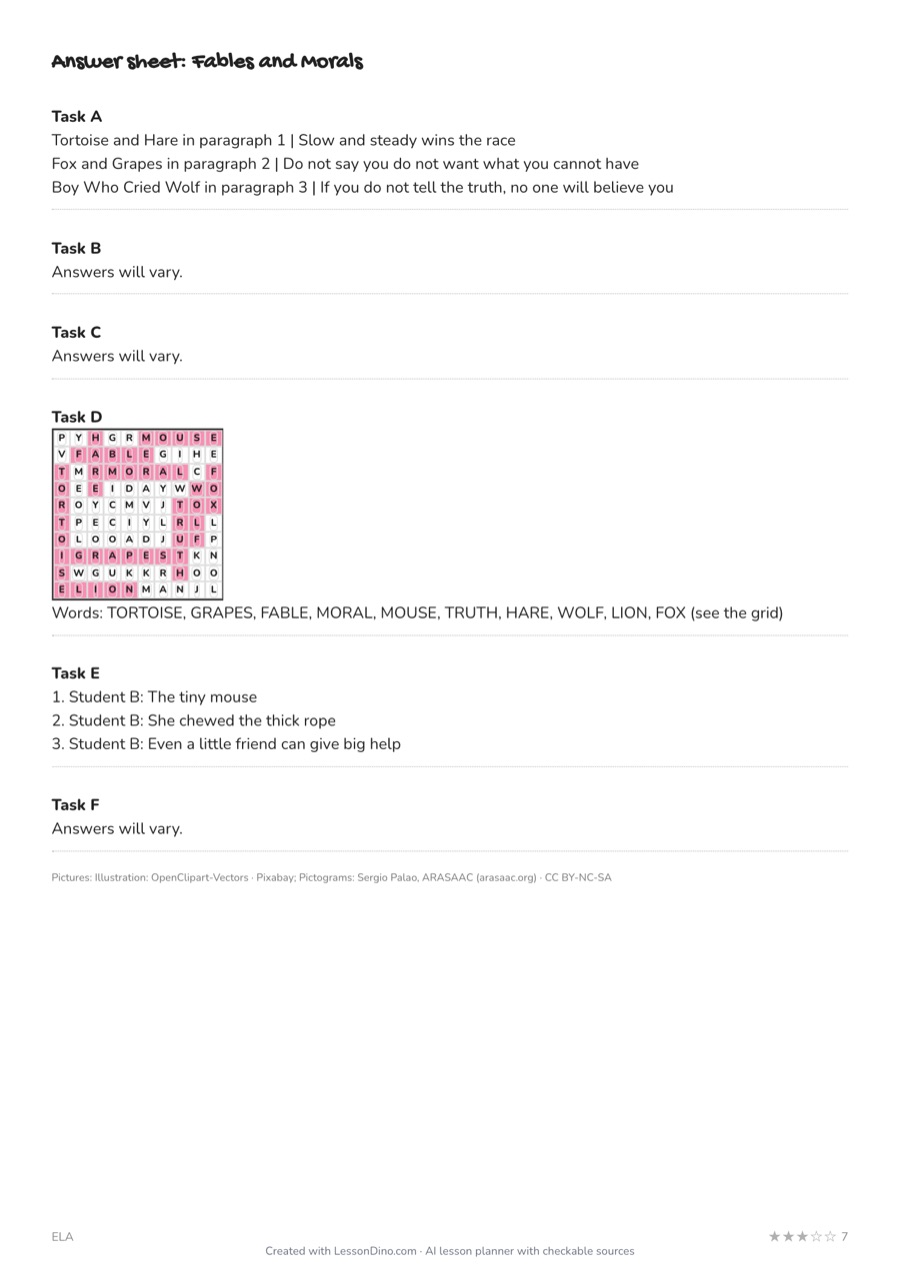
- The answer sheet is the last page, so you can print it on its own or let students check their own work.
Key vocabulary
- fable: a short tale that teaches a lesson
- moral: the lesson about good behavior at the end of a tale
- recount: to tell again what happened in order
- steady: keeping going without stopping
- detail: a small but important piece of information
Mistakes to watch for
- Retelling details but missing the lesson. Ask: What did the actions teach? Point to ending line and say it in 6-8 words.
- Thinking animals in fables act only like animals. Remind: in fables animals think and talk like humans while still acting like themselves.
- Mixing beginning, middle, and end order. Reorder cards and label how the beginning introduces the story and the ending concludes the action.
What's on the worksheet
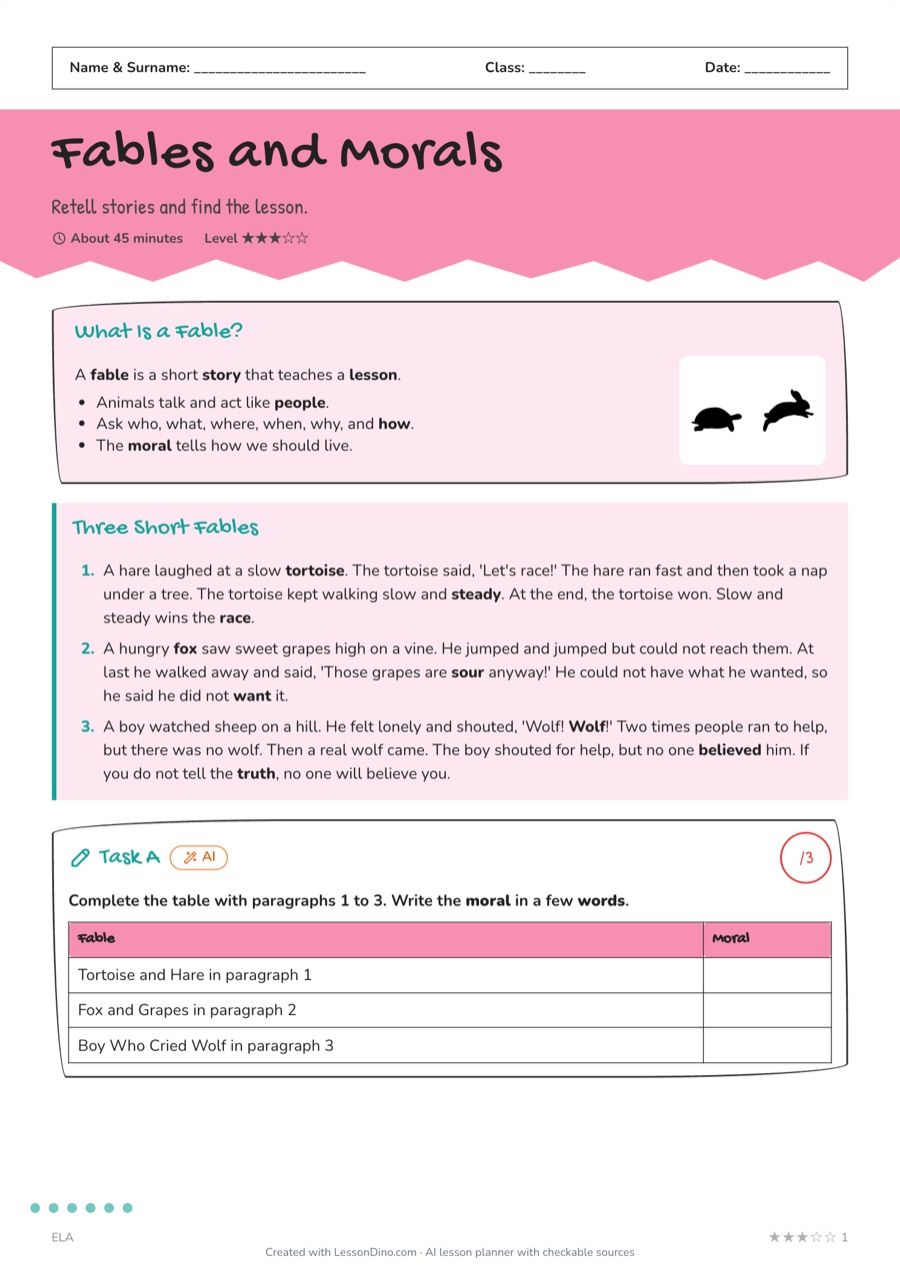
Fables Teach Lessons
Learn what a fable is and match morals.
What Is a Fable?
- A fable is a short story that teaches a lesson.
- Animals talk and act like people.
- Ask who, what, where, when, why, and how.
- The moral tells how we should live.
Three Short Fables
Complete the table with paragraphs 1 to 3. Write the moral in a few words.
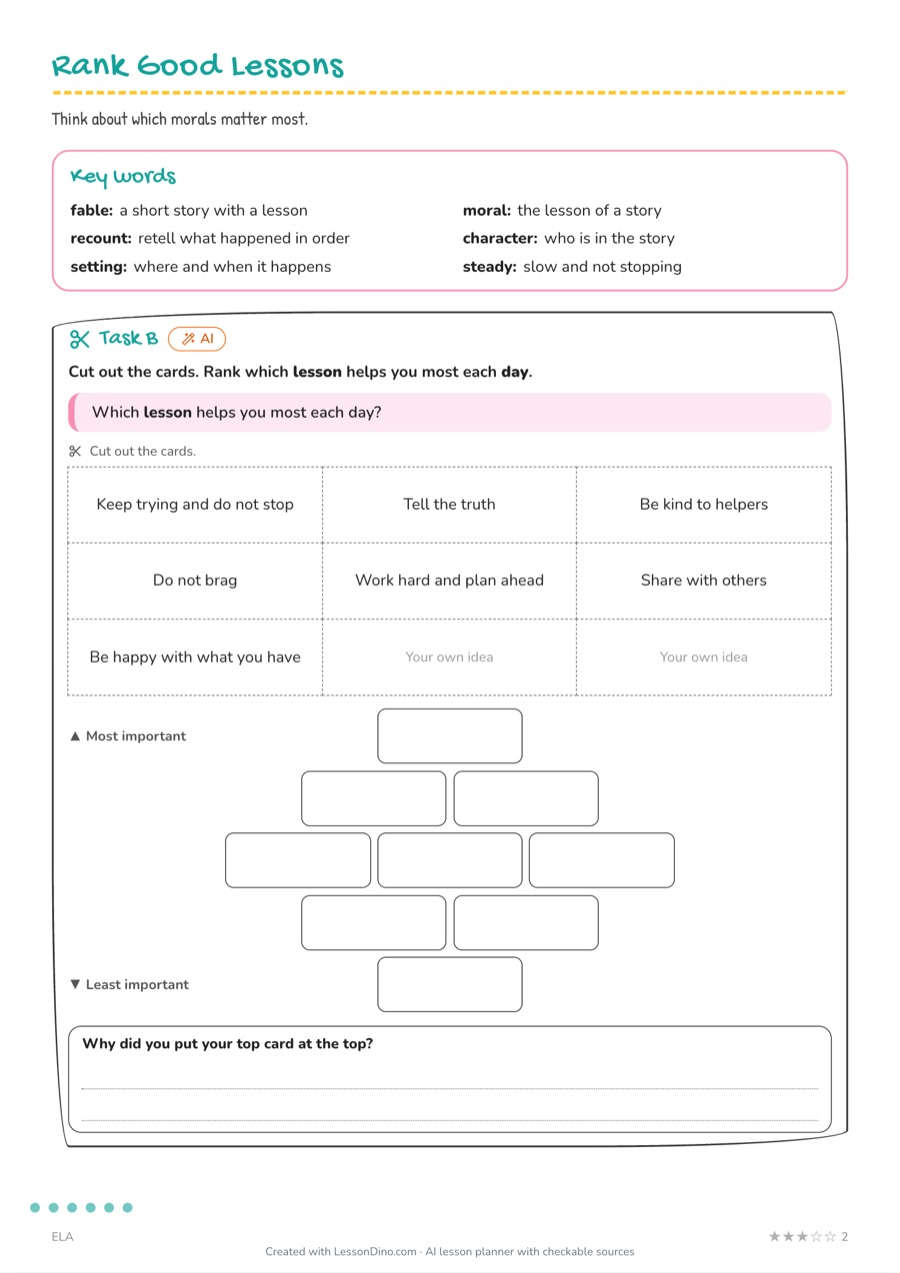
Rank Good Lessons
Think about which morals matter most.
| Word | Meaning |
|---|---|
| fable | a short story with a lesson |
| moral | the lesson of a story |
| recount | retell what happened in order |
| character | who is in the story |
| setting | where and when it happens |
| steady | slow and not stopping |
Cut out the cards. Rank which lesson helps you most each day.
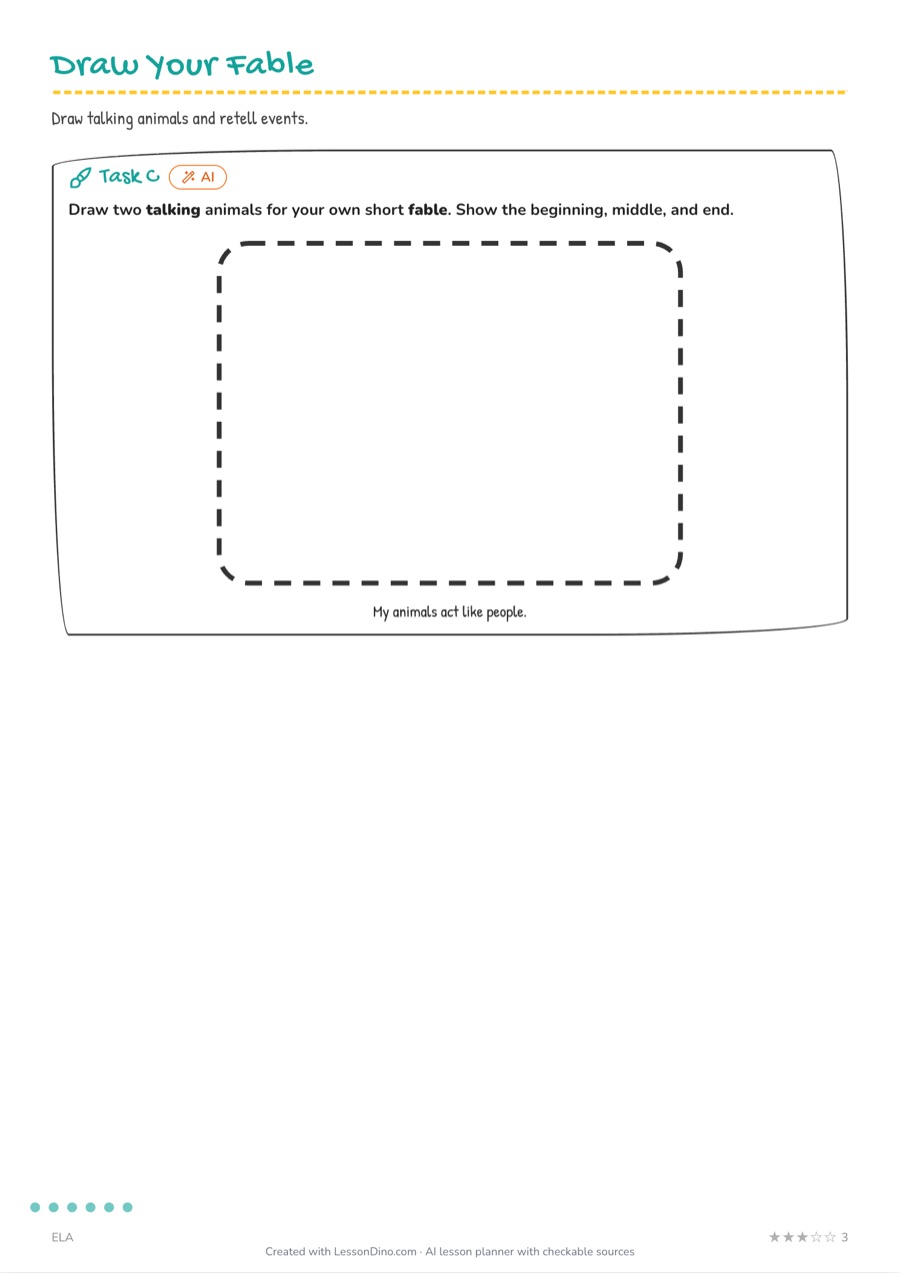
Draw Your Fable
Draw talking animals and retell events.
Draw two talking animals for your own short fable. Show the beginning, middle, and end.
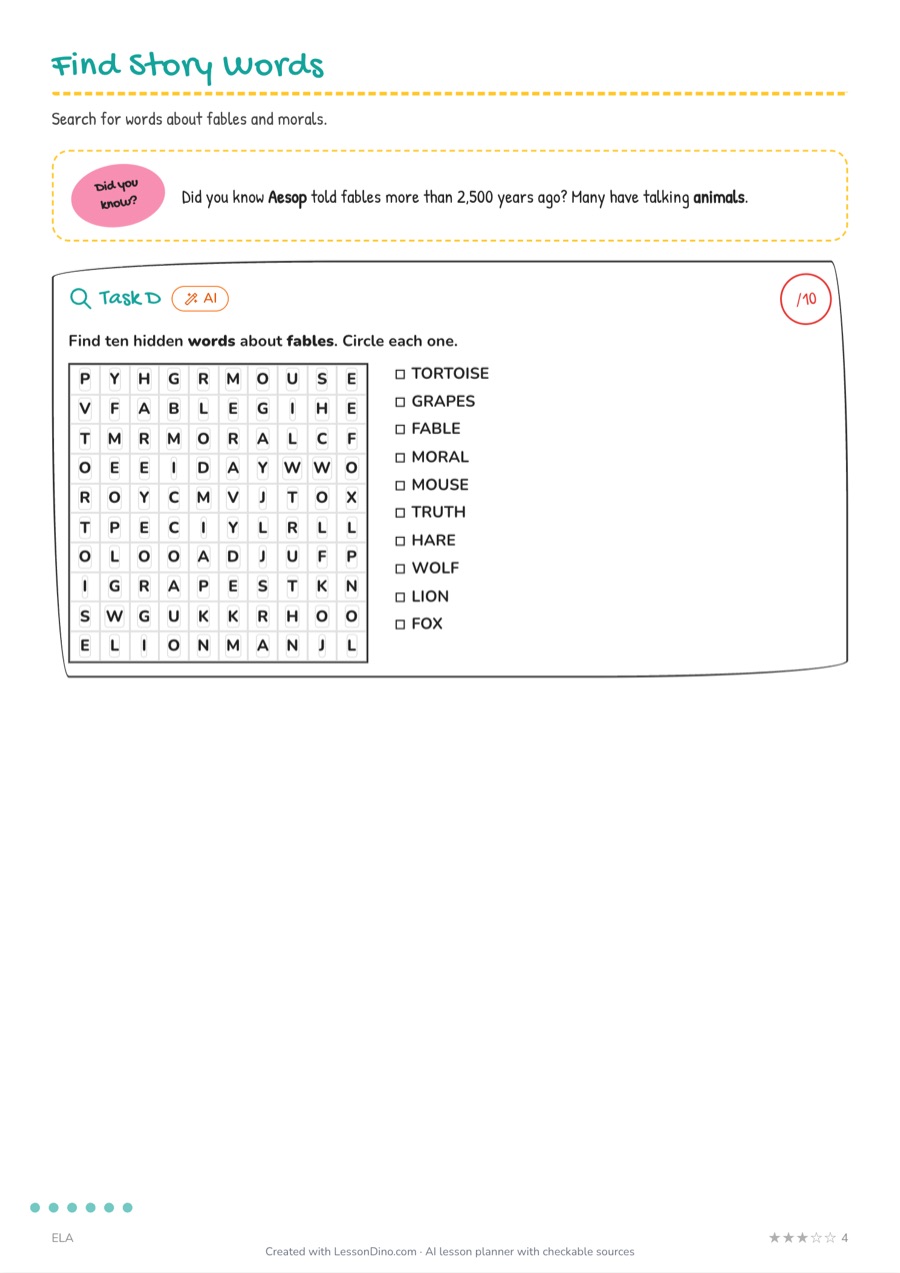
Find Story Words
Search for words about fables and morals.
- Did you know Aesop told fables more than 2,500 years ago? Many have talking animals.
Find ten hidden words about fables. Circle each one.
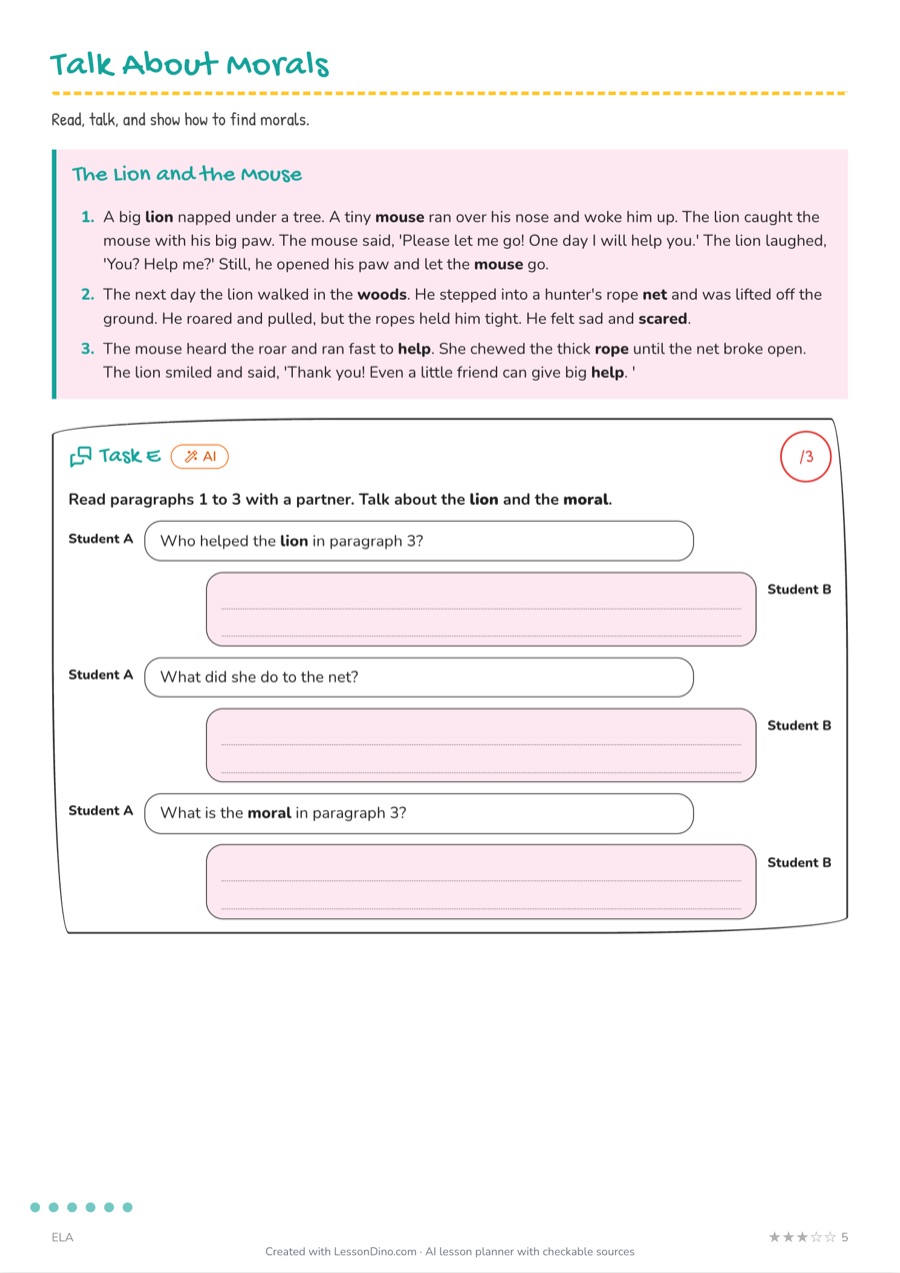
Talk About Morals
Read, talk, and show how to find morals.
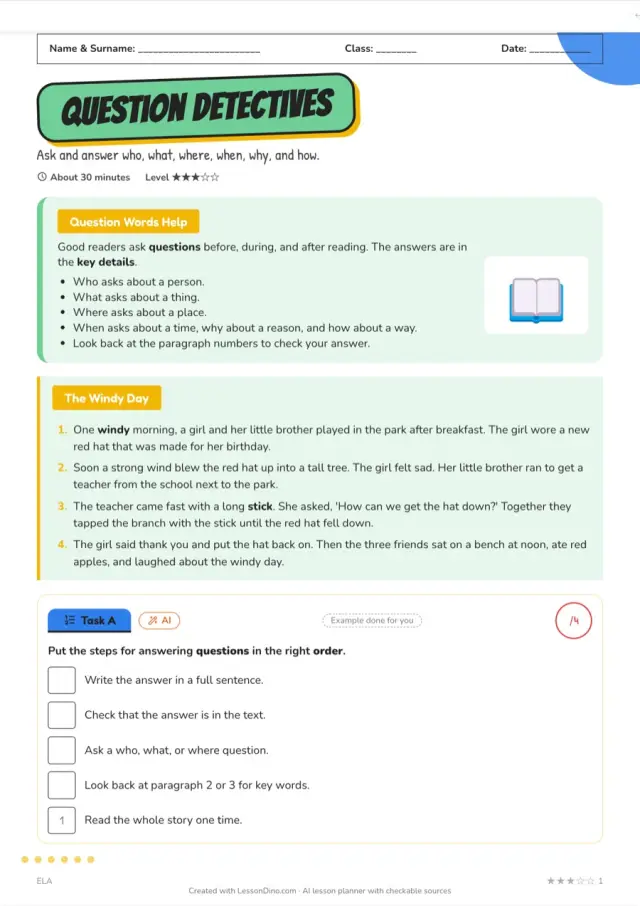
The Lion and the Mouse
Read paragraphs 1 to 3 with a partner. Talk about the lion and the moral.
Page 6
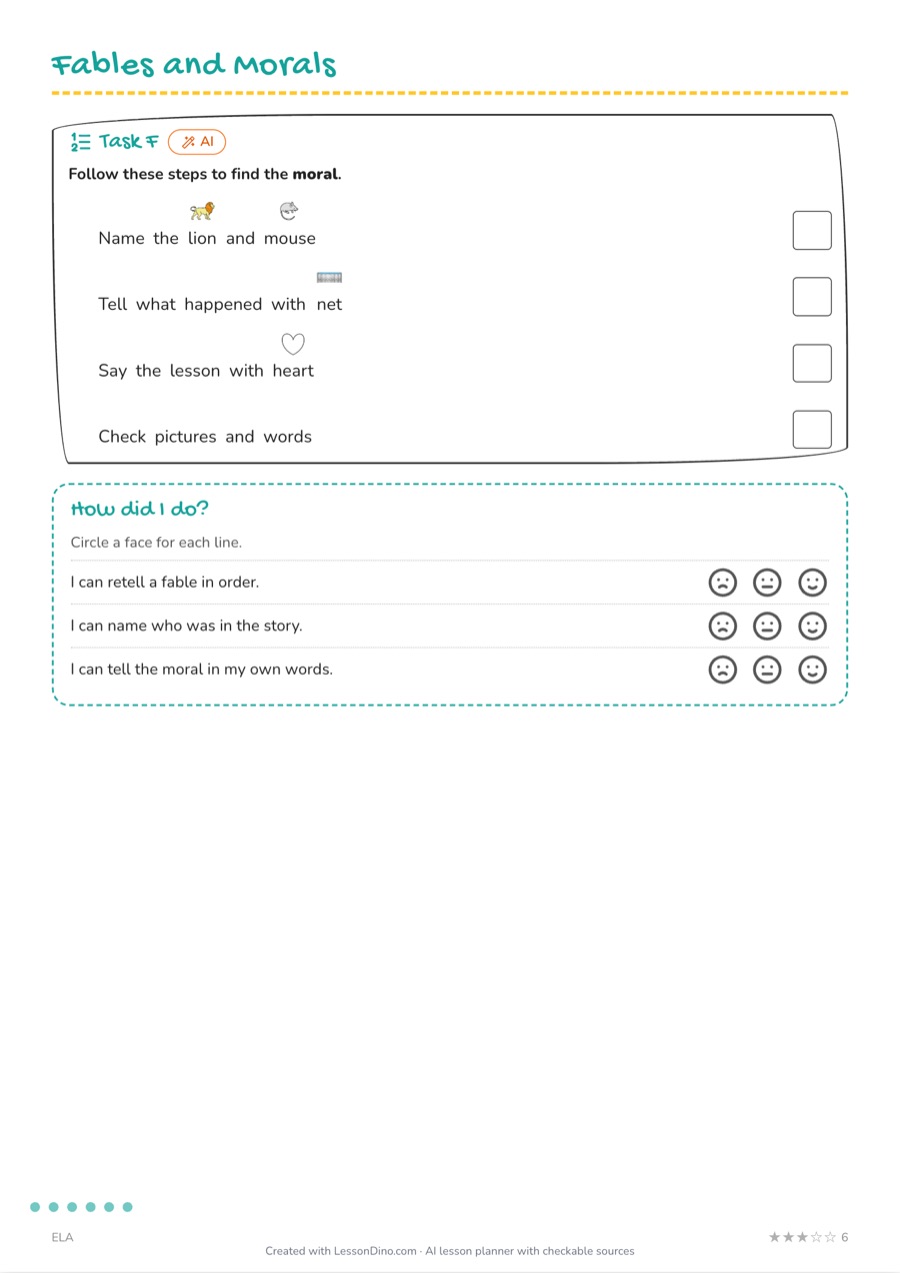
Follow these steps to find the moral.
Answers
Show the answers
The answers are on the answer sheet, the last picture above.
Curriculum
Recount stories, including fables and folktales from diverse cultures, and determine their central message, lesson, or moral.
Made with Lesson Dino's AI on 17 October 2026. AI can make mistakes, so check the answers and facts against the sources before you teach.