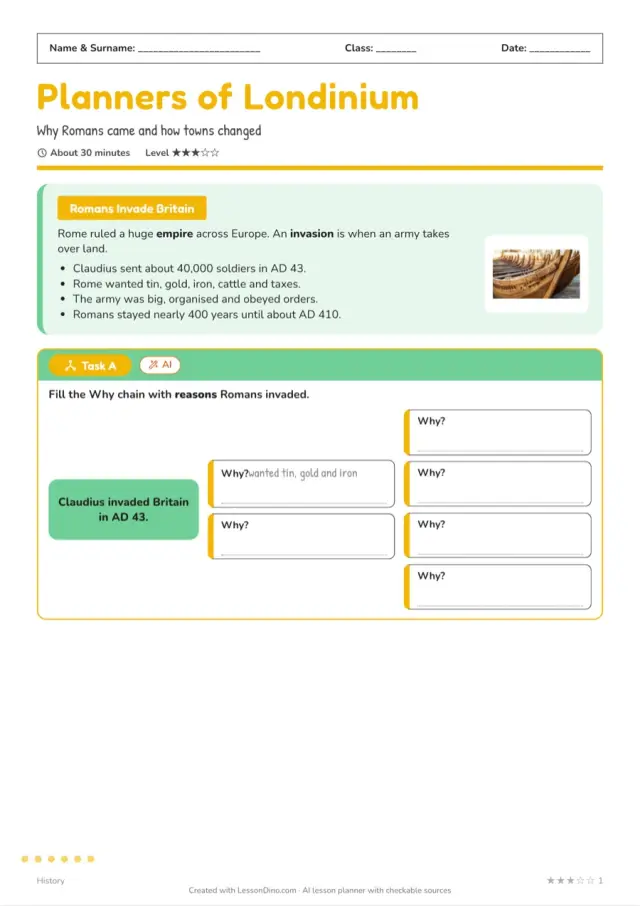
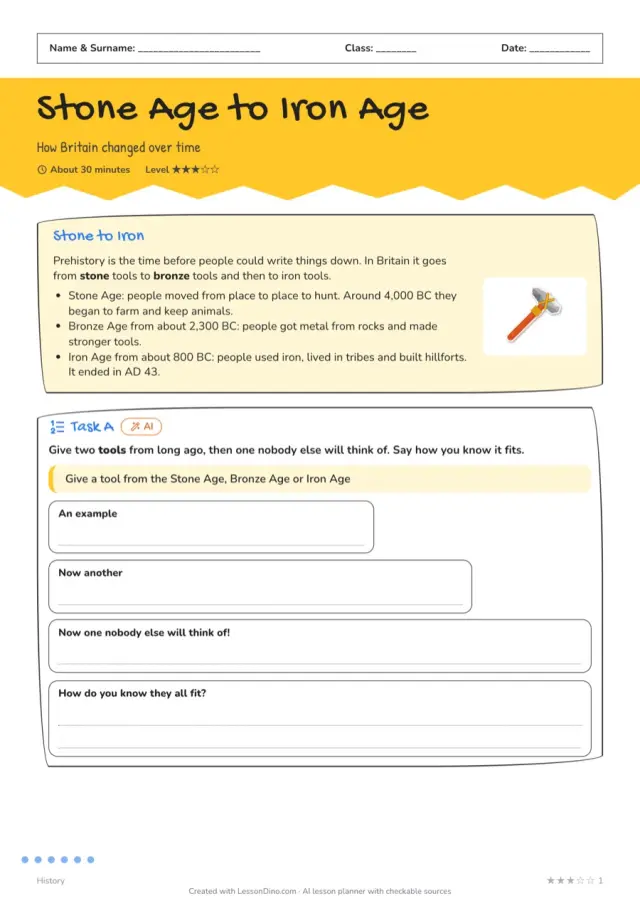
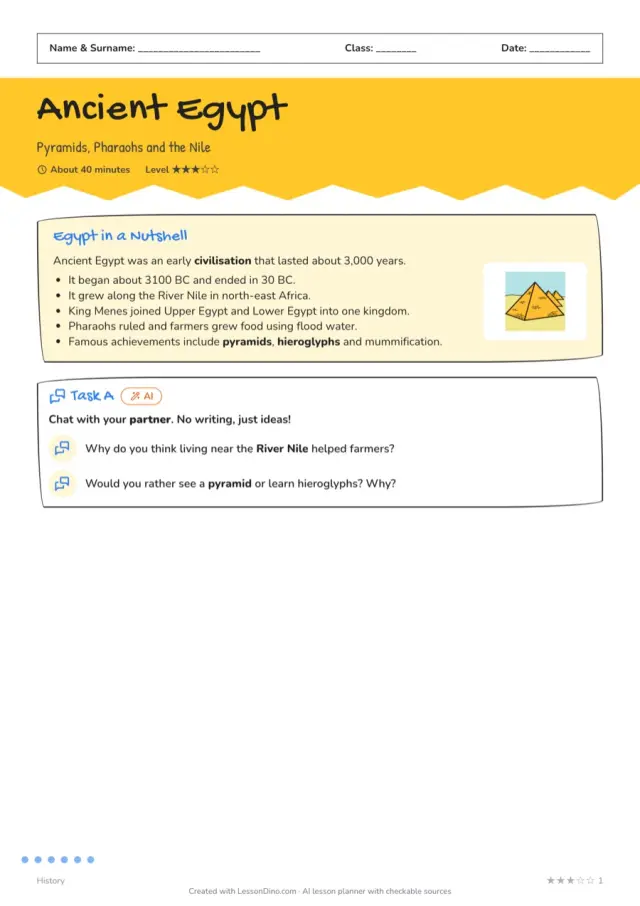
The worksheet
About this worksheet
Students learn how alliances turned the 1914 crisis into world war and what the 1919 settlement changed. They debate the peace and write a verdict on whether it would last. This Year 9 History worksheet gives students (ages 13–14) six pages of practice on the First World War, part of the the First World War and the Peace Settlement unit. It goes with our free The First World War lesson, which has the slides and a timed lesson plan.
What it covers
By the end, students should be able to:
- Students will explain how alliances turned the 1914 crisis into world war.
- Students will describe the global scale of the war and its human cost.
- Students will weigh views on whether the 1919 settlement would keep peace.
How to use it
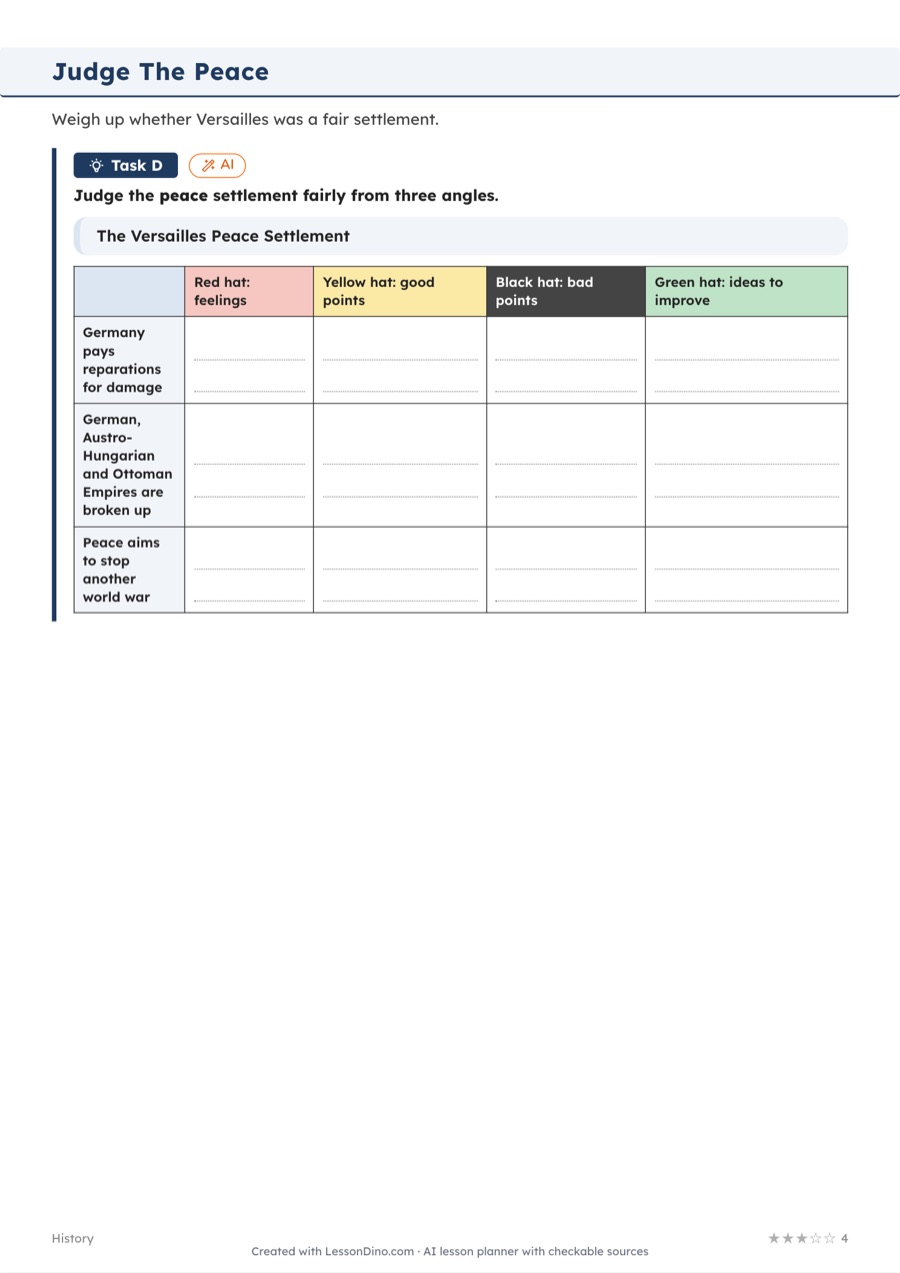
- Was the Peace Fair? (20 minutes): Hand out Worksheet Task D and ask students to Judge the peace settlement fairly from three angles and use Slide 9 to write one verdict sentence using reparations, empires and consequence.
- Plenary (8 minutes): Collect Worksheet Task D Thinking hats: Judge the peace settlement fairly from three angles and Slide 9 verdicts and preview next lesson on inter-war years.
- Support: Hold For, Against or Unsure cards and pass to speak, rather than speaking unprompted.
- Stretch: Connect one consequence back to one long-term cause of tension before 1914 and explain the link.
- The answer sheet is the last page, so you can print it on its own or let students check their own work.
Key vocabulary
- alliance: a promise between countries to help defend each other if attacked
- mobilisation: getting armies ready and moving for fighting
- empire: many lands ruled by one powerful country
- reparations: money a defeated country is made to pay to cover war costs
- consequence: something that happens later because of an earlier event
Mistakes to watch for
- Thinking the assassination alone caused the war. Rebuild chain: alliances promised defence, so 28 July, 1-3 August and 4 August declarations followed.
- Thinking the war was only fought in France. Recall war 1914 to 1918 across Europe, Africa, Asia, Pacific and Middle East and at sea and in the air.
- Thinking Versailles ended all danger of war. Weigh reparations burden in 1919 and break-up of four empires which was a key factor in later war.
What's on the worksheet
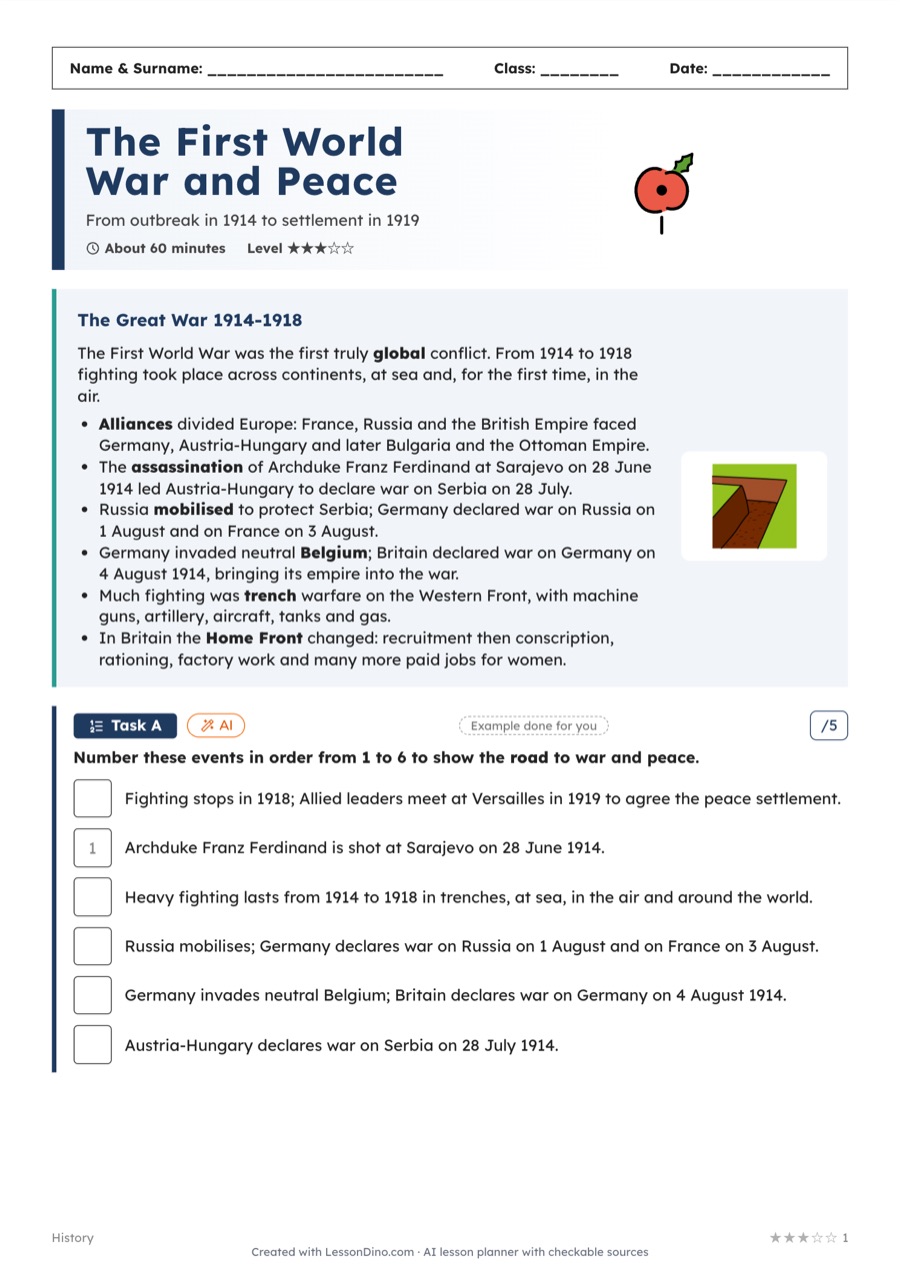
Outbreak and Settlement
Key facts about the war and the peace that followed.
The Great War 1914-1918
- The First World War was the first truly global conflict. From 1914 to 1918 fighting took place across continents, at sea and, for the first time, in the air.
- Alliances divided Europe: France, Russia and the British Empire faced Germany, Austria-Hungary and later Bulgaria and the Ottoman Empire.
- The assassination of Archduke Franz Ferdinand at Sarajevo on 28 June 1914 led Austria-Hungary to declare war on Serbia on 28 July.
- Russia mobilised to protect Serbia; Germany declared war on Russia on 1 August and on France on 3 August.
- Germany invaded neutral Belgium; Britain declared war on Germany on 4 August 1914, bringing its empire into the war.
- Much fighting was trench warfare on the Western Front, with machine guns, artillery, aircraft, tanks and gas.
- In Britain the Home Front changed: recruitment then conscription, rationing, factory work and many more paid jobs for women.
Number these events in order from 1 to 6 to show the road to war and peace.
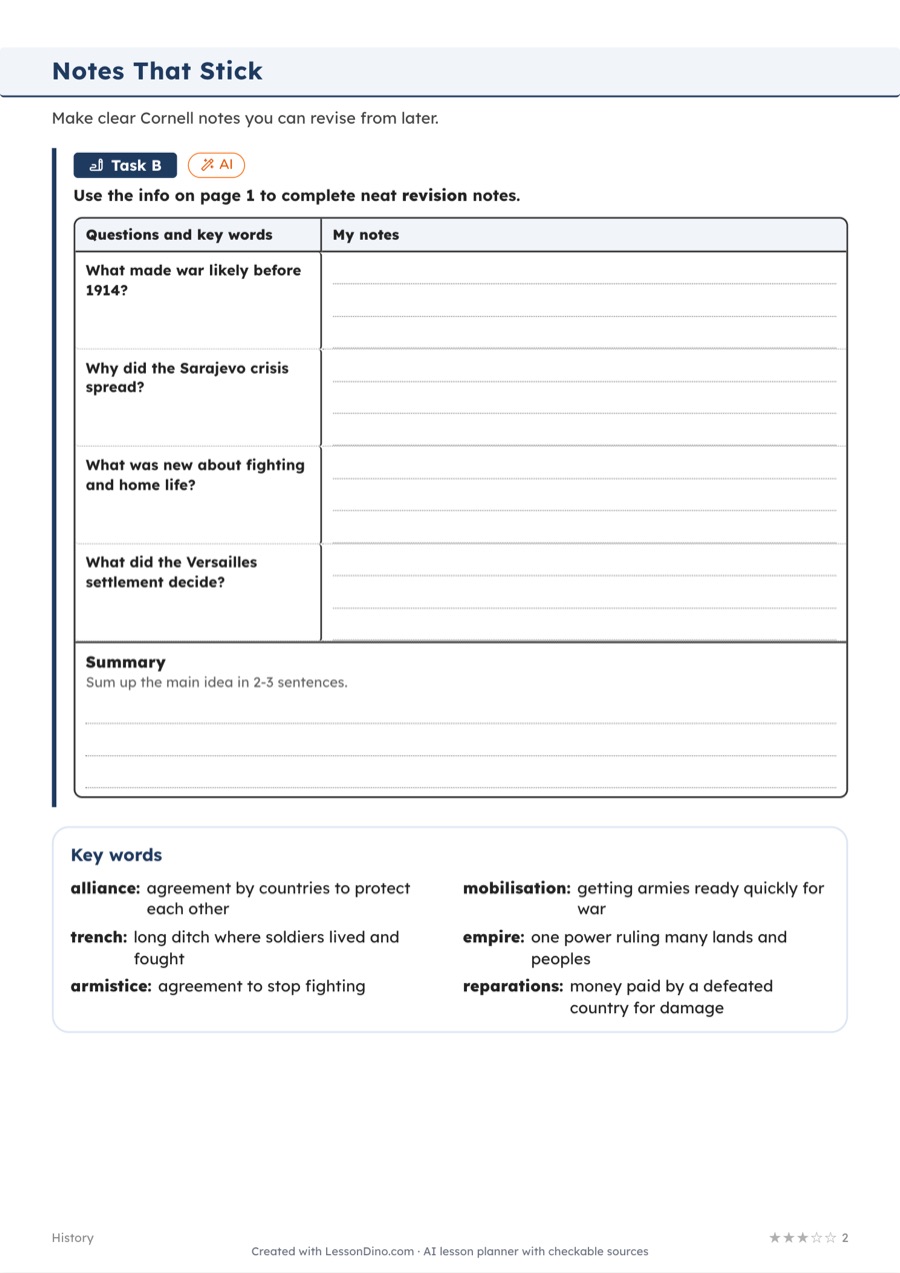
Notes That Stick
Make clear Cornell notes you can revise from later.
Use the info on page 1 to complete neat revision notes.
| Word | Meaning |
|---|---|
| alliance | agreement by countries to protect each other |
| mobilisation | getting armies ready quickly for war |
| trench | long ditch where soldiers lived and fought |
| empire | one power ruling many lands and peoples |
| armistice | agreement to stop fighting |
| reparations | money paid by a defeated country for damage |
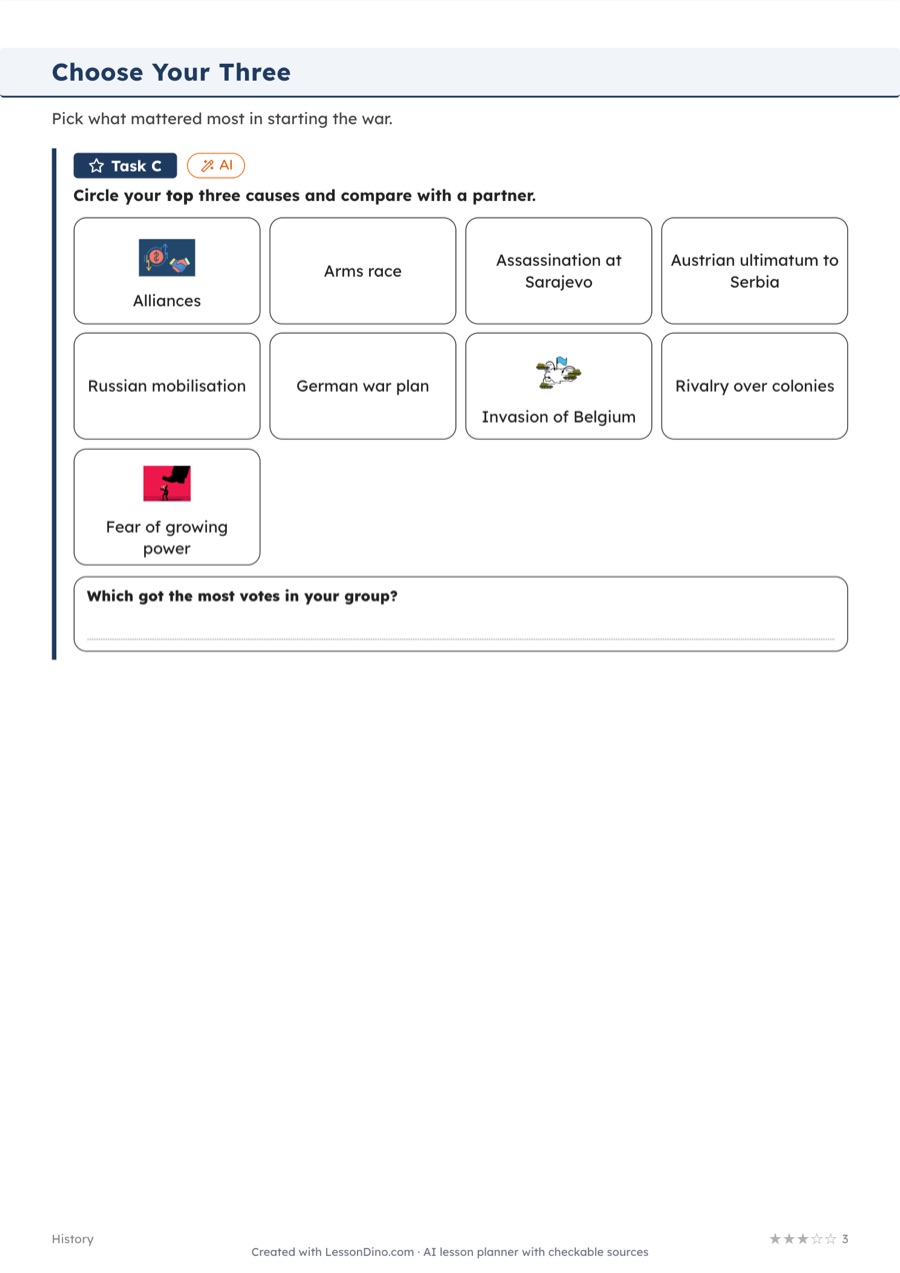
Choose Your Three
Pick what mattered most in starting the war.
Circle your top three causes and compare with a partner.
Judge The Peace
Weigh up whether Versailles was a fair settlement.
Judge the peace settlement fairly from three angles.
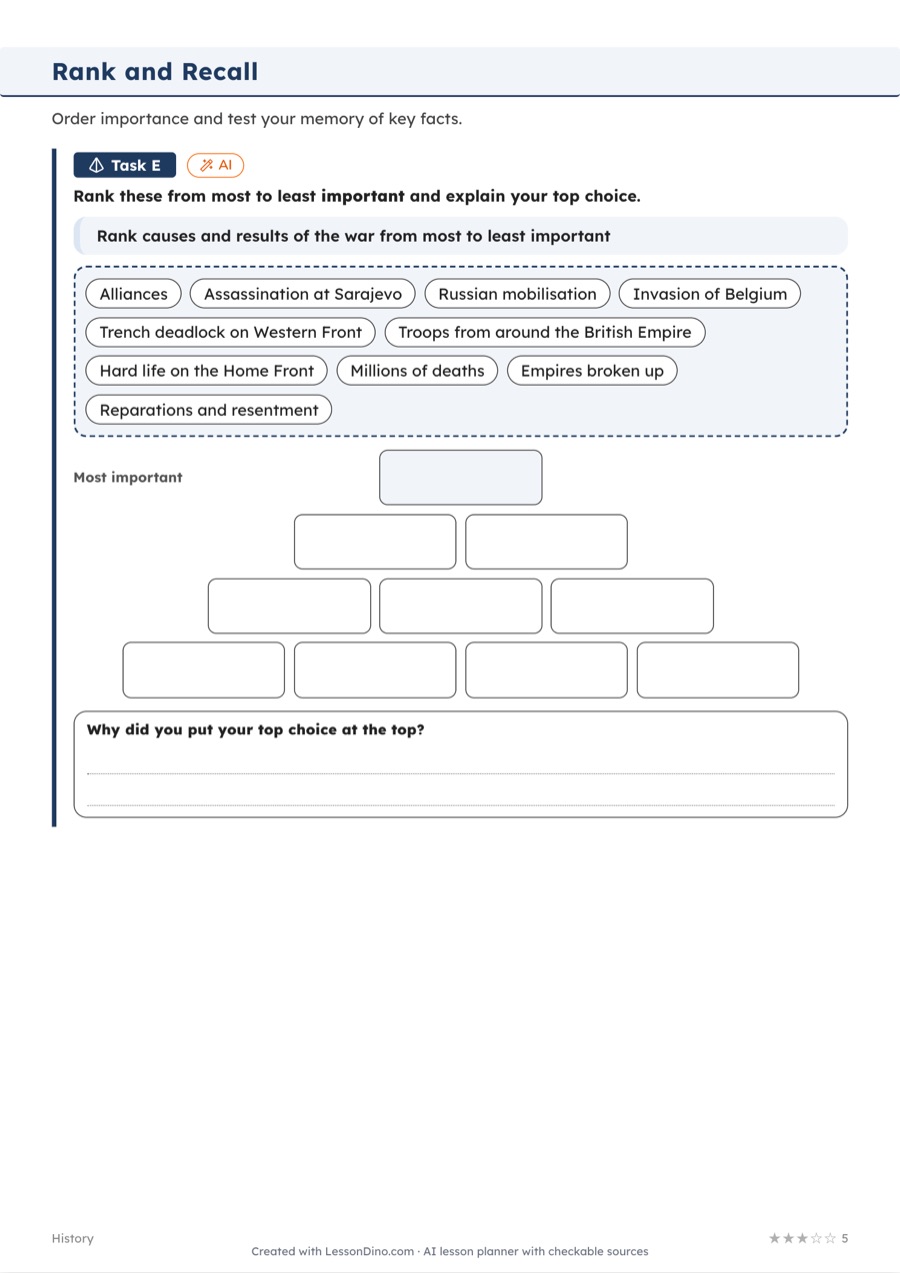
Rank and Recall
Order importance and test your memory of key facts.
Rank these from most to least important and explain your top choice.
Page 6
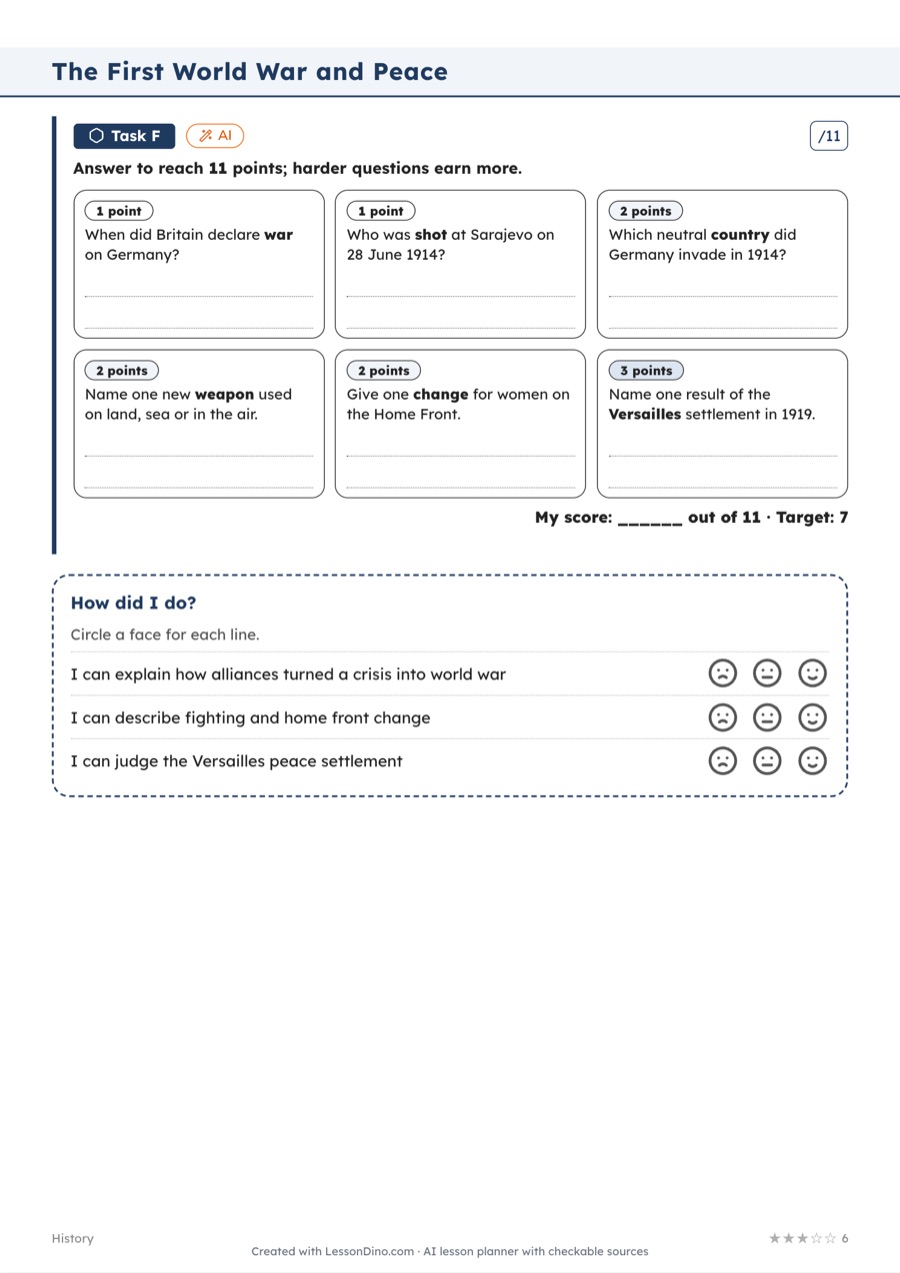
Answer to reach 11 points; harder questions earn more.
- When did Britain declare war on Germany?
- Who was shot at Sarajevo on 28 June 1914?
- Which neutral country did Germany invade in 1914?
- Name one new weapon used on land, sea or in the air.
- Give one change for women on the Home Front.
- Name one result of the Versailles settlement in 1919.
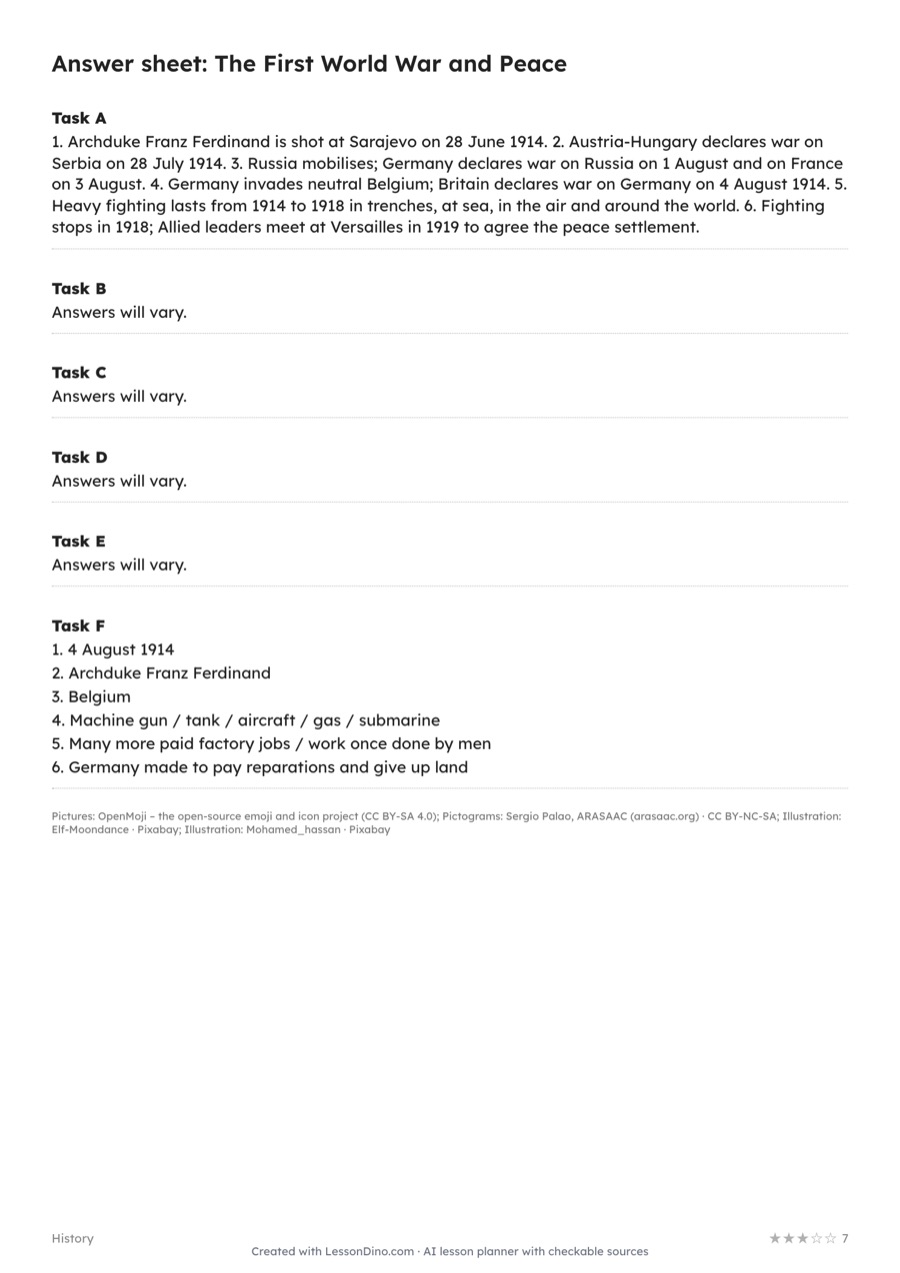
Answers
Show the answers
- When did Britain declare war on Germany? 4 August 1914
- Who was shot at Sarajevo on 28 June 1914? Archduke Franz Ferdinand
- Which neutral country did Germany invade in 1914? Belgium
- Name one new weapon used on land, sea or in the air. Machine gun / tank / aircraft / gas / submarine
- Give one change for women on the Home Front. Many more paid factory jobs / work once done by men
- Name one result of the Versailles settlement in 1919. Germany made to pay reparations and give up land
The answer sheet is the last picture above.
Curriculum
the First World War and the Peace Settlement
Made with Lesson Dino's AI on 17 October 2026. AI can make mistakes, so check the answers and facts against the sources before you teach.