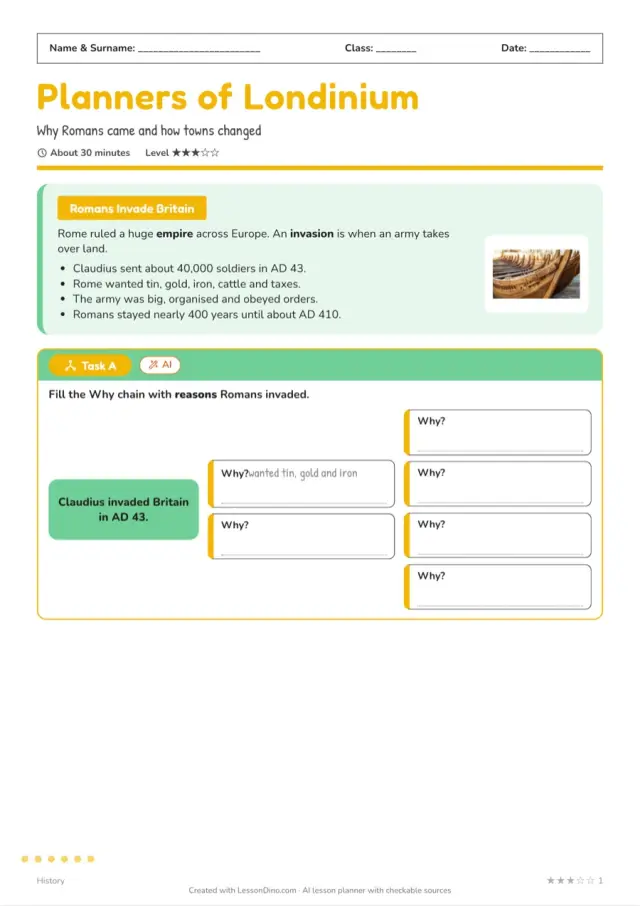
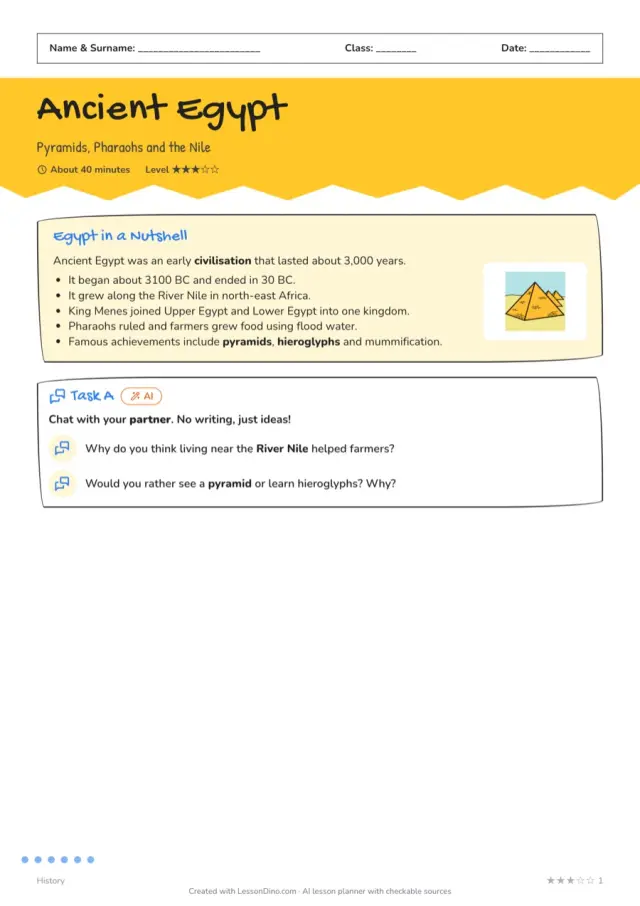
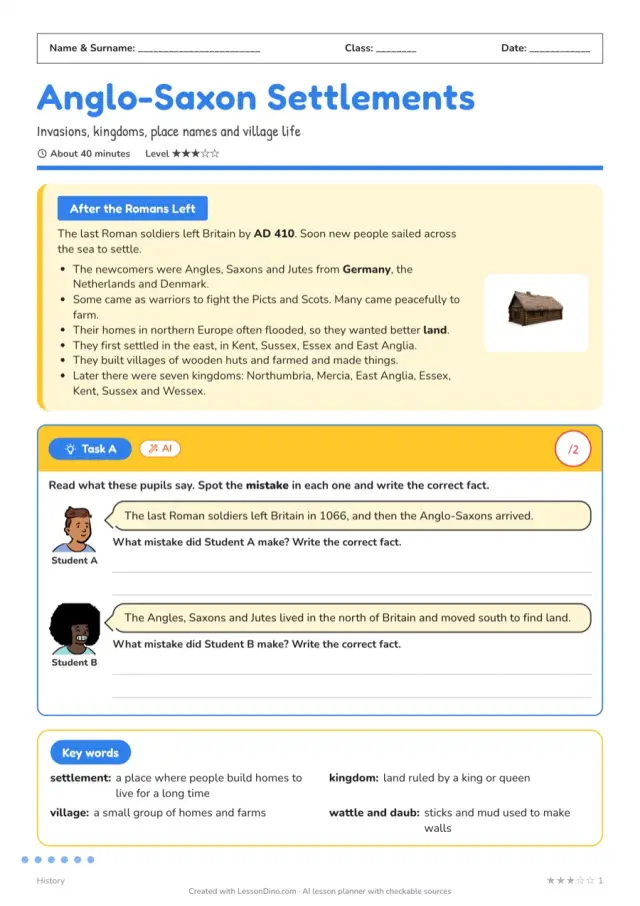
The worksheet
About this worksheet
Pupils learn how tools, food and homes changed from the Stone Age to the Iron Age. They make a 3-part tool timeline to show the order of changes. This Year 3 History worksheet gives students (ages 7–8) five pages of practice on stone Age to Iron Age Britain, part of the stone Age to Iron Age unit. It goes with our free Stone Age to Iron Age Britain lesson, which has the slides and a timed lesson plan.
What it covers
By the end, students should be able to:
- Students will order the Stone Age, Bronze Age and Iron Age in time.
- Students will describe how tools, food and homes changed over time.
- Students will explain why bronze then iron replaced stone tools.
How to use it
- Use it for practice after the teaching part of the lesson, once students have seen the worked examples on the slides.
- Support: Use picture cards with colour borders, pre-cut tools and pre-written labels to narrow choice.
- Stretch: Add a caption explaining why a farmer or hunter might prefer the new material.
- The answer sheet is the last page, so you can print it on its own or let students check their own work.
Key vocabulary
- chronological: in time order, oldest first
- prehistory: the time before people could write things down
- nomadic: moving from place to place to find food
- smelting: getting metal out of rocks by heating and melting
- bronze: shiny mixed metal that replaced stone for tools around 2,300 BC
- iron: strong dark metal that later replaced bronze for tools
Mistakes to watch for
- Thinking a smaller BC number means longer ago. Practise that the bigger the number BC, the longer ago it was, using 12,000 BC, 2,300 BC and 800 BC.
- Mixing up bronze and iron order. Repeat that bronze replaced stone around 2,300 BC, then iron replaced bronze as the main material, with Iron Age from around 800 BC.
- Thinking people farmed from the start. Retell that around 12,000 BC people were nomadic hunters, then by about 4,000 BC they settled into farming villages with crops and animals.
What's on the worksheet
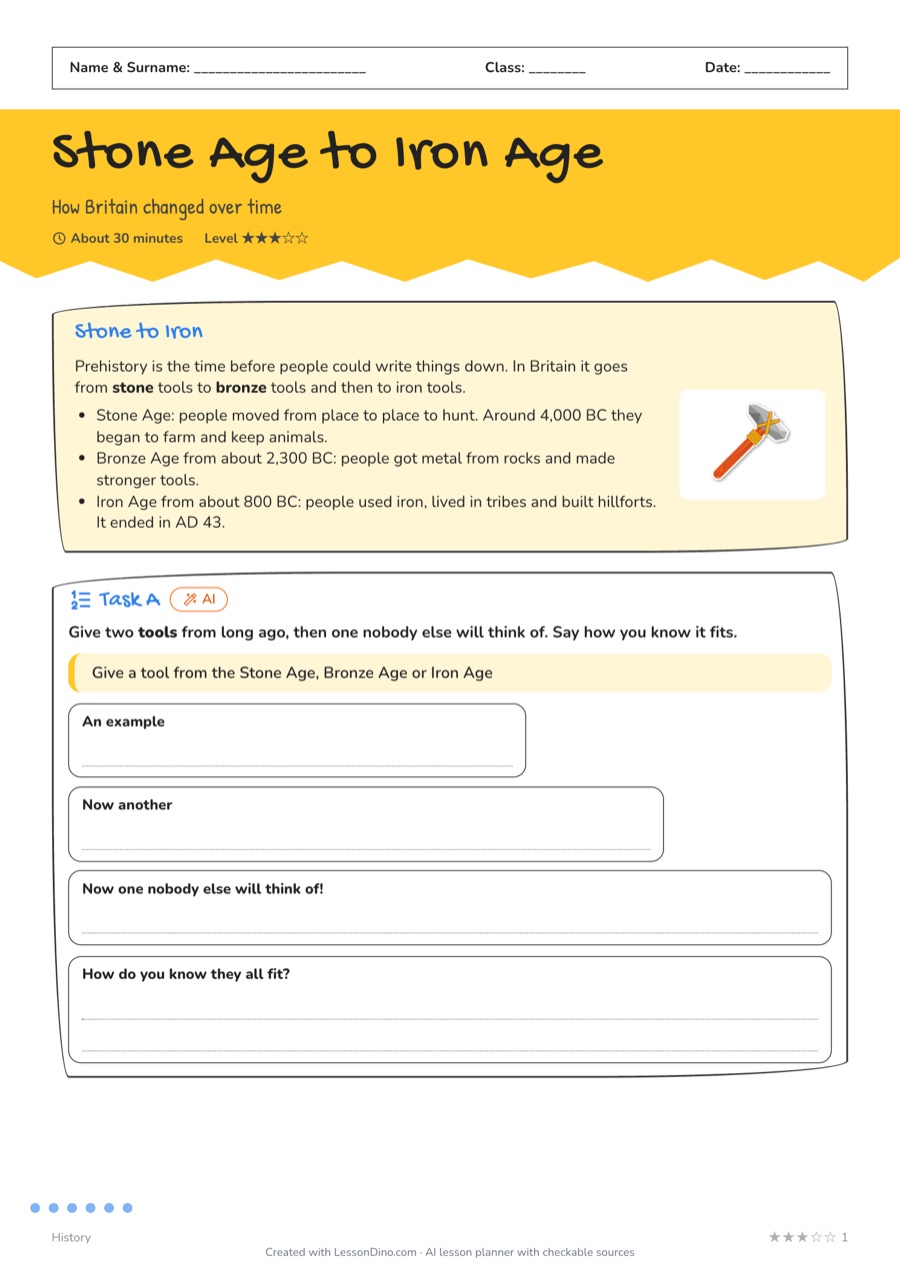
Long Ago Britain
See how life changed from stone to iron.
Stone to Iron
- Prehistory is the time before people could write things down. In Britain it goes from stone tools to bronze tools and then to iron tools.
- Stone Age: people moved from place to place to hunt. Around 4,000 BC they began to farm and keep animals.
- Bronze Age from about 2,300 BC: people got metal from rocks and made stronger tools.
- Iron Age from about 800 BC: people used iron, lived in tribes and built hillforts. It ended in AD 43.
Give two tools from long ago, then one nobody else will think of. Say how you know it fits.
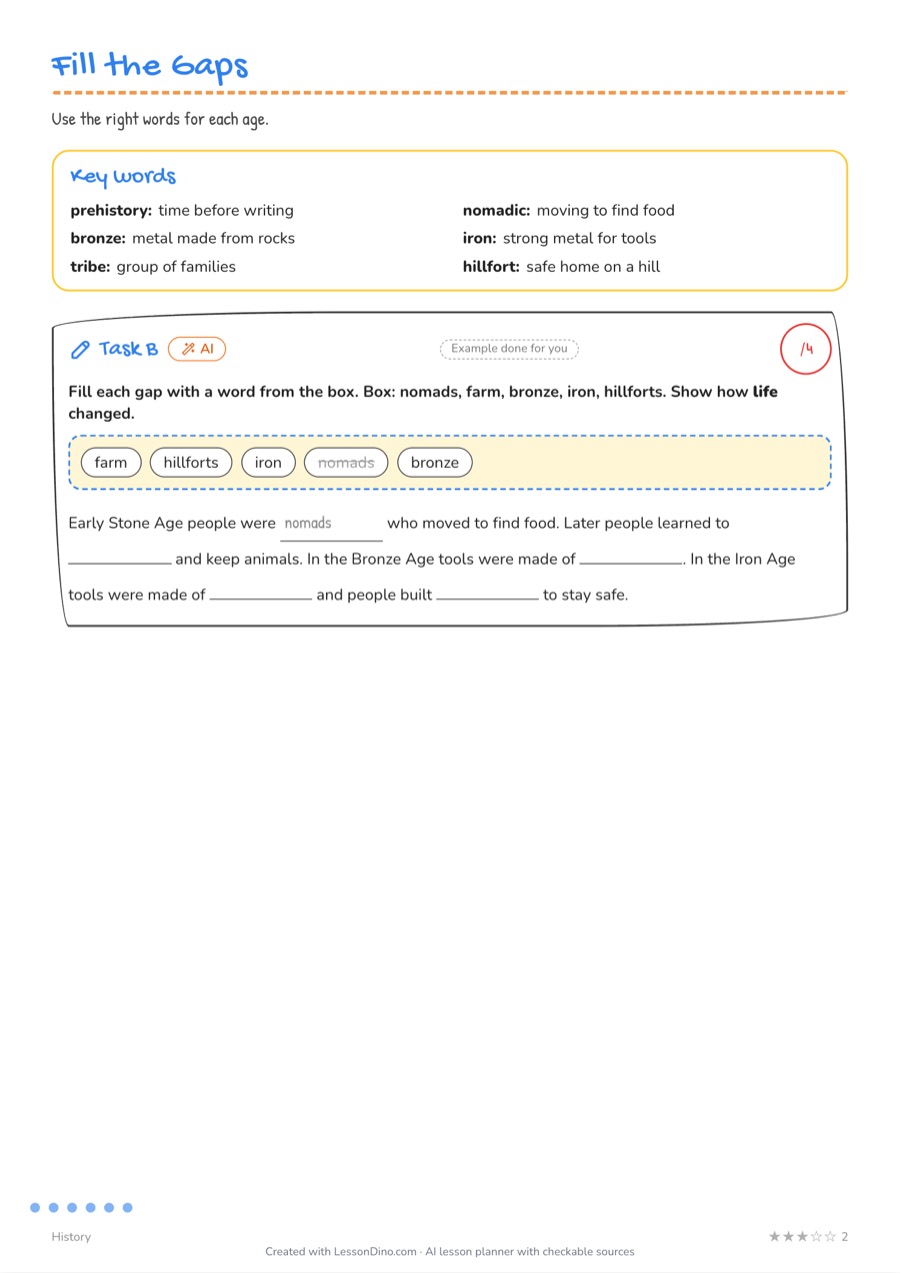
Fill the Gaps
Use the right words for each age.
| Word | Meaning |
|---|---|
| prehistory | time before writing |
| nomadic | moving to find food |
| bronze | metal made from rocks |
| iron | strong metal for tools |
| tribe | group of families |
| hillfort | safe home on a hill |
Fill each gap with a word from the box. Box: nomads, farm, bronze, iron, hillforts. Show how life changed.
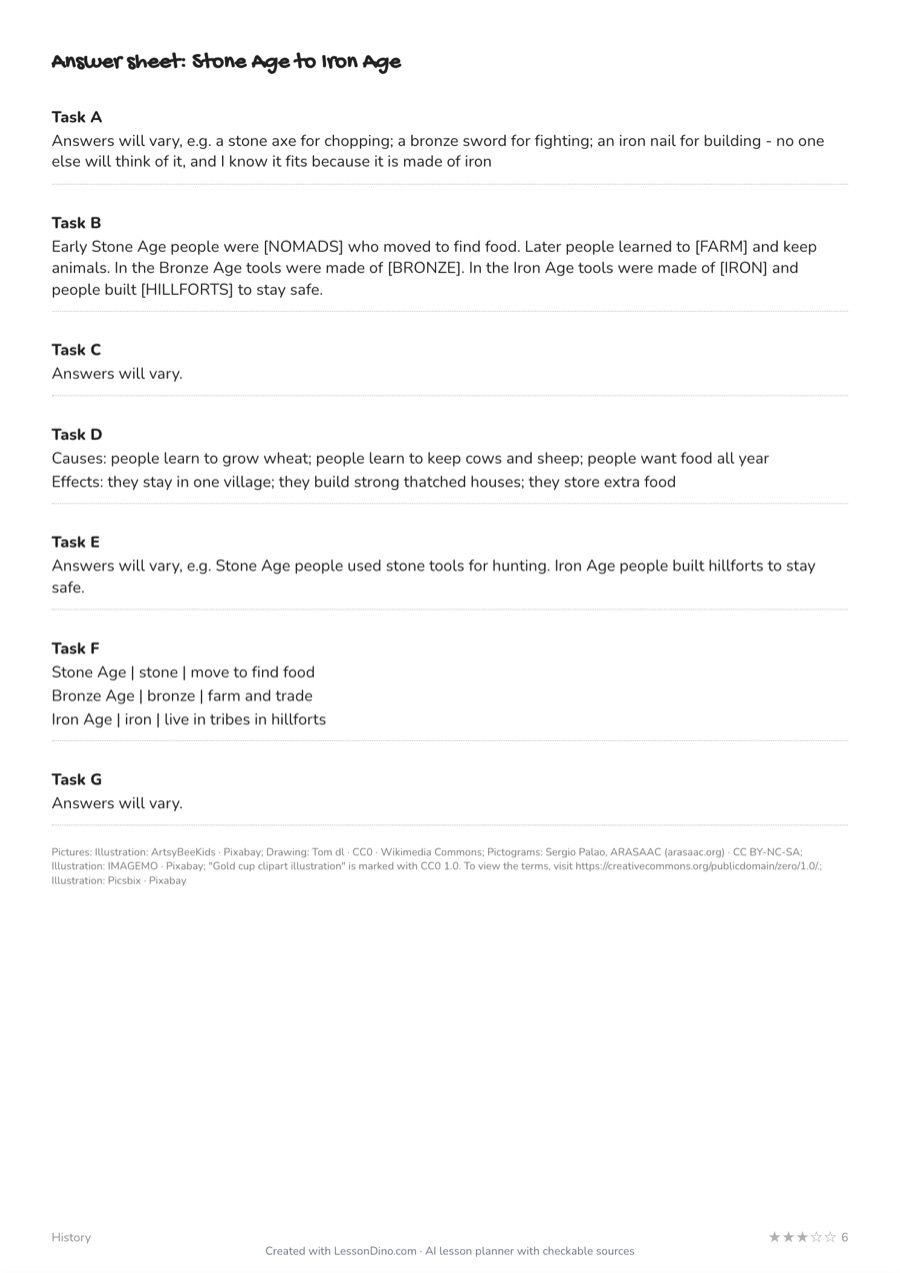
- Early Stone Age people were [[nomads]] who moved to find food. Later people learned to [[farm]] and keep animals. In the Bronze Age tools were made of [[bronze]]. In the Iron Age tools were made of [[iron]] and people built [[hillforts]] to stay safe.
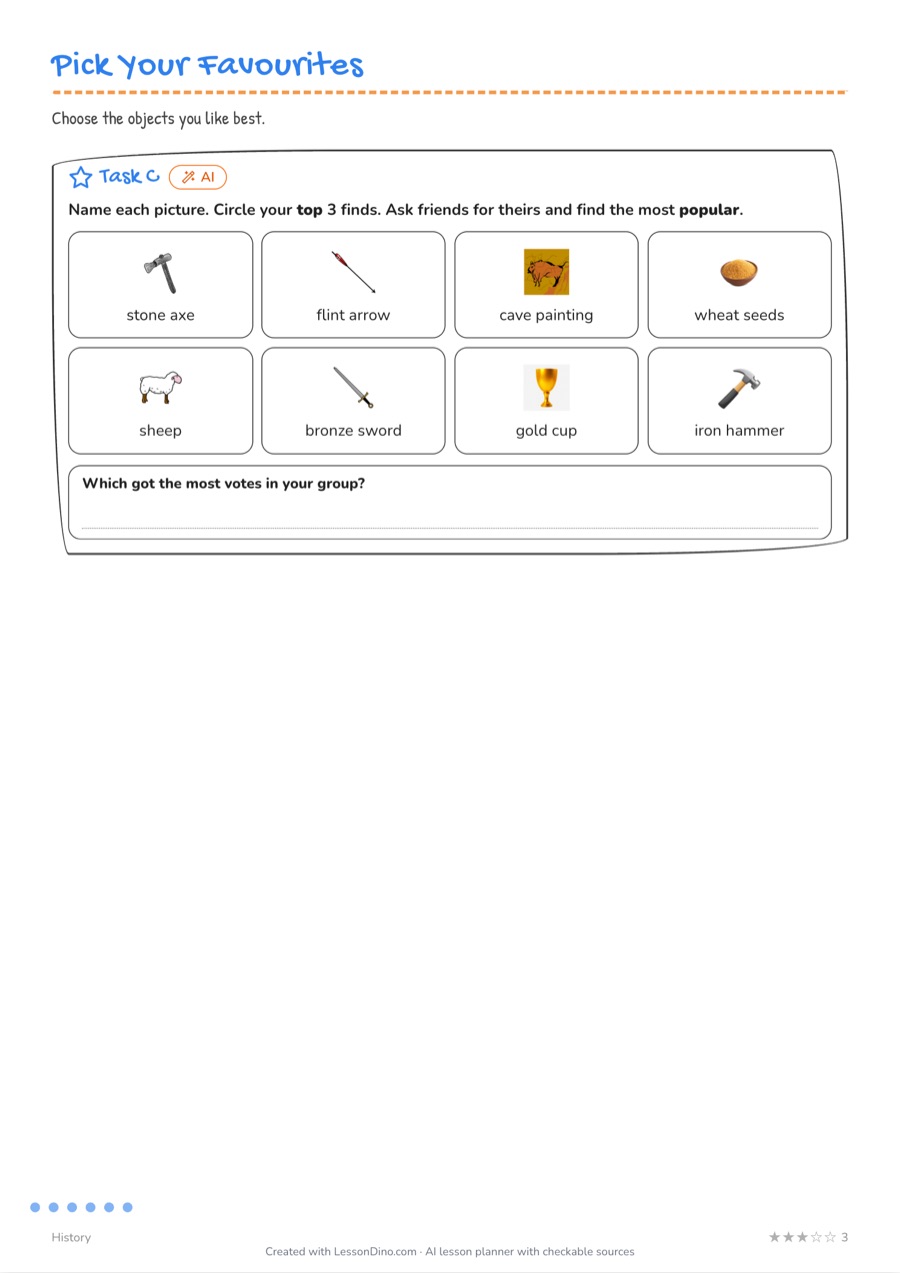
Pick Your Favourites
Choose the objects you like best.
Name each picture. Circle your top 3 finds. Ask friends for theirs and find the most popular.
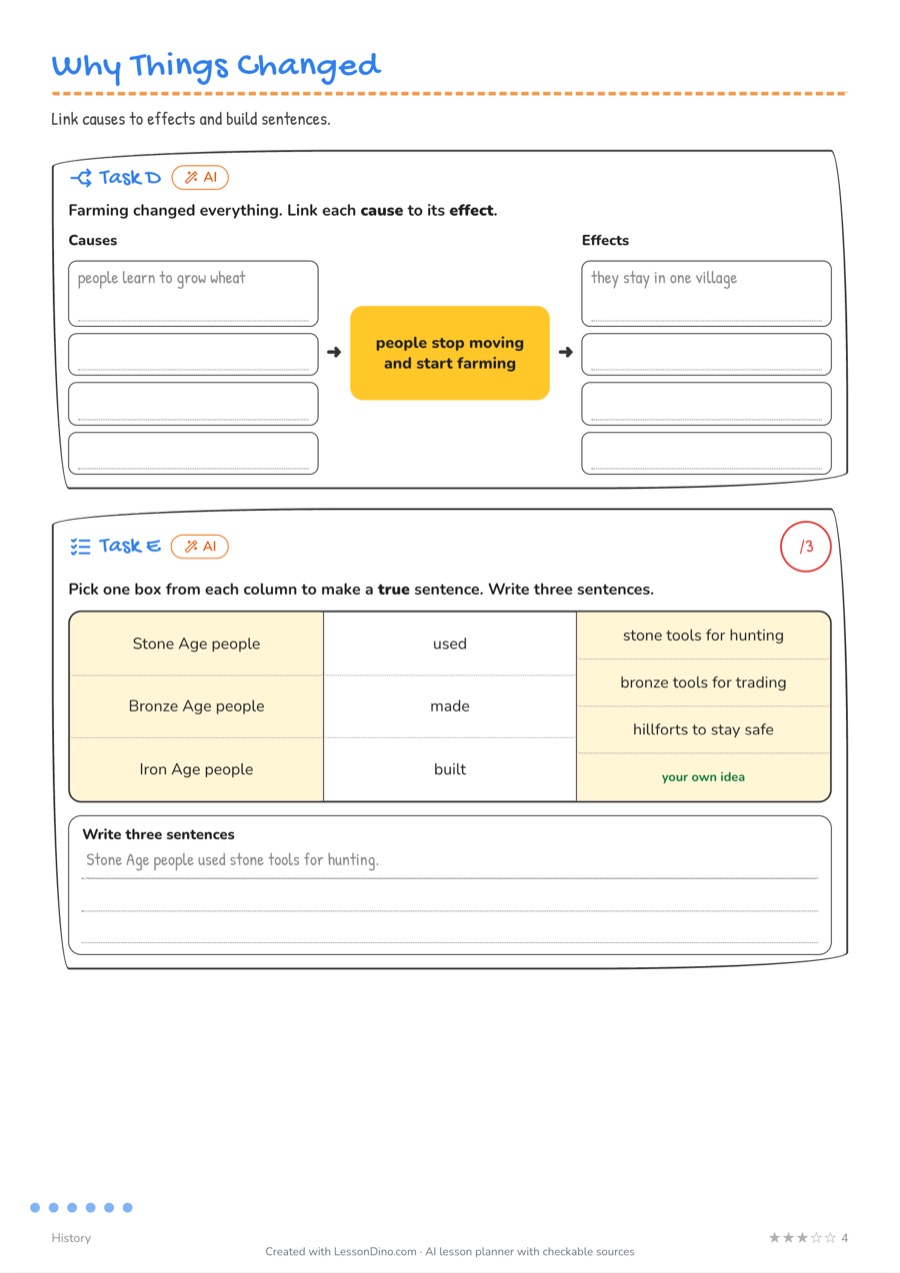
Why Things Changed
Link causes to effects and build sentences.
Farming changed everything. Link each cause to its effect.
Pick one box from each column to make a true sentence. Write three sentences.
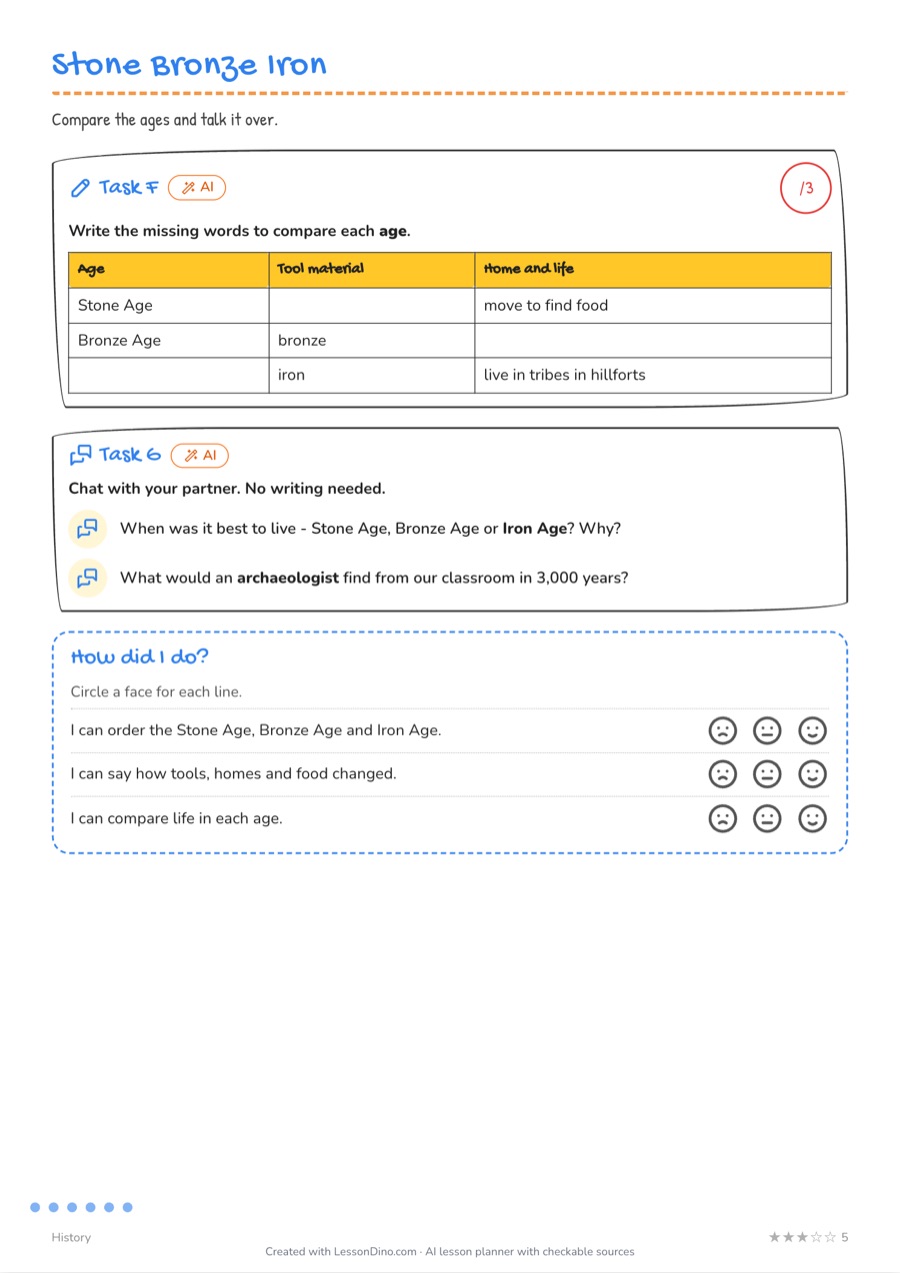
Stone Bronze Iron
Compare the ages and talk it over.
Write the missing words to compare each age.
Chat with your partner. No writing needed.
- When was it best to live - Stone Age, Bronze Age or Iron Age? Why?
- What would an archaeologist find from our classroom in 3,000 years?
Answers
Show the answers
The answers are on the answer sheet, the last picture above.
Curriculum
changes in Britain from the Stone Age to the Iron Age
Made with Lesson Dino's AI on 17 October 2026. AI can make mistakes, so check the answers and facts against the sources before you teach.