The worksheet
About this worksheet
Students learn how Britain's triangular trade worked and who it harmed and enriched. They map profits in Britain and judge what abolition changed. This Year 8 History worksheet gives students (ages 12–13) seven pages of practice on the transatlantic slave trade, part of the britain's transatlantic slave trade unit. It goes with our free The transatlantic slave trade lesson, which has the slides and a timed lesson plan.
What it covers
By the end, students should be able to:
- Students will explain the three legs of Britain's triangular trade.
- Students will describe effects on African communities and on Britain.
- Students will explain why the trade was abolished and what changed.
How to use it
- Use it for practice after the teaching part of the lesson, once students have seen the worked examples on the slides.
- Support: Pre-highlighted role cards and triangle outlines with pictures.
- Stretch: Explain why full holds made the triangle so profitable for merchants.
- The answer sheet is the last page, so you can print it on its own or let students check their own work.
Key vocabulary
- triangular trade: voyages linking Europe, West Africa and the Americas to swap goods and people
- Middle Passage: forced voyage carrying captive Africans across the Atlantic to the Americas
- plantation: large farm growing crops such as sugar using forced labour
- enslaved person: someone forced to work without pay who is treated as property
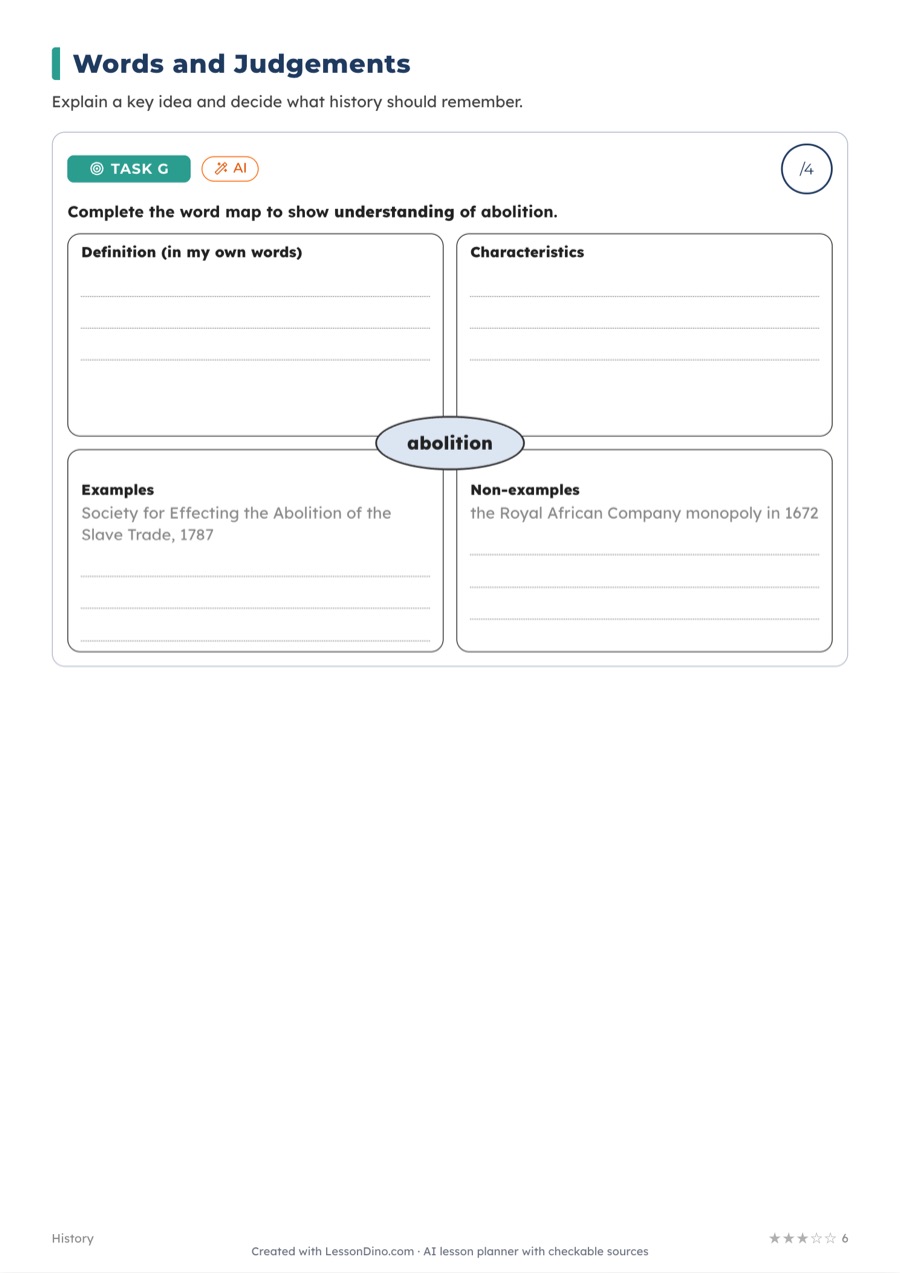
- abolition: official ending by law of buying and selling of captives
Mistakes to watch for
- Thinking the 1807 Act freed all enslaved people at once. Restate it banned trading only, and nearly 750,000 people remained enslaved in British colonies.
- Thinking only ship owners got rich in Britain. Add factories and trades refining sugar, tobacco and chocolate and factory jobs for ordinary people.
- Thinking enslaved Africans accepted slavery. Recall resistance from everyday acts to large-scale rebellions was permanent and helped end trade and slavery.
What's on the worksheet
Britain and Enslavement
Learn how Britain's triangular trade worked and who was affected.
How Britain Traded People
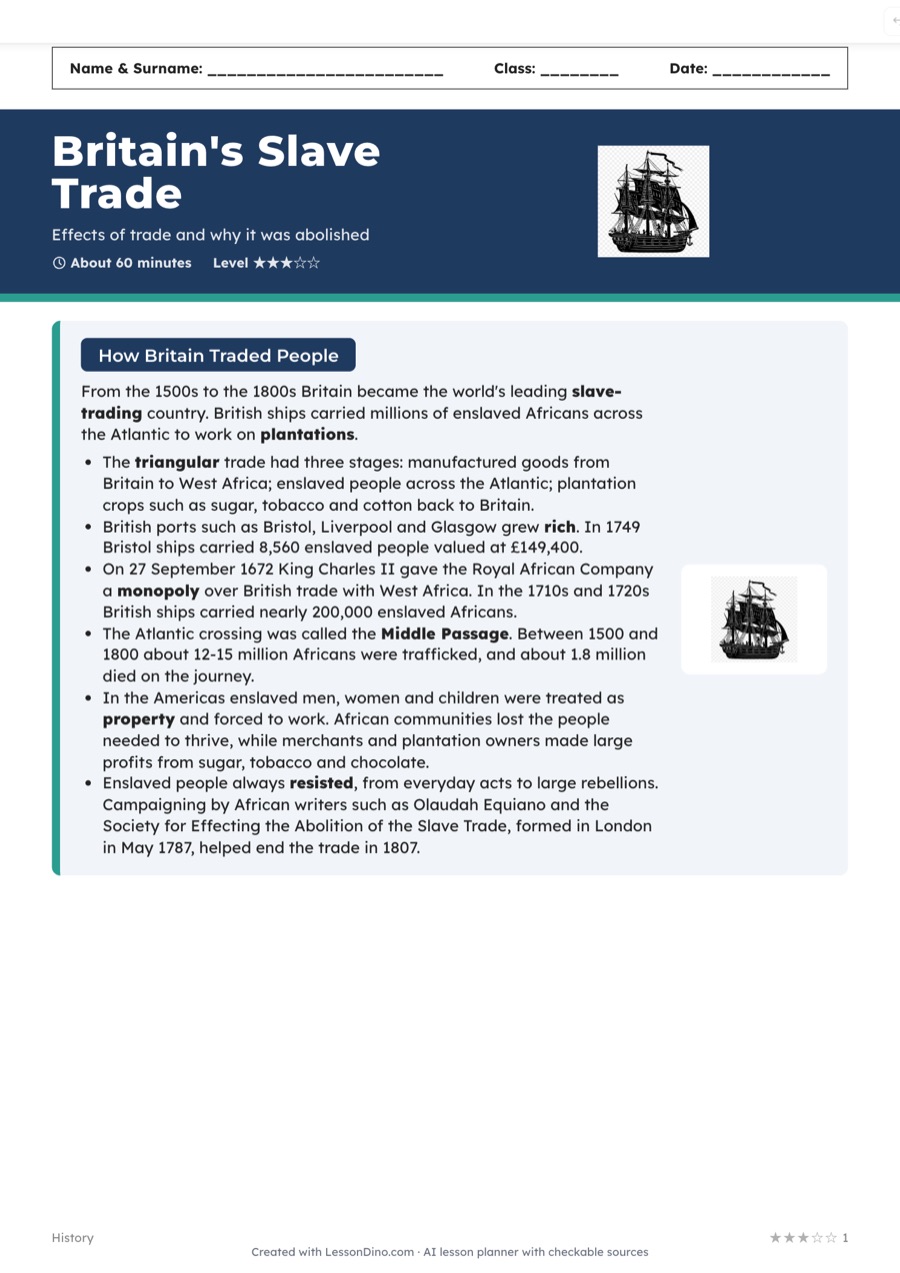
- From the 1500s to the 1800s Britain became the world's leading slave-trading country. British ships carried millions of enslaved Africans across the Atlantic to work on plantations.
- The triangular trade had three stages: manufactured goods from Britain to West Africa; enslaved people across the Atlantic; plantation crops such as sugar, tobacco and cotton back to Britain.
- British ports such as Bristol, Liverpool and Glasgow grew rich. In 1749 Bristol ships carried 8,560 enslaved people valued at £149,400.
- On 27 September 1672 King Charles II gave the Royal African Company a monopoly over British trade with West Africa. In the 1710s and 1720s British ships carried nearly 200,000 enslaved Africans.
- The Atlantic crossing was called the Middle Passage. Between 1500 and 1800 about 12-15 million Africans were trafficked, and about 1.8 million died on the journey.
- In the Americas enslaved men, women and children were treated as property and forced to work. African communities lost the people needed to thrive, while merchants and plantation owners made large profits from sugar, tobacco and chocolate.
- Enslaved people always resisted, from everyday acts to large rebellions. Campaigning by African writers such as Olaudah Equiano and the Society for Effecting the Abolition of the Slave Trade, formed in London in May 1787, helped end the trade in 1807.
Page 2
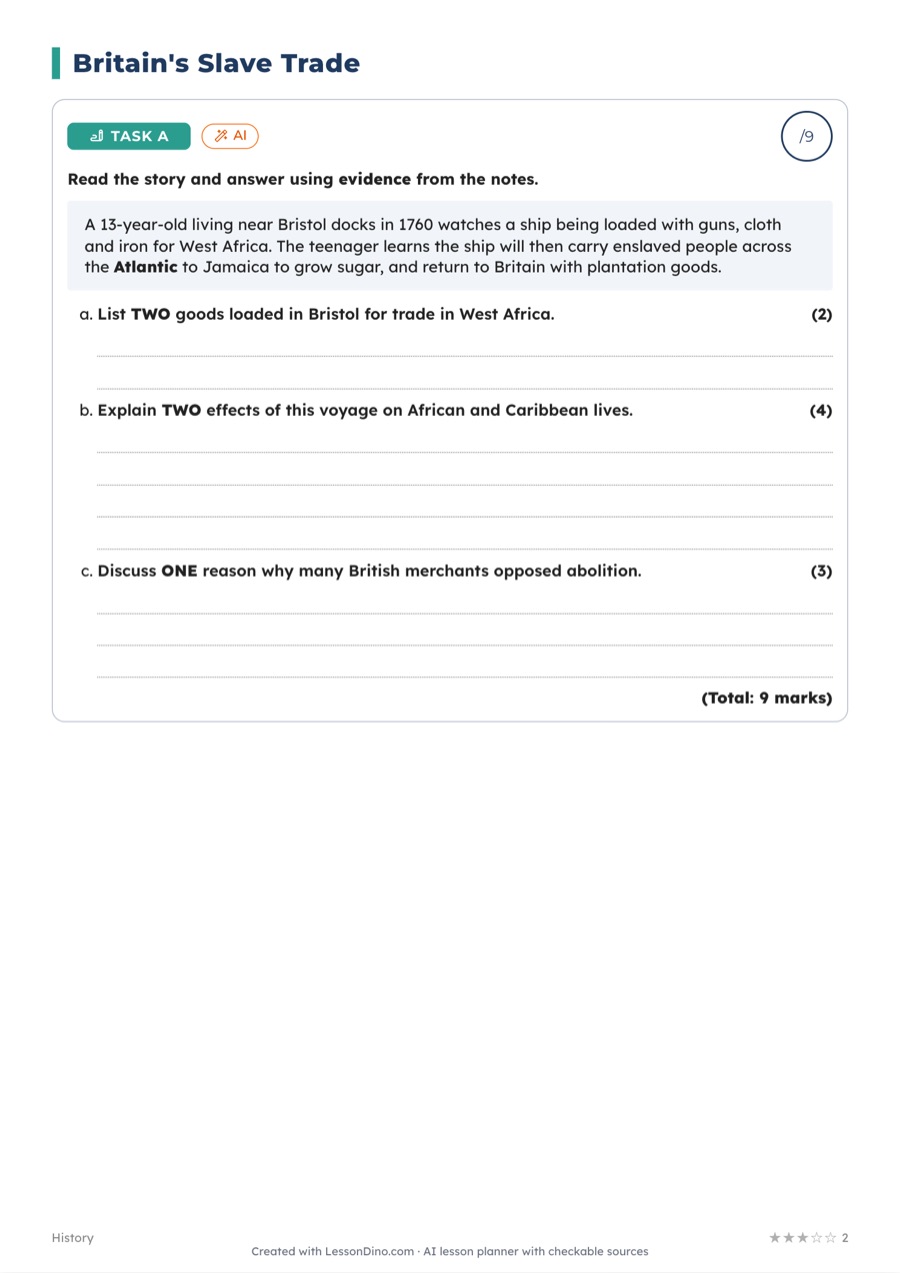
Read the story and answer using evidence from the notes.
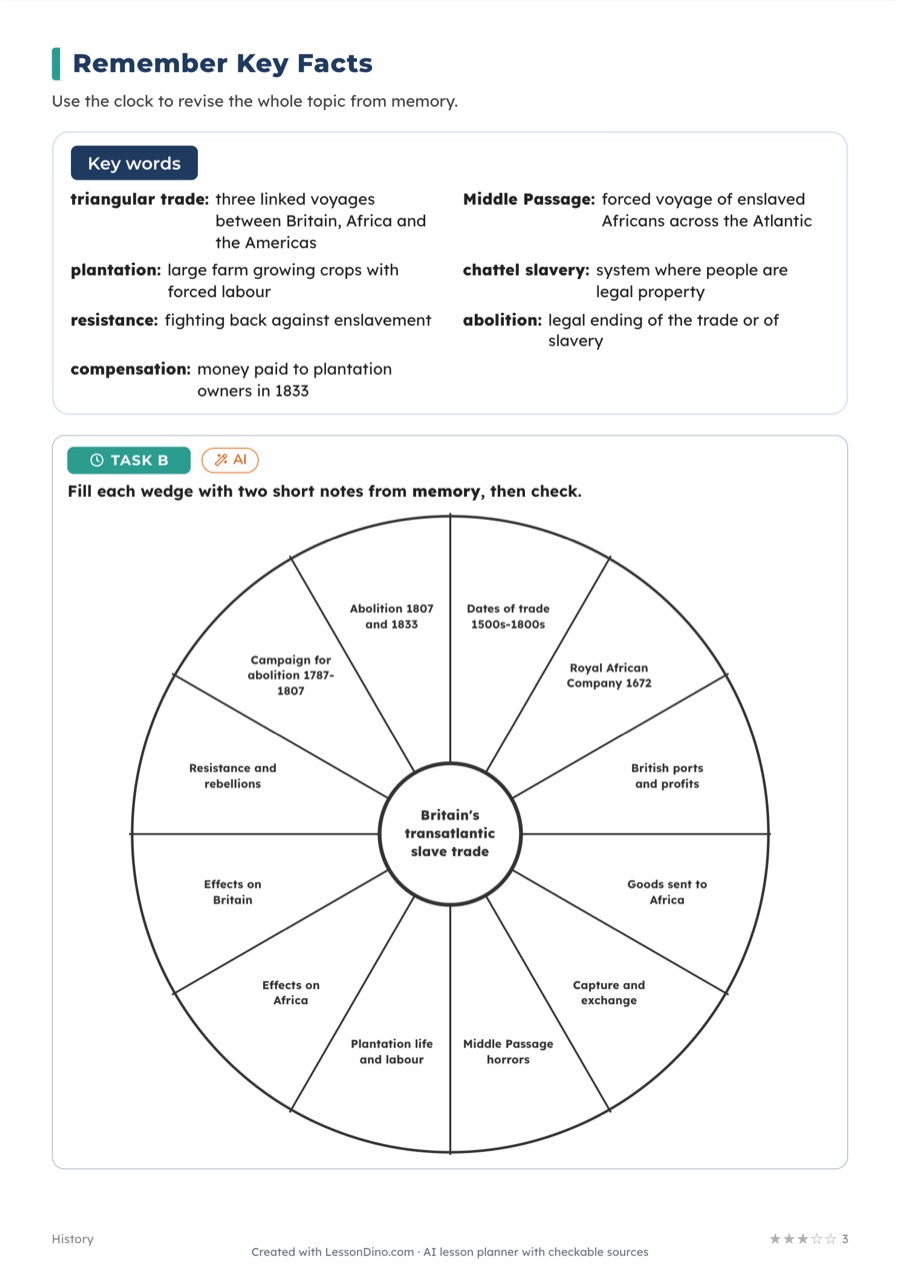
Remember Key Facts
Use the clock to revise the whole topic from memory.
| Word | Meaning |
|---|---|
| triangular trade | three linked voyages between Britain, Africa and the Americas |
| Middle Passage | forced voyage of enslaved Africans across the Atlantic |
| plantation | large farm growing crops with forced labour |
| chattel slavery | system where people are legal property |
| resistance | fighting back against enslavement |
| abolition | legal ending of the trade or of slavery |
| compensation | money paid to plantation owners in 1833 |
Fill each wedge with two short notes from memory, then check.
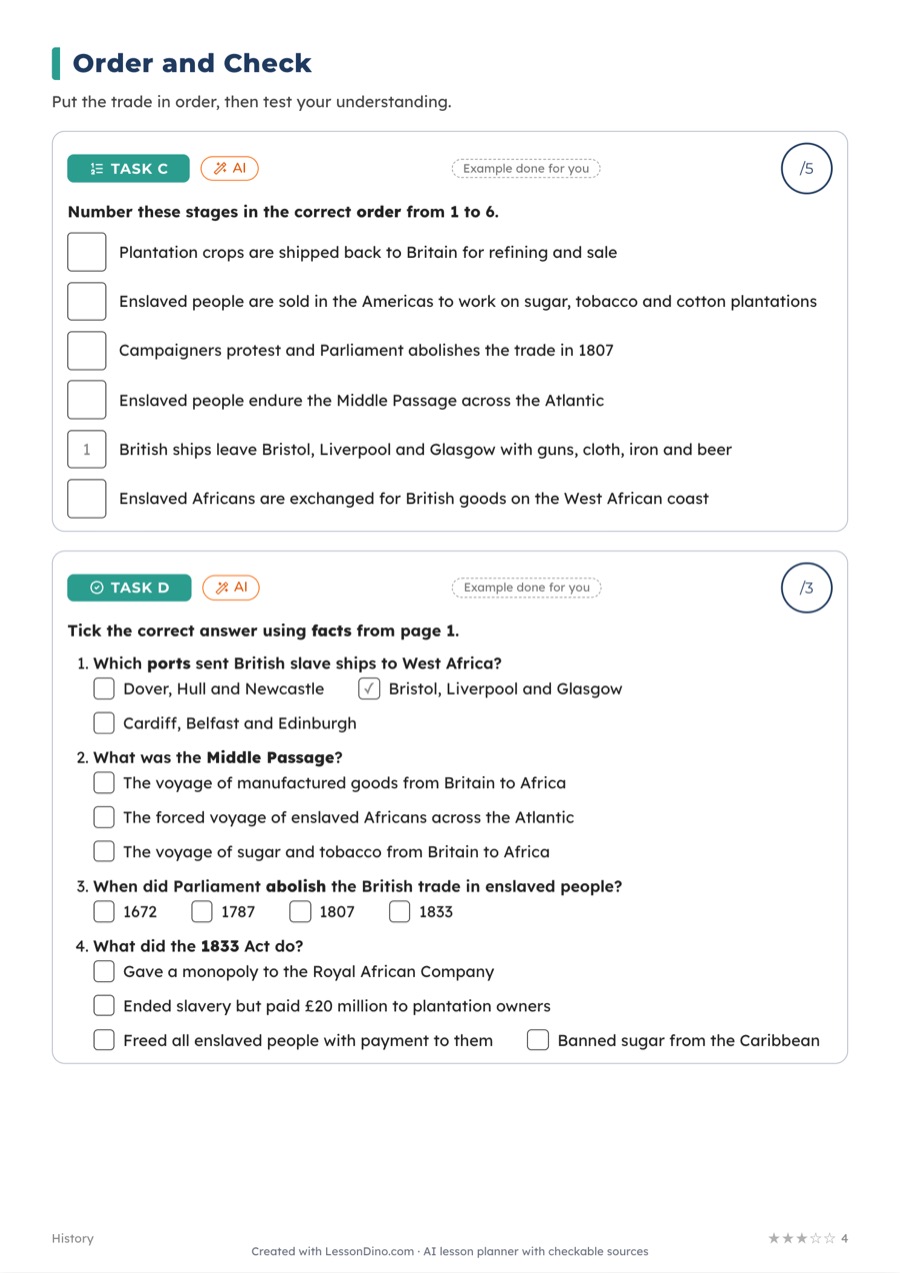
Order and Check
Put the trade in order, then test your understanding.
Number these stages in the correct order from 1 to 6.
Tick the correct answer using facts from page 1.
- Which ports sent British slave ships to West Africa?
- What was the Middle Passage?
- When did Parliament abolish the British trade in enslaved people?
- What did the 1833 Act do?
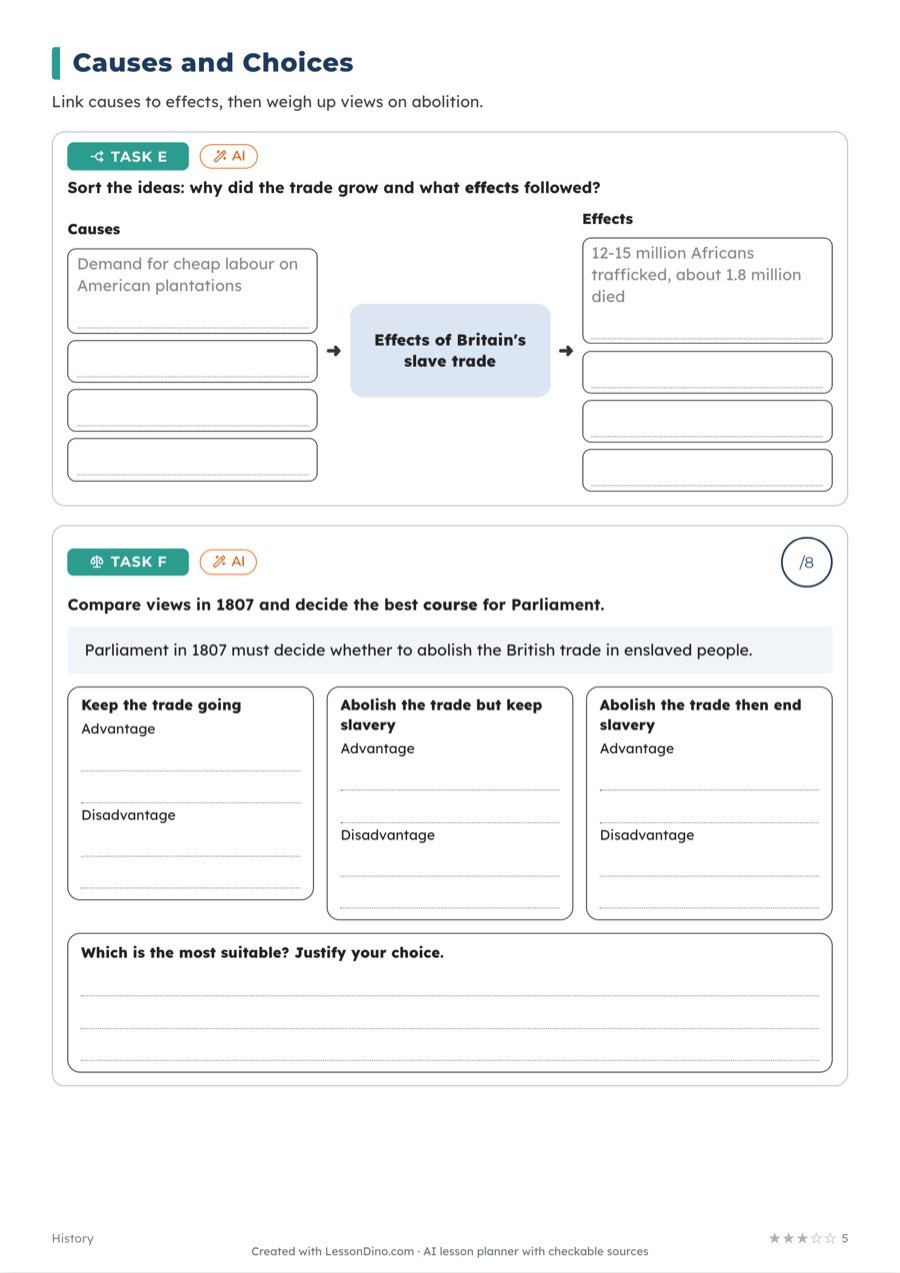
Causes and Choices
Link causes to effects, then weigh up views on abolition.
Sort the ideas: why did the trade grow and what effects followed?
Compare views in 1807 and decide the best course for Parliament.
Words and Judgements
Explain a key idea and decide what history should remember.
Complete the word map to show understanding of abolition.
Page 7
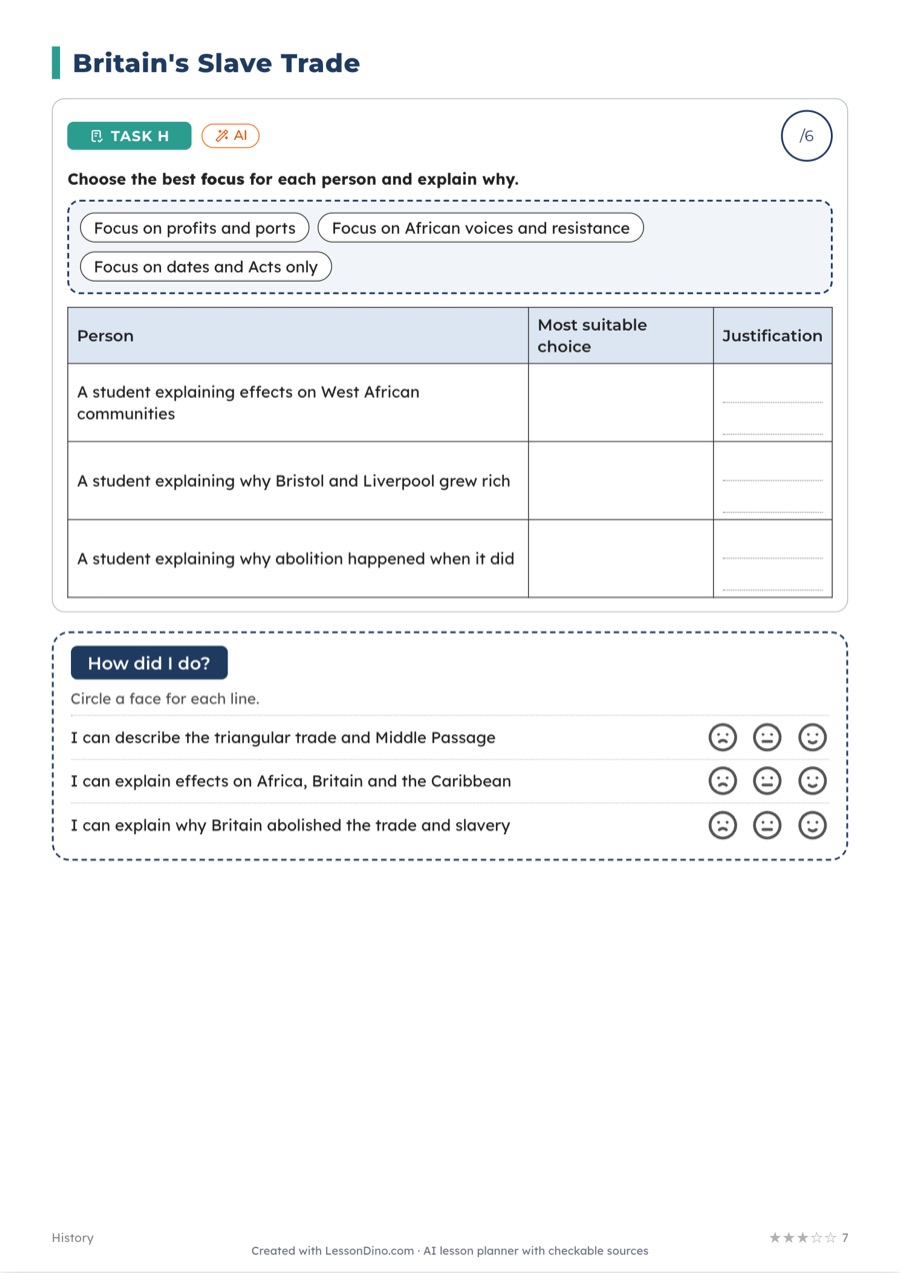
Choose the best focus for each person and explain why.
Answers
Show the answers
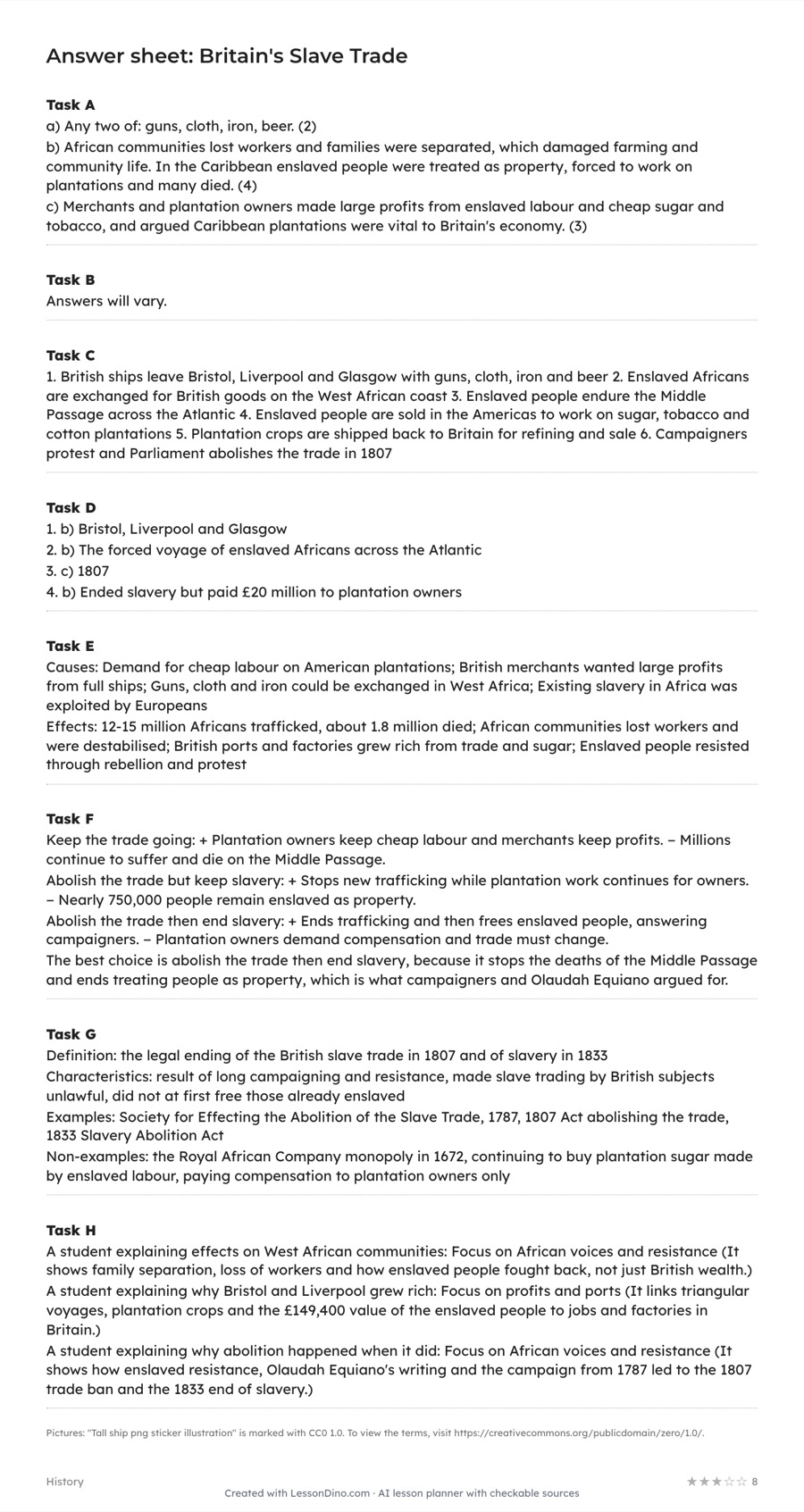
- List TWO goods loaded in Bristol for trade in West Africa. Any two of: guns, cloth, iron, beer.
- Explain TWO effects of this voyage on African and Caribbean lives. African communities lost workers and families were separated, which damaged farming and community life. In the Caribbean enslaved people were treated as property, forced to work on plantations and many died.
- Discuss ONE reason why many British merchants opposed abolition. Merchants and plantation owners made large profits from enslaved labour and cheap sugar and tobacco, and argued Caribbean plantations were vital to Britain's economy.
The answer sheet is the last picture above.
Curriculum
Britain’s transatlantic slave trade: its effects and its eventual abolition
Made with Lesson Dino's AI on 17 October 2026. AI can make mistakes, so check the answers and facts against the sources before you teach.