Slides
Lesson plan
Stolen Lives, Sweet Profits
Students learn how Britain's triangular trade worked and who it harmed and enriched. They map profits in Britain and judge what abolition changed.
Objectives
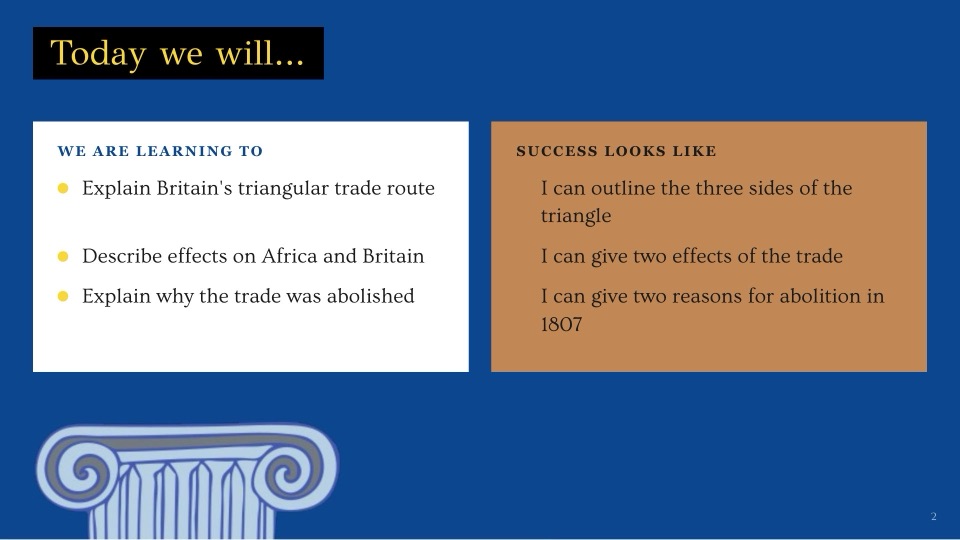
- Students will explain the three legs of Britain's triangular trade.
- Students will describe effects on African communities and on Britain.
- Students will explain why the trade was abolished and what changed.
Success criteria
- I can outline the three sides of the triangular trade.
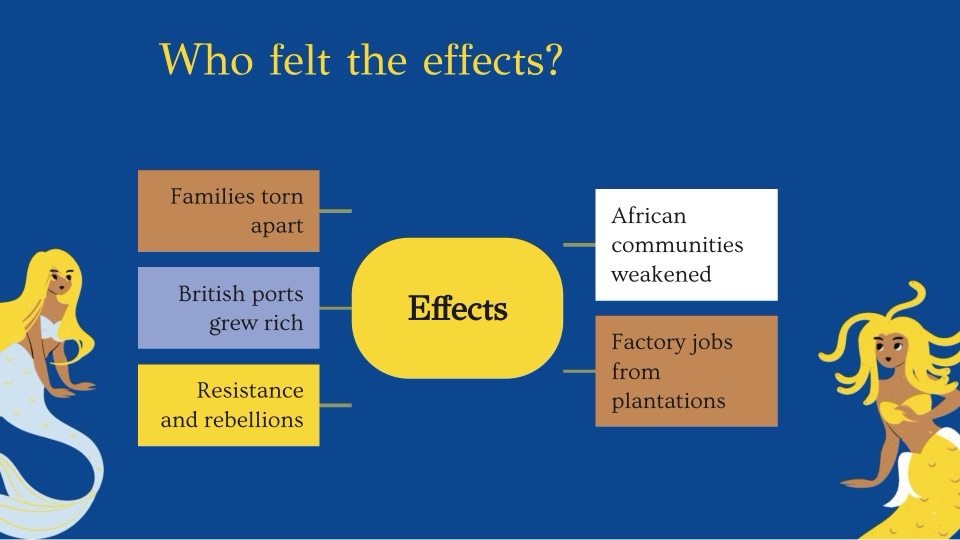
- I can describe two effects on Africa and two in Britain.
- I can explain what the 1807 Act banned and what remained.
Key words
| Word | Meaning |
|---|---|
| triangular trade | voyages linking Europe, West Africa and the Americas to swap goods and people |
| Middle Passage | forced voyage carrying captive Africans across the Atlantic to the Americas |
| plantation | large farm growing crops such as sugar using forced labour |
| enslaved person | someone forced to work without pay who is treated as property |
| abolition | official ending by law of buying and selling of captives |
Timed plan (60 minutes)
| Time | Stage | What happens |
|---|---|---|
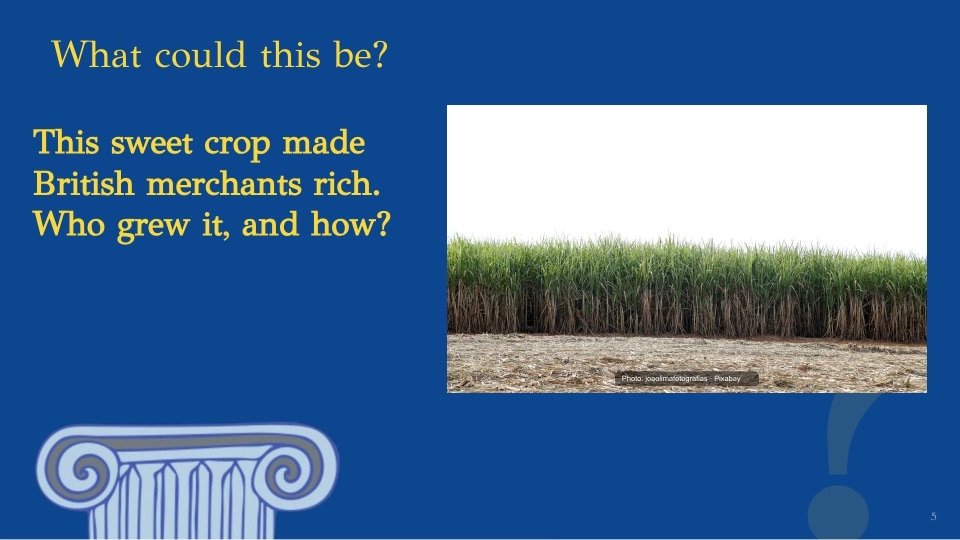
| 5 min | Starter | To hook interest in sugar profits and recall what students know about empire and slavery. Show Slide 1 title and Slide 5 mystery sugar cane prompt. Say the hook and hold up a packet of sugar or point to the picture. Take quick hands-up ideas on who grew sugar and how merchants got rich. Link answers to today's objectives on Slide 2 without giving everything away. |
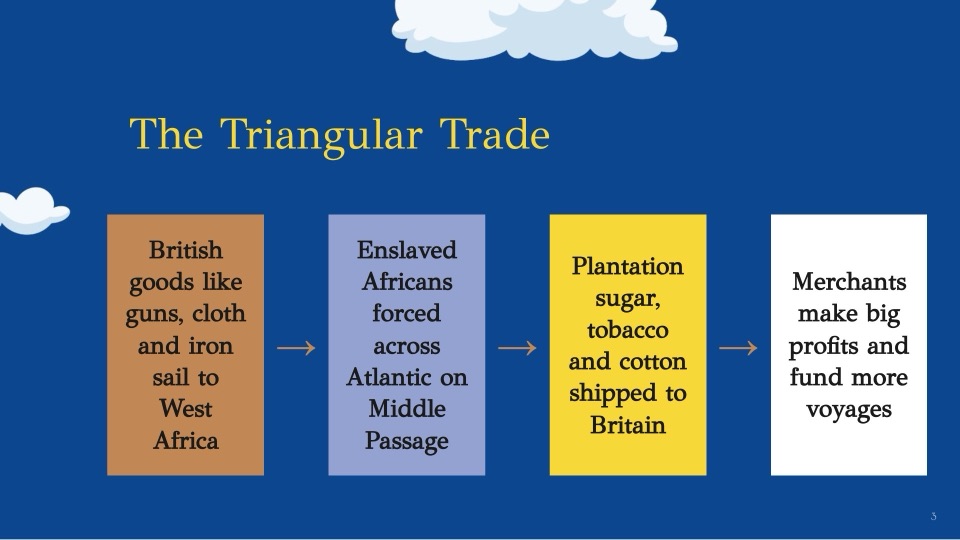
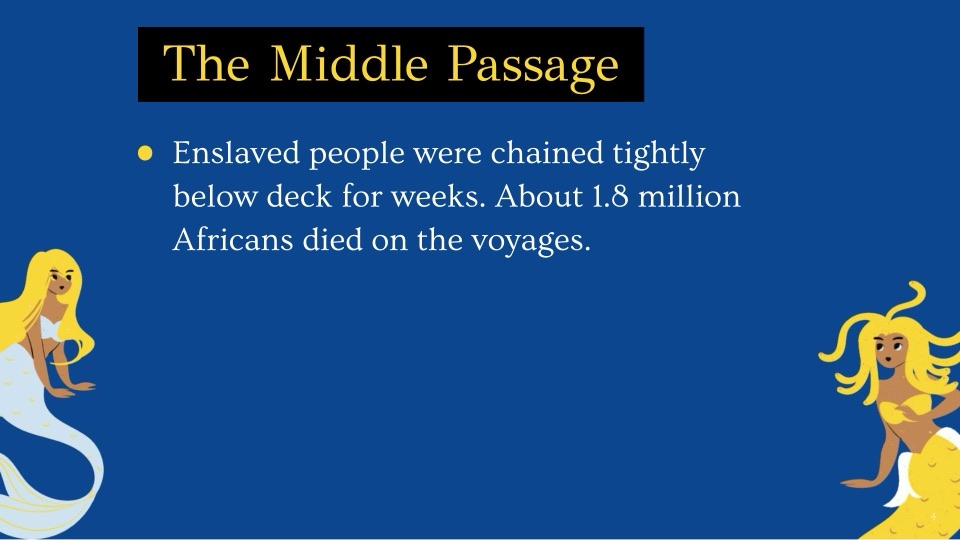
| 12 min | Teaching the triangle | To explain the three legs of Britain's triangular trade and the Middle Passage. Show Slides 2, 3 and 4 and trace the circle with a finger on the map. Model Leg 1 to Leg 3 step by step using the worked example below. Stress that about 1.8 million Africans died on the voyage known as the Middle Passage. Cold-call to label each leg with what was carried and which way it sailed. |
| 20 min | Main activity: profit chain | To explain who in Britain profited from enslaved labour. Put students in fours and give each group four role cards and a mini whiteboard. Ask each student to read their highlighted bullets aloud, then build a chain with arrows. Circulate, prompting use of facts on refining sugar, tobacco and chocolate and factory jobs. Stop with 4 minutes left for two groups to read their money-flow chain in order. |
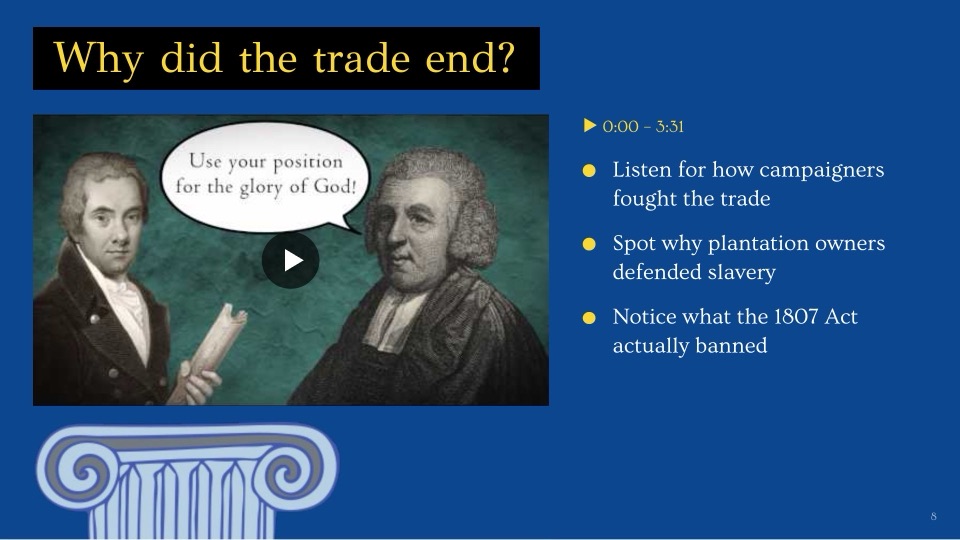
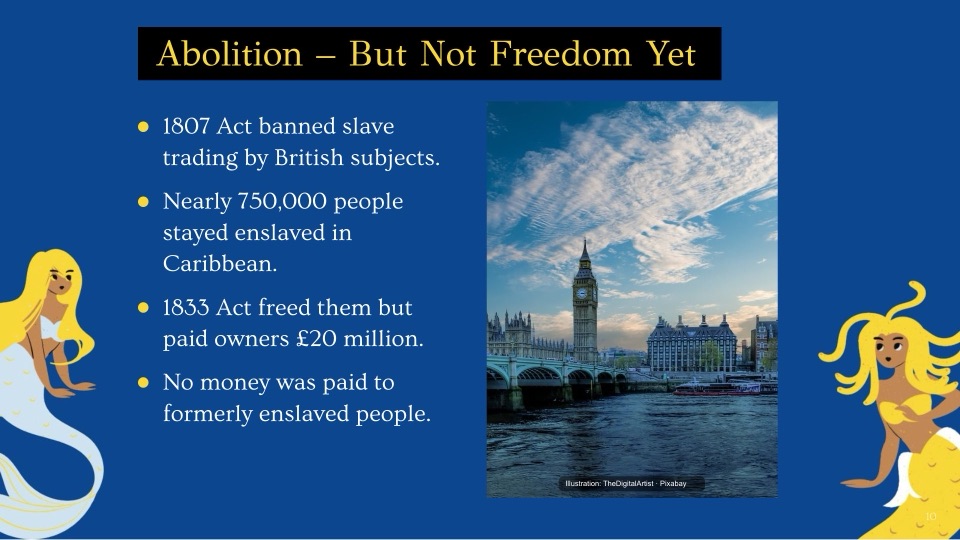
| 13 min | Why the trade ended | To explain abolitionist pressure and what the 1807 Act did and did not do. Show Slide 8 and play Video clip 5 (0:00-3:31), asking students to listen for campaigners, owners and the ban. Teach the timeline: Society meeting in May 1787, 1807 Act, Royal Navy patrols from 1808. Show Slide 10 bullets on 750,000 still enslaved and £20 million to owners. Link resistance to pressure: everyday acts to large-scale rebellions were permanent and helped end the trade. |
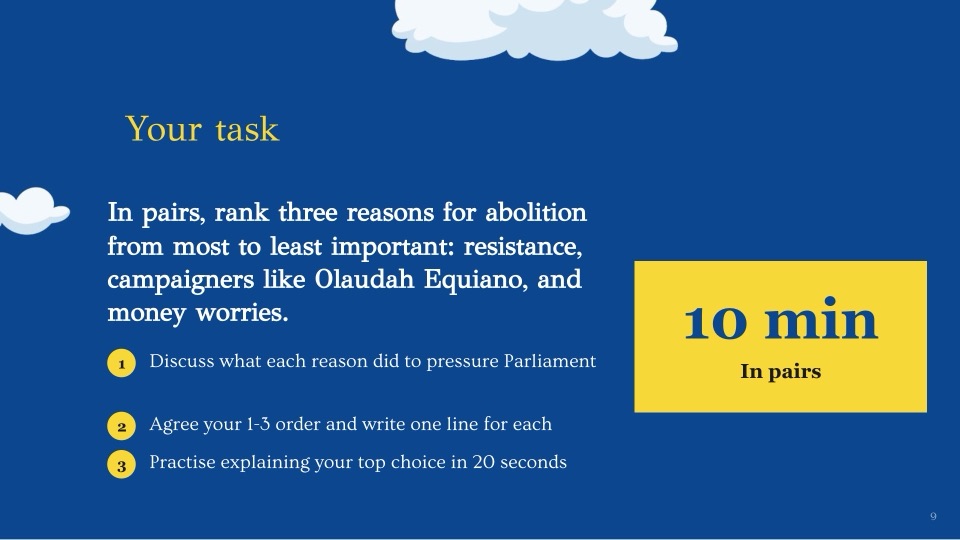
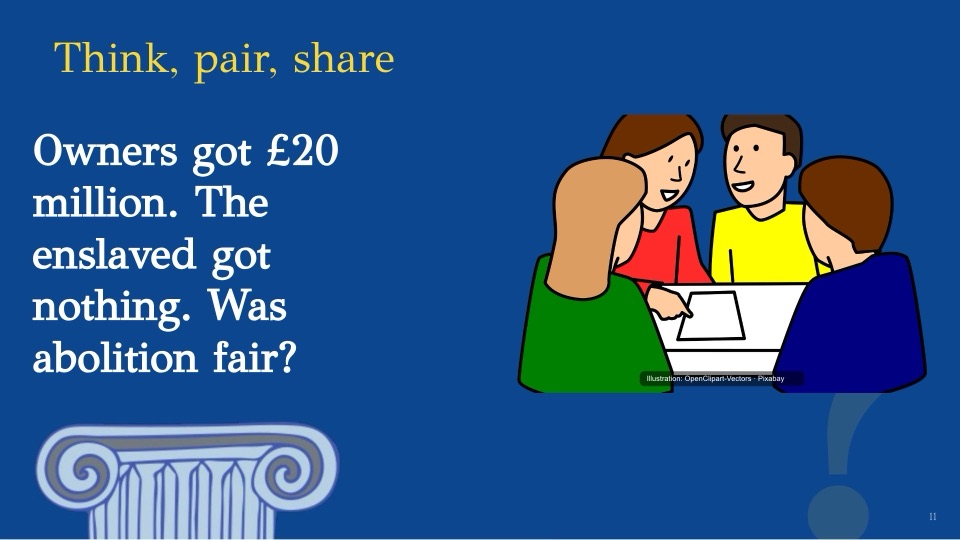
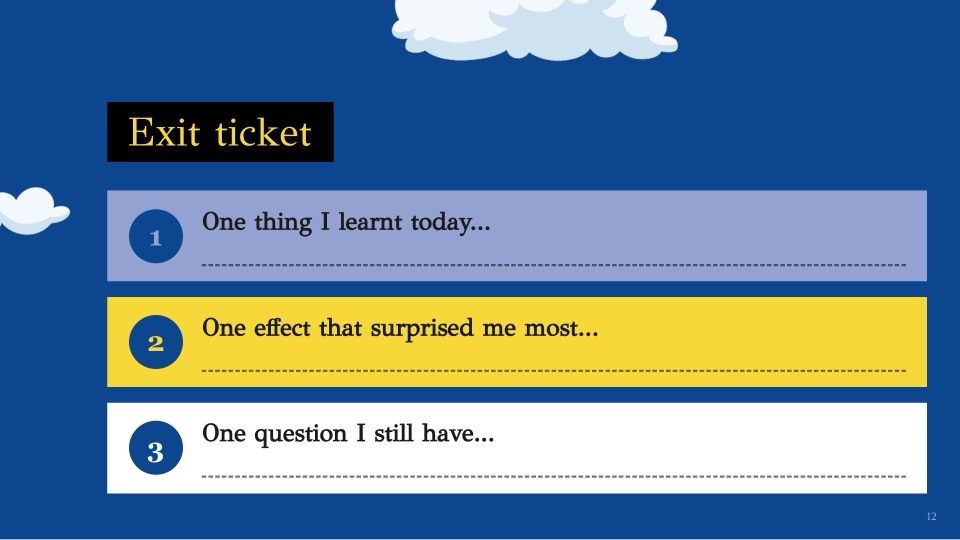
| 10 min | Plenary debate and exit | To judge fairness of abolition and check all three objectives. Show Slide 11 question and give 2 minutes pair talk with ground rules for respectful language. Take 3 quick views and sum up: trade ban mattered, but freedom delayed and money went to owners. Show Slide 12 exit ticket and set 5 minutes silent writing. Collect tickets and preview next lesson on empire and protest. |
Common mistakes
- Thinking the 1807 Act freed all enslaved people at once.
How to spot it: Exit says everyone was free in 1807.
Restate it banned trading only, and nearly 750,000 people remained enslaved in British colonies. - Thinking only ship owners got rich in Britain.
How to spot it: Profit chain shows merchant alone.
Add factories and trades refining sugar, tobacco and chocolate and factory jobs for ordinary people. - Thinking enslaved Africans accepted slavery.
How to spot it: No mention of resistance in answers.
Recall resistance from everyday acts to large-scale rebellions was permanent and helped end trade and slavery.
Support
- Pre-highlighted role cards and triangle outlines with pictures
- Sentence starters for effects and fairness judgement
- Numbers on board as clues for 1807, 750,000 and £20 million
Stretch
- Explain why full holds made the triangle so profitable for merchants
- Decide who knew most or least about the source of profits and why it matters
- Write an extra fairness question about compensation only for owners
Check questions
- Name in order what a British ship carried on each of the three legs.
Answer: Goods like guns, cloth, iron to West Africa; enslaved people across Atlantic; sugar, tobacco, cotton to Europe. - Give one effect on Africa and one on Britain.
Answer: Africa lost millions with devastating social and economic effect; Britain's merchants, shipbuilders and factory workers profited and got jobs. - What did the 1807 Act do and not do?
Answer: Banned British slave trading as unlawful; did not end slavery, nearly 750,000 remained enslaved.
Curriculum
Britain’s transatlantic slave trade: its effects and its eventual abolition
Video clips
Clips on YouTube, from the start and end times we chose. Check each one before you show it.
-
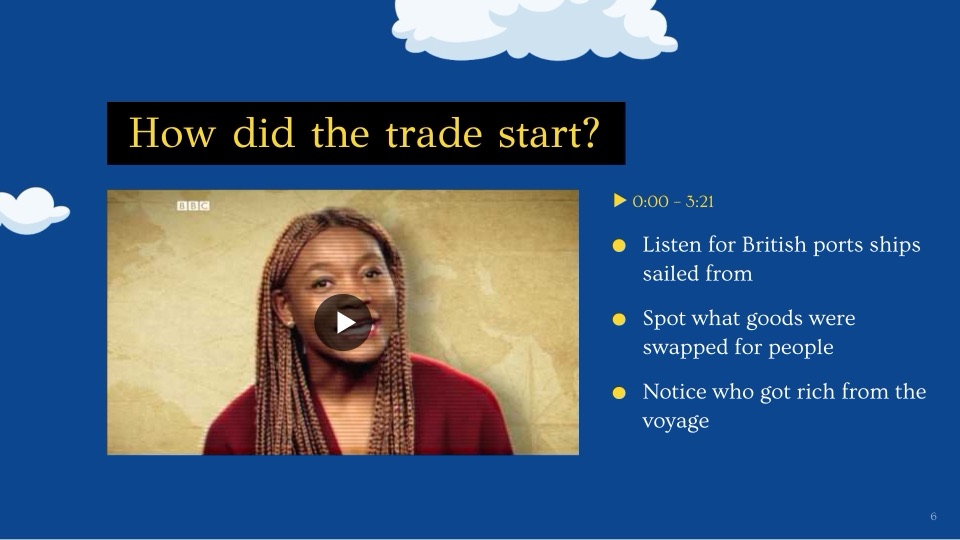
How the trade started from 0:00 to 3:21
BBC What’s New / Actu Jeunes: How did the transatlantic slave trade start? - BBC What's New
BBC explainer with clear vocabulary and steady pace that suits 12-13-year-olds and covers origins including Britain's role.
-
Wilberforce and abolition from 0:00 to 3:31
Rose Publishing: William Wilberforce & the End of the African Slave Trade - Christian History Made Easy
Short, clear explainer with accessible language for 12-13-year-olds directly about the campaign to end the trade.
Worksheet
Sources
- Year 8 History - Curriculum Overview and KS3 Progress ... hgs.herts.sch.uk
- History Department: Year 8 Curriculum Aim of the curriculum ... trinity.bexley.sch.uk
- The transatlantic slave trade - The National Archives nationalarchives.gov.uk
- Slavery and the British transatlantic slave trade - The ... nationalarchives.gov.uk
- The transatlantic slave trade overview - BBC bbc.co.uk
- The history of the transatlantic slave trade | Royal Museums ... rmg.co.uk
- Lesson: The Transatlantic Slave Trade | Oak National Academy thenational.academy
- Lesson: The structure of the Transatlantic Slave Trade | Oak ... thenational.academy
- The transatlantic slave trade - KS3 History - BBC Bitesize bbc.co.uk
- Transatlantic slave trade | History, Time Period, Causes ... britannica.com
- The Transatlantic Slave Trade (article) | Khan Academy khanacademy.org
- Outreach Programme on the Transatlantic Slave Trade and Slavery … un.org
- The Transatlantic Slave Trade Database | National Endowment for … neh.gov
- Last survivor of transatlantic slave trade discovered bbc.com
- Last survivor of transatlantic slave trade discovered - BBC News bbc.co.uk
- The British Transatlantic Slave Trade, Vol. 3, The Abolitionist … eprints.soton.ac.uk
- The Transatlantic Slave Trade - Equal Justice Initiative Reports eji.org
- Bristol slave trade en.wikipedia.org
- The Transatlantic Slave Trade | Essay | The Metropolitan Museum … metmuseum.org
- The transatlantic slave trade and the evolution of political aut… ideas.repec.org
- Learning History Through Objects: The Transatlantic Slave Trade learninglab.si.edu
- Transatlantic Slave Trade Lesson Plans | OER Project oerproject.com
- Transatlantic Slave Trade Facts, Worksheets, Origin & Aftermath schoolhistory.co.uk
- The Transatlantic Slave Trade | DPLA dp.la
- Atlas of the transatlantic slave trade | WorldCat.org worldcat.org
Picture credits
Made with Lesson Dino's AI on 17 October 2026. AI can make mistakes, so check facts against the sources before you teach.