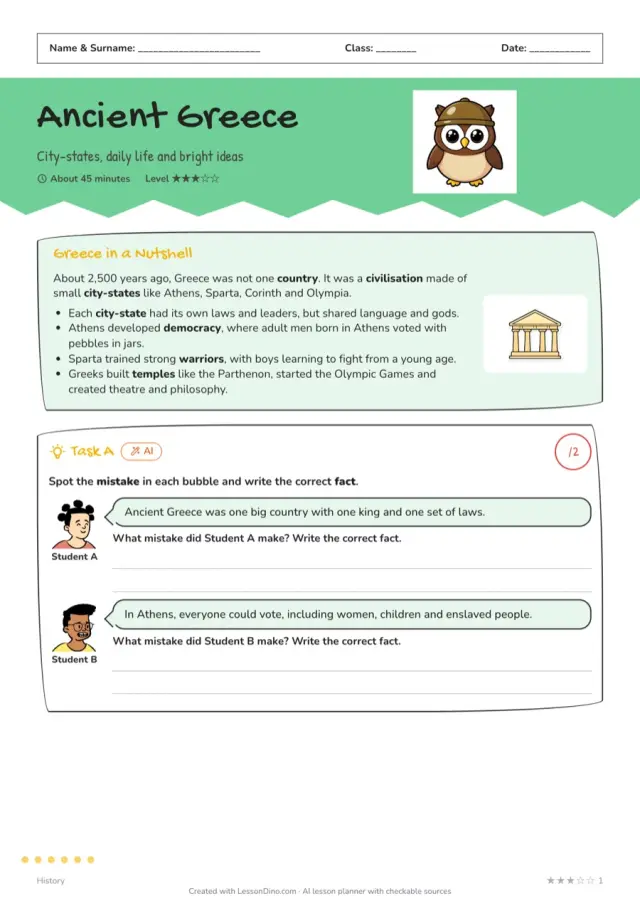
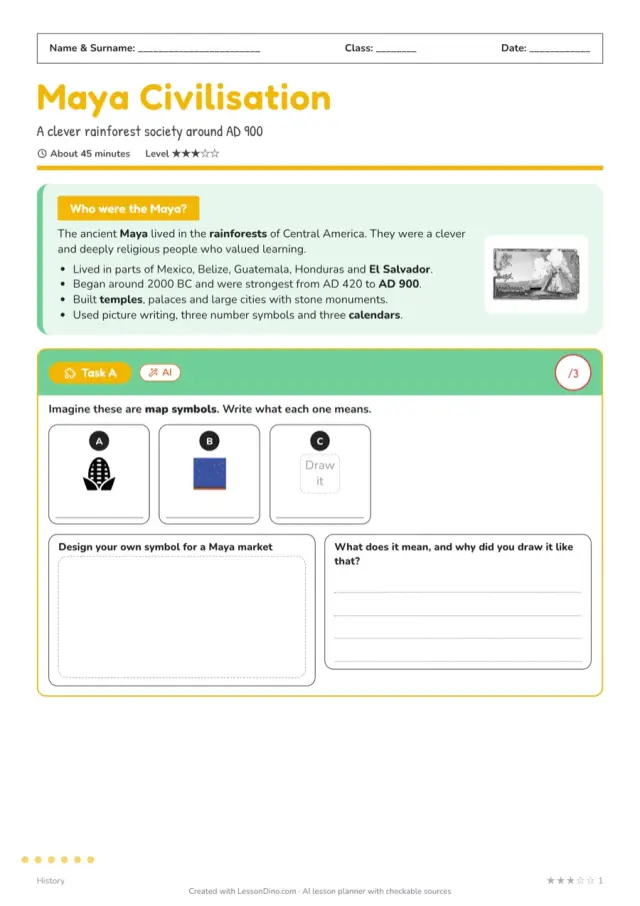
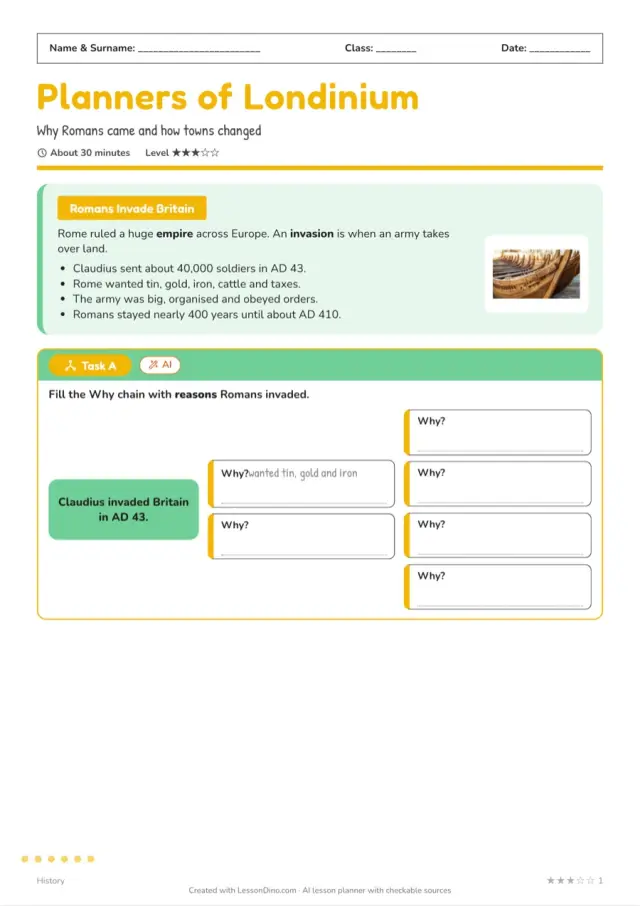
The worksheet
About this worksheet
Pupils learn why Vikings crossed the sea to raid Britain and how raids differed from invasion. They label Scandinavia and draw sea routes to Britain. This Year 5 History worksheet gives students (ages 9–10) five pages of practice on viking raids and invasion, part of the vikings and Anglo-Saxons unit. It goes with our free Viking raids and invasion lesson, which has the slides and a timed lesson plan.
What it covers
By the end, students should be able to:
- Students will locate Scandinavia and trace Viking sea routes to Britain.
- Students will place the Lindisfarne raid in 793 on a timeline.
- Students will explain the difference between a raid and an invasion.
How to use it
- Use it for practice after the teaching part of the lesson, once students have seen the worked examples on the slides.
- Support: Pre-labelled maps with dotted country names, word banks for abbey, treasure, slaves and sentence starters.
- Stretch: Add a map key for short raids and settling routes linked to Norse settlement in the British Isles.
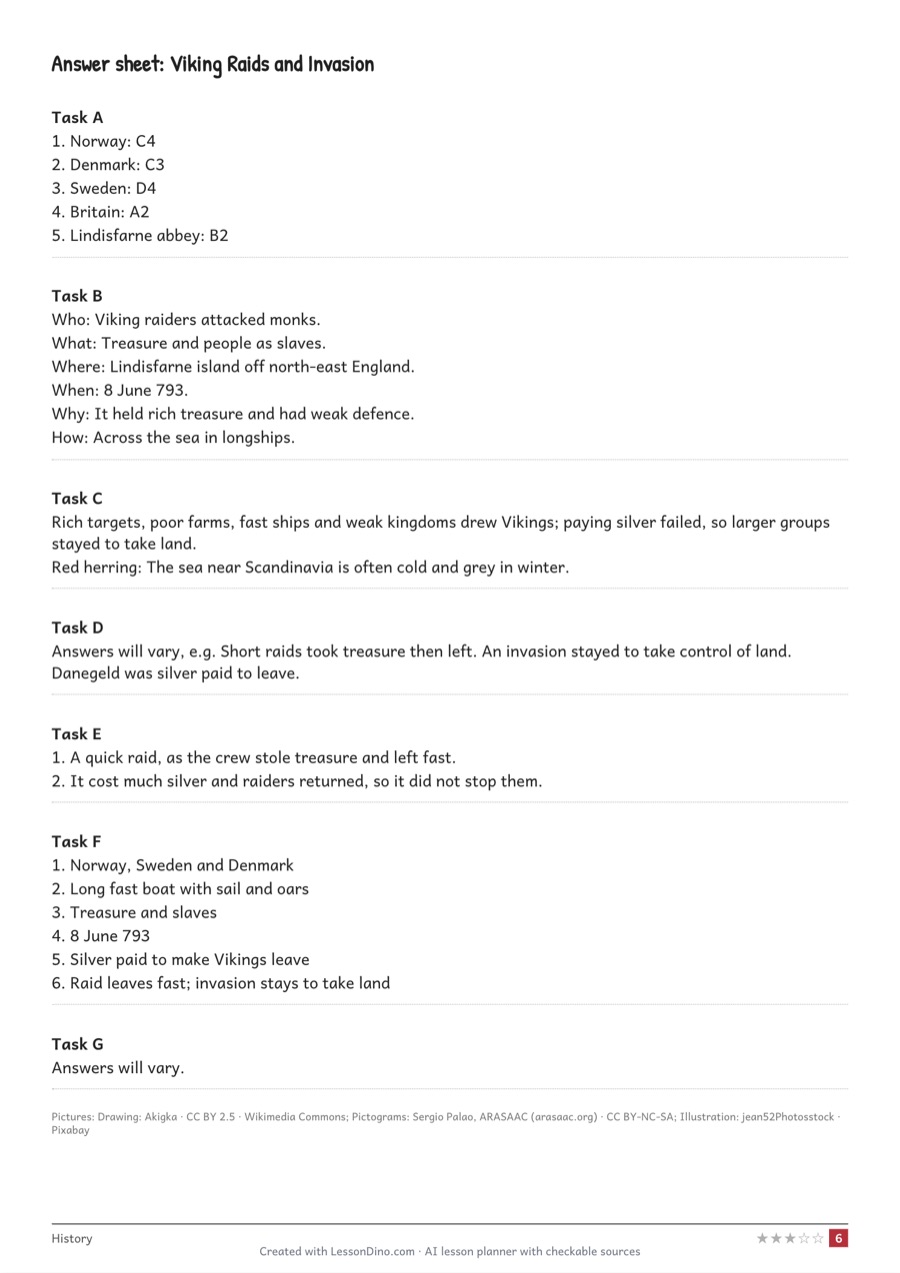
- The answer sheet is the last page, so you can print it on its own or let students check their own work.
Key vocabulary
- Scandinavia: the cold northern area where the lands now called Norway, Sweden and Denmark are
- longship: a narrow wooden sailing ship with oars that could travel far over the sea
- raid: a quick surprise attack to steal treasure and take slaves then sail home
- invasion: arriving with a large group to take land and stay to live and farm
- abbey: a large church home where monks lived, prayed and kept treasure
- Danegeld: silver money paid to attackers to make them go away without fighting
Mistakes to watch for
- Thinking a raid and an invasion are the same. Use the test: did they take treasure and slaves and sail home or take land to stay. Lindisfarne was a quick raid.
- Thinking Scandinavia is one country. Point to all three: the lands we now call Norway, Sweden and Denmark in the area called Scandinavia.
- Thinking Vikings only fought and stole. Explain most Vikings were also farmers, fishermen, craftsmen and traders and planted crops in spring then raided until harvest.
What's on the worksheet
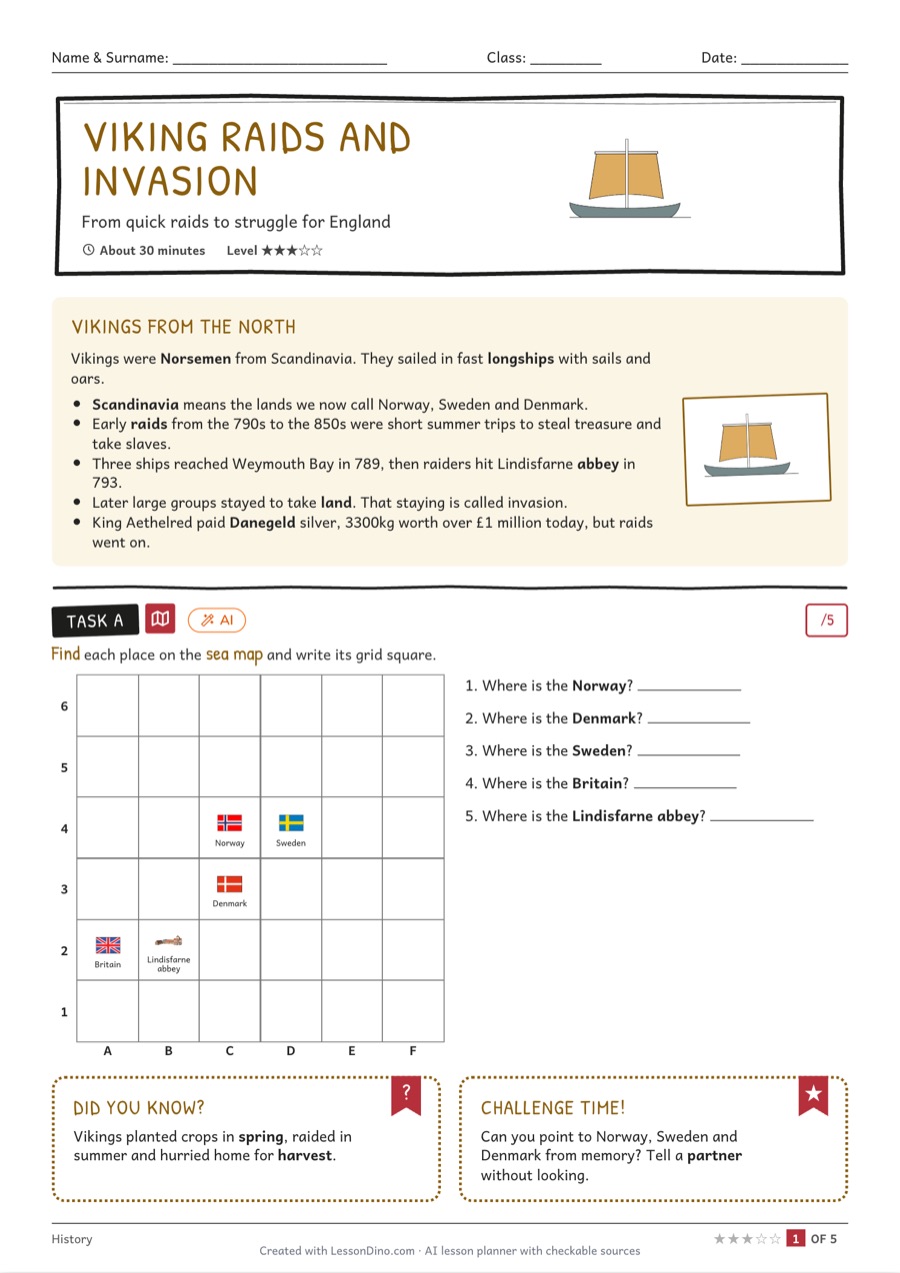
Where Vikings Sailed
Find where raiders came from and how they reached Britain.
Vikings from the North
- Vikings were Norsemen from Scandinavia. They sailed in fast longships with sails and oars.
- Scandinavia means the lands we now call Norway, Sweden and Denmark.
- Early raids from the 790s to the 850s were short summer trips to steal treasure and take slaves.
- Three ships reached Weymouth Bay in 789, then raiders hit Lindisfarne abbey in 793.
- Later large groups stayed to take land. That staying is called invasion.
- King Aethelred paid Danegeld silver, 3300kg worth over £1 million today, but raids went on.
Find each place on the sea map and write its grid square.
- Vikings planted crops in spring, raided in summer and hurried home for harvest.
- Can you point to Norway, Sweden and Denmark from memory? Tell a partner without looking.
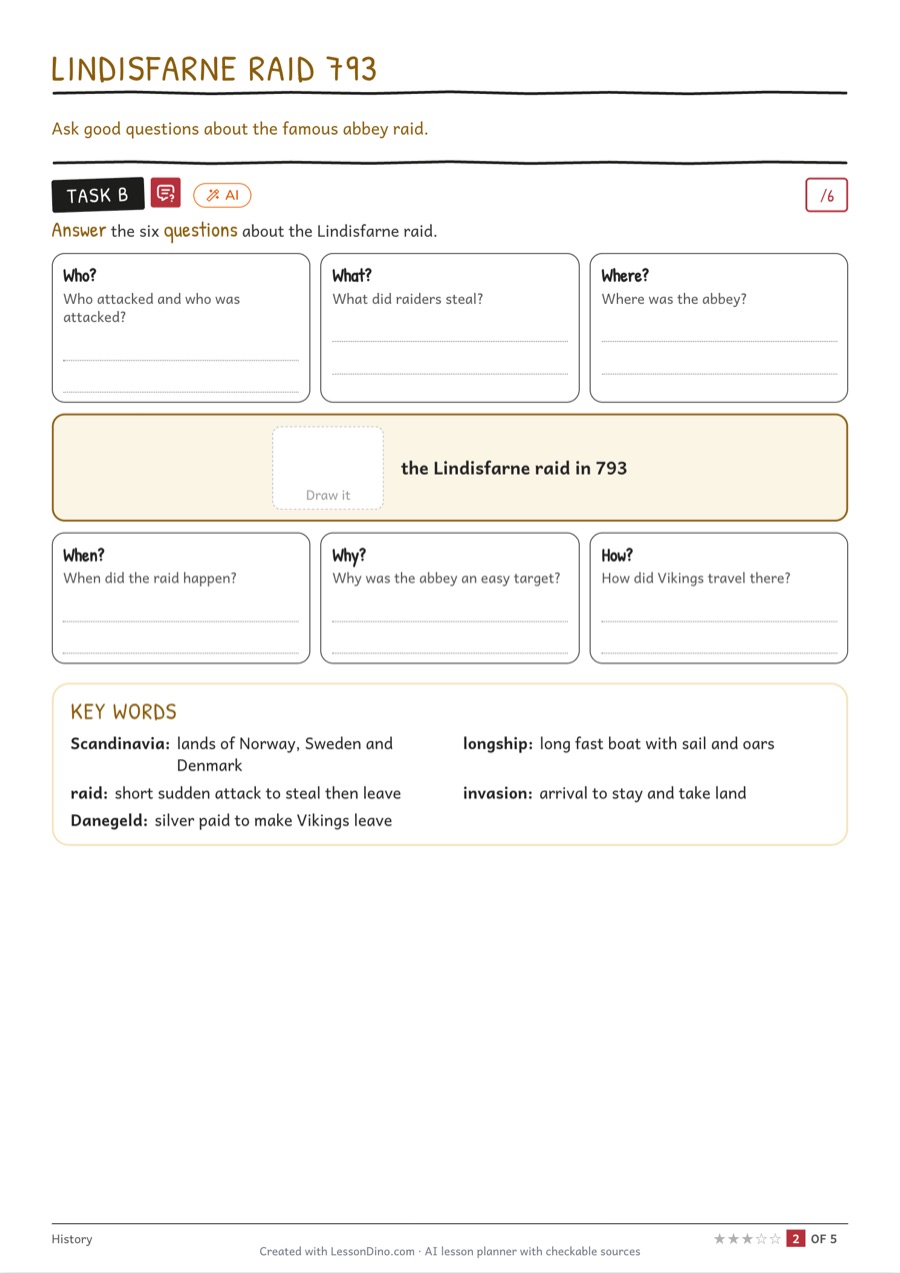
Lindisfarne Raid 793
Ask good questions about the famous abbey raid.
Answer the six questions about the Lindisfarne raid.
| Word | Meaning |
|---|---|
| Scandinavia | lands of Norway, Sweden and Denmark |
| longship | long fast boat with sail and oars |
| raid | short sudden attack to steal then leave |
| invasion | arrival to stay and take land |
| Danegeld | silver paid to make Vikings leave |
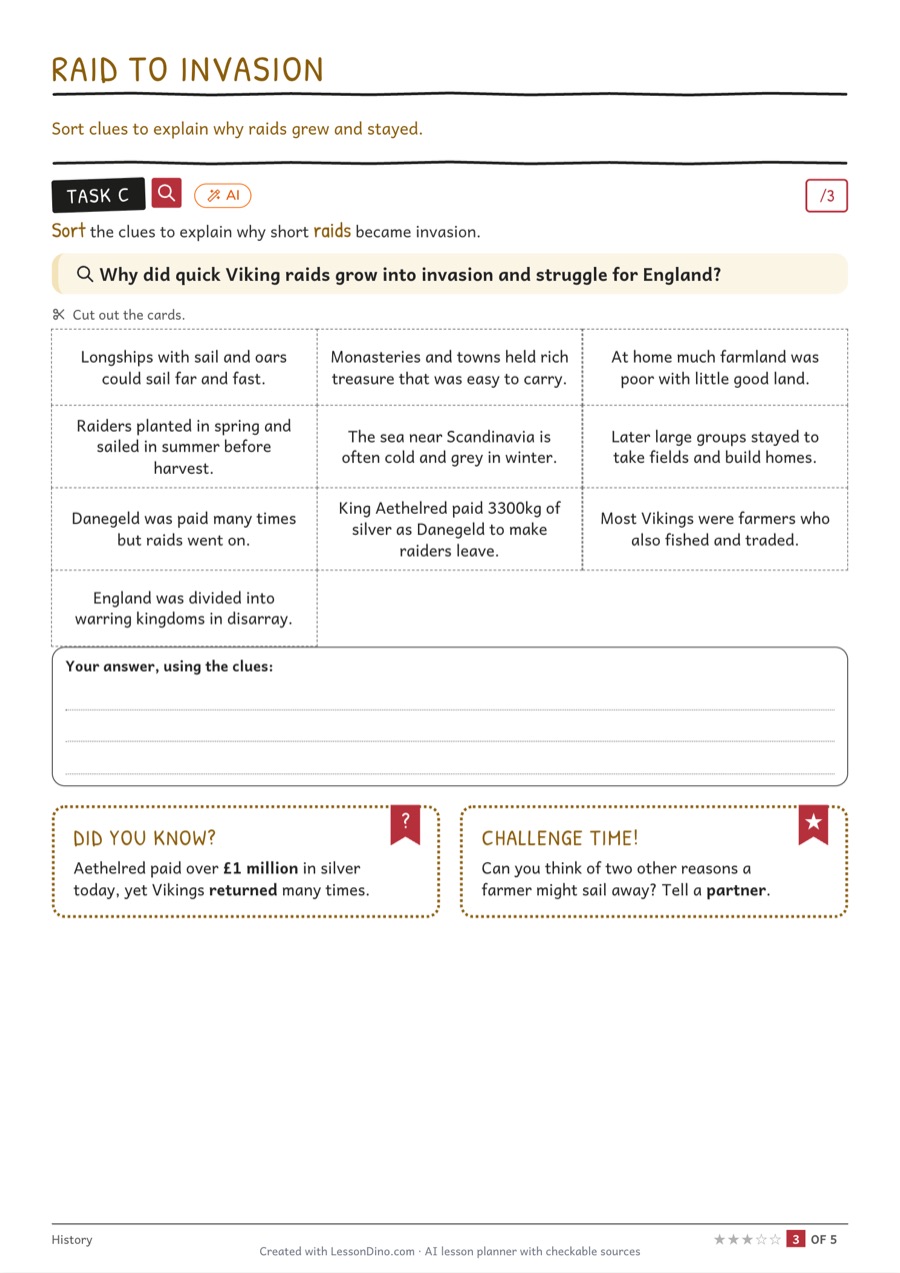
Raid to Invasion
Sort clues to explain why raids grew and stayed.
Sort the clues to explain why short raids became invasion.
- Aethelred paid over £1 million in silver today, yet Vikings returned many times.
- Can you think of two other reasons a farmer might sail away? Tell a partner.
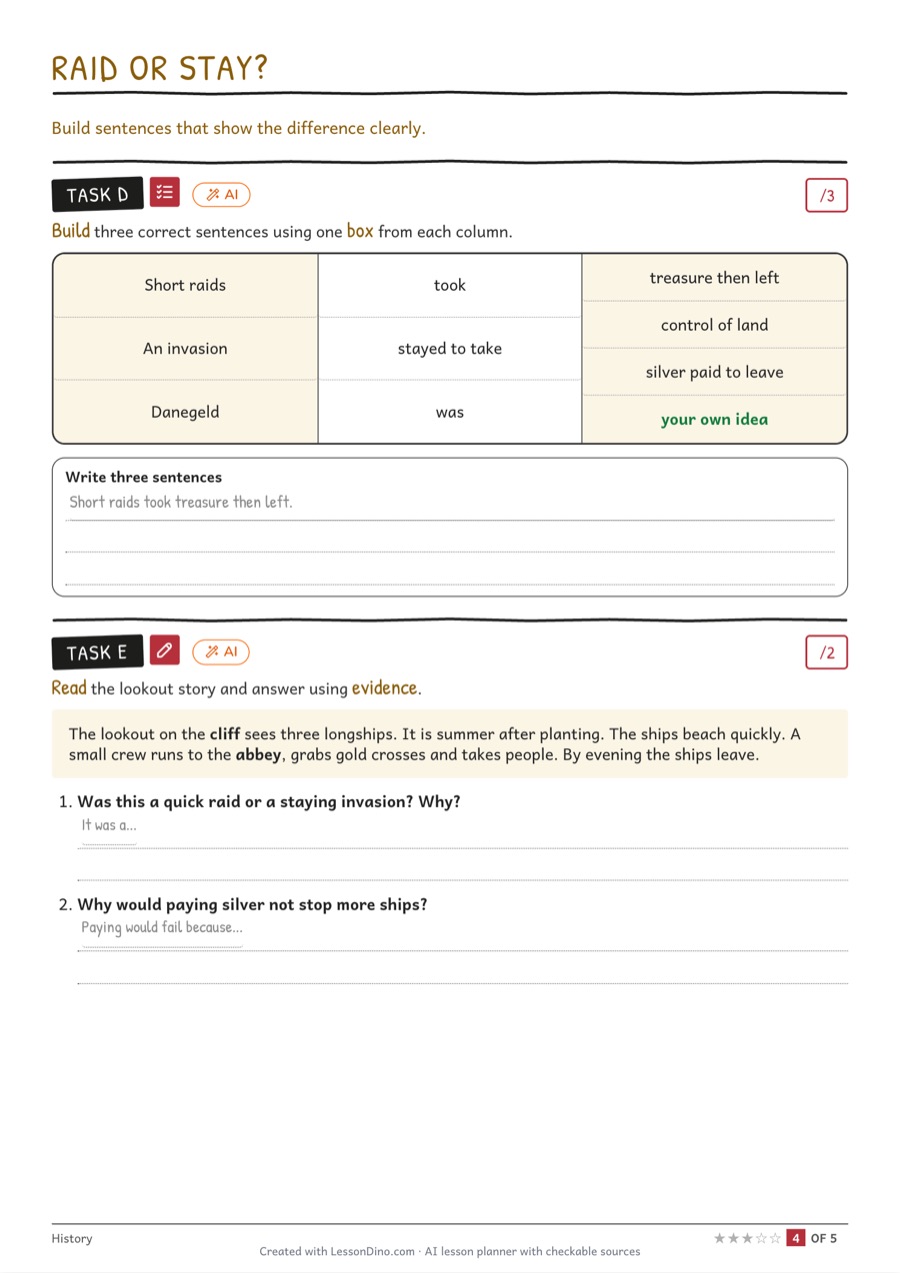
Raid or Stay?
Build sentences that show the difference clearly.
Build three correct sentences using one box from each column.
Read the lookout story and answer using evidence.
- Was this a quick raid or a staying invasion? Why?
- Why would paying silver not stop more ships?
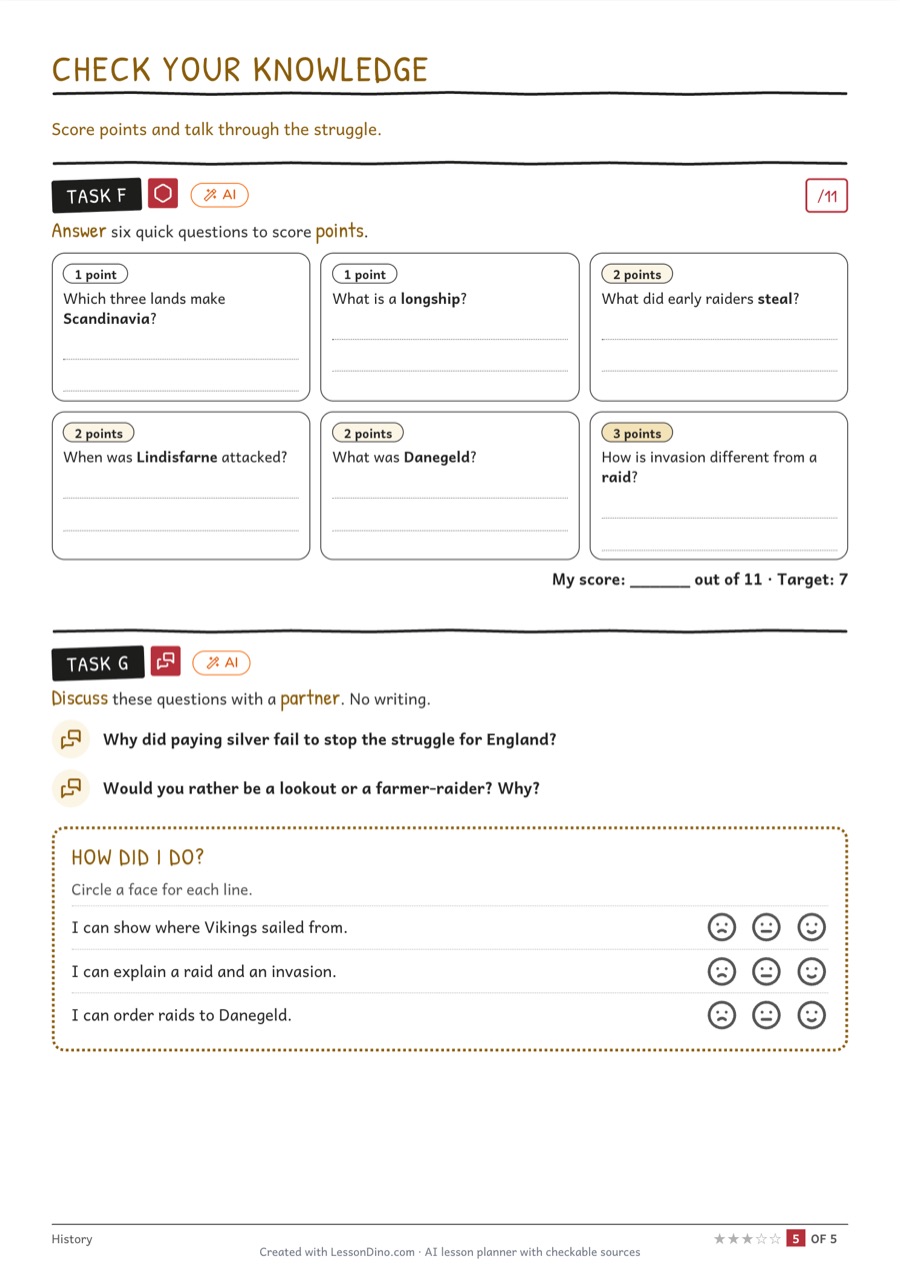
Check Your Knowledge
Score points and talk through the struggle.
Answer six quick questions to score points.
- Which three lands make Scandinavia?
- What is a longship?
- What did early raiders steal?
- When was Lindisfarne attacked?
- What was Danegeld?
- How is invasion different from a raid?
Discuss these questions with a partner. No writing.
- Why did paying silver fail to stop the struggle for England?
- Would you rather be a lookout or a farmer-raider? Why?
Answers
Show the answers
- Was this a quick raid or a staying invasion? Why? A quick raid, as the crew stole treasure and left fast.
- Why would paying silver not stop more ships? It cost much silver and raiders returned, so it did not stop them.
- Which three lands make Scandinavia? Norway, Sweden and Denmark
- What is a longship? Long fast boat with sail and oars
- What did early raiders steal? Treasure and slaves
- When was Lindisfarne attacked? 8 June 793
- What was Danegeld? Silver paid to make Vikings leave
- How is invasion different from a raid? Raid leaves fast; invasion stays to take land
The answer sheet is the last picture above.
Curriculum
the Viking and Anglo-Saxon struggle for the Kingdom of England to the time of Edward the Confessor (for example, Viking raids and invasion)
Made with Lesson Dino's AI on 17 October 2026. AI can make mistakes, so check the answers and facts against the sources before you teach.