Slides
Lesson plan
Viking Raids: From Scandinavia to Lindisfarne
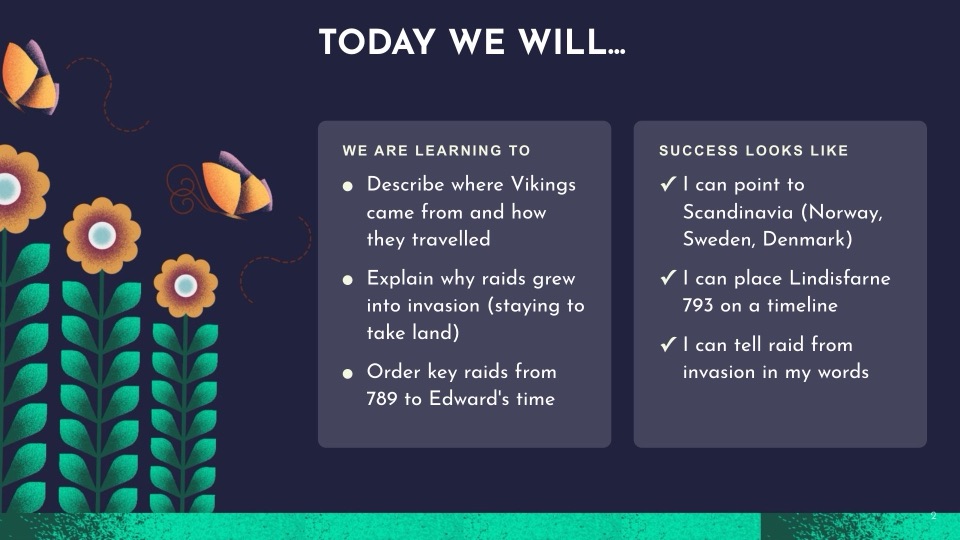
Pupils learn why Vikings crossed the sea to raid Britain and how raids differed from invasion. They label Scandinavia and draw sea routes to Britain.
Objectives
- Students will locate Scandinavia and trace Viking sea routes to Britain.
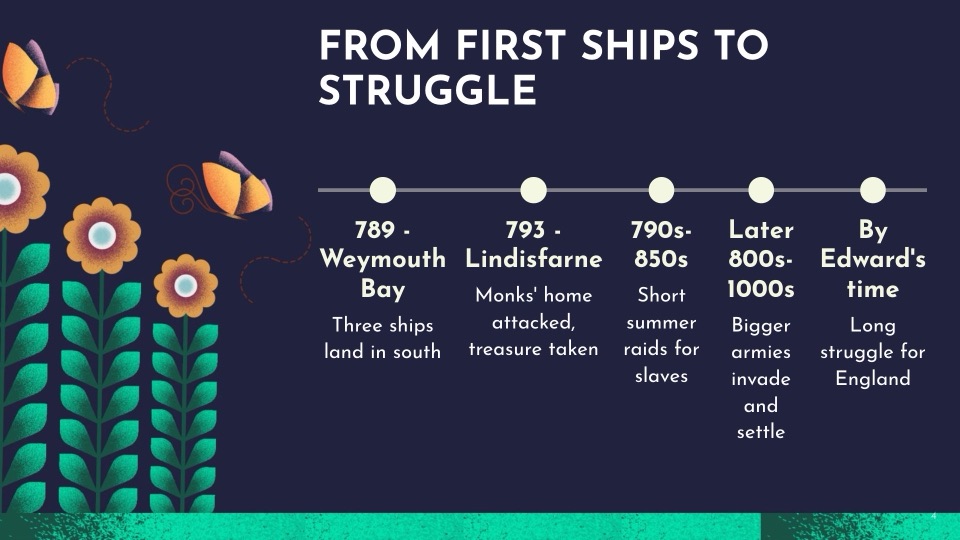
- Students will place the Lindisfarne raid in 793 on a timeline.
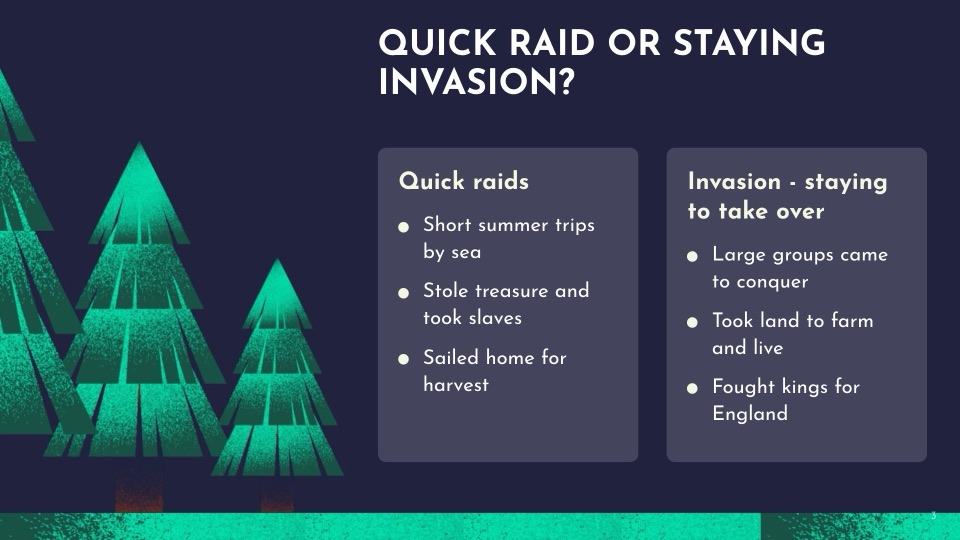
- Students will explain the difference between a raid and an invasion.
Success criteria
- I can point to Norway, Sweden and Denmark and show the sea route.
- I can place Lindisfarne 793 and say why people were terrified.
- I can explain a quick raid and a staying invasion in my words.
Key words
| Word | Meaning |
|---|---|
| Scandinavia | the cold northern area where the lands now called Norway, Sweden and Denmark are |
| longship | a narrow wooden sailing ship with oars that could travel far over the sea |
| raid | a quick surprise attack to steal treasure and take slaves then sail home |
| invasion | arriving with a large group to take land and stay to live and farm |
| abbey | a large church home where monks lived, prayed and kept treasure |
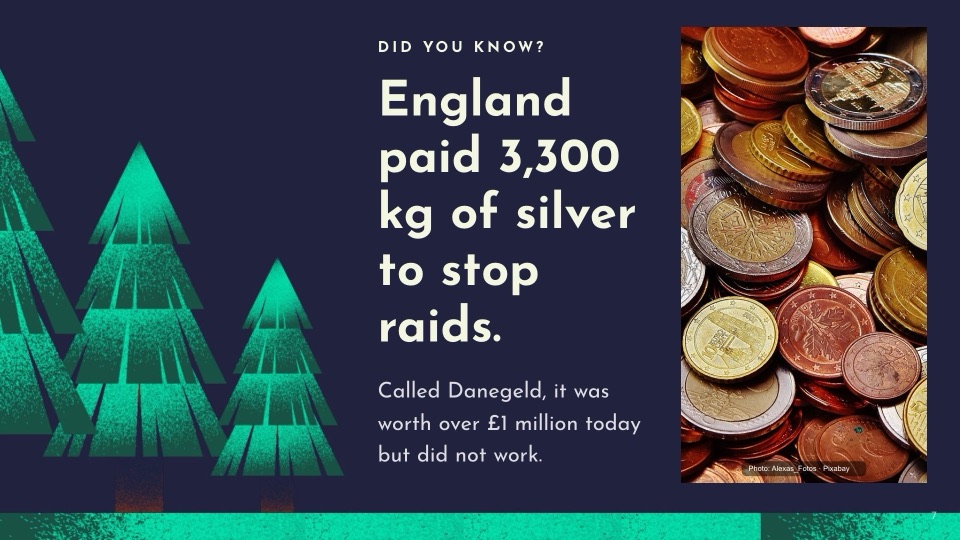
| Danegeld | silver money paid to attackers to make them go away without fighting |
Timed plan (60 minutes)
| Time | Stage | What happens |
|---|---|---|
| 8 min | Starter | To recall Britain before the Vikings and spark curiosity about sea voyages. Show Slide 1 and read the question why they came and who fought for England. Show Slide 2 and share the three aims in your own words. Say the hook and ask pupils to whisper to a partner where they would sail. Remind the class that Anglo-Saxons, Scots and Picts battled among themselves to dominate Britain. |
| 12 min | Teaching | To teach the difference between a quick raid and a staying invasion on a timeline. Show Slide 3 and explain the two columns: short summer trips by sea that stole treasure and took slaves and sailed home, and large groups that came to conquer and took land. Show Slide 4 and walk along the timeline from three ships in Weymouth Bay in 789 to the monks home attacked in 793 to short summer raids in the 790s to 850s. Model the raid test: came quickly, took things, left. Ask pairs to decide raid or invasion for two examples on mini whiteboards. |
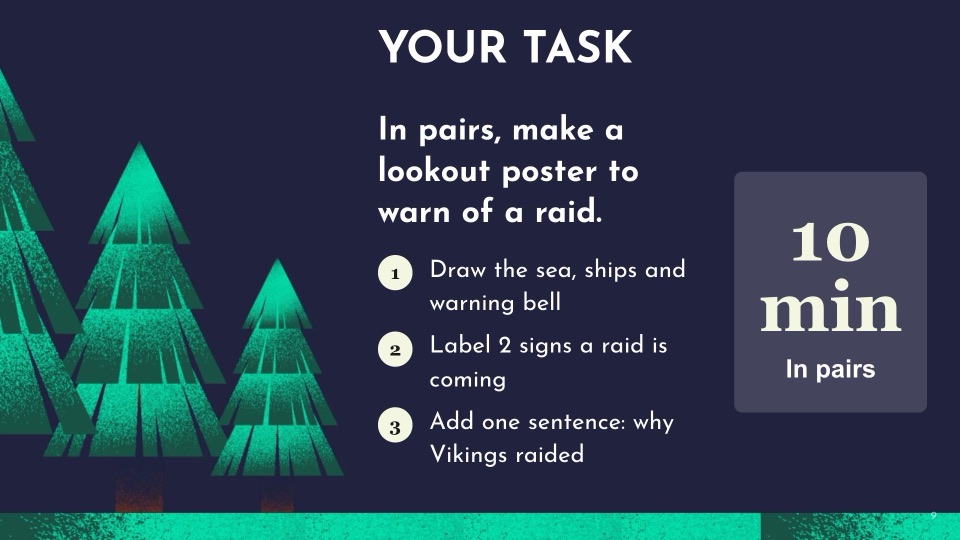
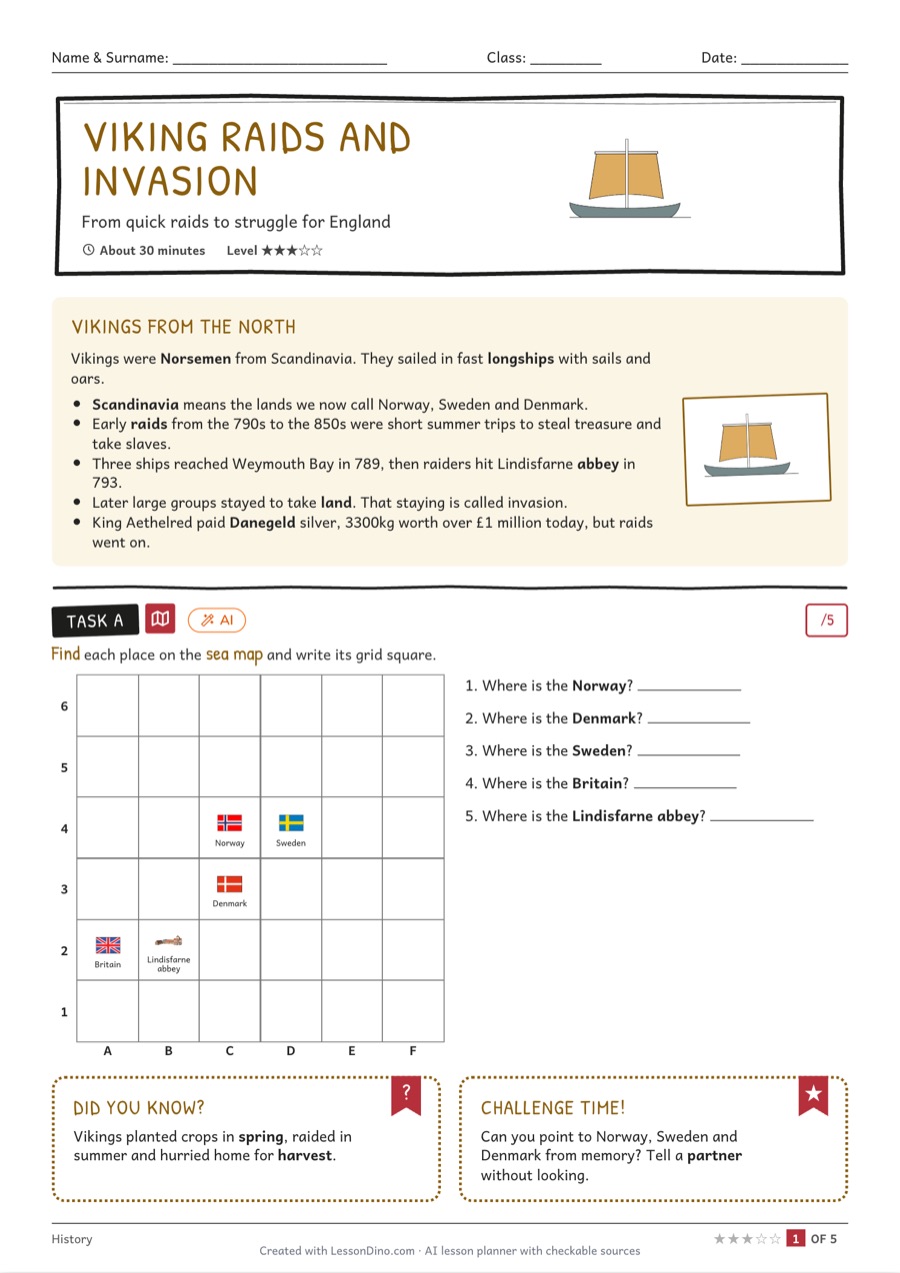
| 20 min | Main activity | To locate Scandinavia and trace early raiding routes to Britain. Give out outline maps, blue pencils and card arrows. Model on the large map: label the lands we now call Norway, Sweden and Denmark and shade Scandinavia lightly. Model drawing one blue sea arrow from Denmark across the sea to north-east England and explain innovations in sailing gave Vikings the ability to sail longer to farther places. Send pairs to label, place arrows and add two labels for direction and reason for long voyages, then check maps. |
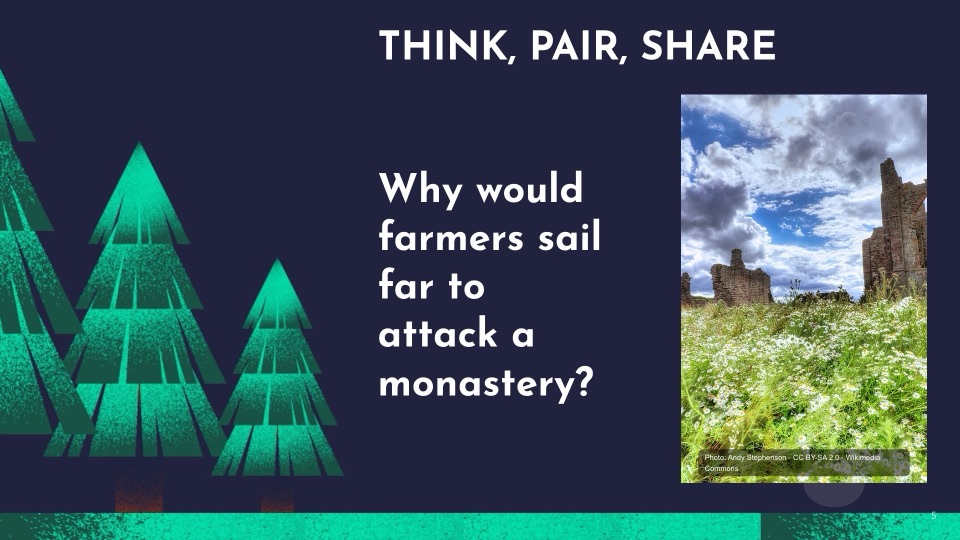
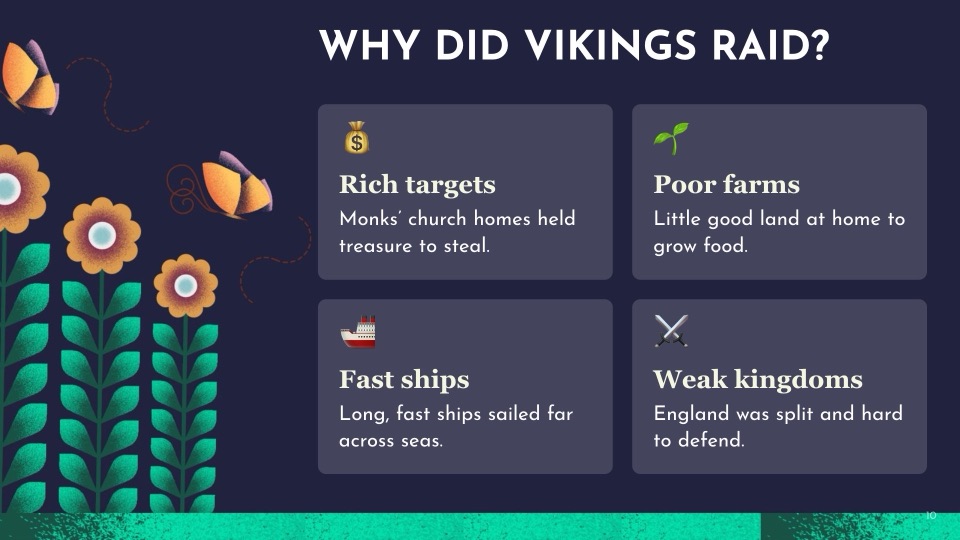
| 10 min | Lindisfarne and why they raided | To understand the terror at Lindisfarne and why Vikings kept raiding. Play Video clip 3 (0:00-0:42) about why Vikings raided. Explain the Lindisfarne attack on 8 June 793 that destroyed the abbey, a centre of learning on an island off the north-east coast of England that is regarded as the beginning of the Viking Age. Describe that monks were killed, thrown into the sea to drown, or carried away as slaves along with the church treasures, so never before in Britain had such a terror appeared. Show Slide 7 Danegeld fact and Slide 10 cards for rich targets, poor farms and fast ships. |
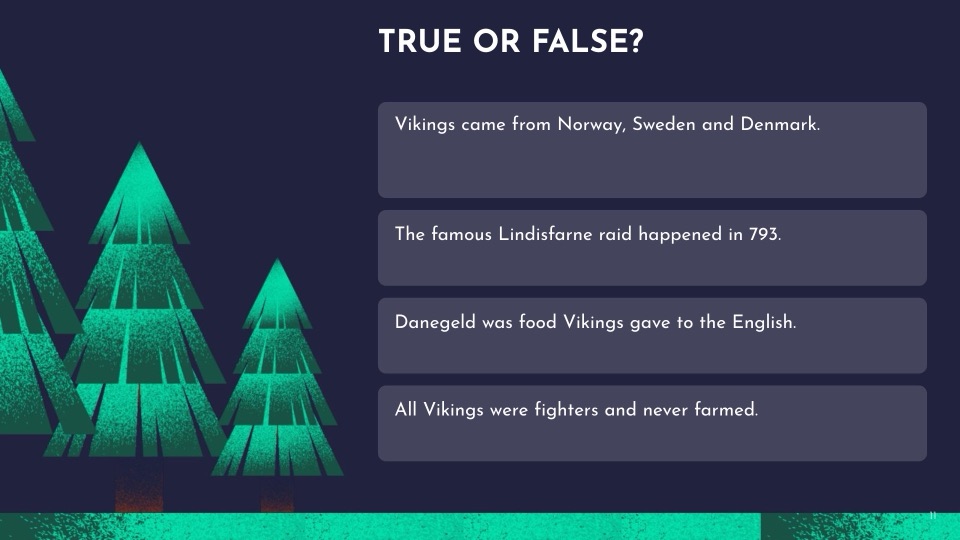
| 10 min | Plenary | To check the three aims and fix raid and invasion confusion. Show Slide 11 true or false statements and read each one. Ask pairs to discuss Slide 11 statements for 2 minutes, then vote true or false with thumbs. Go back to the three I can statements from Slide 2 and tick them together. Give the exit ticket on mini whiteboards. |
Common mistakes
- Thinking a raid and an invasion are the same.
How to spot it: Pupil calls Lindisfarne an invasion or settling.
Use the test: did they take treasure and slaves and sail home or take land to stay. Lindisfarne was a quick raid. - Thinking Scandinavia is one country.
How to spot it: Pupil labels only one land or points to Britain.
Point to all three: the lands we now call Norway, Sweden and Denmark in the area called Scandinavia. - Thinking Vikings only fought and stole.
How to spot it: Pupil says Vikings never farmed or traded.
Explain most Vikings were also farmers, fishermen, craftsmen and traders and planted crops in spring then raided until harvest.
Support
- Pre-labelled maps with dotted country names, word banks for abbey, treasure, slaves and sentence starters.
- Partner reading, picture prompts and mini whiteboards to show raid or invasion without long writing.
Stretch
- Add a map key for short raids and settling routes linked to Norse settlement in the British Isles.
- Debate pay or fight using the 3,300 kg Danegeld cost and suggest a third defence plan with strengths and weaknesses.
Check questions
- Name the three lands of Scandinavia and point to the sea route.
Answer: Norway, Sweden and Denmark, with a sea arrow from Scandinavia to Britain. - When was Lindisfarne attacked and what happened?
Answer: 8 June 793; monks killed or taken as slaves and church treasures taken. - Explain raid and invasion in your words.
Answer: Raid is a short trip to steal treasure and take slaves then sail home; invasion is coming with a large group to take land and stay.
Curriculum
the Viking and Anglo-Saxon struggle for the Kingdom of England to the time of Edward the Confessor (for example, Viking raids and invasion)
Video clips
Clips on YouTube, from the start and end times we chose. Check each one before you show it.
-
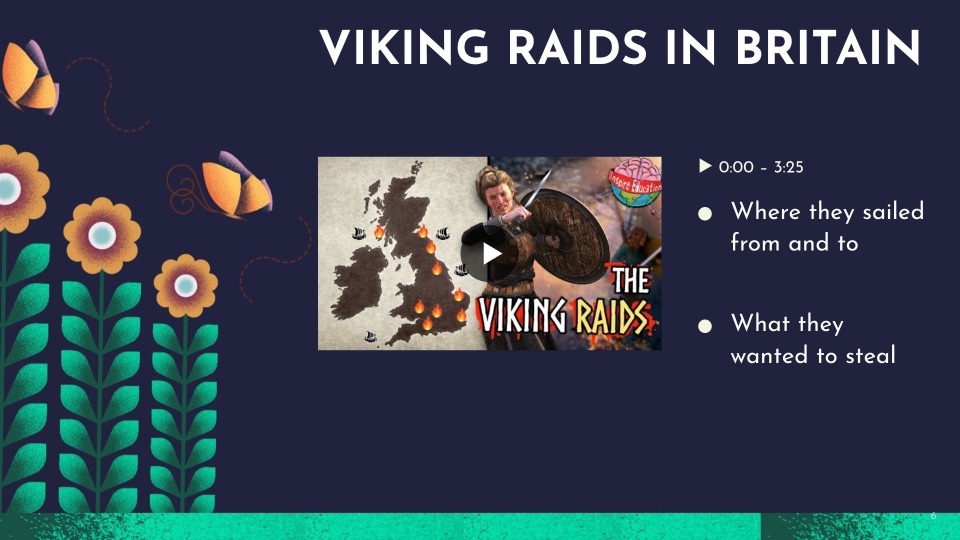
Viking Raids in Britain from 0:00 to 3:25
Inspire Education: The Viking Raids in Britain
Directly about Viking raids in Britain with clear simple vocabulary and steady pace ideal for ages 9-10.
-
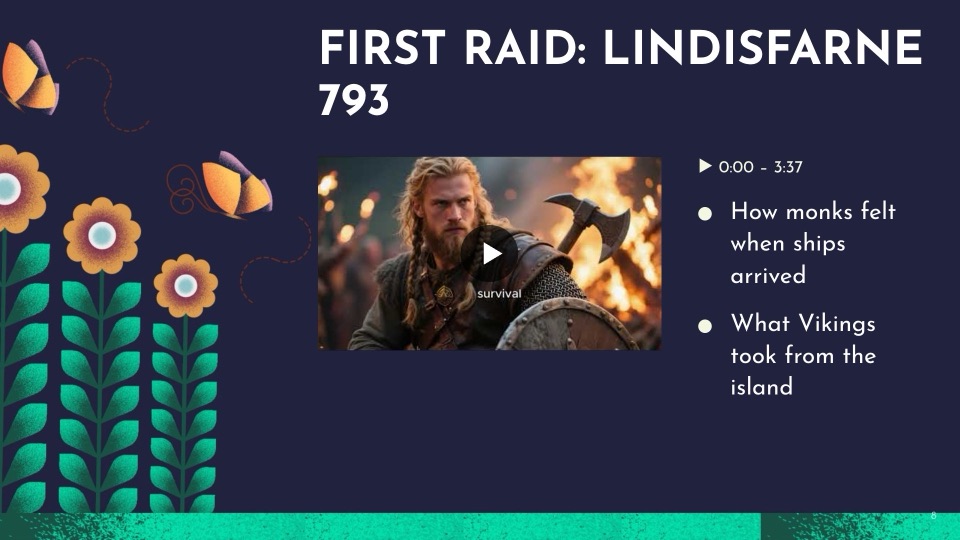
First Raid on Lindisfarne from 0:00 to 3:37
Stories and Tales: The First Viking Raid Lindisfarne 793 AD
Focuses on the 793 Lindisfarne raid with story-style narration and vocabulary suited to ages 9-10.
Worksheet
Sources
- 25B26F989F10243DEA01CAC486F267D0 lodgefarm.herts.sch.uk
- 5134399E273119F20617690AF072A2CC warden-house.kent.sch.uk
- Viking Age Wikipedia
- Vikings Wikipedia
- Black Sea slave trade Wikipedia
Picture credits
- Photo: KELLEPICS · Pixabay
- Photo: Andy Stephenson · CC BY-SA 2.0 · Wikimedia Commons
- Photo: Alexas_Fotos · Pixabay
- Drawing: Akigka · CC BY 2.5 · Wikimedia Commons
- Pictograms: Sergio Palao, ARASAAC (arasaac.org) · CC BY-NC-SA
- Illustration: jean52Photosstock · Pixabay
Made with Lesson Dino's AI on 17 October 2026. AI can make mistakes, so check facts against the sources before you teach.