The worksheet
About this worksheet
Pupils learn how skilful Maya farming fed cities near AD 900. They trade crop cards and explain how extra food built temples. This Year 5 History worksheet gives students (ages 9–10) five pages of practice on mayan civilisation, part of the a non-European society that provides contrasts with British history unit. It goes with our free Mayan civilisation lesson, which has the slides and a timed lesson plan.
What it covers
By the end, students should be able to:
- Students will name Maya crops such as maize, beans and squash.
- Students will explain how extra food helped build Maya cities.
- Students will describe Maya land and time around AD 900.
How to use it
- Use it for practice after the teaching part of the lesson, once students have seen the worked examples on the slides.
- Support: Limit choices to two cards, maize and beans, with picture prompts and simple word labels.
- Stretch: Pupils must plan for a poor harvest and explain which crop they would still grow first and why.
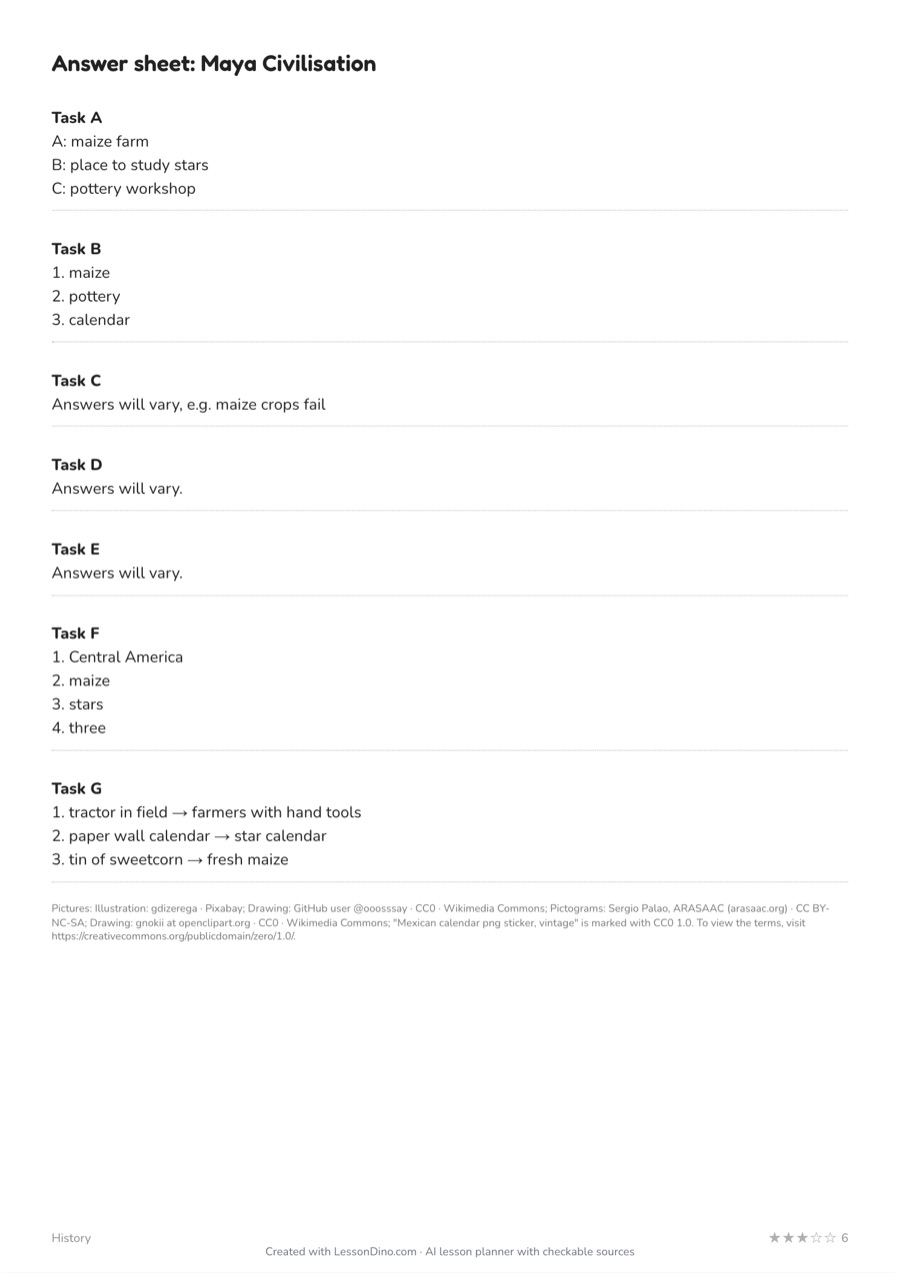
- The answer sheet is the last page, so you can print it on its own or let students check their own work.
Key vocabulary
- maize: yellow grain crop grown for food that stores well
- civilisation: large organised human society with shared rules and culture
- temple: large stepped building made to honour gods
- calendar: system for tracking days and seasons for farming and ceremonies
- trade: swapping food and goods between families and groups
Mistakes to watch for
- Thinking the Maya lived in one present-day country. Show the five parts again: the area spreads over Mexico, Belize, Guatemala, west Honduras and north El Salvador.
- Thinking the Maya vanished right after AD 900. Explain cities started to become smaller after AD 900, but cities were still thriving in AD 1000 and the civilisation was still in existence in AD 1500, and Maya people still live there today.
- Thinking extra food only meant more eating. Rebuild the chain: extra food fed more families together so more people could build temples, palaces and cities.
What's on the worksheet
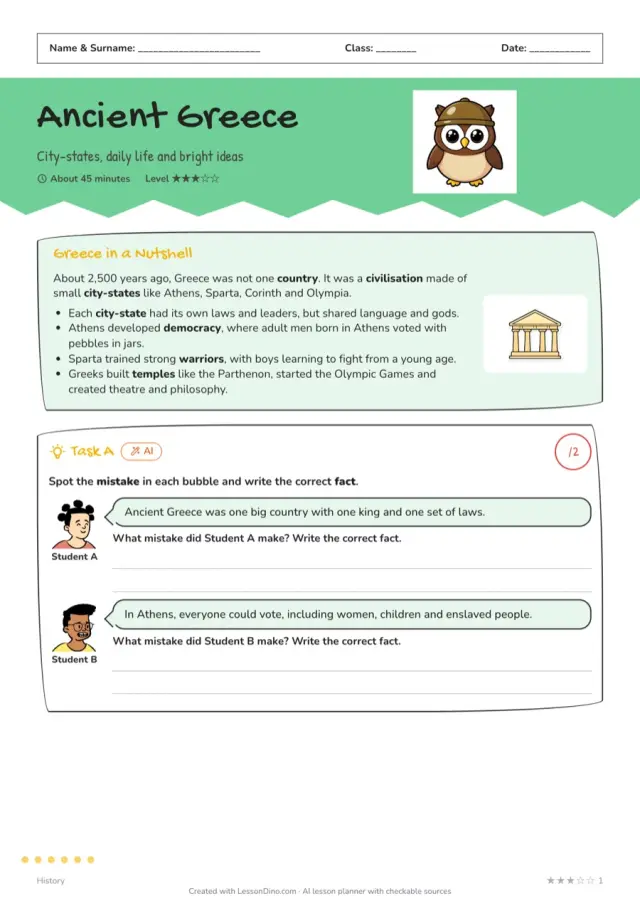
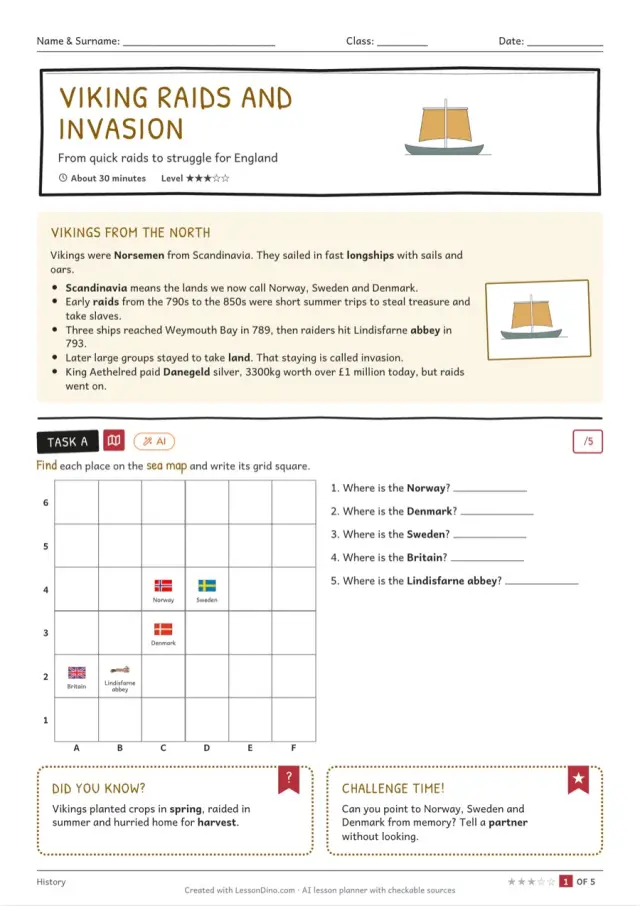
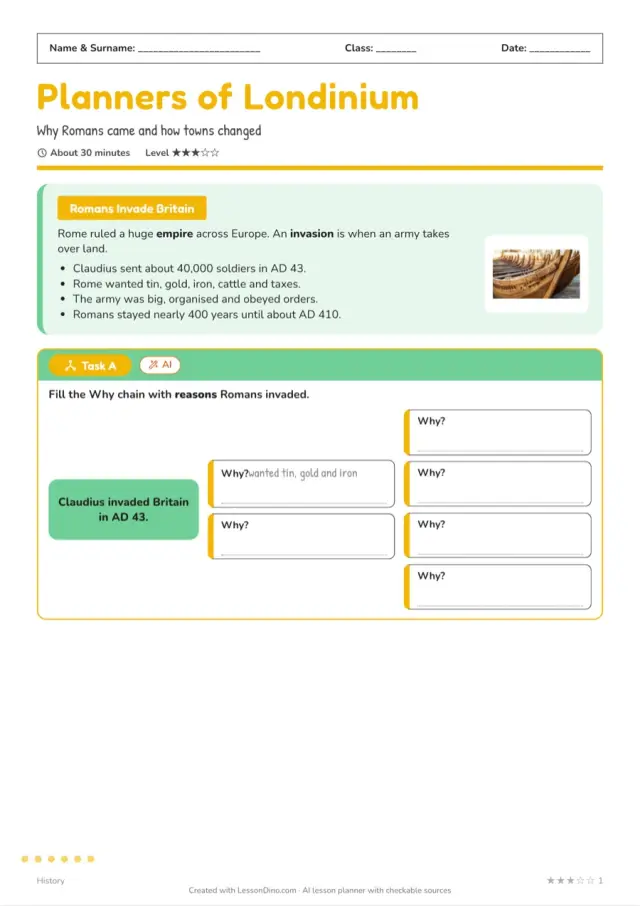
Maya World
Find out where and when the Maya lived.
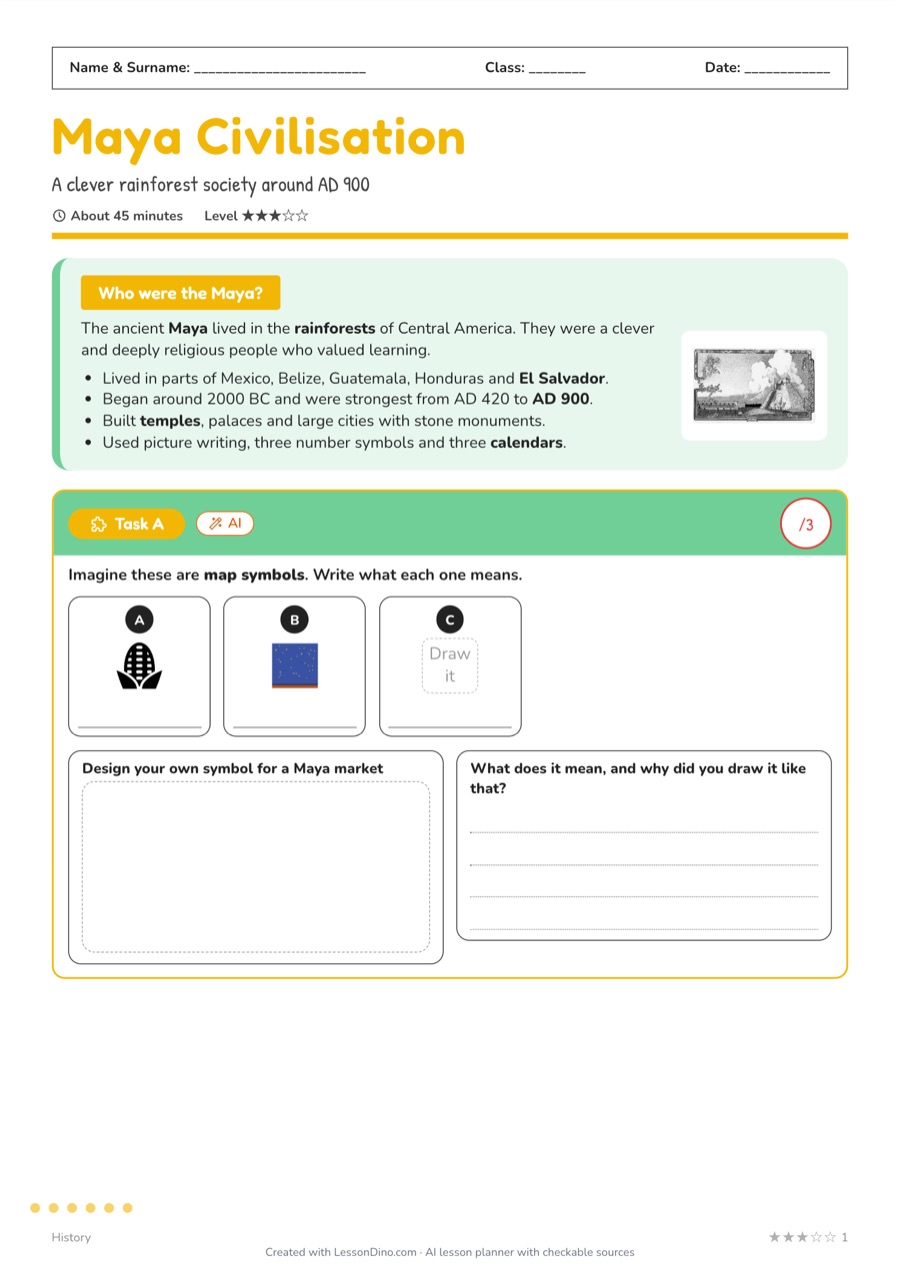
Who were the Maya?
- The ancient Maya lived in the rainforests of Central America. They were a clever and deeply religious people who valued learning.
- Lived in parts of Mexico, Belize, Guatemala, Honduras and El Salvador.
- Began around 2000 BC and were strongest from AD 420 to AD 900.
- Built temples, palaces and large cities with stone monuments.
- Used picture writing, three number symbols and three calendars.
Imagine these are map symbols. Write what each one means.
Maya Skills
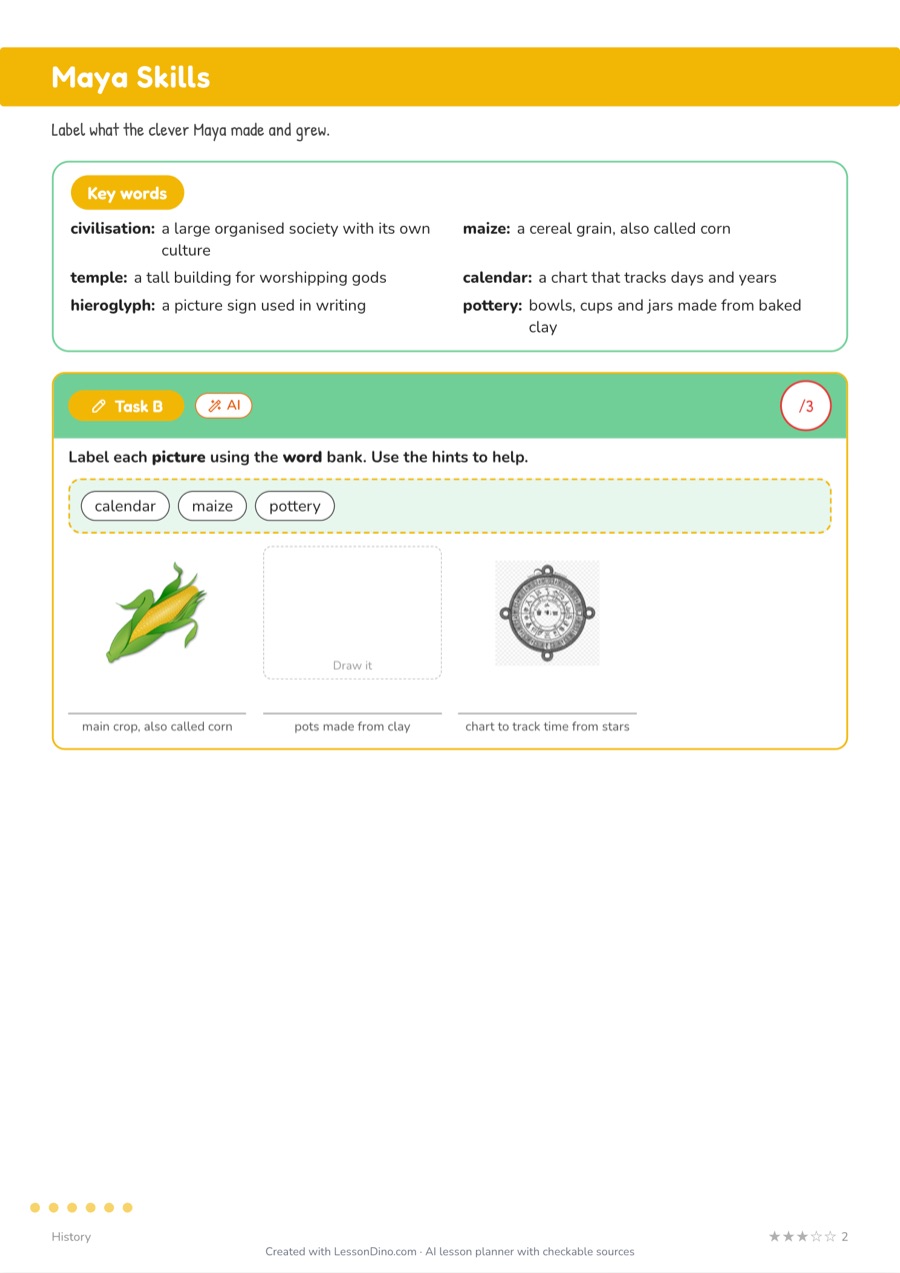
Label what the clever Maya made and grew.
| Word | Meaning |
|---|---|
| civilisation | a large organised society with its own culture |
| maize | a cereal grain, also called corn |
| temple | a tall building for worshipping gods |
| calendar | a chart that tracks days and years |
| hieroglyph | a picture sign used in writing |
| pottery | bowls, cups and jars made from baked clay |
Label each picture using the word bank. Use the hints to help.
Vanishing Cities
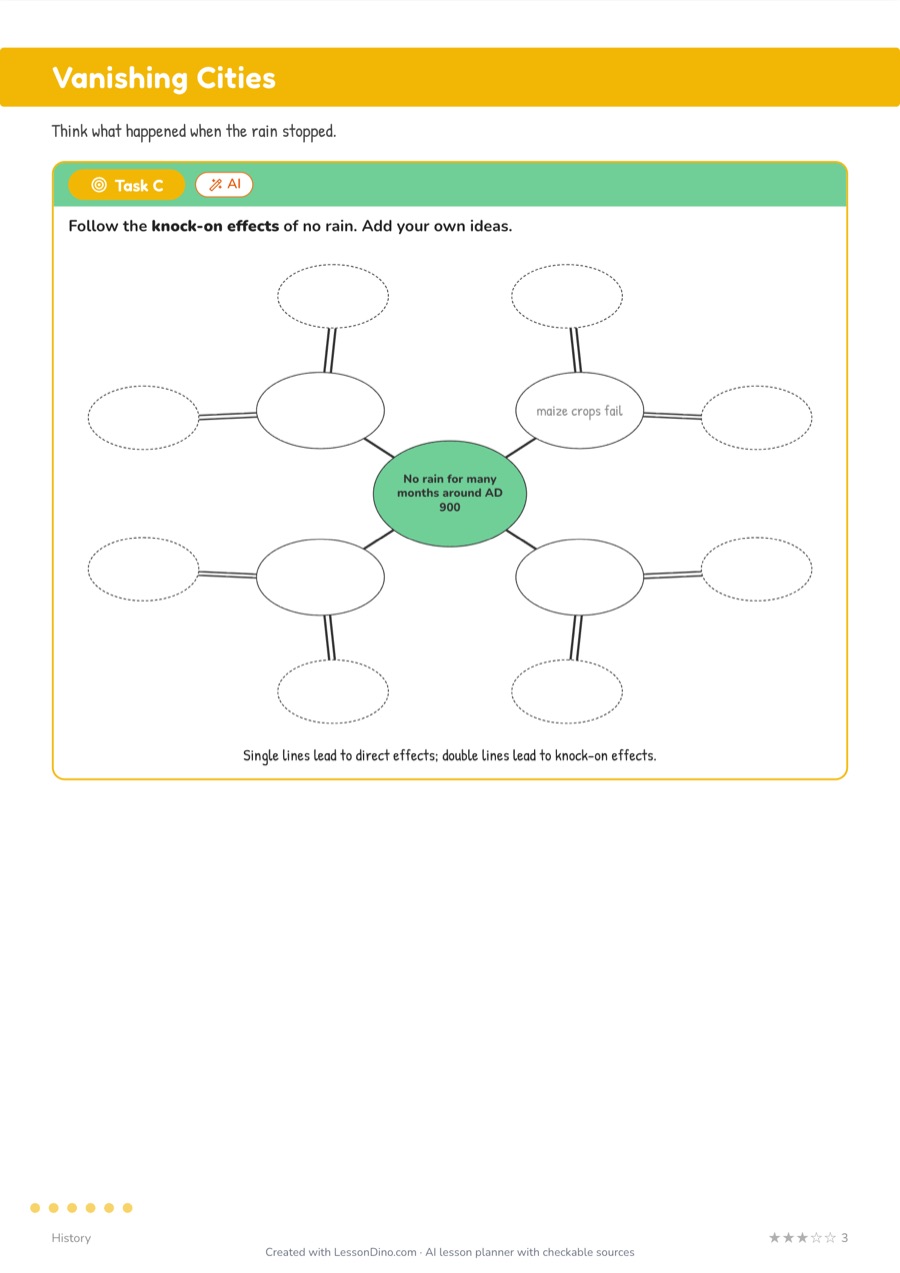
Think what happened when the rain stopped.
Follow the knock-on effects of no rain. Add your own ideas.
Great Maya Life
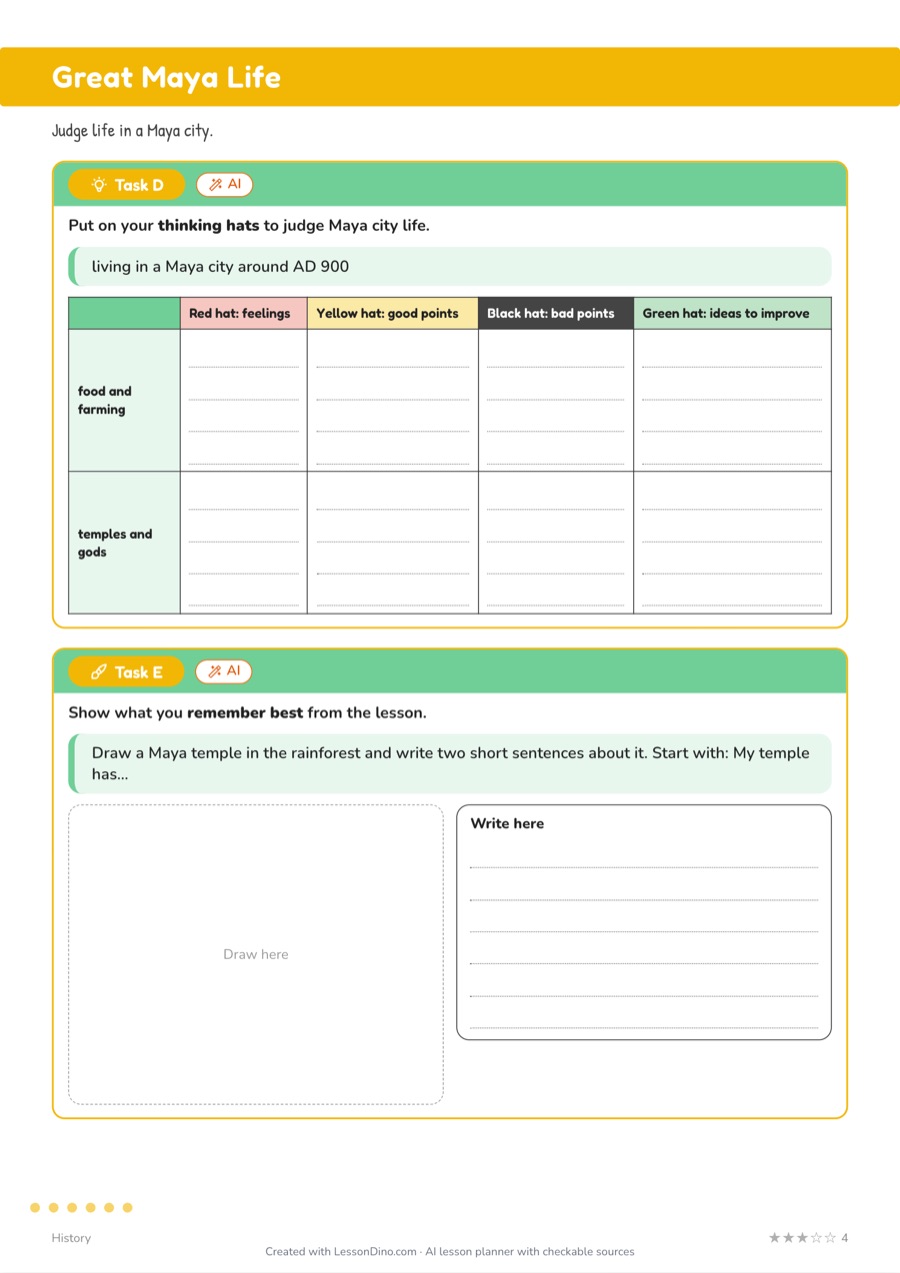
Judge life in a Maya city.
Put on your thinking hats to judge Maya city life.
Show what you remember best from the lesson.
Maya Check
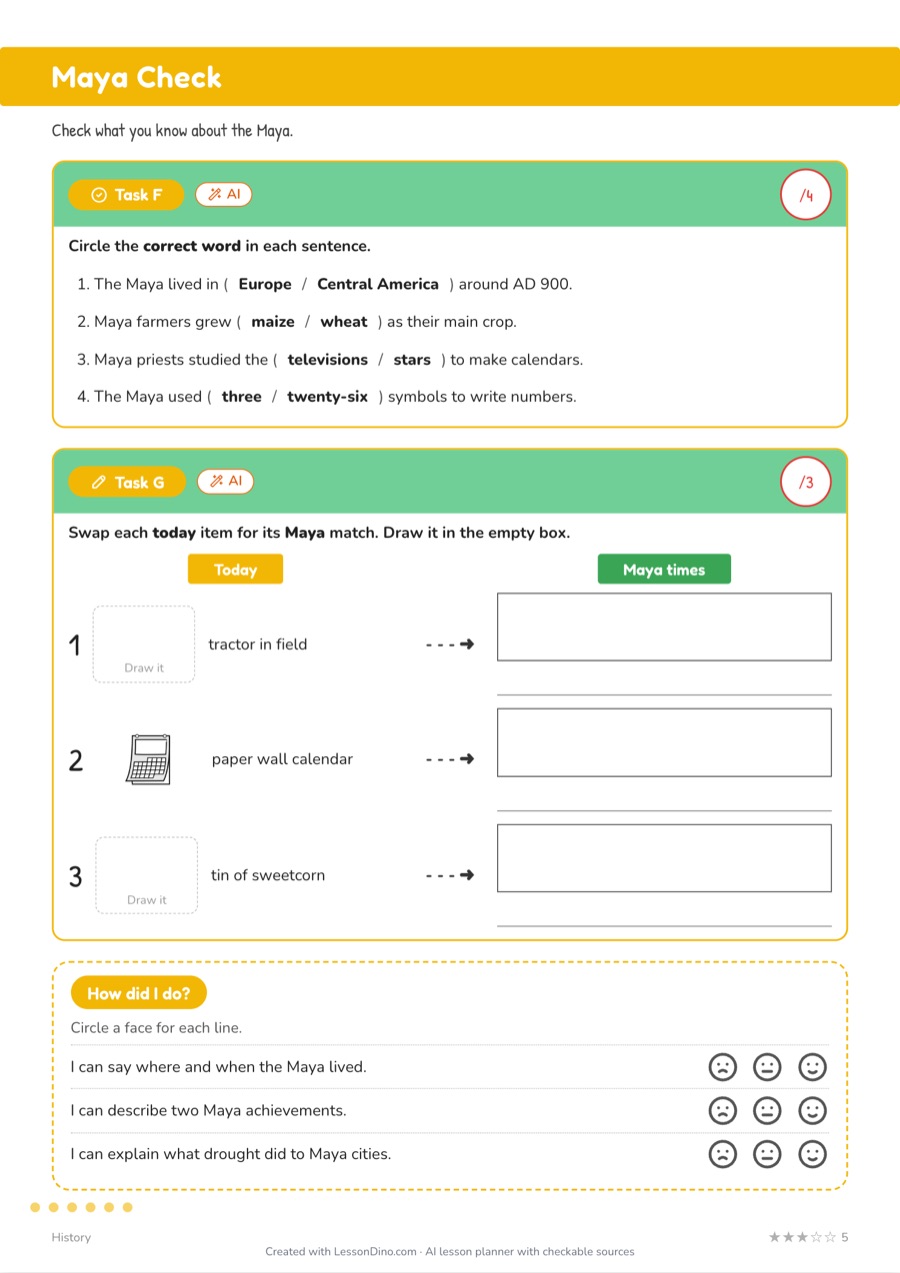
Check what you know about the Maya.
Circle the correct word in each sentence.
Swap each today item for its Maya match. Draw it in the empty box.
Answers
Show the answers
The answers are on the answer sheet, the last picture above.
Curriculum
a non-European society that provides contrasts with British history – one study chosen from: early Islamic civilization, including a study of Baghdad c. AD 900; Mayan civilization c. AD 900; Benin (West Africa) c. AD 900-1300
Made with Lesson Dino's AI on 17 October 2026. AI can make mistakes, so check the answers and facts against the sources before you teach.