The worksheet
About this worksheet
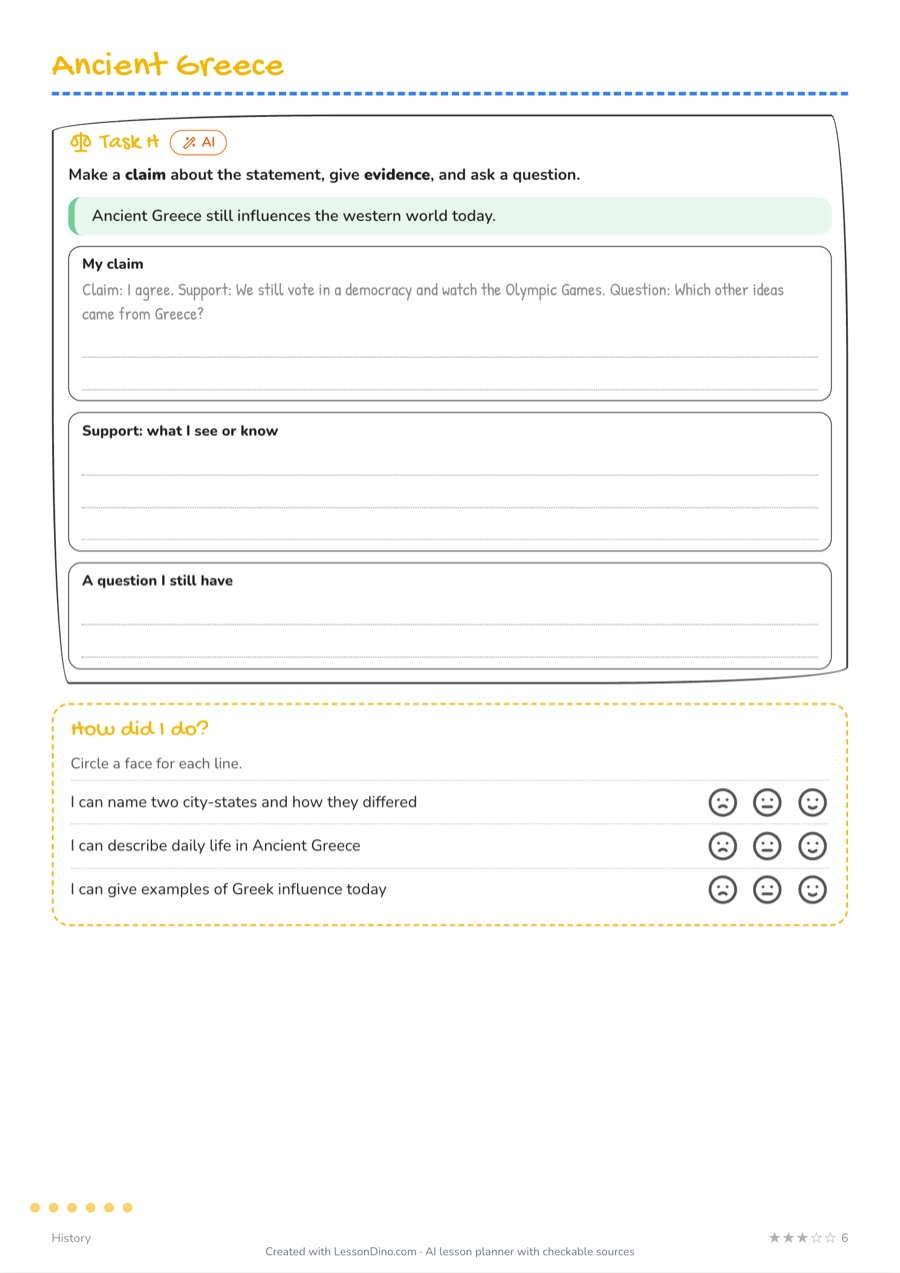
Pupils compare life in Athens and Sparta and explain city-states. They link democracy, Olympics and theatre to life today. This Year 5 History worksheet gives students (ages 9–10) six pages of practice on ancient Greece. It goes with our free Ancient Greece lesson, which has the slides and a timed lesson plan.
What it covers
By the end, students should be able to:
- Students will explain what a city-state was and name two examples.
- Students will compare daily life for children in Athens and Sparta.
- Students will explain three Greek achievements that still shape life today.
How to use it
- Use it for practice after the teaching part of the lesson, once students have seen the worked examples on the slides.
- Support: Provide sentence starters on the board for Athens and Sparta reasons.
- Stretch: Challenge pupils to justify one benefit and problem of no single ruler.
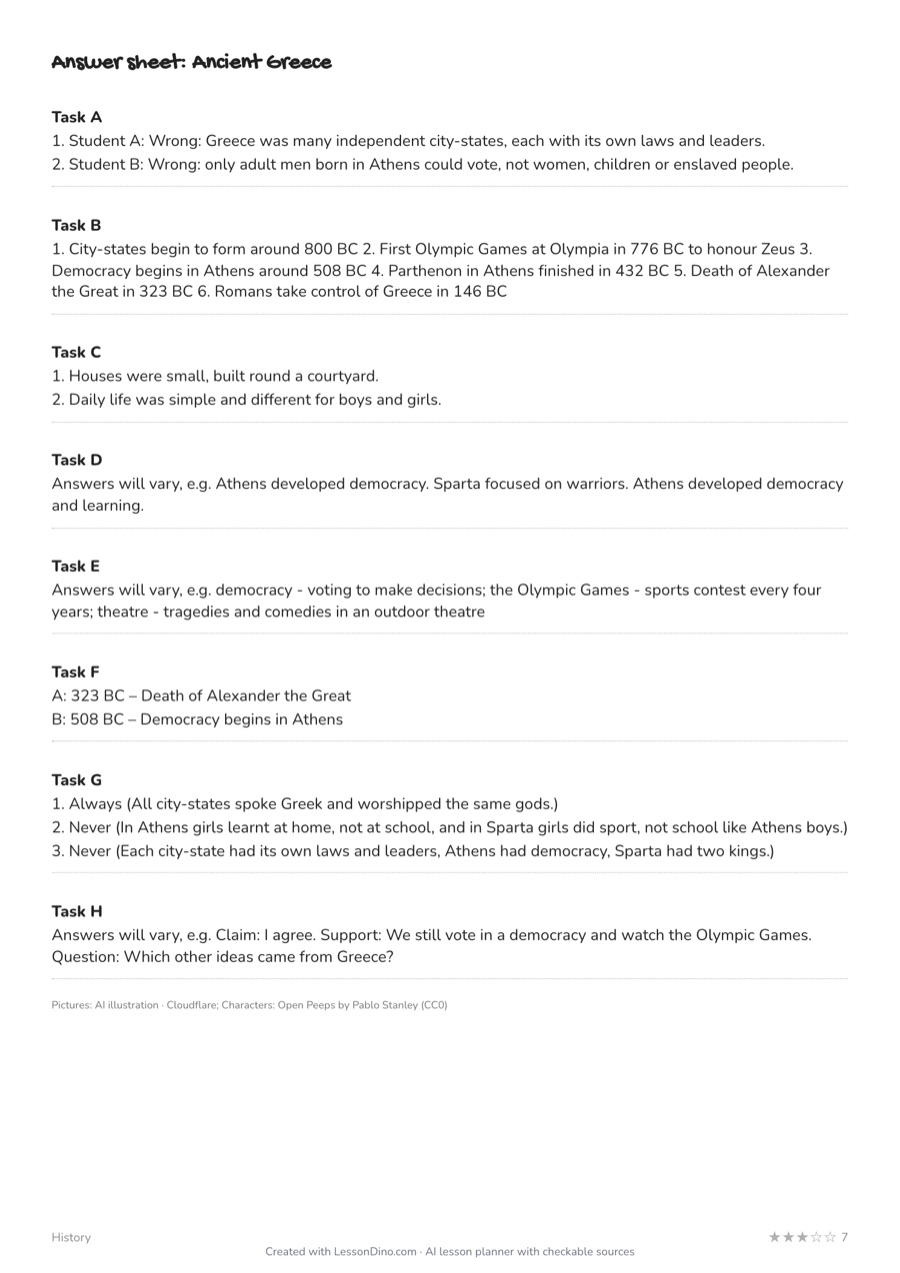
- The answer sheet is the last page, so you can print it on its own or let students check their own work.
Key vocabulary
- polis: a tiny Greek town area with its own laws and leaders
- city-state: a small place that rules itself with its own laws and leaders
- democracy: a way of running a place where people vote to decide
- Olympics: a big sports contest held every four years to honour Zeus
- theatre: plays acted outside for crowds, sad or funny stories
- philosophy: thinking and talking about big ideas of life and right and wrong
Mistakes to watch for
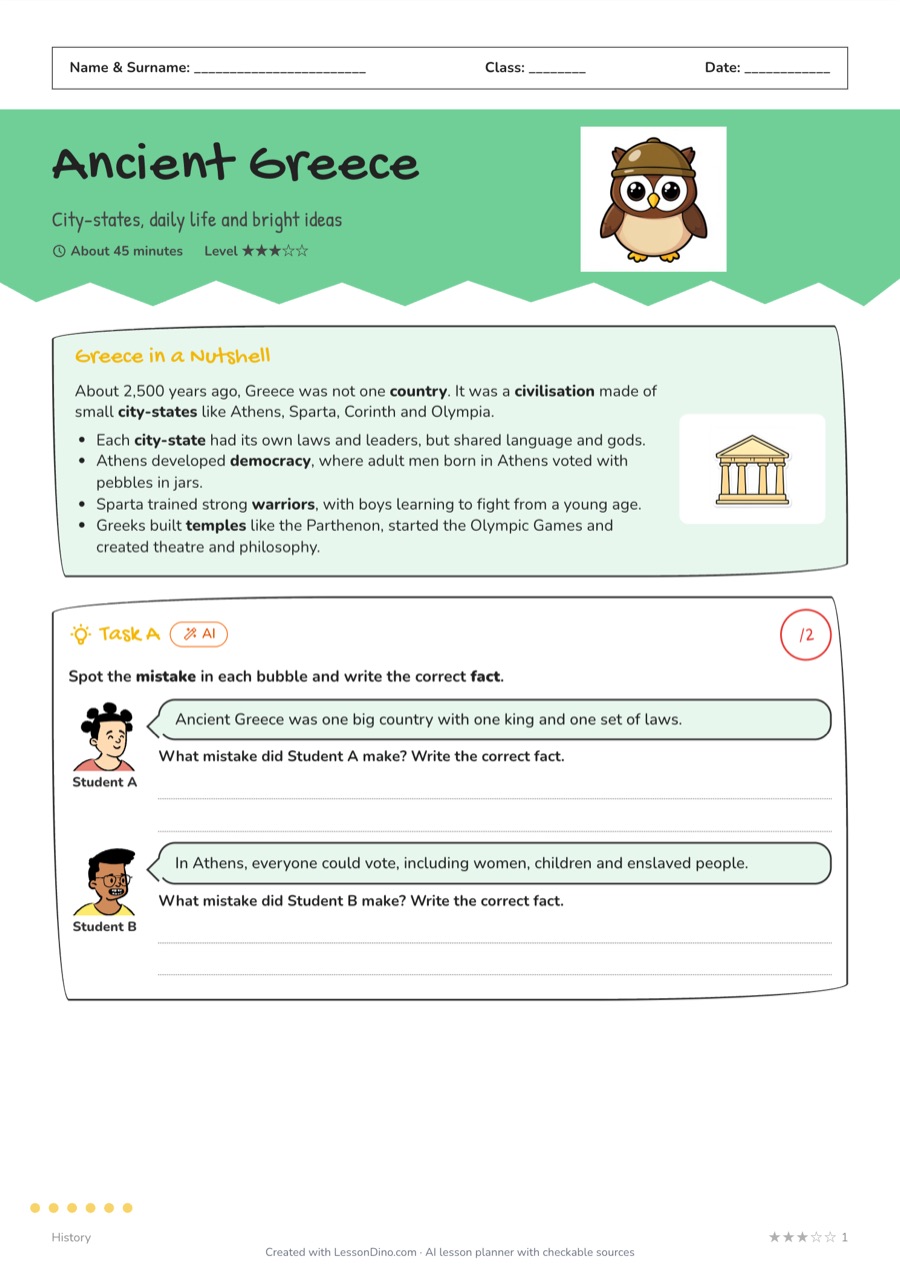
- Thinking Ancient Greece was one country with one king. Restate there was never one country, but small city-states like Athens and Sparta each with own laws and leaders.
- Thinking everyone in Athens could vote. Remind only adult men born in Athens could vote, not women, children or enslaved people, shown by pebbles in jars.
- Thinking Olympics were only modern sport with no Greek meaning. Rebuild link: first Games at Olympia to honour Zeus in 776 BC, and city-states even paused wars to compete.
What's on the worksheet
Meet Ancient Greece
Discover city-states, daily life and big ideas.
Greece in a Nutshell
- About 2,500 years ago, Greece was not one country. It was a civilisation made of small city-states like Athens, Sparta, Corinth and Olympia.
- Each city-state had its own laws and leaders, but shared language and gods.
- Athens developed democracy, where adult men born in Athens voted with pebbles in jars.
- Sparta trained strong warriors, with boys learning to fight from a young age.
- Greeks built temples like the Parthenon, started the Olympic Games and created theatre and philosophy.
Spot the mistake in each bubble and write the correct fact.
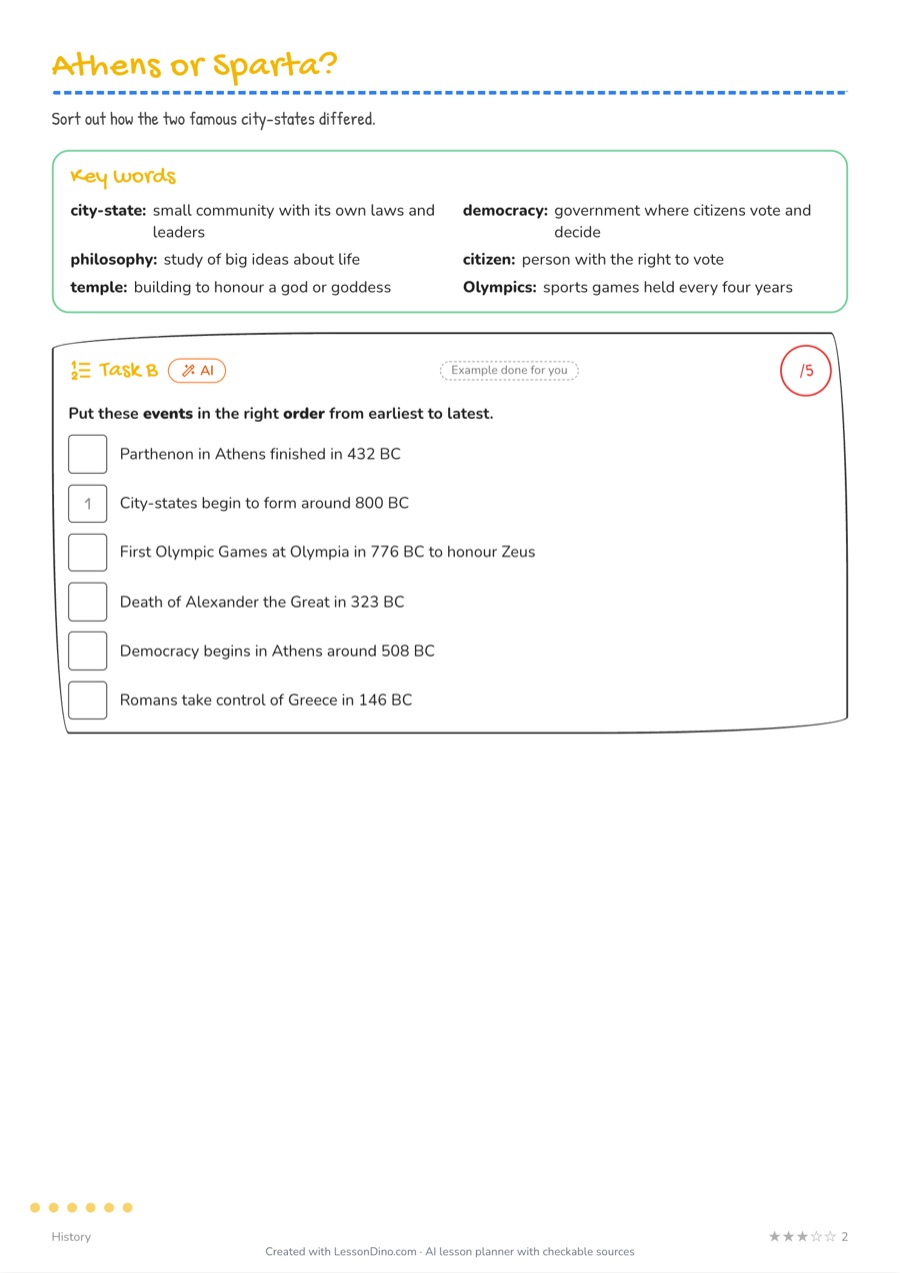
Athens or Sparta?
Sort out how the two famous city-states differed.
| Word | Meaning |
|---|---|
| city-state | small community with its own laws and leaders |
| democracy | government where citizens vote and decide |
| philosophy | study of big ideas about life |
| citizen | person with the right to vote |
| temple | building to honour a god or goddess |
| Olympics | sports games held every four years |
Put these events in the right order from earliest to latest.
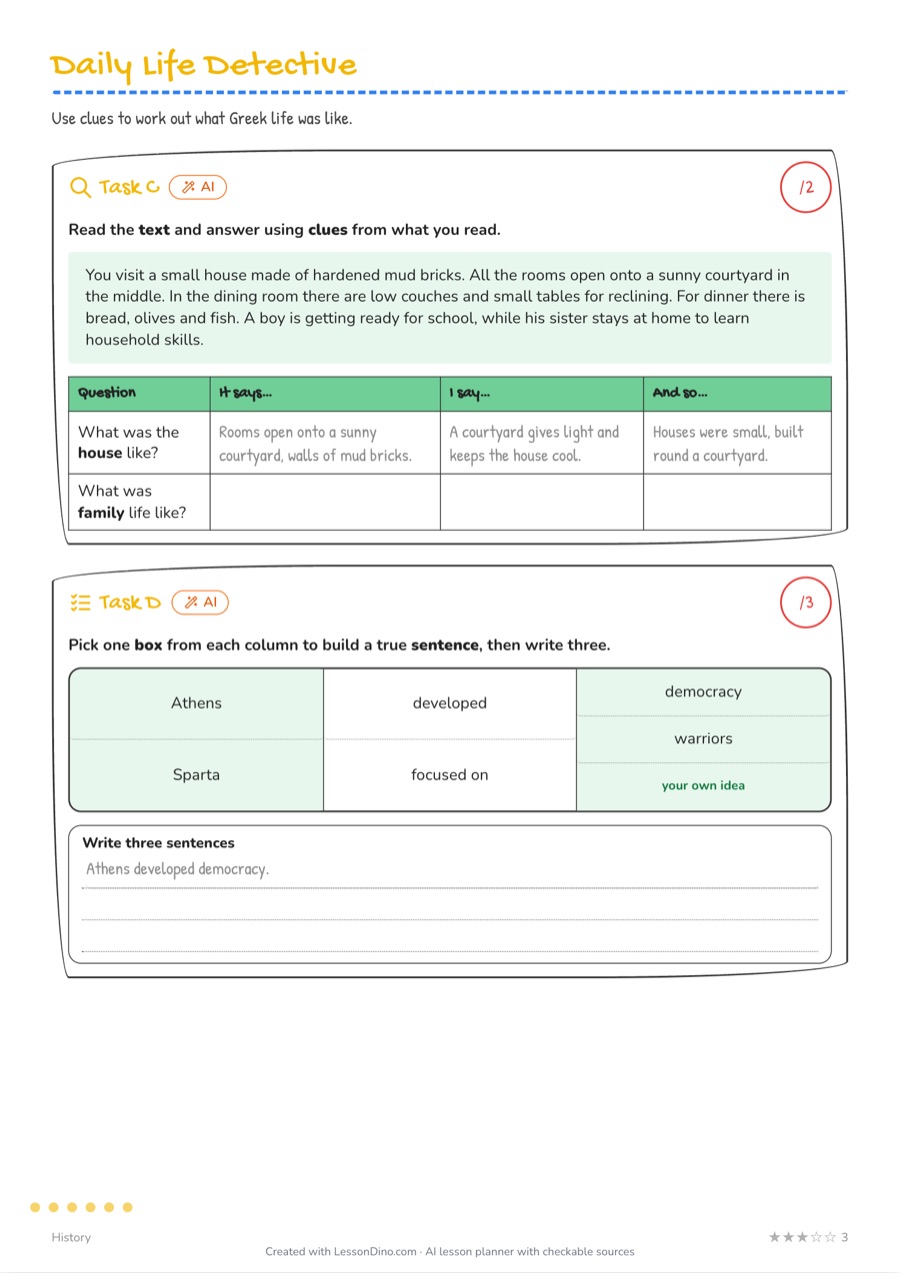
Daily Life Detective
Use clues to work out what Greek life was like.
Read the text and answer using clues from what you read.
- You visit a small house made of hardened mud bricks. All the rooms open onto a sunny courtyard in the middle. In the dining room there are low couches and small tables for reclining. For dinner there is bread, olives and fish. A boy is getting ready for school, while his sister stays at home to learn household skills.
- What was the house like?
- What was family life like?
Pick one box from each column to build a true sentence, then write three.
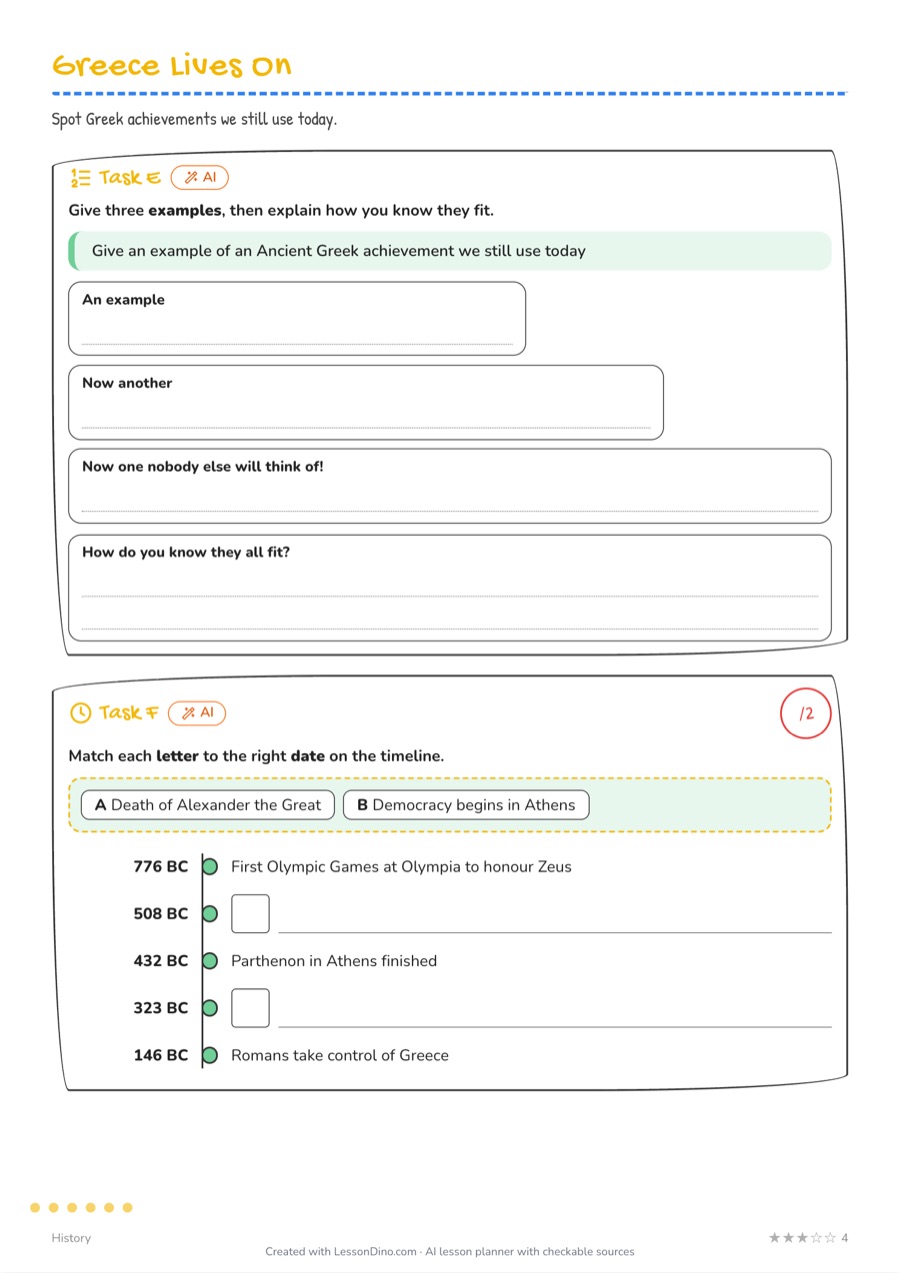
Greece Lives On
Spot Greek achievements we still use today.
Give three examples, then explain how you know they fit.
Match each letter to the right date on the timeline.
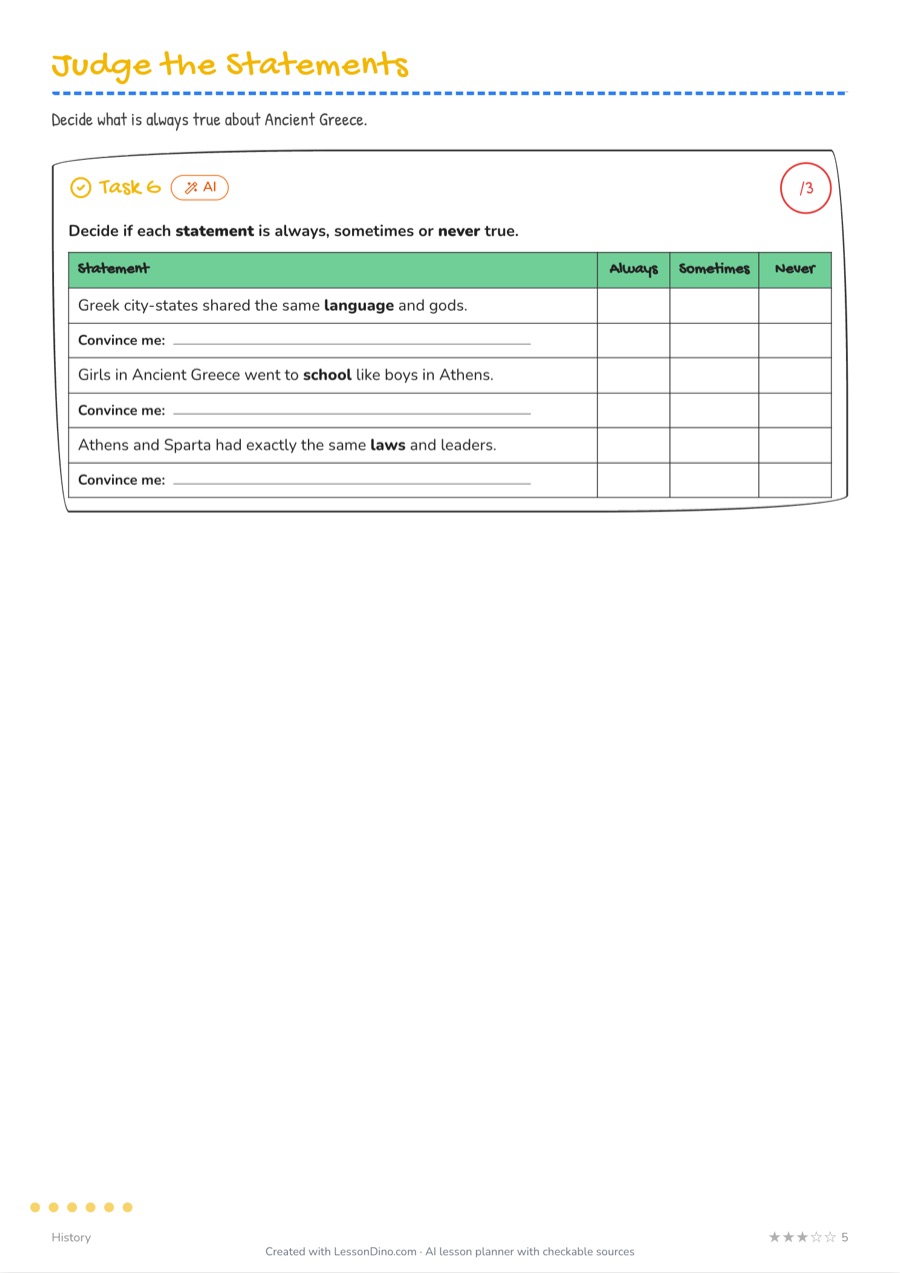
Judge the Statements
Decide what is always true about Ancient Greece.
Decide if each statement is always, sometimes or never true.
Page 6
Make a claim about the statement, give evidence, and ask a question.
Answers
Show the answers
The answers are on the answer sheet, the last picture above.
Curriculum
Ancient Greece – a study of Greek life and achievements and their influence on the western world
Made with Lesson Dino's AI on 19 October 2026. AI can make mistakes, so check the answers and facts against the sources before you teach.