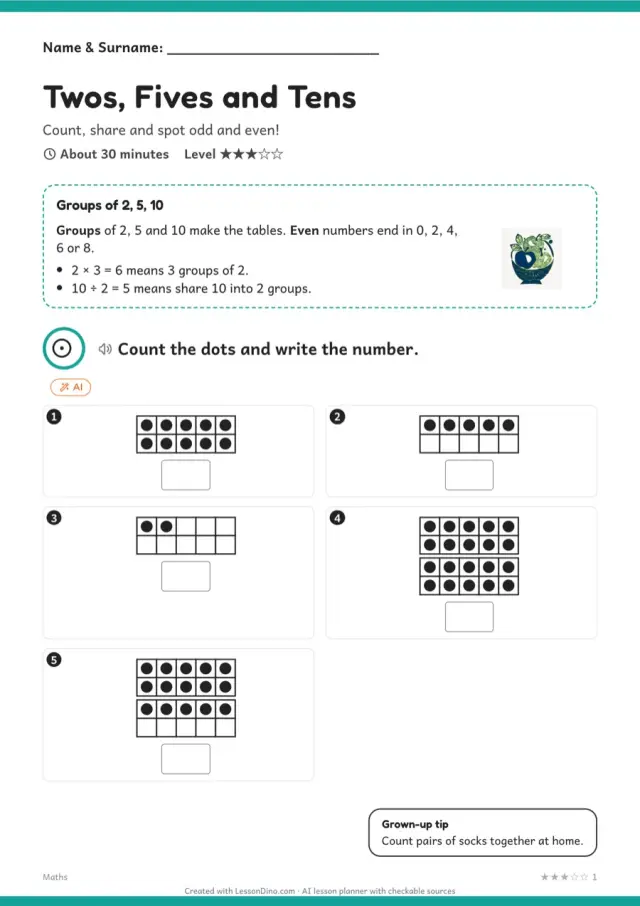
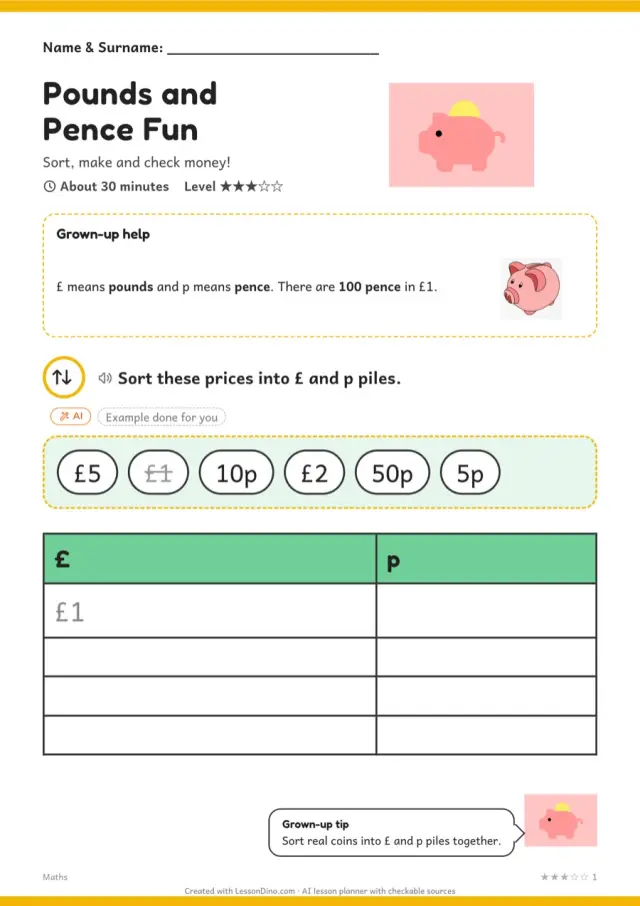
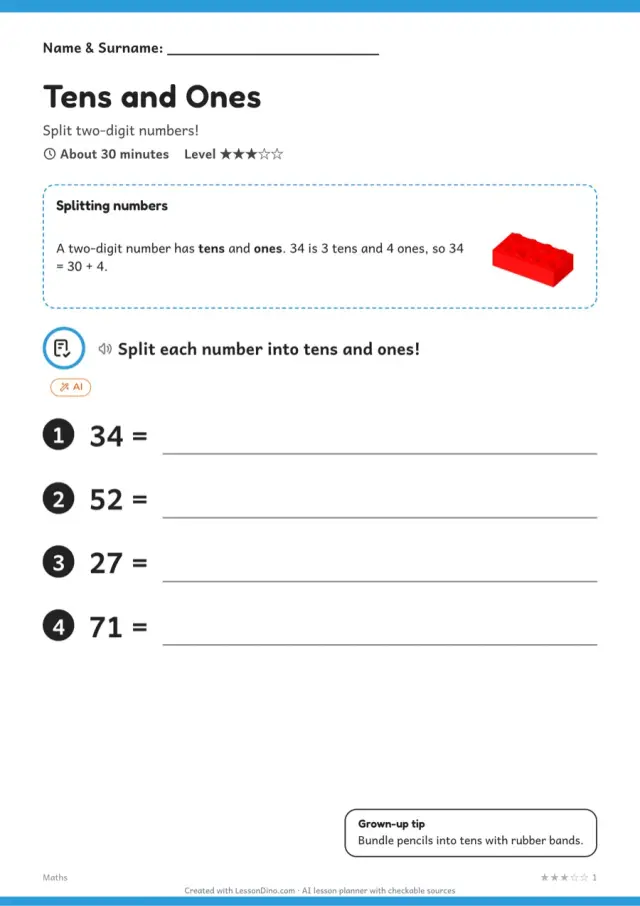
The worksheet
About this worksheet
Pupils learn bonds to 10 and matching take-aways linked to 20. They split cubes on part-part-whole mats and write the four sentences. This Year 1 Maths worksheet gives students (ages 5–6) five pages of practice on number bonds to 10, part of the number: addition and subtraction unit. It goes with our free Number bonds to 10 lesson, which has the slides and a timed lesson plan.
What it covers
By the end, students should be able to:
- Students will represent bonds to 10 using cubes, drawings and number sentences.
- Students will use bonds to 10 to add and subtract within 20.
How to use it
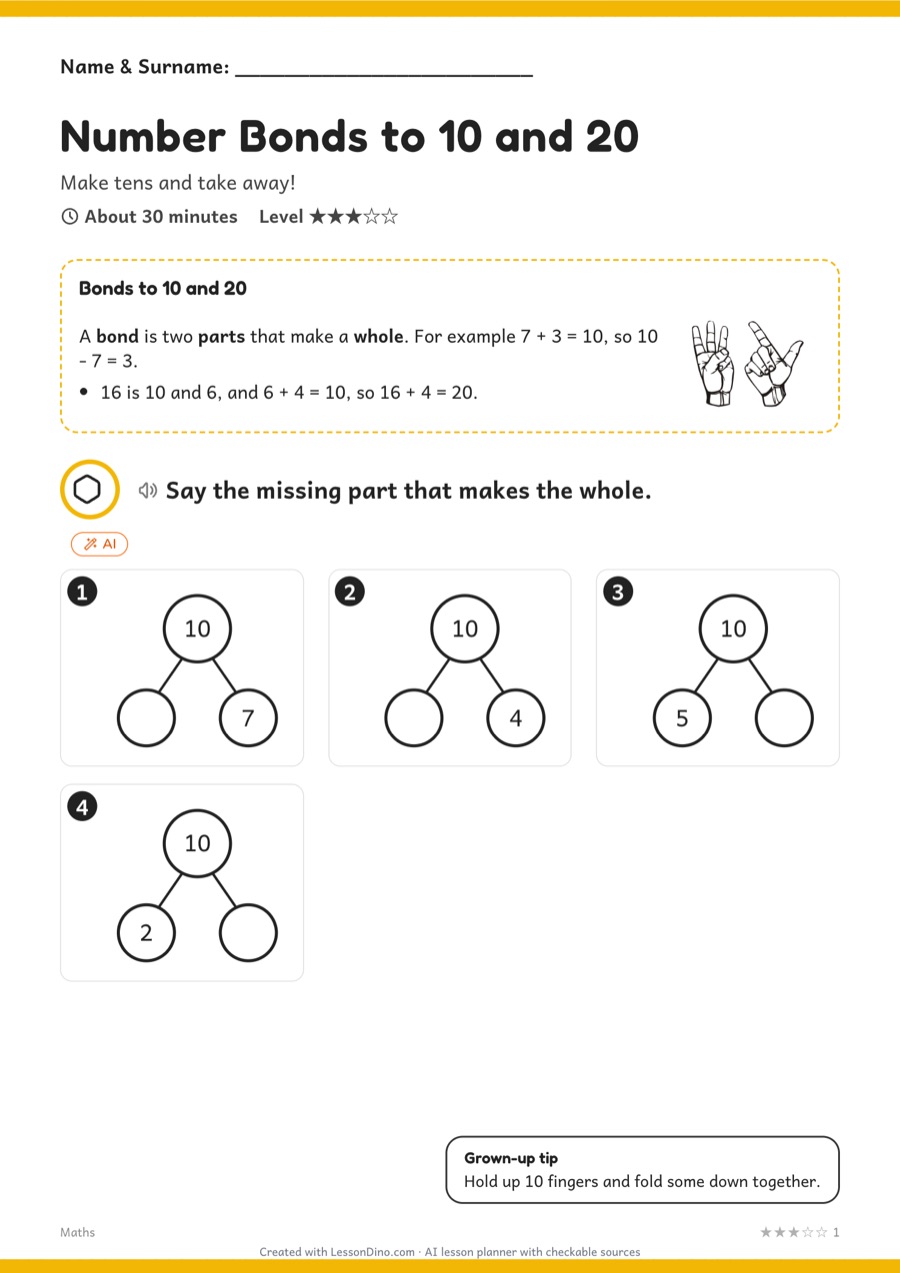
- Main activity (25 minutes): Give out Worksheet page 1: Number bonds: Say the missing part that makes the whole for pupils to complete when mats are tidy.
- Support: Use ten-frames, finger lifts and mats marked with 10 to show empty spaces.
- Stretch: Write all four sentences for each bond and explain the swap pattern.
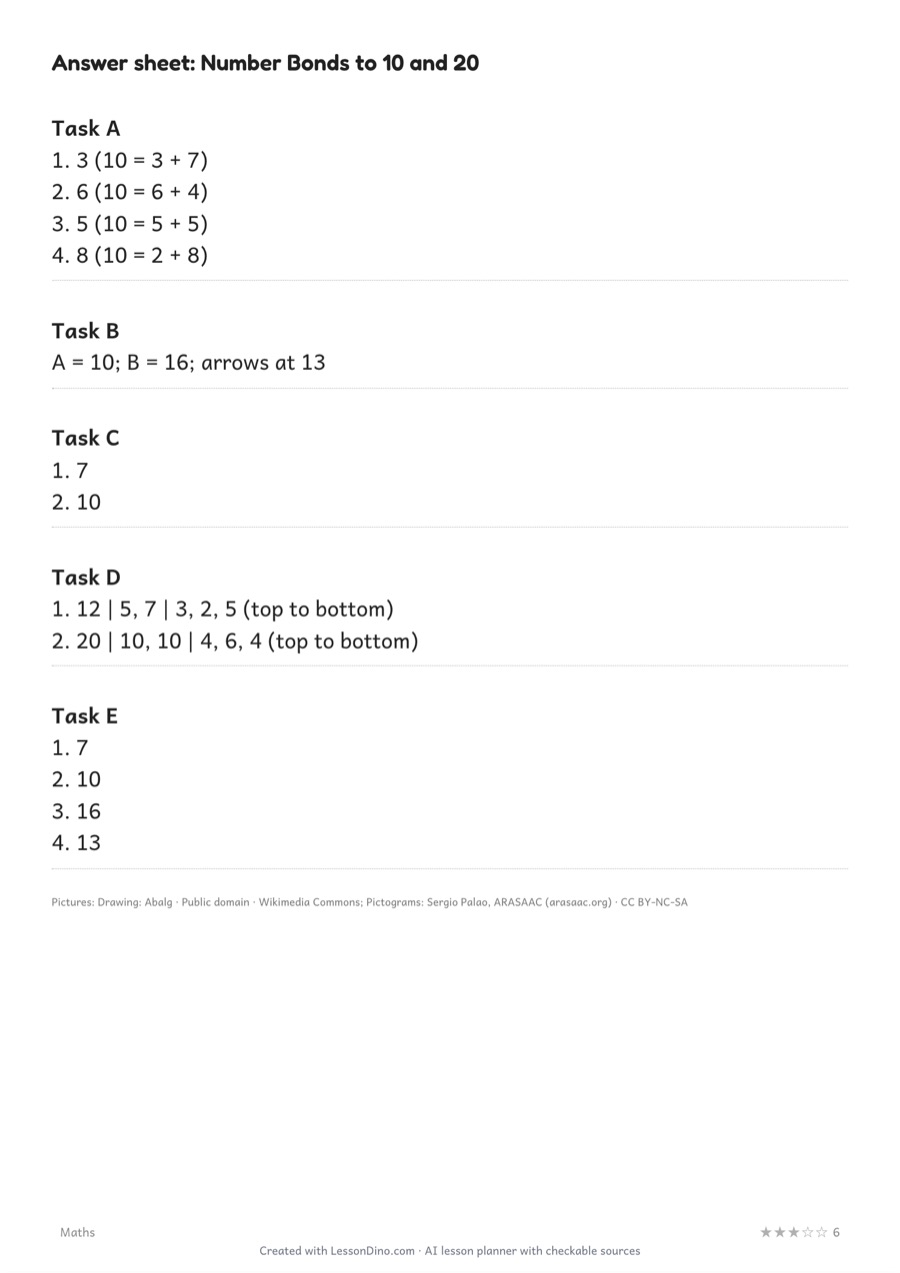
- The answer sheet is the last page, so you can print it on its own or let students check their own work.
Key vocabulary
- number bond: two small counts that join to make a total, here ten
- part: one small group that joins with another to make the total
- whole: the big total made when the two small groups join
- take away: finding what is left when some are removed from the total
Mistakes to watch for
- Thinking 3 + 7 and 7 + 3 give different totals. Swap two colour groups left to right to show it does not matter which order you add numbers together, the total is the same.
- Counting the whole again instead of the missing part. Count up from 8 as 9, 10, which is two steps, so 8 and 2 make 10.
What's on the worksheet
Make Ten Bonds!
Bonds to 10 and 20
- A bond is two parts that make a whole. For example 7 + 3 = 10, so 10 - 7 = 3.
- 16 is 10 and 6, and 6 + 4 = 10, so 16 + 4 = 20.
Say the missing part that makes the whole.
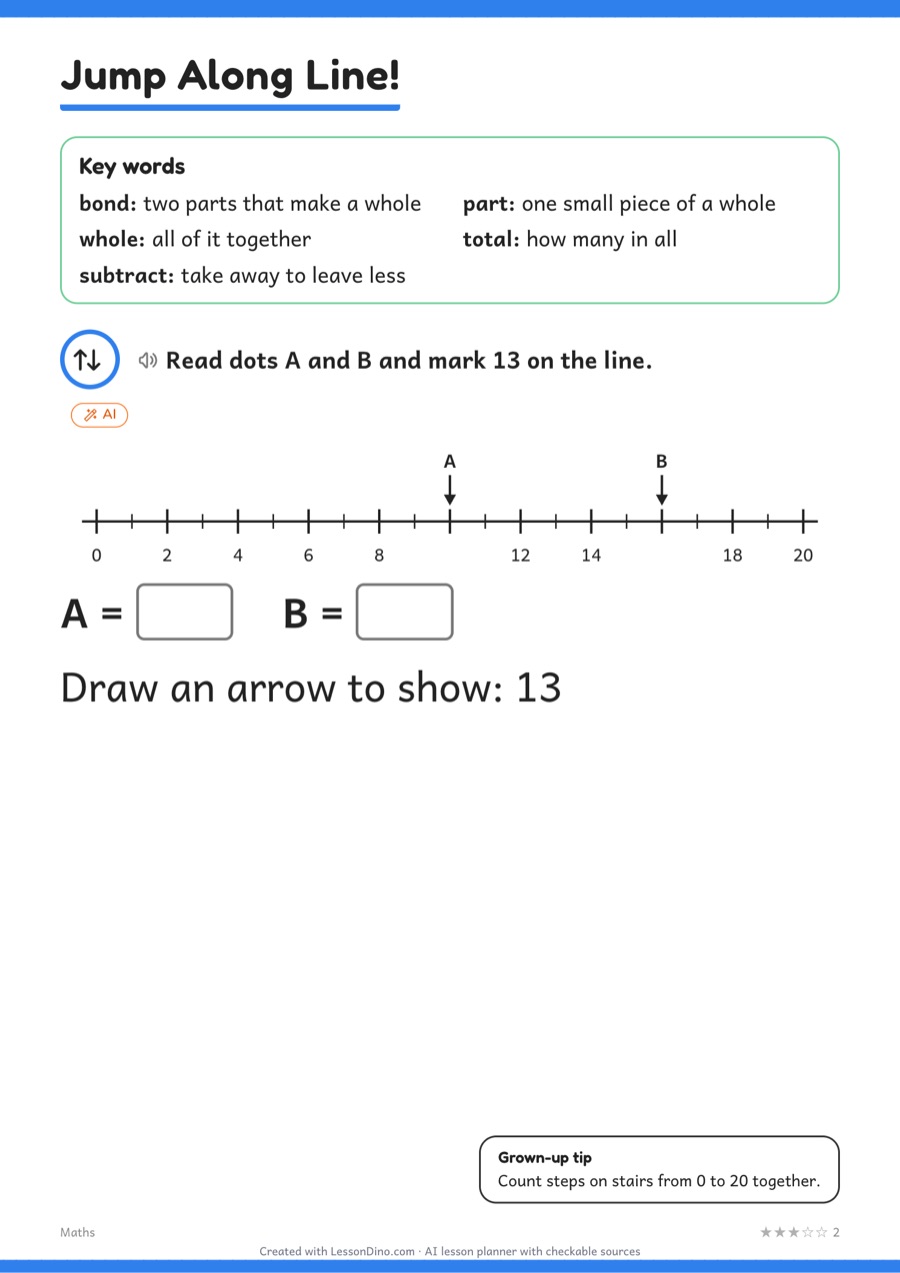
Jump Along Line!
| Word | Meaning |
|---|---|
| bond | two parts that make a whole |
| part | one small piece of a whole |
| whole | all of it together |
| total | how many in all |
| subtract | take away to leave less |
Read dots A and B and mark 13 on the line.
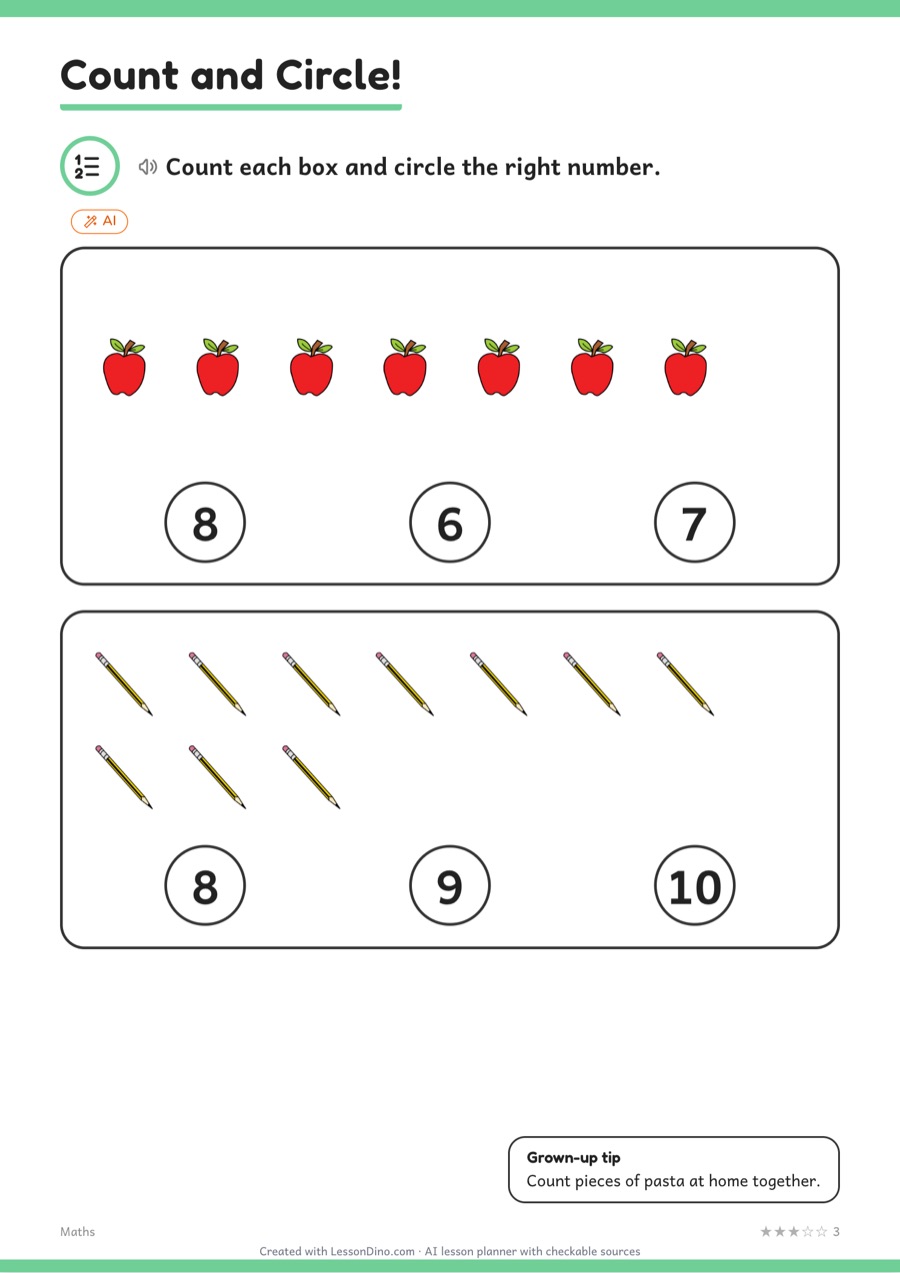
Count and Circle!
Count each box and circle the right number.
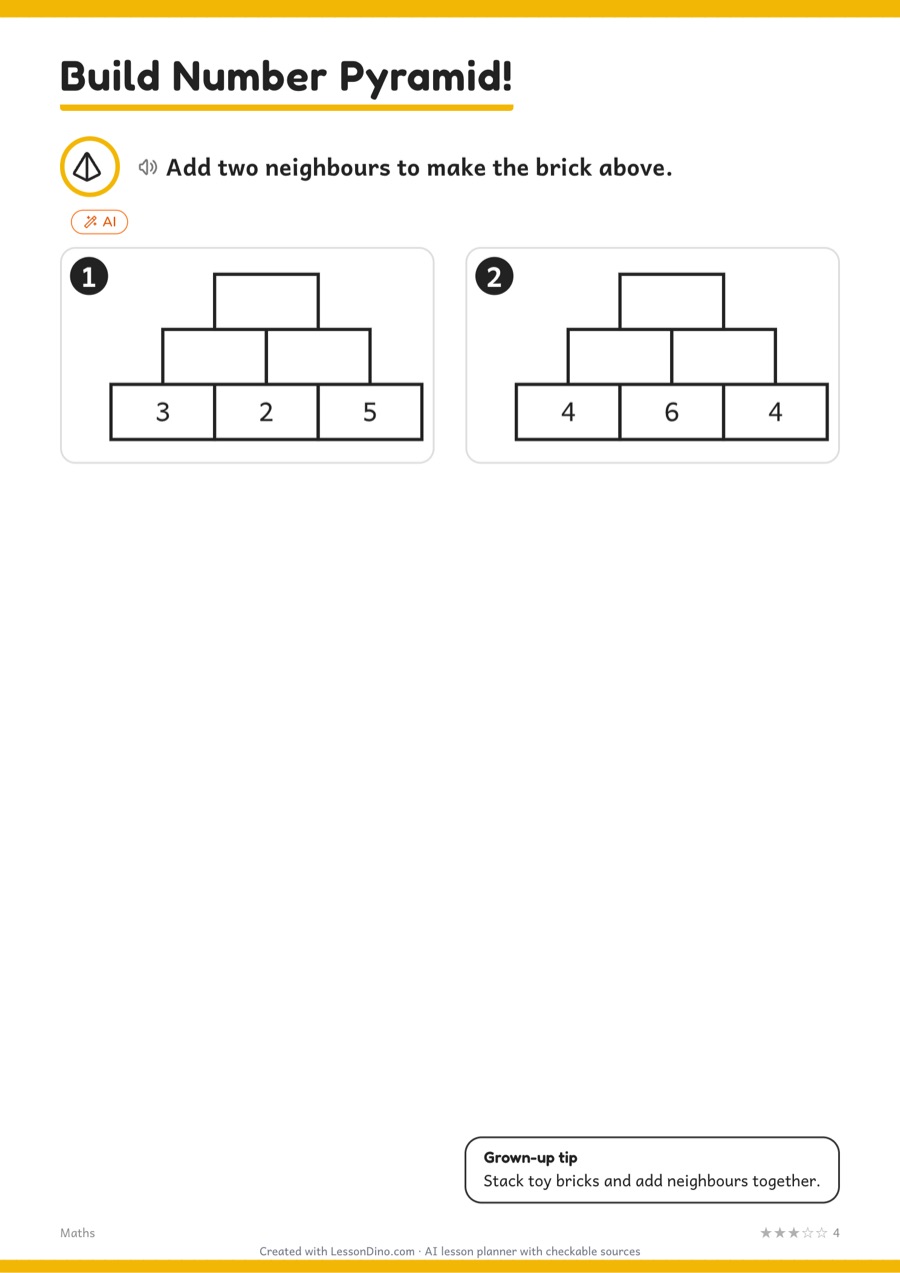
Build Number Pyramid!
Add two neighbours to make the brick above.
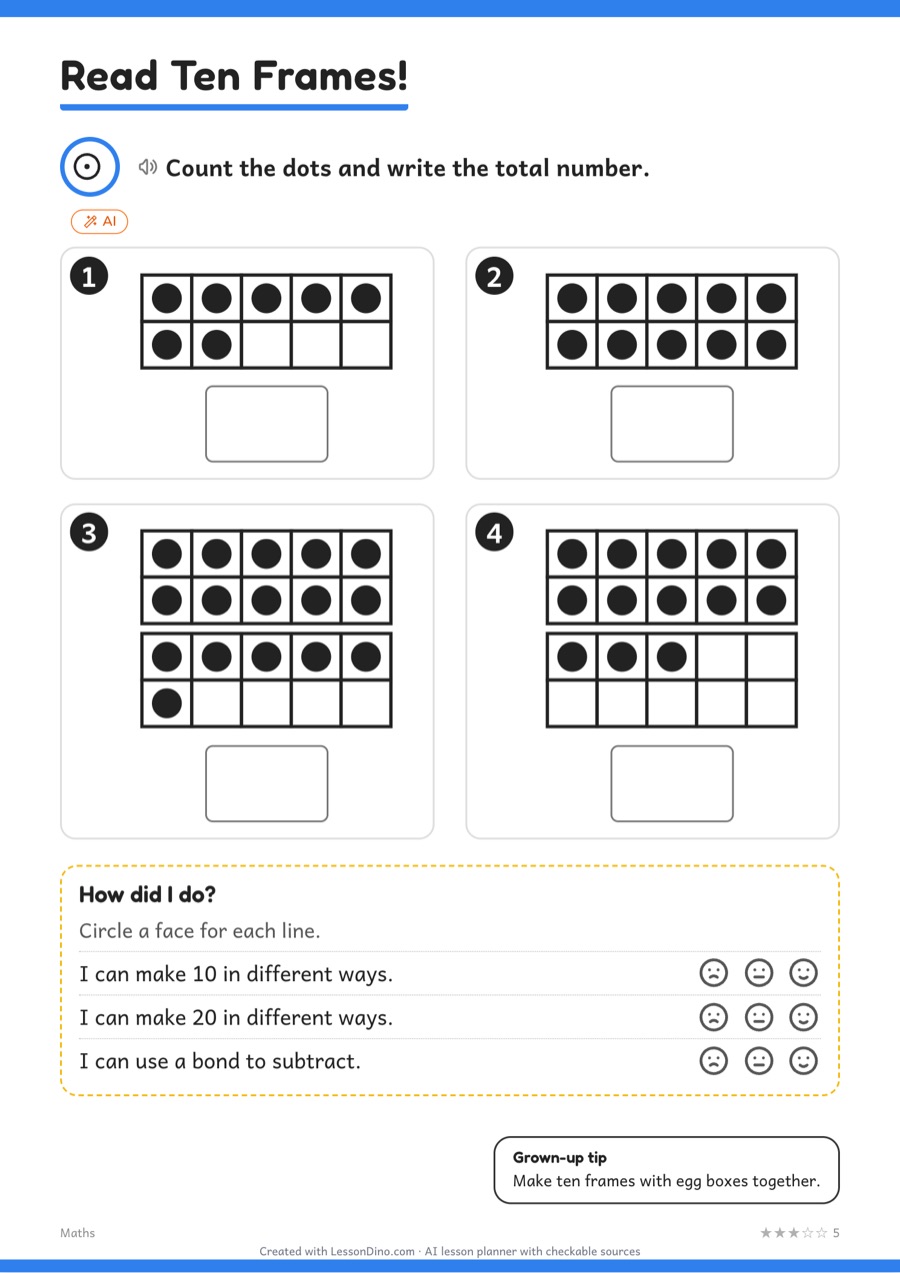
Read Ten Frames!
Count the dots and write the total number.
Answers
Show the answers
The answers are on the answer sheet, the last picture above.
Curriculum
represent and use number bonds and related subtraction facts within 20
Made with Lesson Dino's AI on 17 October 2026. AI can make mistakes, so check the answers and facts against the sources before you teach.