The worksheet
About this worksheet
Pupils recall 2, 5 and 10 facts and link them to odd and even. They build arrays, share equally and sort numbers. This Year 2 Maths worksheet gives students (ages 6–7) five pages of practice on the 2, 5 and 10 times tables, part of the multiplication and division unit. It goes with our free The 2, 5 and 10 times tables lesson, which has the slides and a timed lesson plan.
What it covers
By the end, students should be able to:
- Students will recall multiplication facts for 2, 5 and 10 using arrays and repeated addition.
- Students will use division facts for 2, 5 and 10 by sharing and grouping equally.
- Students will recognise odd and even numbers to 20 from their ones digit.
How to use it
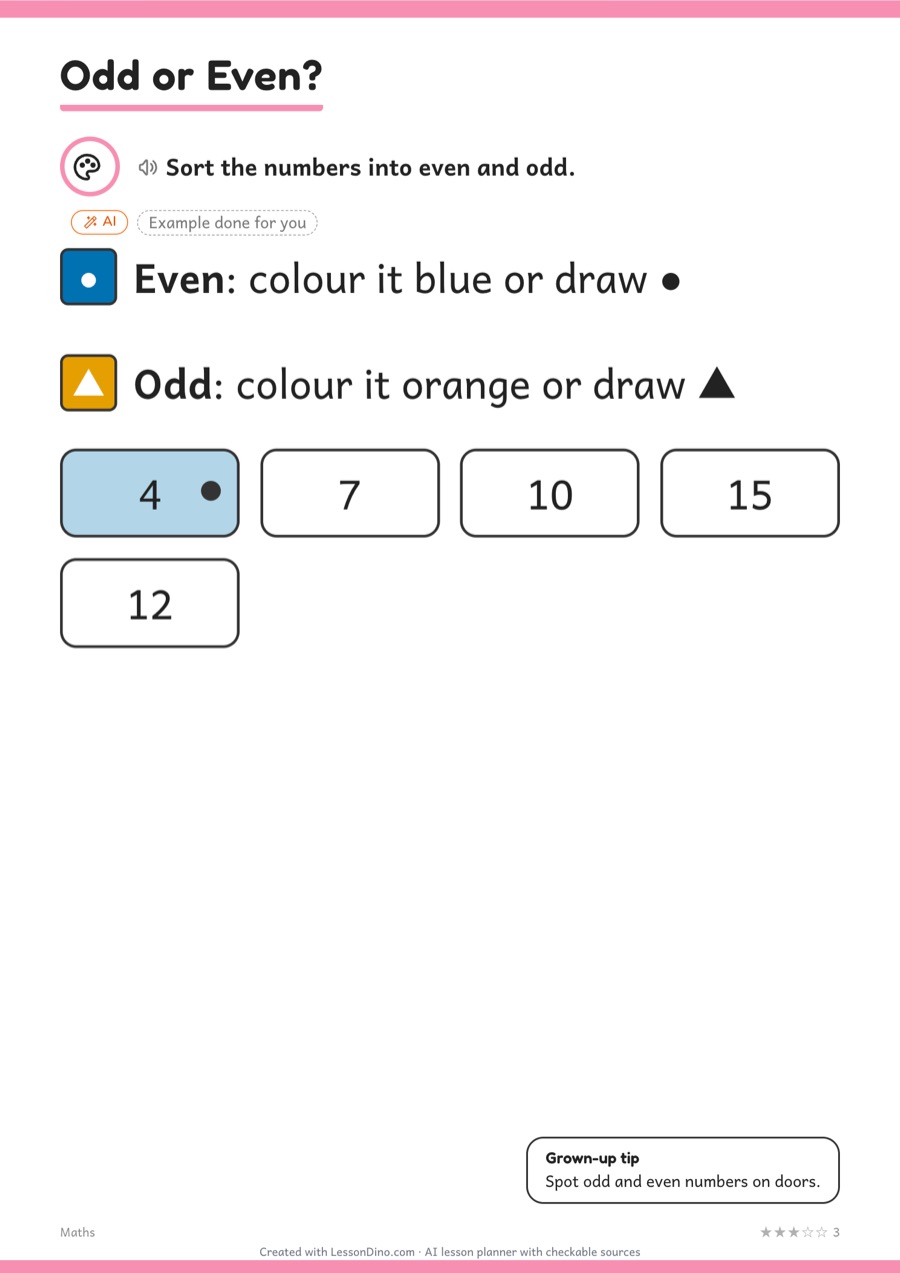
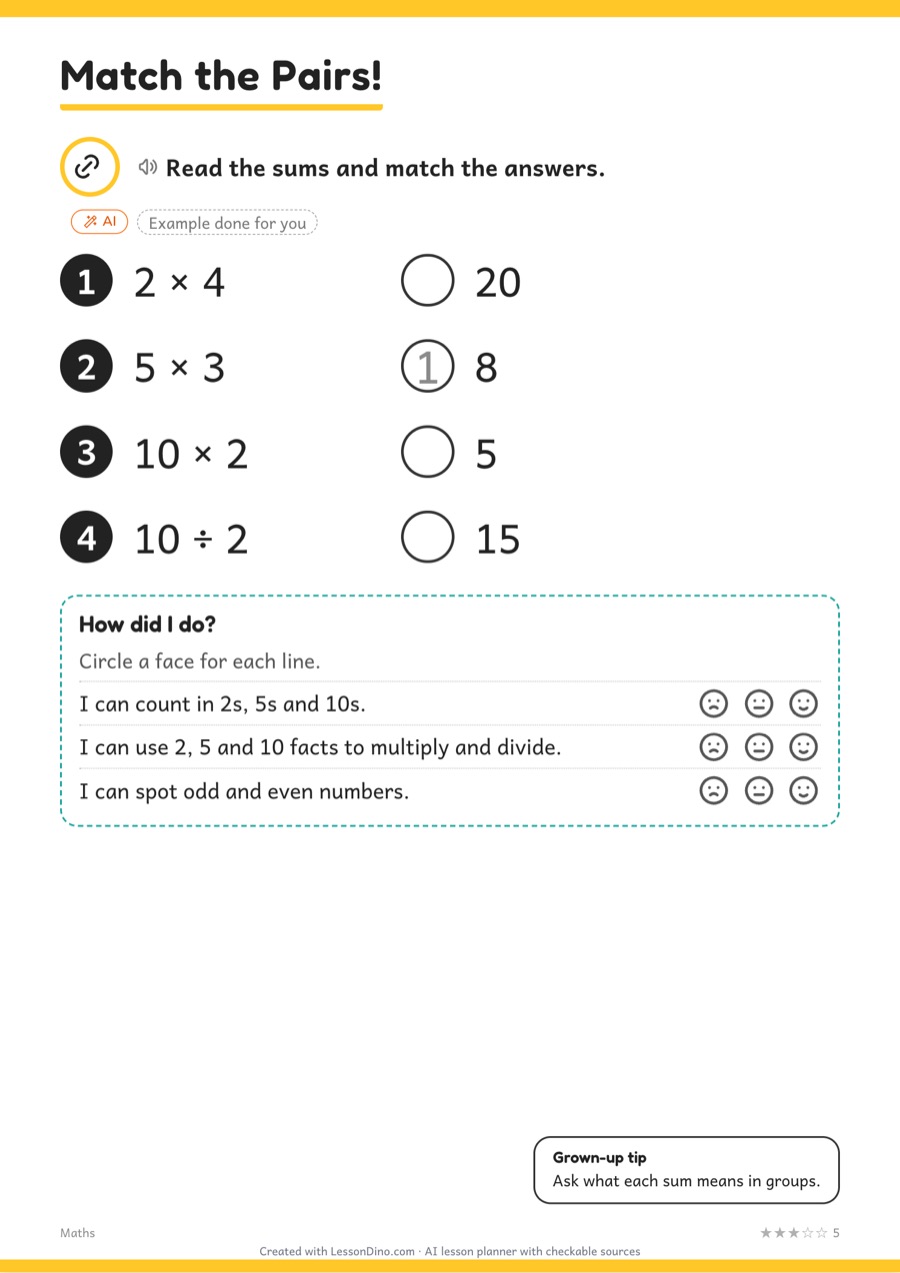
- Practice (10 minutes): Give out Worksheet page 3 and explain: Colour by group: Sort the numbers into even and odd, checking the ones digit. Give out Worksheet page 5 and explain: Matching: Read the sums and match the answers, writing both the multiplication and division where shown.
- Support: Start with only 2s arrays using two rows, since 2 times a number is just doubling the number.
- Stretch: Build the same array turned sideways to show the matching fact, such as 5 rows of 3 for 15.
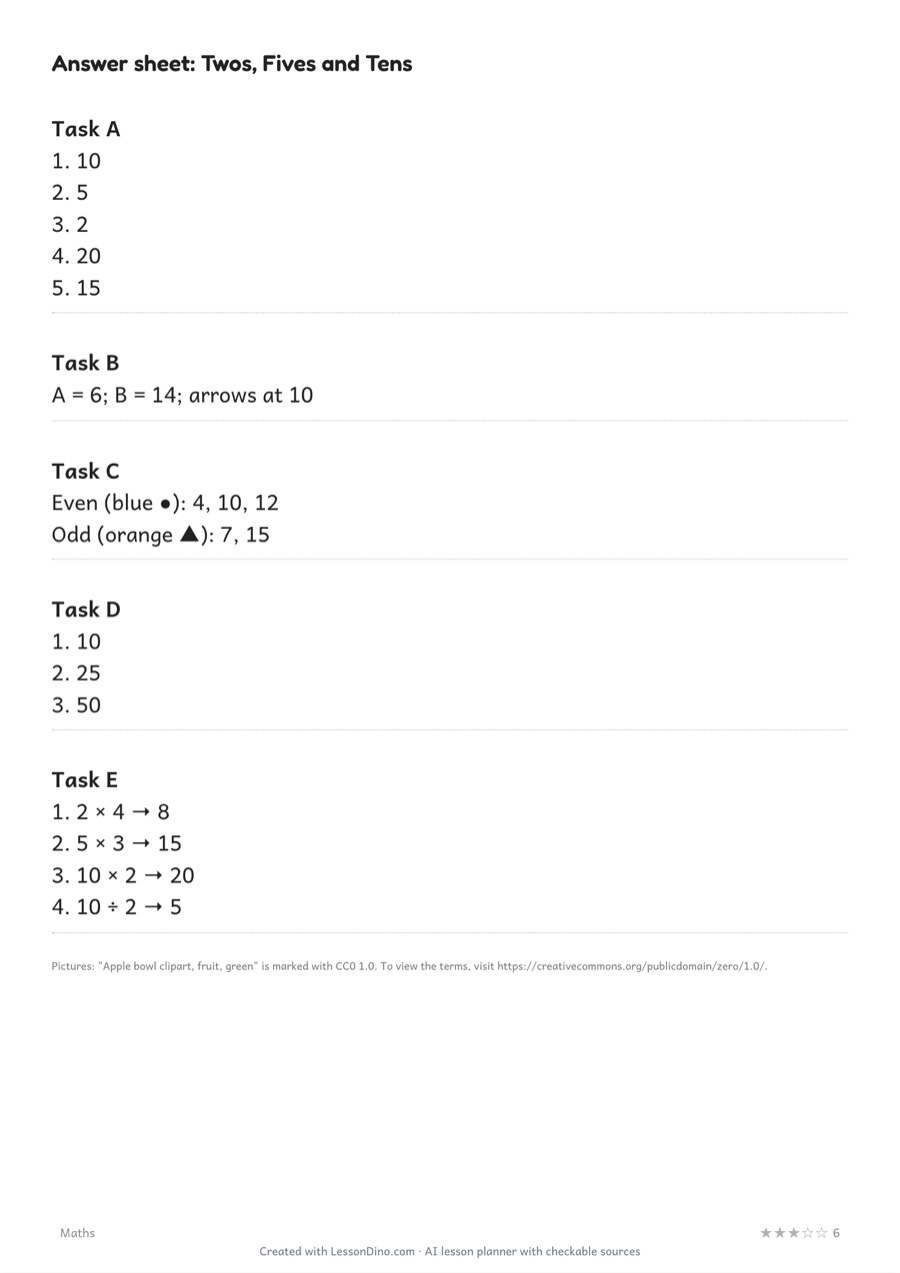
- The answer sheet is the last page, so you can print it on its own or let students check their own work.
Key vocabulary
- multiplication: joining equal groups together to find how many there are altogether
- division: sharing equally into groups to find how many are in each group
- array: cubes lined up in neat rows and columns to show a number sentence
- multiple: an answer you get when you count in twos, fives or tens
- even: a number you can split into pairs with nothing left over
- odd: a number that leaves one left over when you try to make pairs
Mistakes to watch for
- Thinks multiples of 5 always end in 5. Chant 5, 10, 15, 20 and colour ones digits to show answers end in either 0 or 5.
- Mixes up multiplication and division signs. Return to the array: build 15 as 3 rows of 5, then cover one row to show sharing, so 15 divided by 5 = 3.
- Decides odd or even from the tens digit. Check only the ones digit, because multiples of 2 always end with an even number; build towers of 2 to prove the leftover.
What's on the worksheet
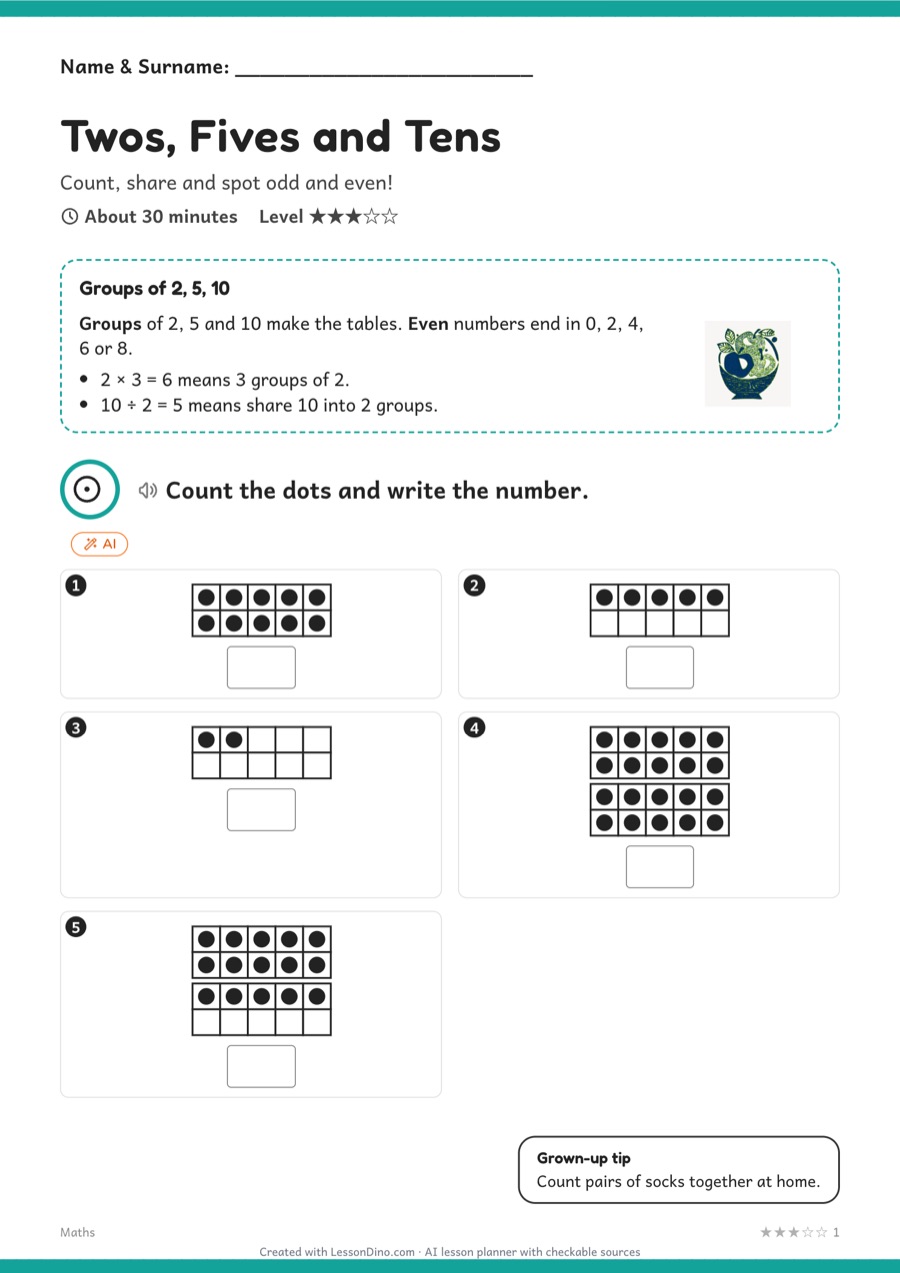
Count the Dots!
Groups of 2, 5, 10
- Groups of 2, 5 and 10 make the tables. Even numbers end in 0, 2, 4, 6 or 8.
- 2 × 3 = 6 means 3 groups of 2.
- 10 ÷ 2 = 5 means share 10 into 2 groups.
Count the dots and write the number.
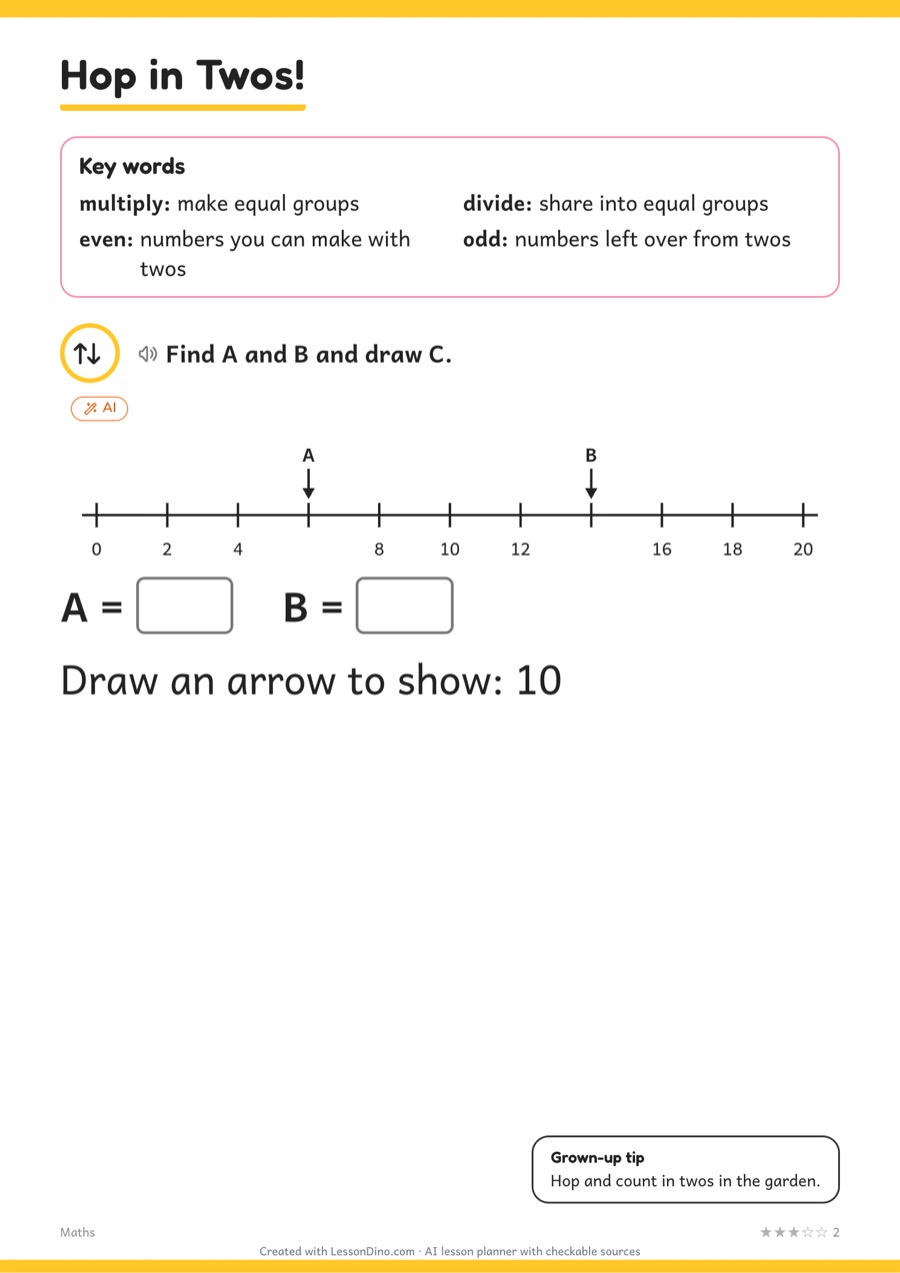
Hop in Twos!
| Word | Meaning |
|---|---|
| multiply | make equal groups |
| divide | share into equal groups |
| even | numbers you can make with twos |
| odd | numbers left over from twos |
Find A and B and draw C.
Odd or Even?
Sort the numbers into even and odd.
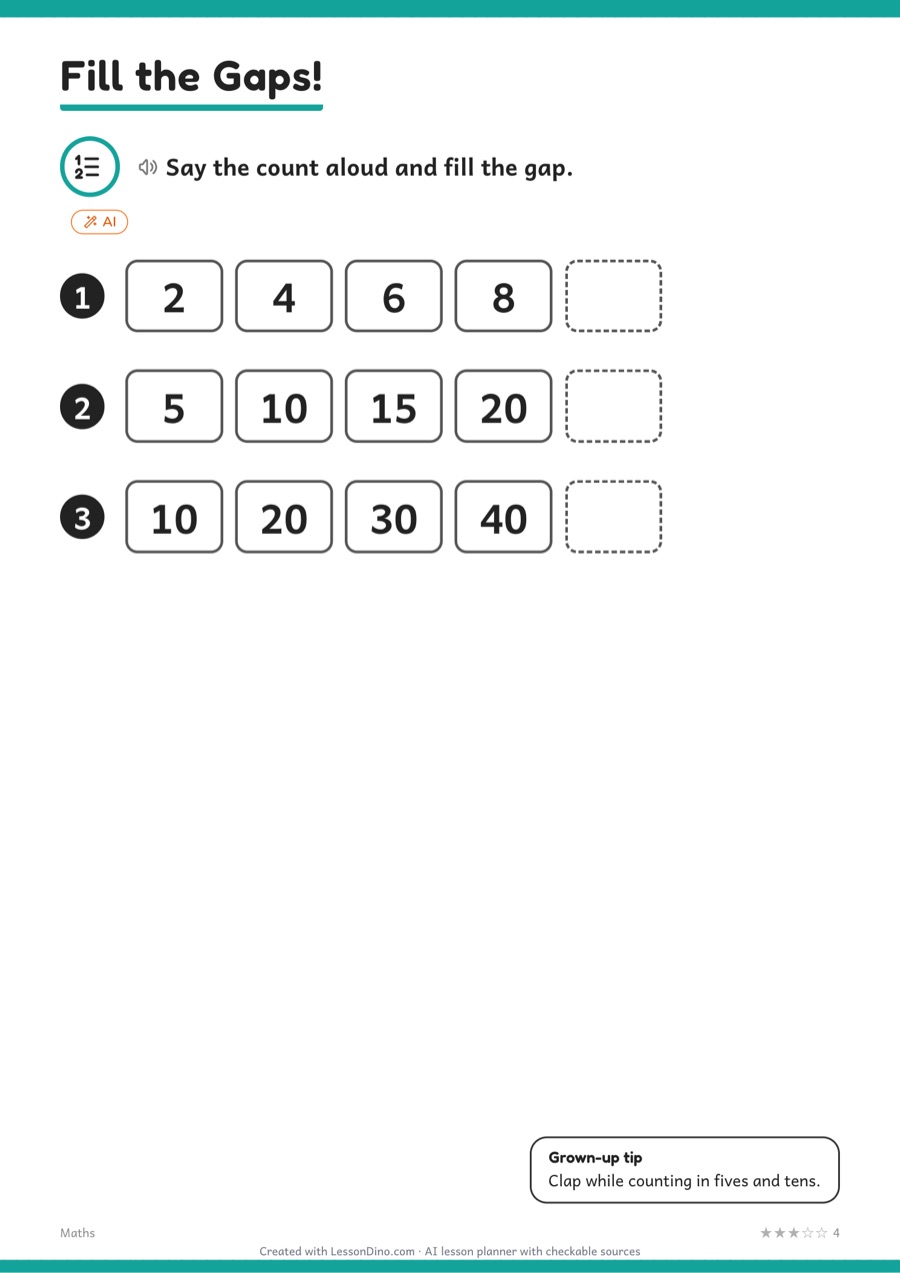
Fill the Gaps!
Say the count aloud and fill the gap.
Match the Pairs!
Read the sums and match the answers.
Answers
Show the answers
The answers are on the answer sheet, the last picture above.
Curriculum
recall and use multiplication and division facts for the 2, 5 and 10 multiplication tables, including recognising odd and even numbers
Made with Lesson Dino's AI on 17 October 2026. AI can make mistakes, so check the answers and facts against the sources before you teach.