Slides
Lesson plan
Twos, Fives and Tens with Arrays
Pupils recall 2, 5 and 10 facts and link them to odd and even. They build arrays, share equally and sort numbers.
Objectives
- Students will recall multiplication facts for 2, 5 and 10 using arrays and repeated addition.
- Students will use division facts for 2, 5 and 10 by sharing and grouping equally.
- Students will recognise odd and even numbers to 20 from their ones digit.
Success criteria
- I can say 2, 5 and 10 multiplications and show them with an array.
- I can share equally to find division answers for 2, 5 and 10.
- I can sort numbers to 20 into odd and even groups.
Key words
| Word | Meaning |
|---|---|
| multiplication | joining equal groups together to find how many there are altogether |
| division | sharing equally into groups to find how many are in each group |
| array | cubes lined up in neat rows and columns to show a number sentence |
| multiple | an answer you get when you count in twos, fives or tens |
| even | a number you can split into pairs with nothing left over |
| odd | a number that leaves one left over when you try to make pairs |
Timed plan (60 minutes)
| Time | Stage | What happens |
|---|---|---|
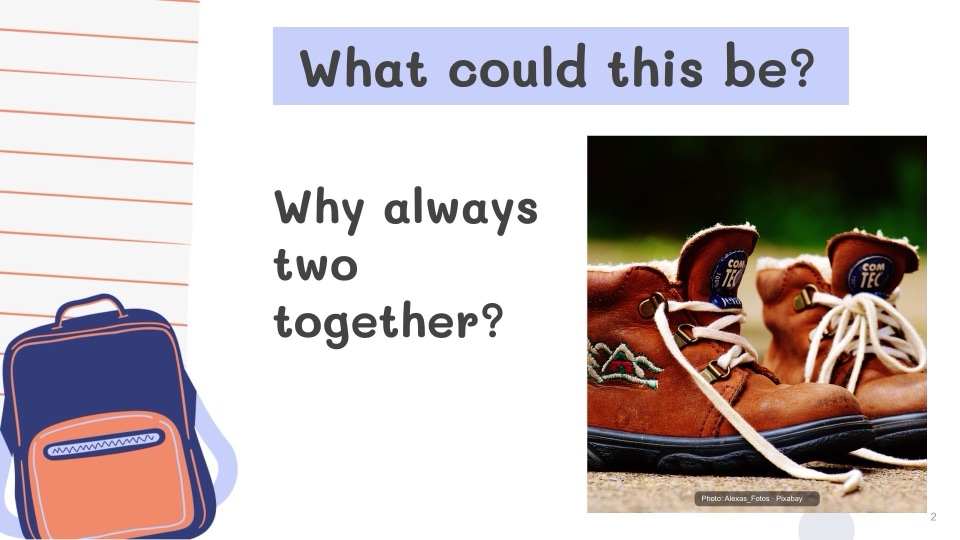
| 10 min | Starter | To recall counting in 2s and odd and even numbers and hook pupils into showing facts with arrays. Show Slide 1 and say the hook: How can we see a times table question without counting on our fingers? Show Slide 2 and chant together: Pairs! 2, 4, 6, 8... to 20, clapping each pair. Show Slide 5 and ask: How do you spot even numbers? Model 6 cubes as three towers of 2 with nothing left over, then 7 cubes with one left over. Sort number cards 1 to 10 with the class into odd and even hoops, leaving one cube unpaired for odd numbers to prove it. |
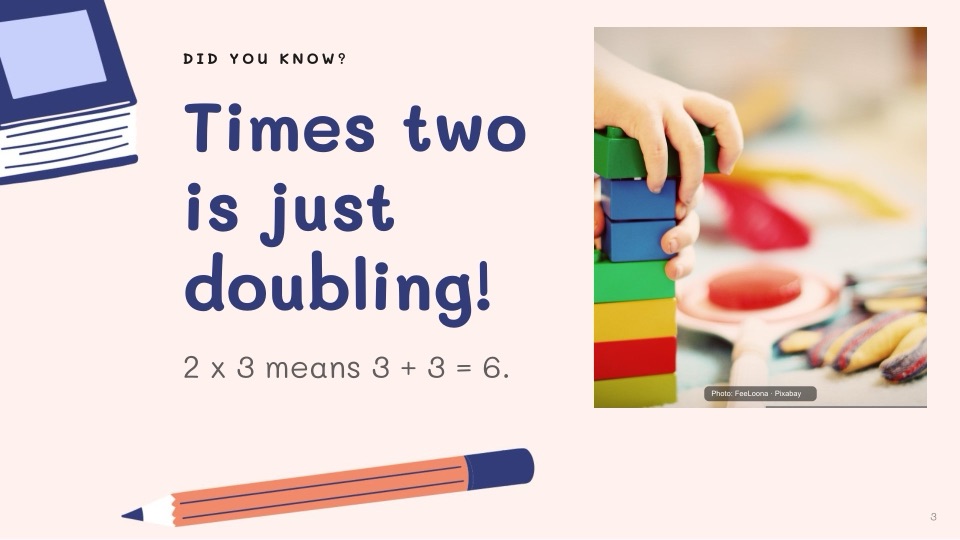
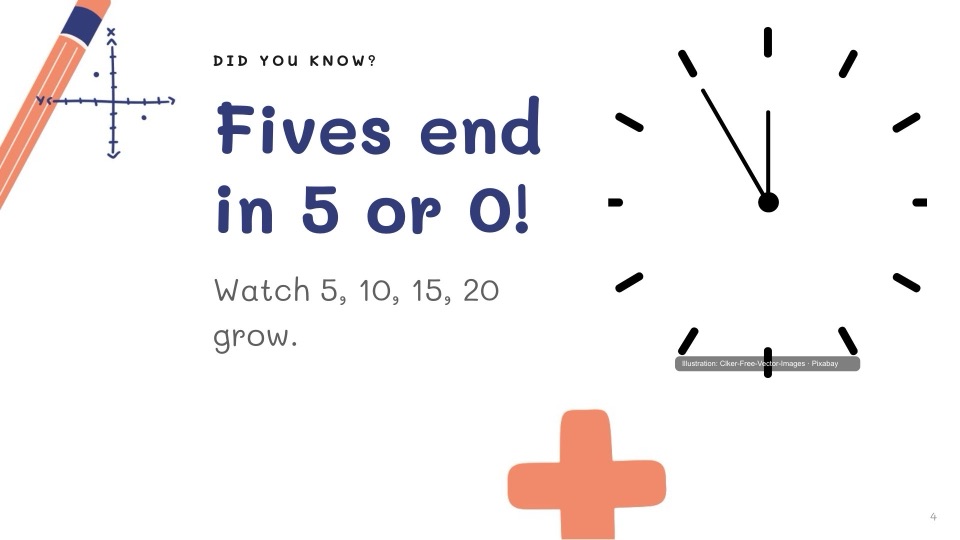
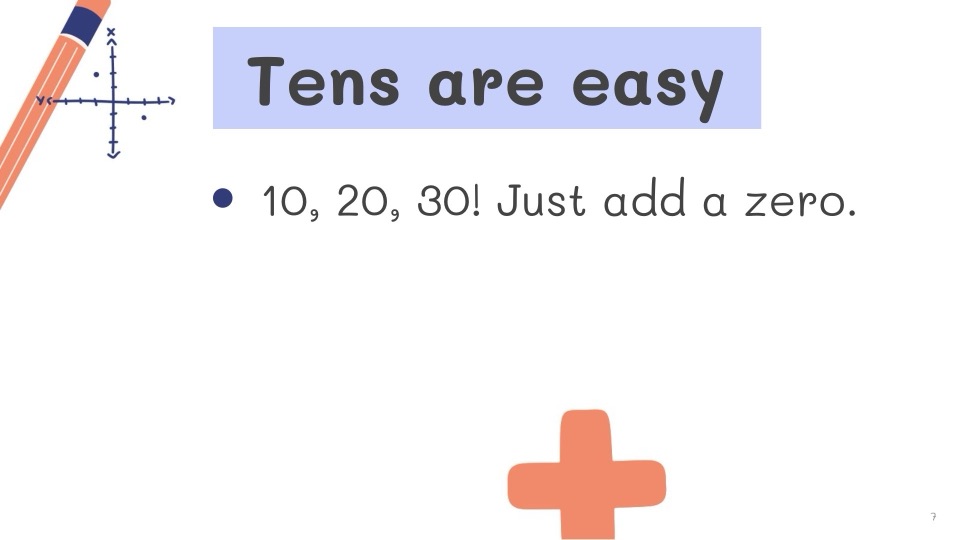
| 10 min | Teaching | To model 2, 5 and 10 multiplication facts and link them to repeated addition and division. Show Slide 3 and model doubling: Times two is just doubling! and 2 x 3 means 3 + 3 = 6, because 2 times a number is just doubling the number. Show Slide 4 and count: Watch 5, 10, 15, 20 grow, pointing out answers end in either 0 or 5. Show Slide 7 and model: 10, 20, 30! Just add a zero, because multiples of 10 all have a zero in the ones column. Model the matching division for each fact on the board, such as 15 divided by 5 is 3. |
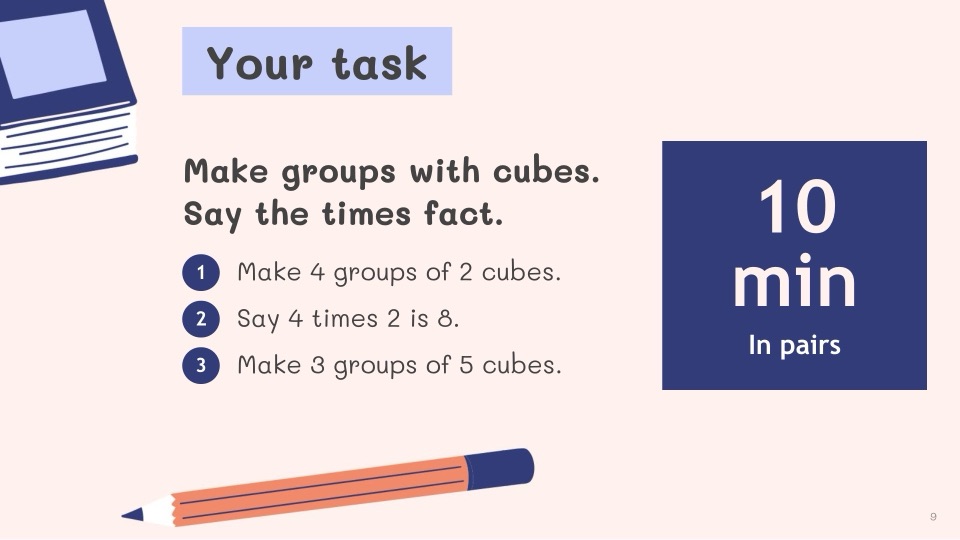
| 20 min | Main activity | To recall 2, 5 and 10 facts by building, drawing and writing matching arrays and divisions. Show Slide 9 and read the task: Make 4 groups of 2 cubes and Say 4 times 2 is 8. Model 3 rows of 5 on squared paper, because multiplication and division relate to arrays and to repeated addition, counting 5 + 5 + 5 = 15. Draw the array, write 3 x 5 = 15 where the facts meet in the grid, then write 15 divided by 5 = 3. Give out multiplication cards for 2, 5 and 10 and send pairs to build, draw and write two facts per table. |
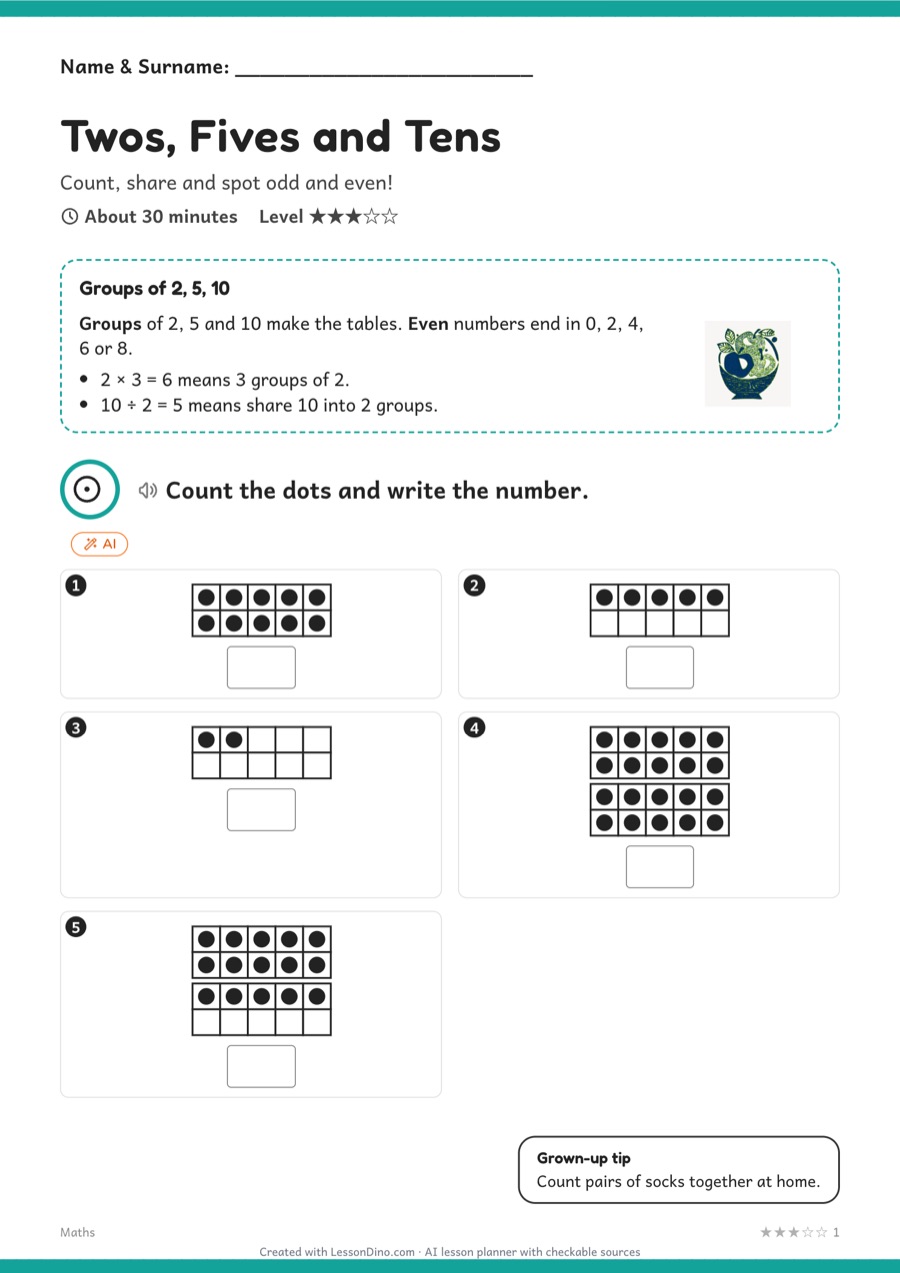
| 10 min | Practice | To practise sorting odd and even numbers and matching 2, 5 and 10 facts independently. Give out Worksheet page 3 and explain: Colour by group: Sort the numbers into even and odd, checking the ones digit. Give out Worksheet page 5 and explain: Matching: Read the sums and match the answers, writing both the multiplication and division where shown. Set 4 minutes for each page, then ask pairs to compare answers and fix with cubes. |
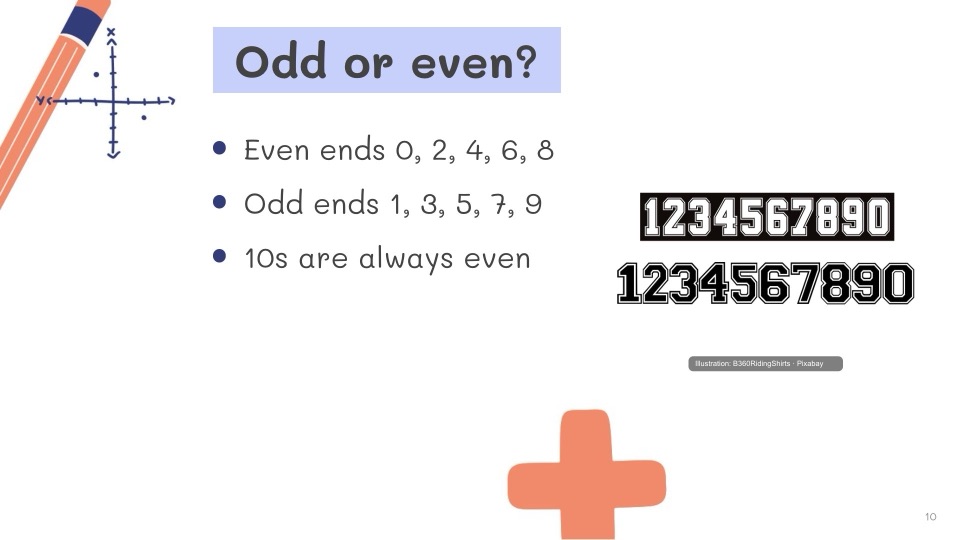
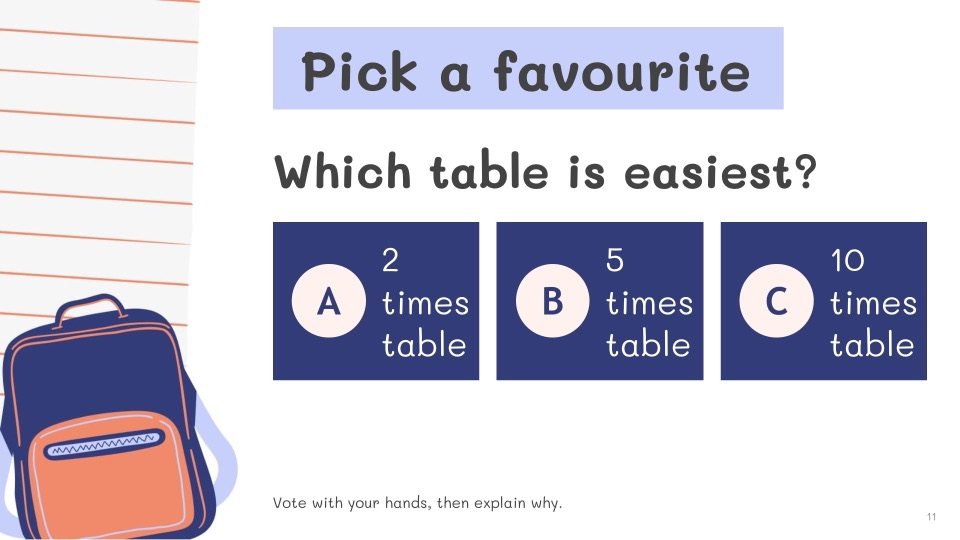
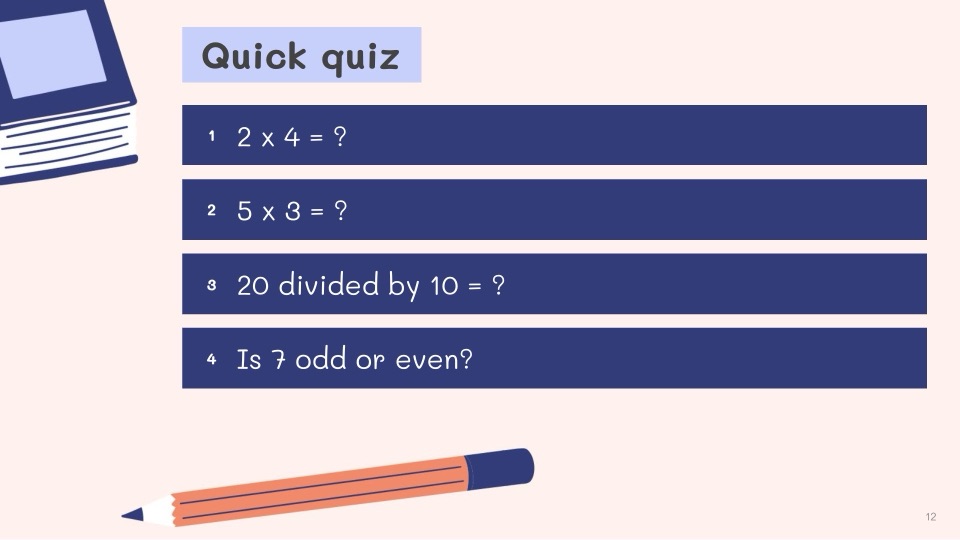
| 10 min | Plenary | To check recall of 2, 5 and 10 facts and odd and even rules against the success criteria. Show Slide 10 and chant: Even ends 0, 2, 4, 6, 8 and Odd ends 1, 3, 5, 7, 9, noting 10s are always even. Show Slide 12 and run the Quick quiz: 2 x 4 = ?, 5 x 3 = ?, 20 divided by 10 = ?, Is 7 odd or even?, taking answers on whiteboards. Show Slide 11 and vote: Which table is easiest? with 2 times table, 5 times table and 10 times table, asking pupils to justify with a fact. Return to the three I can statements and ask pupils to show thumbs up if they can do each. |
Common mistakes
- Thinks multiples of 5 always end in 5.
How to spot it: Says 20 cannot be in the 5 times table.
Chant 5, 10, 15, 20 and colour ones digits to show answers end in either 0 or 5. - Mixes up multiplication and division signs.
How to spot it: Answers 15 divided by 5 with 75 or 20 divided by 10 with 200.
Return to the array: build 15 as 3 rows of 5, then cover one row to show sharing, so 15 divided by 5 = 3. - Decides odd or even from the tens digit.
How to spot it: Says 12 is odd because 1 is odd, or 17 is even because 7 looks like 1.
Check only the ones digit, because multiples of 2 always end with an even number; build towers of 2 to prove the leftover.
Support
- Start with only 2s arrays using two rows, since 2 times a number is just doubling the number.
- Lay real cubes in rows and count in 2s, 5s or 10s before writing anything.
- Work with numbers to 10 first when sorting odd and even, then move to 20.
Stretch
- Build the same array turned sideways to show the matching fact, such as 5 rows of 3 for 15.
- Write all four facts for an array, including two divisions, such as 6 x 2 = 12 and 12 divided by 2 = 6.
- Predict if bigger numbers like 34 or 47 are odd or even from the ones digit, then check with cubes.
Check questions
- What is 5 x 3?
Answer: 15 - What is 20 divided by 10?
Answer: 2 - Is 13 odd or even? How do you know?
Answer: Odd, it ends in 3 and leaves one left over in pairs.
Curriculum
recall and use multiplication and division facts for the 2, 5 and 10 multiplication tables, including recognising odd and even numbers
Video clips
Clips on YouTube, from the start and end times we chose. Check each one before you show it.
-
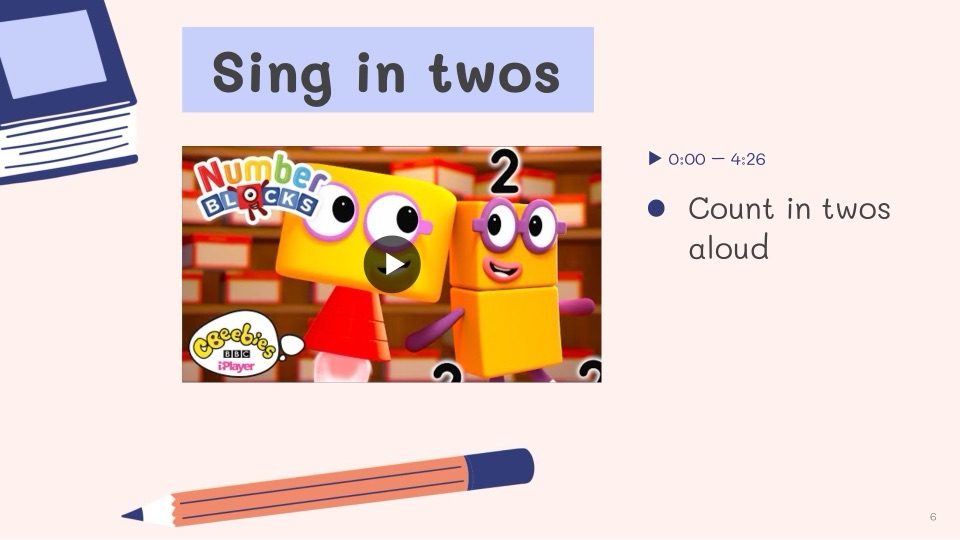
Two times table song from 0:00 to 4:26
CBeebies: Two Times Table Song | Numberblocks | CBeebies
CBeebies Numberblocks song made for ages 4-7 with clear counting in 2s that builds recall of 2 times-table facts for Year 2.
-
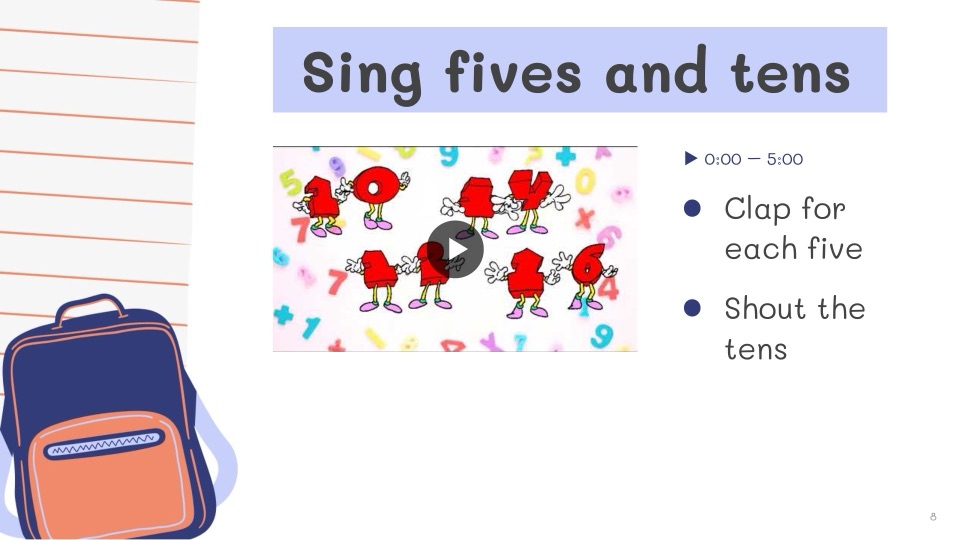
2, 5 and 10 song together from 0:00 to 5:00
Haaris Mystic World: Times Table song - 2, 5, and 10 Times Table Song
Song covering the 2, 5 and 10 tables together at a simple pace that suits ages 6-7 for recall practice.
Worksheet
Sources
- National curriculum in England: mathematics programmes of ... gov.uk
- 2, 5 and 10 Multiplication Times Table and Division Facts ... twinkl.co.uk
- The 2, 5 and 10 times tables boosteducation.co.uk
- Times tables grid - Timestables.co.uk timestables.co.uk
- Times tables games and songs 1-12 - BBC Bitesize bbc.co.uk
- Numberblocks – Times tables - KS1 Maths - BBC Bitesize bbc.co.uk
- Multiplication table Facts for Kids kids.kiddle.co
- Use knowledge of the 2, 5 and 10 times tables to solve ... thenational.academy
- Times Tables - Transum transum.org
- What Are Times Tables? Definition, Multiplication Charts, Example splashlearn.com
- 2 times table - KS1 Maths - BBC Bitesize bbc.co.uk
- Multiplication - Times Tables - Math is Fun mathsisfun.com
- Times Tables Games 2️⃣ ️3️⃣ - Times Tables Kids timestablekids.com
- How can you introduce the 2, 5 and 10 times tables in Year 2? hands-oneducation.com
- Times Tables Worksheets 1–12 | Free Printable PDFs mental-arithmetic.co.uk
- 2, 5 and 10 Times Table and Division Facts Activity Booklet twinkl.com
- Teaching the Times Tables with Pictures and Stories multiplication.com
Picture credits
Made with Lesson Dino's AI on 17 October 2026. AI can make mistakes, so check facts against the sources before you teach.