The worksheet
About this worksheet
Students learn what each digit in a two-digit number is worth. They bundle sticks into tens and write numbers as tens plus ones. This Year 2 Maths worksheet gives students (ages 6–7) five pages of practice on partitioning two-digit numbers, part of the number and place value unit. It goes with our free Partitioning two-digit numbers lesson, which has the slides and a timed lesson plan.
What it covers
By the end, students should be able to:
- Students will recognise how many tens and ones make a two-digit number.
- Students will explain what each digit in a two-digit number is worth.
- Students will write a two-digit number as tens plus ones using bundles.
How to use it
- Main activity (25 minutes): Hand out sticks, bands, mats and Worksheet page 1 for recording.
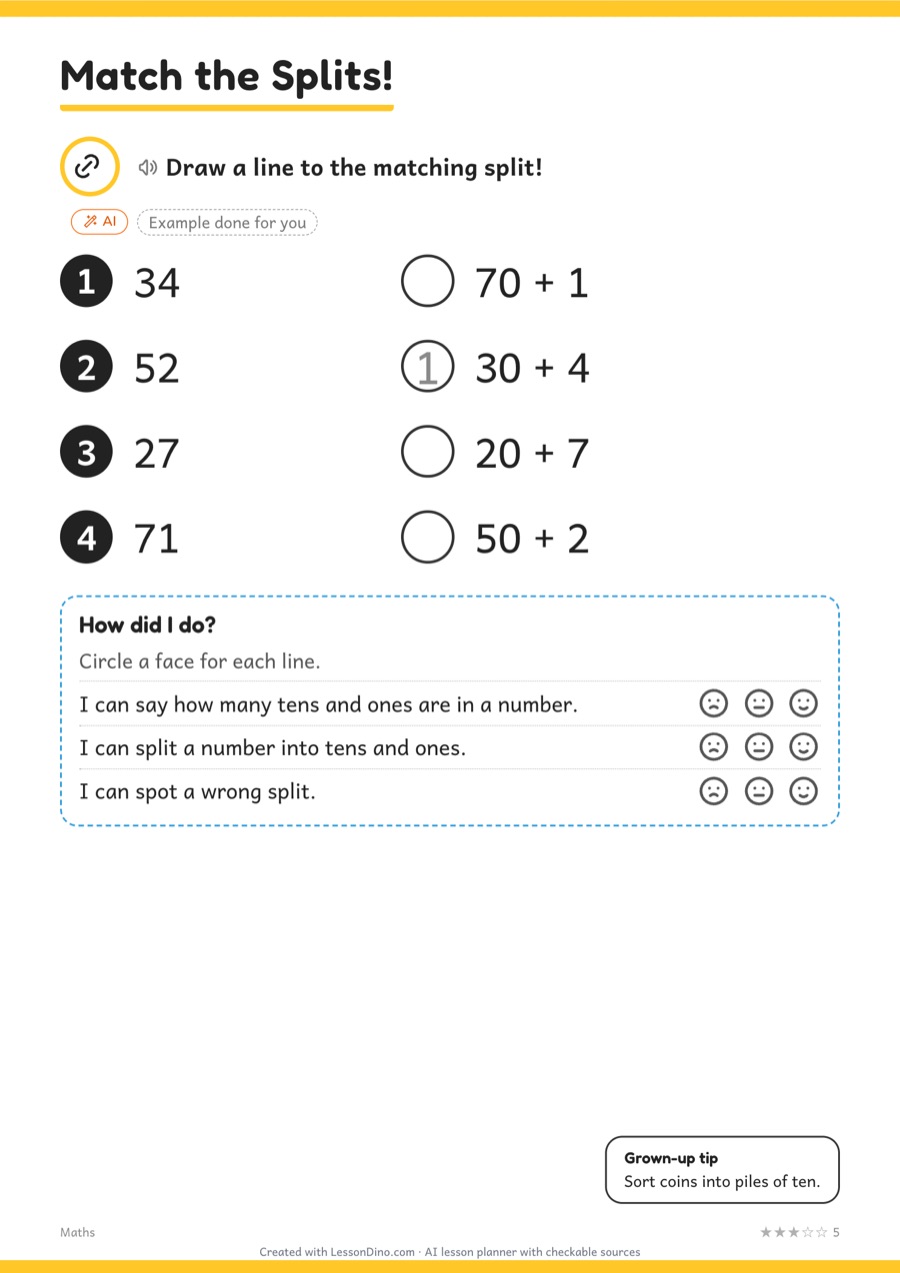
- Plenary (15 minutes): Hand out Worksheet page 5 for pairs to draw matching lines.
- Support: Start with handfuls under 20 and match each bundle to base-ten equipment on a place value chart.
- Stretch: Try a larger handful and work out the total from the bundles first, without counting every stick.
- The answer sheet is the last page, so you can print it on its own or let students check their own work.
Key vocabulary
- tens: a bundle made of 10 joined together
- ones: loose cubes counted on their own
- partition: to split a whole up into parts
- place value: what a digit is worth because of where it sits
Mistakes to watch for
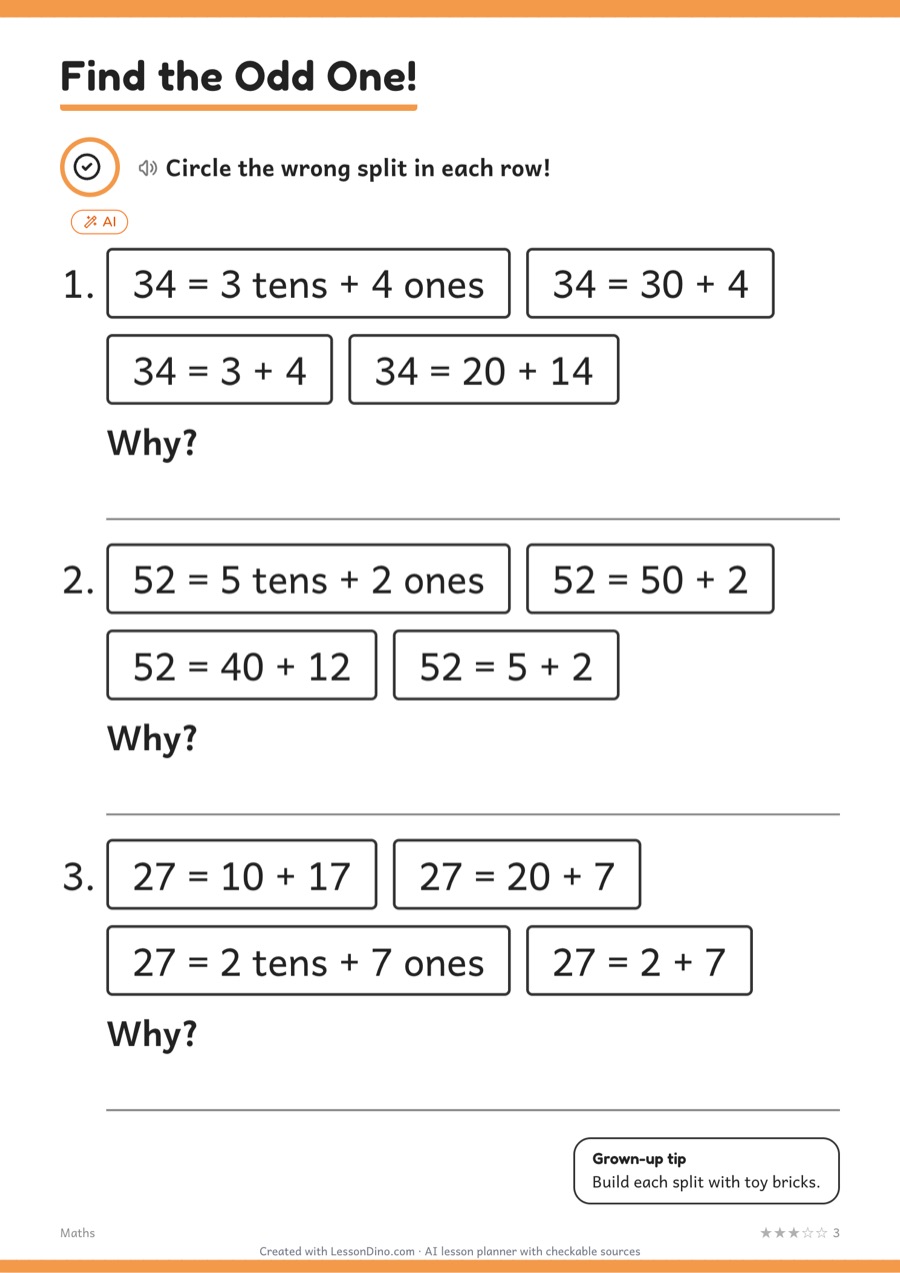
- Writes 34 as 3 + 4 instead of 30 + 4. Rebuild 3 tens rods to show 3 tens = 30, so 21 is the same as 20 + 1.
- Thinks 42 and 24 are the same because they use 4 and 2. Build both with blocks and compare place value of each digit in a two-digit number (10s, 1s).
- Ignores 0 in numbers like 30, saying it shows nothing. Show 3 tens with no ones and explain 0 holds the ones place as a place holder.
What's on the worksheet
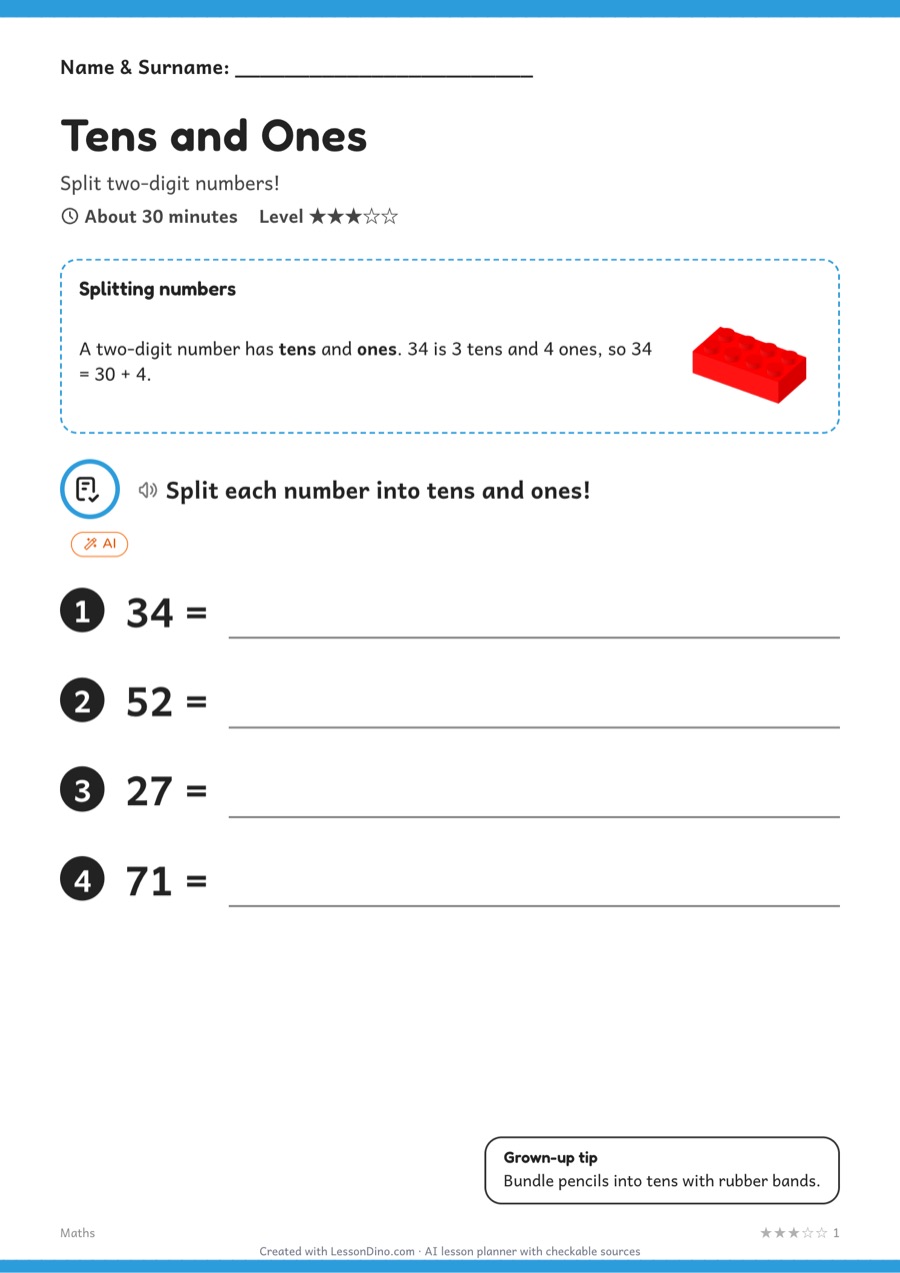
Split the Numbers!
Splitting numbers
- A two-digit number has tens and ones. 34 is 3 tens and 4 ones, so 34 = 30 + 4.
Split each number into tens and ones!
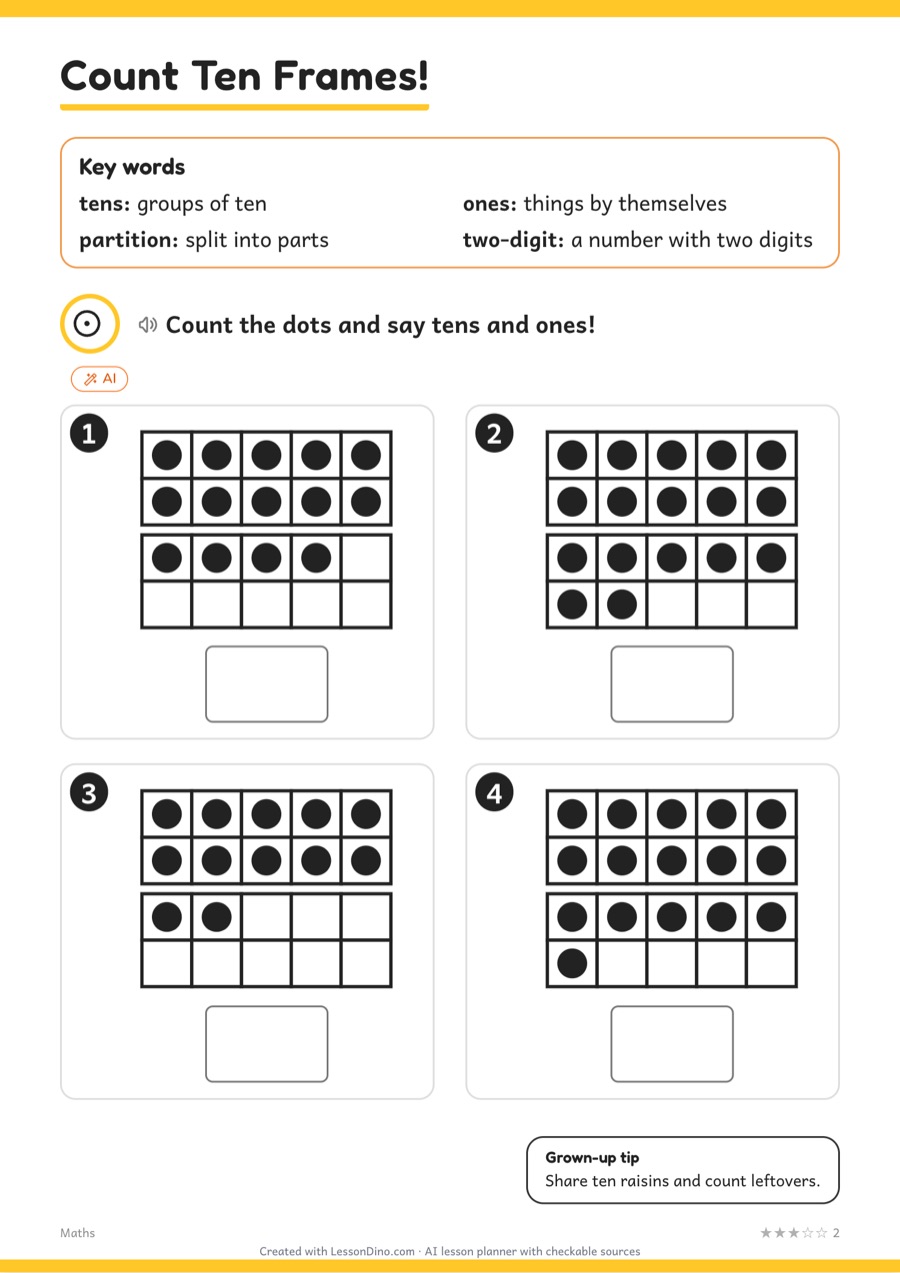
Count Ten Frames!
| Word | Meaning |
|---|---|
| tens | groups of ten |
| ones | things by themselves |
| partition | split into parts |
| two-digit | a number with two digits |
Count the dots and say tens and ones!
Find the Odd One!
Circle the wrong split in each row!
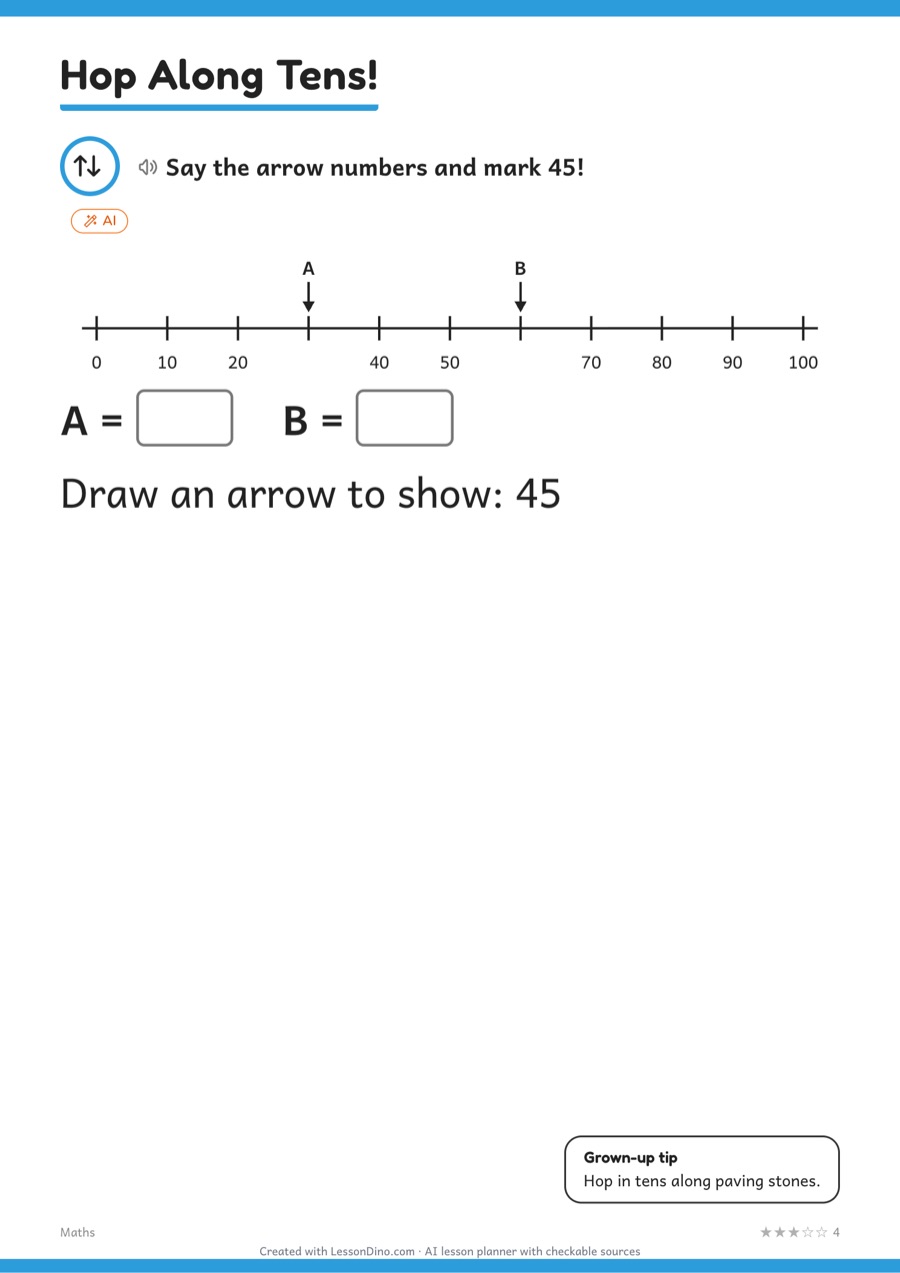
Hop Along Tens!
Say the arrow numbers and mark 45!
Match the Splits!
Draw a line to the matching split!
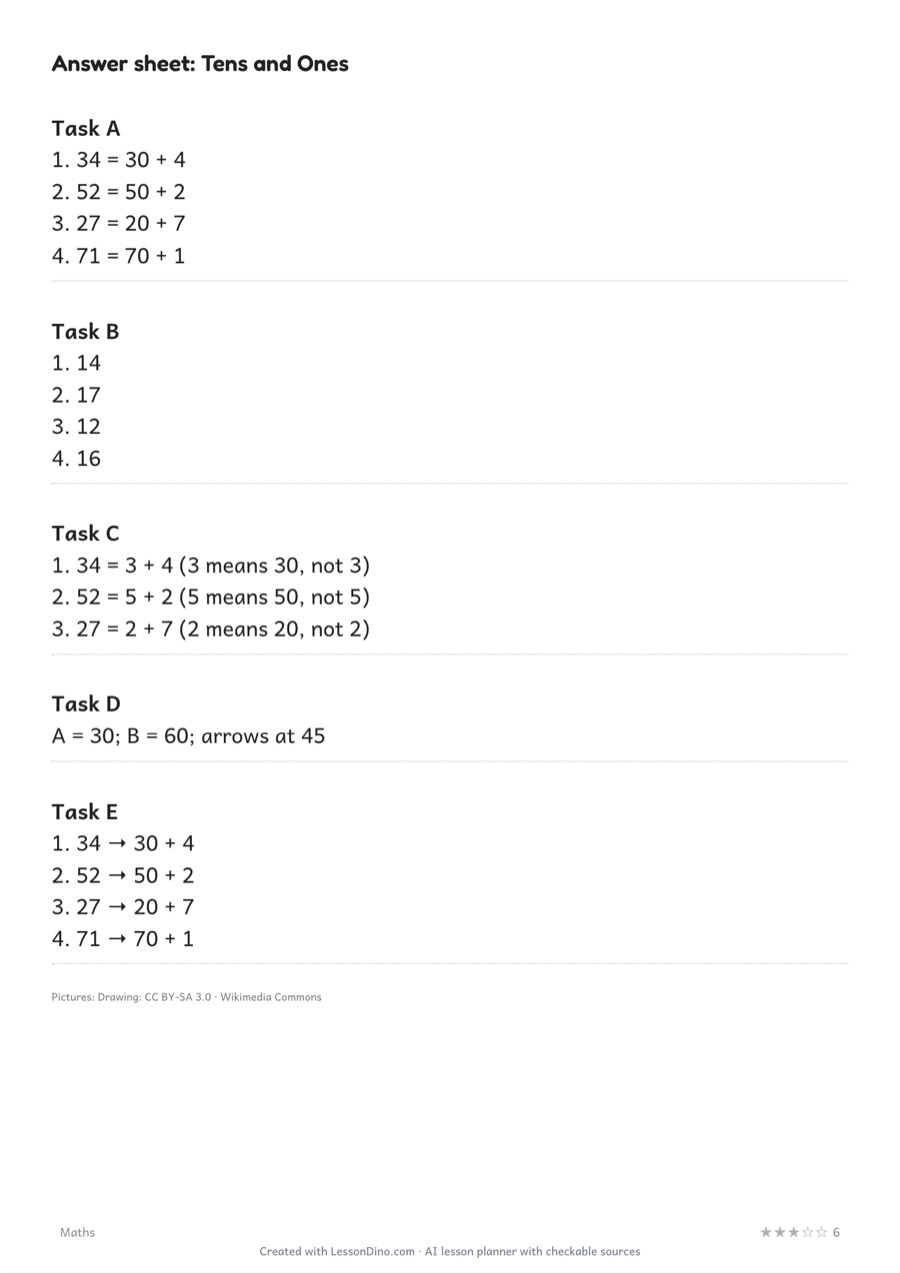
Answers
Show the answers
The answers are on the answer sheet, the last picture above.
Curriculum
recognise the place value of each digit in a two-digit number (10s, 1s)
Made with Lesson Dino's AI on 19 October 2026. AI can make mistakes, so check the answers and facts against the sources before you teach.