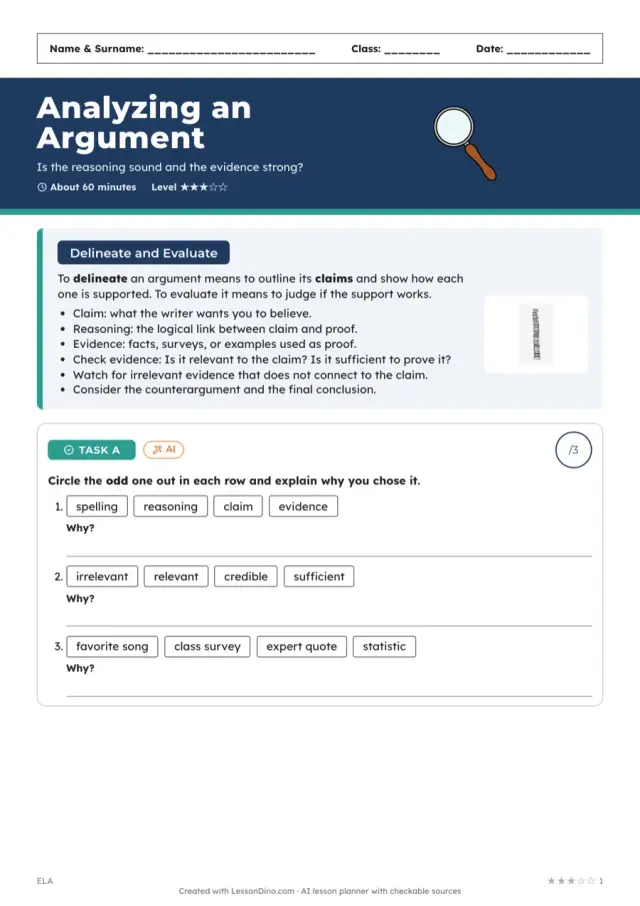
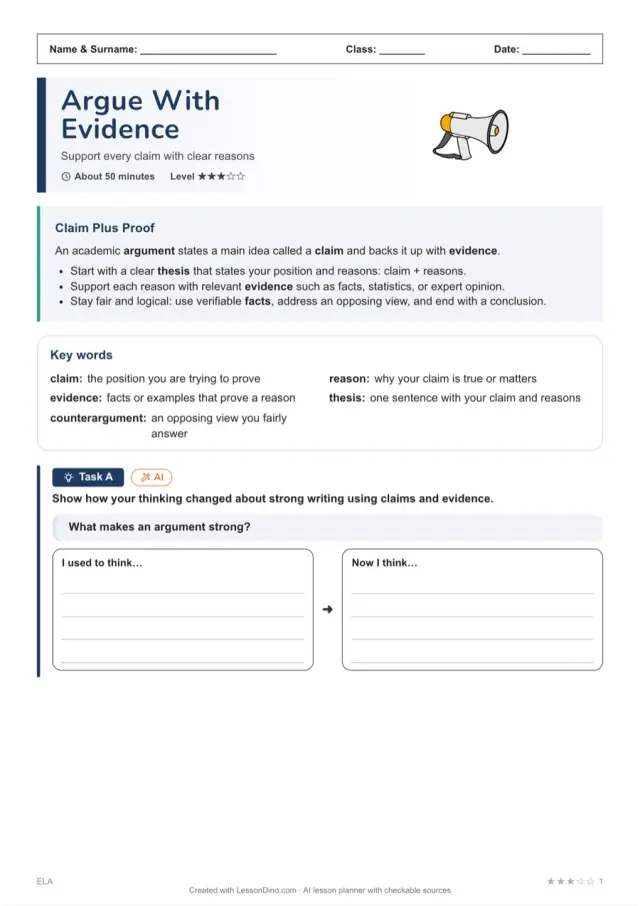
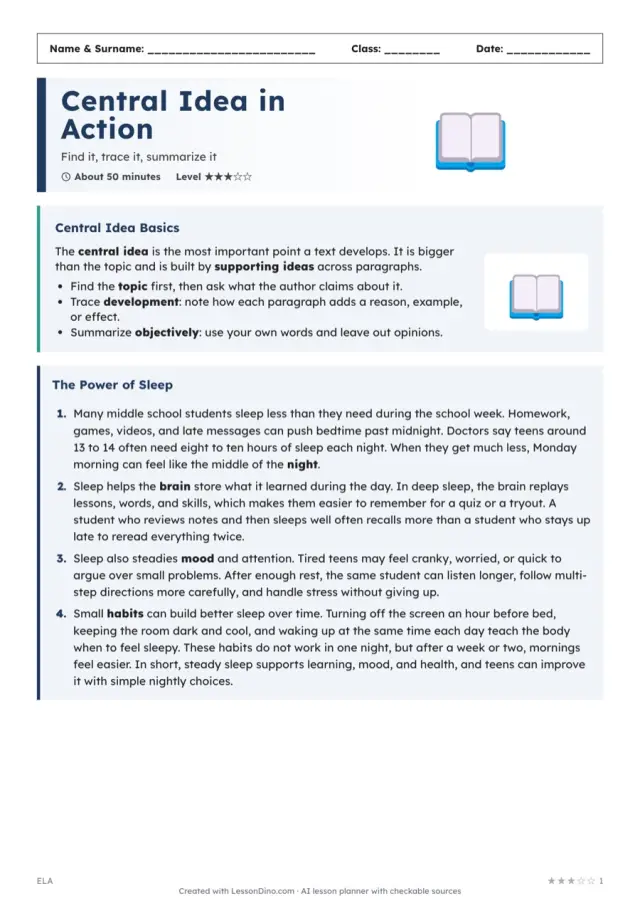
The worksheet
About this worksheet
Students learn how each sentence in a paragraph has a job. They label sentences and track how a key concept gets refined. This Grade 8 ELA worksheet gives students (ages 13–14) five pages of practice on paragraph structure, part of the reading informational text unit. It goes with our free Paragraph structure lesson, which has the slides and a timed lesson plan.
What it covers
By the end, students should be able to:
- Students will analyze a paragraph sentence by sentence to name each role.
- Students will explain how sentences develop and refine a key concept.
- Students will identify topic, evidence, analysis, and wrap-up sentences.
How to use it
- Use it for practice after the teaching part of the lesson, once students have seen the worked examples on the slides.
- Support: Number the sentences and give guiding questions for sentences 2 and 3, such as What new detail does this add?
- Stretch: Partners argue which single sentence does the most refining work and why.
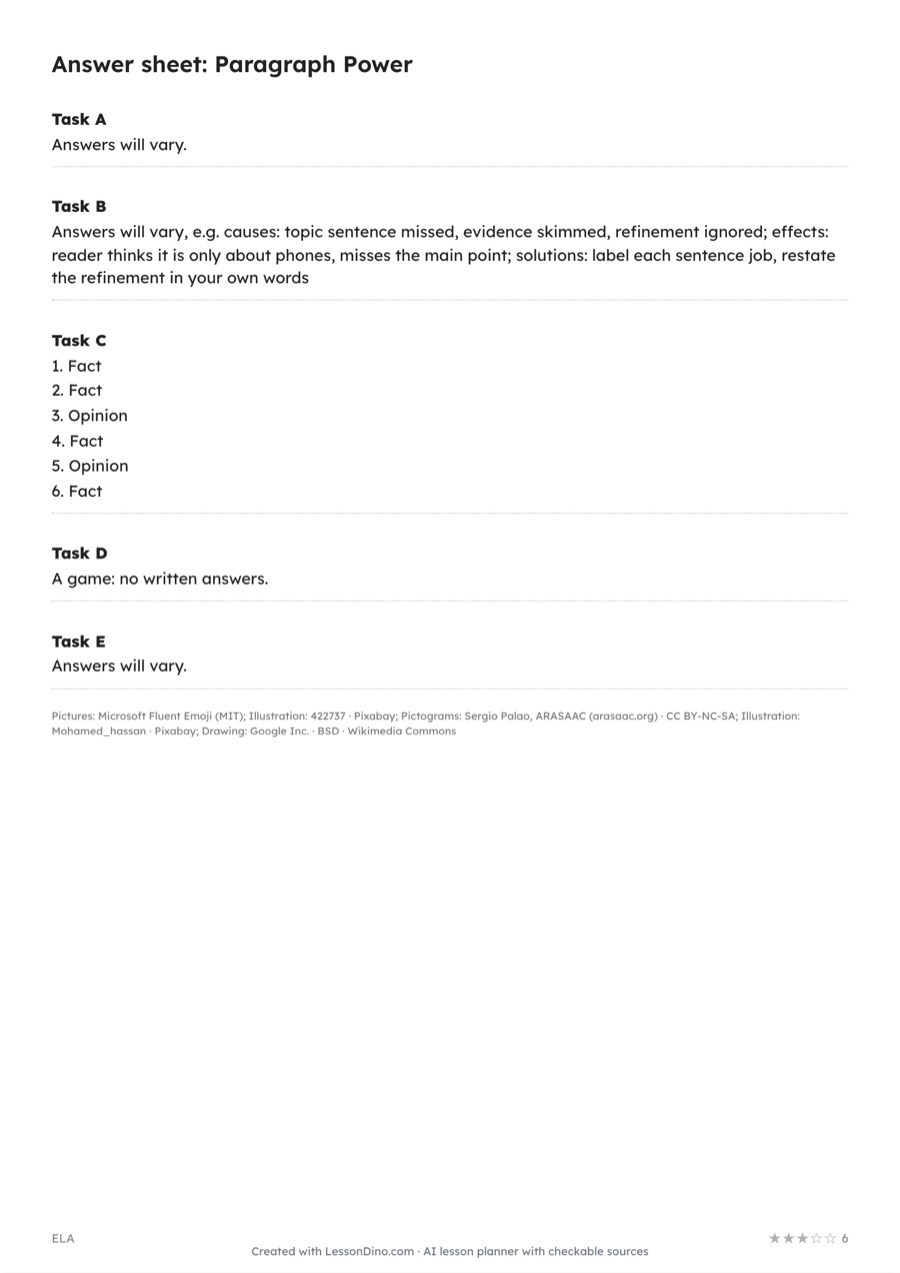
- The answer sheet is the last page, so you can print it on its own or let students check their own work.
Key vocabulary
- topic sentence: first line that tells what the whole chunk is about
- evidence: facts, quotes, or numbers that show a point is true
- analysis: thinking that says what proof means and why it matters
- concluding sentence: last line that wraps up the point and points ahead
- refine: make a thought clearer and sharper by adding limits or details
Mistakes to watch for
- Calling evidence the explanation. Ask does it show who or what, or does it tell how and why it matters.
- Thinking closing sentence only repeats. Point to new words that add limit and link forward, not just summary.
- Putting two ideas in one paragraph chart. Return to controlling idea and check each sentence links back for unity.
What's on the worksheet
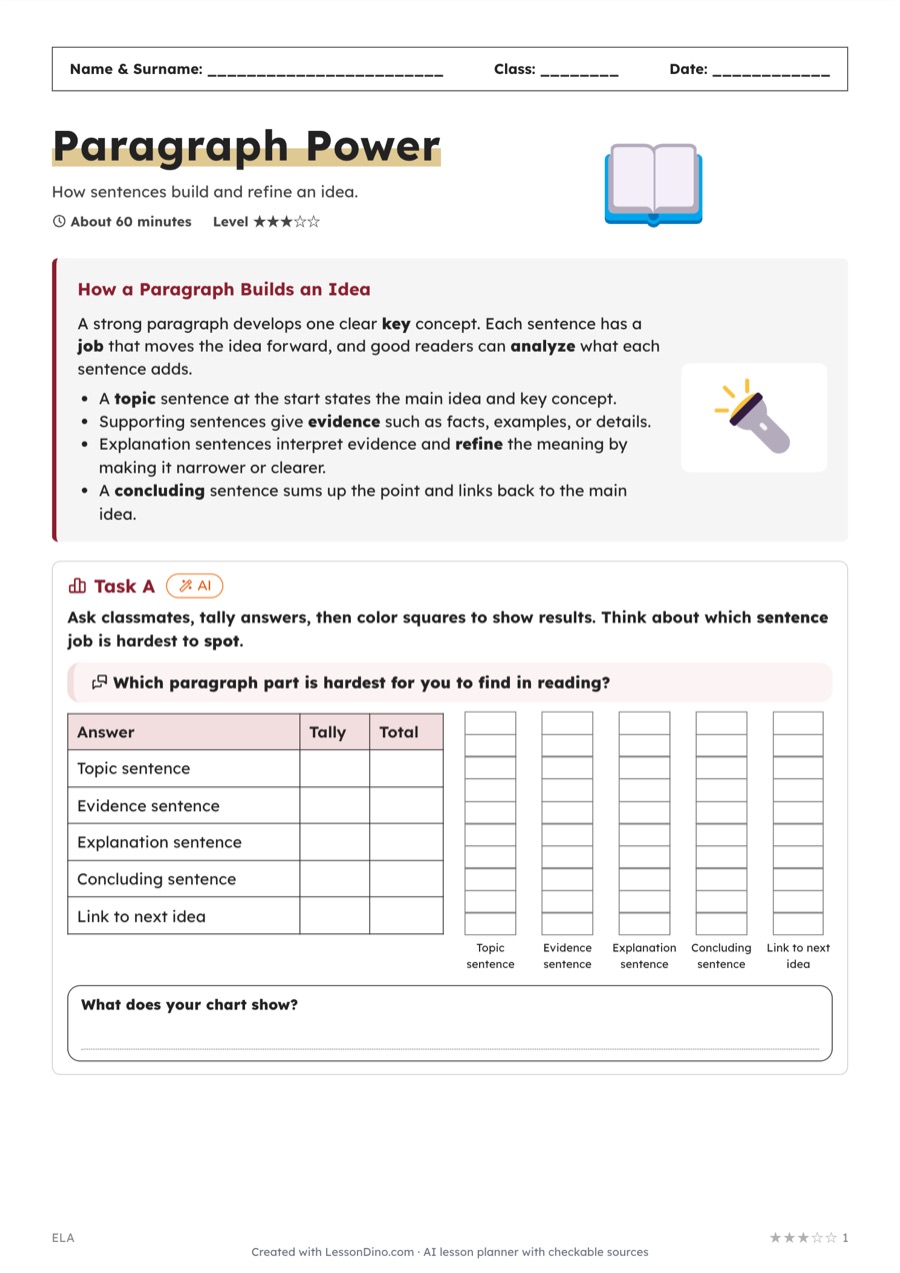
Paragraphs Have Jobs
Learn the parts of a paragraph and survey the class.
How a Paragraph Builds an Idea
- A strong paragraph develops one clear key concept. Each sentence has a job that moves the idea forward, and good readers can analyze what each sentence adds.
- A topic sentence at the start states the main idea and key concept.
- Supporting sentences give evidence such as facts, examples, or details.
- Explanation sentences interpret evidence and refine the meaning by making it narrower or clearer.
- A concluding sentence sums up the point and links back to the main idea.
Ask classmates, tally answers, then color squares to show results. Think about which sentence job is hardest to spot.
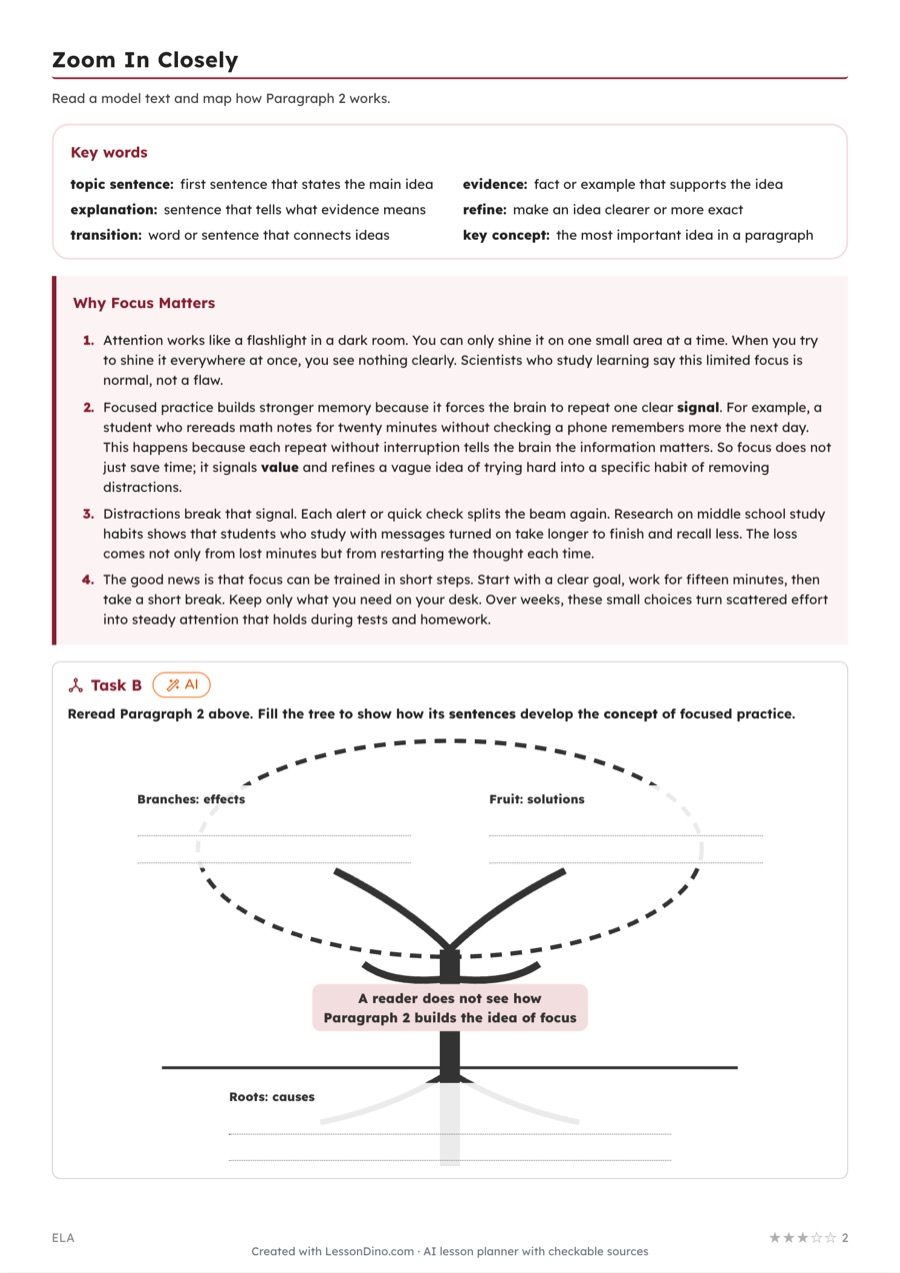
Zoom In Closely
Read a model text and map how Paragraph 2 works.
| Word | Meaning |
|---|---|
| topic sentence | first sentence that states the main idea |
| evidence | fact or example that supports the idea |
| explanation | sentence that tells what evidence means |
| refine | make an idea clearer or more exact |
| transition | word or sentence that connects ideas |
| key concept | the most important idea in a paragraph |
Why Focus Matters
Reread Paragraph 2 above. Fill the tree to show how its sentences develop the concept of focused practice.
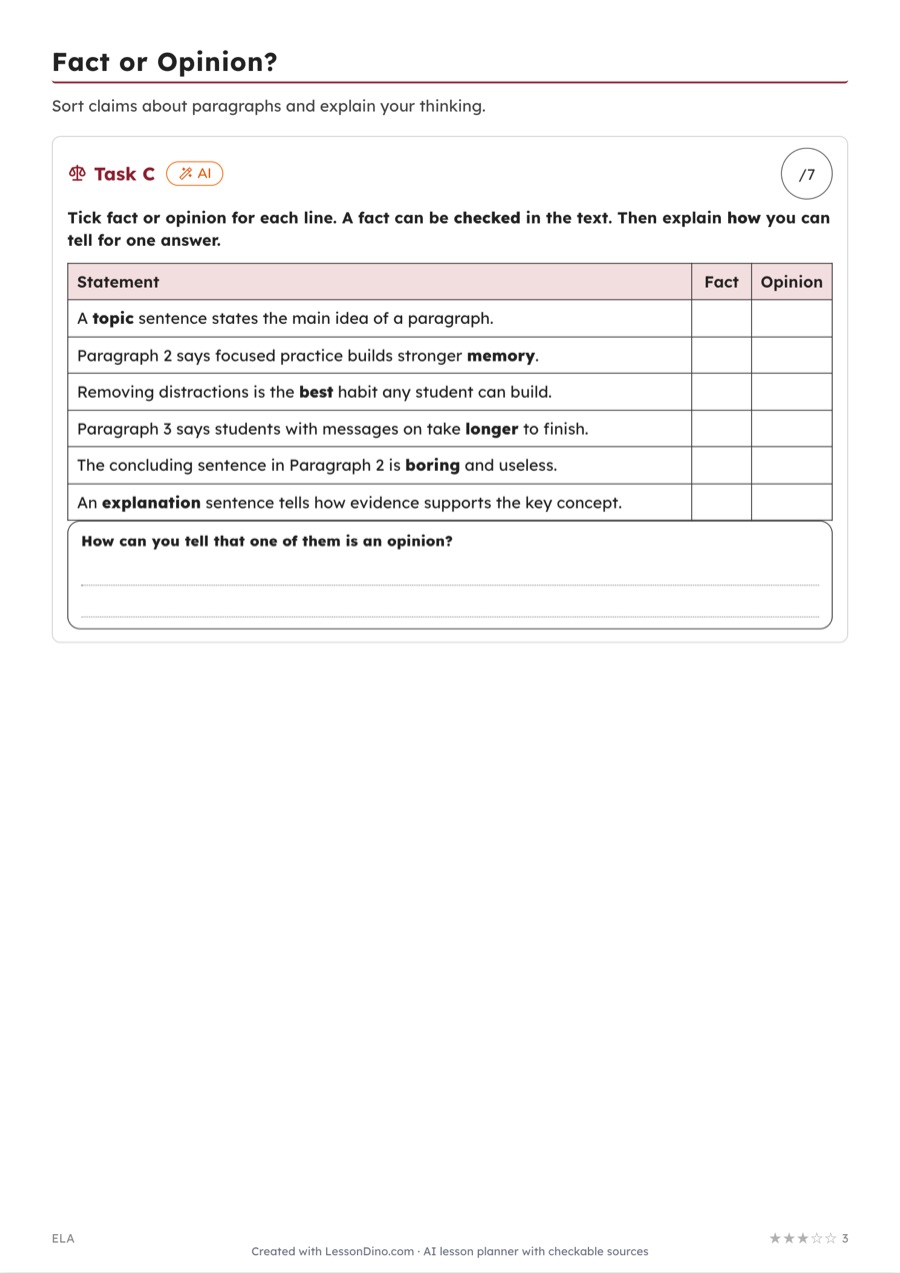
Fact or Opinion?
Sort claims about paragraphs and explain your thinking.
Tick fact or opinion for each line. A fact can be checked in the text. Then explain how you can tell for one answer.
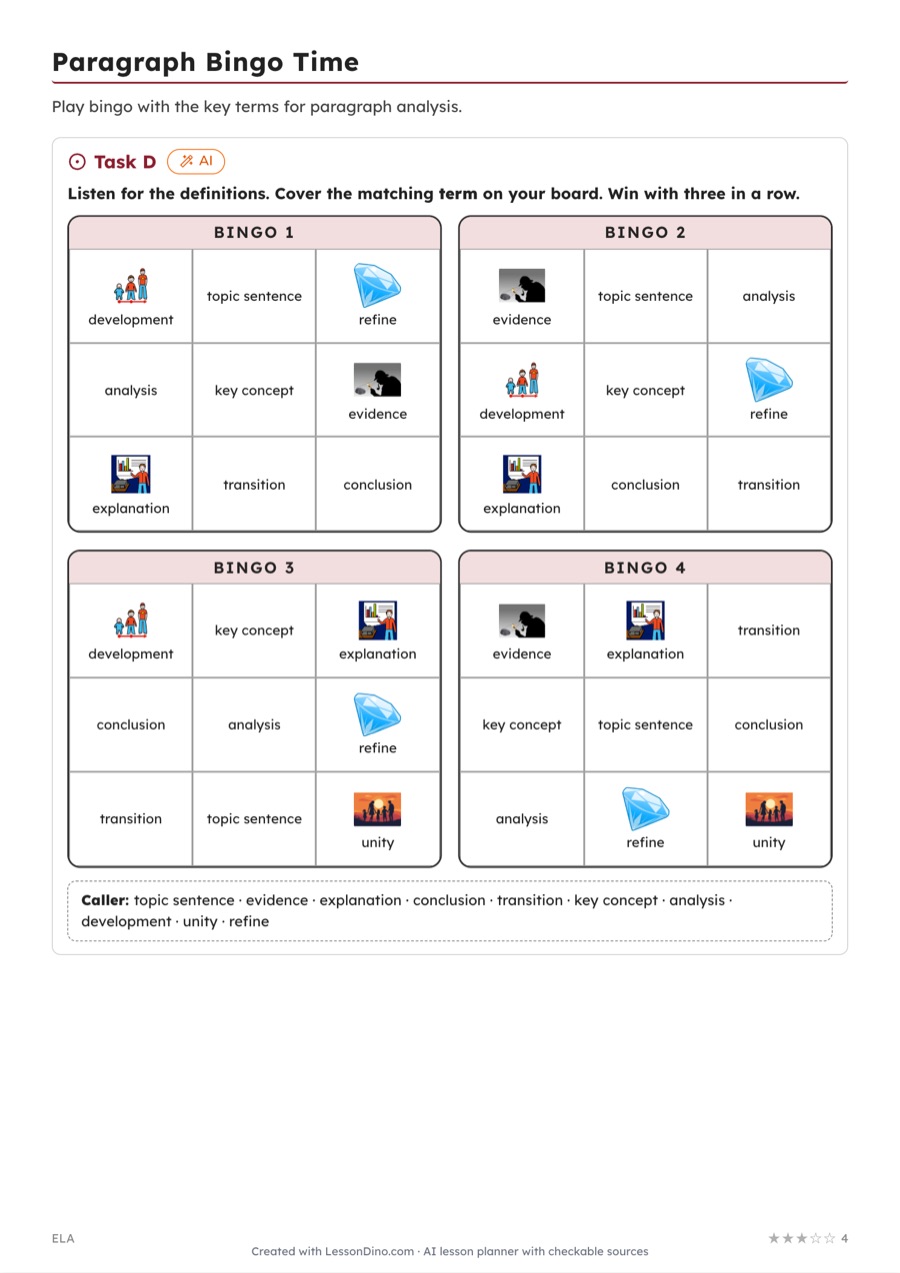
Paragraph Bingo Time
Play bingo with the key terms for paragraph analysis.
Listen for the definitions. Cover the matching term on your board. Win with three in a row.
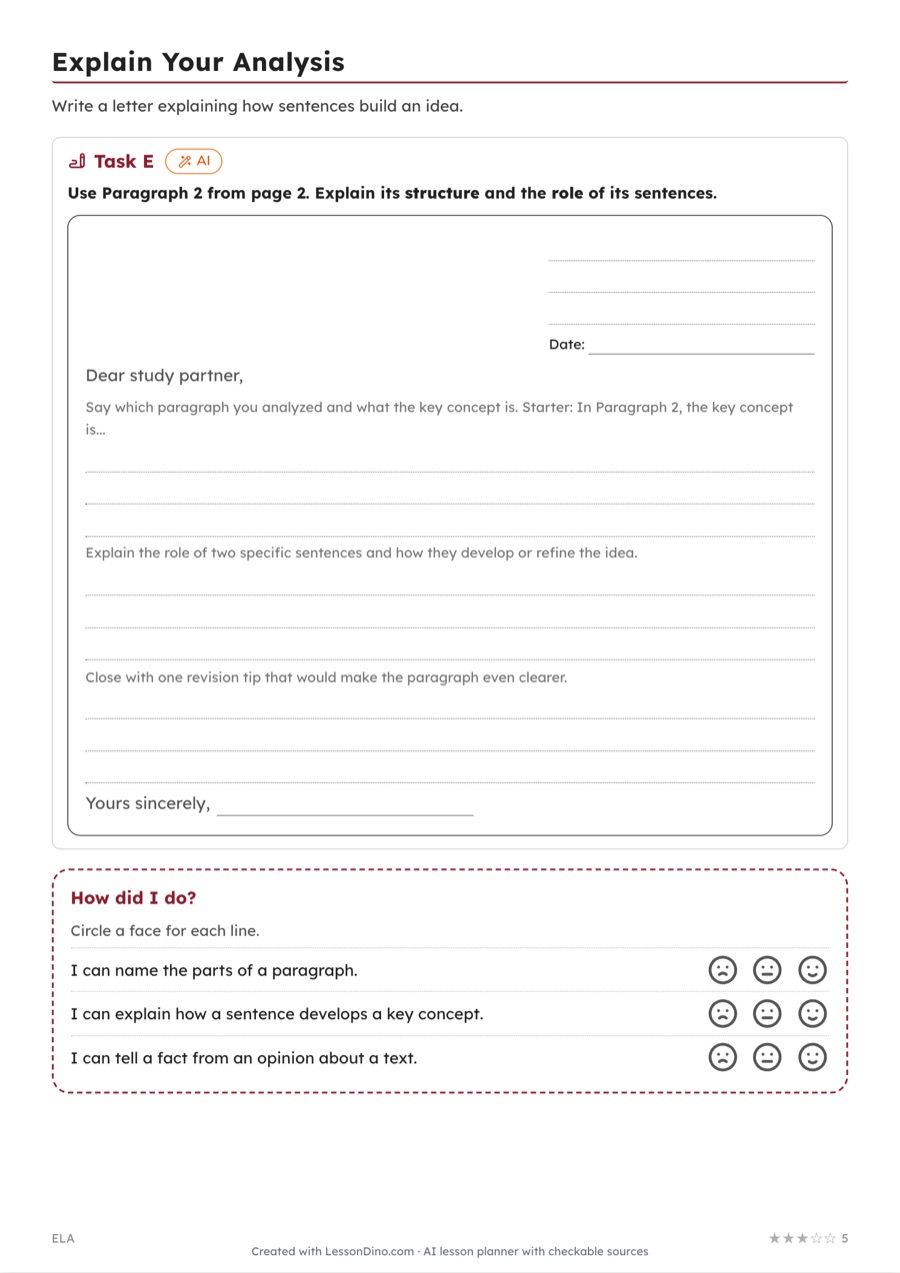
Explain Your Analysis
Write a letter explaining how sentences build an idea.
Use Paragraph 2 from page 2. Explain its structure and the role of its sentences.
Answers
Show the answers
The answers are on the answer sheet, the last picture above.
Curriculum
Analyze in detail the structure of a specific paragraph in a text, including the role of particular sentences in developing and refining a key concept.
Made with Lesson Dino's AI on 17 October 2026. AI can make mistakes, so check the answers and facts against the sources before you teach.