The worksheet
About this worksheet
Students learn how photosynthesis cycles matter and moves energy into life. They sort evidence and write a claim-evidence-reasoning explanation. This Grade 7 Science worksheet gives students (ages 12–13) six pages of practice on photosynthesis, part of the from molecules to organisms: structures and processes unit. It goes with our free Photosynthesis lesson, which has the slides and a timed lesson plan.
What it covers
By the end, students should be able to:
- Students will identify inputs and outputs of photosynthesis using the equation.
- Students will trace how atoms cycle through photosynthesis into sugar and oxygen.
- Students will explain how light energy flows into chemical energy stored in sugar.
How to use it
- Use it for practice after the teaching part of the lesson, once students have seen the worked examples on the slides.
- Support: Pre-filled equation with word bank: carbon dioxide, water, light, glucose, oxygen.
- Stretch: Trace one carbon atom from air into leaf sugar, then into an animal that eats the plant.
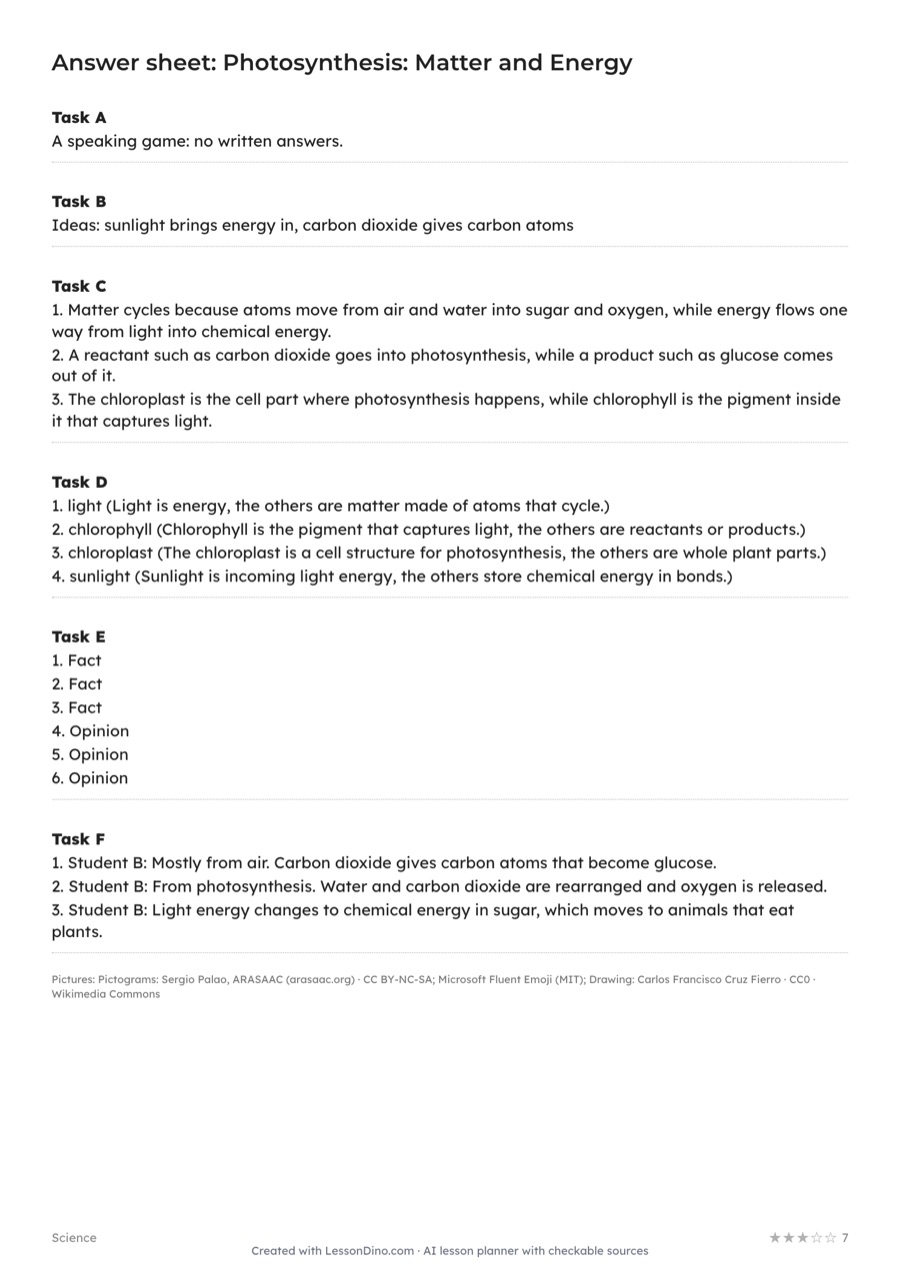
- The answer sheet is the last page, so you can print it on its own or let students check their own work.
Key vocabulary
- photosynthesis: the process where green living things make sugar from water and carbon dioxide using light
- carbon dioxide: a gas in air that plants breathe in and use to build sugar
- glucose: a kind of sugar that stores energy plants can use to grow
- chlorophyll: green coloring inside leaves that catches blue and red light
- chemical energy: energy held in sugar links that living things can later use
Mistakes to watch for
- Thinks plant mass comes from soil being eaten. Weigh idea: soil stays nearly same while carbon dioxide plus water rearrange into sugar plus oxygen, so mass comes from air and water.
- Thinks sunlight is food or becomes an atom in sugar. Show light is energy, not matter: plants harness sunlight into chemical energy stored in sugar made from water and carbon dioxide.
- Thinks oxygen breathed out comes from nowhere or energy cycles like atoms. Trace oxygen atoms from carbon dioxide and water to oxygen gas, and stress energy flows one way from Sun to sugar.
What's on the worksheet
Energy Into Food
See how plants turn light into food and oxygen.
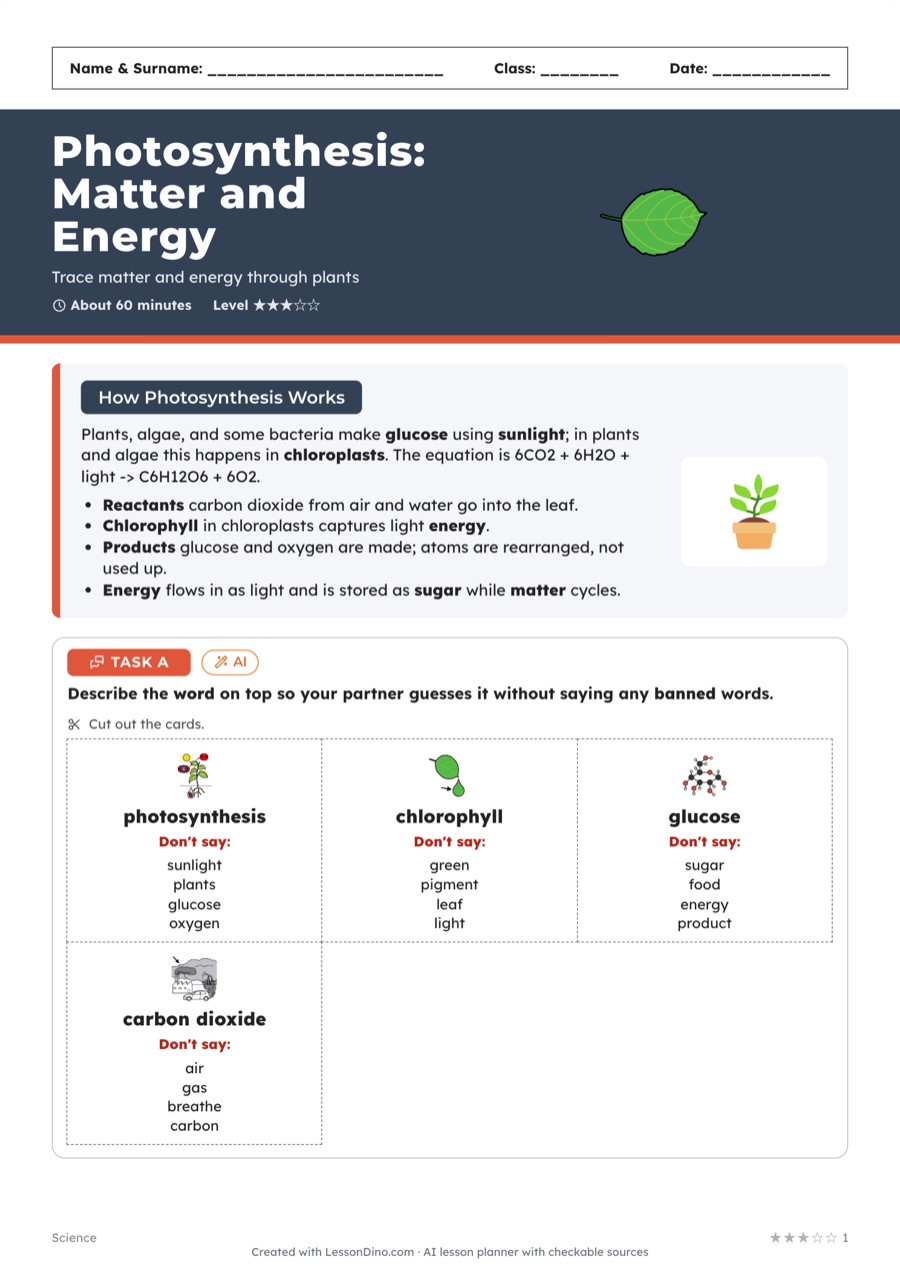
How Photosynthesis Works
- Plants, algae, and some bacteria make glucose using sunlight; in plants and algae this happens in chloroplasts. The equation is 6CO2 + 6H2O + light -> C6H12O6 + 6O2.
- Reactants carbon dioxide from air and water go into the leaf.
- Chlorophyll in chloroplasts captures light energy.
- Products glucose and oxygen are made; atoms are rearranged, not used up.
- Energy flows in as light and is stored as sugar while matter cycles.
Describe the word on top so your partner guesses it without saying any banned words.
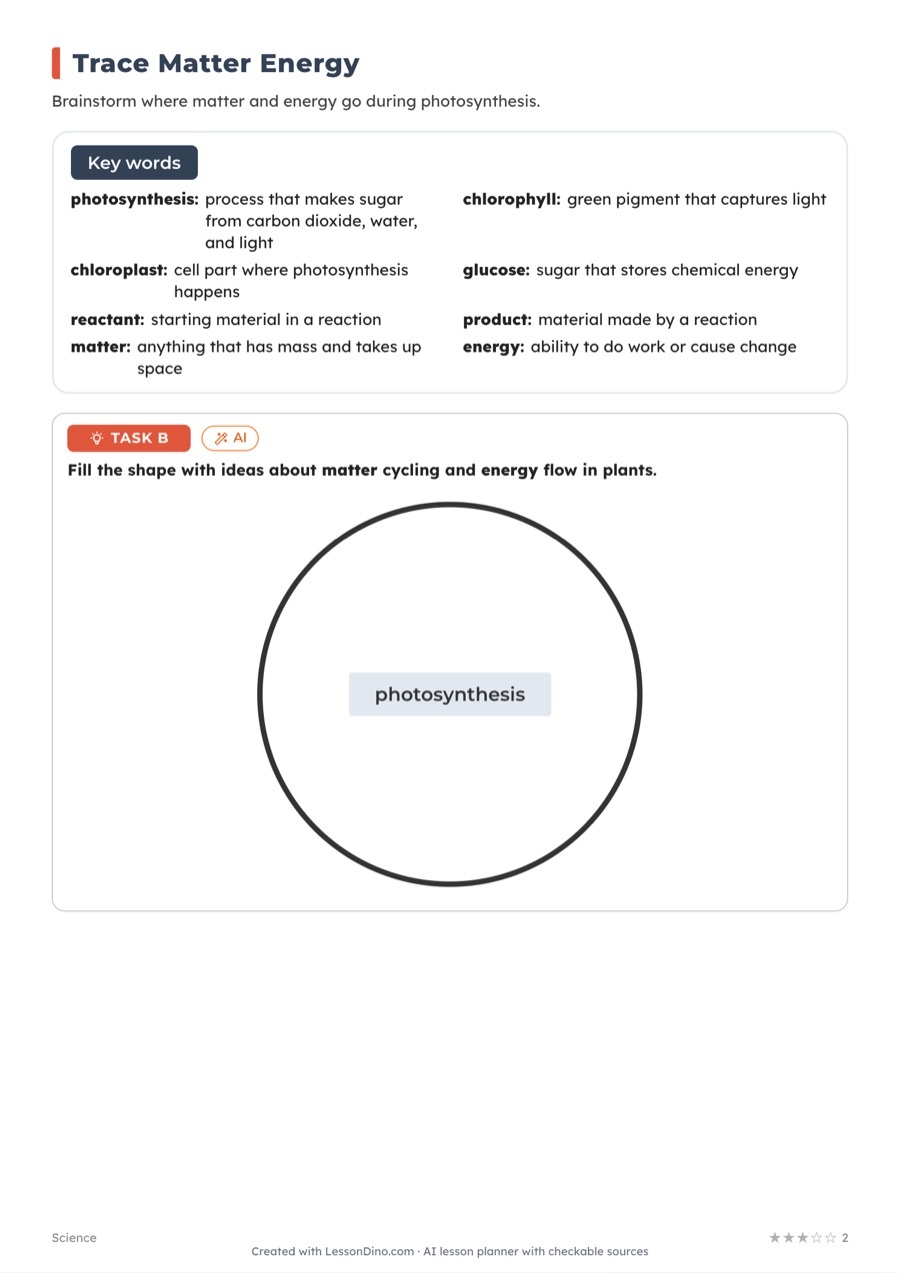
Trace Matter Energy
Brainstorm where matter and energy go during photosynthesis.
| Word | Meaning |
|---|---|
| photosynthesis | process that makes sugar from carbon dioxide, water, and light |
| chlorophyll | green pigment that captures light |
| chloroplast | cell part where photosynthesis happens |
| glucose | sugar that stores chemical energy |
| reactant | starting material in a reaction |
| product | material made by a reaction |
| matter | anything that has mass and takes up space |
| energy | ability to do work or cause change |
Fill the shape with ideas about matter cycling and energy flow in plants.
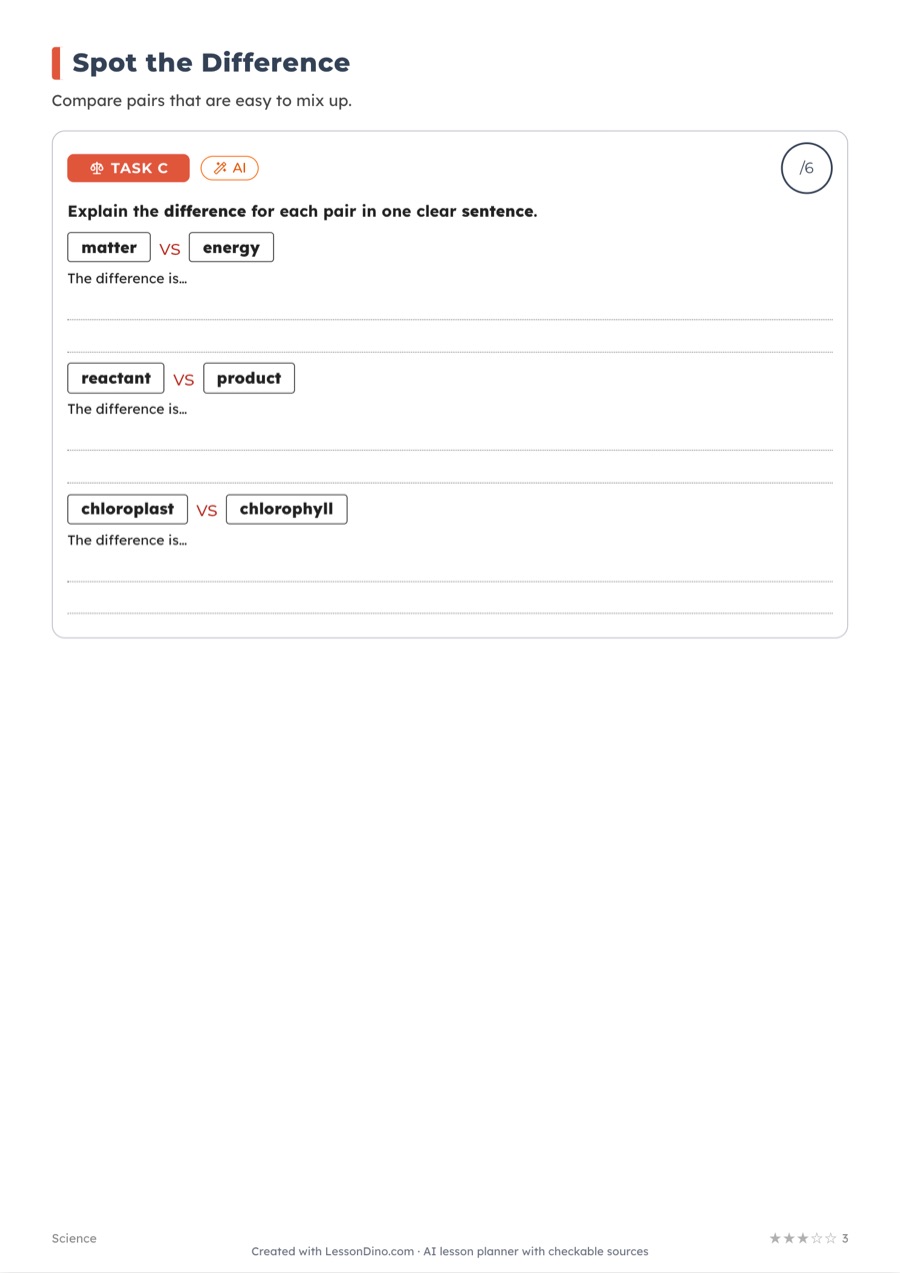
Spot the Difference
Compare pairs that are easy to mix up.
Explain the difference for each pair in one clear sentence.
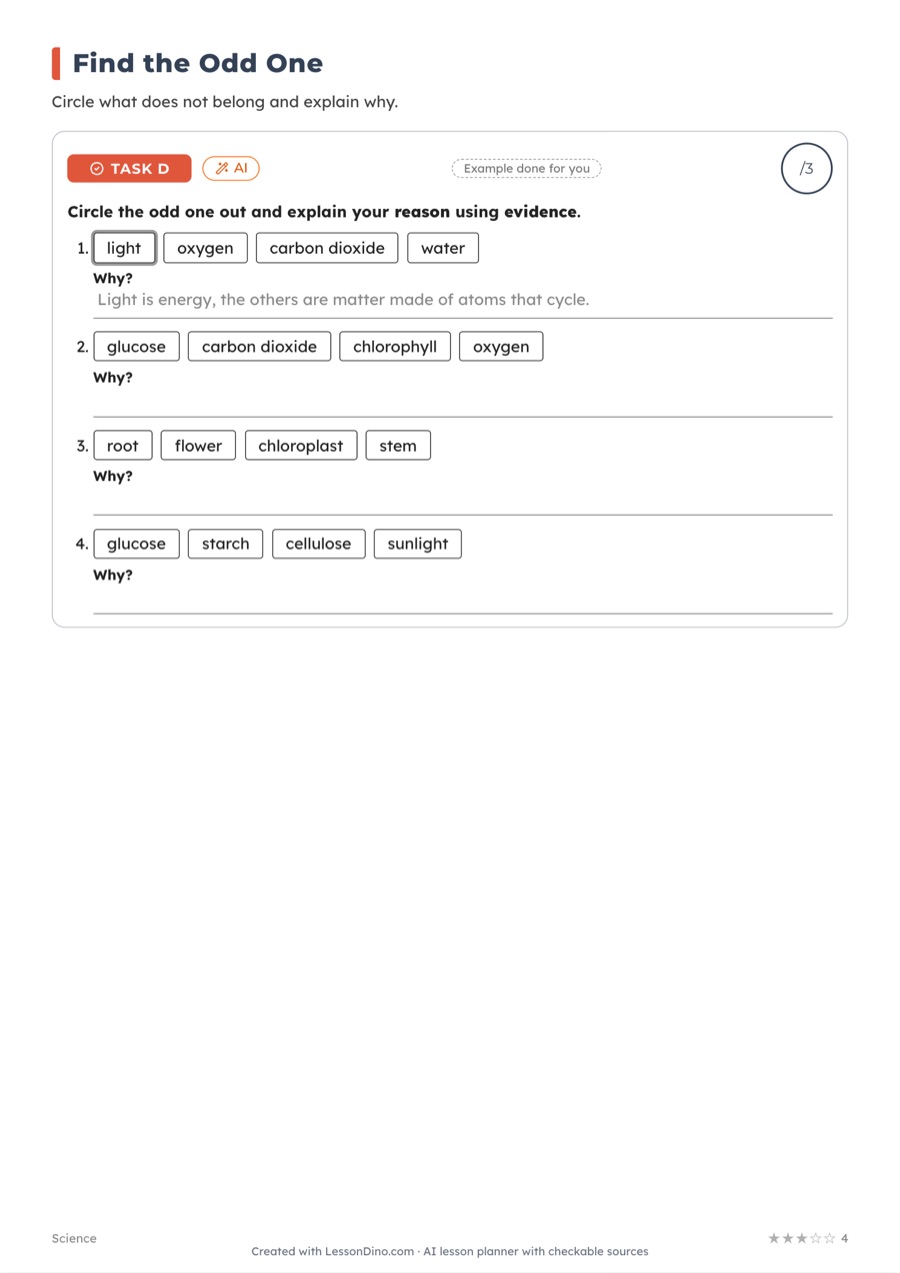
Find the Odd One
Circle what does not belong and explain why.
Circle the odd one out and explain your reason using evidence.
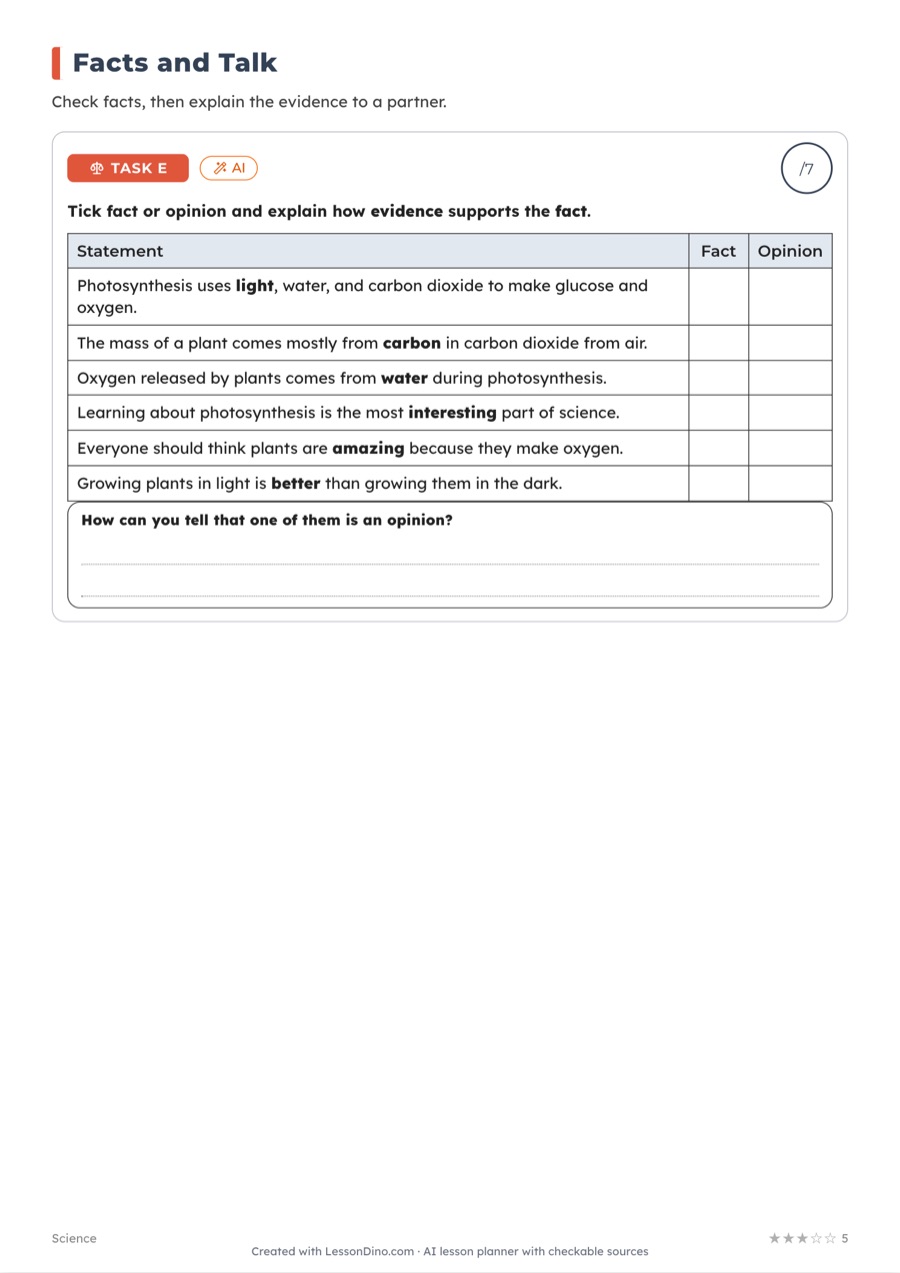
Facts and Talk
Check facts, then explain the evidence to a partner.
Tick fact or opinion and explain how evidence supports the fact.
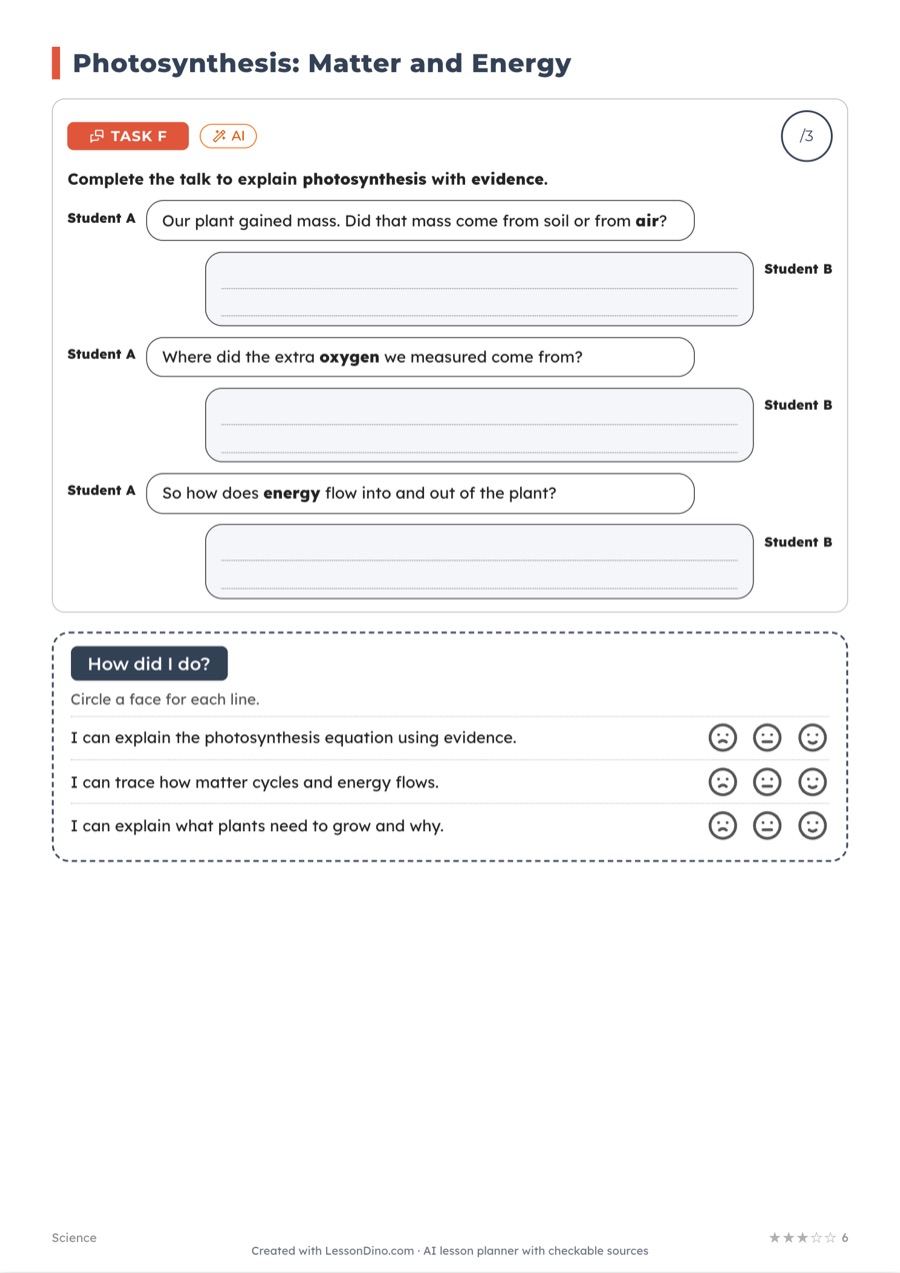
Page 6
Complete the talk to explain photosynthesis with evidence.
Answers
Show the answers
The answers are on the answer sheet, the last picture above.
Curriculum
Construct a scientific explanation based on evidence for the role of photosynthesis in the cycling of matter and flow of energy into and out of organisms.
Made with Lesson Dino's AI on 16 October 2026. AI can make mistakes, so check the answers and facts against the sources before you teach.