The worksheet
About this worksheet
Students learn four kinds of picture words and how word strength changes meaning. They sort, act, and write wild lines about a school day. This Grade 5 ELA worksheet gives students (ages 10–11) six pages of practice on figurative language, part of the language unit. It goes with our free Figurative language lesson, which has the slides and a timed lesson plan.
What it covers
By the end, students should be able to:
- Students will identify simile, metaphor, personification, and hyperbole in sentences.
- Students will explain the real meaning of figurative phrases in plain words.
- Students will order close words by strength to show small differences in meaning.
How to use it
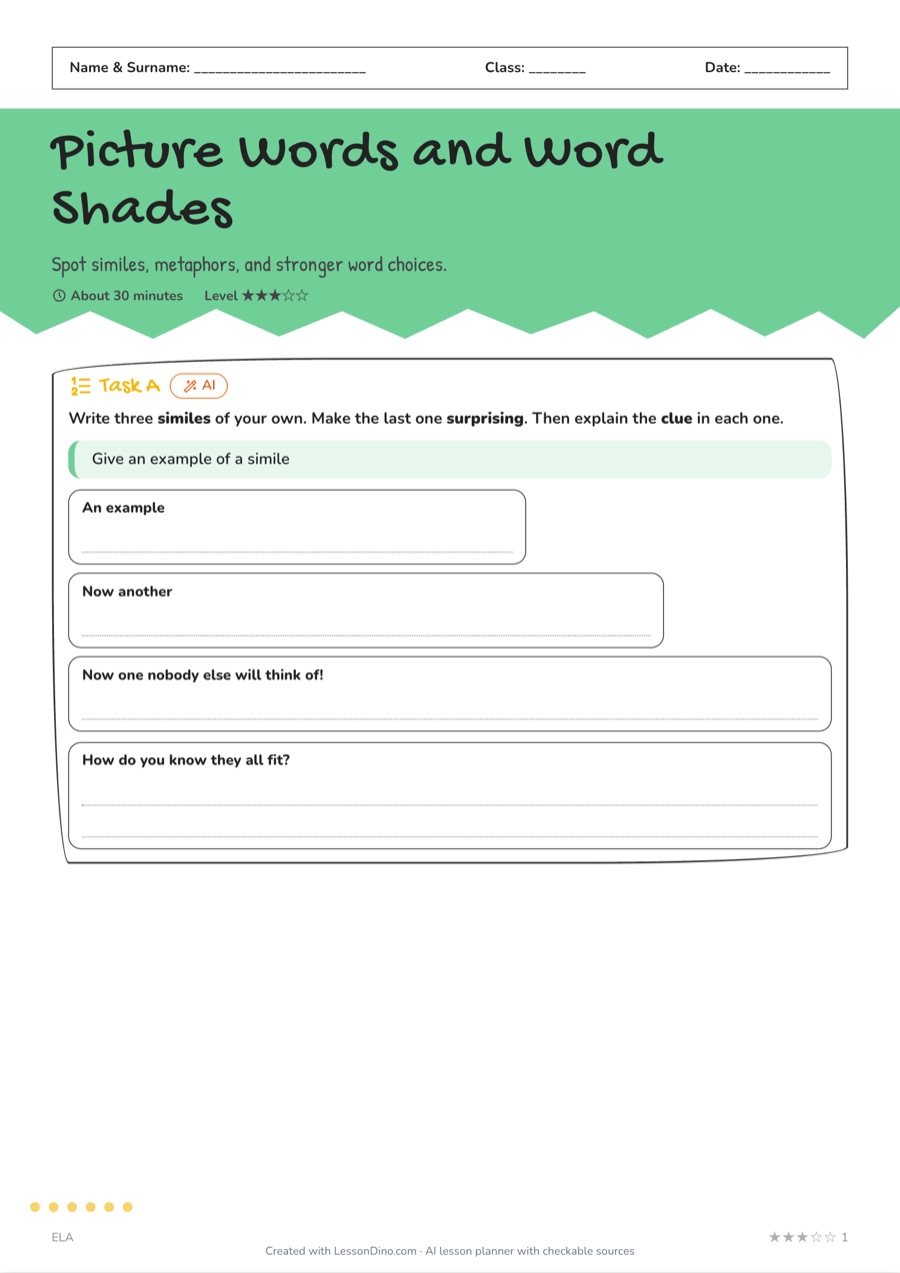
- Word shades and writing (15 minutes): Hand out Worksheet Task A and remind pairs to explain the clue in each simile.
- Support: Clue cards with tests for like, as, is, human action, and big exaggeration.
- Stretch: Rewrite each simile as a metaphor and each metaphor as a simile.
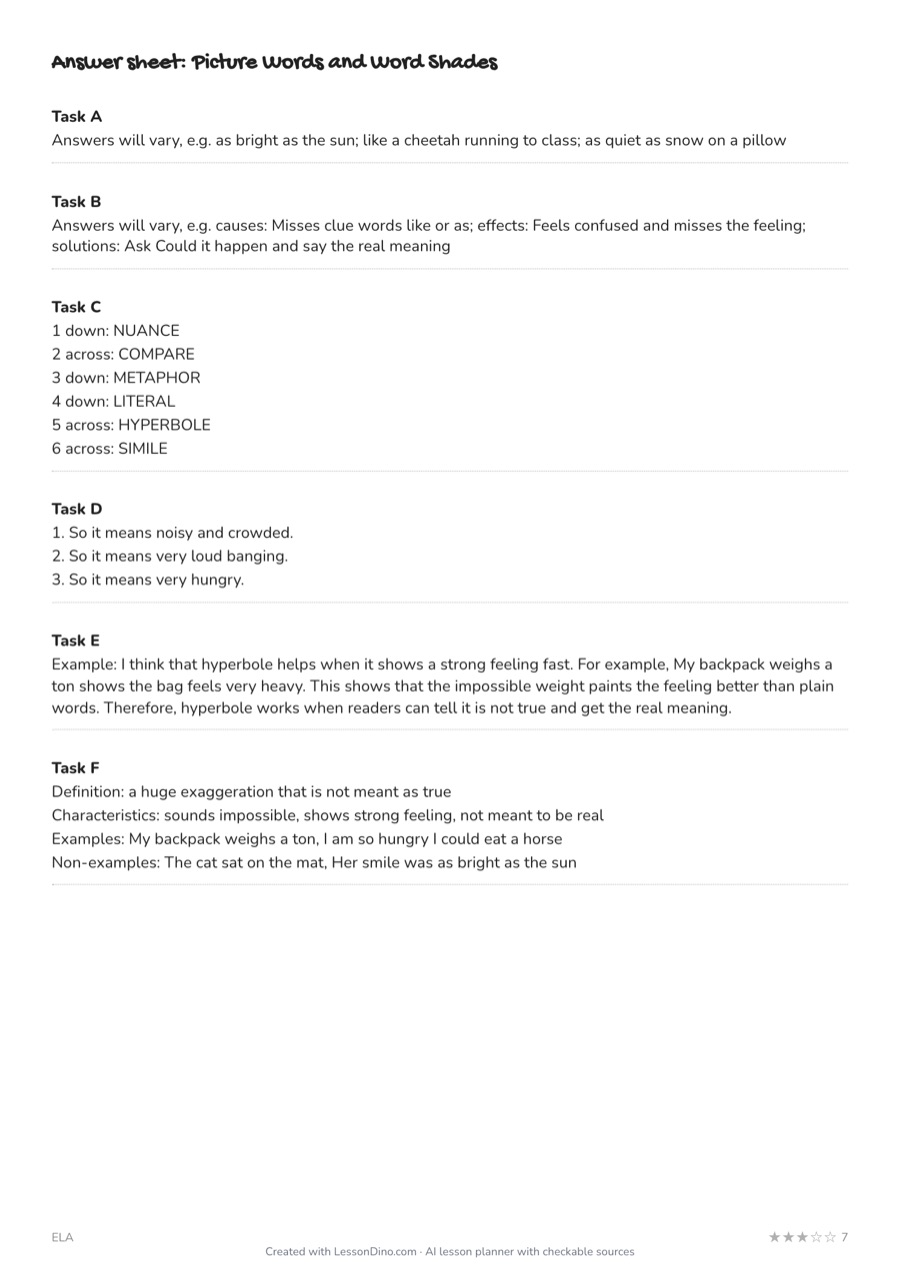
- The answer sheet is the last page, so you can print it on its own or let students check their own work.
Key vocabulary
- simile: a comparison that uses like or as to link two different things
- metaphor: saying one thing is another thing to show they are alike
- personification: giving human actions or feelings to a thing or animal
- hyperbole: a very big exaggeration that is not true and adds feeling
- literal: words that mean exactly what they say with no hidden picture
- nuance: a small change in strength or feeling between close words
Mistakes to watch for
- Calling any comparison a simile, even without like or as. Use the like-or-as test: a simile compares with like or as, a metaphor says one thing is another.
- Taking hyperbole as true fact. Ask Could this really happen? Hyperbole is not meant to be taken literally, it means very heavy.
- Thinking personification means the thing really became a person. Explain personification treats a thing as if it were a person to connect feelings, the clock sounded loud and harsh.
What's on the worksheet
Words That Paint
Learn four picture-word types and give examples.
Write three similes of your own. Make the last one surprising. Then explain the clue in each one.
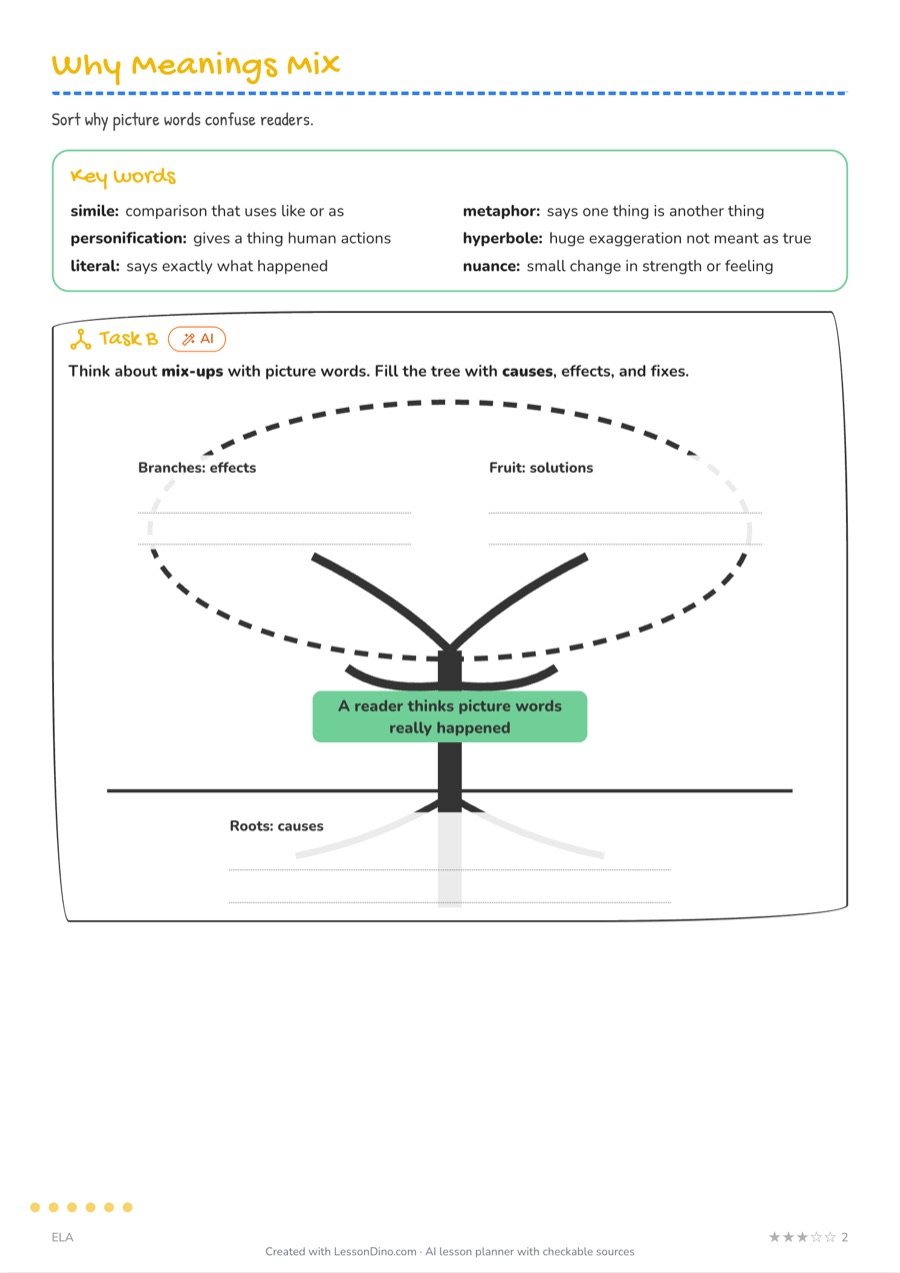
Why Meanings Mix
Sort why picture words confuse readers.
| Word | Meaning |
|---|---|
| simile | comparison that uses like or as |
| metaphor | says one thing is another thing |
| personification | gives a thing human actions |
| hyperbole | huge exaggeration not meant as true |
| literal | says exactly what happened |
| nuance | small change in strength or feeling |
Think about mix-ups with picture words. Fill the tree with causes, effects, and fixes.
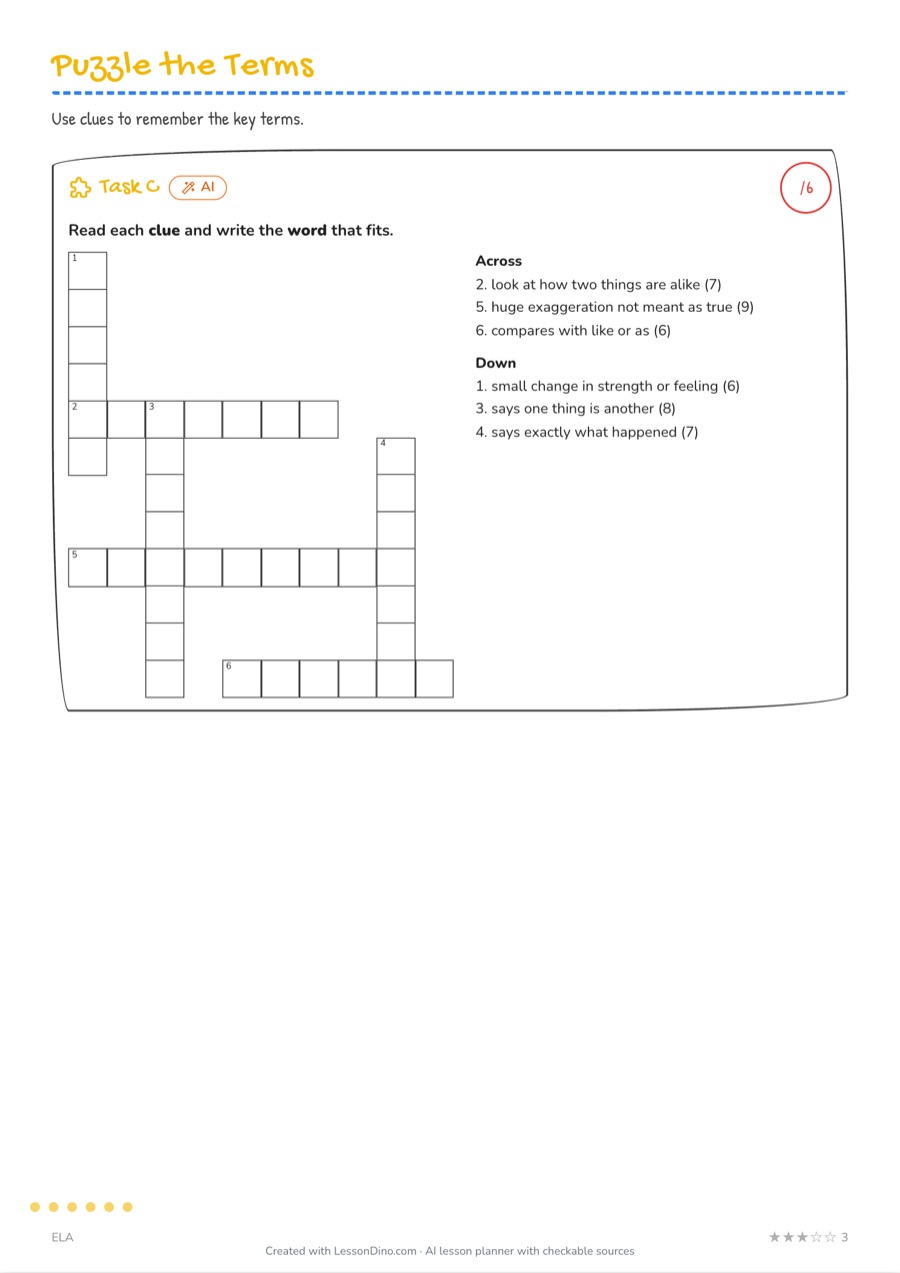
Puzzle the Terms
Use clues to remember the key terms.
Read each clue and write the word that fits.
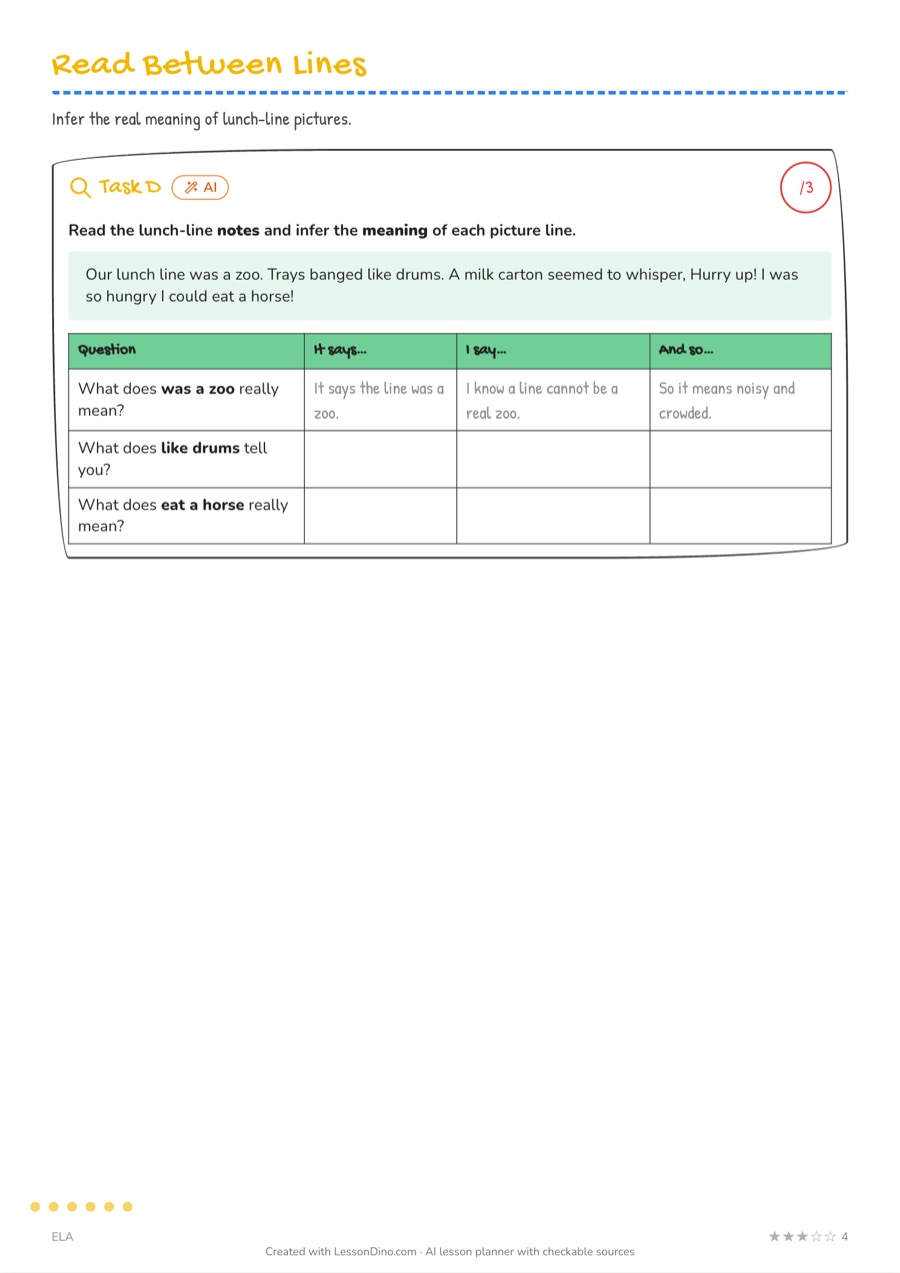
Read Between Lines
Infer the real meaning of lunch-line pictures.
Read the lunch-line notes and infer the meaning of each picture line.
- Our lunch line was a zoo. Trays banged like drums. A milk carton seemed to whisper, Hurry up! I was so hungry I could eat a horse!
- What does was a zoo really mean?
- What does like drums tell you?
- What does eat a horse really mean?
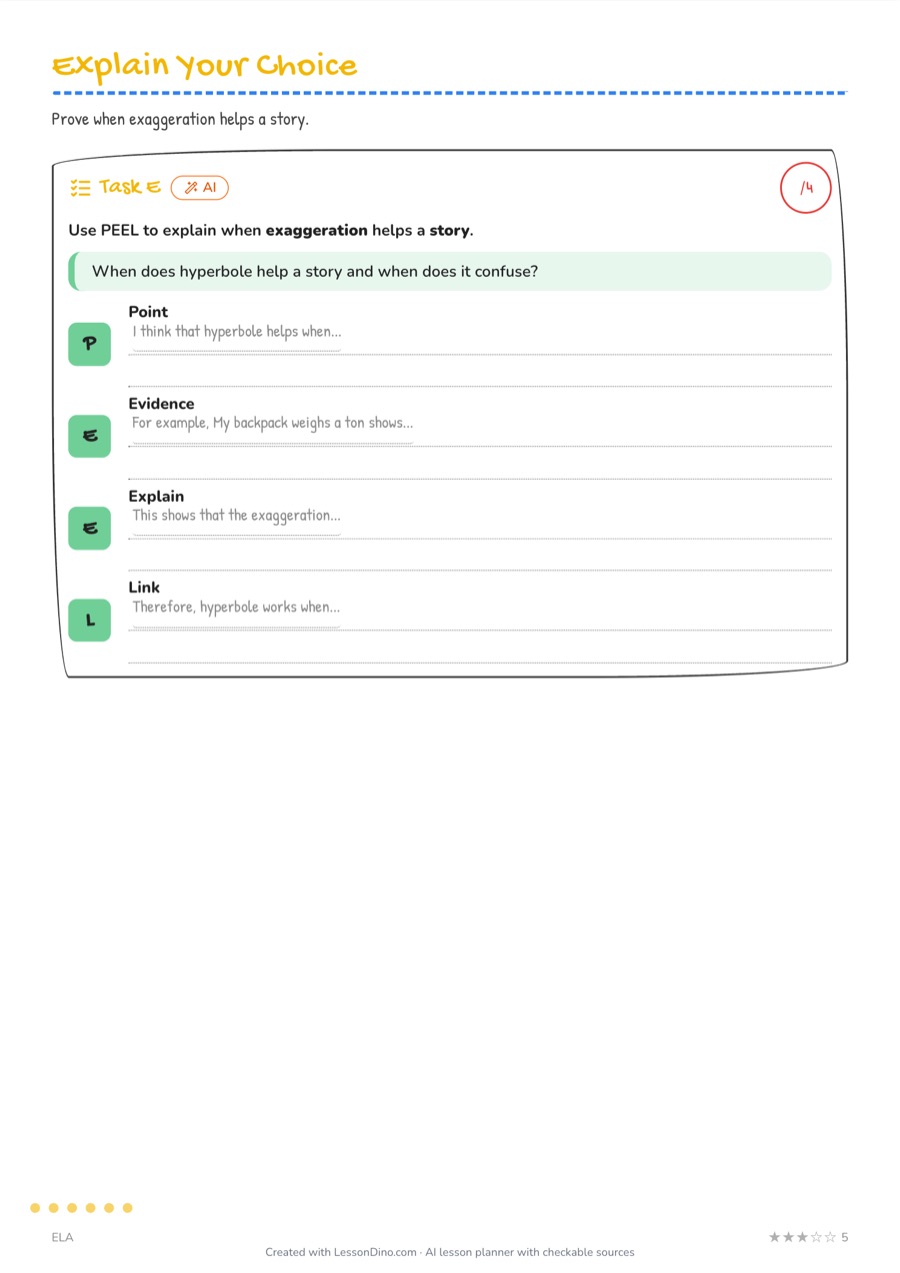
Explain Your Choice
Prove when exaggeration helps a story.
Use PEEL to explain when exaggeration helps a story.
Page 6
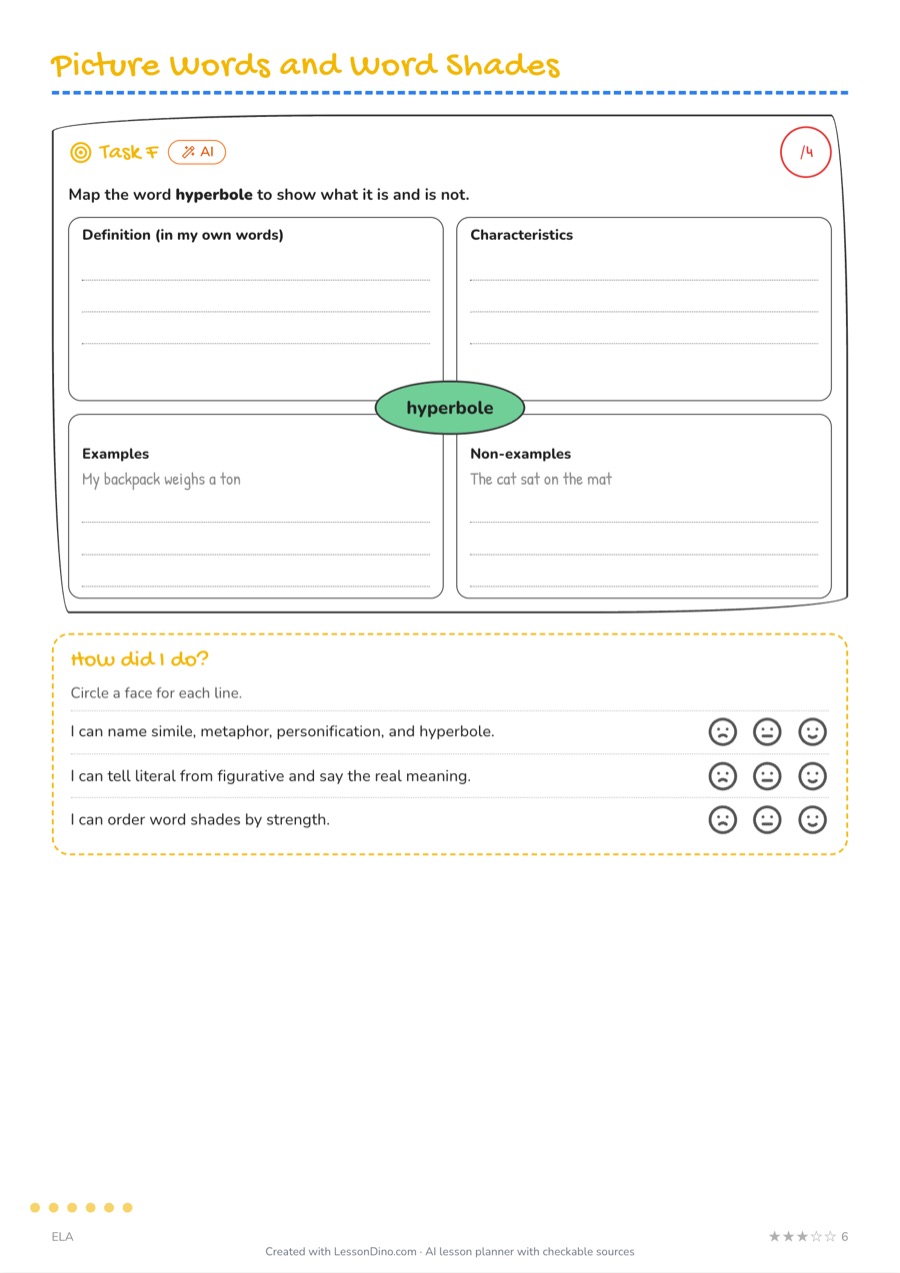
Map the word hyperbole to show what it is and is not.
Answers
Show the answers
The answers are on the answer sheet, the last picture above.
Curriculum
Demonstrate understanding of figurative language, word relationships, and nuances in word meanings.
Made with Lesson Dino's AI on 17 October 2026. AI can make mistakes, so check the answers and facts against the sources before you teach.