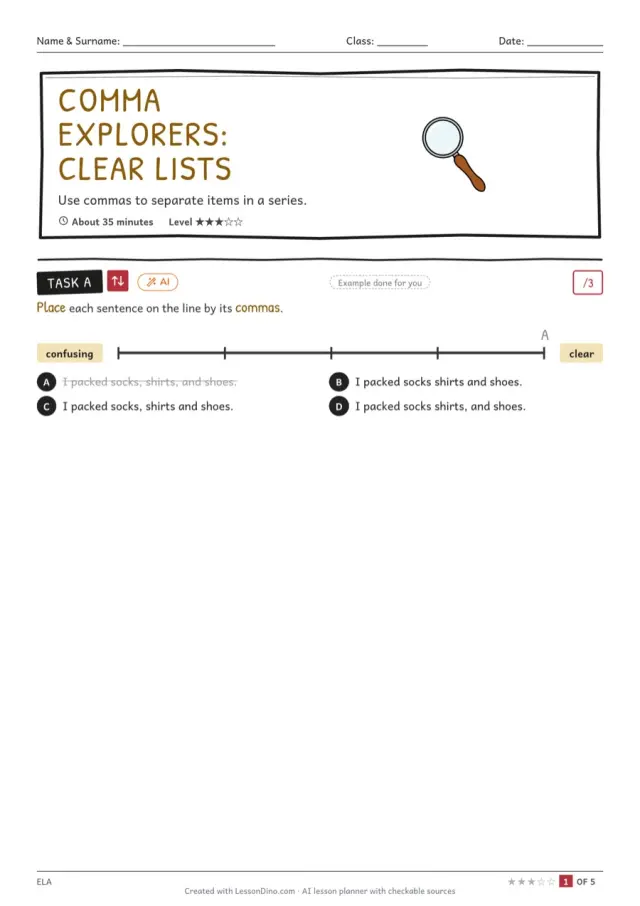
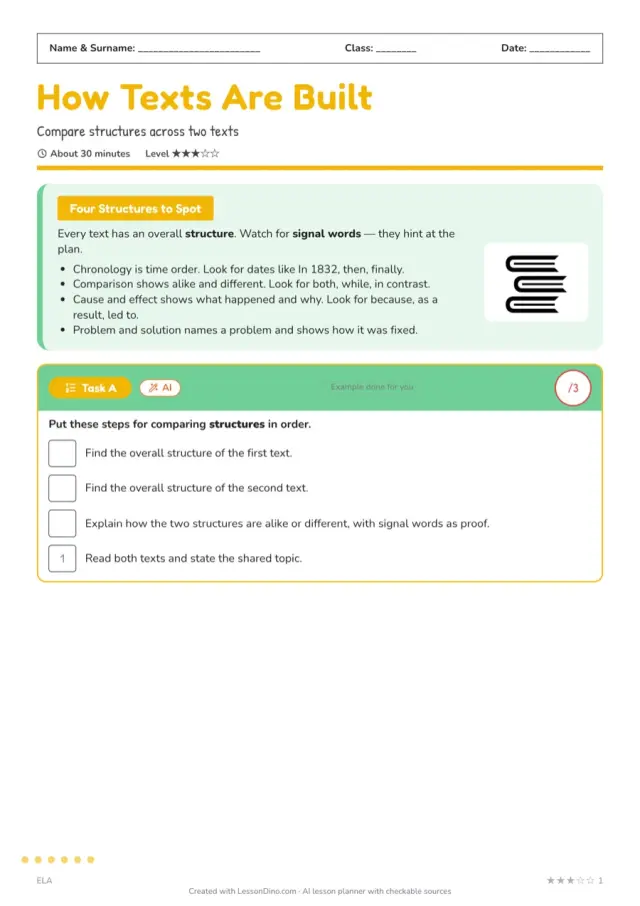
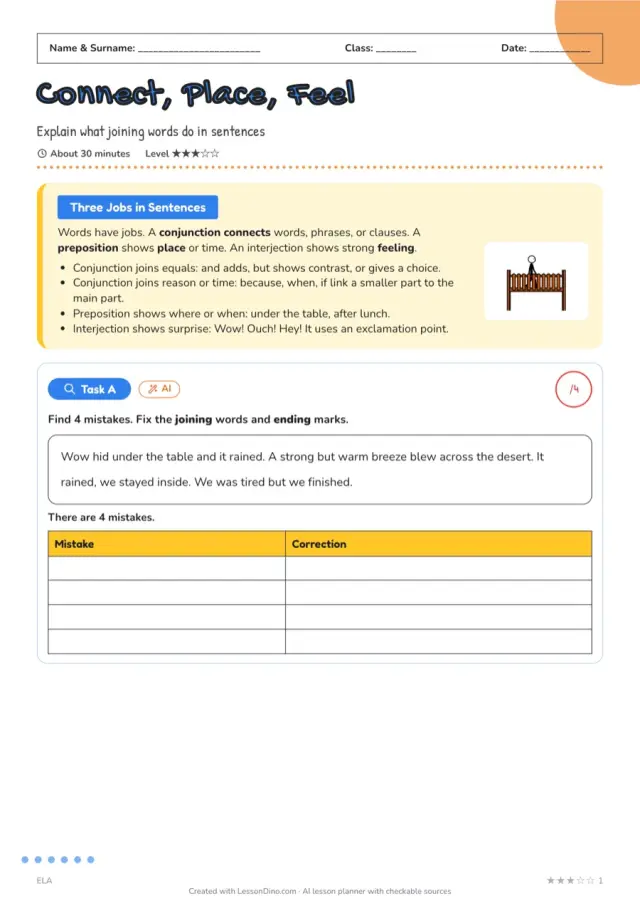
The worksheet
About this worksheet
Students learn how two mysteries handle the same theme in different ways. They compare two stories with a Venn diagram and explain the difference. This Grade 5 ELA worksheet gives students (ages 10–11) five pages of practice on comparing stories in the same genre, part of the reading literature unit. It goes with our free Comparing stories in the same genre lesson, which has the slides and a timed lesson plan.
What it covers
By the end, students should be able to:
- Students will name mystery genre clues and find the shared theme.
- Students will compare how two mysteries treat curiosity and bravery.
- Students will explain different approaches using details from both stories.
How to use it
- Use it for practice after the teaching part of the lesson, once students have seen the worked examples on the slides.
- Support: Provide a partially filled Venn with one example already in each section.
- Stretch: Have students add topic words of their own in the overlap, like teamwork or honesty.
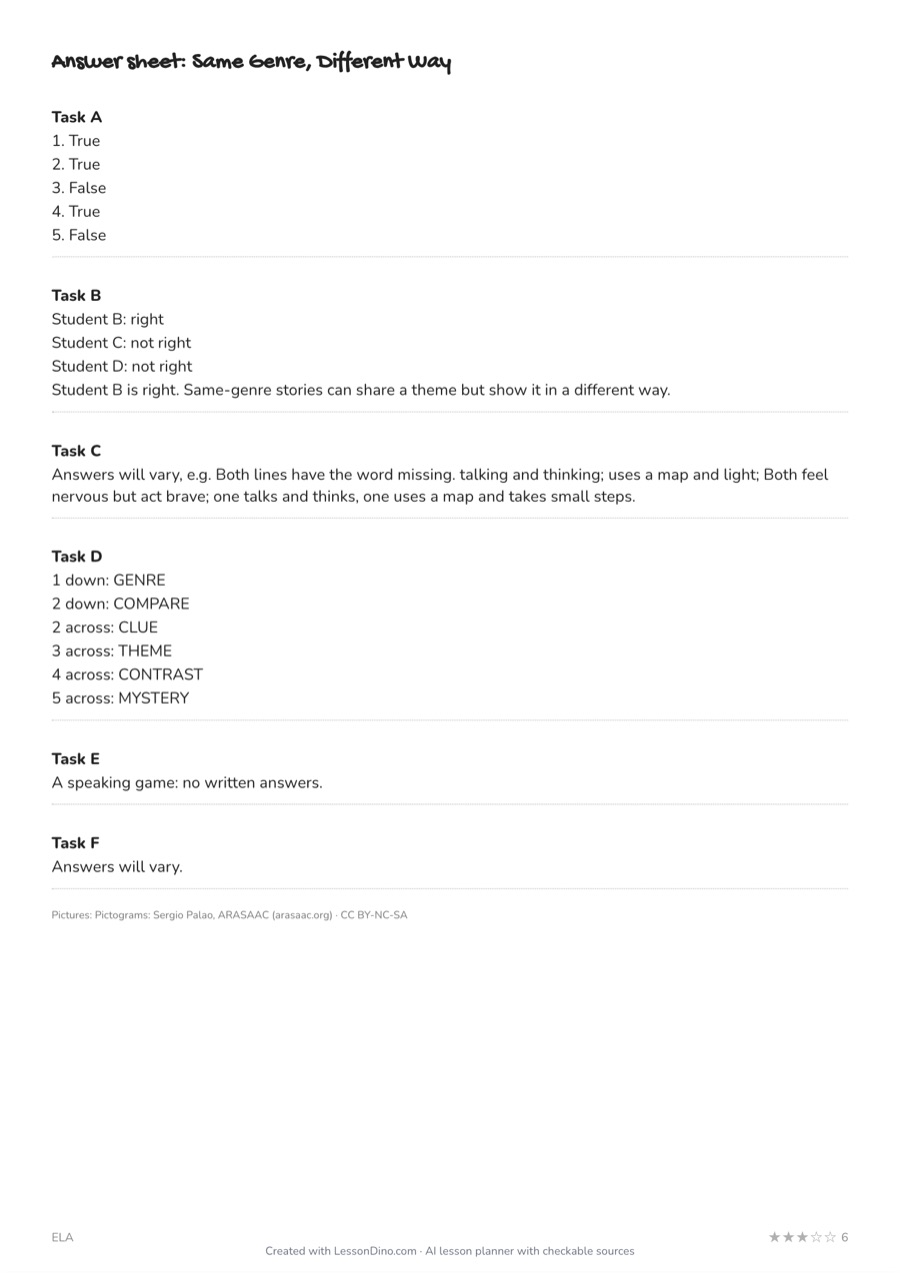
- The answer sheet is the last page, so you can print it on its own or let students check their own work.
Key vocabulary
- genre: a type of story, like mystery or adventure
- theme: the big idea inside a story, like being brave or curious
- clue: a small fact that helps solve a puzzle in a mystery
- compare: to tell how two things are the same
- contrast: to tell how two things are not the same
Mistakes to watch for
- Thinking same genre means same events or ending. Restate that two stories often share themes but each writer treats them differently; check Slide 12 false line.
- Naming topic instead of theme treatment. Ask how: by asking and thinking versus by small brave steps with map and light, using paragraphs 2 and 4.
- Mixing genres, calling garage story fantasy. Remind that a mystery will have clues and a detective while fantasy has magic and new worlds; map here is a normal keepsake.
What's on the worksheet
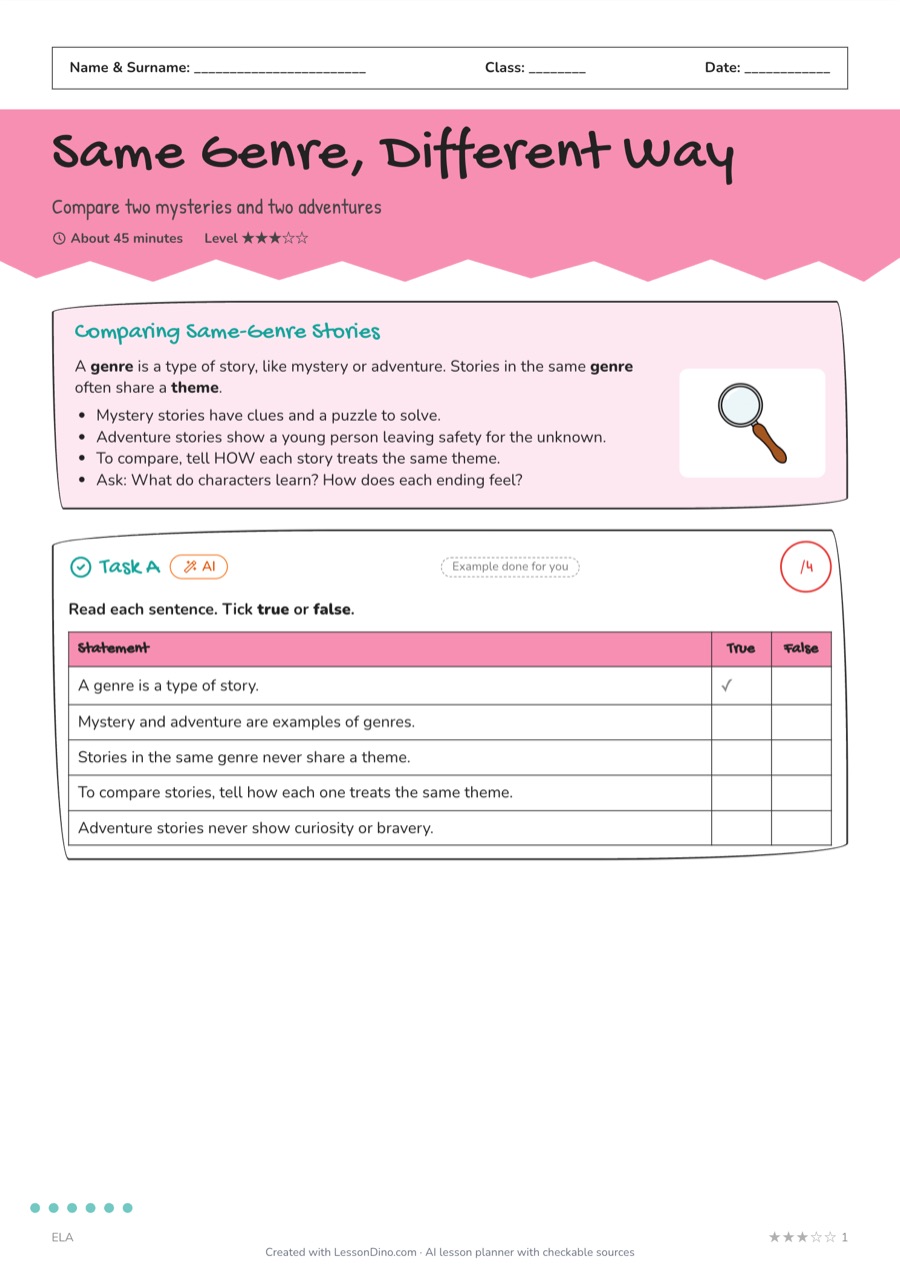
Mystery Genre Basics
Learn what it means to compare stories in the same genre.
Comparing Same-Genre Stories
- A genre is a type of story, like mystery or adventure. Stories in the same genre often share a theme.
- Mystery stories have clues and a puzzle to solve.
- Adventure stories show a young person leaving safety for the unknown.
- To compare, tell HOW each story treats the same theme.
- Ask: What do characters learn? How does each ending feel?
Read each sentence. Tick true or false.
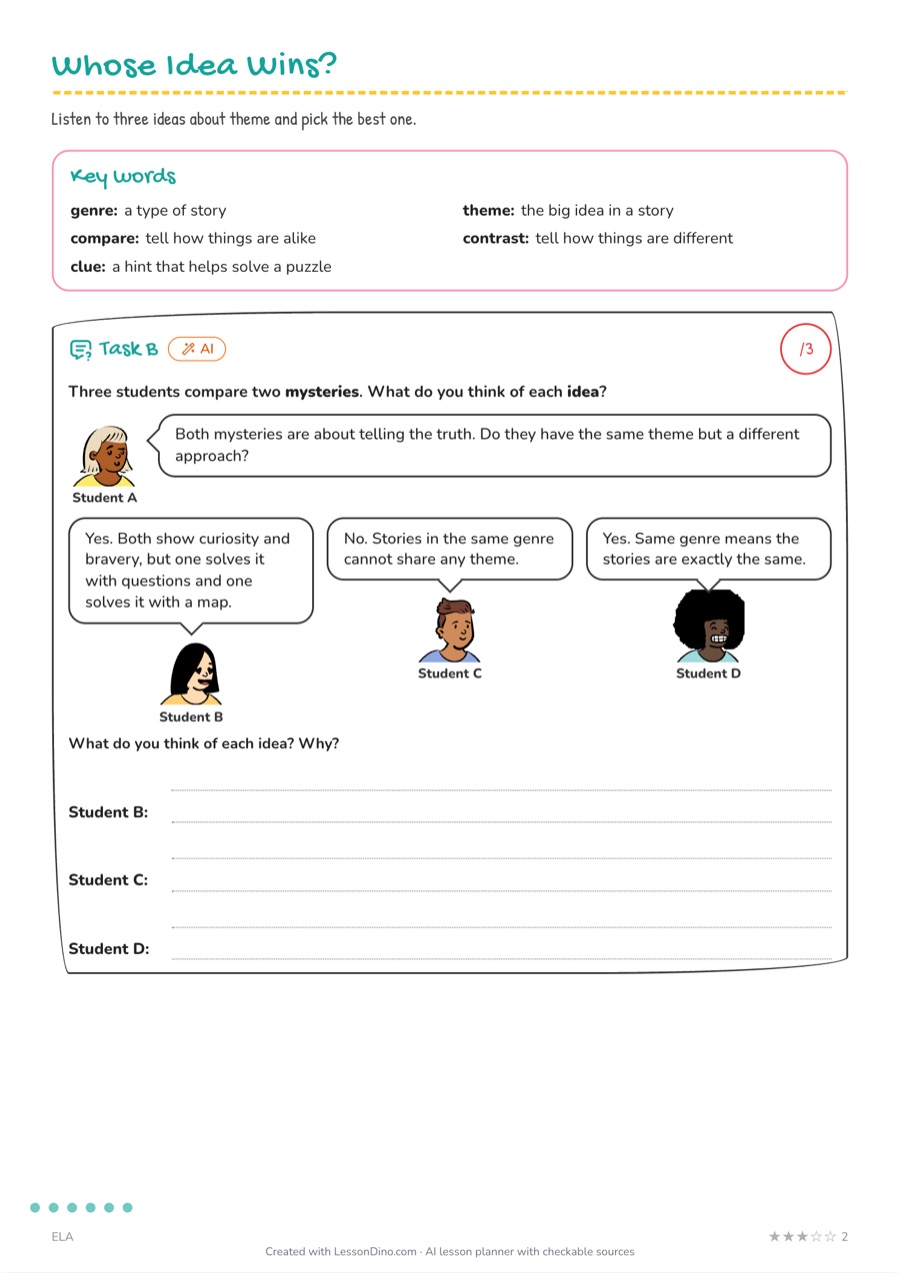
Whose Idea Wins?
Listen to three ideas about theme and pick the best one.
| Word | Meaning |
|---|---|
| genre | a type of story |
| theme | the big idea in a story |
| compare | tell how things are alike |
| contrast | tell how things are different |
| clue | a hint that helps solve a puzzle |
Three students compare two mysteries. What do you think of each idea?
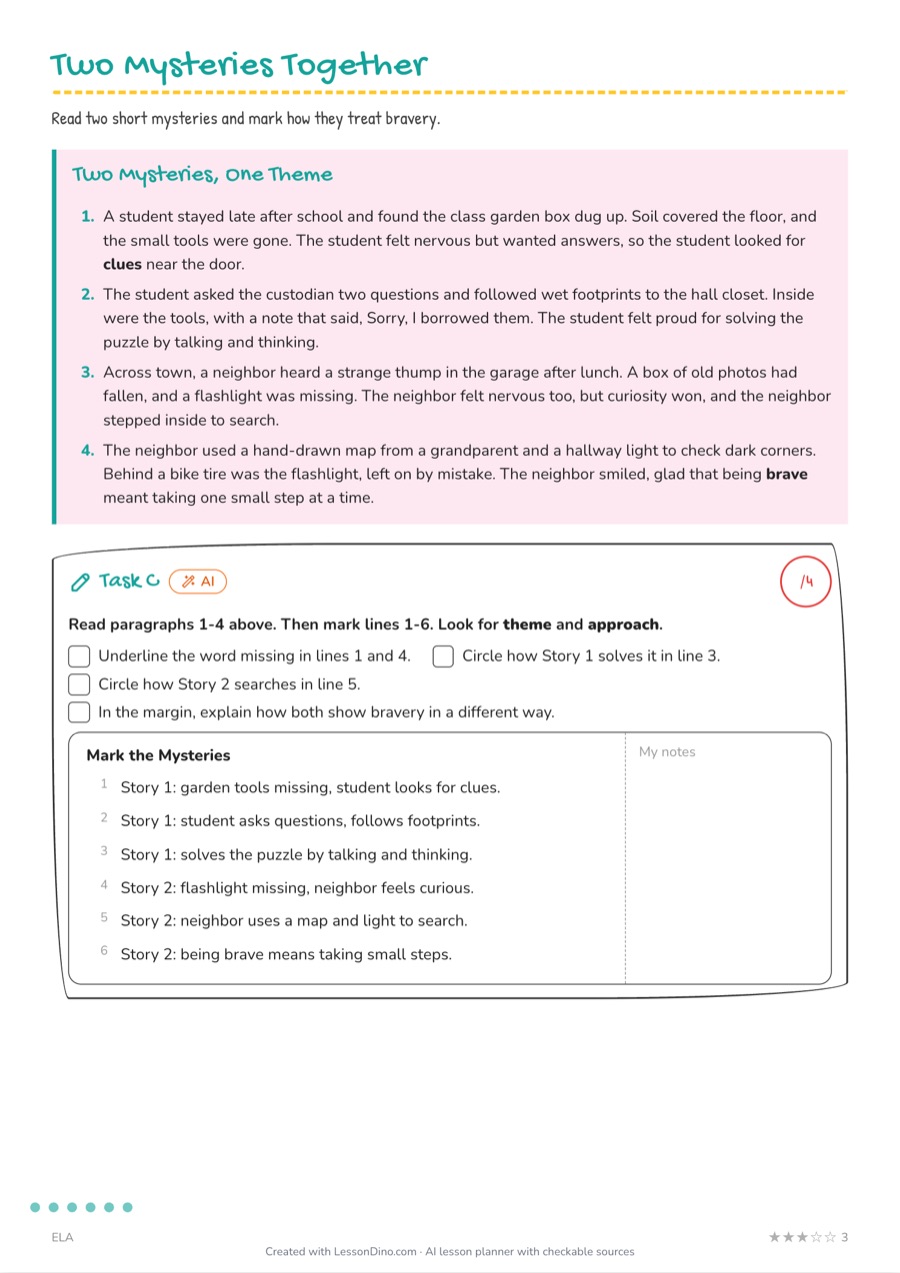
Two Mysteries Together
Read two short mysteries and mark how they treat bravery.
Two Mysteries, One Theme
Read paragraphs 1-4 above. Then mark lines 1-6. Look for theme and approach.
- Story 1: garden tools missing, student looks for clues.
- Story 1: student asks questions, follows footprints.
- Story 1: solves the puzzle by talking and thinking.
- Story 2: flashlight missing, neighbor feels curious.
- Story 2: neighbor uses a map and light to search.
- Story 2: being brave means taking small steps.
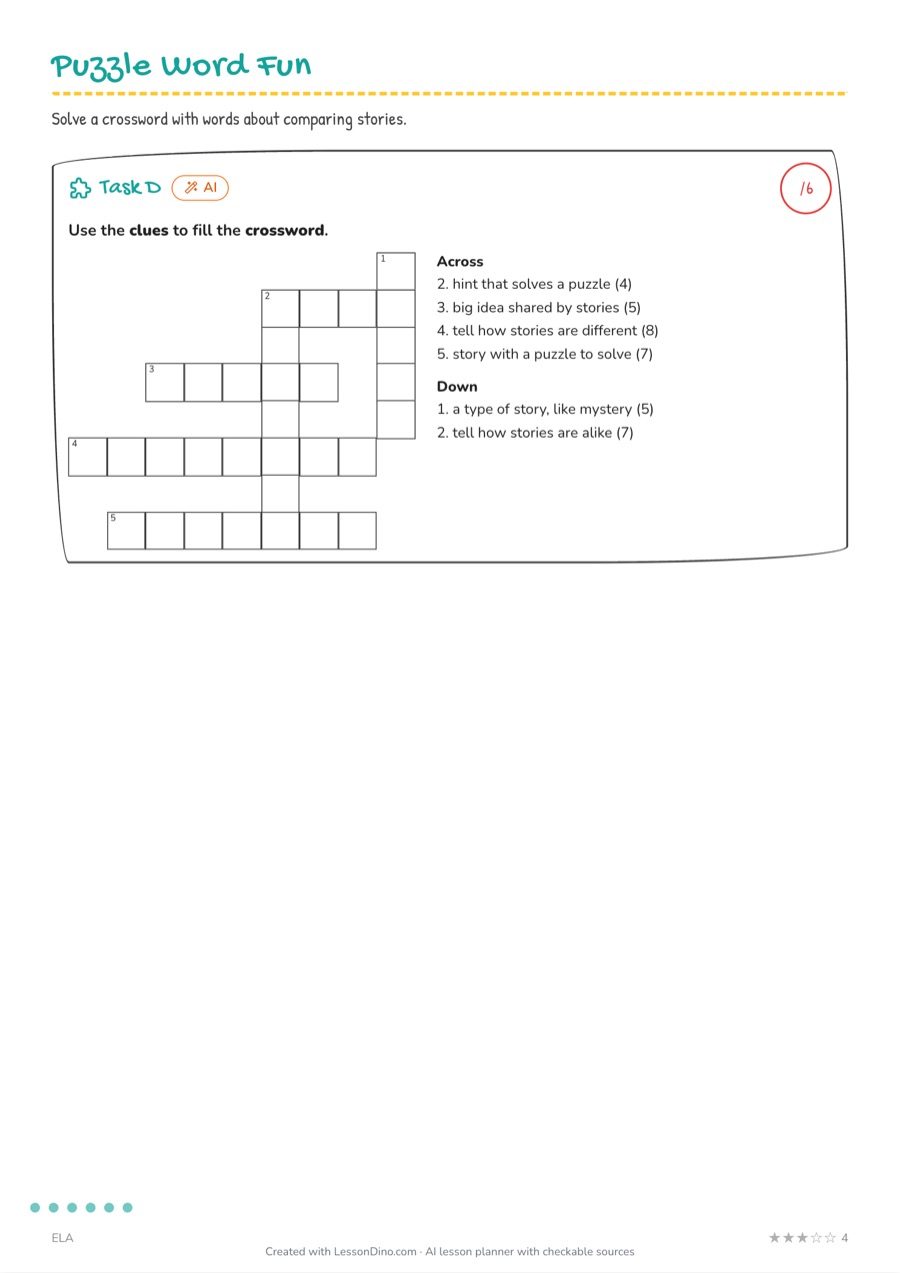
Puzzle Word Fun
Solve a crossword with words about comparing stories.
Use the clues to fill the crossword.
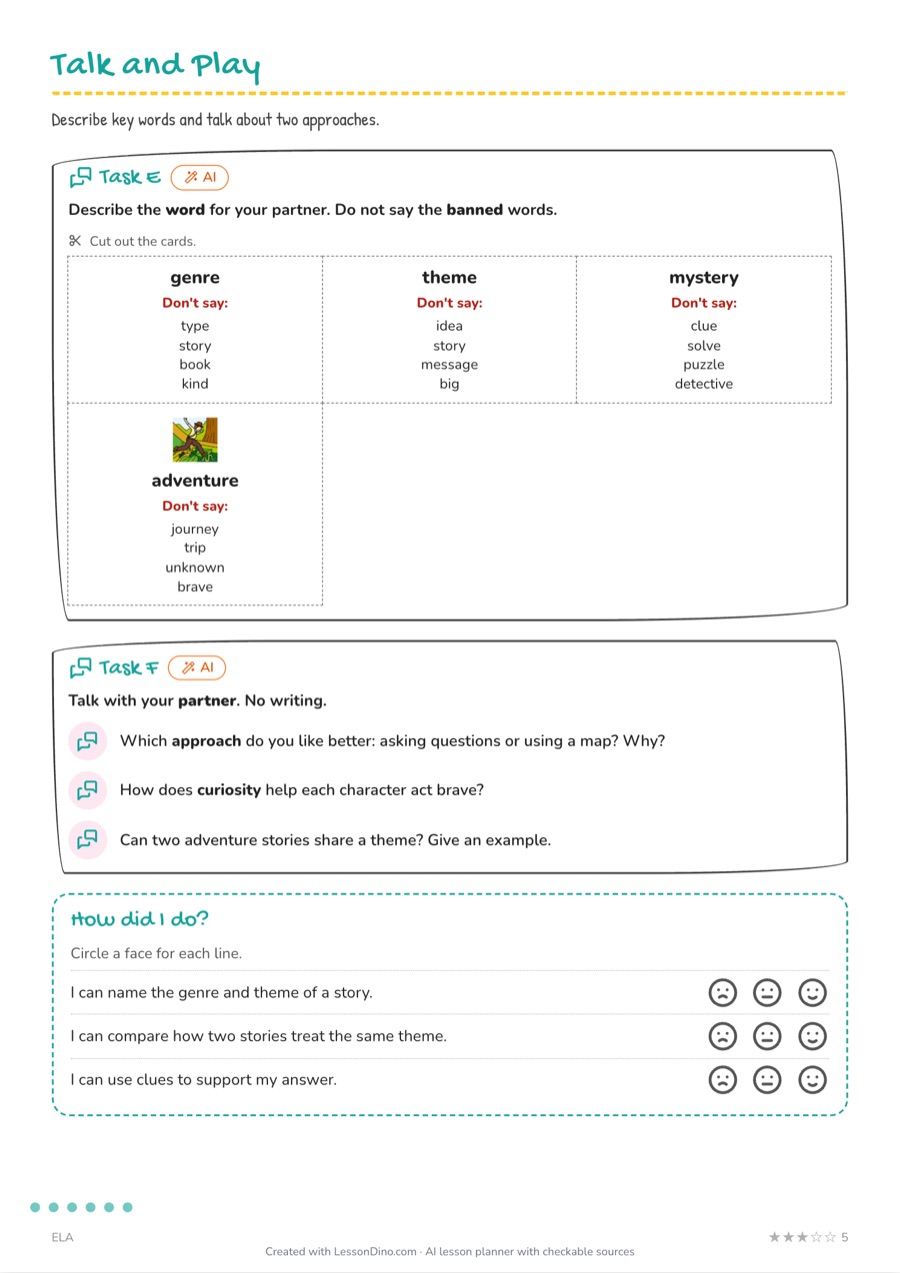
Talk and Play
Describe key words and talk about two approaches.
Describe the word for your partner. Do not say the banned words.
Talk with your partner. No writing.
- Which approach do you like better: asking questions or using a map? Why?
- How does curiosity help each character act brave?
- Can two adventure stories share a theme? Give an example.
Answers
Show the answers
The answers are on the answer sheet, the last picture above.
Curriculum
Compare and contrast stories in the same genre (e.g., mysteries and adventure stories) on their approaches to similar themes and topics.
Made with Lesson Dino's AI on 17 October 2026. AI can make mistakes, so check the answers and facts against the sources before you teach.