The worksheet
About this worksheet
Students learn to separate items in a series with commas. They fix messy lists together and write their own clear list. This Grade 5 ELA worksheet gives students (ages 10–11) five pages of practice on commas in a series, part of the language unit. It goes with our free Commas in a series lesson, which has the slides and a timed lesson plan.
What it covers
By the end, students should be able to:
- Students will place commas correctly to separate three or more items in a series.
- Students will explain how commas in a series make meaning clear for readers.
How to use it
- Main Activity (20 minutes): Hand out Worksheet Task F for pairs who finish strips to proofread a paragraph for missing commas.
- Support: Give strips where the three items are already underlined in different colors so students only focus on placing commas.
- Stretch: Ask students to add a fourth item to the series or change and to or and rewrite the sentence.
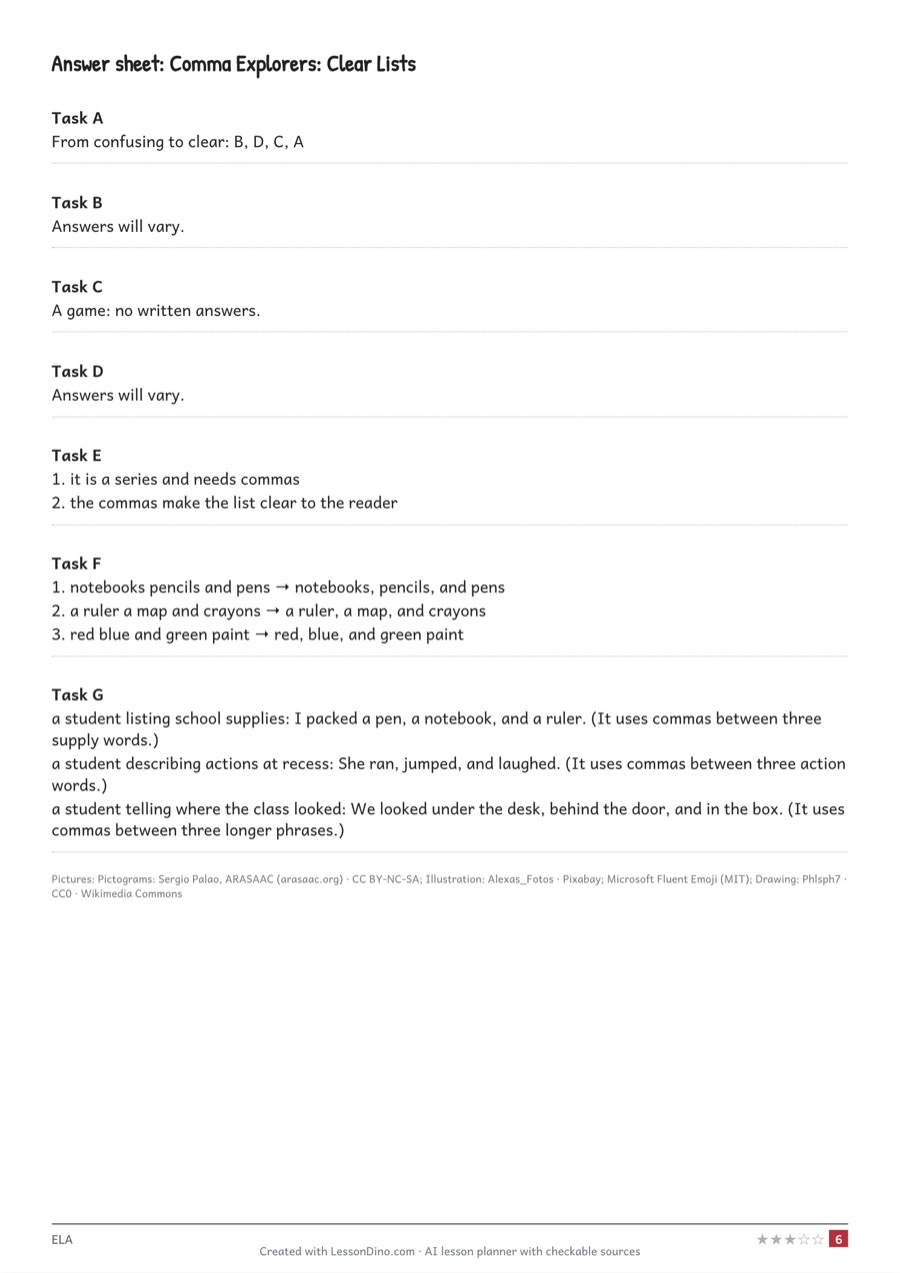
- The answer sheet is the last page, so you can print it on its own or let students check their own work.
Key vocabulary
- comma: a small mark [,] that shows a short pause and splits parts
- series: a list of three or more things of the same kind in one sentence
- item: one single thing counted as part of a list
- conjunction: a linking word such as and or or before the last thing
Mistakes to watch for
- Putting a comma before the first item or after the last item. Remodel to put a comma after each item except the very last, never before the first item.
- Using commas for only two items joined by and. Count items together: two is not a series; a series needs three or more items with the same job.
- Leaving out the last comma so the last two items blur together. Add the comma before and or or; using it is always correct and prevents confusion.
What's on the worksheet
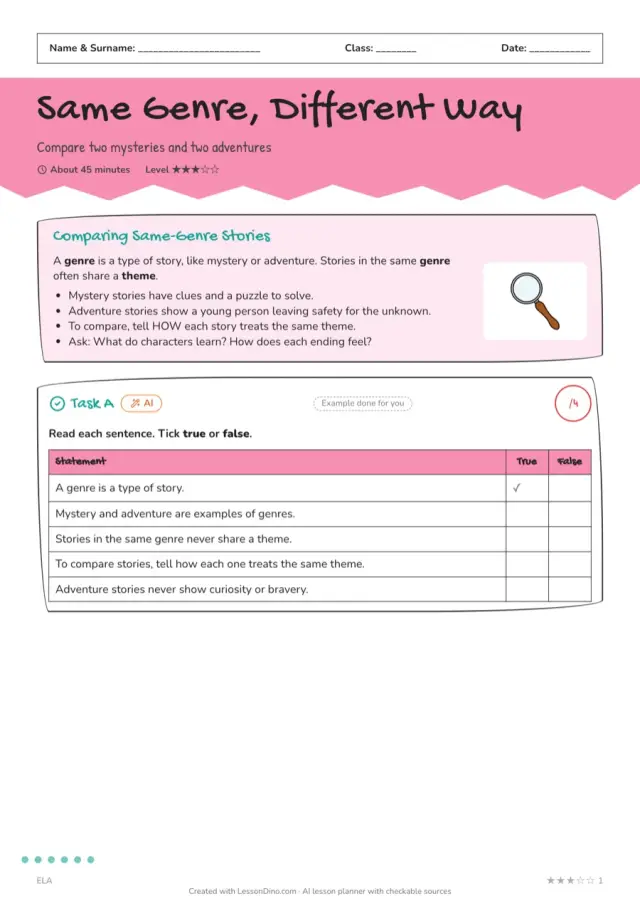
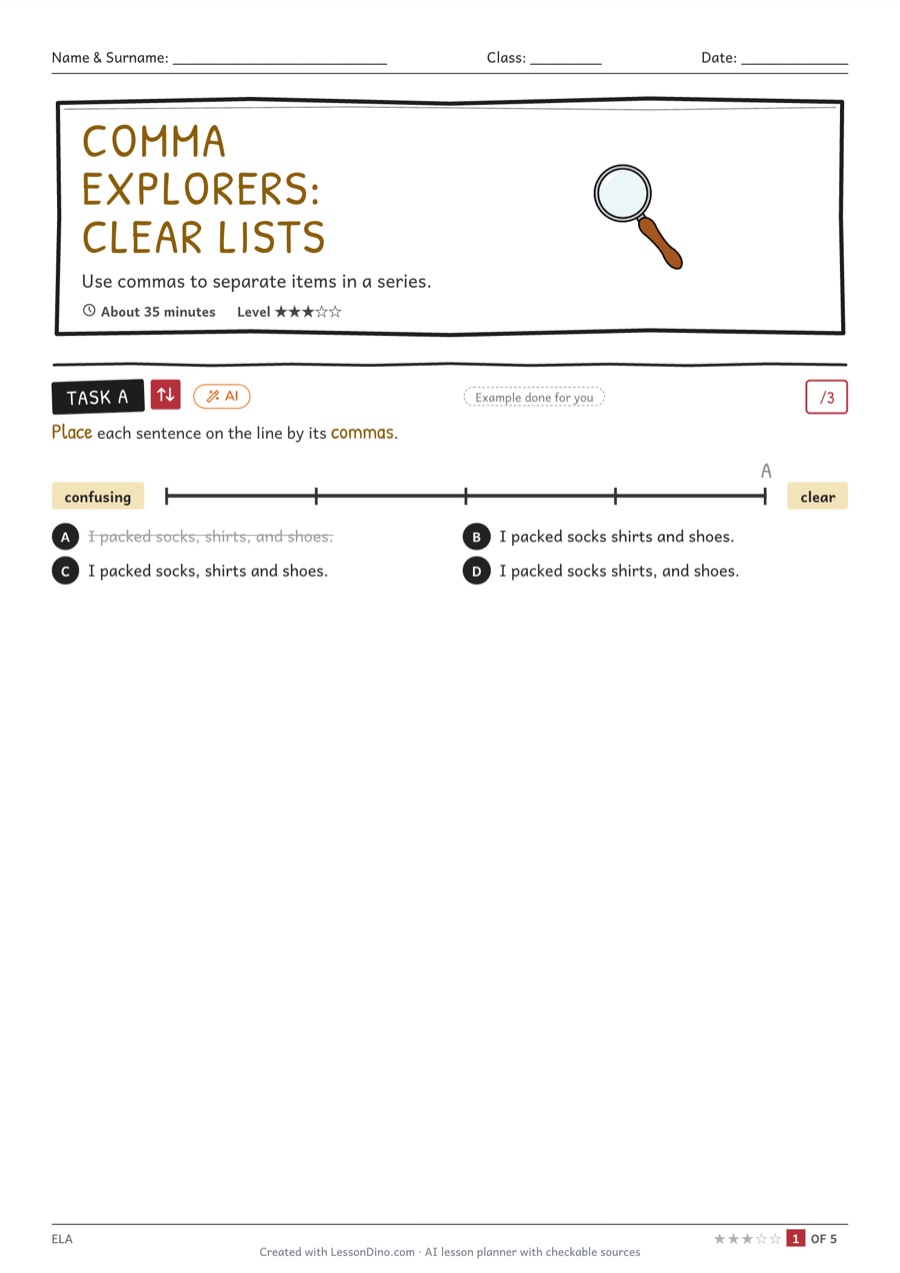
Lists Need Commas
Learn the rule for commas in a series.
Place each sentence on the line by its commas.
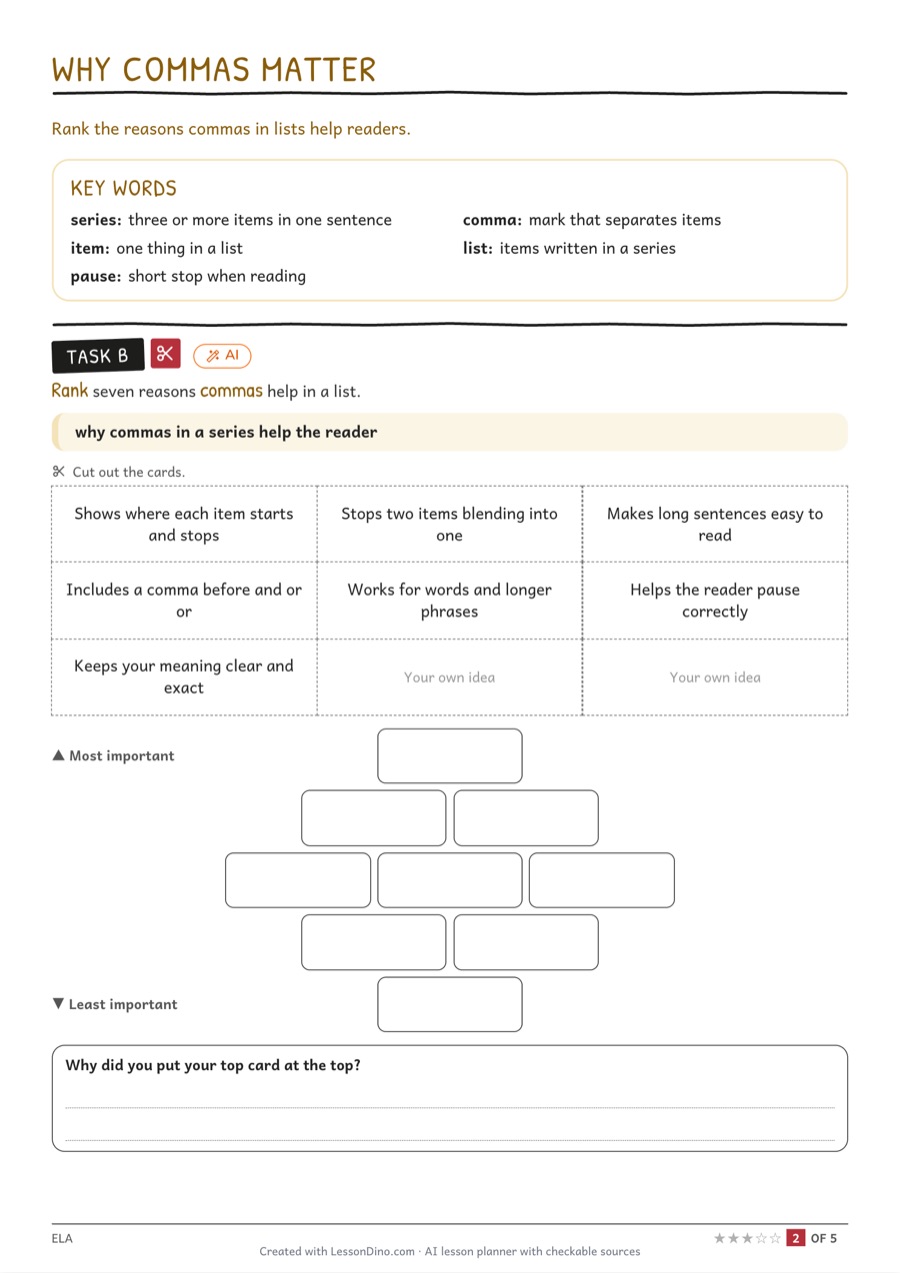
Why Commas Matter
Rank the reasons commas in lists help readers.
| Word | Meaning |
|---|---|
| series | three or more items in one sentence |
| comma | mark that separates items |
| item | one thing in a list |
| list | items written in a series |
| pause | short stop when reading |
Rank seven reasons commas help in a list.
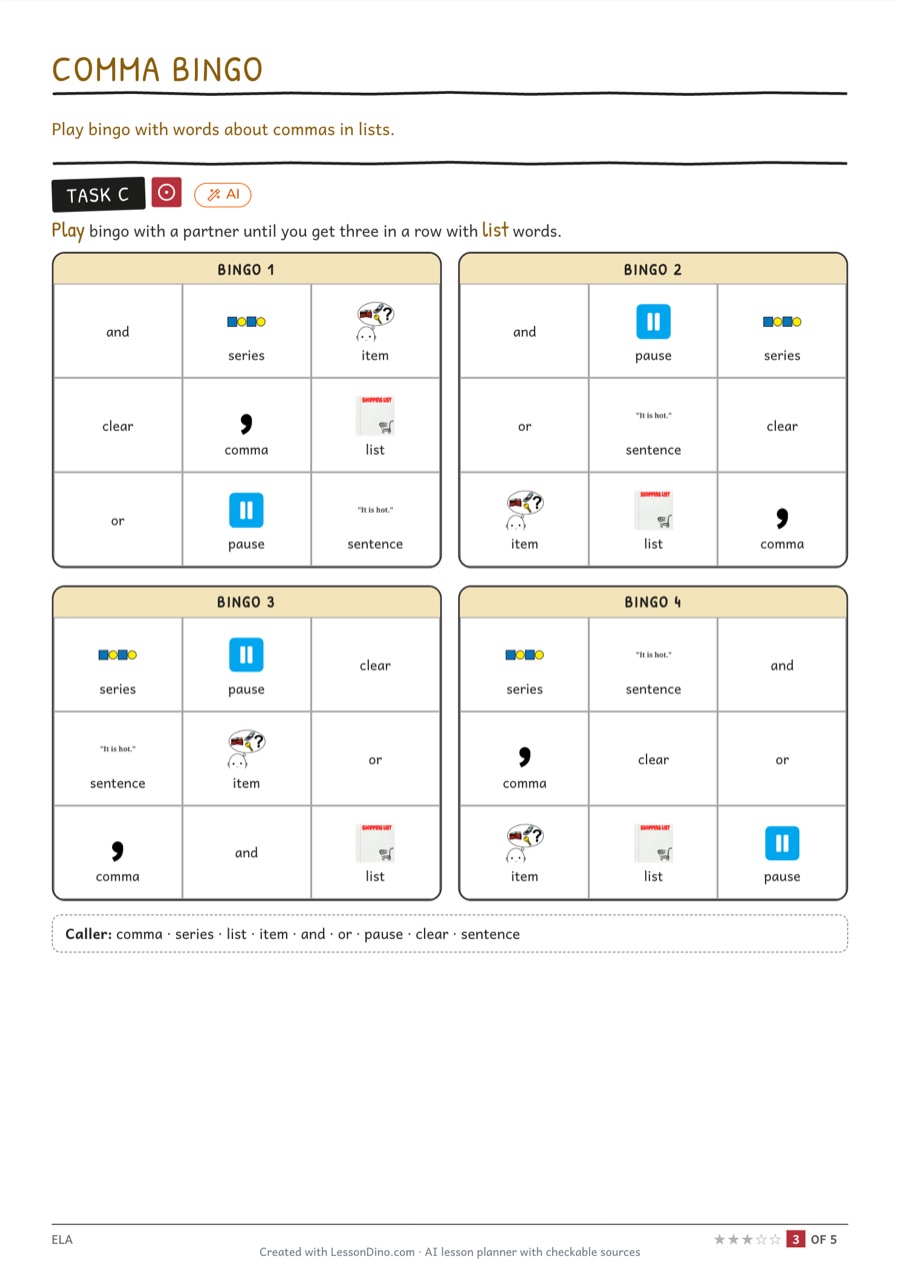
Comma Bingo
Play bingo with words about commas in lists.
Play bingo with a partner until you get three in a row with list words.
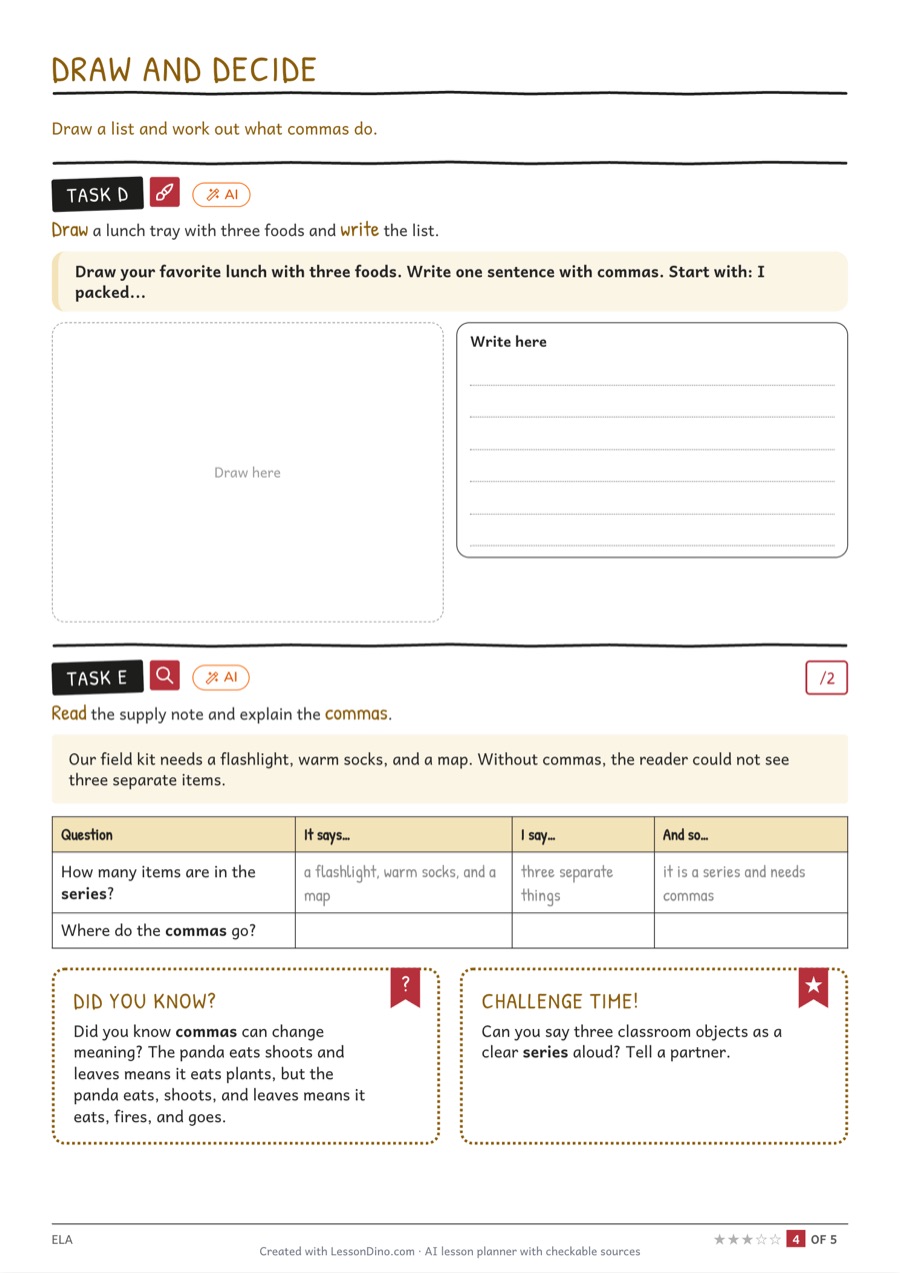
Draw and Decide
Draw a list and work out what commas do.
Draw a lunch tray with three foods and write the list.
Read the supply note and explain the commas.
- Our field kit needs a flashlight, warm socks, and a map. Without commas, the reader could not see three separate items.
- How many items are in the series?
- Where do the commas go?
- Did you know commas can change meaning? The panda eats shoots and leaves means it eats plants, but the panda eats, shoots, and leaves means it eats, fires, and goes.
- Can you say three classroom objects as a clear series aloud? Tell a partner.
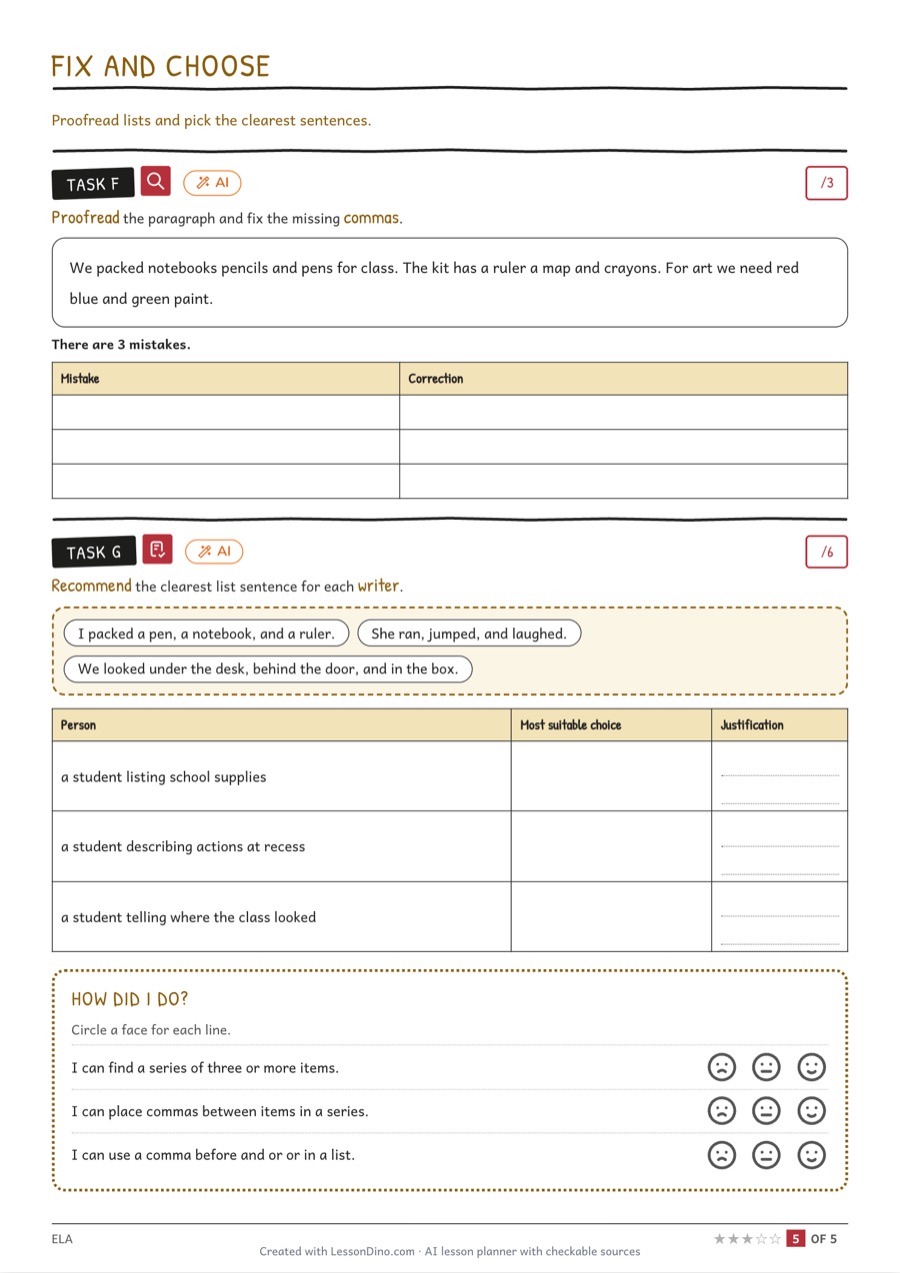
Fix and Choose
Proofread lists and pick the clearest sentences.
Proofread the paragraph and fix the missing commas.
- We packed notebooks pencils and pens for class. The kit has a ruler a map and crayons. For art we need red blue and green paint.
Recommend the clearest list sentence for each writer.
Answers
Show the answers
The answers are on the answer sheet, the last picture above.
Curriculum
Use punctuation to separate items in a series.
Made with Lesson Dino's AI on 17 October 2026. AI can make mistakes, so check the answers and facts against the sources before you teach.