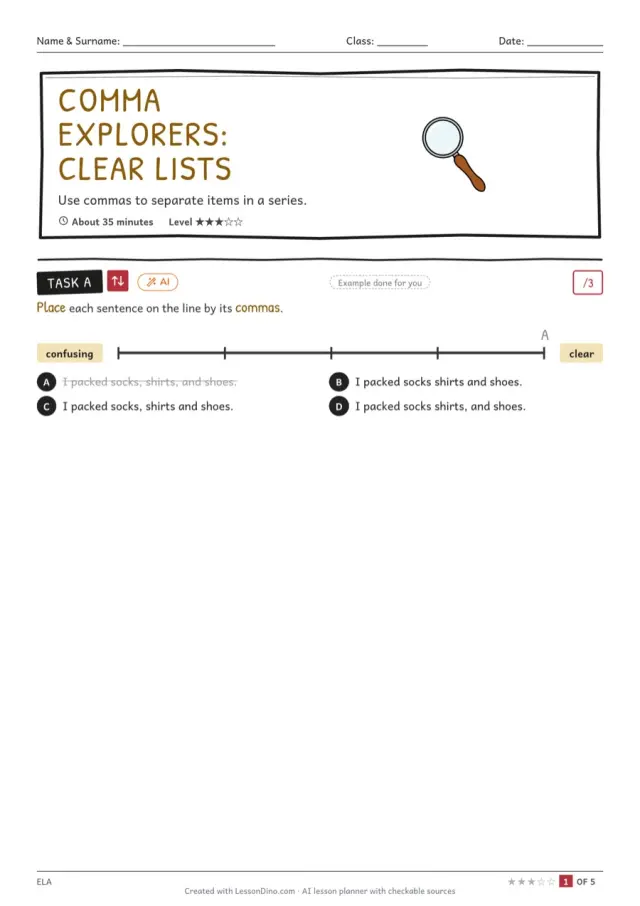
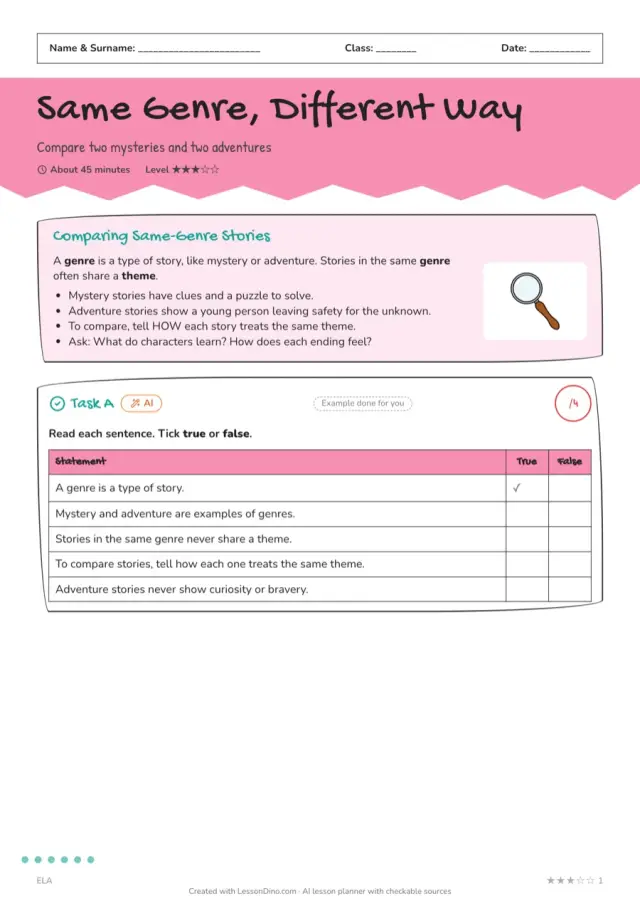
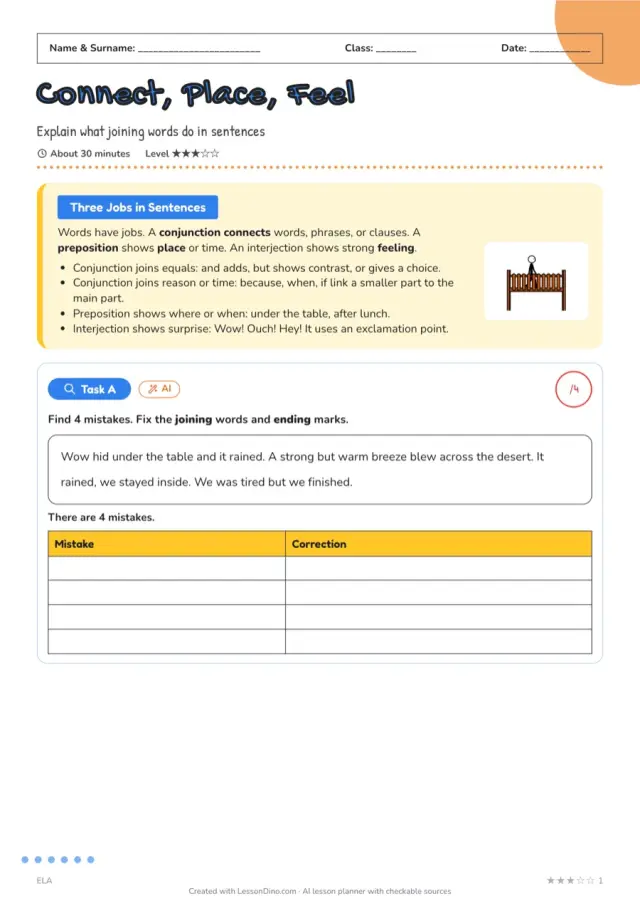
The worksheet
About this worksheet
Students learn to compare chronology and cause and effect in two texts. They read telegraph texts and prove each build with signal words. This Grade 5 ELA worksheet gives students (ages 10–11) five pages of practice on comparing text structures, part of the reading informational text unit. It goes with our free Comparing text structures lesson, which has the slides and a timed lesson plan.
What it covers
By the end, students should be able to:
- Students will compare chronology in one text with cause and effect in another.
- Students will use signal words to name each text's overall structure.
- Students will contrast structures of two texts on the same topic.
How to use it
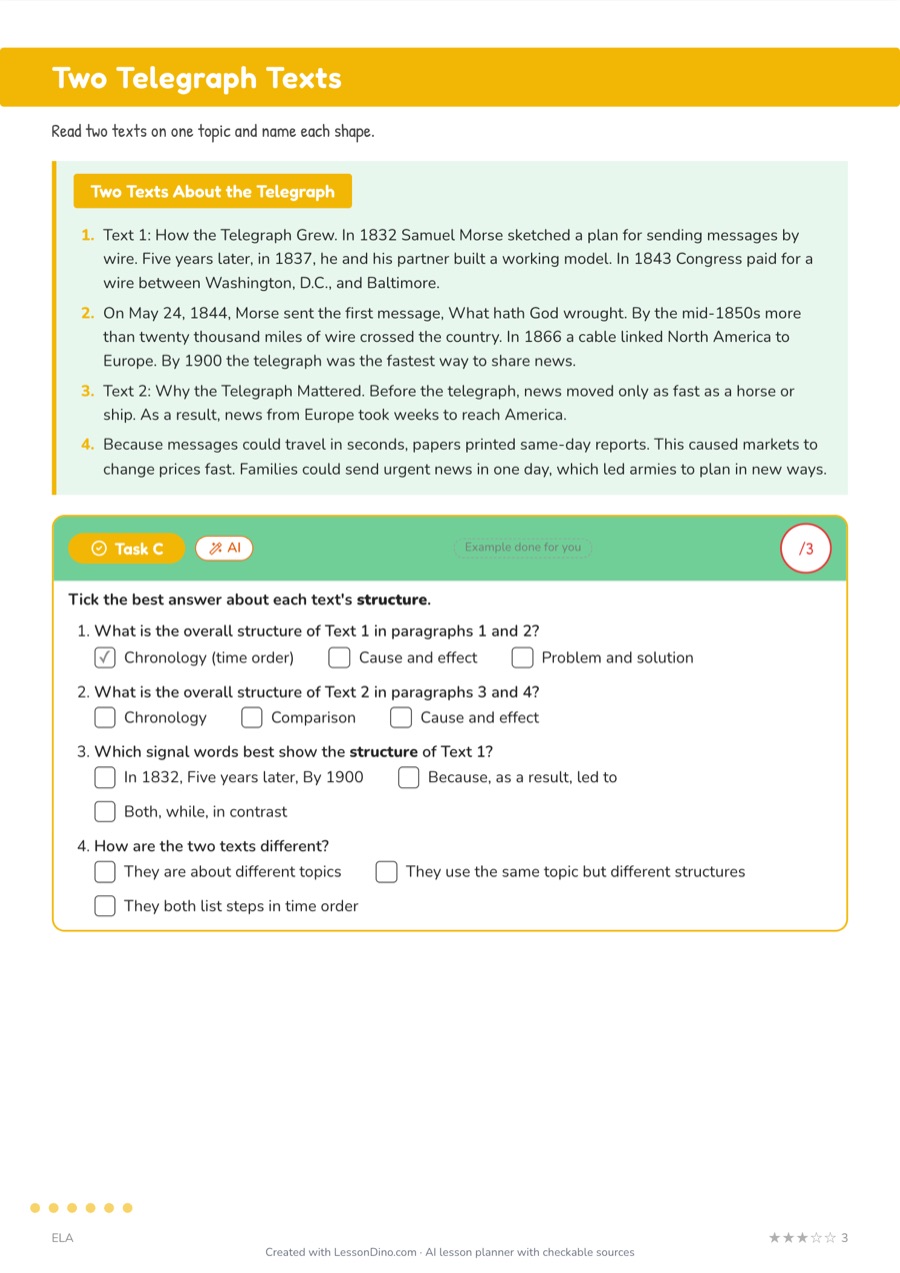
- Main Activity (22 minutes): Hand out Worksheet page 3 Two Texts About the Telegraph with Task C multiple choice to tick the best answer about each text's structure and Venn diagram handouts and pencils. Direct pairs to complete Worksheet Task C multiple choice to tick the best answer about each text's structure.
- Support: Pre-highlight dates and cause words and give a grouped signal-word bank for matching.
- Stretch: Write one sentence explaining how the timeline made the causes in the second text possible.
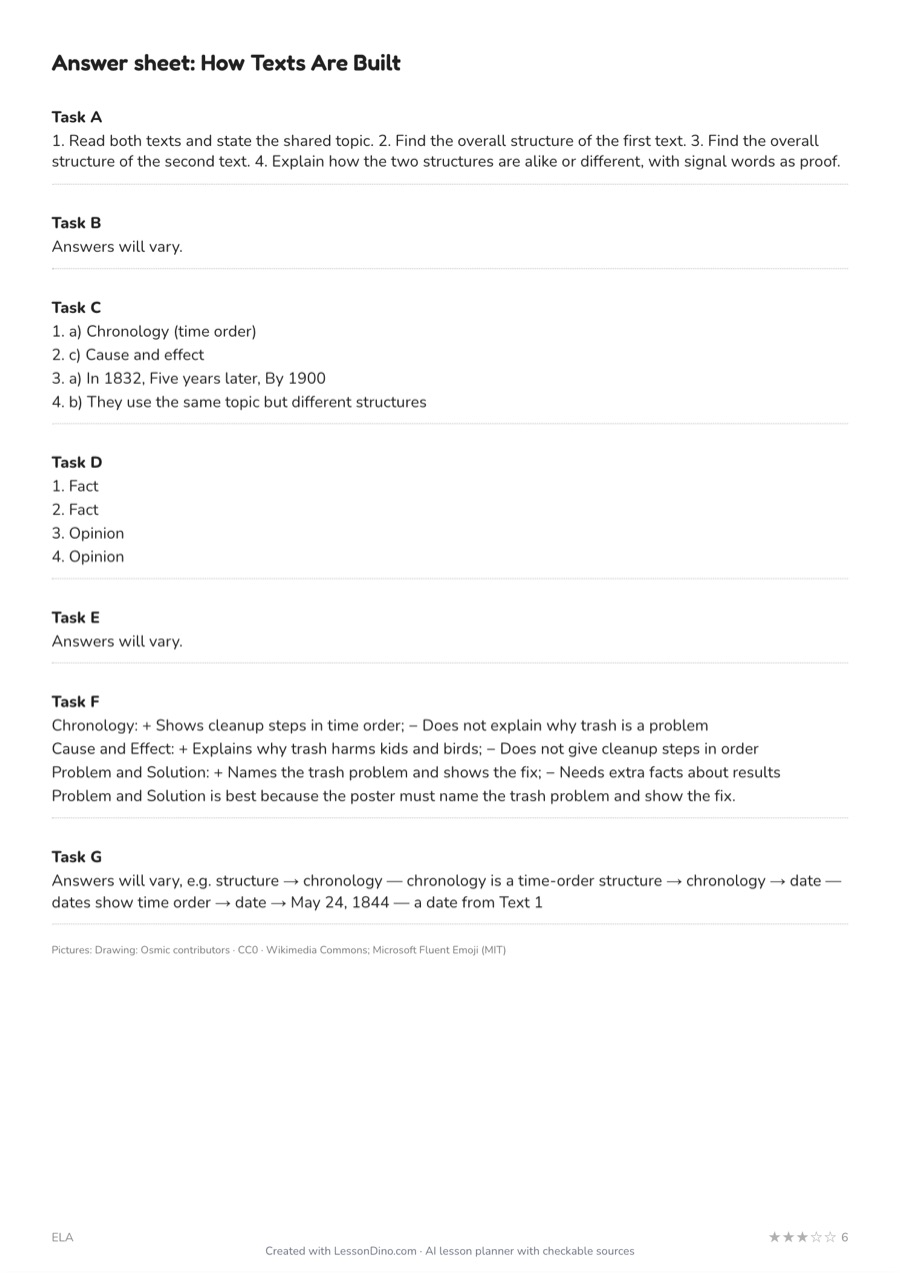
- The answer sheet is the last page, so you can print it on its own or let students check their own work.
Key vocabulary
- chronology: order of when things happened from first to last
- cause: why something happens
- effect: what follows after something happens
- signal word: clue word that shows how writing is put together
- structure: the way parts of writing are built and ordered
Mistakes to watch for
- Thinking because, as a result show chronology. Sort words: dates like In 1844 show when, because and as a result show why and what followed.
- Thinking same topic means same structure. Remind that overall structure can differ even on one topic, one tells when, one tells why.
- Writing all about one text, then all about the other. Model linking with on the other hand and in the same way to talk about both all the way through.
What's on the worksheet
Know the Structures
See four common ways writers organize ideas.
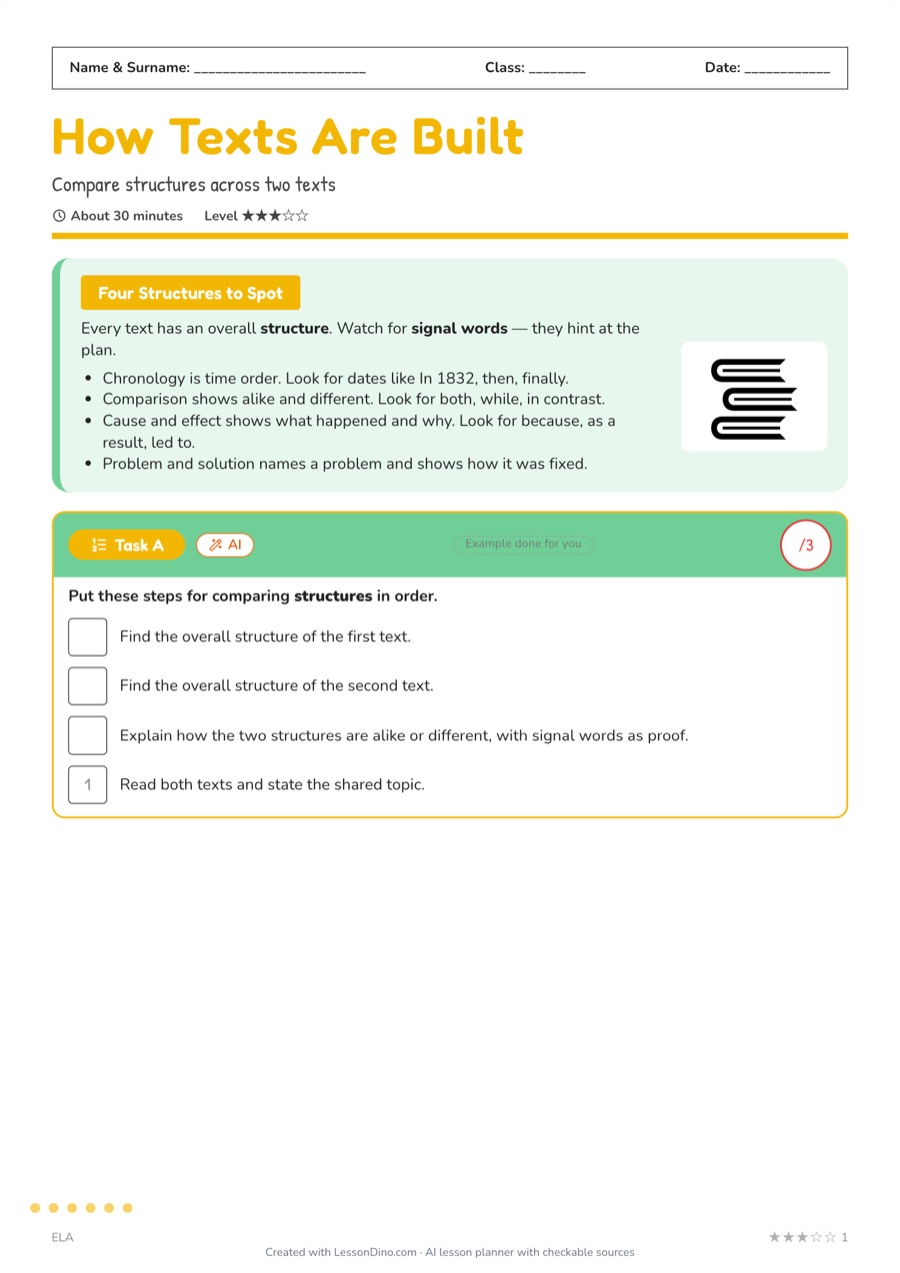
Four Structures to Spot
- Every text has an overall structure. Watch for signal words — they hint at the plan.
- Chronology is time order. Look for dates like In 1832, then, finally.
- Comparison shows alike and different. Look for both, while, in contrast.
- Cause and effect shows what happened and why. Look for because, as a result, led to.
- Problem and solution names a problem and shows how it was fixed.
Put these steps for comparing structures in order.
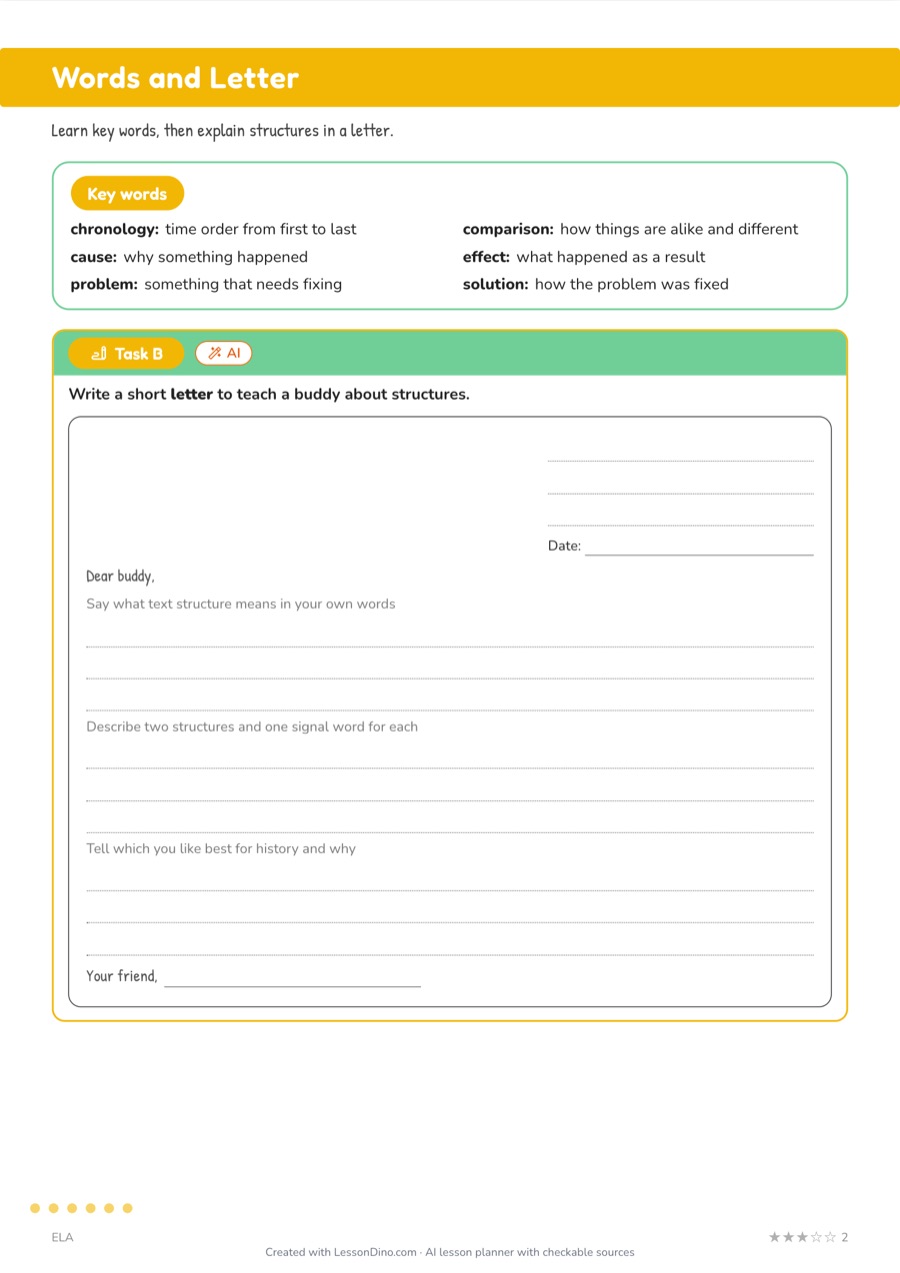
Words and Letter
Learn key words, then explain structures in a letter.
| Word | Meaning |
|---|---|
| chronology | time order from first to last |
| comparison | how things are alike and different |
| cause | why something happened |
| effect | what happened as a result |
| problem | something that needs fixing |
| solution | how the problem was fixed |
Write a short letter to teach a buddy about structures.
Two Telegraph Texts
Read two texts on one topic and name each shape.
Two Texts About the Telegraph
Tick the best answer about each text's structure.
- What is the overall structure of Text 1 in paragraphs 1 and 2?
- What is the overall structure of Text 2 in paragraphs 3 and 4?
- Which signal words best show the structure of Text 1?
- How are the two texts different?
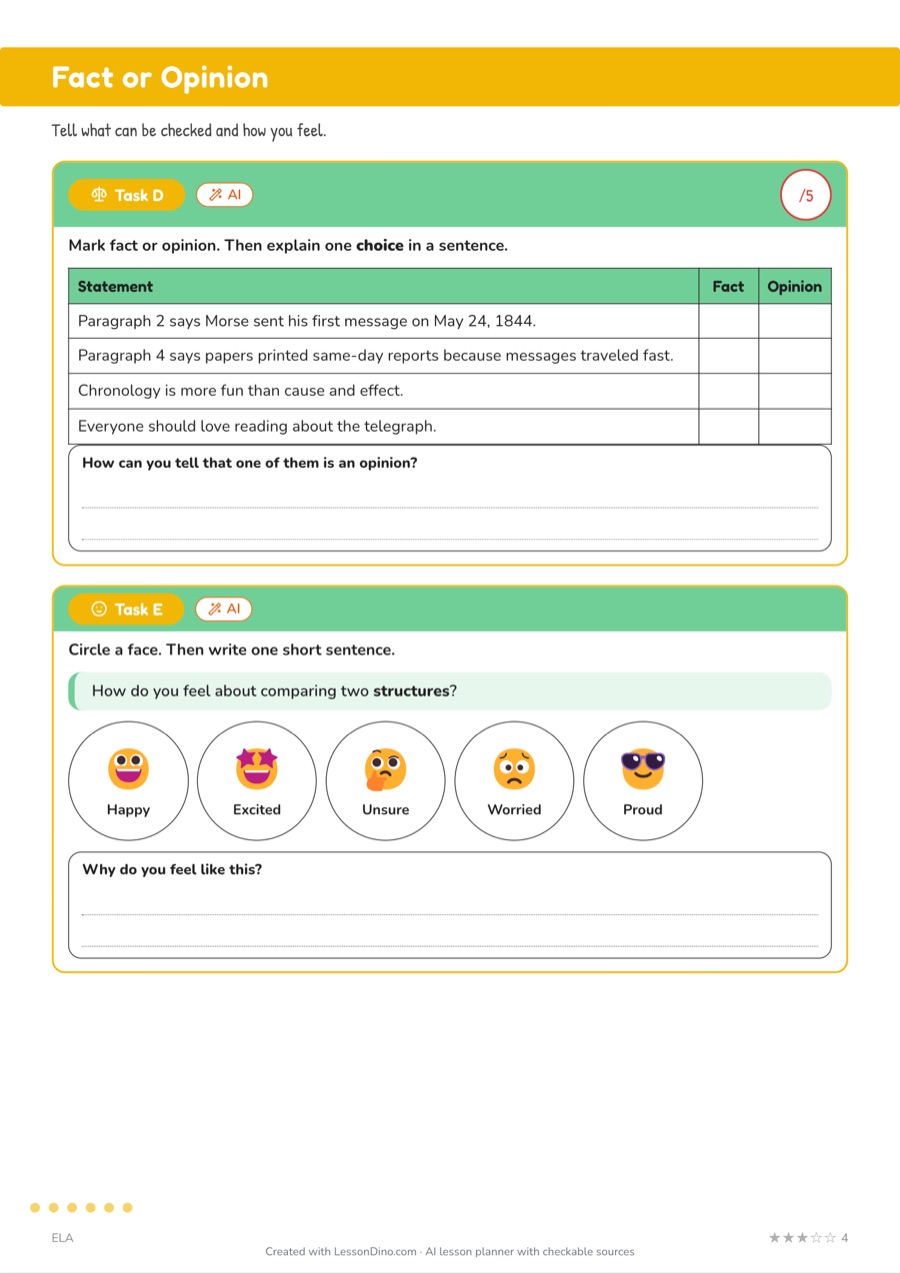
Fact or Opinion
Tell what can be checked and how you feel.
Mark fact or opinion. Then explain one choice in a sentence.
Circle a face. Then write one short sentence.
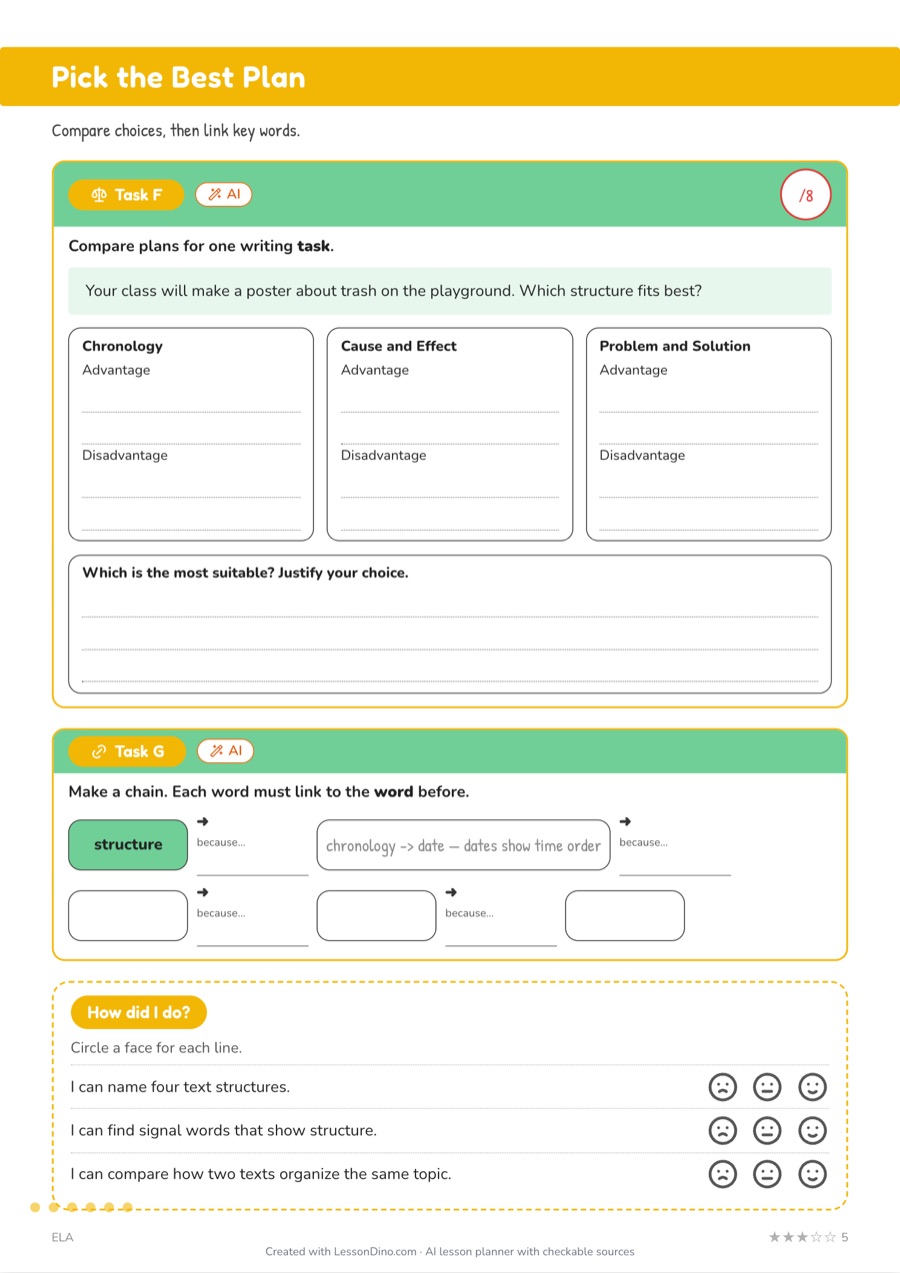
Pick the Best Plan
Compare choices, then link key words.
Compare plans for one writing task.
Make a chain. Each word must link to the word before.
Answers
Show the answers
The answers are on the answer sheet, the last picture above.
Curriculum
Compare and contrast the overall structure (e.g., chronology, comparison, cause/effect, problem/solution) of events, ideas, concepts, or information in two or more texts.
Made with Lesson Dino's AI on 17 October 2026. AI can make mistakes, so check the answers and facts against the sources before you teach.