The worksheet
About this worksheet
Students learn to order real or imagined events and add vivid details. They plan and write a three-part narrative in clear sequence. This Grade 5 ELA worksheet gives students (ages 10–11) three pages of practice on creative writing: narratives, part of the writing unit. It goes with our free Creative writing: narratives lesson, which has the slides and a timed lesson plan.
What it covers
By the end, students should be able to:
- Students will write a real or imagined narrative in clear beginning-middle-end order.
- Students will use sensory details and action to show feelings and events.
How to use it
- Main activity: Three-Panel Story Sprint (20 minutes): Direct quick planning talk using Worksheet Task C: tell your start, big moment, end with no writing for 2 minutes.
- Support: Provide sentence starters for Start, Big Moment, and End to help plan, revise, and keep ideas in order.
- Stretch: Add one descriptive detail about setting and one about character feelings in each panel.
- The answer sheet is the last page, so you can print it on its own or let students check their own work.
Key vocabulary
- narrative: a story that tells connected events in order to share meaning
- sequence: the order in which events happen, one after another
- climax: the most exciting or important part of the story
- resolution: the end part where the problem is solved and change is shown
- sensory detail: words that tell what can be seen, heard, smelled, or felt
- technique: a smart trick a writer uses to make the story clear and lively
Mistakes to watch for
- Listing events without connection. Link events so they share meaning; it becomes a narrative when events connect to share meaning. Ask: what changed?
- Putting the climax first or last with flat ending. Move most exciting or important part to the middle and add action and detail to resolution where conflict is solved.
- Telling feelings instead of showing. Add elaboration, explanation and detail with senses and action, using metaphors, similes, and imagery.
What's on the worksheet
Stories That Shine
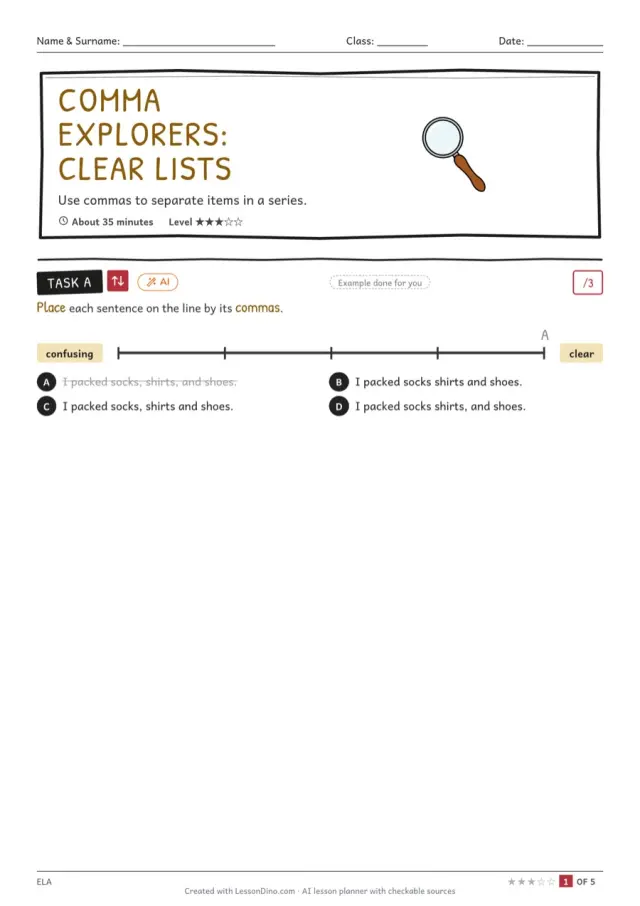
Learn what makes a strong narrative.
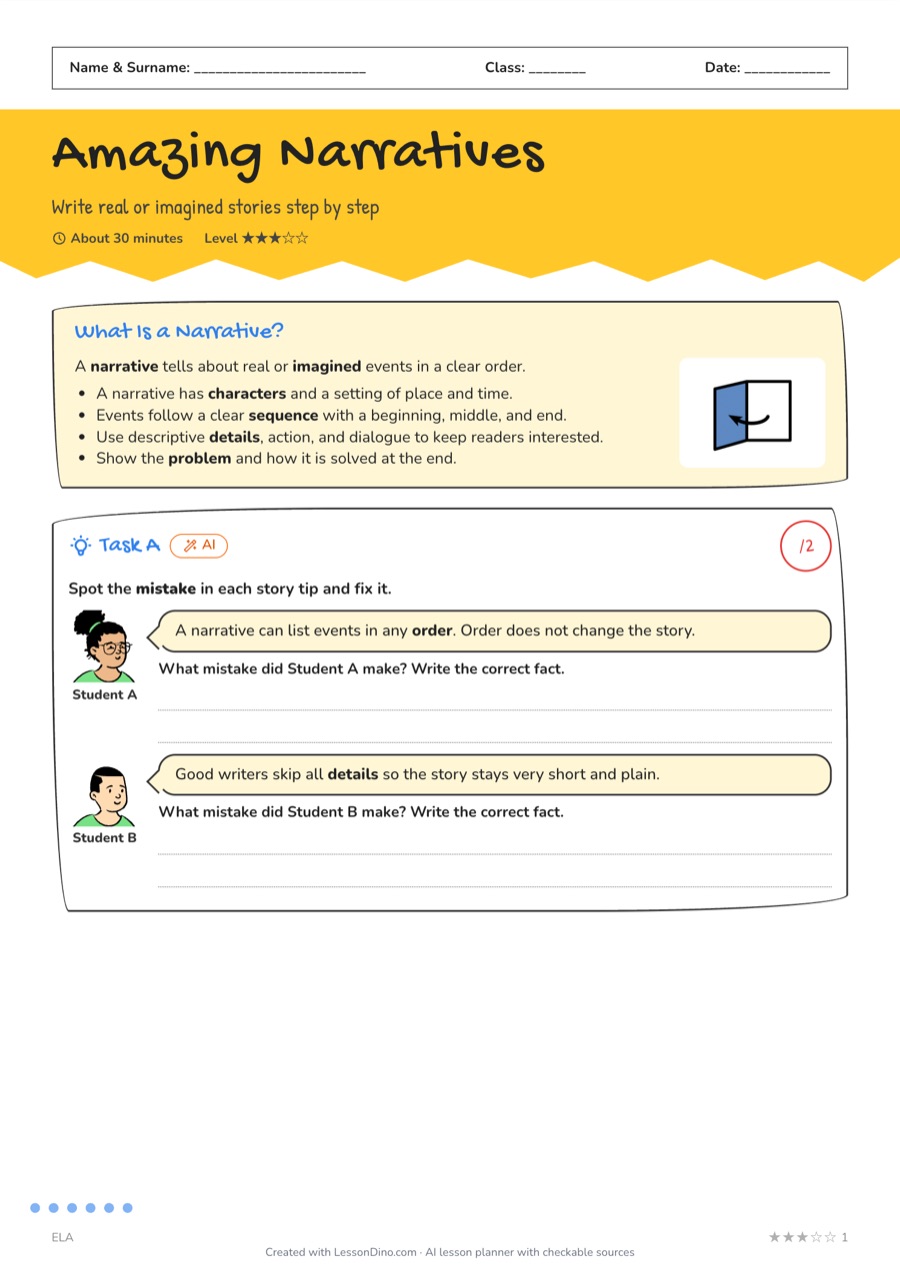
What Is a Narrative?
- A narrative tells about real or imagined events in a clear order.
- A narrative has characters and a setting of place and time.
- Events follow a clear sequence with a beginning, middle, and end.
- Use descriptive details, action, and dialogue to keep readers interested.
- Show the problem and how it is solved at the end.
Spot the mistake in each story tip and fix it.
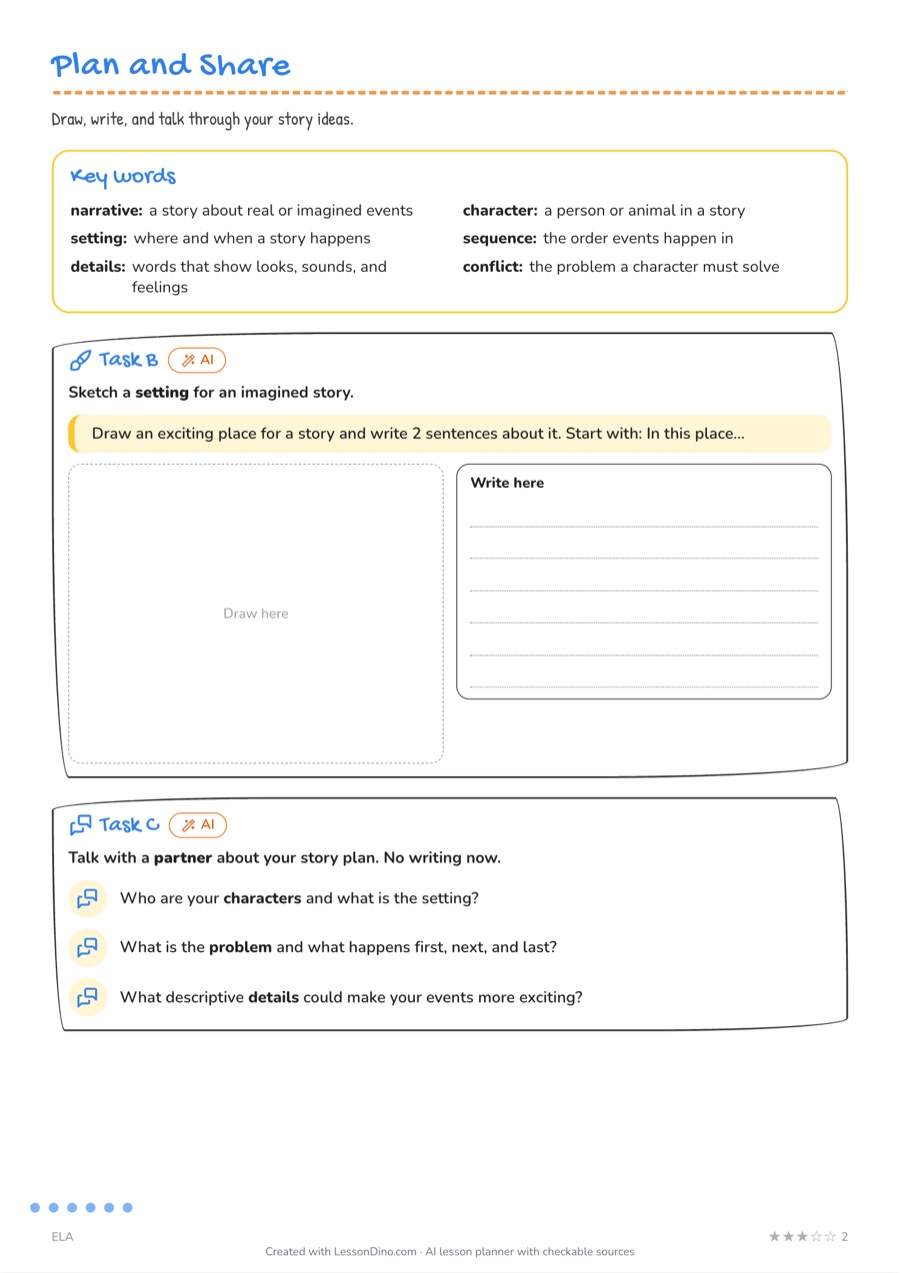
Plan and Share
Draw, write, and talk through your story ideas.
| Word | Meaning |
|---|---|
| narrative | a story about real or imagined events |
| character | a person or animal in a story |
| setting | where and when a story happens |
| sequence | the order events happen in |
| details | words that show looks, sounds, and feelings |
| conflict | the problem a character must solve |
Sketch a setting for an imagined story.
Talk with a partner about your story plan. No writing now.
- Who are your characters and what is the setting?
- What is the problem and what happens first, next, and last?
- What descriptive details could make your events more exciting?
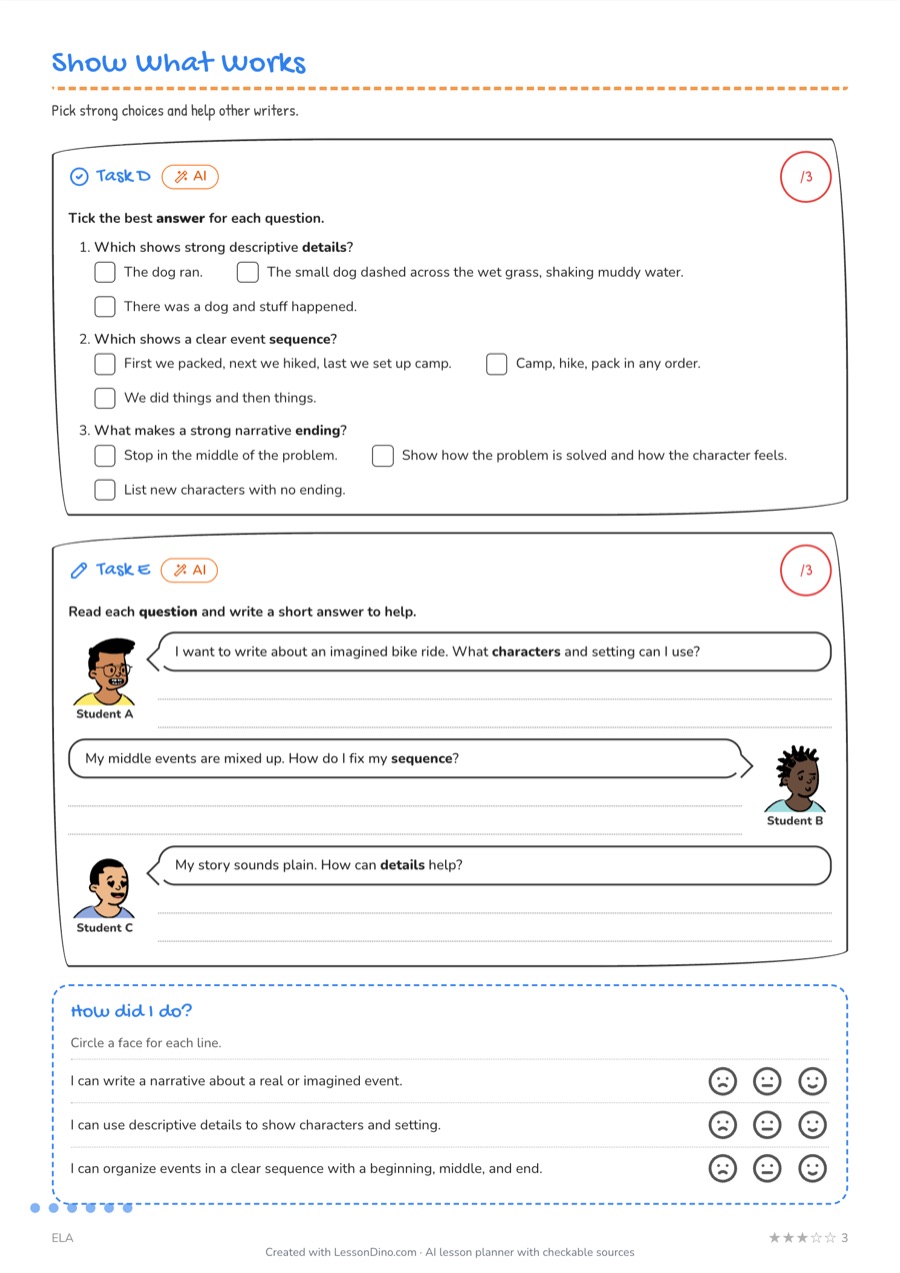
Show What Works
Pick strong choices and help other writers.
Tick the best answer for each question.
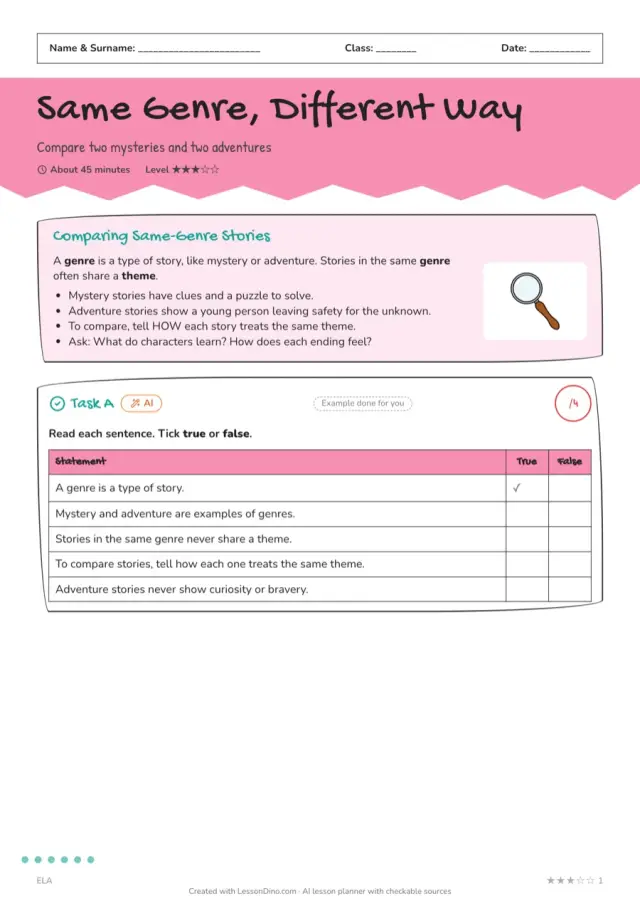
- Which shows strong descriptive details?
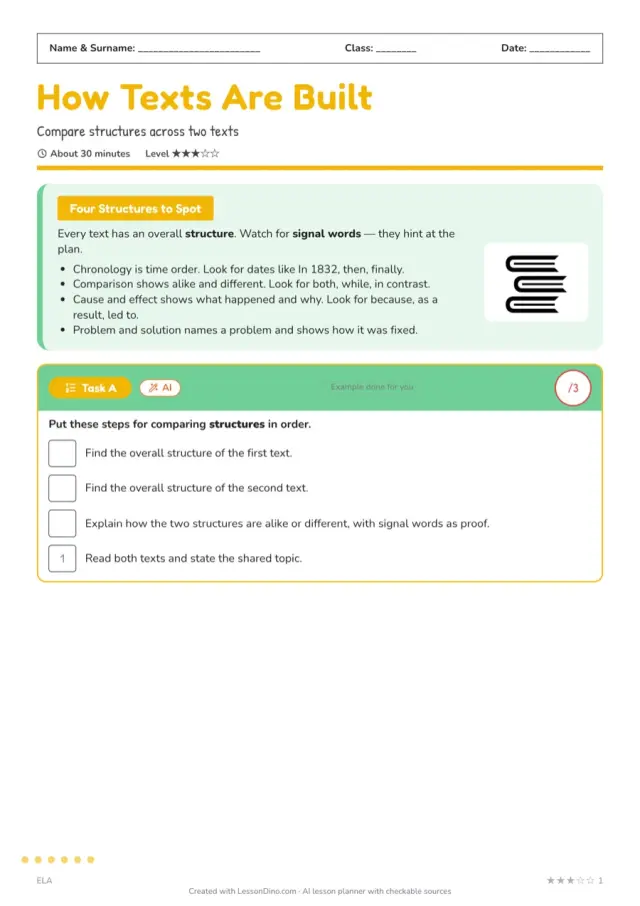
- Which shows a clear event sequence?
- What makes a strong narrative ending?
Read each question and write a short answer to help.
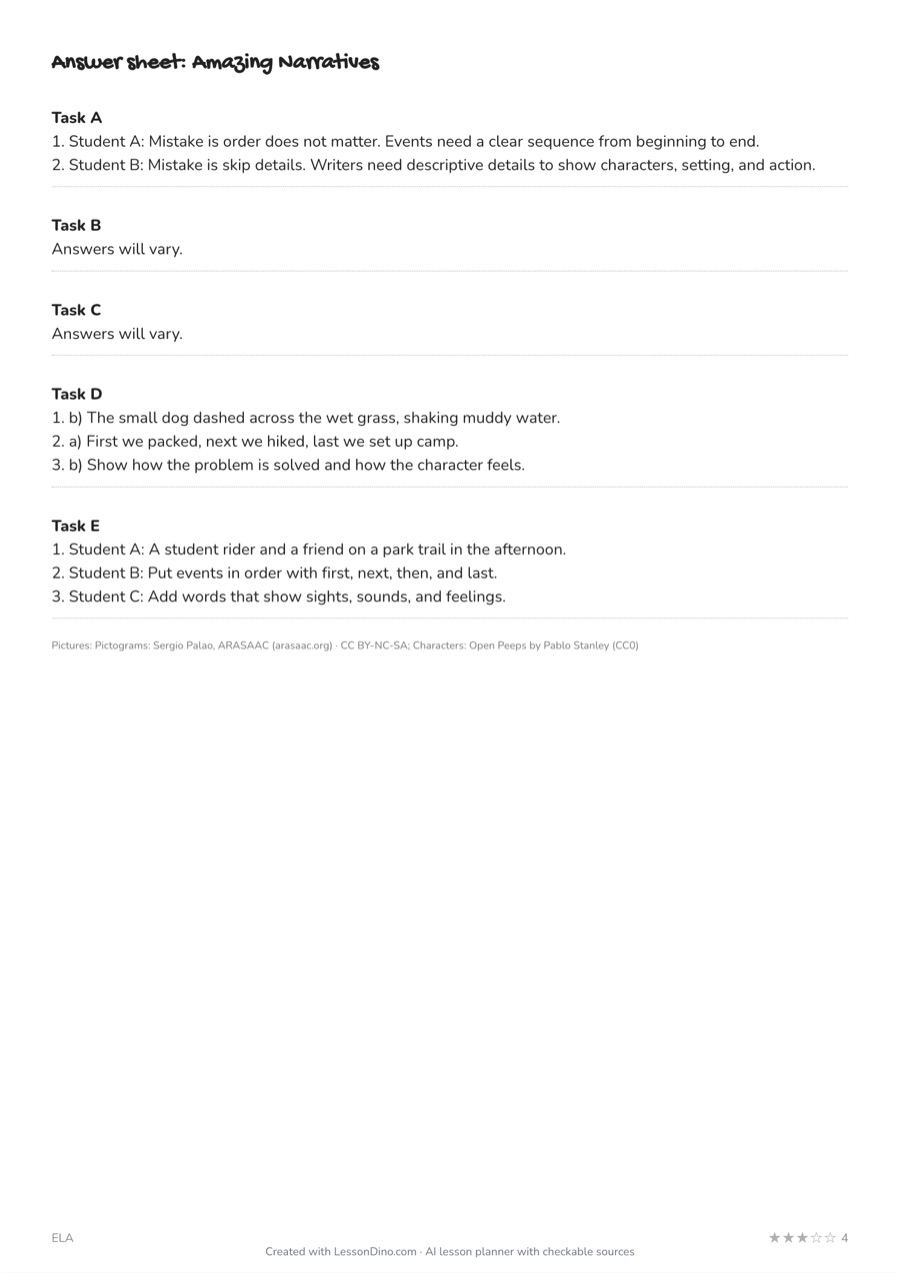
Answers
Show the answers
The answers are on the answer sheet, the last picture above.
Curriculum
Write narratives to develop real or imagined experiences or events using effective technique, descriptive details, and clear event sequences.
Made with Lesson Dino's AI on 16 October 2026. AI can make mistakes, so check the answers and facts against the sources before you teach.