The worksheet
About this worksheet
Students learn how to run a short research project that builds knowledge. They investigate dolphins in pairs and make illustrated fact cards. This Grade 4 ELA worksheet gives students (ages 9–10) six pages of practice on short research projects, part of the writing unit. It goes with our free Short research projects lesson, which has the slides and a timed lesson plan.
What it covers
By the end, students should be able to:
- Students will choose a focused research question that is just right.
- Students will gather facts about different aspects from two sources.
- Students will share findings in a clear fact card in own words.
How to use it
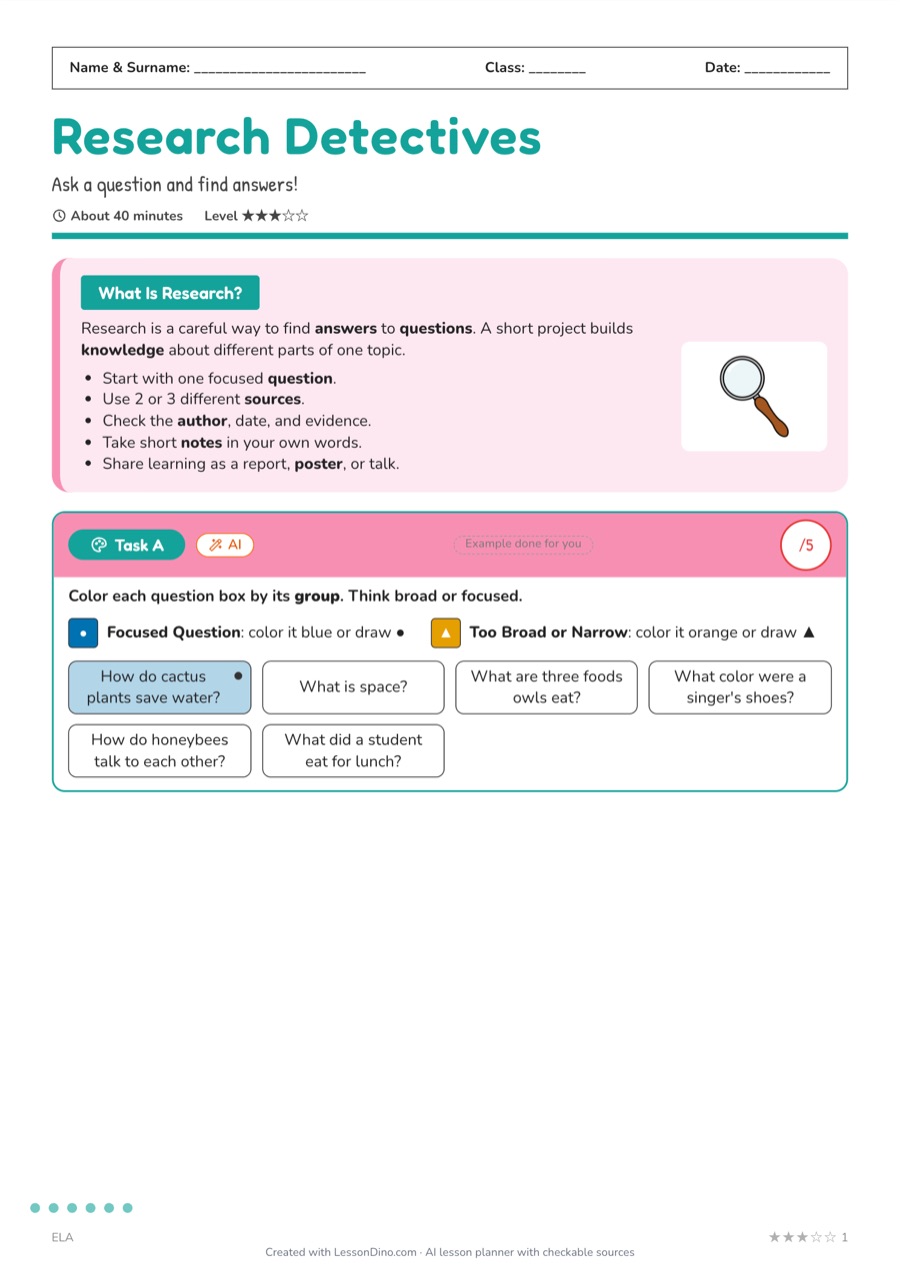
- Teaching (12 minutes): Do Worksheet Task A together: Color each question box by its group and think broad or focused.
- Support: Sentence-starter cards and pre-marked facts to find and underline in sources.
- Stretch: Add a fourth fact that compares two sources and notes where they agreed.
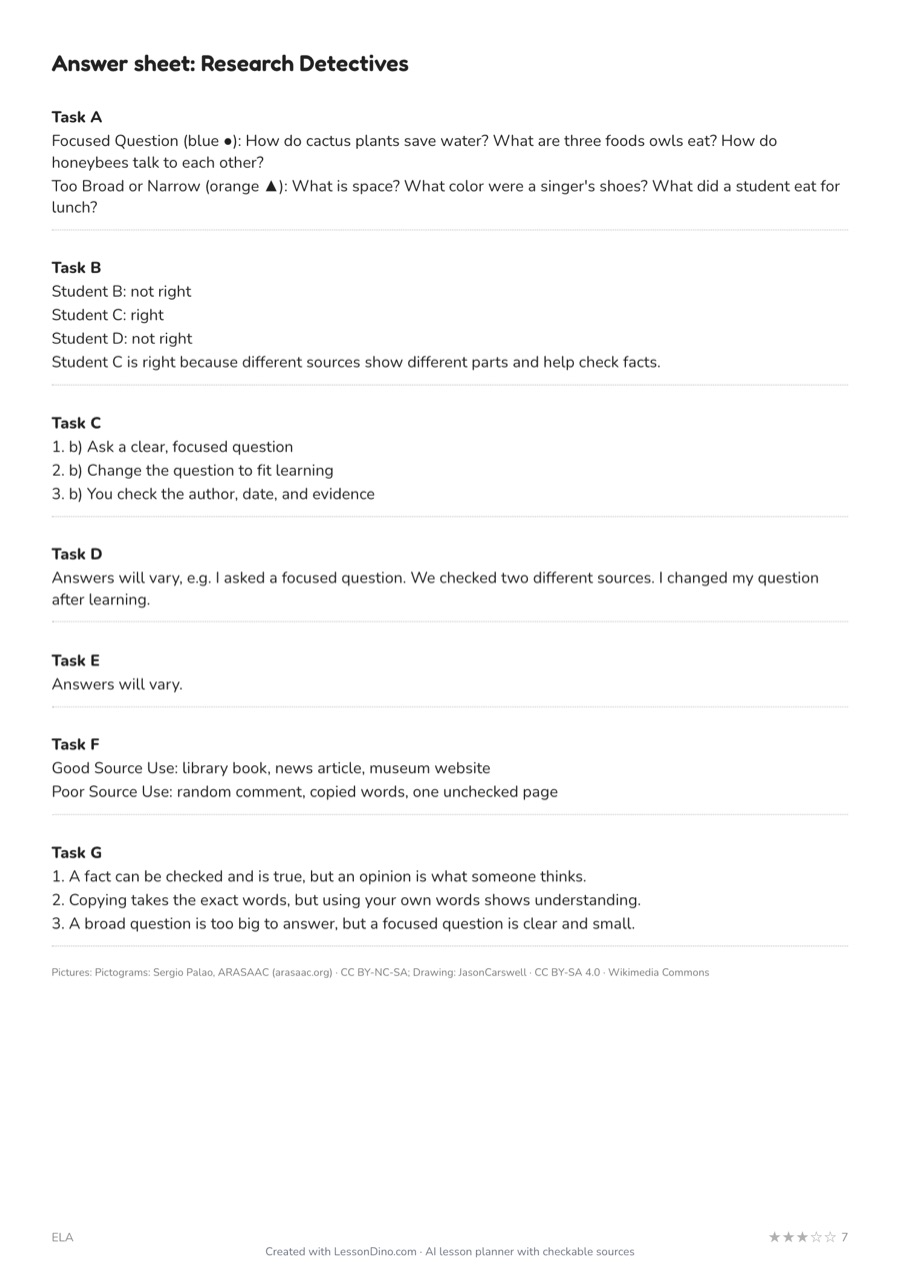
- The answer sheet is the last page, so you can print it on its own or let students check their own work.
Key vocabulary
- research: careful hunt for answers to a question
- investigation: digging for facts to learn more
- source: book or site that gives facts
- aspect: one small part of a bigger topic
Mistakes to watch for
- Using only one source for the answer. Require two ticks and ask how two sources help check facts and see angles.
- Copying sentences word for word. Cover source and retell in own words, then write; good work is organized and fair.
- Picking a too-broad question like What is space? Narrow to one aspect like sleep, food, or home and retest can finish in days.
What's on the worksheet
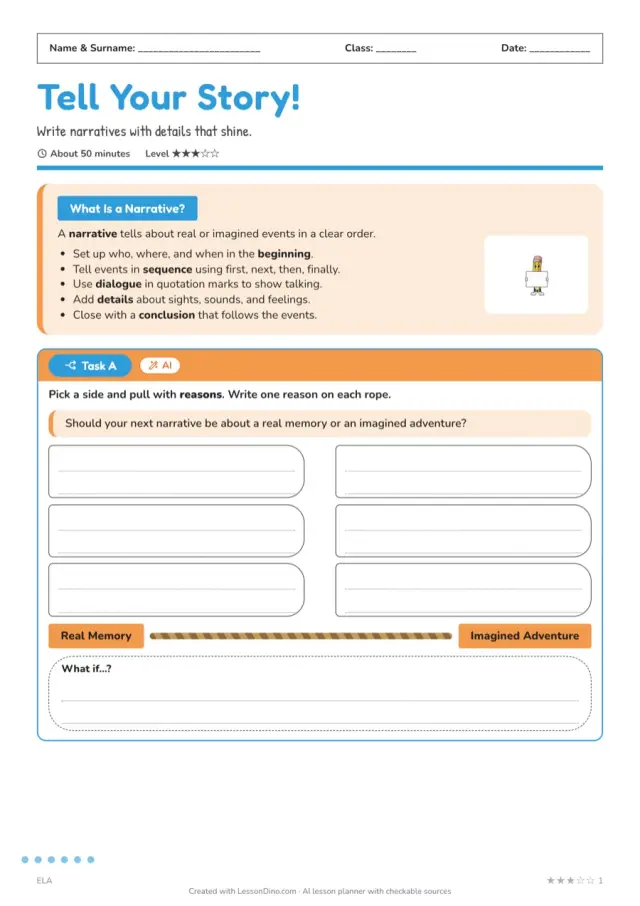
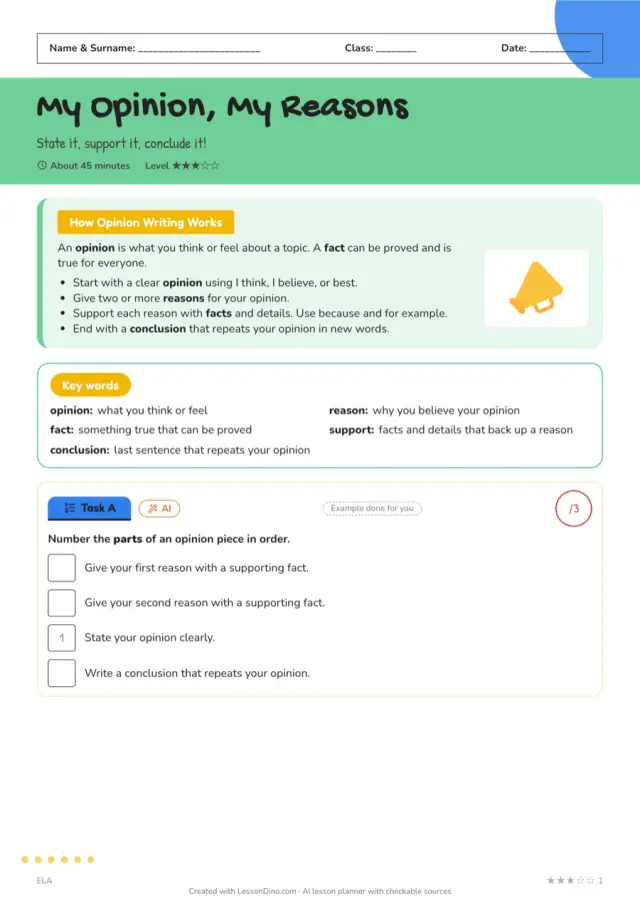
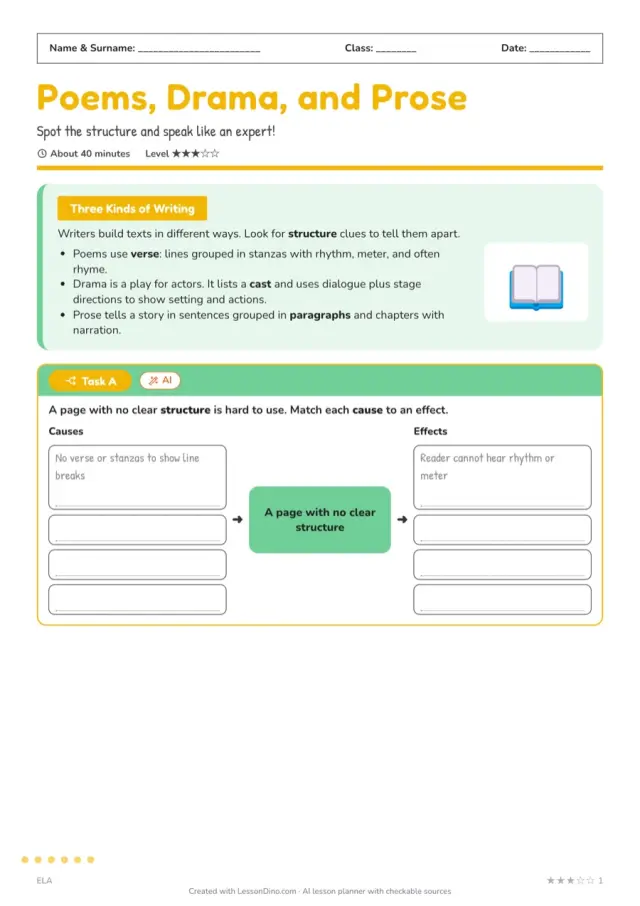
Ask and Find Out
Learn what a short research project does.
What Is Research?
- Research is a careful way to find answers to questions. A short project builds knowledge about different parts of one topic.
- Start with one focused question.
- Use 2 or 3 different sources.
- Check the author, date, and evidence.
- Take short notes in your own words.
- Share learning as a report, poster, or talk.
Color each question box by its group. Think broad or focused.
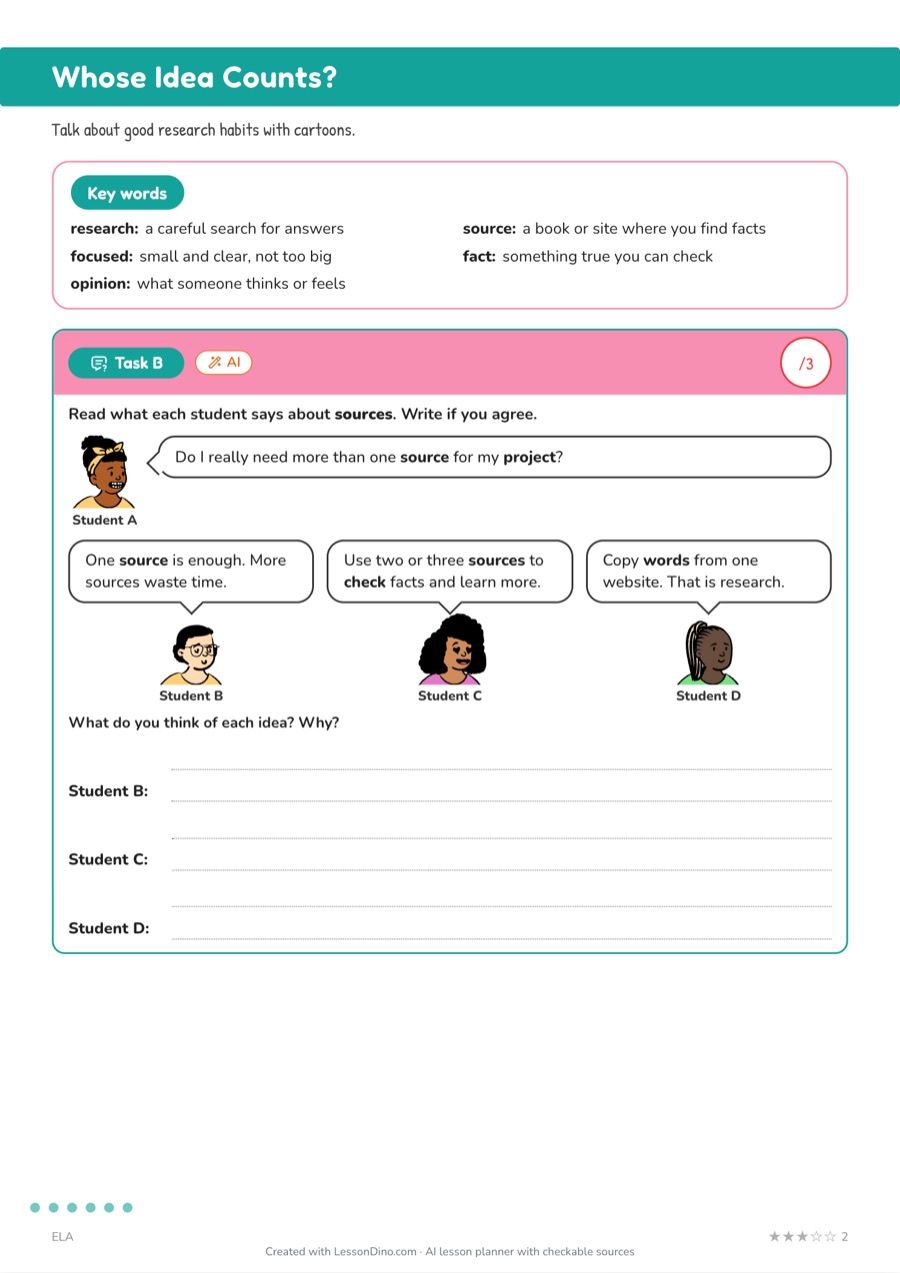
Whose Idea Counts?
Talk about good research habits with cartoons.
| Word | Meaning |
|---|---|
| research | a careful search for answers |
| source | a book or site where you find facts |
| focused | small and clear, not too big |
| fact | something true you can check |
| opinion | what someone thinks or feels |
Read what each student says about sources. Write if you agree.
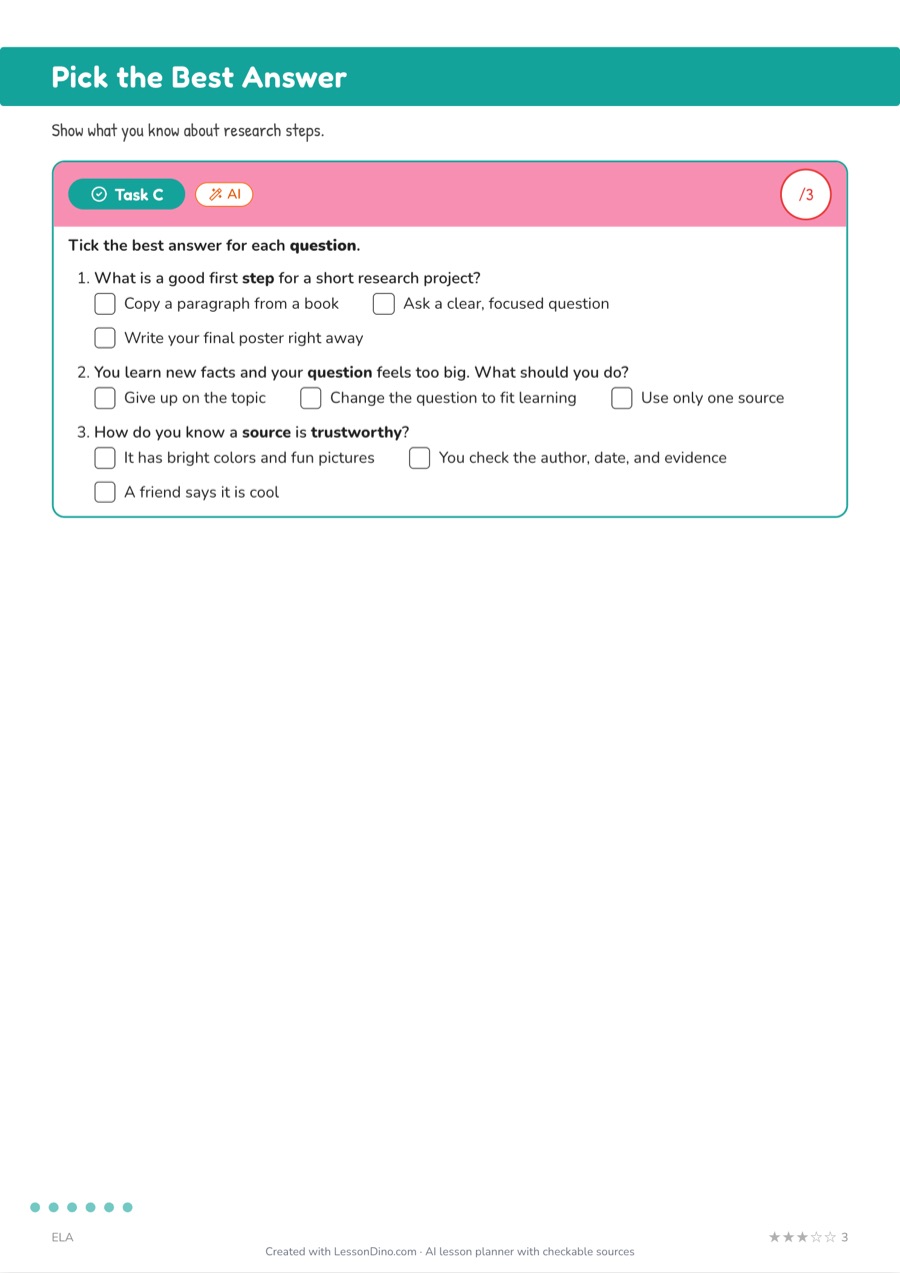
Pick the Best Answer
Show what you know about research steps.
Tick the best answer for each question.
- What is a good first step for a short research project?
- You learn new facts and your question feels too big. What should you do?
- How do you know a source is trustworthy?
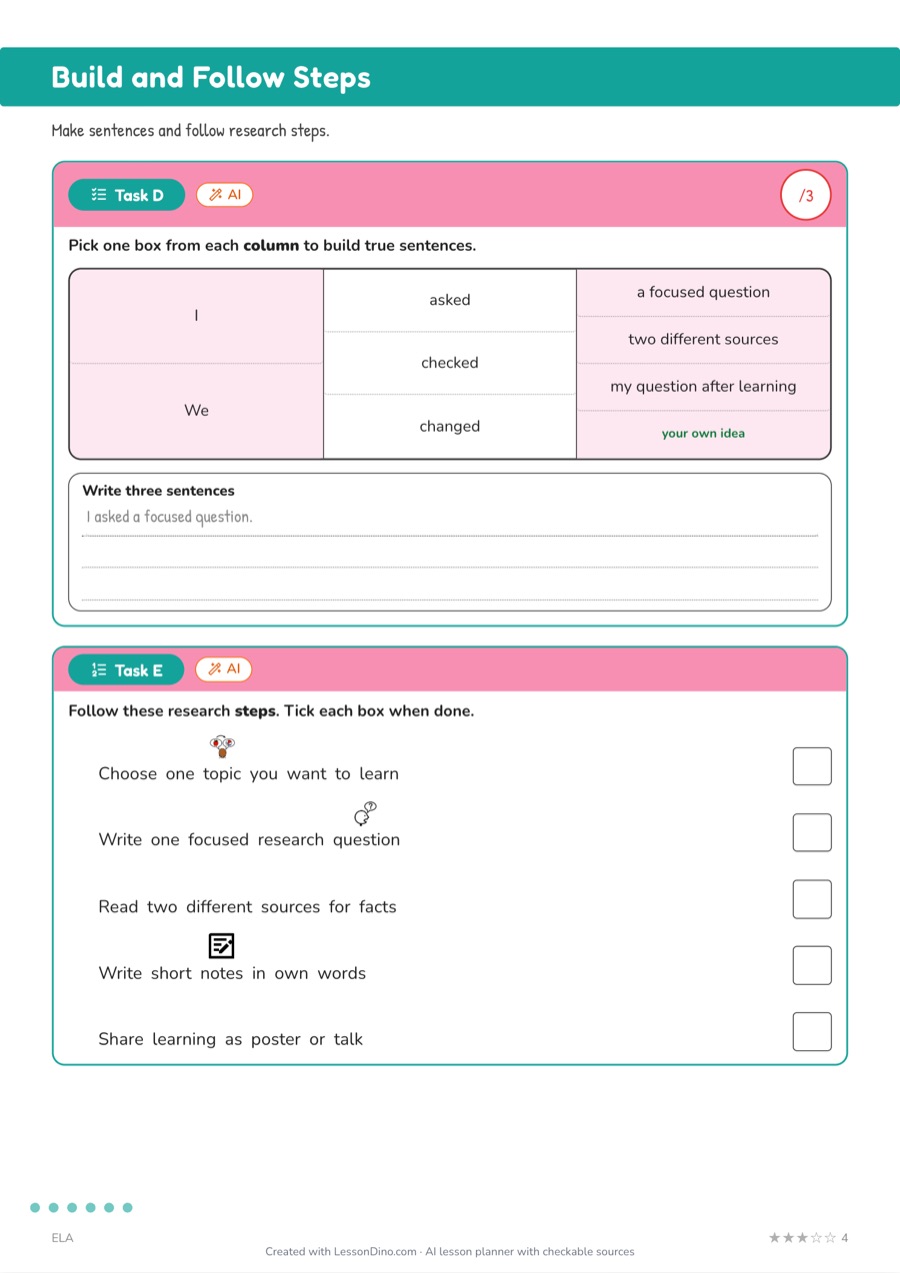
Build and Follow Steps
Make sentences and follow research steps.
Pick one box from each column to build true sentences.
Follow these research steps. Tick each box when done.
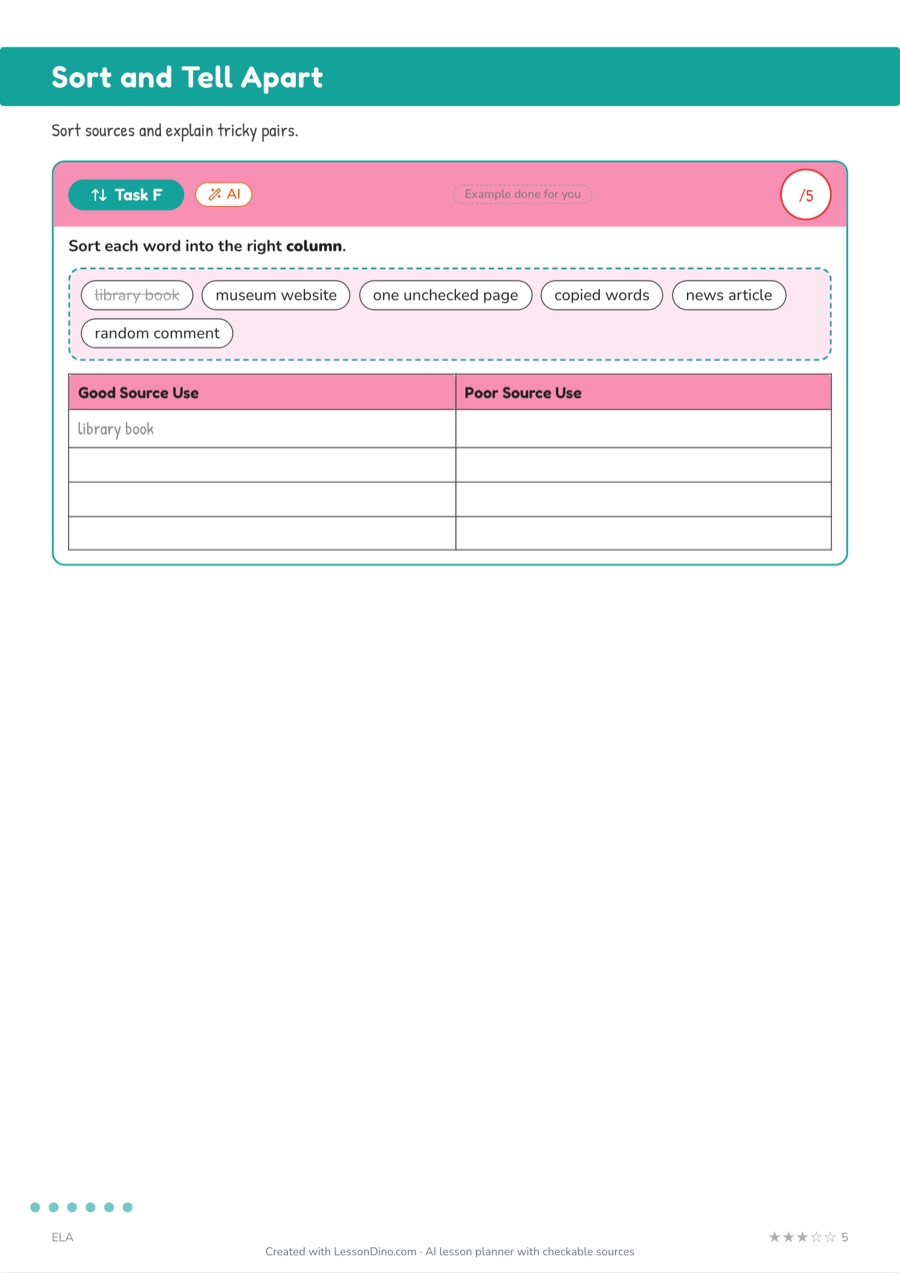
Sort and Tell Apart
Sort sources and explain tricky pairs.
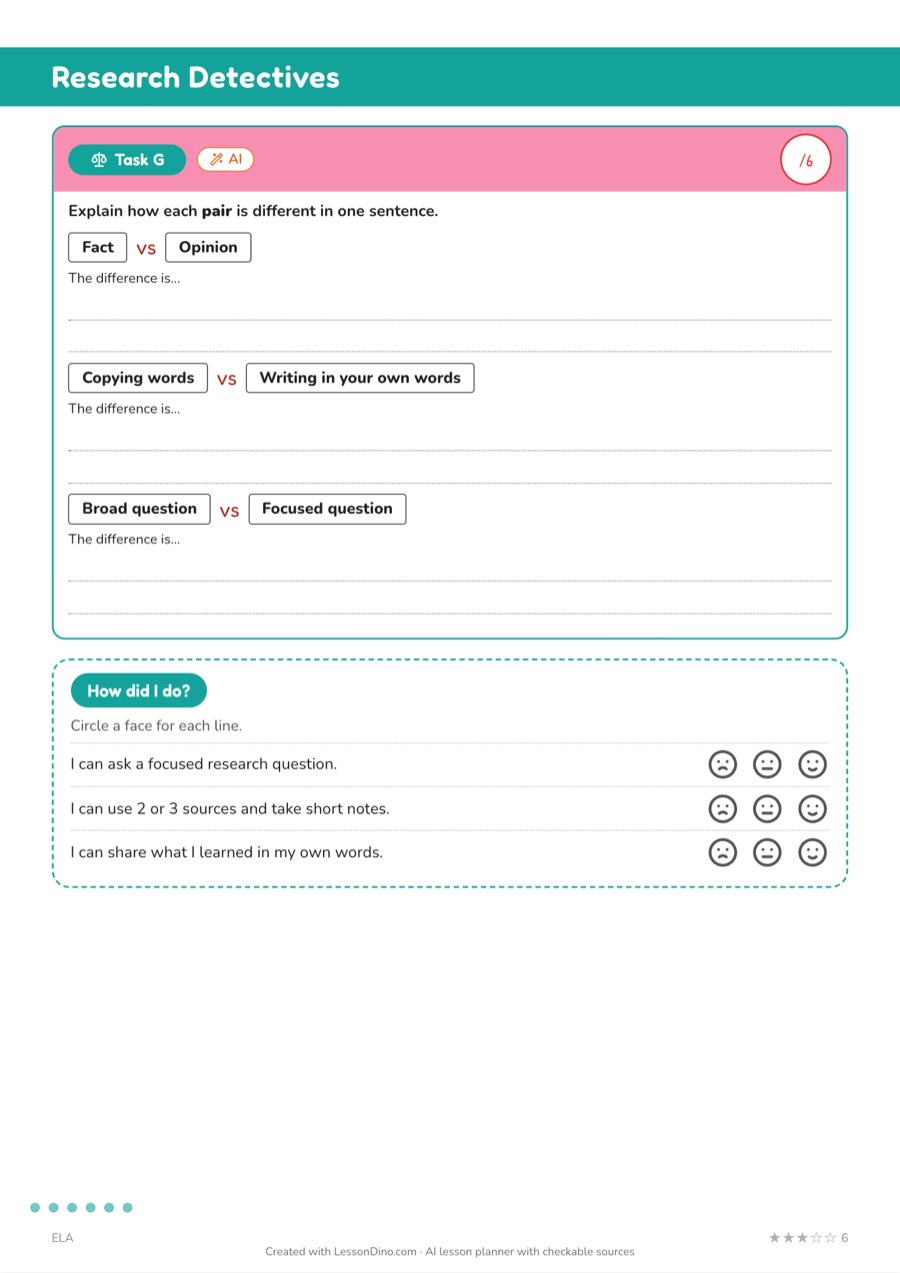
Sort each word into the right column.
Page 6
Explain how each pair is different in one sentence.
Answers
Show the answers
The answers are on the answer sheet, the last picture above.
Curriculum
Conduct short research projects that build knowledge through investigation of different aspects of a topic.
Made with Lesson Dino's AI on 17 October 2026. AI can make mistakes, so check the answers and facts against the sources before you teach.