The worksheet
About this worksheet
Students learn to find a story theme from details. They draw a four-box summary and state its big message. This Grade 4 ELA worksheet gives students (ages 9–10) five pages of practice on finding the theme of a story, part of the reading literature unit. It goes with our free Finding the theme of a story lesson, which has the slides and a timed lesson plan.
What it covers
By the end, students should be able to:
- Students will determine a story theme using key details from the text.
- Students will summarize a story briefly in order from beginning to end.
How to use it
- Guided practice (11 minutes): Do Worksheet Task F together to order the 4 steps for finding theme.
- Main activity (20 minutes): Direct pairs to read paragraphs 1-4 and draw Worksheet Task B: 4-box summary in order with one short sentence under each. Direct pairs to do Worksheet Task C: finish frame, then add a speech bubble for theme in one full sentence.
- Support: Use 3-sentence summary frame: Someone wanted ___, then ___, in the end ___.
- Stretch: Add a title that hints at the theme without giving away the ending.
- The answer sheet is the last page, so you can print it on its own or let students check their own work.
Key vocabulary
- theme: big idea about life that a story shows
- detail: small fact, word, or action in the writing
- summarize: retell only the main parts in short order
- moral: lesson about right and wrong choice
Mistakes to watch for
- Writing a topic word like friendship instead of a theme message. Stretch concept into statement: a concept is a word, a statement is a full sentence; add what story says about friendship.
- Writing a summary retell instead of theme. Use Slide 9 compare: summary tells what happens, theme tells big idea; ask What did characters learn about life?
- Using one detail or no proof for theme. Hunt for repeated ideas and character actions that infer theme; add two short details as proof.
What's on the worksheet
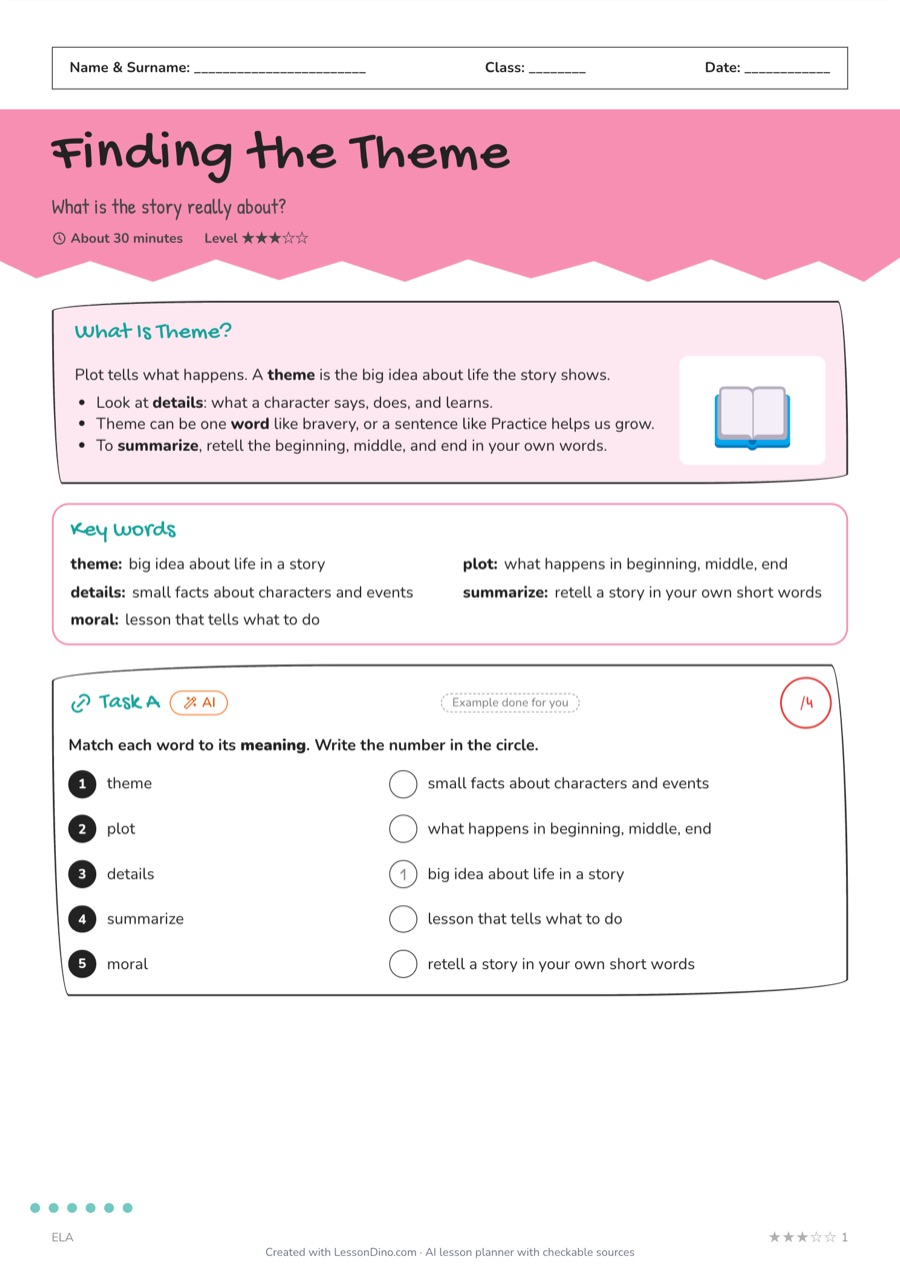
Find the Theme
Learn what theme means and match key words.
What Is Theme?
- Plot tells what happens. A theme is the big idea about life the story shows.
- Look at details: what a character says, does, and learns.
- Theme can be one word like bravery, or a sentence like Practice helps us grow.
- To summarize, retell the beginning, middle, and end in your own words.
| Word | Meaning |
|---|---|
| theme | big idea about life in a story |
| plot | what happens in beginning, middle, end |
| details | small facts about characters and events |
| summarize | retell a story in your own short words |
| moral | lesson that tells what to do |
Match each word to its meaning. Write the number in the circle.
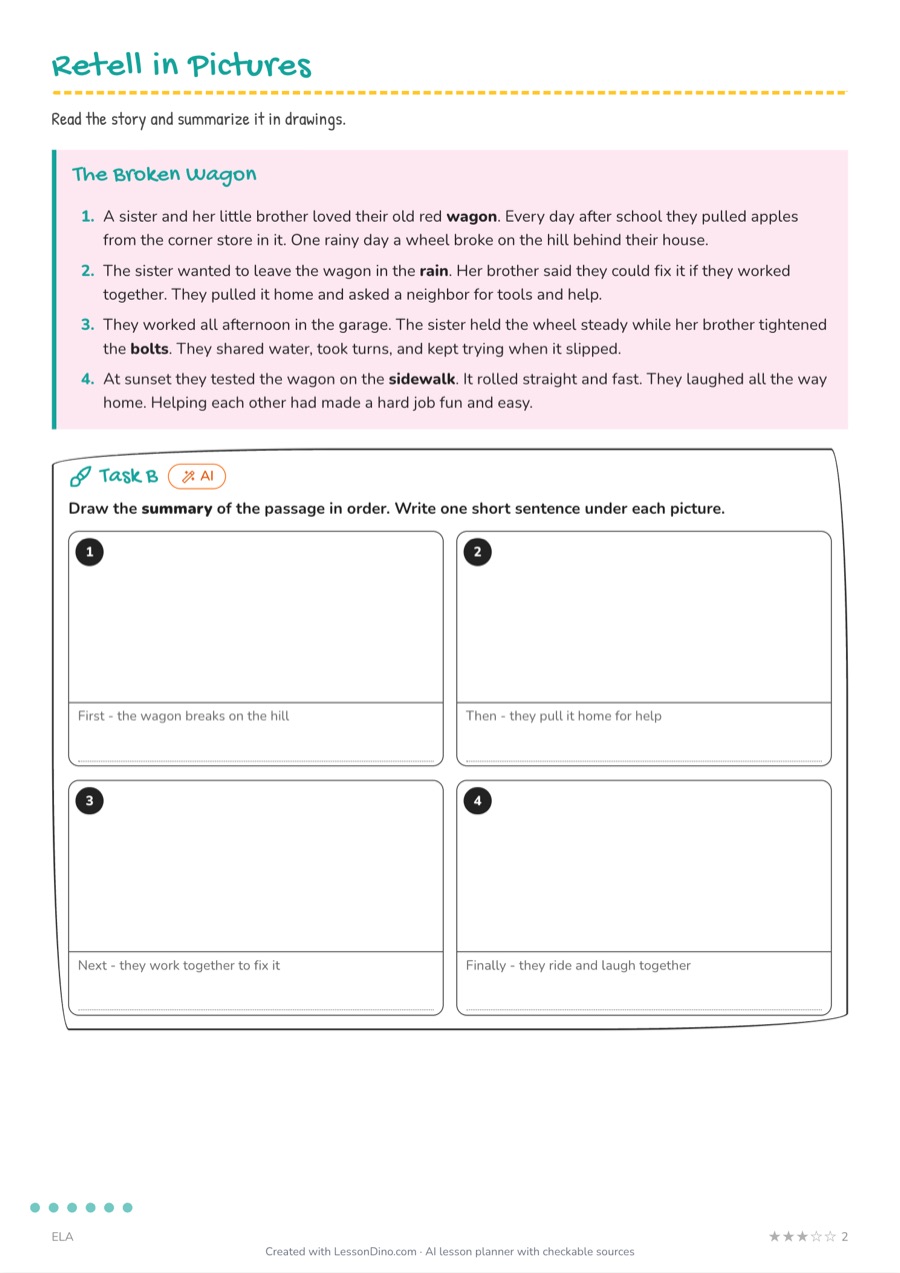
Retell in Pictures
Read the story and summarize it in drawings.
The Broken Wagon
Draw the summary of the passage in order. Write one short sentence under each picture.
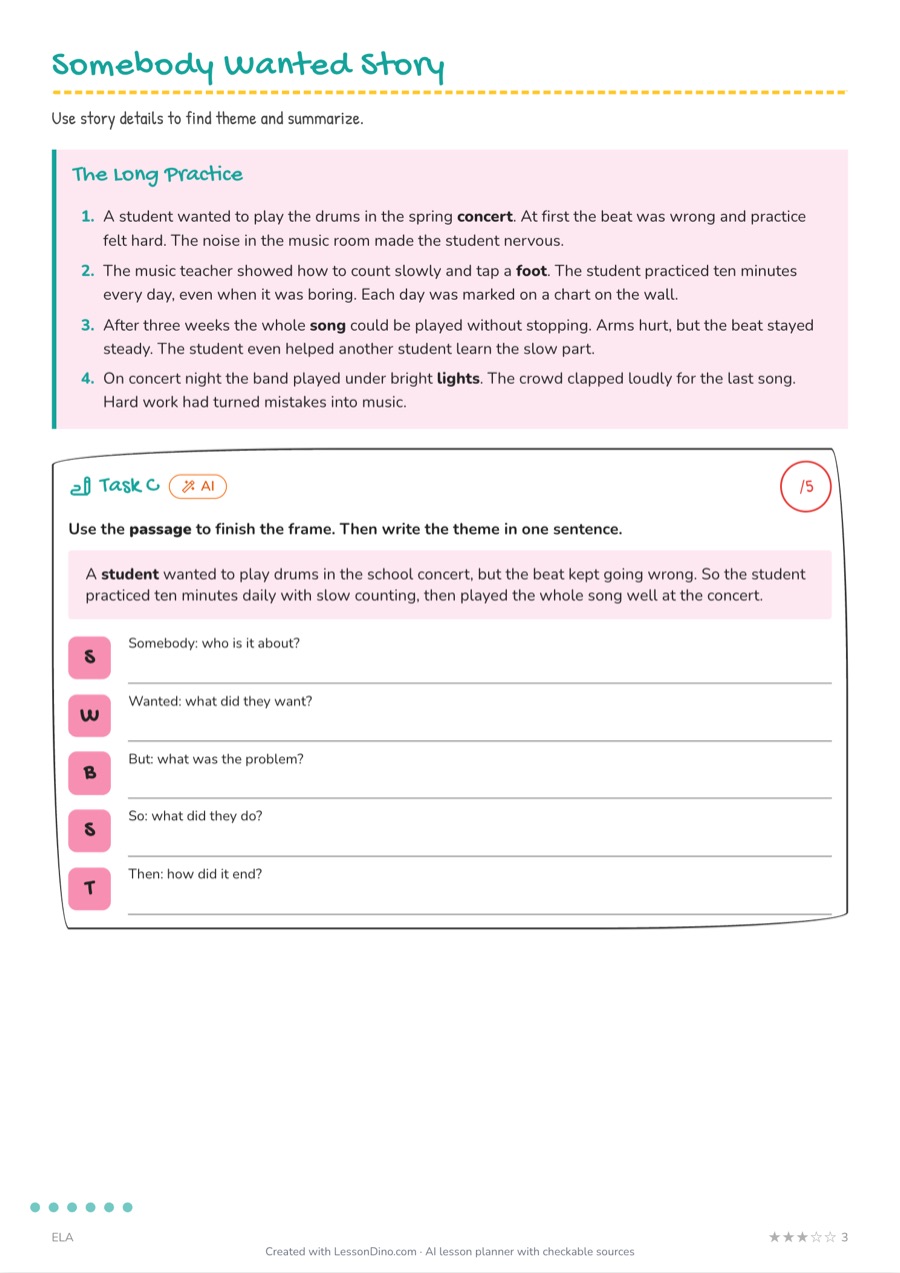
Somebody Wanted Story
Use story details to find theme and summarize.
The Long Practice
Use the passage to finish the frame. Then write the theme in one sentence.
- A student wanted to play drums in the school concert, but the beat kept going wrong. So the student practiced ten minutes daily with slow counting, then played the whole song well at the concert.
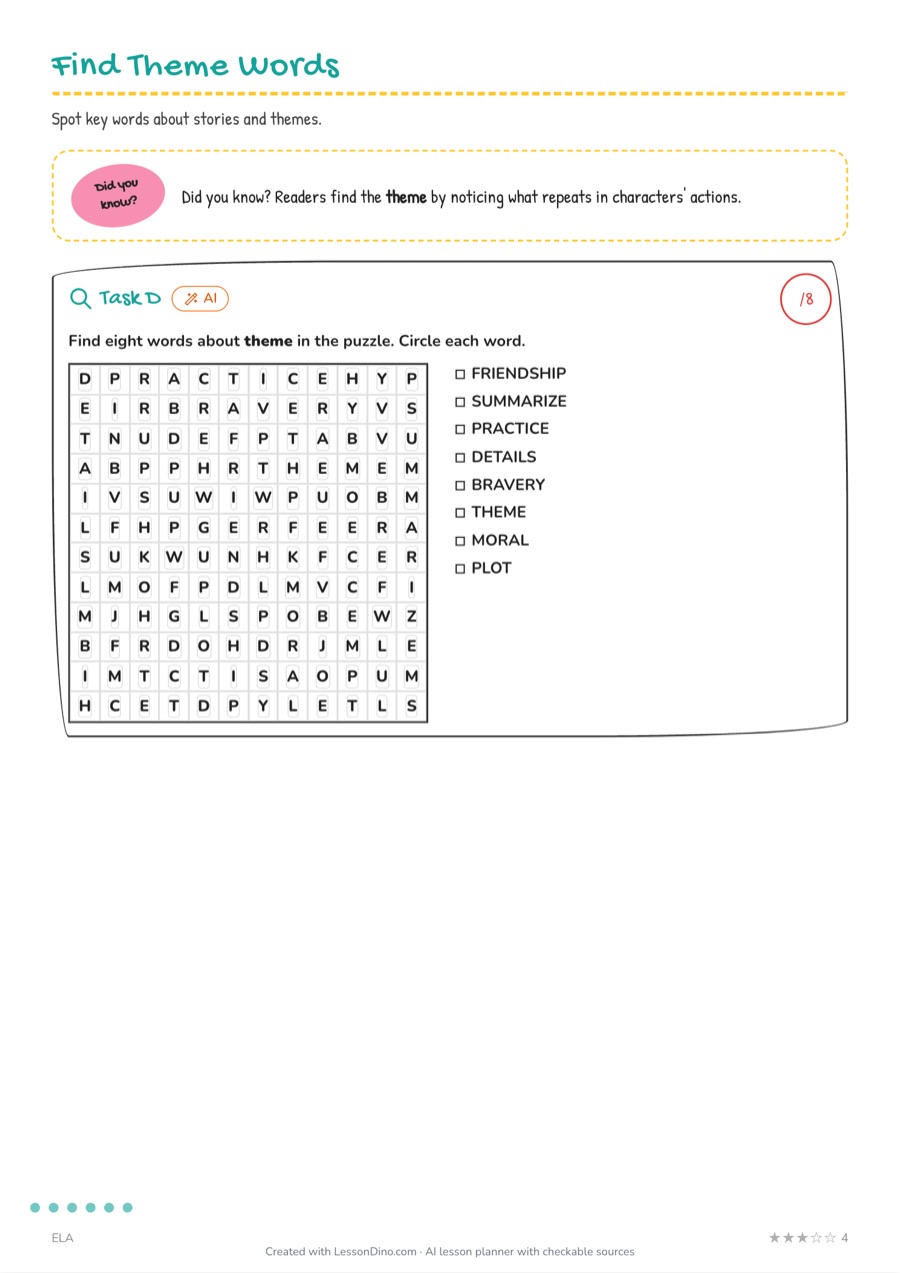
Find Theme Words
Spot key words about stories and themes.
- Did you know? Readers find the theme by noticing what repeats in characters' actions.
Find eight words about theme in the puzzle. Circle each word.
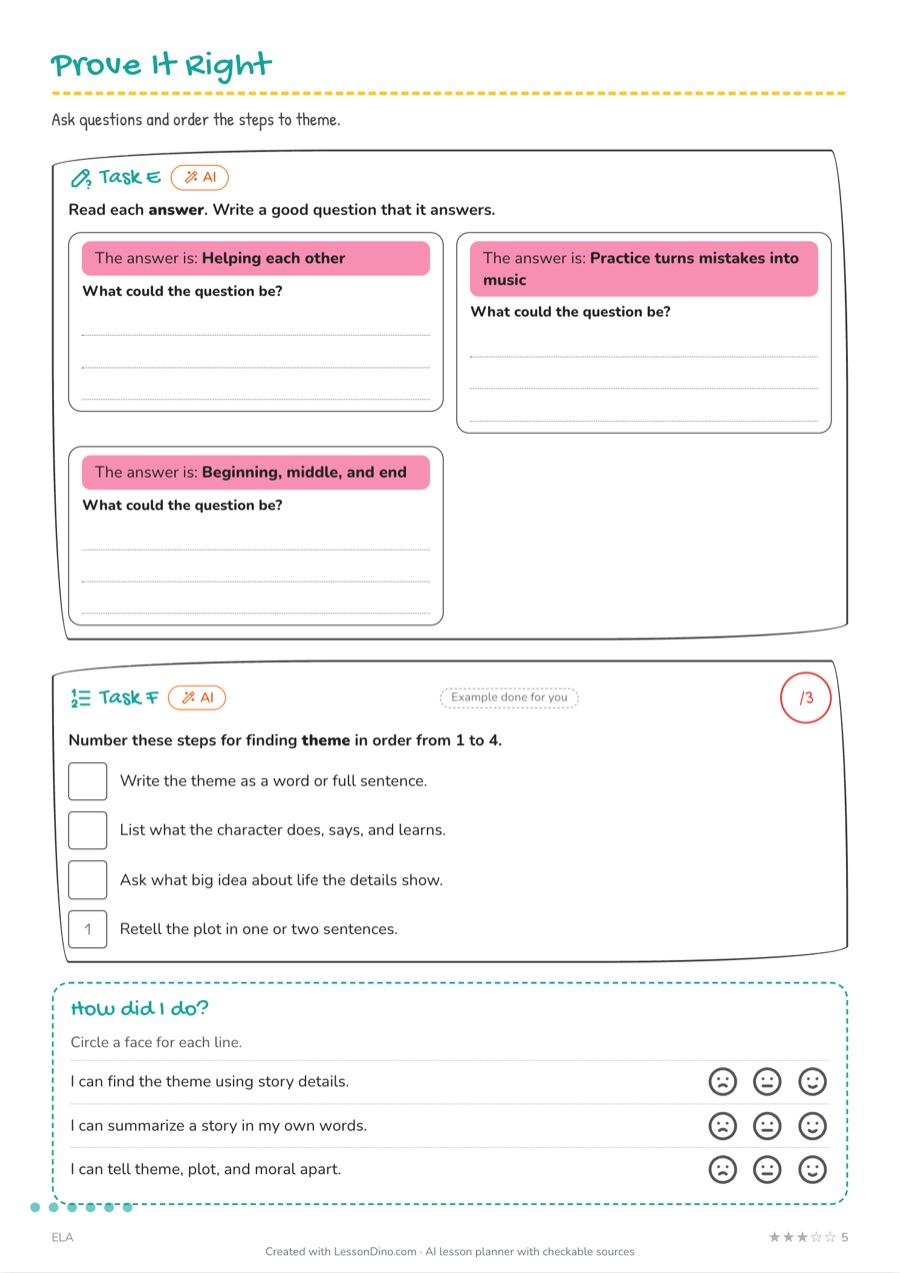
Prove It Right
Ask questions and order the steps to theme.
Read each answer. Write a good question that it answers.
Number these steps for finding theme in order from 1 to 4.
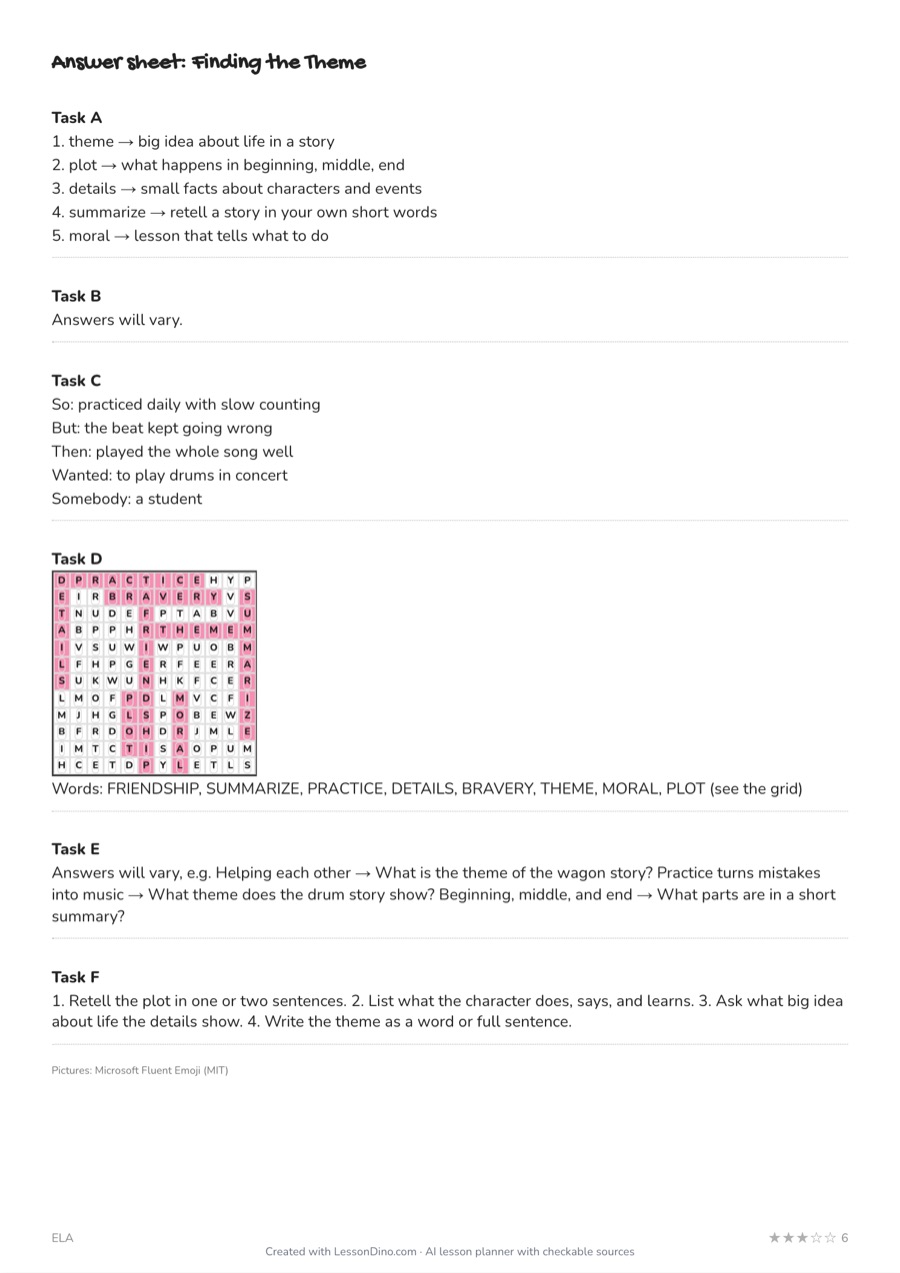
Answers
Show the answers
The answers are on the answer sheet, the last picture above.
Curriculum
Determine a theme of a story, drama, or poem from details in the text; summarize the text.
Made with Lesson Dino's AI on 16 October 2026. AI can make mistakes, so check the answers and facts against the sources before you teach.