The worksheet
About this worksheet
Students learn to separate my view from the narrator's view and characters' views. They move, sort clues, and explain whose thought each line shows. This Grade 3 ELA worksheet gives students (ages 8–9) six pages of practice on point of view, part of the reading literature unit. It goes with our free Point of view lesson, which has the slides and a timed lesson plan.
What it covers
By the end, students should be able to:
- Students will tell apart my view, the narrator view, and character views.
- Students will use I, you, he, she, they clues to find who thinks.
- Students will state my own view apart from story views with reasons.
How to use it
- Guided practice (15 minutes): Hand out Worksheet Task A multiple choice and read directions together.
- Main activity (20 minutes): Move pairs to seats for Worksheet Task D causes and effects using paragraphs 2 and 3.
- Support: Pair students to move and decide together with I-equals-me card.
- Stretch: Explain what the narrator knows that one character does not know.
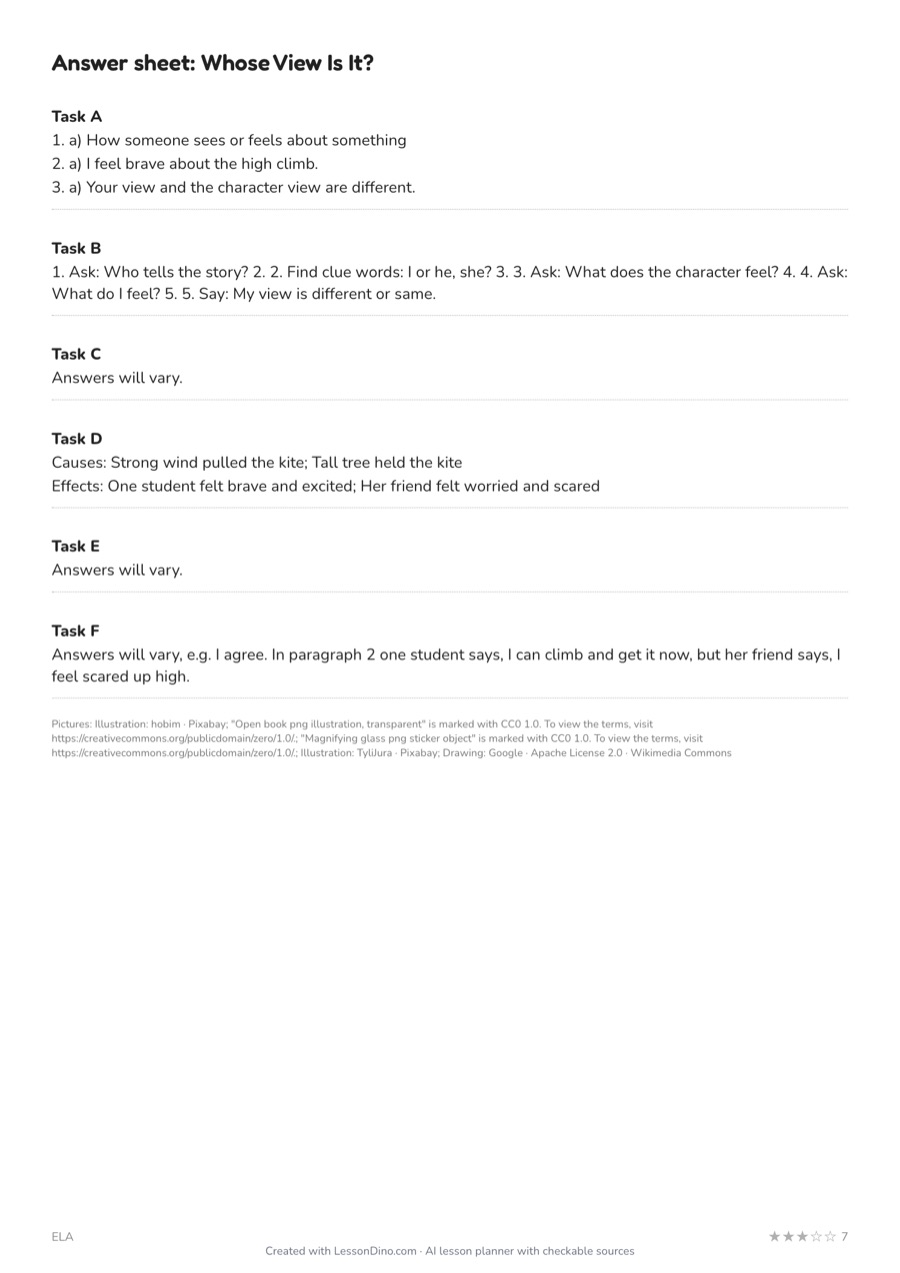
- The answer sheet is the last page, so you can print it on its own or let students check their own work.
Key vocabulary
- point of view: how someone sees or thinks about something
- narrator: the voice that tells the story
- character: a person or animal in a story
- clue: a small word or sign that helps you decide
Mistakes to watch for
- Thinking if a character says I in talking, the whole story is first-person. Color narration yellow and talking blue, then ask who is narrating versus who is speaking.
- Thinking my view must match the brave or scared character's view. Use two lines: My point of view is ___ because ___. The character view is ___. Views differ because experiences shape views.
- Mixing up he-she-they clues and calling narrator lines mine. Ask Is this me or the story? Find I, you, he, she, they, then say This is _ view because _.
What's on the worksheet
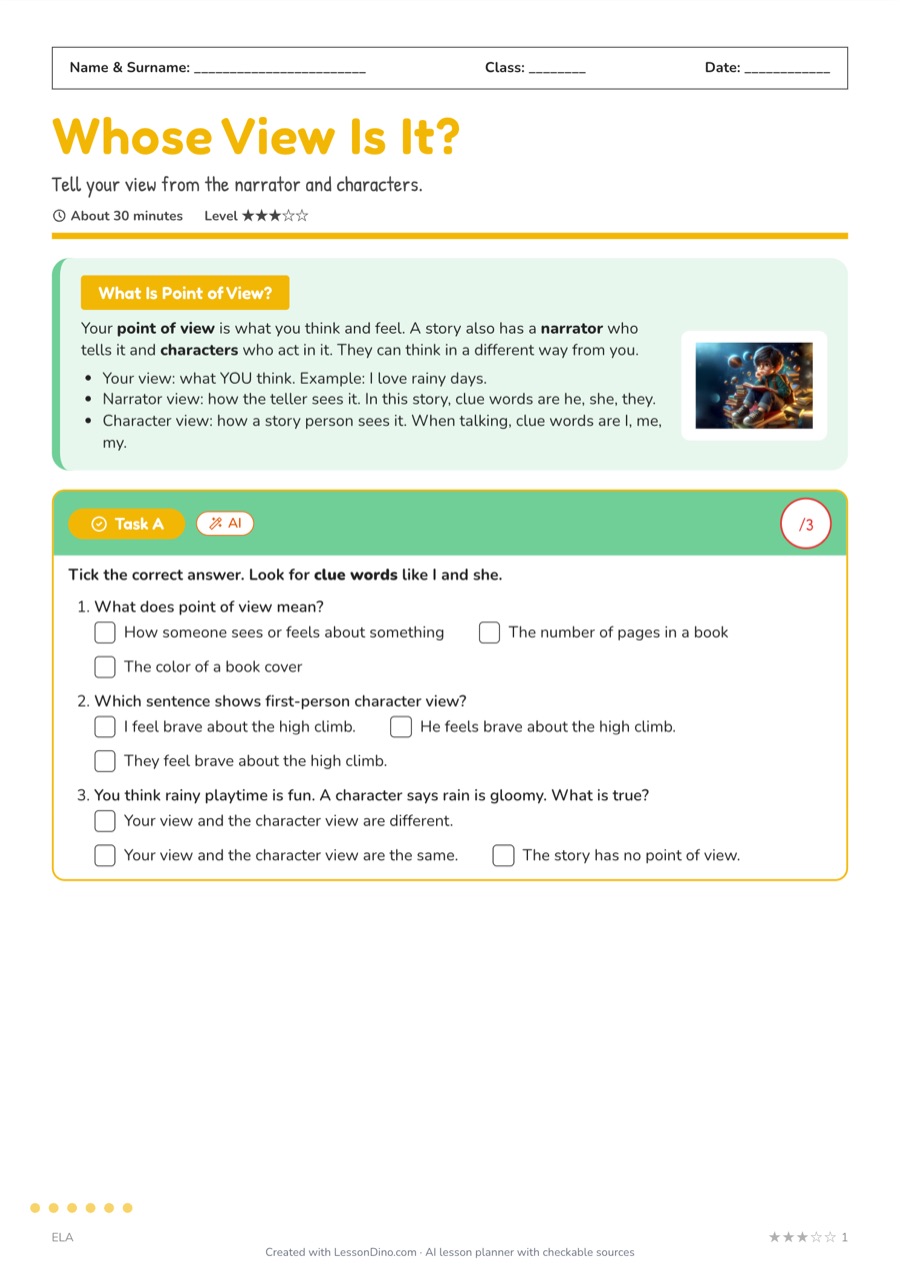
Whose Eyes See?
Find out what point of view means.
What Is Point of View?
- Your point of view is what you think and feel. A story also has a narrator who tells it and characters who act in it. They can think in a different way from you.
- Your view: what YOU think. Example: I love rainy days.
- Narrator view: how the teller sees it. In this story, clue words are he, she, they.
- Character view: how a story person sees it. When talking, clue words are I, me, my.
Tick the correct answer. Look for clue words like I and she.
- What does point of view mean?
- Which sentence shows first-person character view?
- You think rainy playtime is fun. A character says rain is gloomy. What is true?
Follow the Steps
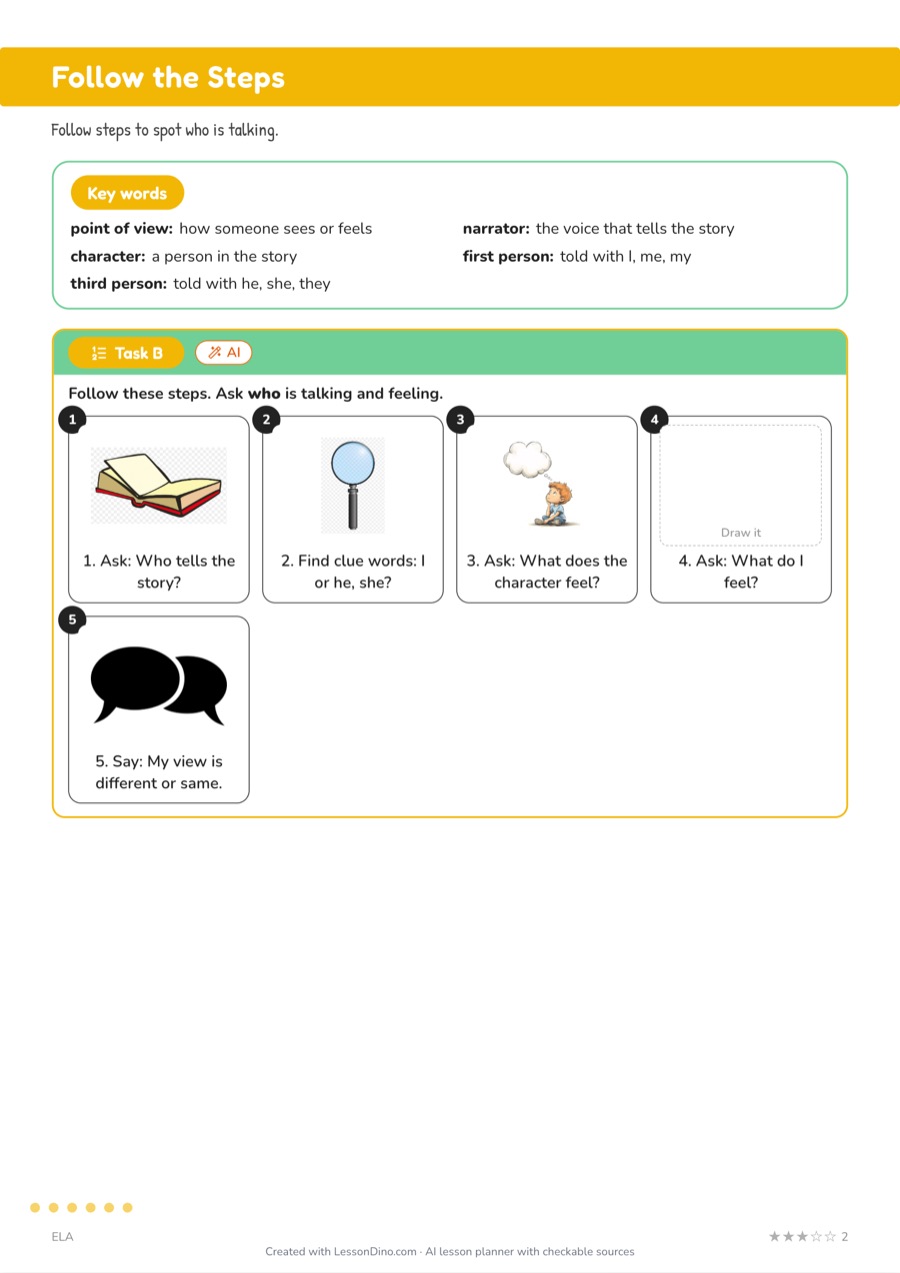
Follow steps to spot who is talking.
| Word | Meaning |
|---|---|
| point of view | how someone sees or feels |
| narrator | the voice that tells the story |
| character | a person in the story |
| first person | told with I, me, my |
| third person | told with he, she, they |
Follow these steps. Ask who is talking and feeling.
What Do You Think?
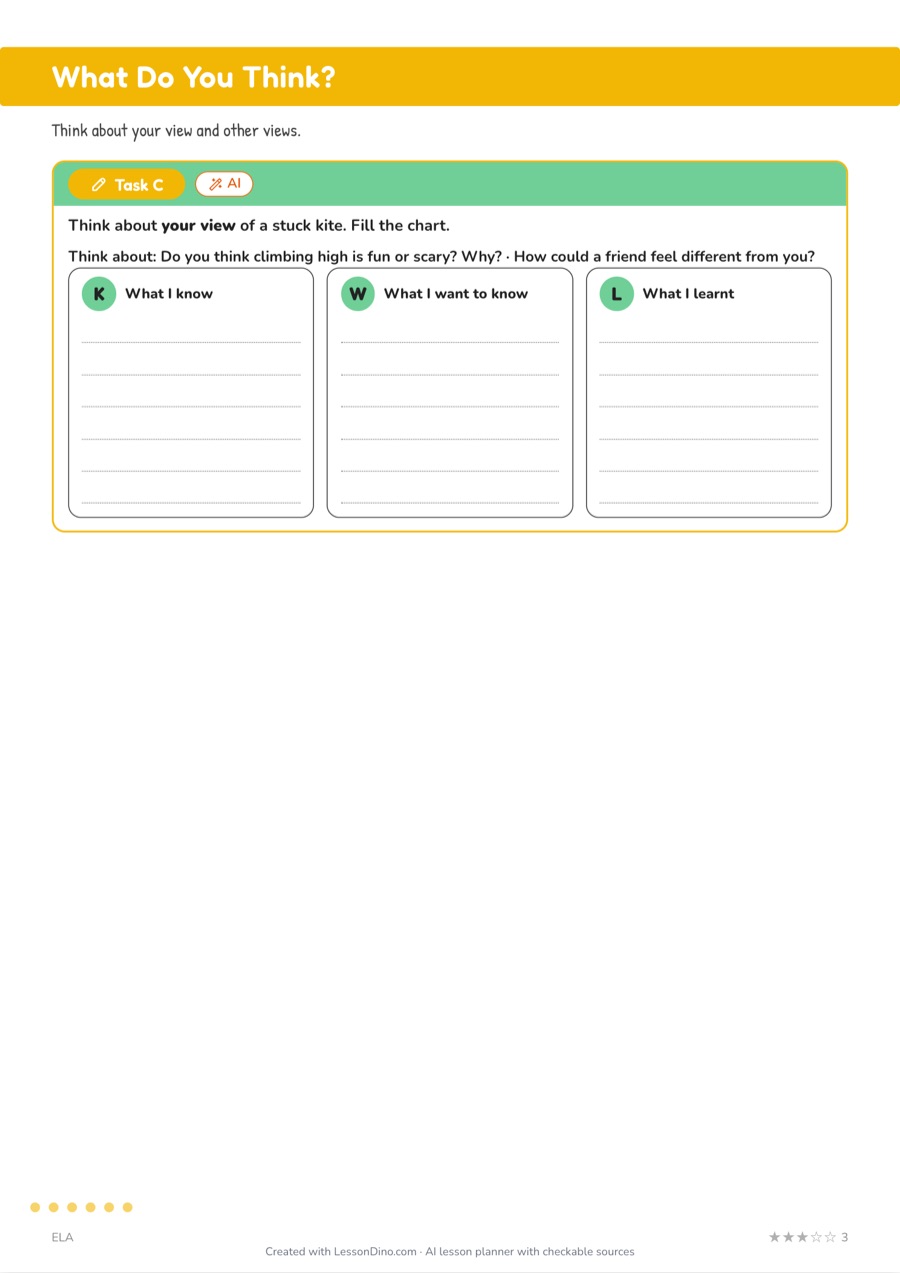
Think about your view and other views.
Think about your view of a stuck kite. Fill the chart.
Same Event Different Feelings
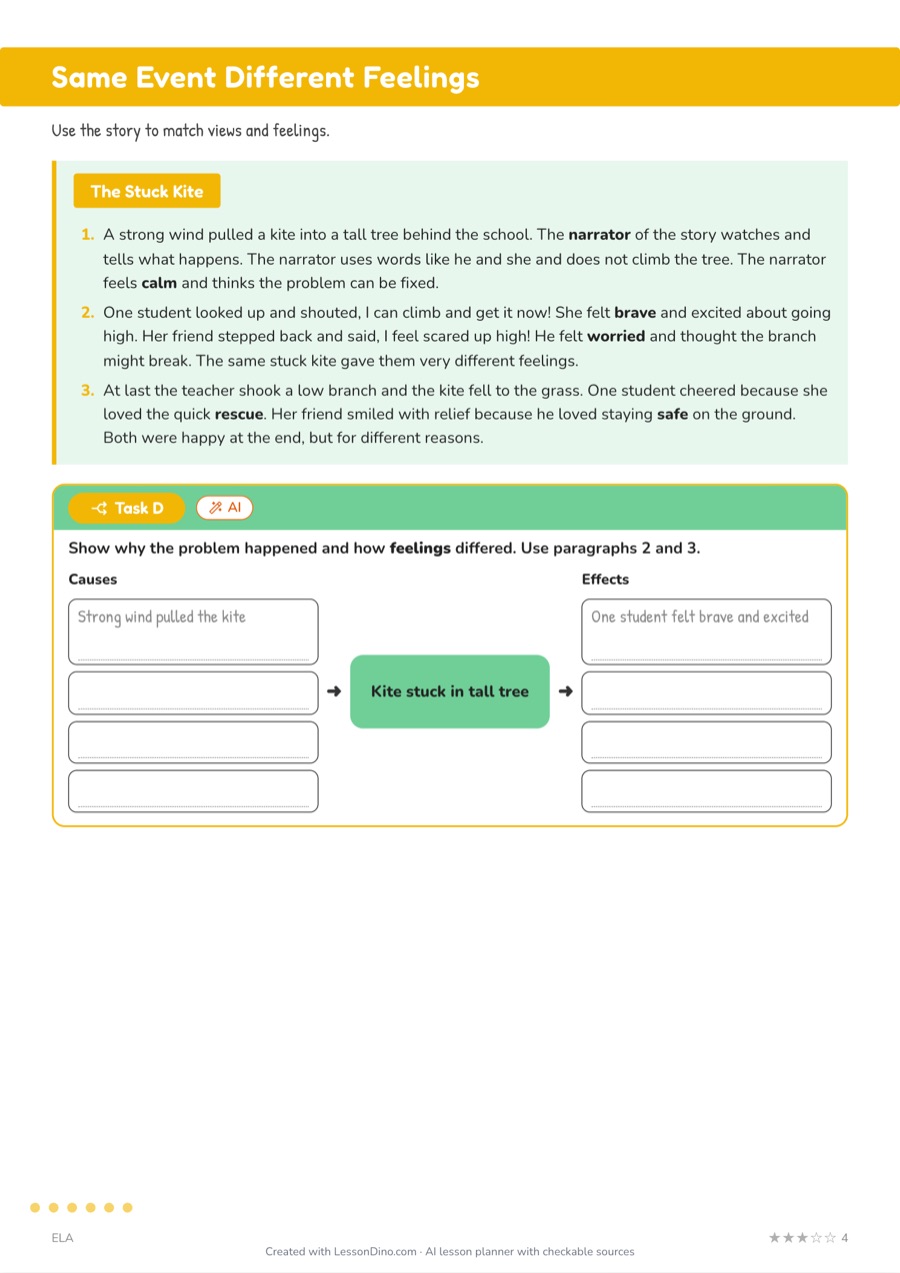
Use the story to match views and feelings.
The Stuck Kite
Show why the problem happened and how feelings differed. Use paragraphs 2 and 3.
You Versus Story
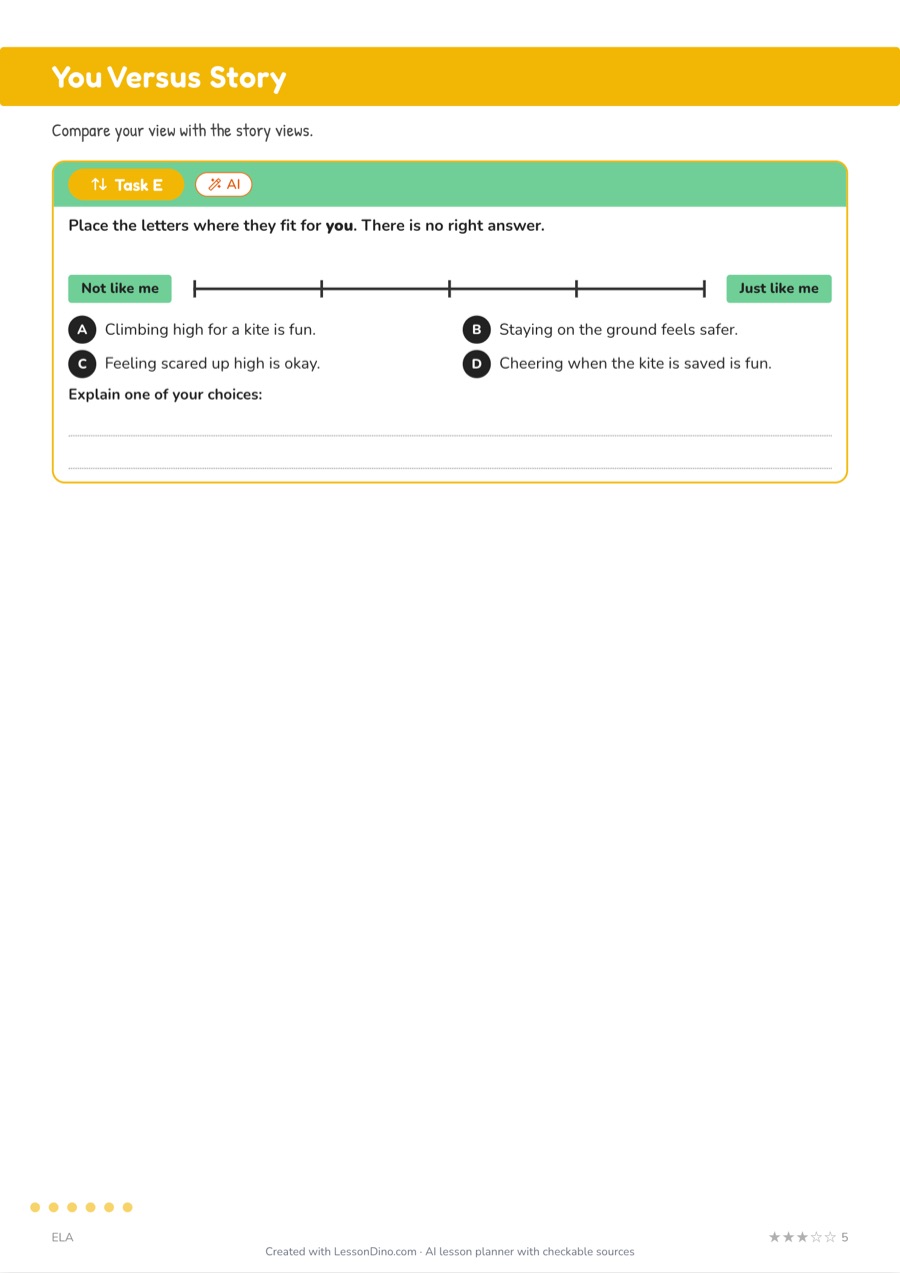
Compare your view with the story views.
Place the letters where they fit for you. There is no right answer.
Page 6
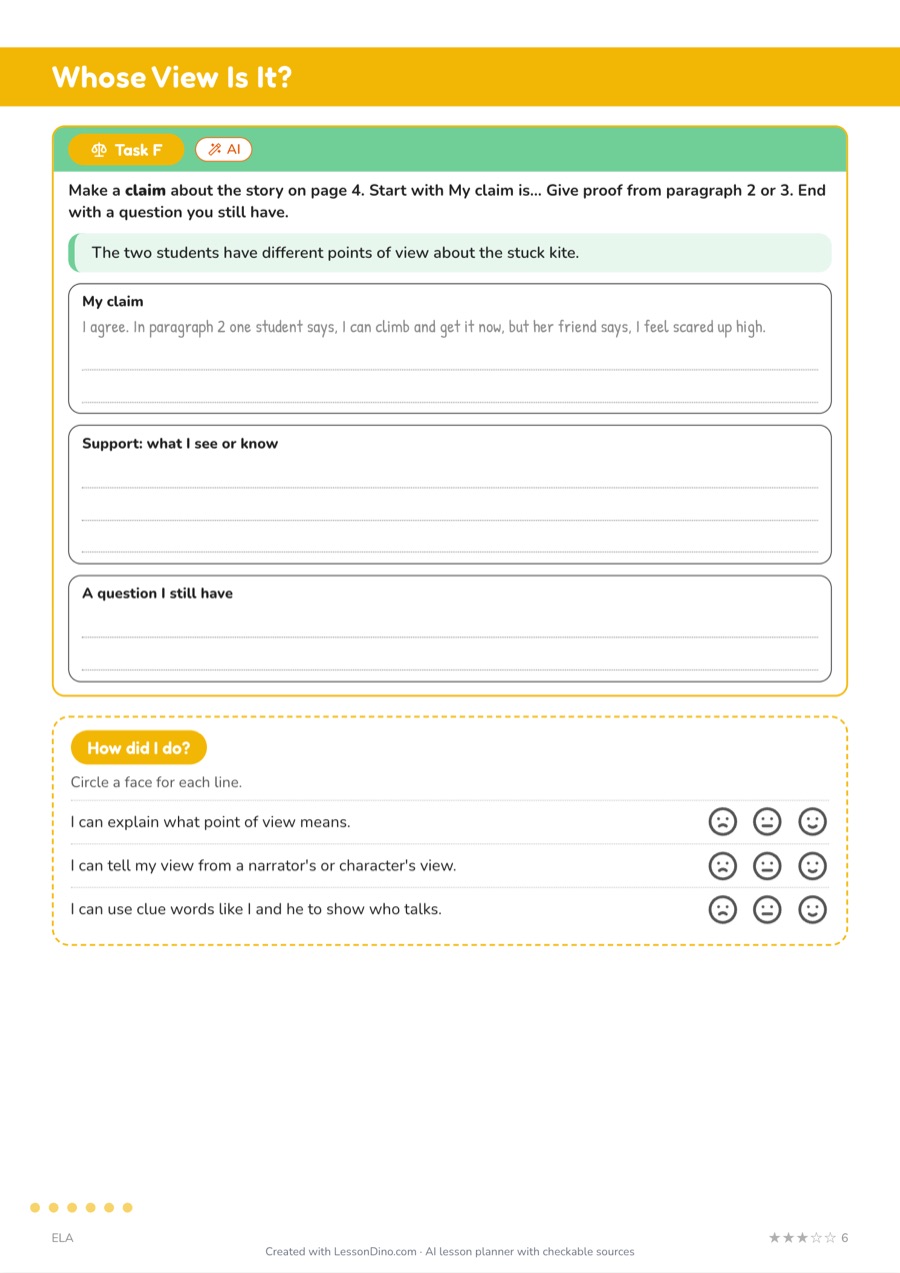
Make a claim about the story on page 4. Start with My claim is... Give proof from paragraph 2 or 3. End with a question you still have.
Answers
Show the answers
The answers are on the answer sheet, the last picture above.
Curriculum
Distinguish their own point of view from that of the narrator or those of the characters.
Made with Lesson Dino's AI on 17 October 2026. AI can make mistakes, so check the answers and facts against the sources before you teach.