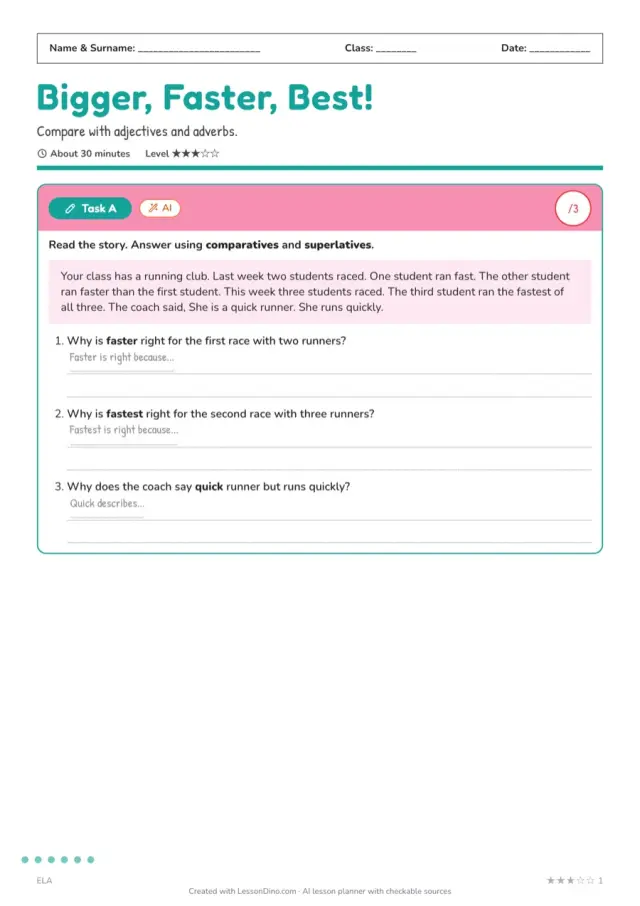
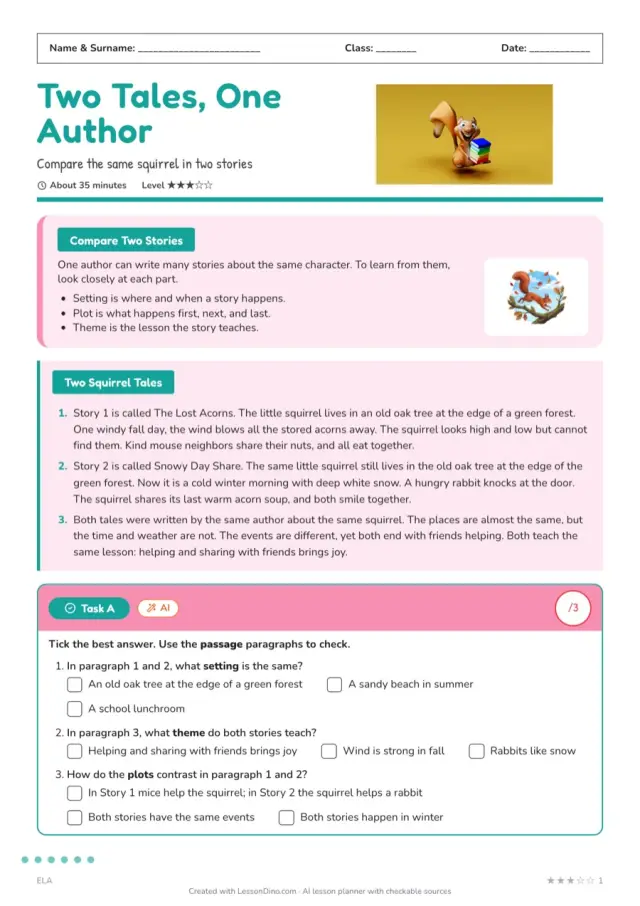
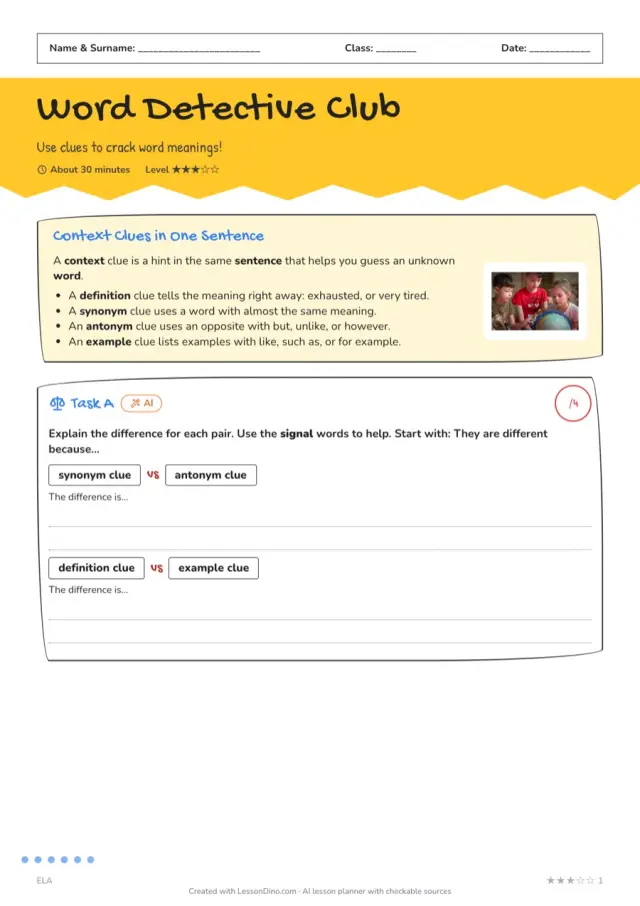
The worksheet
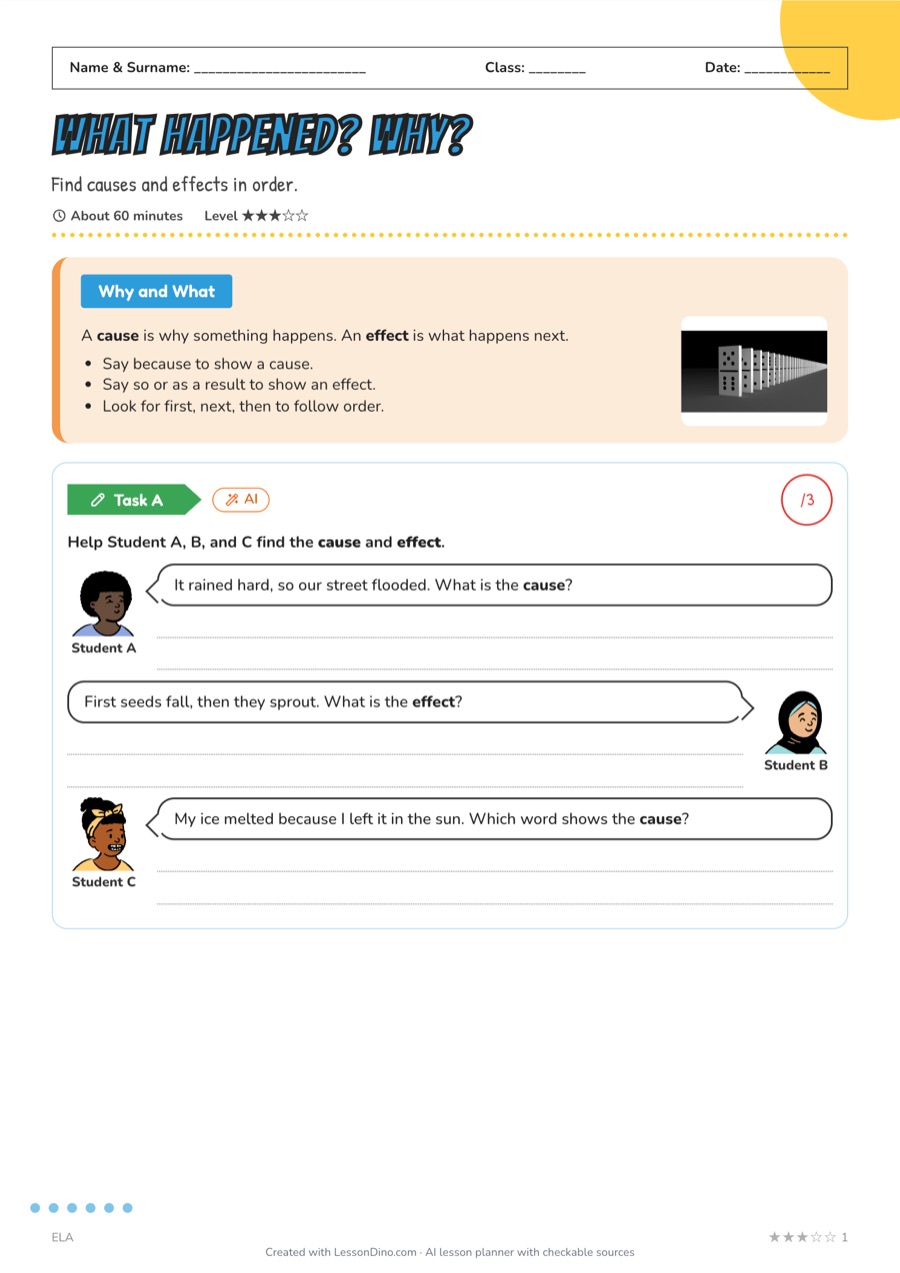
About this worksheet
Students learn to describe cause-and-effect chains in order. They build a paper chain and retell it with time and link words. This Grade 3 ELA worksheet gives students (ages 8–9) six pages of practice on cause and effect, part of the reading informational text unit. It goes with our free Cause and effect lesson, which has the slides and a timed lesson plan.
What it covers
By the end, students should be able to:
- Students will describe a cause-and-effect chain in order using time words.
- Students will find causes and effects in a text and explain why each step happens.
- Students will retell steps in a procedure using because, so, then, and finally.
How to use it
- Use it for practice after the teaching part of the lesson, once students have seen the worked examples on the slides.
- Support: Give two links already taped together with the time word written in light pencil to trace.
- Stretch: Add a fifth link that predicts one more effect later that day.
- The answer sheet is the last page, so you can print it on its own or let students check their own work.
Key vocabulary
- cause: why something happens
- effect: what happens as a result
- sequence: the order that steps or events come in
- chain: linked steps where one result starts the next step
- because: a linking word that tells the reason why
Mistakes to watch for
- Saying the effect came before its cause. Re-lay links left to right and ask what had to happen first; the cause comes before the effect.
- Listing steps without time or link words. Point to Slides 9–10 bank and insert first, next, then, finally and because, so, as a result.
- Confusing one cause with its chain of effects. Touch each link and say how each effect becomes the next cause in a causal chain.
What's on the worksheet
Cause Makes Effect
Learn what cause and effect mean.
Why and What
- A cause is why something happens. An effect is what happens next.
- Say because to show a cause.
- Say so or as a result to show an effect.
- Look for first, next, then to follow order.
Help Student A, B, and C find the cause and effect.
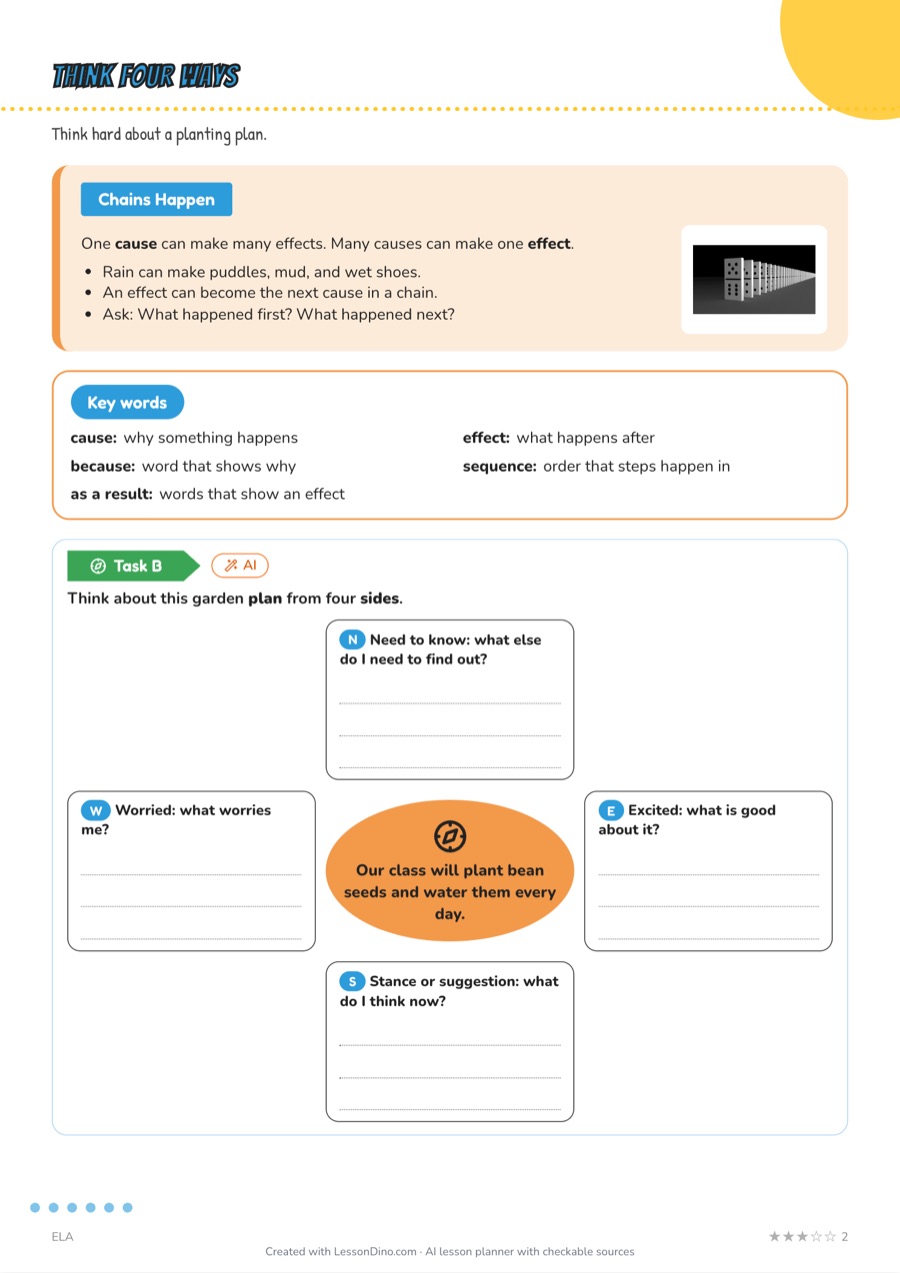
Think Four Ways
Think hard about a planting plan.
Chains Happen
- One cause can make many effects. Many causes can make one effect.
- Rain can make puddles, mud, and wet shoes.
- An effect can become the next cause in a chain.
- Ask: What happened first? What happened next?
| Word | Meaning |
|---|---|
| cause | why something happens |
| effect | what happens after |
| because | word that shows why |
| sequence | order that steps happen in |
| as a result | words that show an effect |
Think about this garden plan from four sides.
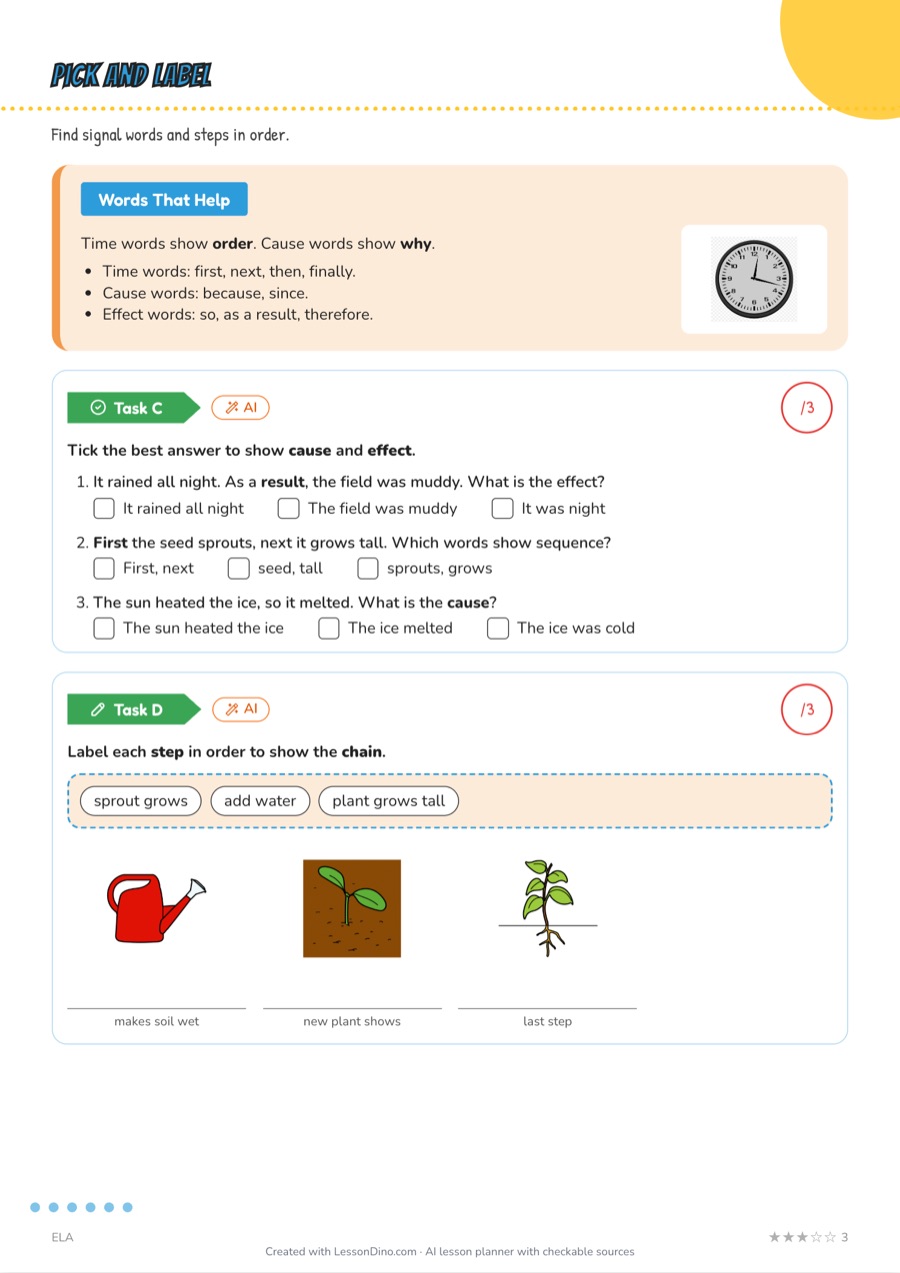
Pick and Label
Find signal words and steps in order.
Words That Help
- Time words show order. Cause words show why.
- Time words: first, next, then, finally.
- Cause words: because, since.
- Effect words: so, as a result, therefore.
Tick the best answer to show cause and effect.
- It rained all night. As a result, the field was muddy. What is the effect?
- First the seed sprouts, next it grows tall. Which words show sequence?
- The sun heated the ice, so it melted. What is the cause?
Label each step in order to show the chain.
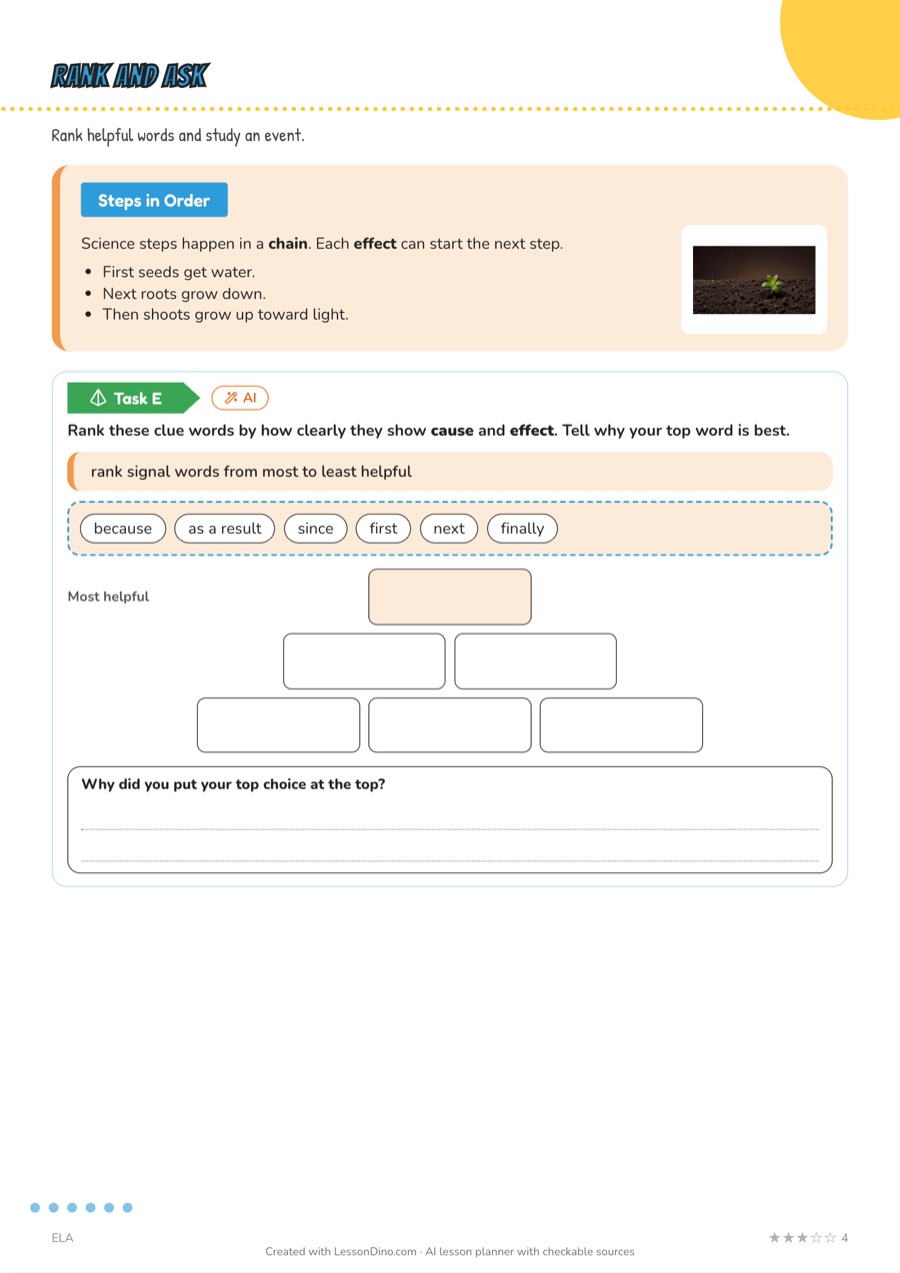
Rank and Ask
Rank helpful words and study an event.
Steps in Order
- Science steps happen in a chain. Each effect can start the next step.
- First seeds get water.
- Next roots grow down.
- Then shoots grow up toward light.
Rank these clue words by how clearly they show cause and effect. Tell why your top word is best.
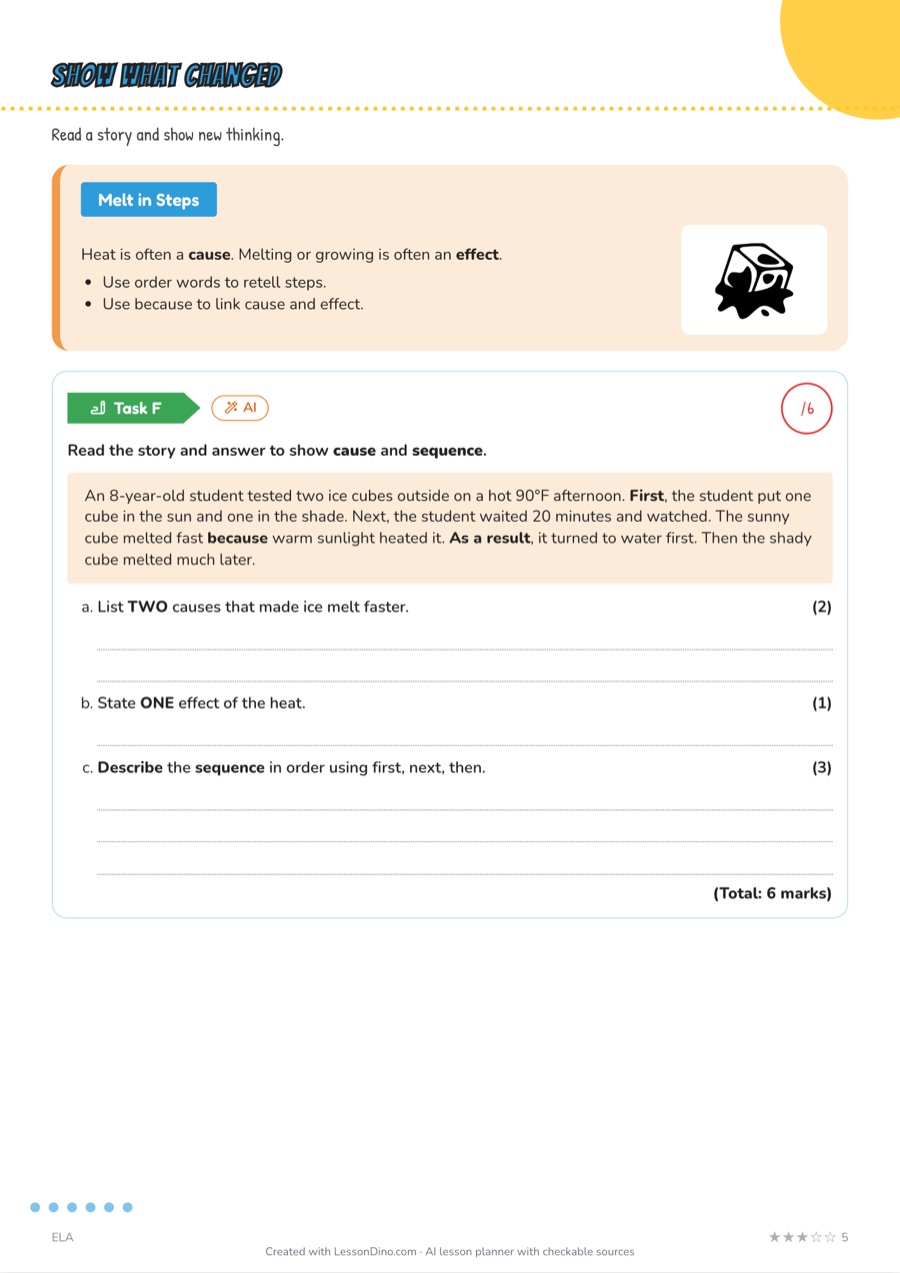
Show What Changed
Read a story and show new thinking.
Melt in Steps
- Heat is often a cause. Melting or growing is often an effect.
- Use order words to retell steps.
- Use because to link cause and effect.
Read the story and answer to show cause and sequence.
Page 6
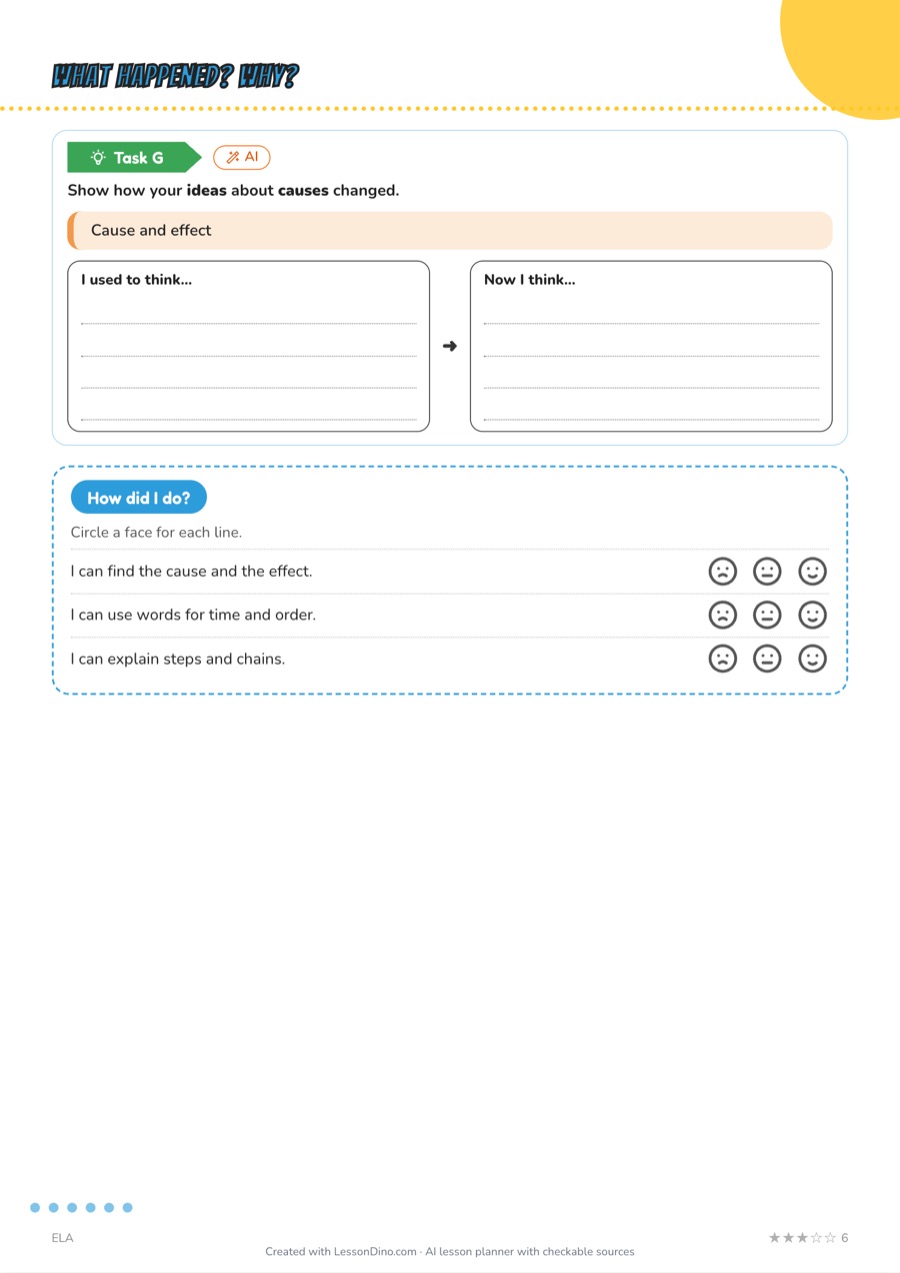
Show how your ideas about causes changed.
Answers
Show the answers
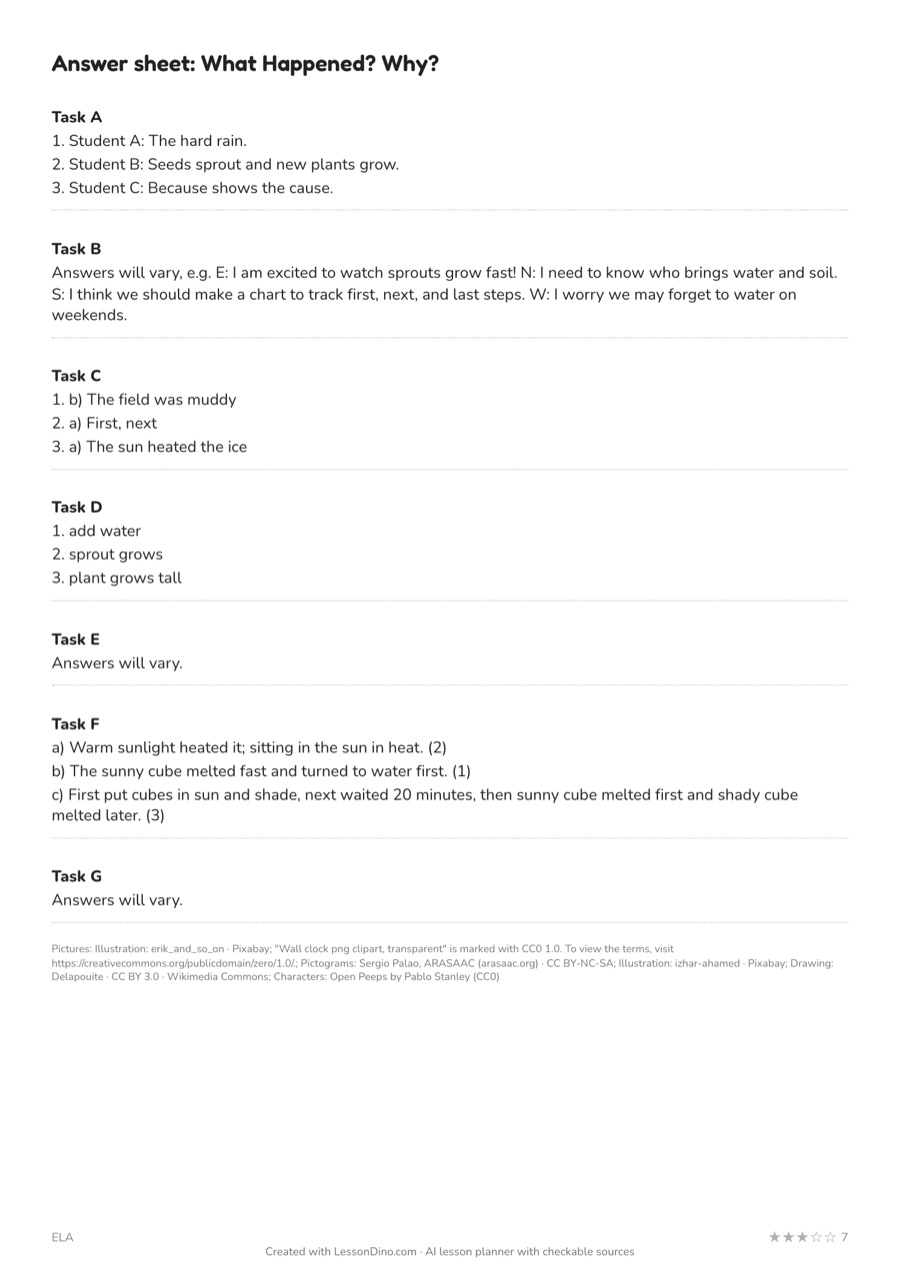
- List TWO causes that made ice melt faster. Warm sunlight heated it; sitting in the sun in heat.
- State ONE effect of the heat. The sunny cube melted fast and turned to water first.
- Describe the sequence in order using first, next, then. First put cubes in sun and shade, next waited 20 minutes, then sunny cube melted first and shady cube melted later.
The answer sheet is the last picture above.
Curriculum
Describe the relationship between a series of historical events, scientific ideas or concepts, or steps in technical procedures in a text, using language that pertains to time, sequence, and cause/effect.
Made with Lesson Dino's AI on 17 October 2026. AI can make mistakes, so check the answers and facts against the sources before you teach.