The worksheet
About this worksheet
Students learn to compare with adjectives and adverbs. They draw a growing picture and write sentences that compare. This Grade 3 ELA worksheet gives students (ages 8–9) five pages of practice on adjectives and adverbs, part of the language unit. It goes with our free Adjectives and adverbs lesson, which has the slides and a timed lesson plan.
What it covers
By the end, students should be able to:
- Students will form comparative adjectives and adverbs with -er and more plus than.
- Students will form superlative adjectives and adverbs with -est and most plus the.
- Students will choose adjectives for nouns and adverbs for verbs in sentences.
How to use it
- Main activity (20 minutes): Hand out folded 3-box paper and do Worksheet Task F together: circle the right word and name what it modifies.
- Support: Word bank with big, fast, loud, happy, slowly, quickly and starter lines with than and the already written.
- Stretch: Add long words like beautiful or powerful with more and most.
- The answer sheet is the last page, so you can print it on its own or let students check their own work.
Key vocabulary
- adjective: a word that tells what kind or which one about a person or thing
- adverb: a word that tells how, when or where about an action or another describing word
- comparative: a form that compares two, often built with -er plus than
- superlative: a form that compares three or more, often built with the plus -est
Mistakes to watch for
- Using the superlative for two, like the tallest of two pencils. Remind that comparatives compare two and superlatives compare more than two. Change to taller than.
- Using an adjective for a verb, like She sings beautiful. Ask what it tells about. Adverbs describe verbs and many add -ly, so use beautifully.
- Saying gooder or weller instead of better and best. Teach that some words change completely, like good changes to better and best. Keep chart up to copy.
What's on the worksheet
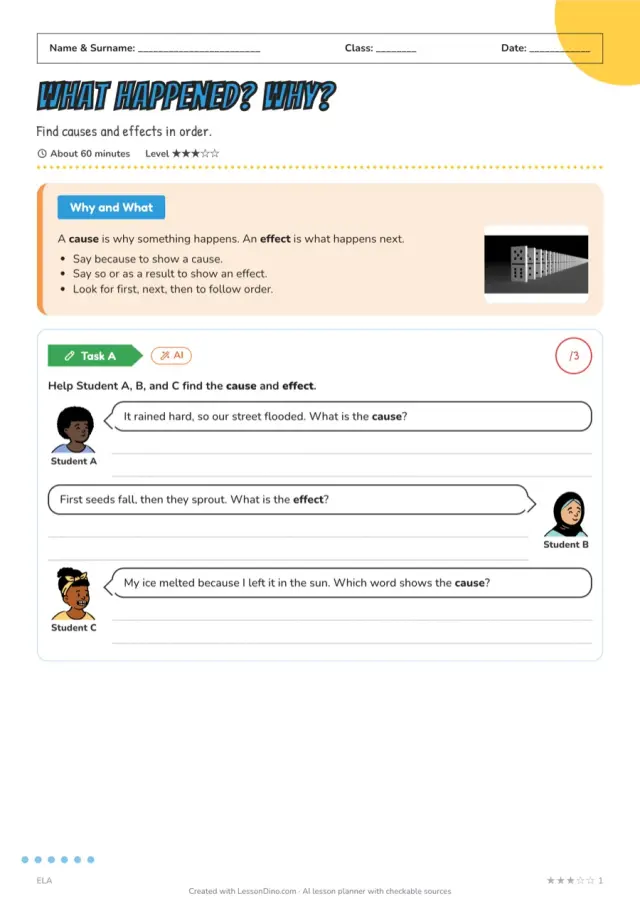
Bigger, Biggest Words
Learn how to compare with adjectives and adverbs.
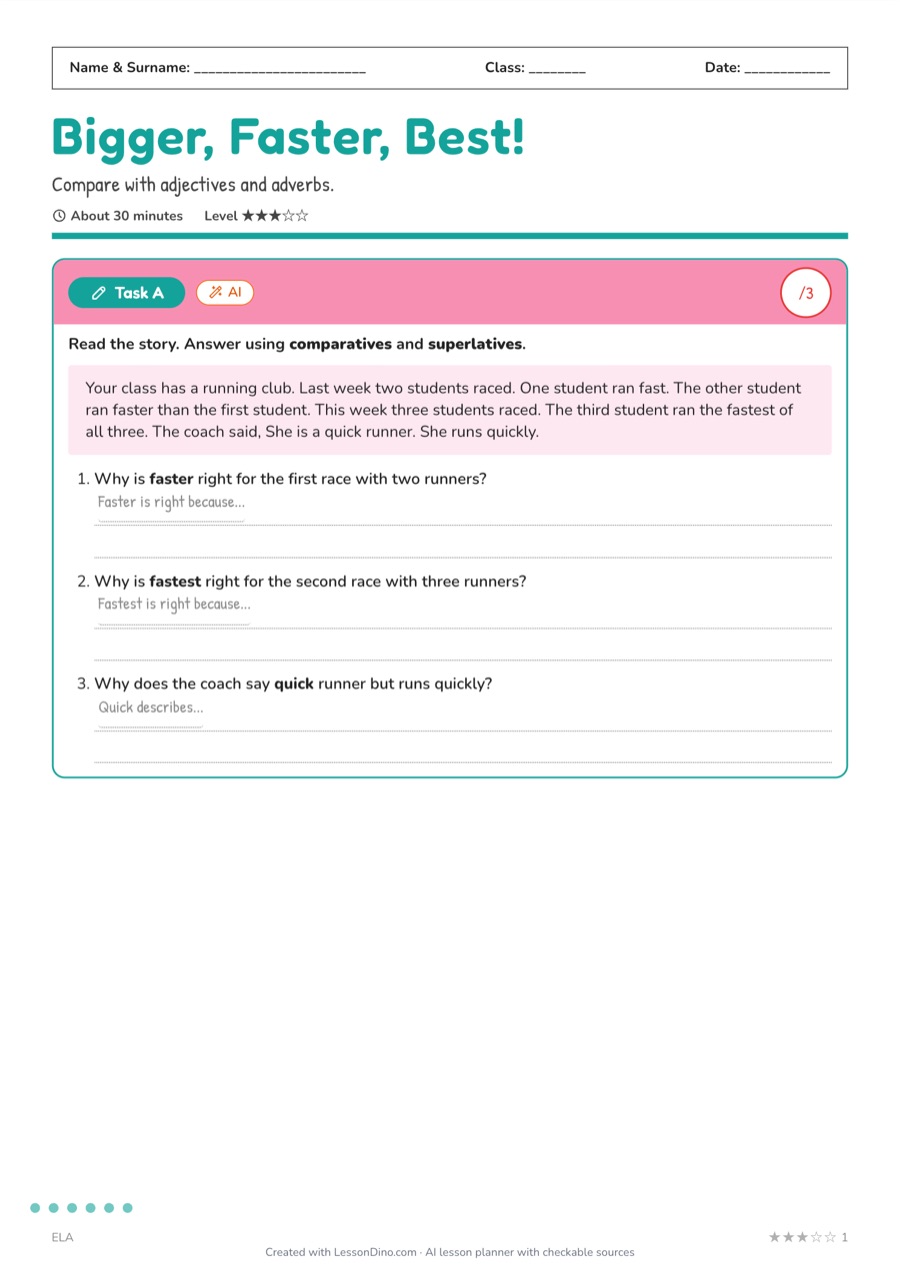
Read the story. Answer using comparatives and superlatives.
- Why is faster right for the first race with two runners?
- Why is fastest right for the second race with three runners?
- Why does the coach say quick runner but runs quickly?
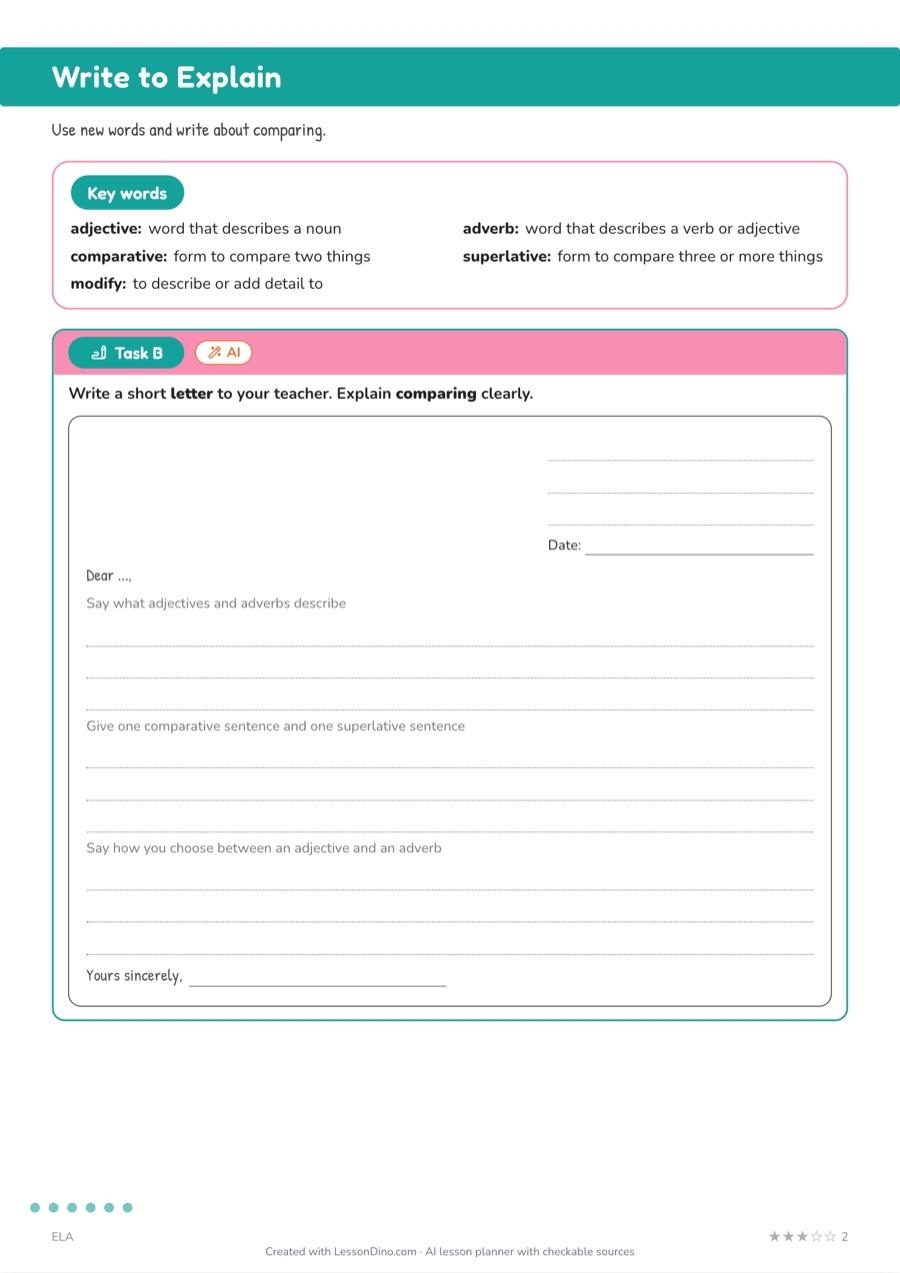
Write to Explain
Use new words and write about comparing.
| Word | Meaning |
|---|---|
| adjective | word that describes a noun |
| adverb | word that describes a verb or adjective |
| comparative | form to compare two things |
| superlative | form to compare three or more things |
| modify | to describe or add detail to |
Write a short letter to your teacher. Explain comparing clearly.
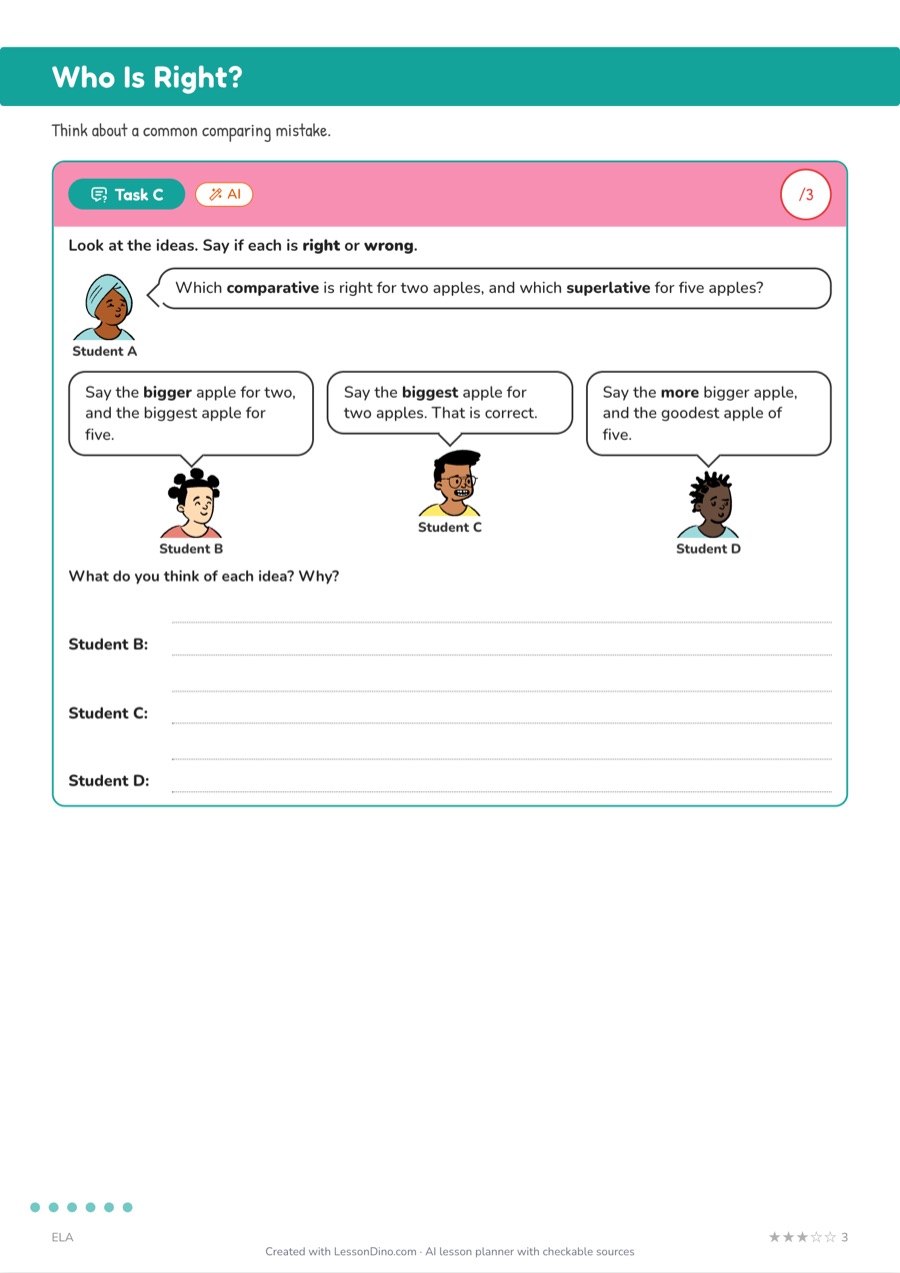
Who Is Right?
Think about a common comparing mistake.
Look at the ideas. Say if each is right or wrong.
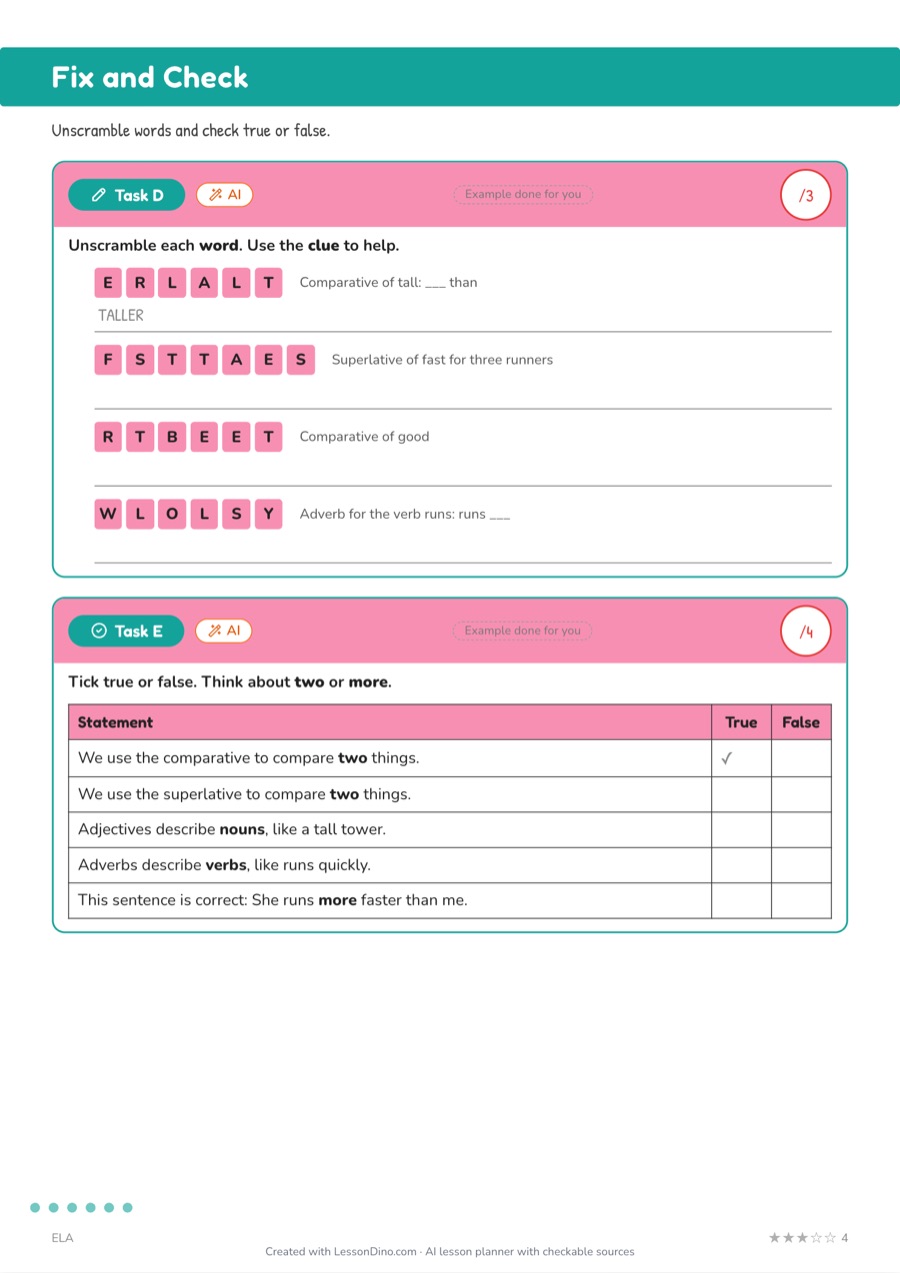
Fix and Check
Unscramble words and check true or false.
Unscramble each word. Use the clue to help.
Tick true or false. Think about two or more.
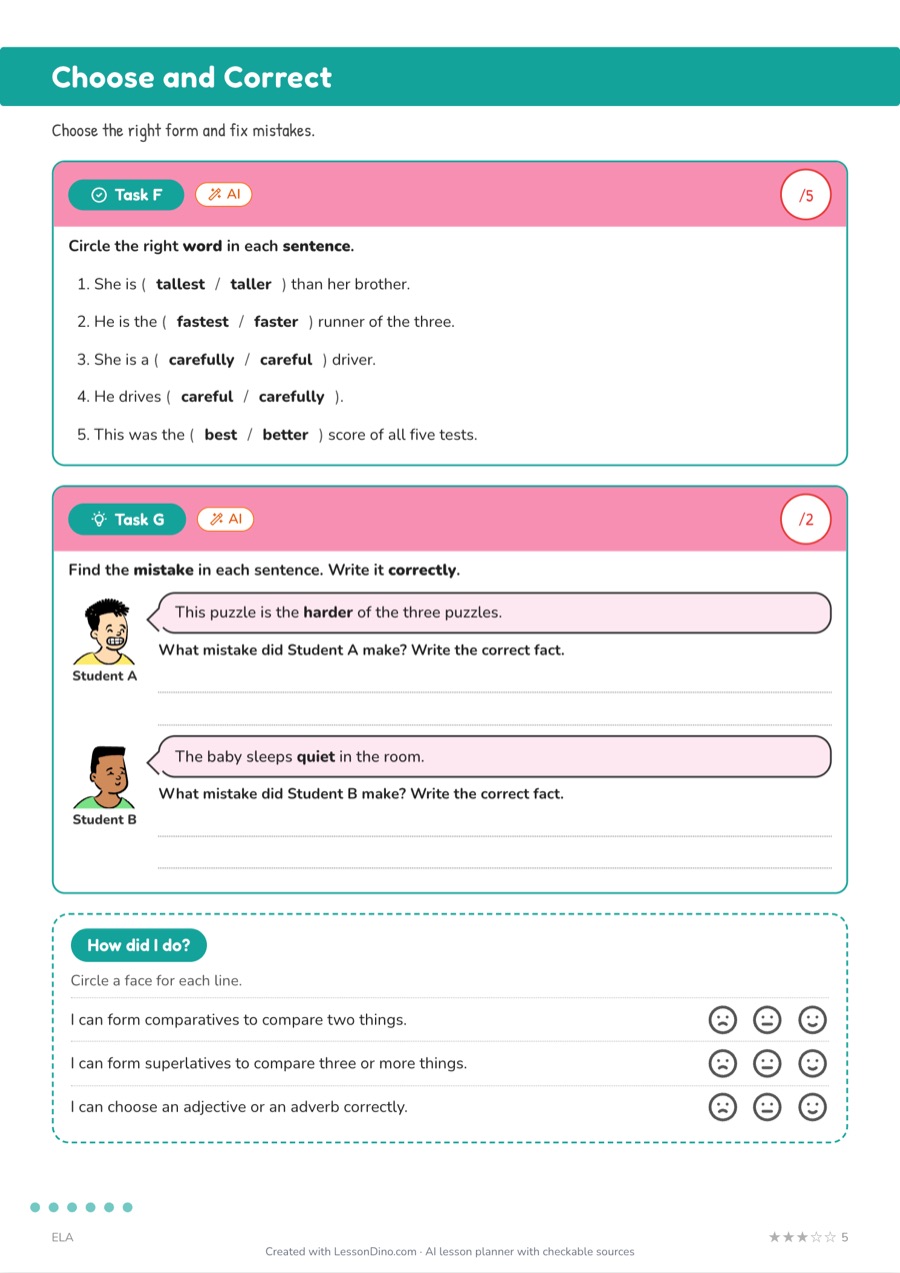
Choose and Correct
Choose the right form and fix mistakes.
Circle the right word in each sentence.
Find the mistake in each sentence. Write it correctly.
Answers
Show the answers
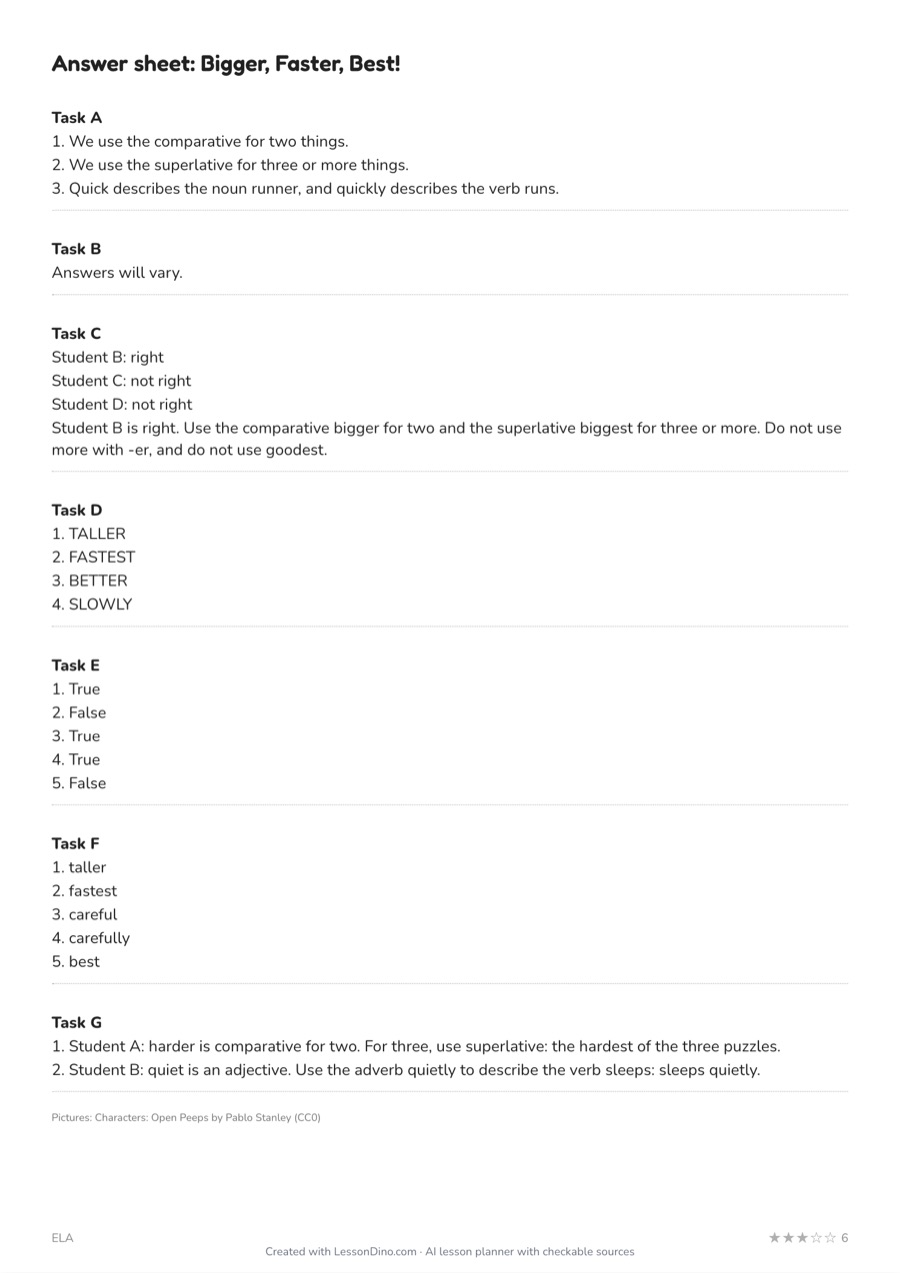
- Why is faster right for the first race with two runners? We use the comparative for two things.
- Why is fastest right for the second race with three runners? We use the superlative for three or more things.
- Why does the coach say quick runner but runs quickly? Quick describes the noun runner, and quickly describes the verb runs.
The answer sheet is the last picture above.
Curriculum
Form and use comparative and superlative adjectives and adverbs, and choose between them depending on what is to be modified.
Made with Lesson Dino's AI on 17 October 2026. AI can make mistakes, so check the answers and facts against the sources before you teach.