The worksheet
About this worksheet
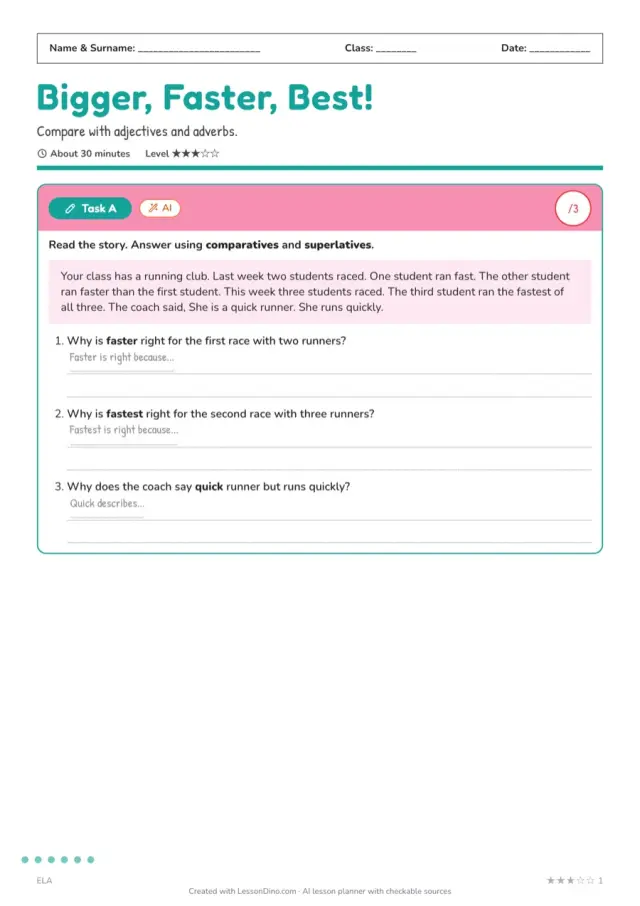
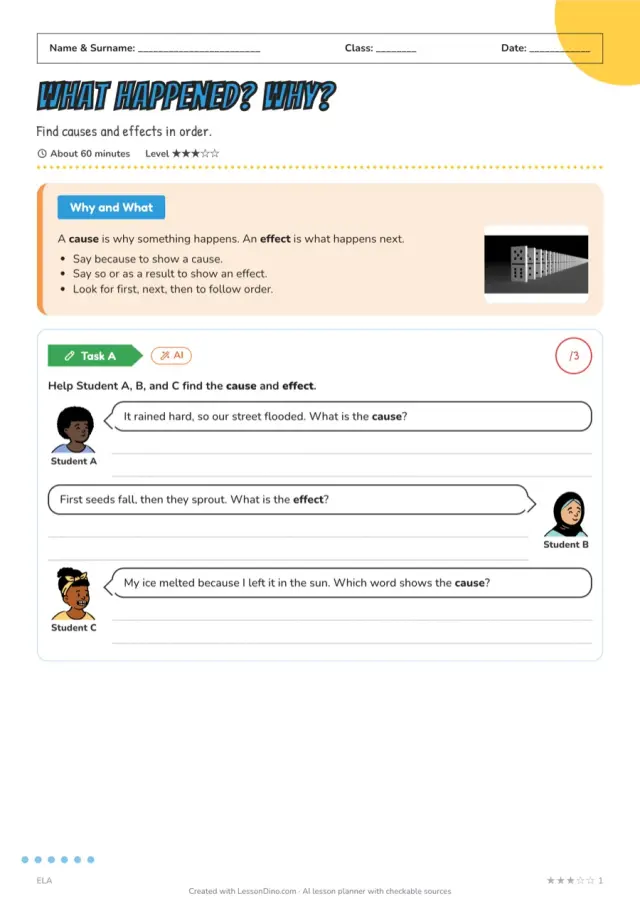
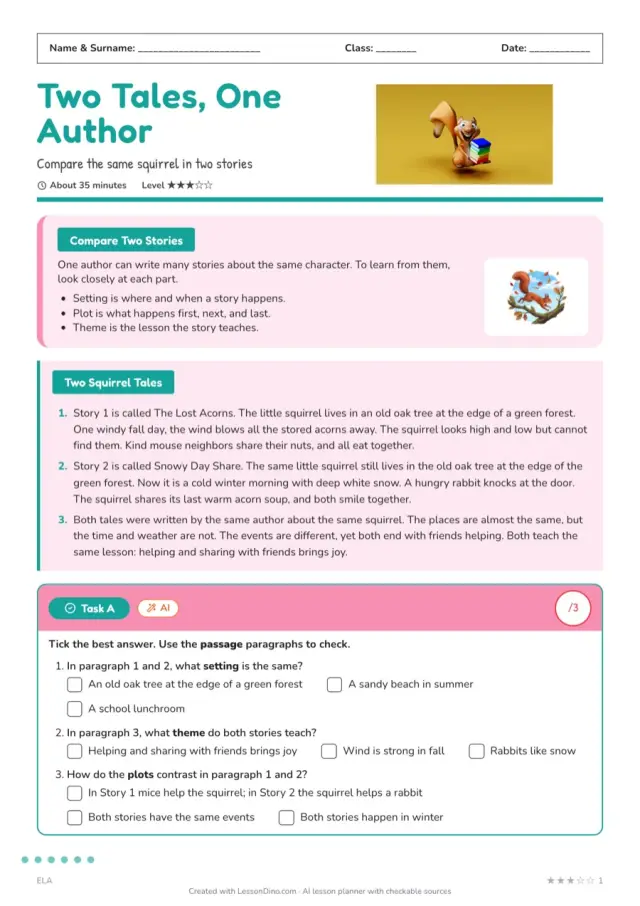
Students learn to use sentence clues to figure out new words. They act as detectives with magnifiers and solve word mysteries. This Grade 3 ELA worksheet gives students (ages 8–9) five pages of practice on context clues, part of the language unit. It goes with our free Context clues lesson, which has the slides and a timed lesson plan.
What it covers
By the end, students should be able to:
- Students will use sentence clues to figure out unknown words’ meanings.
- Students will point to helper words that show the word’s meaning.
- Students will check guesses by putting them back in the sentence.
How to use it
- Use it for practice after the teaching part of the lesson, once students have seen the worked examples on the slides.
- Support: Pre-underline clue words on strips and keep Slide 7 steps visible.
- Stretch: Name clue as synonym, antonym, or example and find the signal word.
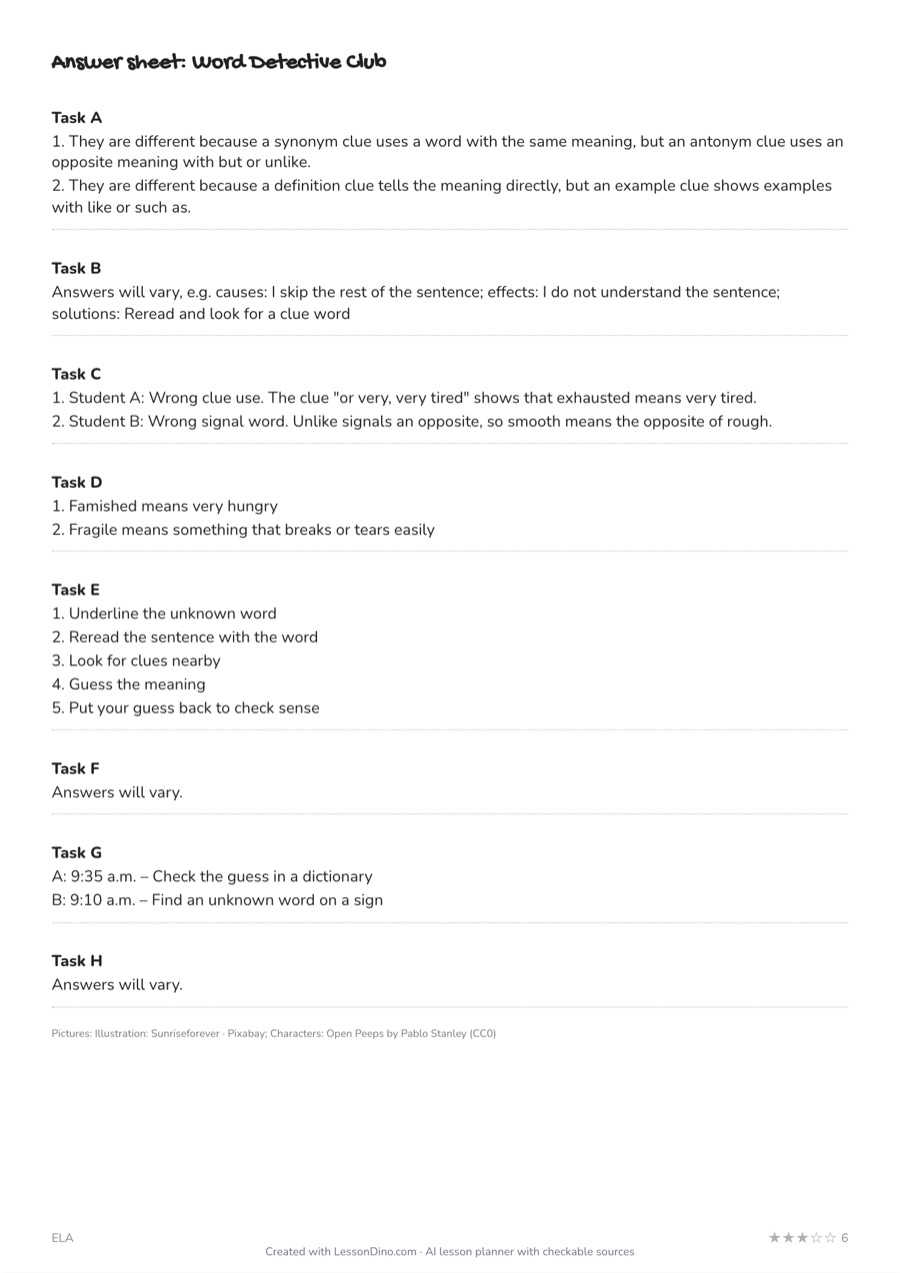
- The answer sheet is the last page, so you can print it on its own or let students check their own work.
Key vocabulary
- context clue: a hint in nearby words that shows what a new word means
- synonym: a nearby word that means almost the same thing
- antonym: a nearby word that means the opposite thing
- definition: words that tell what something is or means
- example: one or more things that show what a word is about
Mistakes to watch for
- Guessing fast without rereading the whole sentence. Reread the sentence with the unknown word and the sentences around it and look for clues, then substitute the guess to see if it makes sense.
- Mixing opposite clues with same-meaning clues. Look for but, however, yet, and unlike that show a contrast and signal an antonym with opposite meaning.
- Looking outside the sentence when the clue is inside. Zoom in first: the clue may appear within the same sentence as the word, often set off by a comma or or.
What's on the worksheet
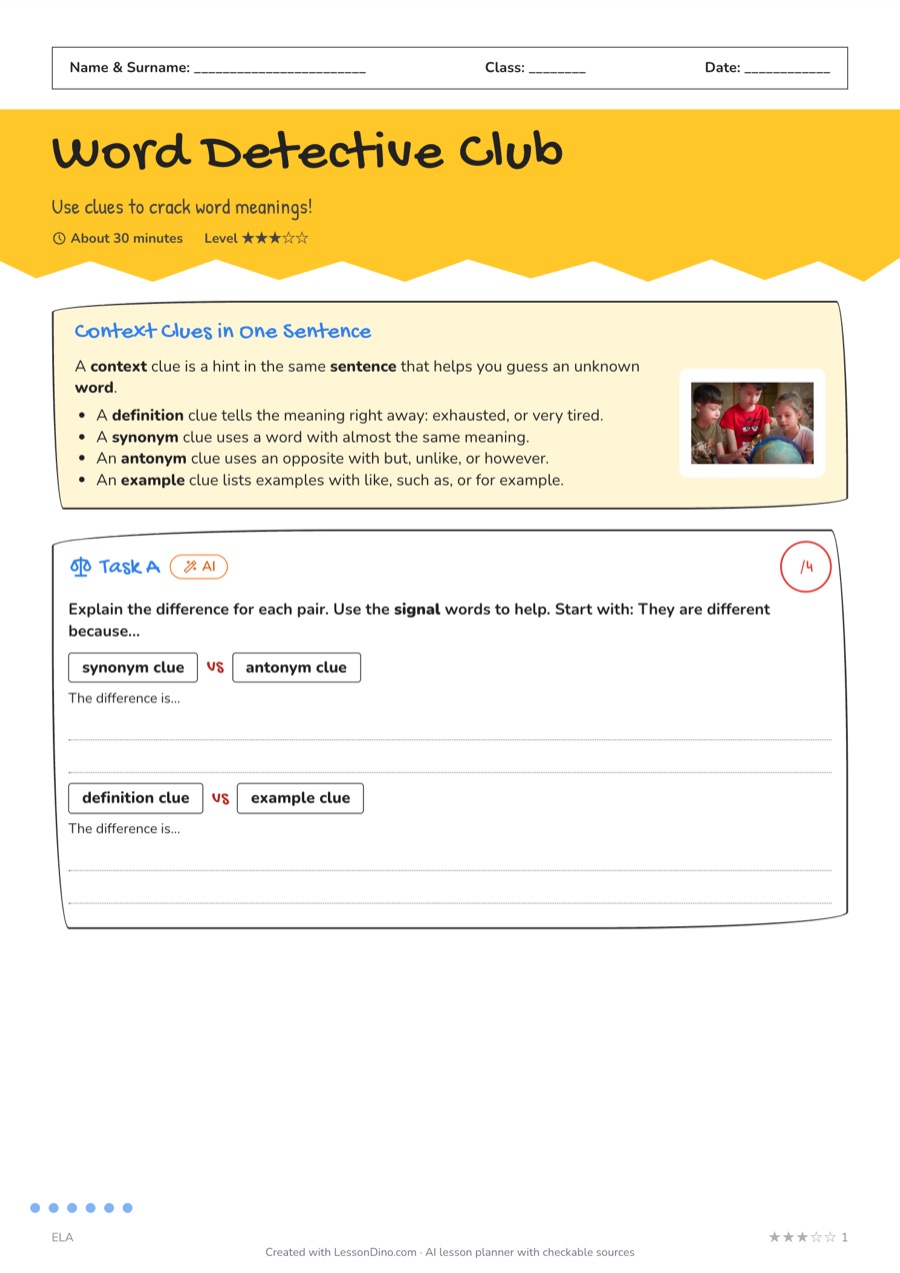
Be Word Detectives
Learn how sentence clues unlock new words.
Context Clues in One Sentence
- A context clue is a hint in the same sentence that helps you guess an unknown word.
- A definition clue tells the meaning right away: exhausted, or very tired.
- A synonym clue uses a word with almost the same meaning.
- An antonym clue uses an opposite with but, unlike, or however.
- An example clue lists examples with like, such as, or for example.
Explain the difference for each pair. Use the signal words to help. Start with: They are different because...
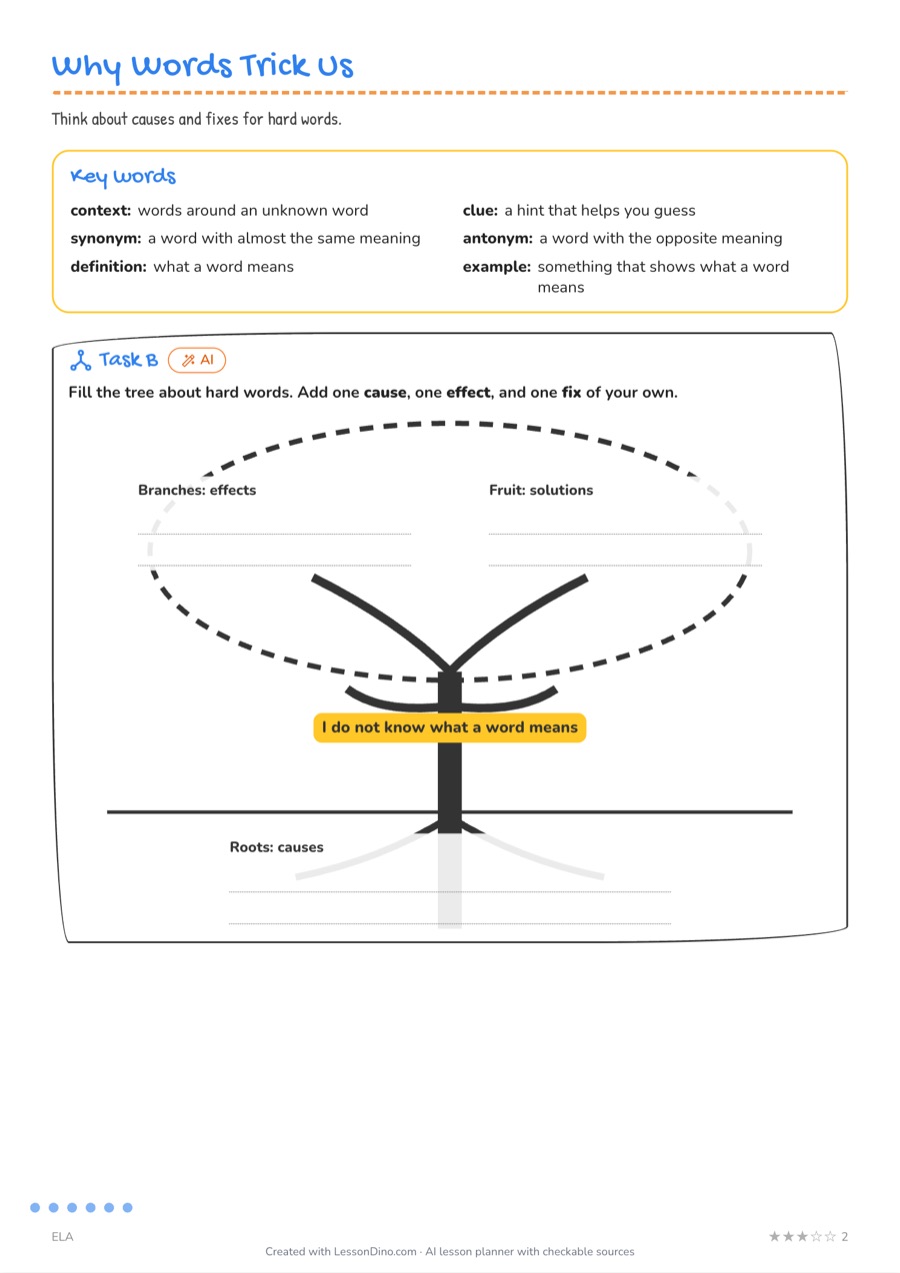
Why Words Trick Us
Think about causes and fixes for hard words.
| Word | Meaning |
|---|---|
| context | words around an unknown word |
| clue | a hint that helps you guess |
| synonym | a word with almost the same meaning |
| antonym | a word with the opposite meaning |
| definition | what a word means |
| example | something that shows what a word means |
Fill the tree about hard words. Add one cause, one effect, and one fix of your own.
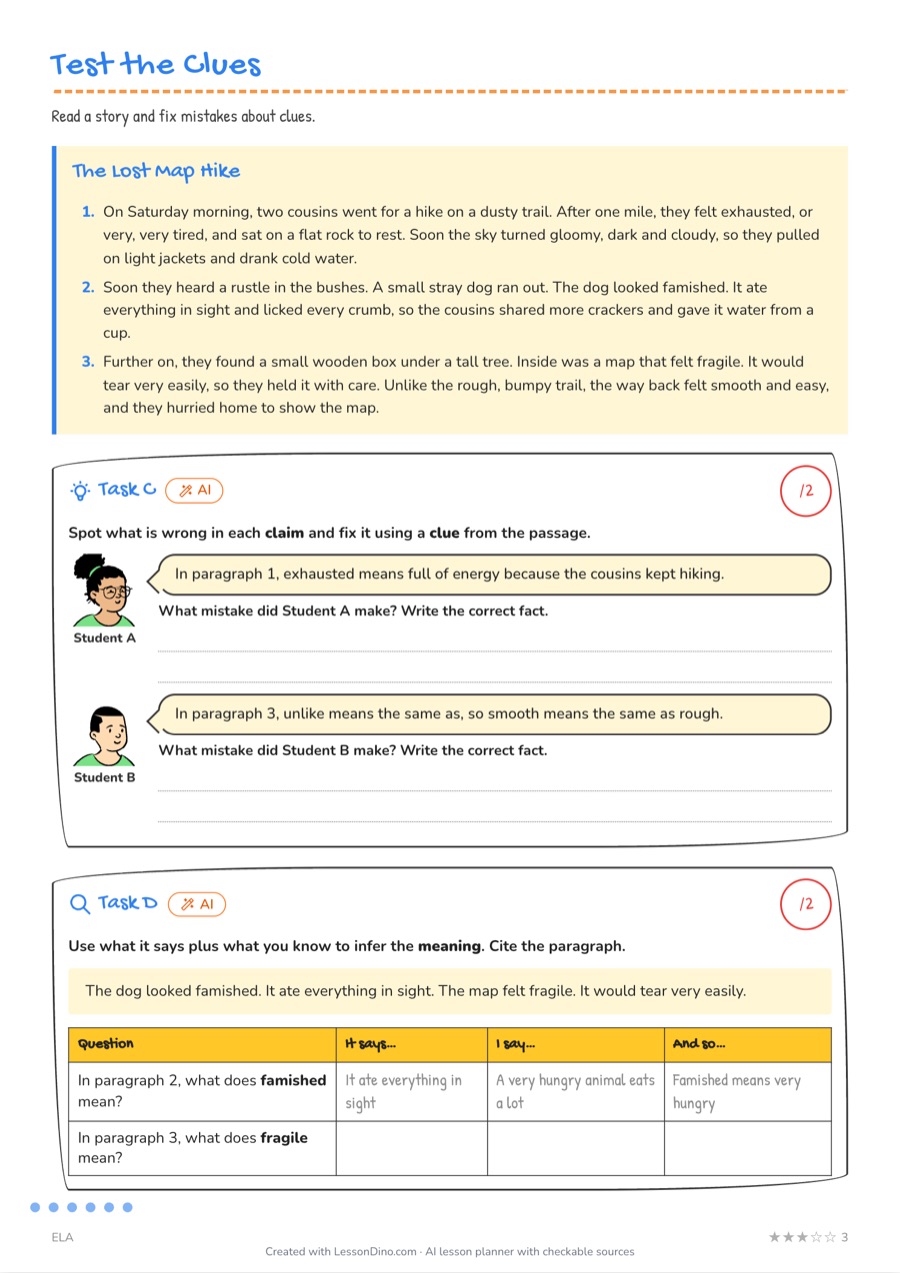
Test the Clues
Read a story and fix mistakes about clues.
The Lost Map Hike
Spot what is wrong in each claim and fix it using a clue from the passage.
Use what it says plus what you know to infer the meaning. Cite the paragraph.
- The dog looked famished. It ate everything in sight. The map felt fragile. It would tear very easily.
- In paragraph 2, what does famished mean?
- In paragraph 3, what does fragile mean?
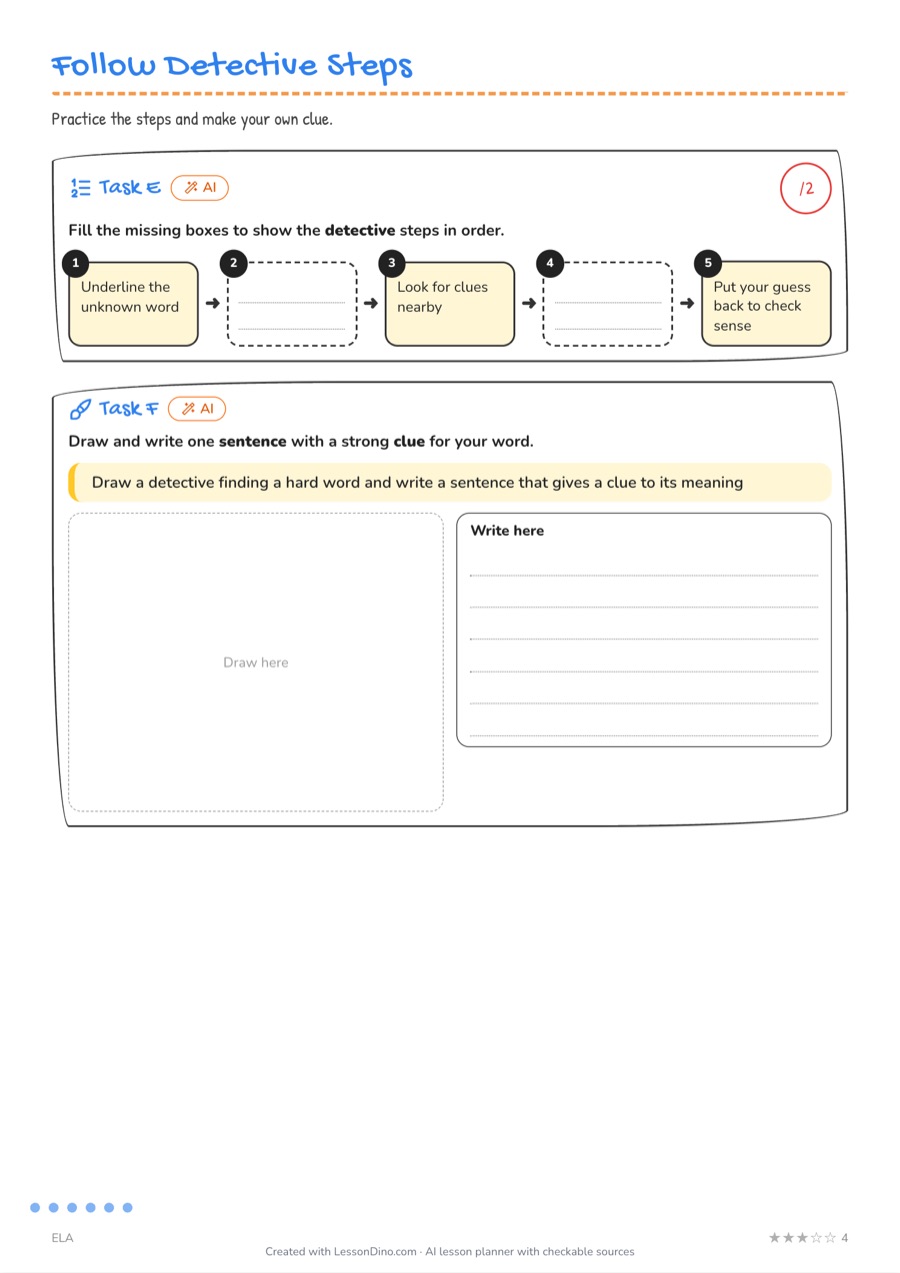
Follow Detective Steps
Practice the steps and make your own clue.
Fill the missing boxes to show the detective steps in order.
Draw and write one sentence with a strong clue for your word.
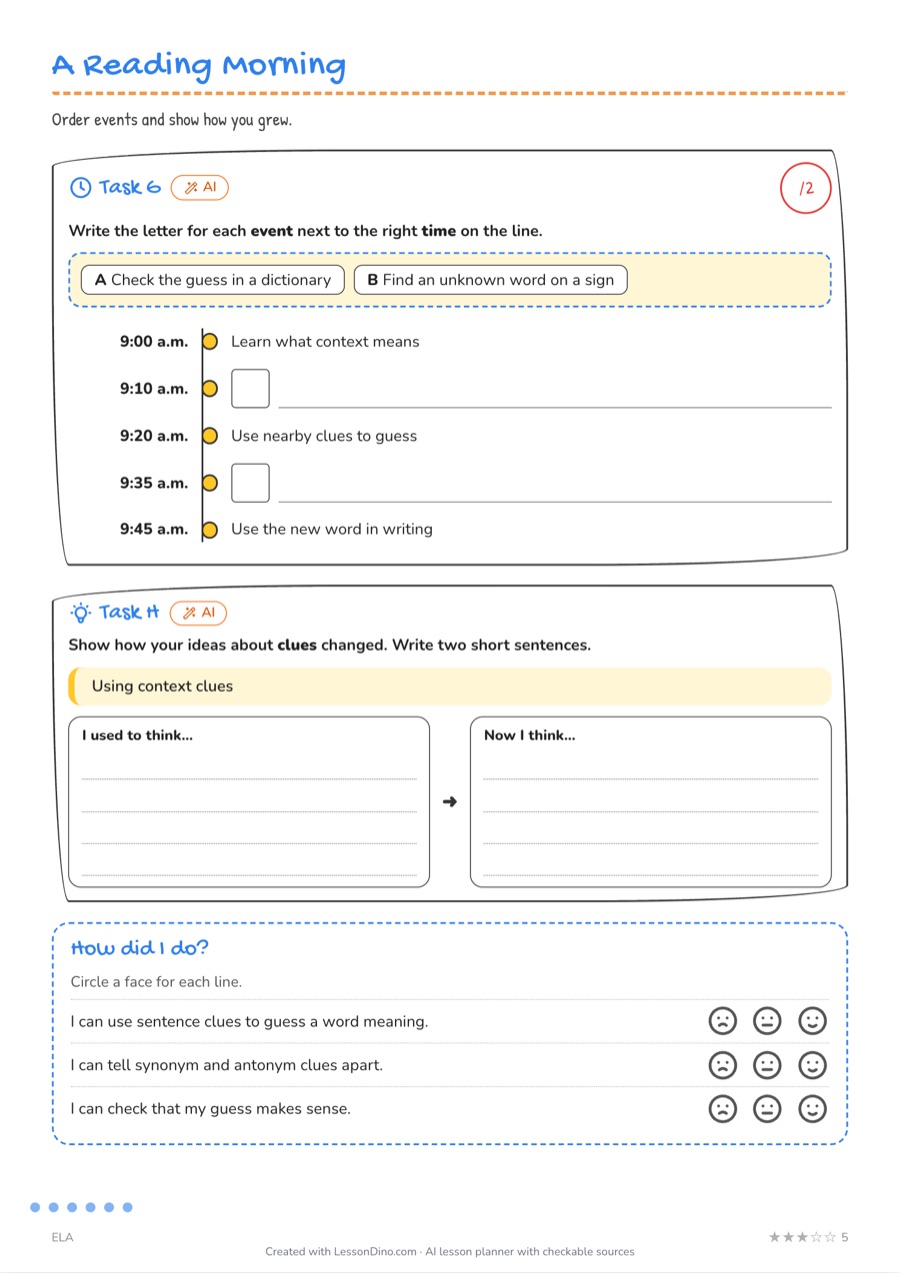
A Reading Morning
Order events and show how you grew.
Write the letter for each event next to the right time on the line.
Show how your ideas about clues changed. Write two short sentences.
Answers
Show the answers
The answers are on the answer sheet, the last picture above.
Curriculum
Use sentence-level context as a clue to the meaning of a word or phrase.
Made with Lesson Dino's AI on 17 October 2026. AI can make mistakes, so check the answers and facts against the sources before you teach.