Slides

Lesson plan
Same Friends, New Adventure
Students learn to compare same-author stories. They make a mini book to sort same and different.
Objectives
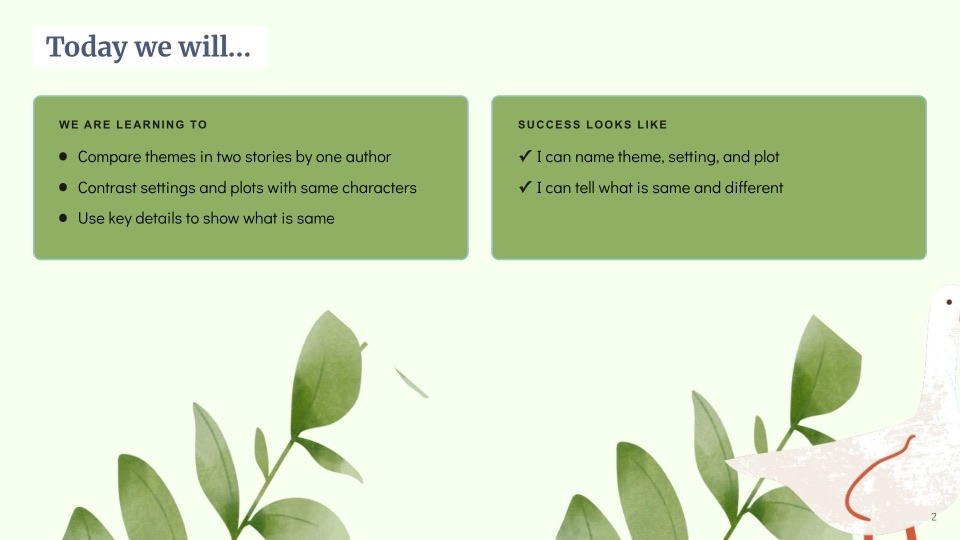
- Students will compare themes, settings, and plots in two same-author stories.
- Students will contrast same characters facing different settings and plot events.
- Students will use key details to show what is same and different.
Success criteria
- I can name theme, setting, and plot for both stories.
- I can sort details into same and different with proof.
- I can explain one same and one different using details.
Key words
| Word | Meaning |
|---|---|
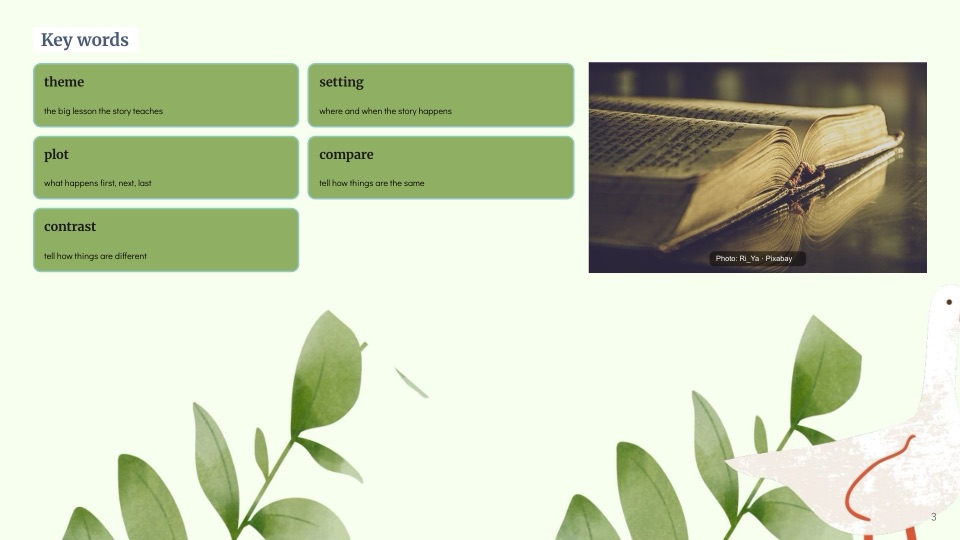
| theme | the big lesson the story teaches |
| setting | where and when the story happens |
| plot | what happens first, next, last |
| compare | find what is the same between stories |
| contrast | find what is different between stories |
Timed plan (60 minutes)
| Time | Stage | What happens |
|---|---|---|
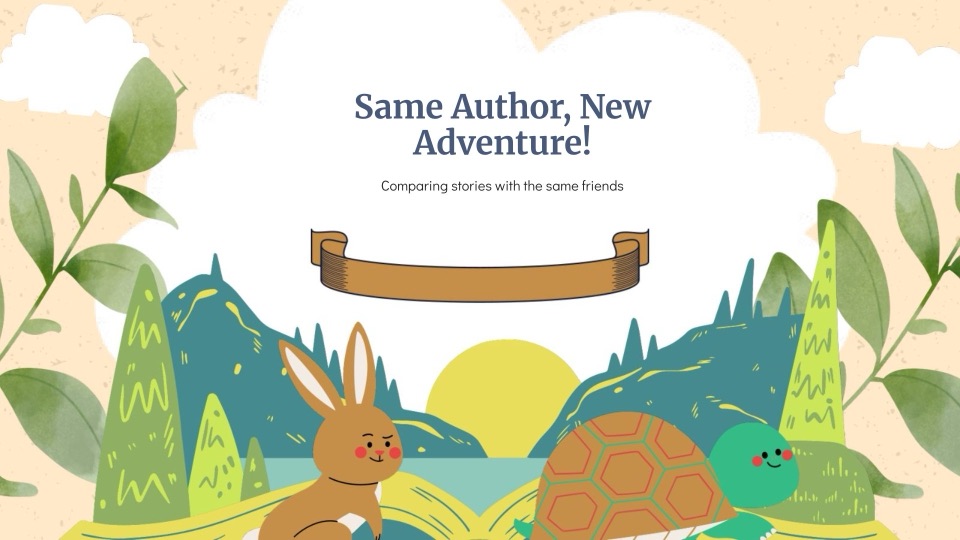
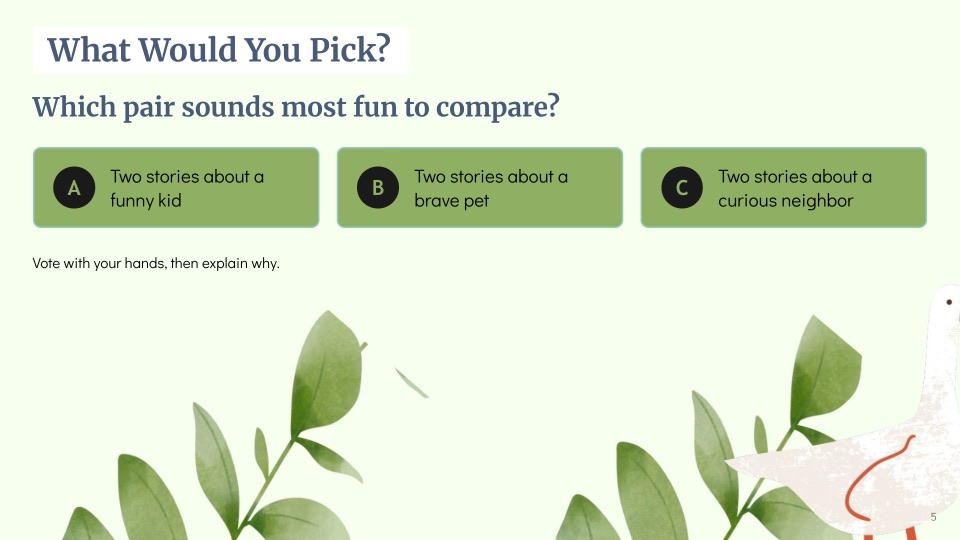
| 5 min | Starter | Hook interest and recall what setting and characters mean for comparing stories. Show Slide 1 Same Author, New Adventure! and read the title. Say the hook and hold up a finished folded mini book as a model. Show Slide 5 What Would You Pick? and take a vote on which pair sounds most fun to compare. Link votes to goal: we will compare themes, settings, and plots in stories by the same author about the same or similar characters. |
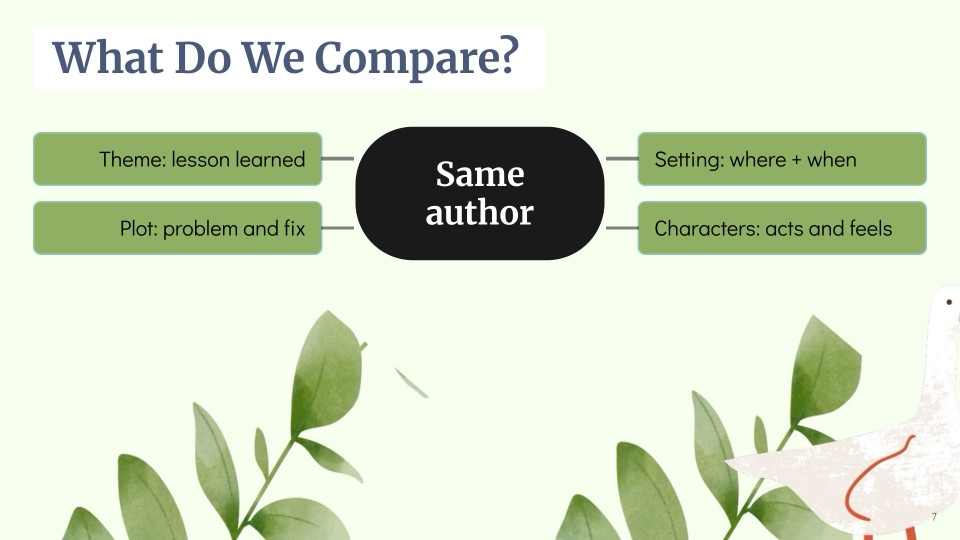
| 10 min | Teaching | Teach theme, setting, and plot words students will use to compare. Show Slide 3 Key words and teach each meaning with gestures for where + when and first, next, last. Show Slide 4 Big idea: Same friends, new adventure: spot what stays same and what changes. Show Slide 7 What Do We Compare? mindmap and explain to compare is to find what is the same and to contrast is to find what is different. Explain that theme is the big idea or important lesson you learn from a story, setting is when and where a story takes place, and plot events are the important actions that move it along. |
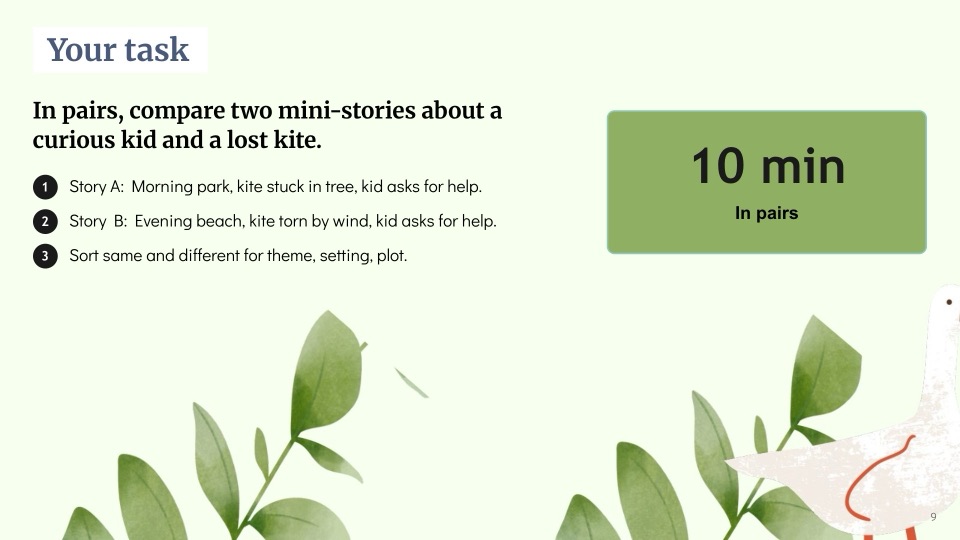
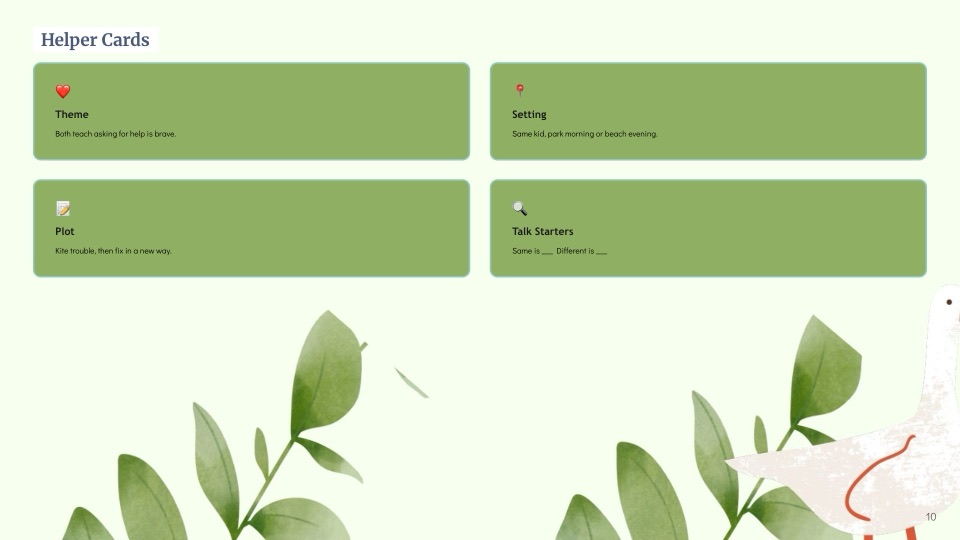
| 10 min | Model together | Model how to sort same and different for theme, setting, and plot. Show Slide 9 Your task with Story A: Morning park, kite stuck in tree, kid asks for help and Story B: Evening beach, kite torn by wind, kid asks for help. Think aloud to sort: same kid and same lesson, different where + when and different fix. Show Slide 10 Helper Cards and read Theme: Both teach asking for help is brave, Setting: Same kid, park morning or beach evening, Plot: Kite trouble, then fix in a new way. Model pointing to key details to prove same and different for stories by the same author about the same or similar characters. |
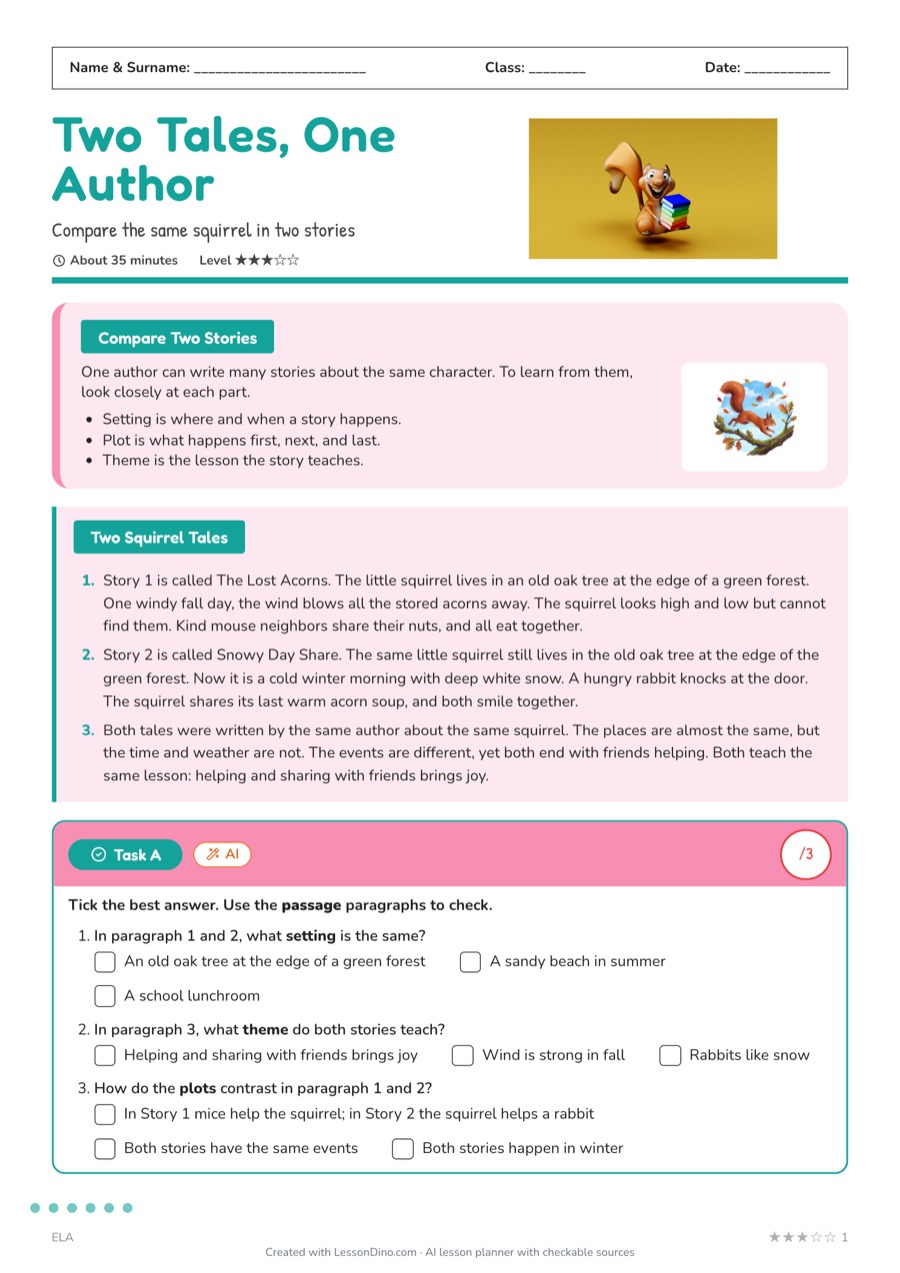
| 20 min | Main activity | Record same and different themes, settings, and plots in a folded mini book. Hand out one sheet of paper and pencils and model folding into a four-page book labeled Theme, Setting, Plot, Same and Different. Read aloud Worksheet Passage Two Squirrel Tales paragraph 1 The Lost Acorns and paragraph 2 Snowy Day Share and paragraph 3 that both teach helping and sharing with friends brings joy. Guide pages: Theme page draws helping and writes the lesson, Setting page draws oak tree then fall wind and winter snow, Plot page draws acorns blown away and soup shared. Have students read their mini book to a partner, pointing to one same and one different on each page. |
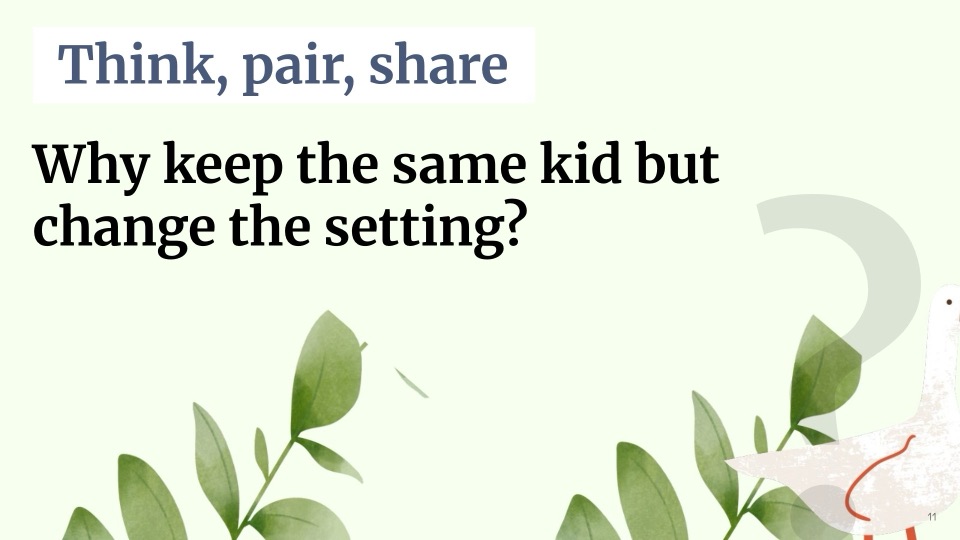
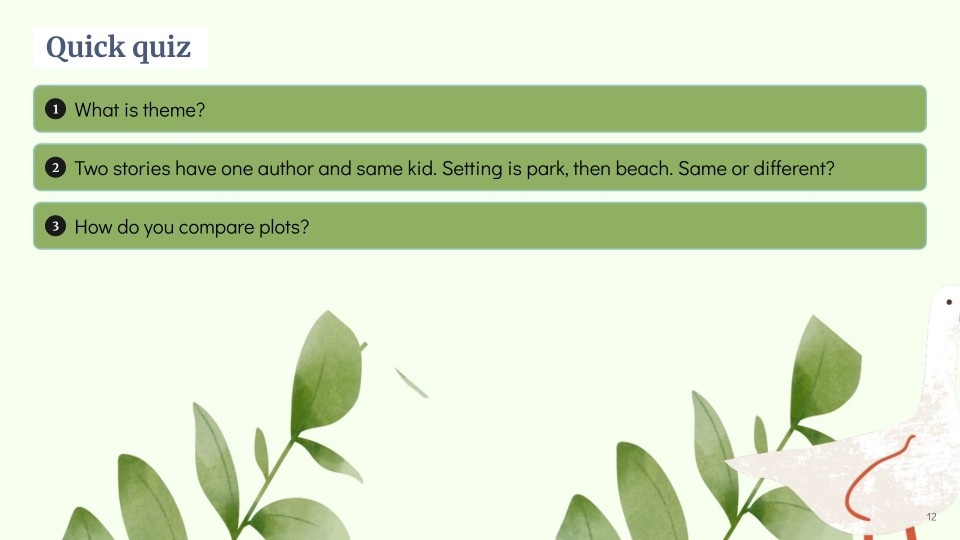
| 15 min | Plenary | Share findings and check students can compare themes, settings, and plots. Show Slide 11 Think, pair, share: Why keep the same kid but change the setting? Collect pattern ideas that an author pattern is something happening again and again. Show Slide 12 Quick quiz: What is theme? The lesson the story teaches. And park then beach: Same or different? Different setting. Give Worksheet Task A multiple choice to tick best answers using passage paragraphs to check; review answers with page proof. Return to success lines and have students show their mini book Same and Different page. |
Common mistakes
- Mixing setting with plot - saying acorns blowing away is where and when.
How to spot it: Setting page lists actions instead of place and time.
Point to when and where words like oak tree, fall day, winter morning and ask where + when versus what happened. - Thinking same character means same plot and theme must also be same.
How to spot it: Student marks everything as same because the squirrel is the same.
Reread paragraph 1 wind blows acorns away and paragraph 2 shares soup and chart same squirrel, different problem and fix. - Naming topic like squirrels instead of theme lesson.
How to spot it: Theme page says squirrels or winter instead of lesson.
Ask what lesson was learned and model Both teach helping and sharing brings joy as the big idea.
Support
- Use pre-folded books, picture starters, and word banks for day, night, park, beach, fall, winter.
- Pair readers so one reads paragraph 1 and the other reads paragraph 2 before comparing.
Stretch
- Add bottom strip comparing lessons and explain how different plots can teach the same lesson.
- Write which squirrel story ending is stronger and prove with two details.
Check questions
- What is theme?
Answer: The lesson the story teaches. - The squirrel lives in the same oak tree in fall and winter. What is same and what is different in setting?
Answer: Same place, different time and weather. - Story 1 has wind blowing acorns away, Story 2 has sharing soup. Plots same or different, themes same or different?
Answer: Different plots, same theme of helping and sharing.
Curriculum
Compare and contrast the themes, settings, and plots of stories written by the same author about the same or similar characters (e.g., in books from a series)
Video clips
Clips on YouTube, from the start and end times we chose. Check each one before you show it.
-
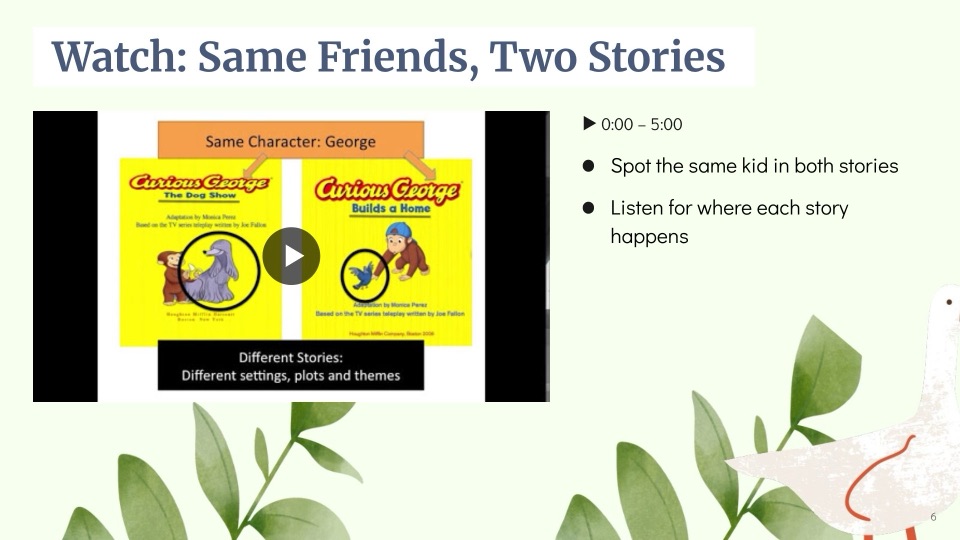
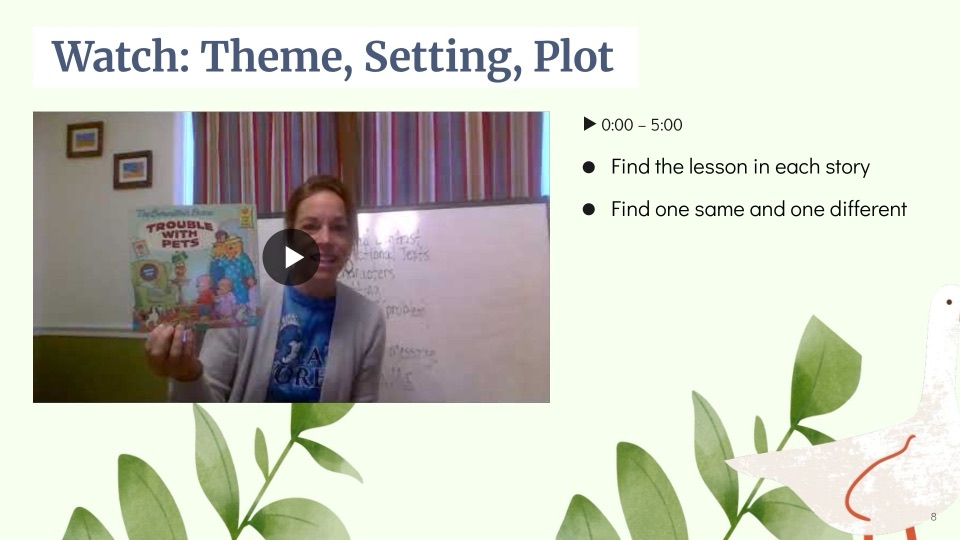
Same Character, Different Stories from 0:00 to 5:00
eSpark: Same Character, Different Stories | 3rd Grade Reading | eSpark Instructional Video
Made for 3rd grade and models comparing same-character stories with vocabulary and pace perfect for 8-9-year-olds.
-
Compare Fictional Texts by Same Author from 0:00 to 5:00
It Takes a Village LF Grade 3: How to Compare and Contrast Fictional Texts by the Same Author
Made for Grade 3 and clearly teaches comparing theme, setting, and plot by the same author at the right level for 8-9-year-olds.
Worksheet
Sources
- English Language Arts Learning Standards - New York State ... nysed.gov
- LearnZillion EL Education Language Arts Correlation Guide Grade 3 ortn.edu
- COMPARING AND CONTRASTING SIMILAR TEXTS - University of Kansas simvilledev.ku.edu
- Comparing Same Author Stories - Discover Writing Patterns and ... studypug.com
- Aromanticism Wikipedia
- Asexuality Wikipedia
- Anitta (singer) Wikipedia
Picture credits
- Photo: Sunriseforever · Pixabay
- Photo: Ri_Ya · Pixabay
- Illustration: julientromeur · Pixabay
- Illustration: tanrıca · Pixabay
- Pictograms: Sergio Palao, ARASAAC (arasaac.org) · CC BY-NC-SA
Made with Lesson Dino's AI on 17 October 2026. AI can make mistakes, so check facts against the sources before you teach.