The worksheet
About this worksheet
Students learn to order real or imagined events and add talking and senses details. They plan on a story mountain and write a short mini-narrative. This Grade 3 ELA worksheet gives students (ages 8–9) five pages of practice on creative writing: narratives, part of the writing unit. It goes with our free Creative writing: narratives lesson, which has the slides and a timed lesson plan.
What it covers
By the end, students should be able to:
- Students will order real or imagined events in a clear beginning, middle, and end.
- Students will use talking and senses words to develop experiences and events.
How to use it
- Use it for practice after the teaching part of the lesson, once students have seen the worked examples on the slides.
- Support: Give pre-drawn three-box strips with starters: First, Next, Last.
- Stretch: Add one line of what a character said in the middle box to show action.
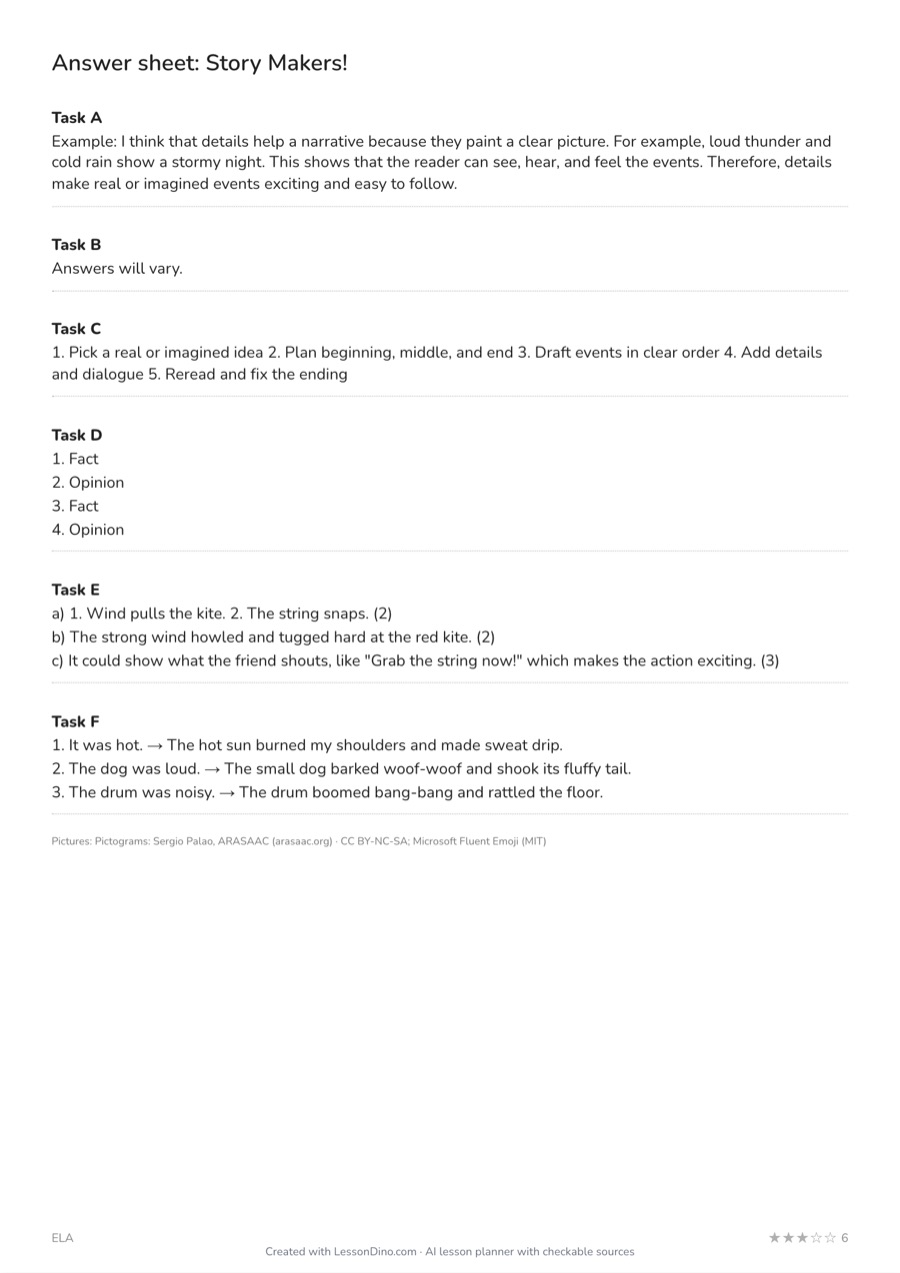
- The answer sheet is the last page, so you can print it on its own or let students check their own work.
Key vocabulary
- narrative: a story about things that happened, real or made up
- sequence: the order things happen in, from first to last
- detail: a small word that shows what you see, hear, or feel
- technique: a smart way to tell a story, like using talking
- dialogue: the exact words a person in a story says
Mistakes to watch for
- Telling events out of order, like starting with the ending. Point to each mountain hill and retell; move sentences to match the hills so progression is clear.
- Thinking a narrative must be true. Remind that a narrative can be non-fictional or fictional events; sort real and imagined ideas both work.
- Telling instead of showing with no senses or talking. Add one sense and one talking line; descriptive writing appeals to the senses and paints a picture.
What's on the worksheet
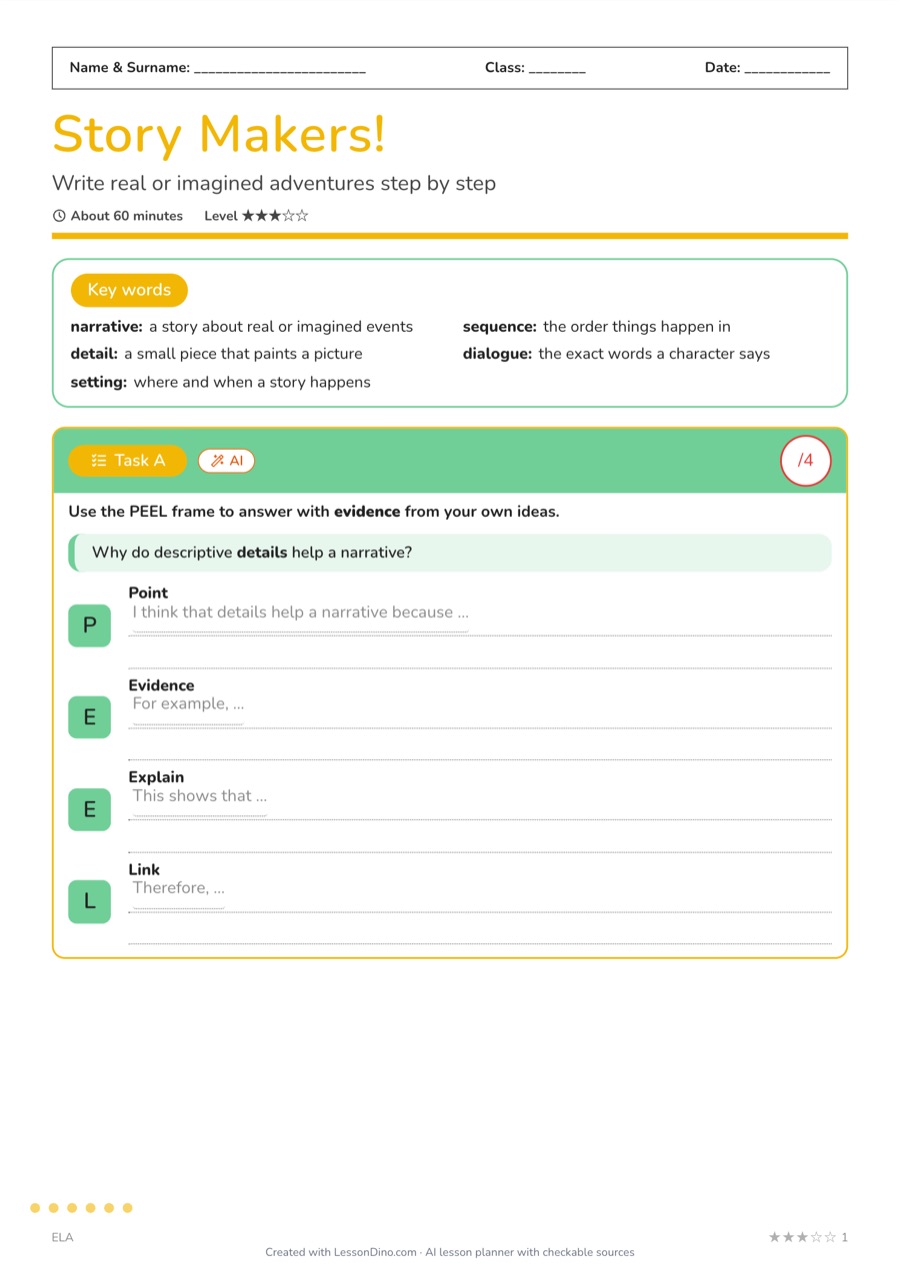
Start Your Story
Learn what makes a strong narrative.
| Word | Meaning |
|---|---|
| narrative | a story about real or imagined events |
| sequence | the order things happen in |
| detail | a small piece that paints a picture |
| dialogue | the exact words a character says |
| setting | where and when a story happens |
Use the PEEL frame to answer with evidence from your own ideas.
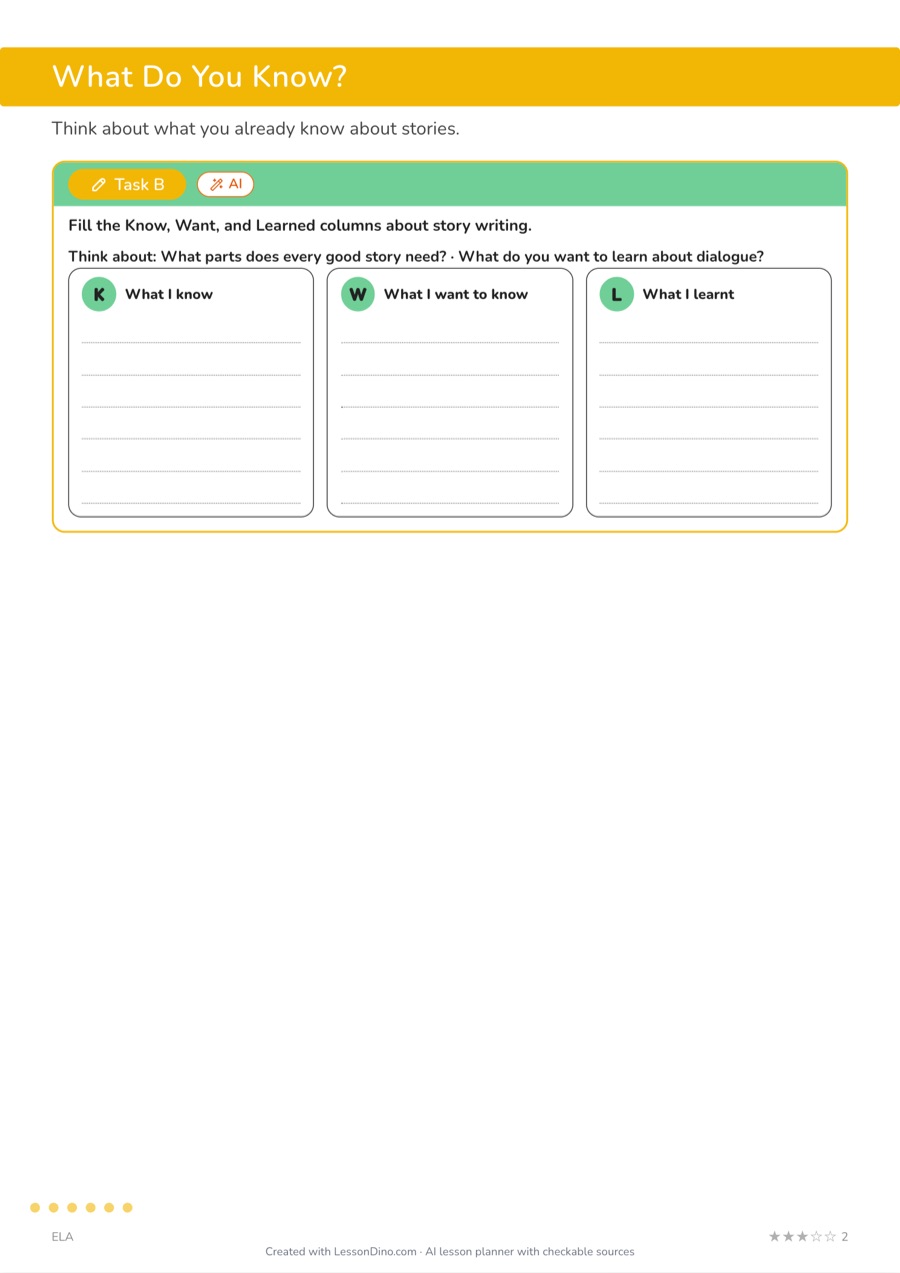
What Do You Know?
Think about what you already know about stories.
Fill the Know, Want, and Learned columns about story writing.
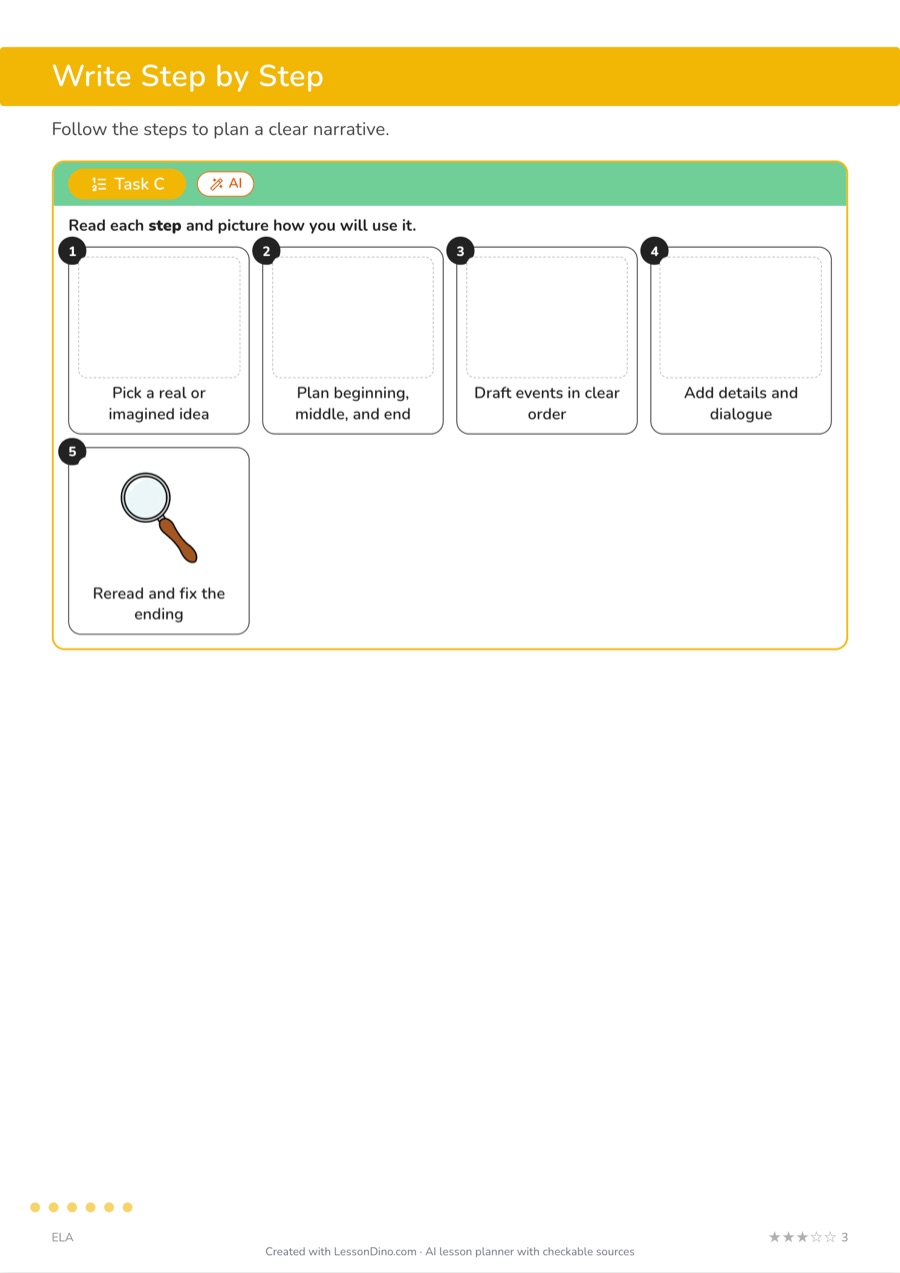
Write Step by Step
Follow the steps to plan a clear narrative.
Read each step and picture how you will use it.
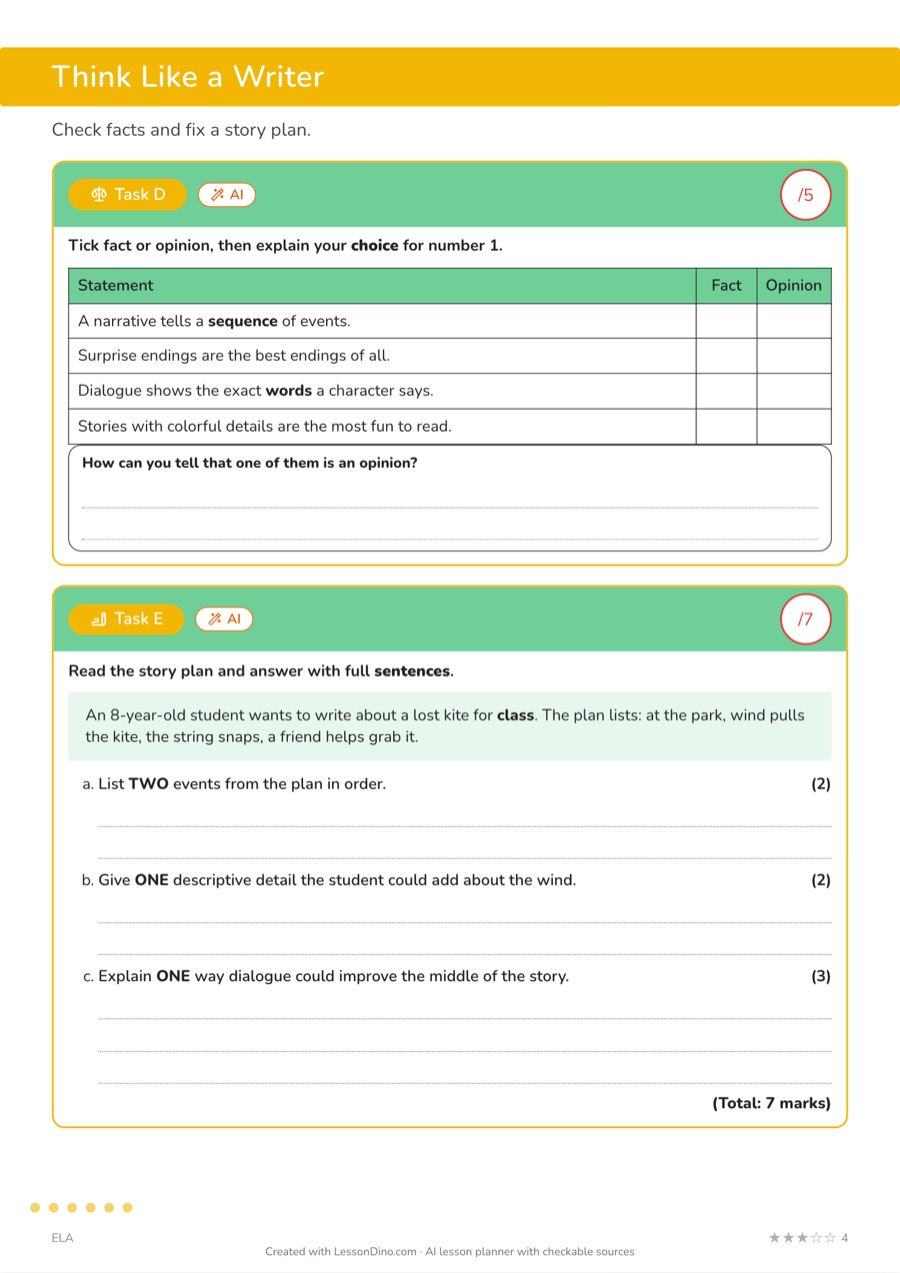
Think Like a Writer
Check facts and fix a story plan.
Tick fact or opinion, then explain your choice for number 1.
Read the story plan and answer with full sentences.
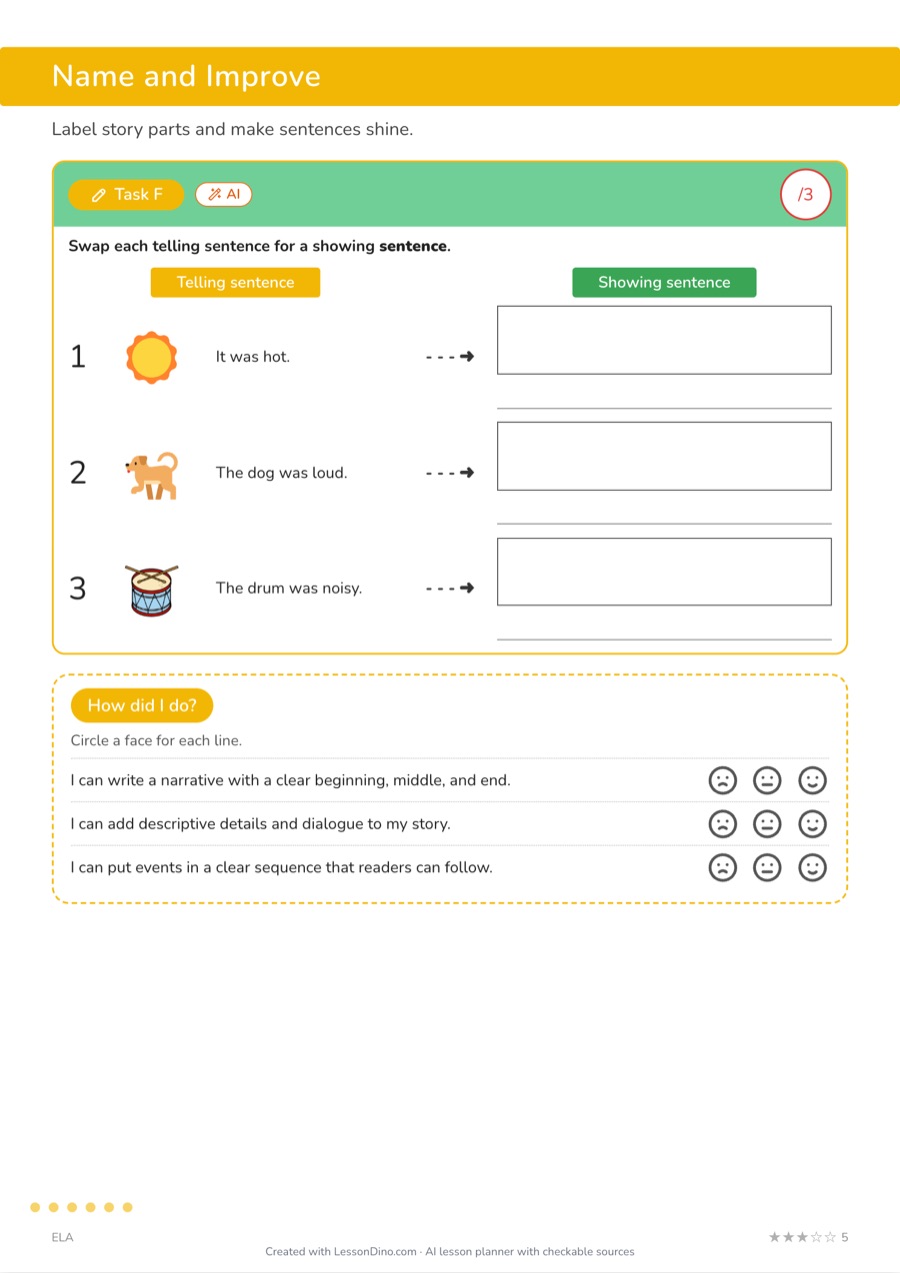
Name and Improve
Label story parts and make sentences shine.
Swap each telling sentence for a showing sentence.
Answers
Show the answers
- List TWO events from the plan in order. 1. Wind pulls the kite. 2. The string snaps.
- Give ONE descriptive detail the student could add about the wind. The strong wind howled and tugged hard at the red kite.
- Explain ONE way dialogue could improve the middle of the story. It could show what the friend shouts, like "Grab the string now!" which makes the action exciting.
The answer sheet is the last picture above.
Curriculum
Write narratives to develop real or imagined experiences or events using effective technique, descriptive details, and clear event sequences.
Made with Lesson Dino's AI on 16 October 2026. AI can make mistakes, so check the answers and facts against the sources before you teach.