The worksheet
About this worksheet
Students learn to name traits, feelings and wants with story proof. They hunt for clues in pairs and chain actions to events. This Grade 3 ELA worksheet gives students (ages 8–9) five pages of practice on character traits, part of the reading literature unit. It goes with our free Character traits lesson, which has the slides and a timed lesson plan.
What it covers
By the end, students should be able to:
- Students will describe a trait with proof from thoughts, words, or actions.
- Students will explain a character's feelings and motivation for acting.
- Students will explain how character actions change the story events in order.
How to use it
- Use it for practice after the teaching part of the lesson, once students have seen the worked examples on the slides.
- Support: Give a bank of 8 traits with pictures and the frame, The character is ___ because ___.
- Stretch: Find a second action by the same character that shows a different trait and explain which matters more.
- The answer sheet is the last page, so you can print it on its own or let students check their own work.
Key vocabulary
- character: a person or being in a made-up story
- trait: how someone often behaves, like kind, brave, or patient
- motivation: the reason why someone wants to do something
- feeling: what is happening inside, like happy, scared, or proud
- event: one thing that happens in a story
Mistakes to watch for
- Calling a feeling in the moment a lasting trait, like sad means sad person. Ask: Is sad how she often acts, or how she feels right now? Trait is brave or patient; sad is the feeling.
- Naming a trait with no story proof. Ask: What did she say, think, or do that shows it? Point to the exact words.
- Retelling events out of order or missing cause. Reorder with first, next, then, last and add so / then to show action changed events.
What's on the worksheet
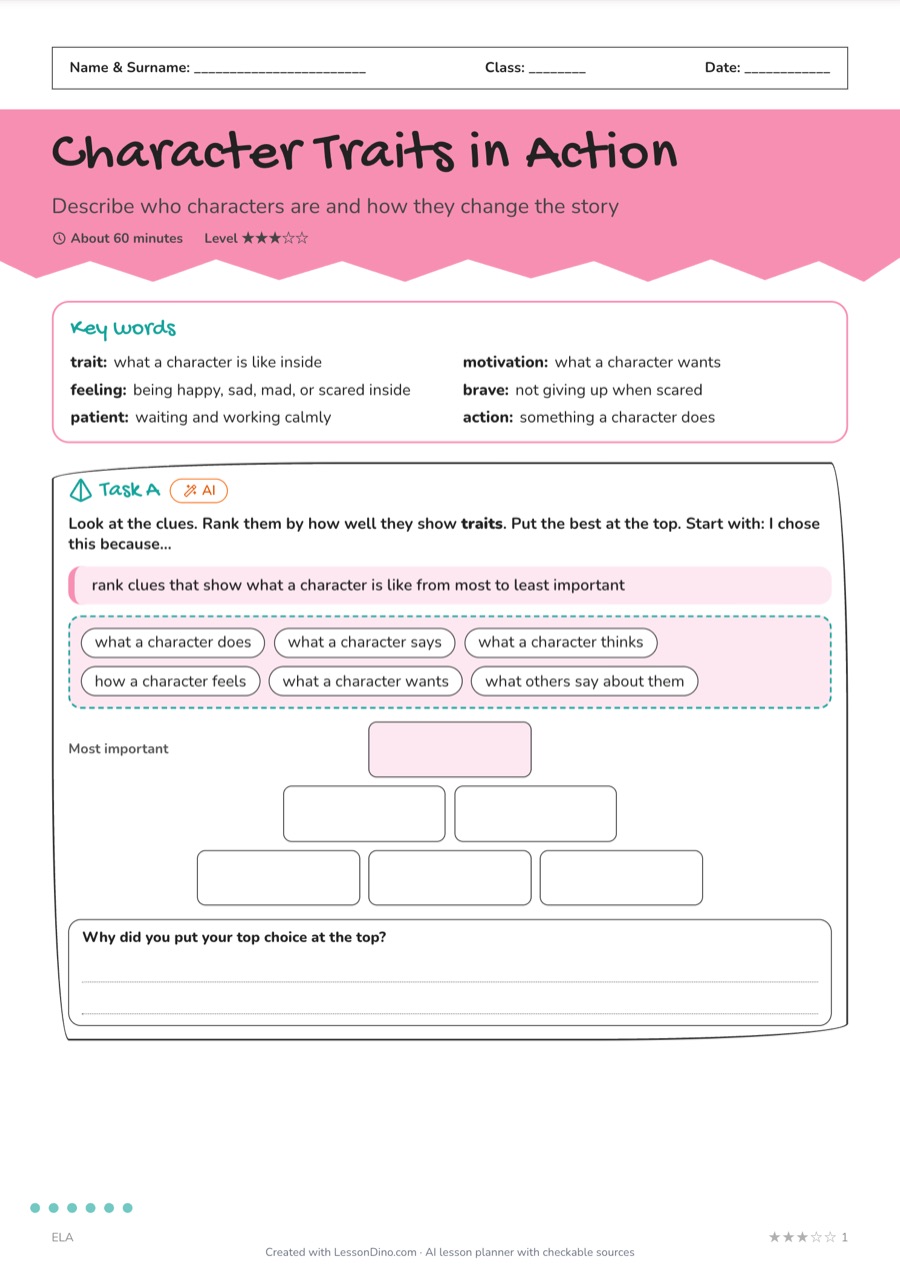
What Makes Characters?
Learn what traits are and how actions move a story.
| Word | Meaning |
|---|---|
| trait | what a character is like inside |
| motivation | what a character wants |
| feeling | being happy, sad, mad, or scared inside |
| brave | not giving up when scared |
| patient | waiting and working calmly |
| action | something a character does |
Look at the clues. Rank them by how well they show traits. Put the best at the top. Start with: I chose this because...
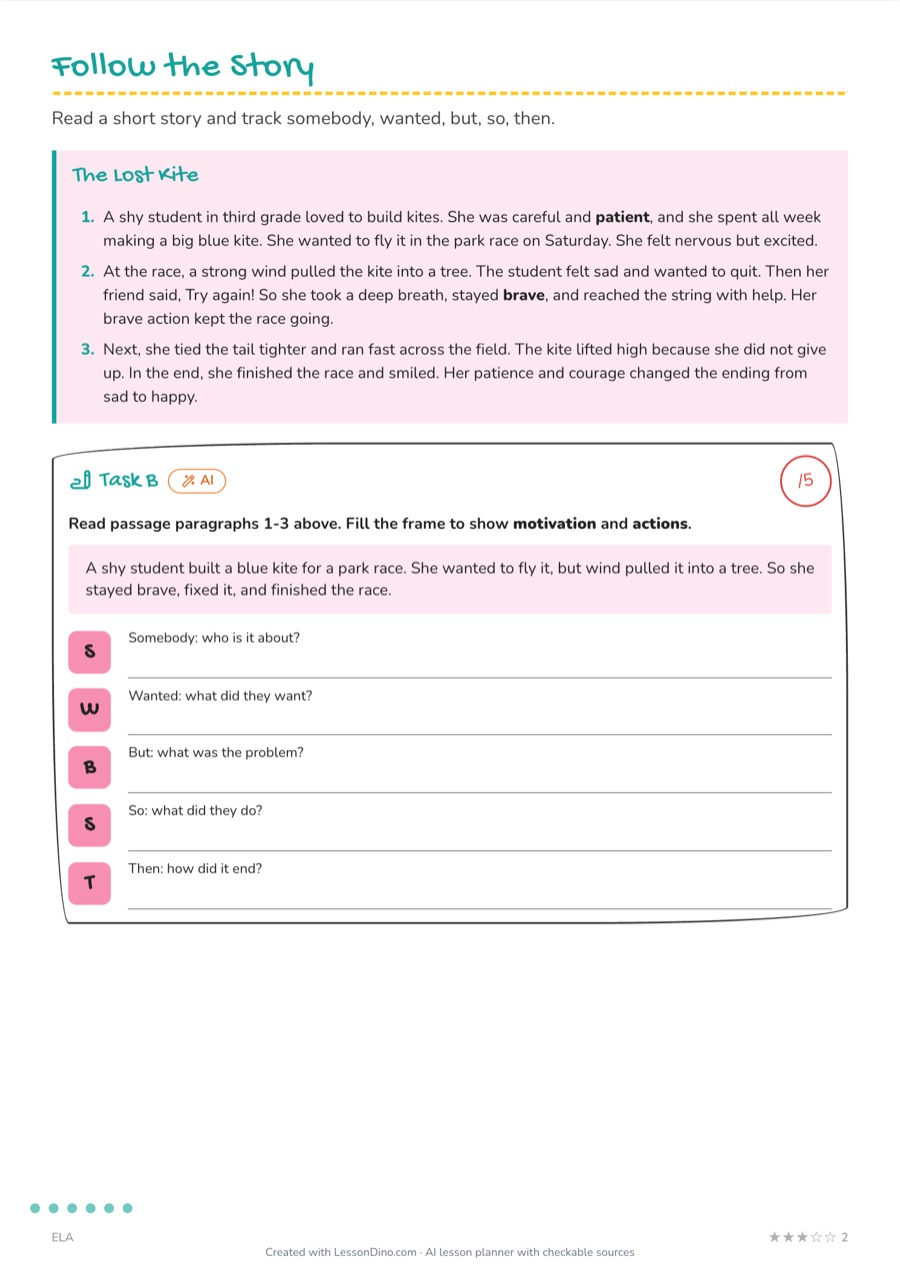
Follow the Story
Read a short story and track somebody, wanted, but, so, then.
The Lost Kite
Read passage paragraphs 1-3 above. Fill the frame to show motivation and actions.
- A shy student built a blue kite for a park race. She wanted to fly it, but wind pulled it into a tree. So she stayed brave, fixed it, and finished the race.
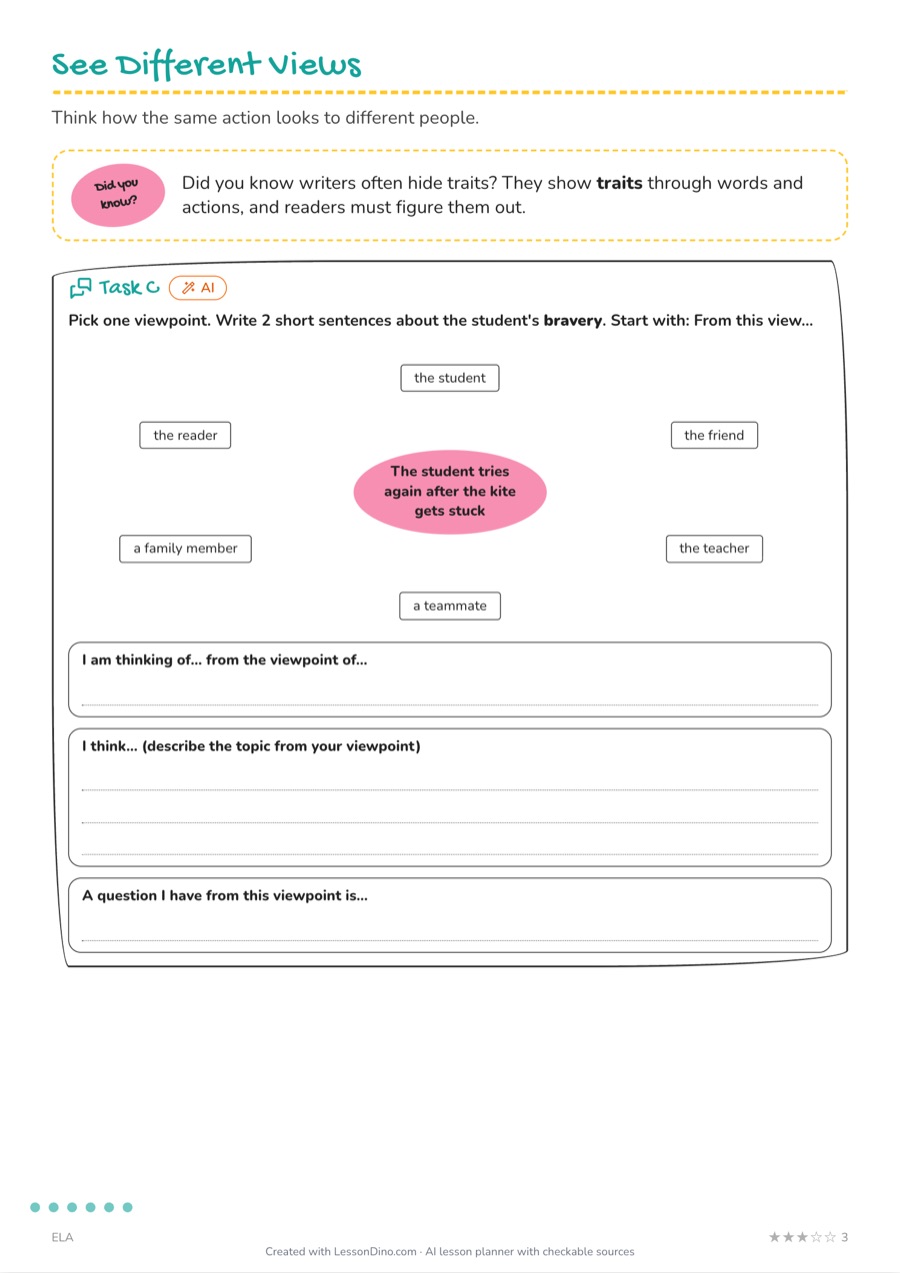
See Different Views
Think how the same action looks to different people.
- Did you know writers often hide traits? They show traits through words and actions, and readers must figure them out.
Pick one viewpoint. Write 2 short sentences about the student's bravery. Start with: From this view...
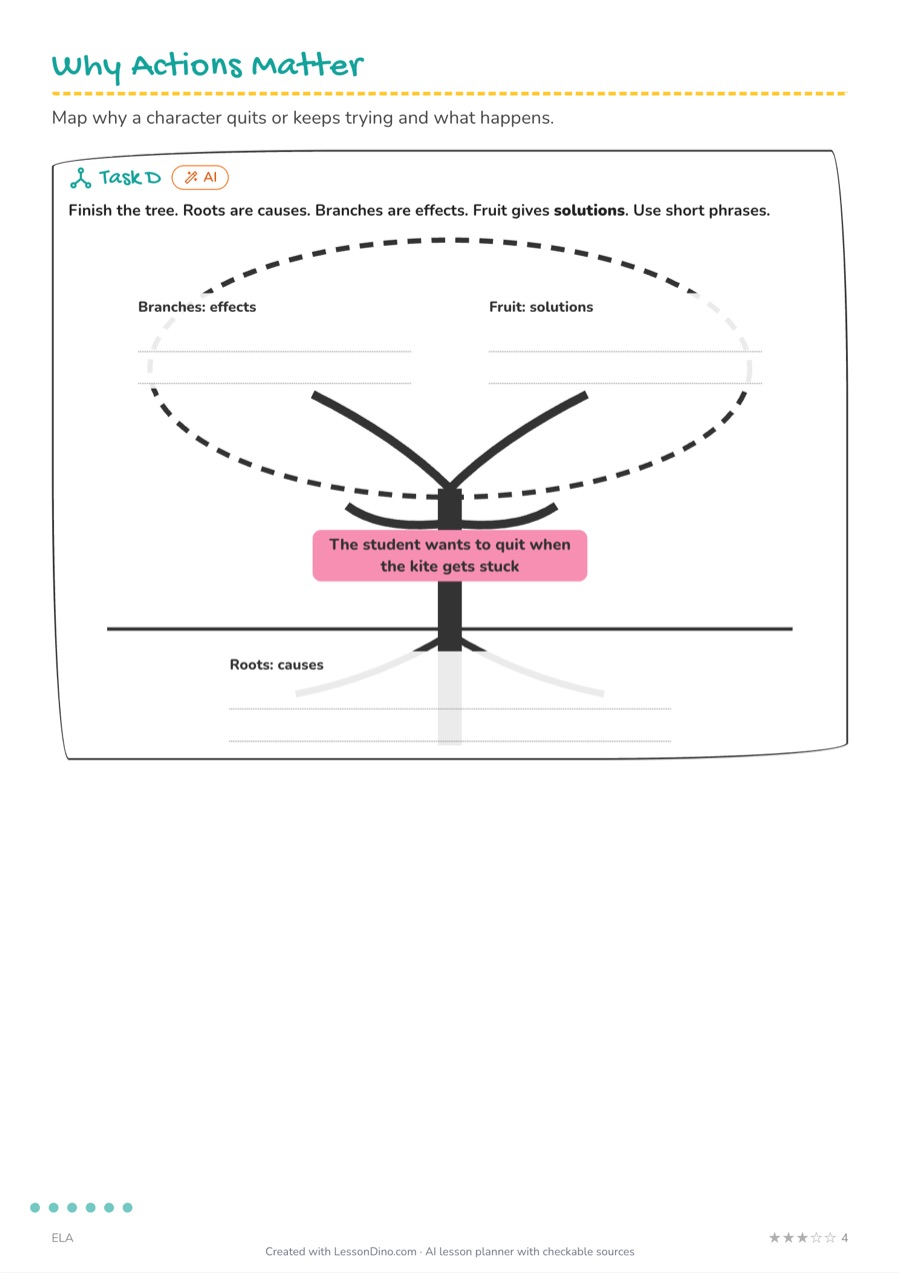
Why Actions Matter
Map why a character quits or keeps trying and what happens.
Finish the tree. Roots are causes. Branches are effects. Fruit gives solutions. Use short phrases.
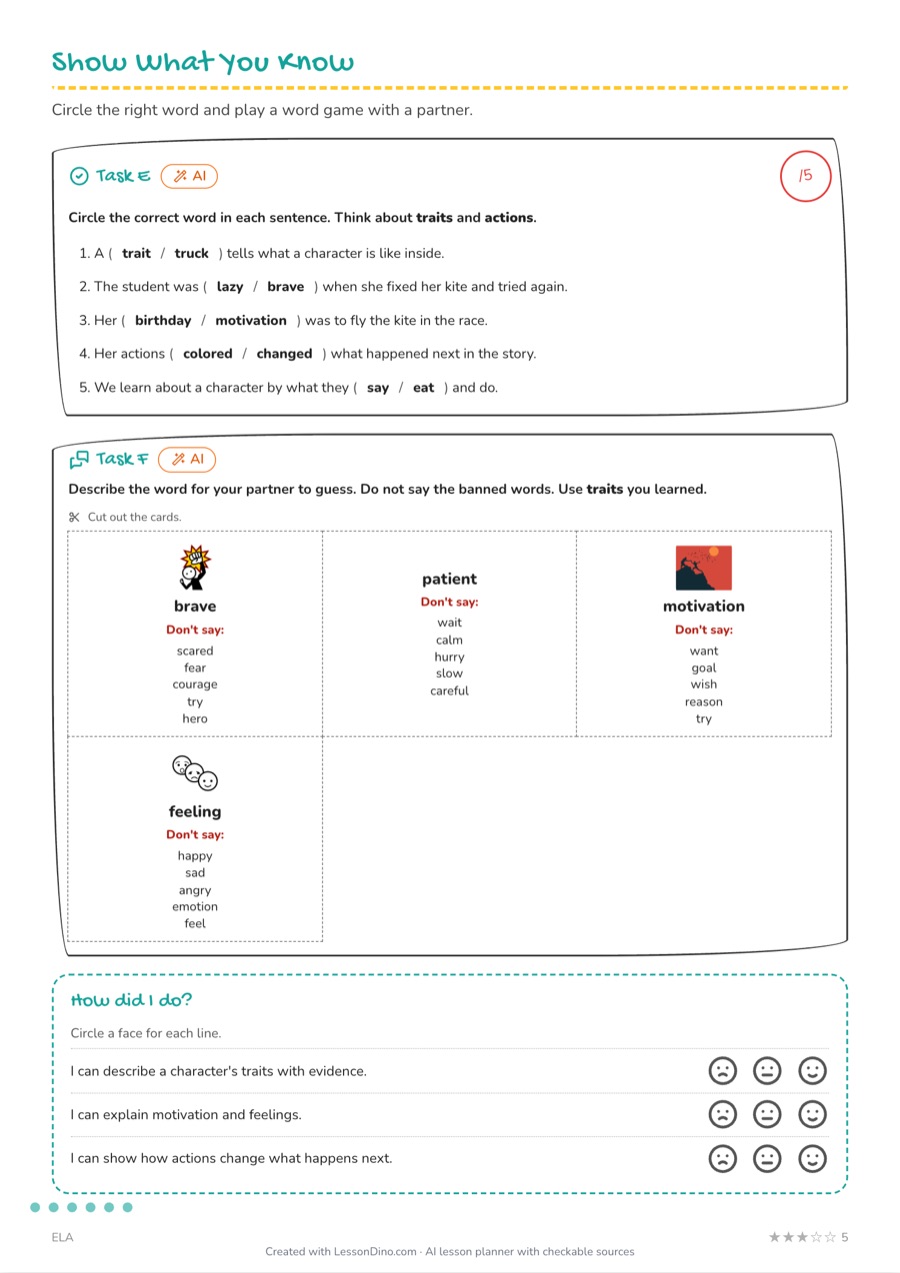
Show What You Know
Circle the right word and play a word game with a partner.
Circle the correct word in each sentence. Think about traits and actions.
Describe the word for your partner to guess. Do not say the banned words. Use traits you learned.
Answers
Show the answers
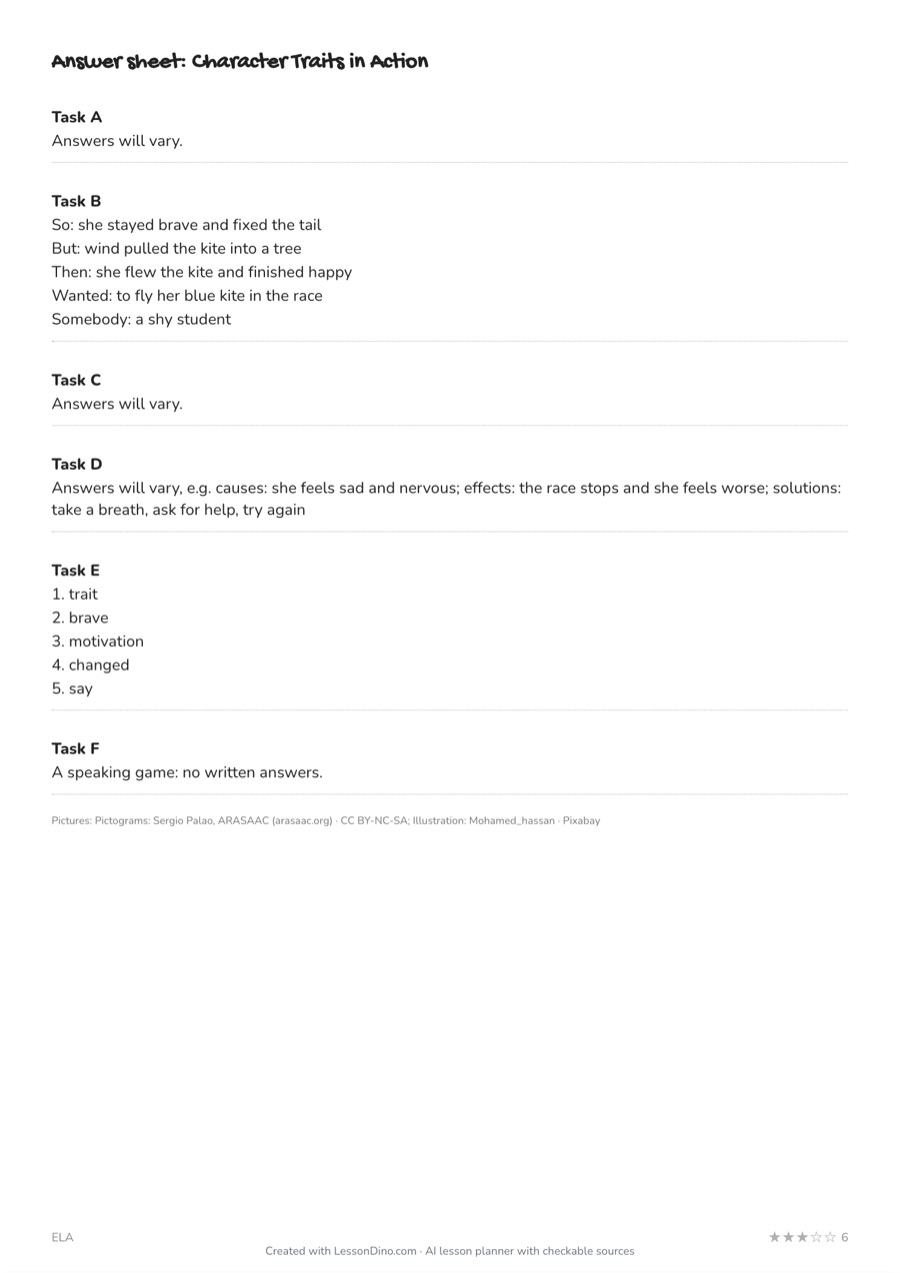
The answers are on the answer sheet, the last picture above.
Curriculum
Describe characters in a story (e.g., their traits, motivations, or feelings) and explain how their actions contribute to the sequence of events
Made with Lesson Dino's AI on 16 October 2026. AI can make mistakes, so check the answers and facts against the sources before you teach.