The worksheet
About this worksheet
Students learn that un- means not and re- means again. They build unhappy, retell, reread and redo with cards and tell the new meanings. This Grade 2 ELA worksheet gives students (ages 7–8) five pages of practice on prefixes, part of the language unit. It goes with our free Prefixes lesson, which has the slides and a timed lesson plan.
What it covers
By the end, students should be able to:
- Students will tell the meaning of unhappy when un- is added to happy.
- Students will build and explain retell, reread, and redo with re- meaning again.
How to use it
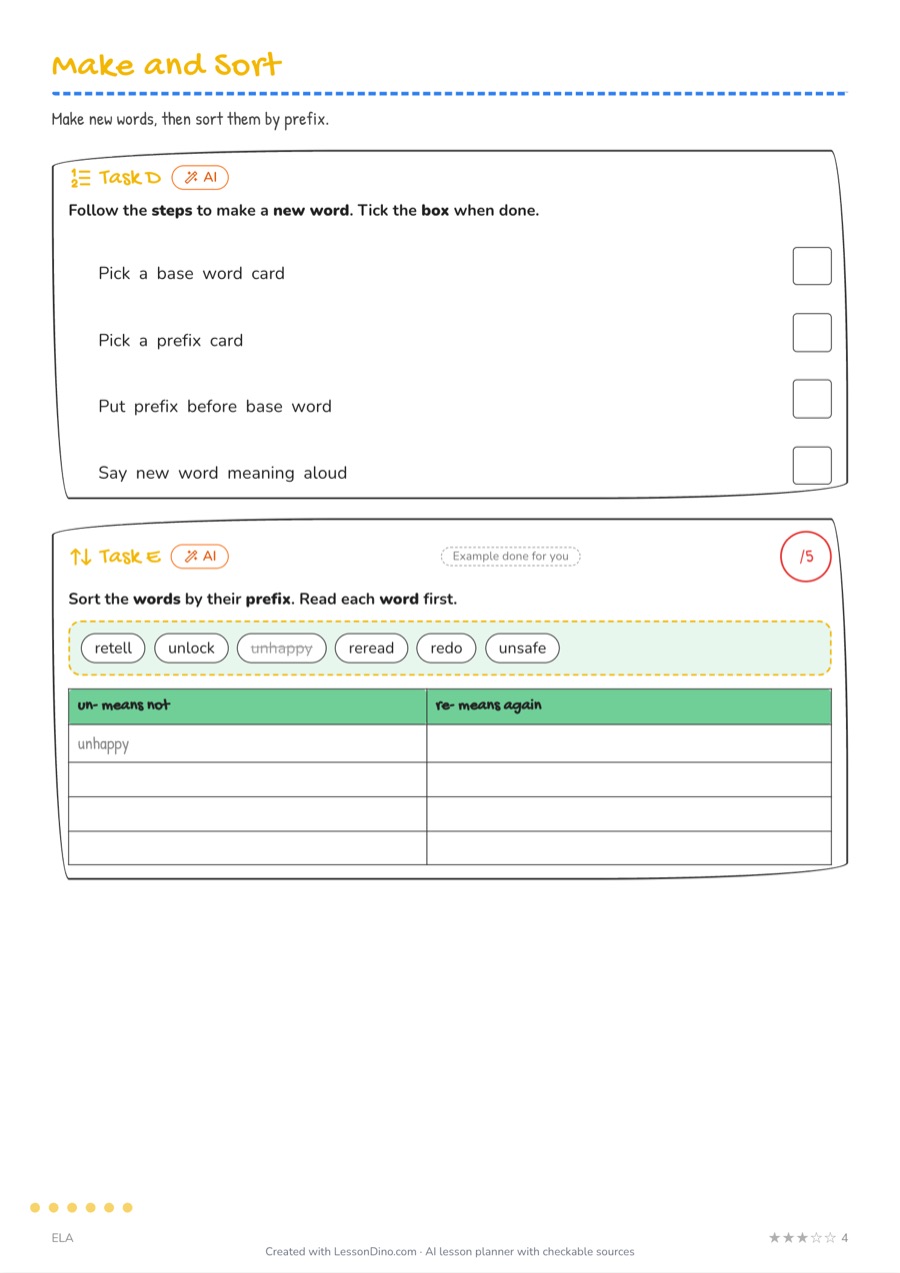
- Main activity (20 minutes): Hand out Worksheet Task D and guide students to follow the steps to make a new word and tick the box when done.
- Practice (12 minutes): Hand out Worksheet Task E and read each word first together: unhappy, unlock, retell, redo, reread.
- Support: Limit choices to two base cards at a time so students can focus on joining and reading the words.
- Stretch: Students mix re- words back into base words and explain both meanings to a partner.
- The answer sheet is the last page, so you can print it on its own or let students check their own work.
Key vocabulary
- prefix: tiny part put at the start of a word that makes a new meaning
- un-: starting part that means not
- re-: starting part that means one more time
- unhappy: not glad, not happy
- retell: say a story one more time
Mistakes to watch for
- Thinking the base word spelling changes when the prefix is added. Show side by side and remind that the spelling of the base word typically stays the same when a prefix is added; just push parts together.
- Mixing up un- means not and re- means again. Point to signs and sort again: un- usually means not and re- means again, then rebuild unhappy and redo.
- Reading only the base word and ignoring the prefix. Cover and uncover: read base, then add prefix, because a prefix is added to the start and changes the meaning.
What's on the worksheet
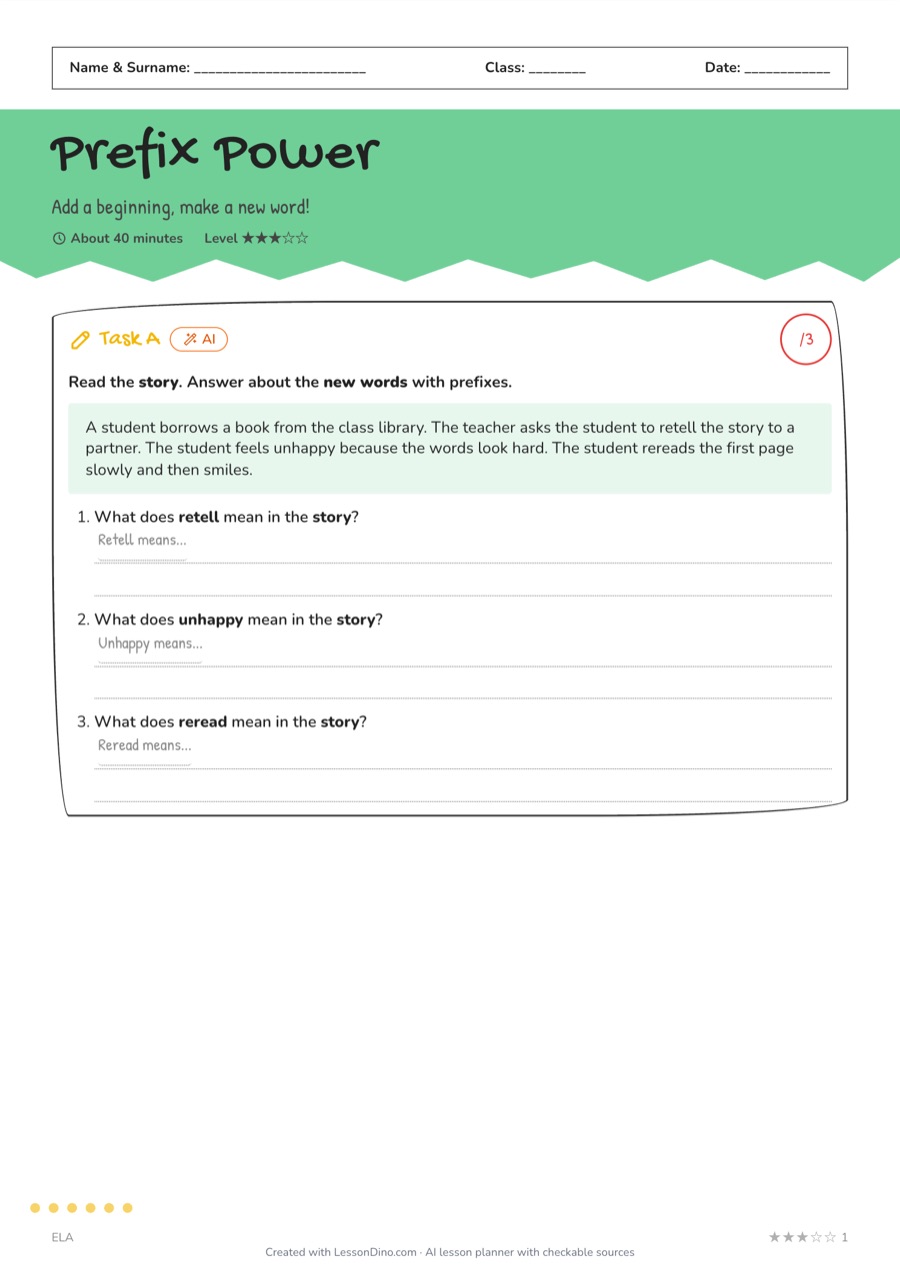
Prefix Power!
Learn how prefixes change a word's meaning.
Read the story. Answer about the new words with prefixes.
- What does retell mean in the story?
- What does unhappy mean in the story?
- What does reread mean in the story?
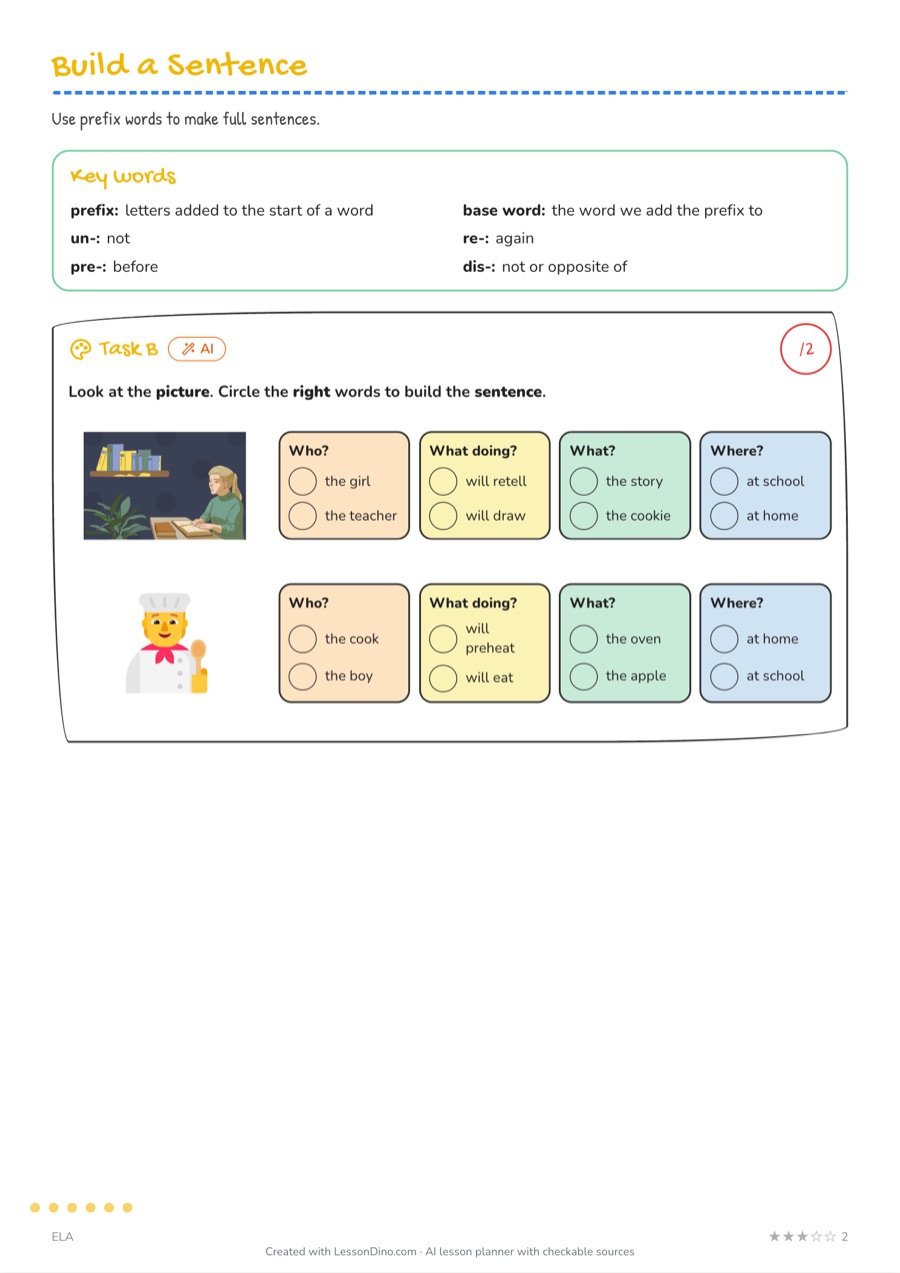
Build a Sentence
Use prefix words to make full sentences.
| Word | Meaning |
|---|---|
| prefix | letters added to the start of a word |
| base word | the word we add the prefix to |
| un- | not |
| re- | again |
| pre- | before |
| dis- | not or opposite of |
Look at the picture. Circle the right words to build the sentence.
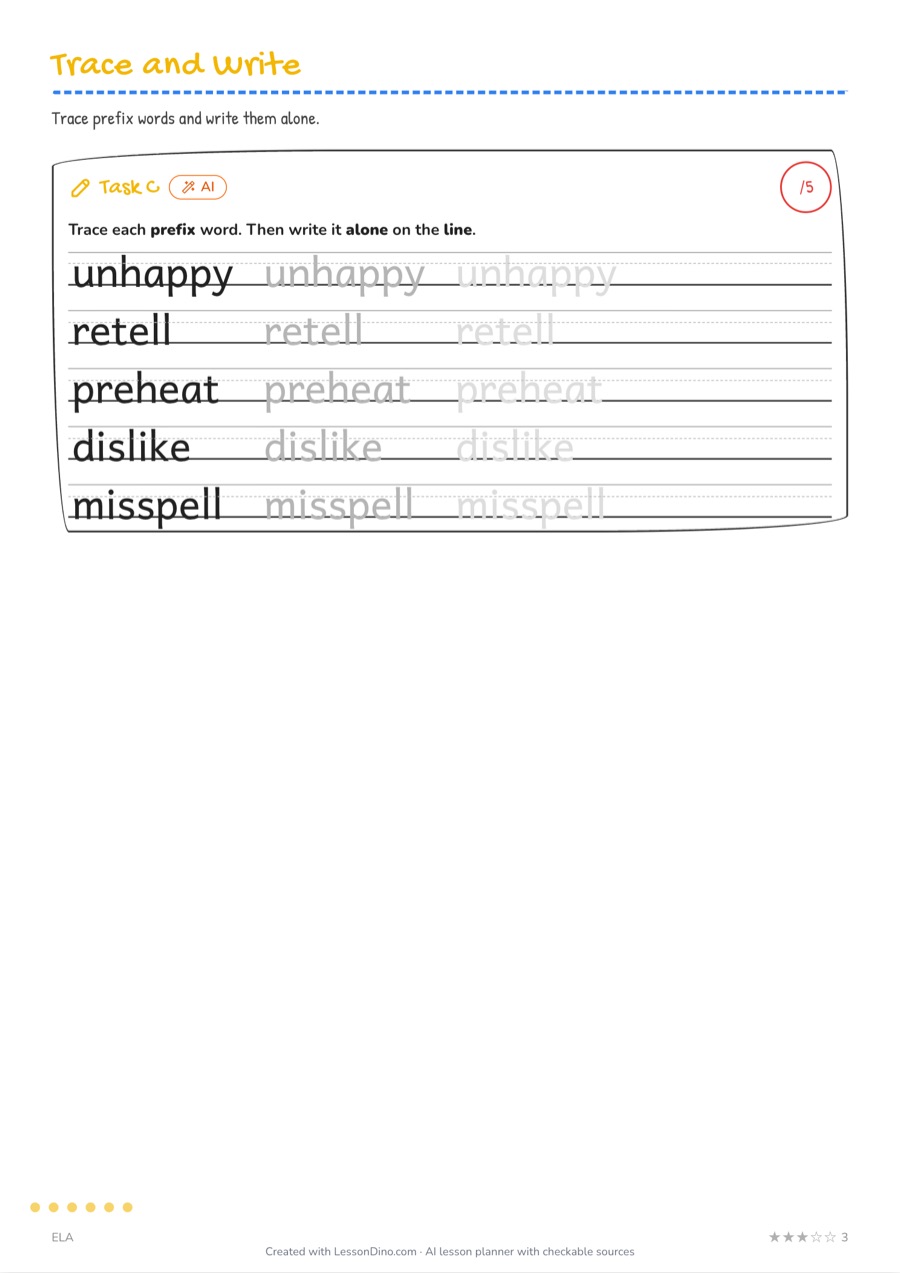
Trace and Write
Trace prefix words and write them alone.
Trace each prefix word. Then write it alone on the line.
Make and Sort
Make new words, then sort them by prefix.
Follow the steps to make a new word. Tick the box when done.
Sort the words by their prefix. Read each word first.
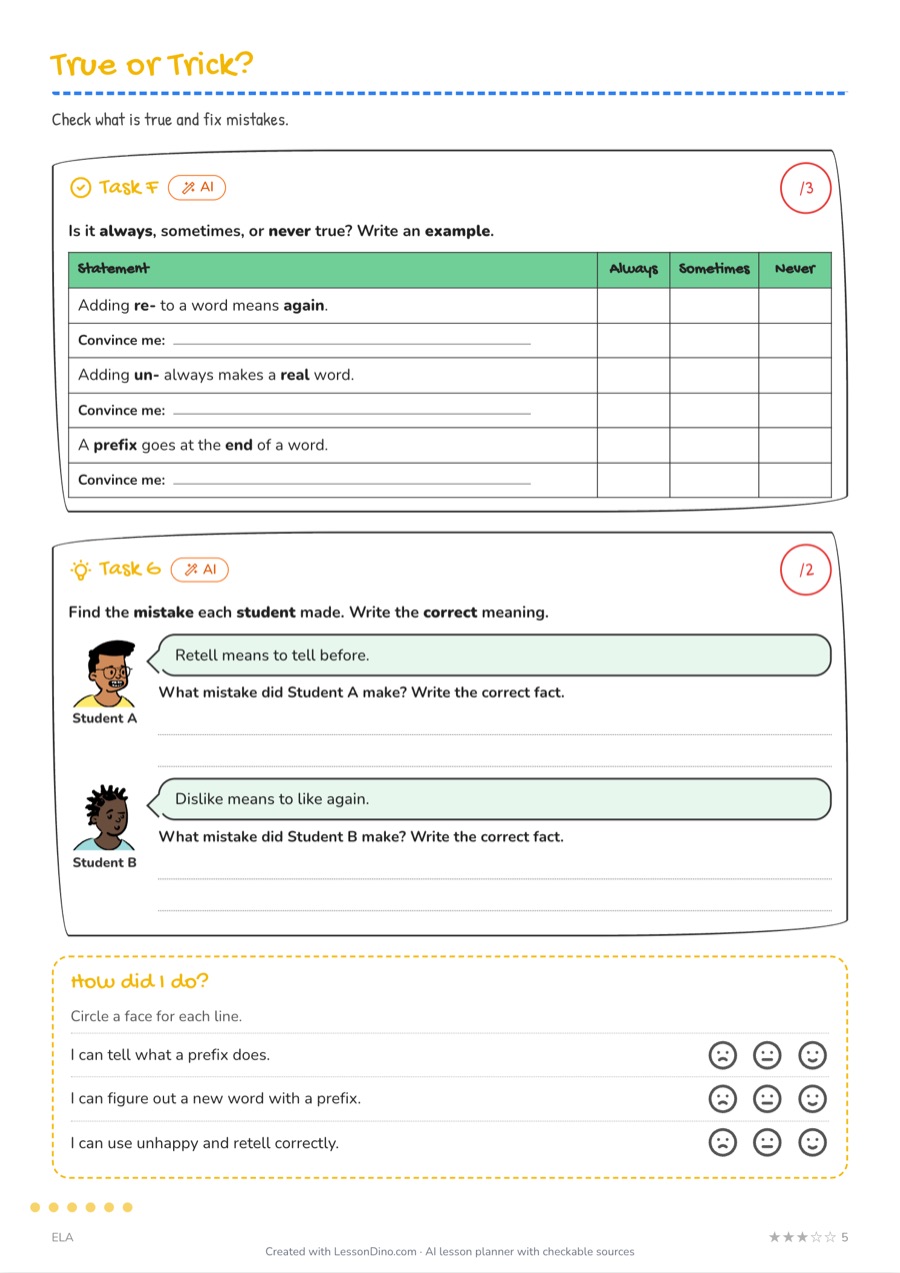
True or Trick?
Check what is true and fix mistakes.
Is it always, sometimes, or never true? Write an example.
Find the mistake each student made. Write the correct meaning.
Answers
Show the answers
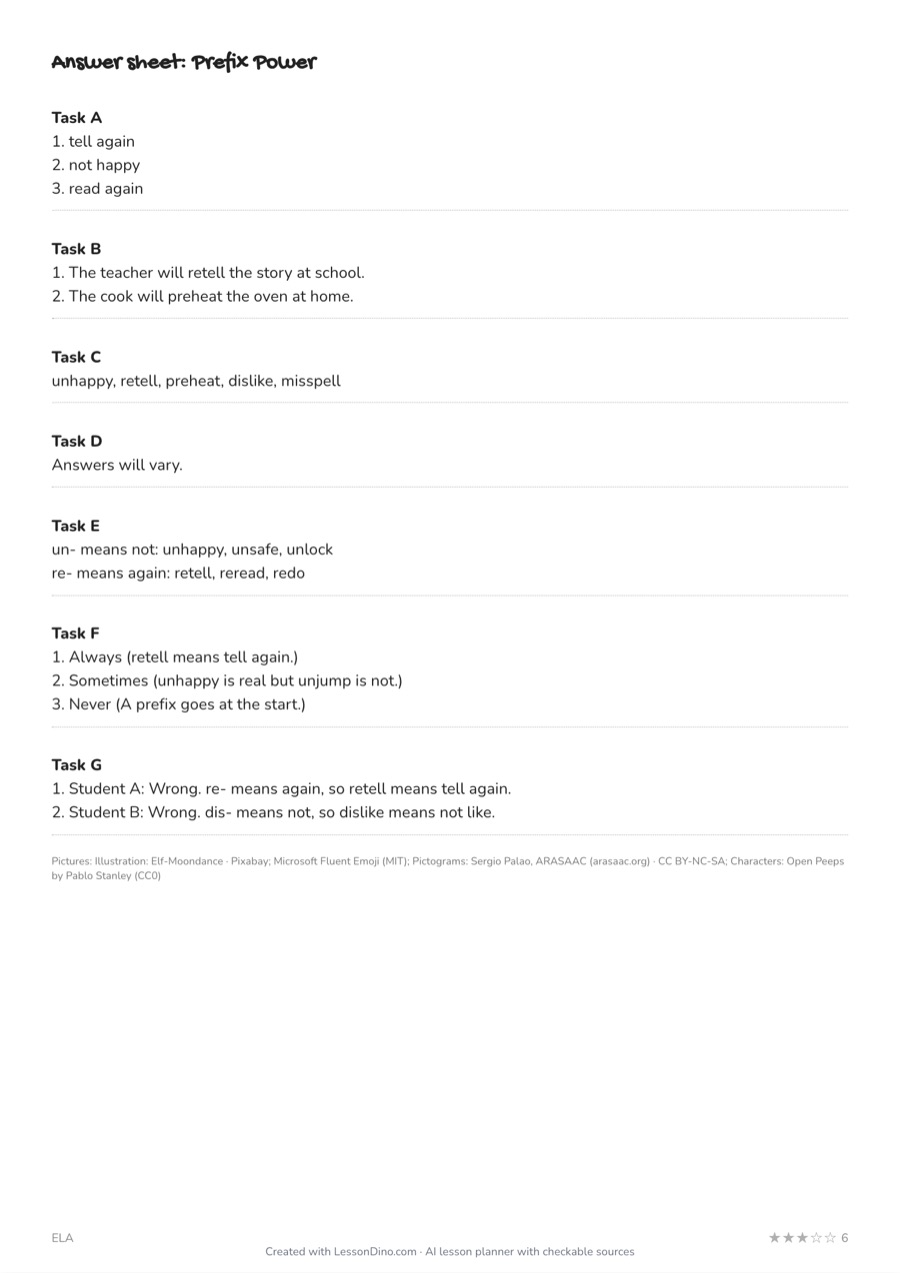
- What does retell mean in the story? tell again
- What does unhappy mean in the story? not happy
- What does reread mean in the story? read again
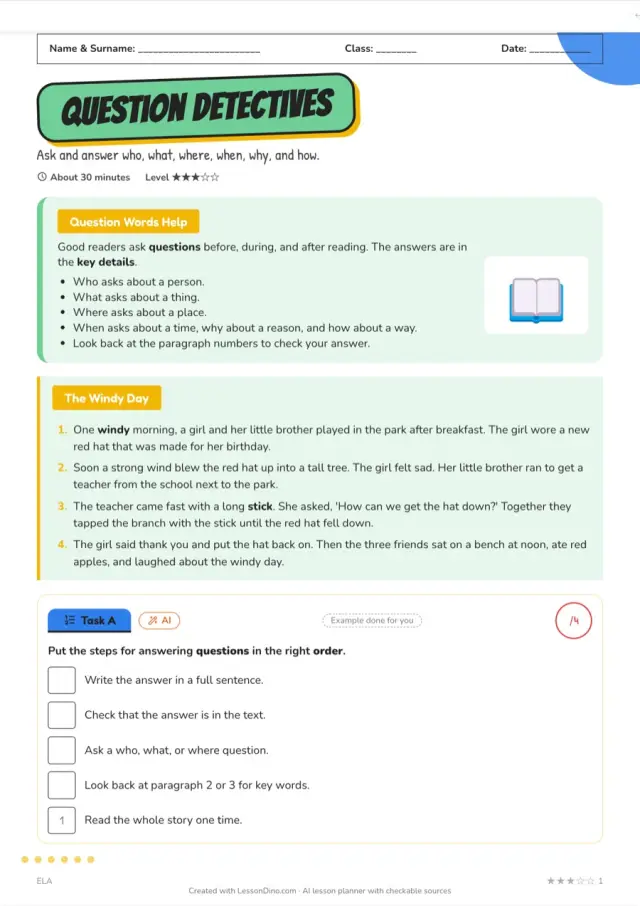
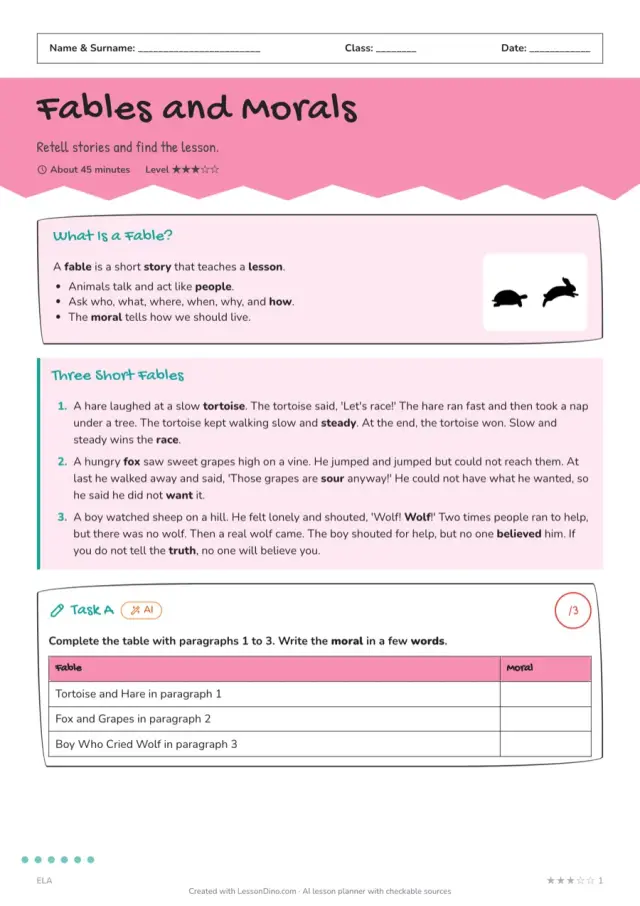
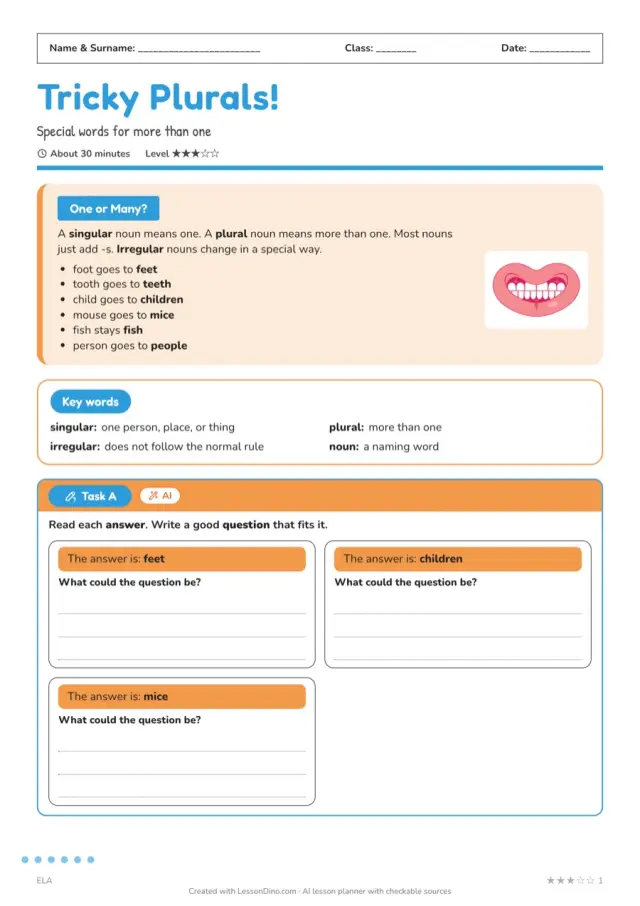
The answer sheet is the last picture above.
Curriculum
Determine the meaning of the new word formed when a known prefix is added to a known word (e.g., happy/unhappy, tell/retell).
Made with Lesson Dino's AI on 17 October 2026. AI can make mistakes, so check the answers and facts against the sources before you teach.