Slides


Lesson plan
Writing and Solving Two-Step Stories
Students learn to turn stories into px+q=r and p(x+q)=r with decimals and fractions. They create, swap, and solve their own story posters.
Objectives
- Students will translate word stories into px+q=r and p(x+q)=r using rational numbers.
- Students will solve two-step equations with inverse operations in correct order.
- Students will define the unknown with units and check answers in story words.
Success criteria
- I can write px+q=r or p(x+q)=r from a story with units.
- I can solve in the right order and show each undo step.
- I can check my answer back in the story words.
Key words
| Word | Meaning |
|---|---|
| variable | a letter that stands for a number you have not found yet |
| equation | a number sentence that shows two amounts are the same |
| total | the whole amount after all parts are put together |
| inverse operations | opposite steps that undo each other, like add then subtract |
| parentheses | curved marks that show what to do first inside equal groups |
Timed plan (60 minutes)
| Time | Stage | What happens |
|---|---|---|
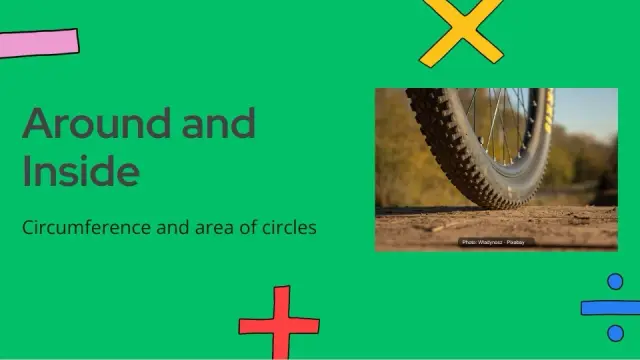
| 8 min | Starter | Activate prior solving and hook students into authoring tricky stories. Show Slide 1 title, then Slide 2 bike photo problem. Ask students to name the unknown with units before writing anything. Take quick ideas for the equation and solution on whiteboards. Frame the lesson goal: today they will learn to tell the two story types apart and author their own. |
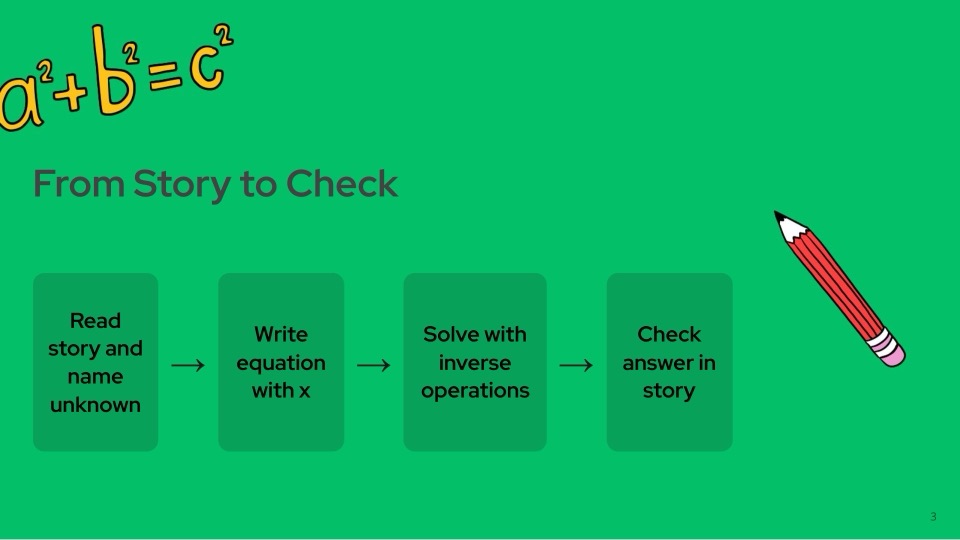
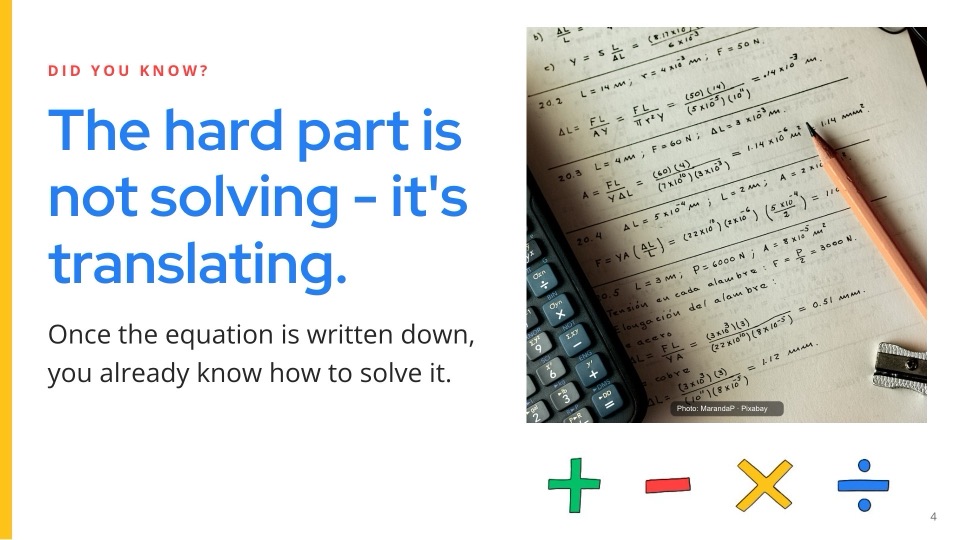
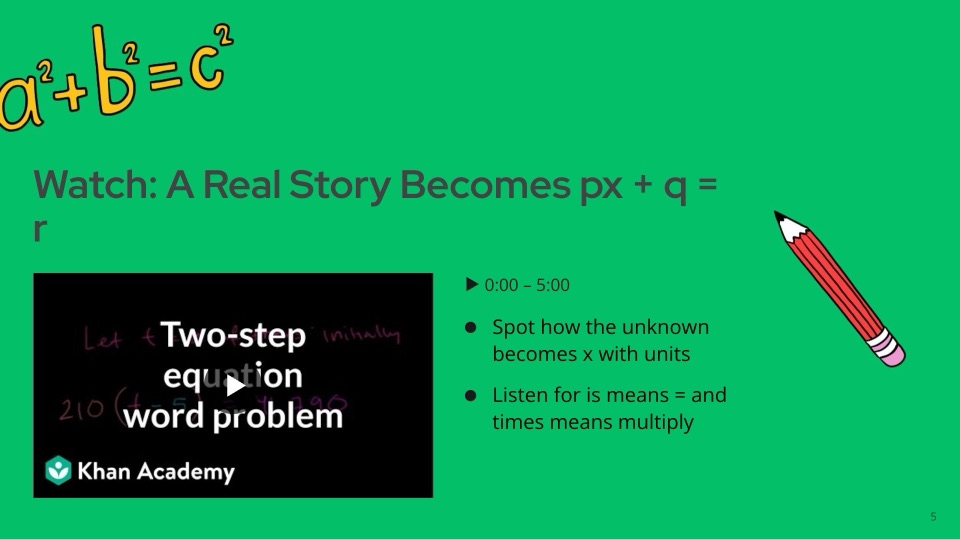
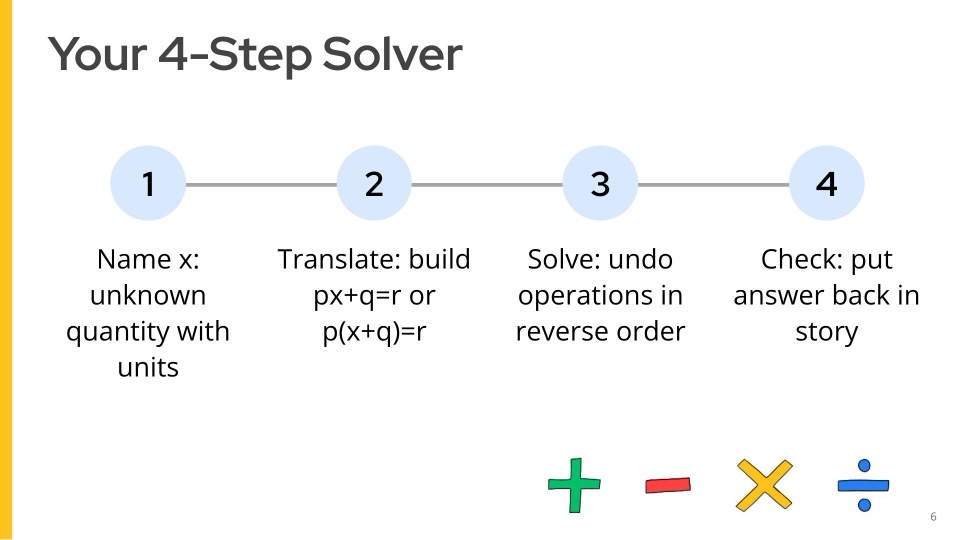
| 12 min | Teaching | Model how to translate stories into both equation forms and solve them. Show Slide 3 chain and Slide 4 fact that the hard part is translating. Play Video clip 1 (0:00-5:00) on Slide 5; ask students to spot how the unknown becomes x with units. Model Slide 6 4-Step Solver: name x, translate to px+q=r or p(x+q)=r, solve by undoing in reverse order, check in story. Think aloud the difference: flat fee added after multiplying versus same addition inside each equal group. |
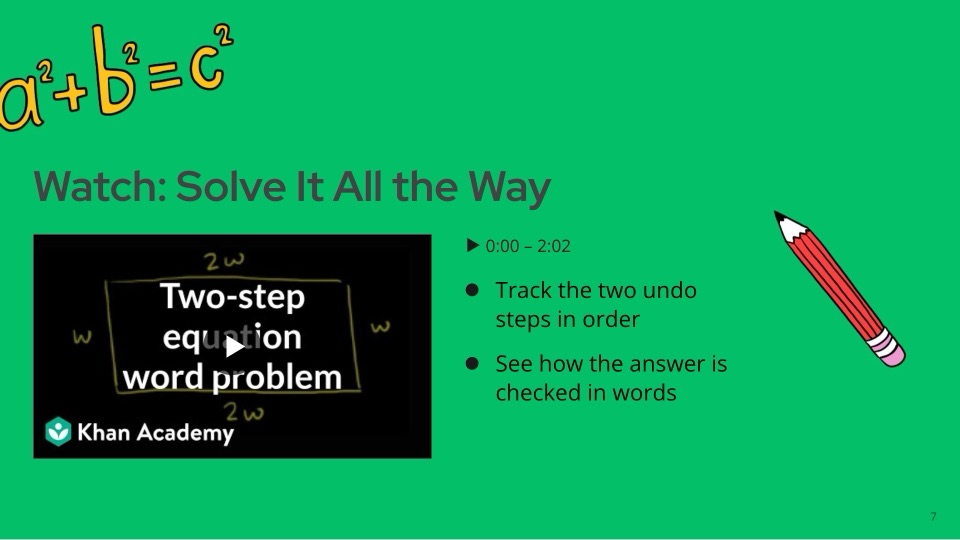
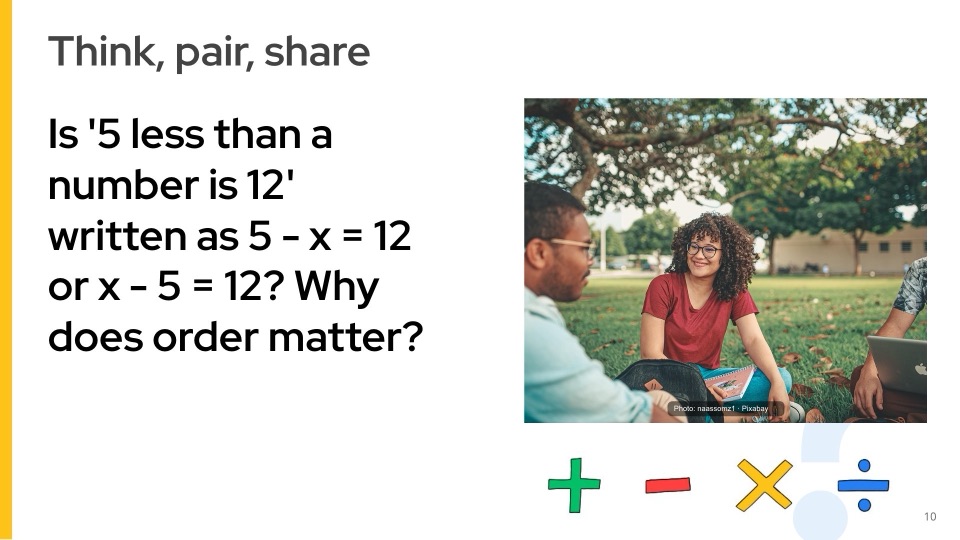
| 12 min | Guided practice | Practice solving both forms together and checking answers in words. Play Video clip 2 (0:00-2:02) on Slide 7; pause to name the two undo steps in order. Show Slide 10 question on order and stress that less than reverses order. Hand out Worksheet Task B: Solve each equation and check with the story. Circulate, ask pairs to explain correspondences between equation, words, and answer and ask Does this make sense?. |
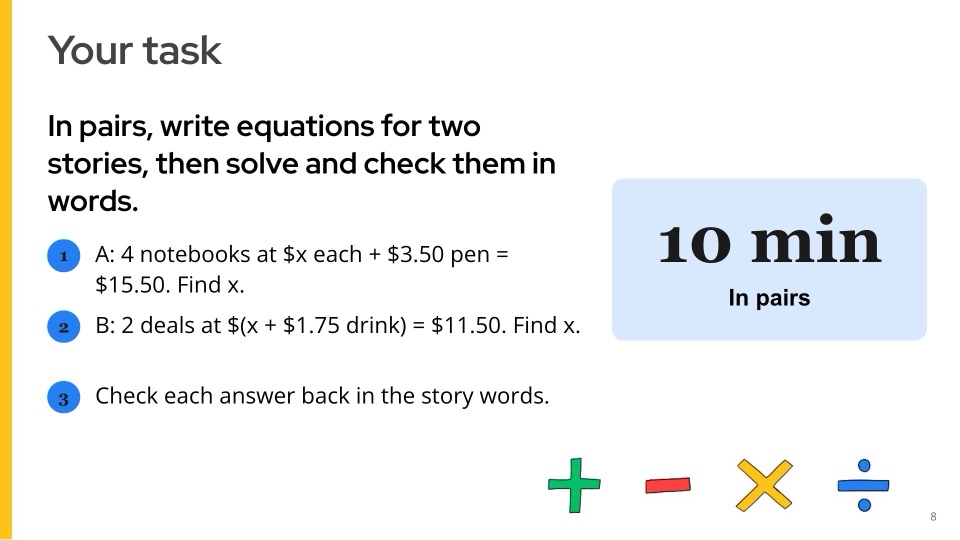
| 20 min | Main activity | Create and solve original stories for both equation types with rational numbers. Show Slide 8 task and Slide 9 check reminder; assign the two target equations: 2.5x+5=20 and 3(x+1.5)=21. Give each pair colored paper and markers; require story, Let x with units, equation, steps, and story check on each poster. Set a 12-minute timer for drafting; prompt use of everyday ideas like craft supplies or phone data and decimals or fractions. Organize a swap: pairs solve the other pair's stories, leave a check note, and return for corrections. |
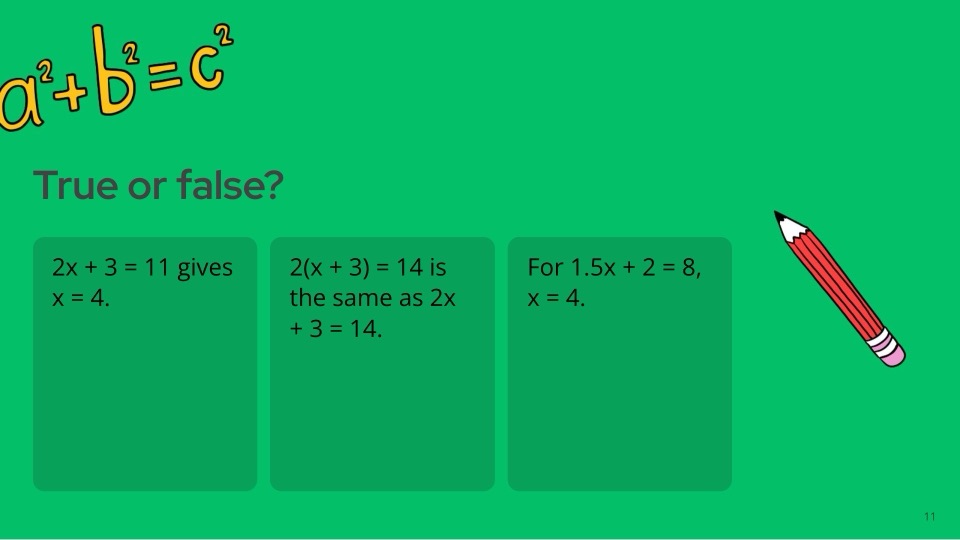
| 8 min | Plenary | Confirm the two forms are distinct and assess solving and checking. Show Slide 11 true-or-false and take votes with reasons. Revisit success criteria: write each form, solve in order, check in words. Hand out exit tickets with three short problems and collect them. Preview homework from Worksheet Task C. |
Common mistakes
- Writing 5 - x = 12 for 5 less than a number
How to spot it: Equation starts with the smaller number first in Task B or Slide 10 vote
Teach that less than reverses order to x - 5 = 12 and test with numbers like 10-8. - Treating 2(x+3)=14 as 2x+3=14
How to spot it: Divides only x or subtracts before dividing in p(x+q)=r
Use bars of two equal (x+4) parts making 26 to show divide first, then subtract. - Giving x without units or no story check
How to spot it: Answer says x=4 with no hours or dollars and check only in symbols
Require Let x with units and one sentence check back in story words and ask Does this make sense?.
Support
- Word bank with total, each, per, plus, in all, combined for translation.
- Pre-drawn bars with total labeled to fill parts before writing equations.
- Sentence frames for Let x = number of ___ with units.
Stretch
- Solve with fractions like (3/4)(x+2)=9 and explain each bar step.
- Create a story with a non-whole answer like x=2.4 hours and justify fit.
- Change one number to make a fractional answer and re-solve.
Check questions
- A student buys 2.5 pounds of clay at $x per pound plus a $5 kit for $20 total. Write and solve 2.5x+5=20. What is x?
Answer: x = 6, meaning $6.00 per pound. Check: 2.5(6)+5=20. - Three packs each have a $1.50 item plus the same-price item for $21 total. Solve 3(x+1.5)=21. What is x?
Answer: x = 5.5, meaning $5.50. Check: 3(5.5+1.5)=21. - Why is 5 less than a number written as x-5, not 5-x?
Answer: Less than reverses order; 5 less than 17 is 17-5=12.
Curriculum
Solve word problems leading to equations of the form px + q = r and p(x + q) = r, where p, q, and r are specific rational numbers.
Video clips
Clips on YouTube, from the start and end times we chose. Check each one before you show it.
-
linear equation story problem from 0:00 to 5:00
Khan Academy: Linear equation word problem | Linear equations | Algebra I | Khan Academy
Models a real-life px + q = r problem step-by-step with clear visuals at the right pace for 12-13-year-olds.
-
solving an equation word problem from 0:00 to 2:02
Khan Academy: Word problem: solving equations | Linear equations | Algebra I | Khan Academy
Shows a complete translate-to-equation and solve cycle in 2 minutes, perfect for Grade 7 attention and level.
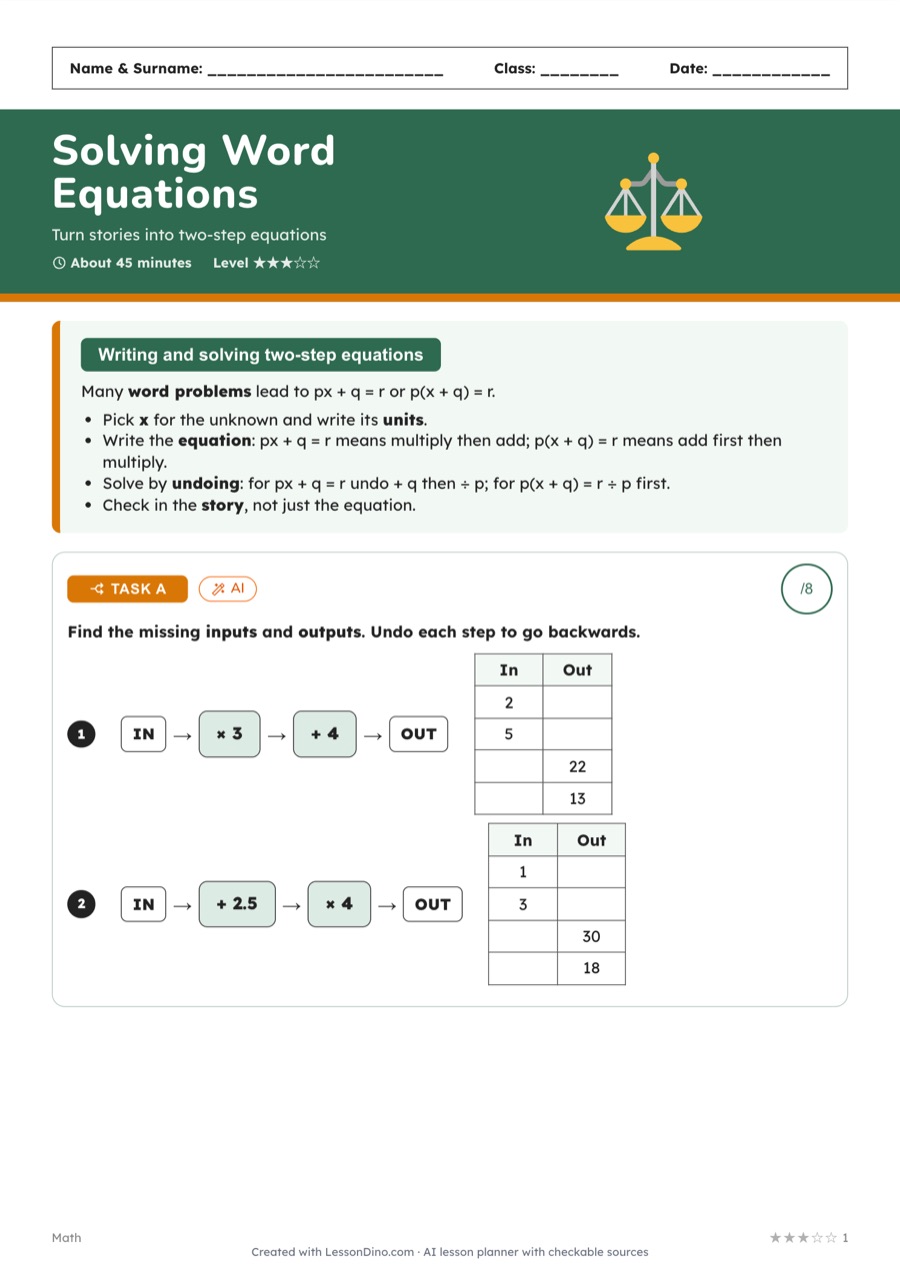
Worksheet
Sources
- Standards for Mathematical Practice thecorestandards.org
- 7th grade Math Curriculum 2025 - thoreaums.fcps.edu thoreaums.fcps.edu
- From English to Algebra: Solving Linear Equations with Word Problems teachers.yale.edu
- Systems of Linear Equations: Word Problems mgccc.edu
- Formulating Algebraic Equations from Word Problems teachers.yale.edu
- Index of Challenge Problems Title of Problem Page mason.gmu.edu
- Developing Connections Between Word Problems and Mathematical Equations ... ies.ed.gov
- Using an equation to solve a word problem. - BBC bbc.co.uk
- Systems of equations word problems (with zero and infinite solutions) khanacademy.org
- Systems of equations word problems | Algebra 1 (practice) | Khan Academy khanacademy.org
- Represent 2-step word problems with equations - Khan Academy en.khanacademy.org
- Linear Equation Word Problems - learnmath.org learnmath.org
- Equation Word Problems Worksheets mathworksheets4kids.com
- Equations and Word Problems - Math Worksheets imathworksheets.com
- Systems of Equations Word Problems Worksheet with Answers math-only-math.com
- 1.20: Word Problems for Linear Equations - Mathematics LibreTexts math.libretexts.org
- Linear Equation Word Problems Worksheets 15worksheets.com
- Two-step equations – word problems - Mathx.net mathx.net
- Lesson Typical word problems on systems of 2 equations in 2 unknowns algebra.com
- Problem solving with expressions and equations thenational.academy
- Equations - KS3 Maths - BBC Bitesize bbc.co.uk
- Problem solving with linear equations - Oak National Academy thenational.academy
- Math Exercises & Math Problems: Equation Word Problems math-exercises.com
Picture credits
Made with Lesson Dino's AI on 17 October 2026. AI can make mistakes, so check facts against the sources before you teach.