Slides
Lesson plan
Covering Shapes to Find Area
Students learn that area is the flat space a shape covers. They cover shapes with squares and count to find area.
Objectives
- Students will recognize area as the flat space inside plane figures.
- Students will measure area by counting same-size squares without gaps or overlaps.
Success criteria
- I can show the area inside a shape and say what it means.
- I can cover a shape and count squares to find area.
Key words
| Word | Meaning |
|---|---|
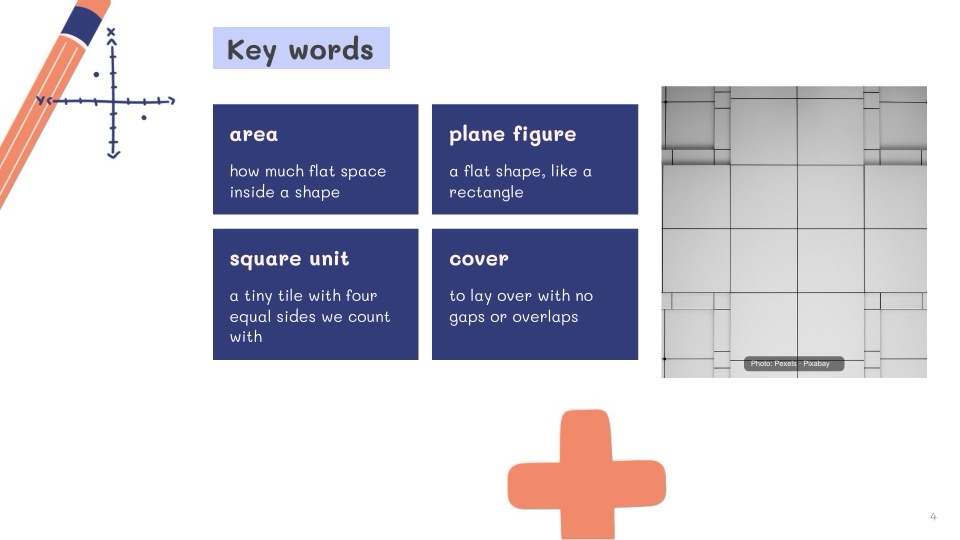
| area | how much flat space inside a shape |
| plane figure | a flat shape, like a rectangle |
| square unit | a tiny tile with four equal sides we count with |
| cover | to put squares across a shape with no gaps or overlaps |
Timed plan (60 minutes)
| Time | Stage | What happens |
|---|---|---|
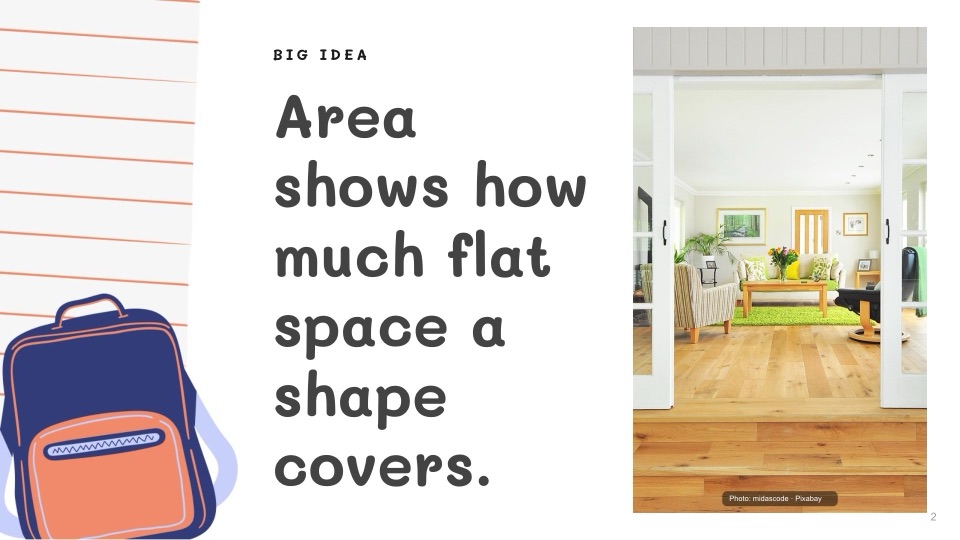
| 5 min | Starter | Hook students and connect area to flat space they can see. Show Slide 1: How Much Space? Understanding area in Grade 3 math. Hold up a paper and say the hook to focus on covering. Show Slide 2: Area shows how much flat space a shape covers. Show Slide 5 question and have students turn and talk with a partner. |
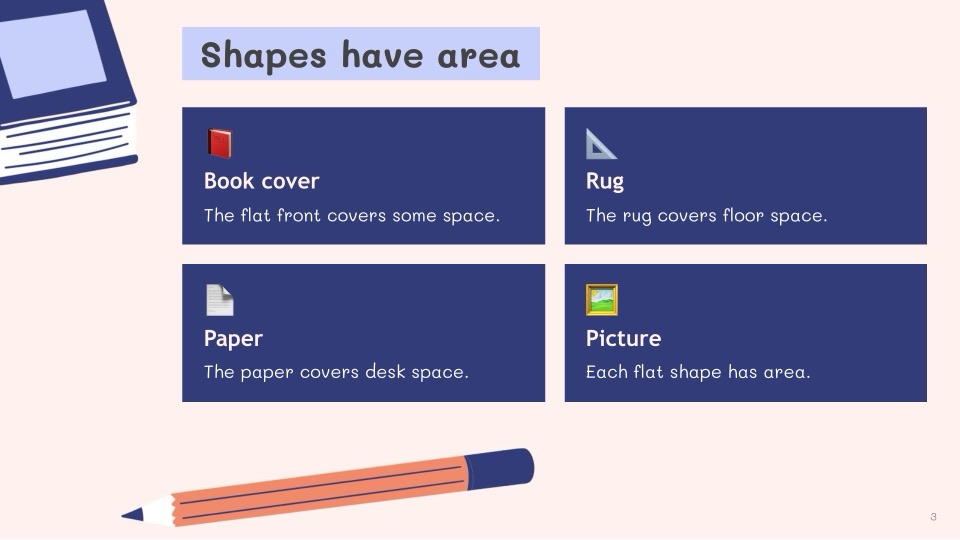
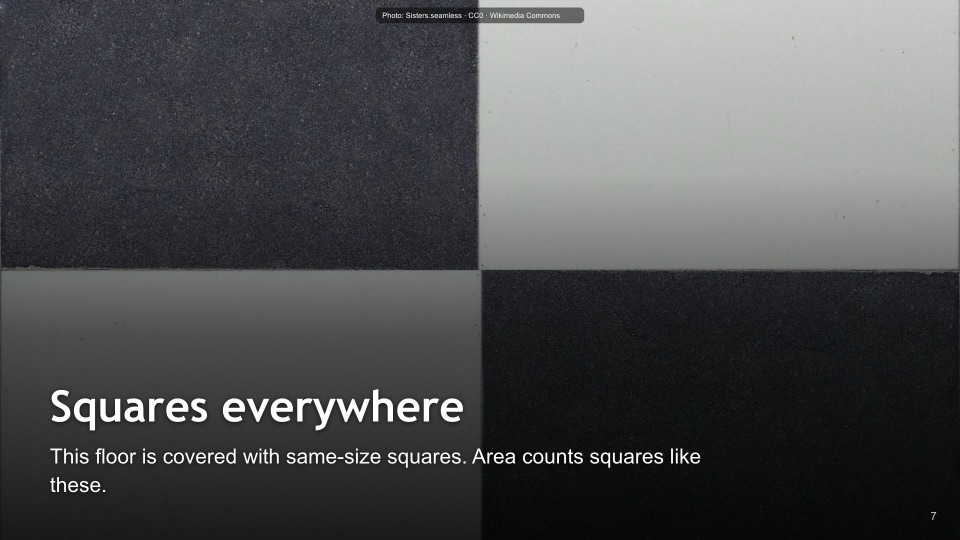
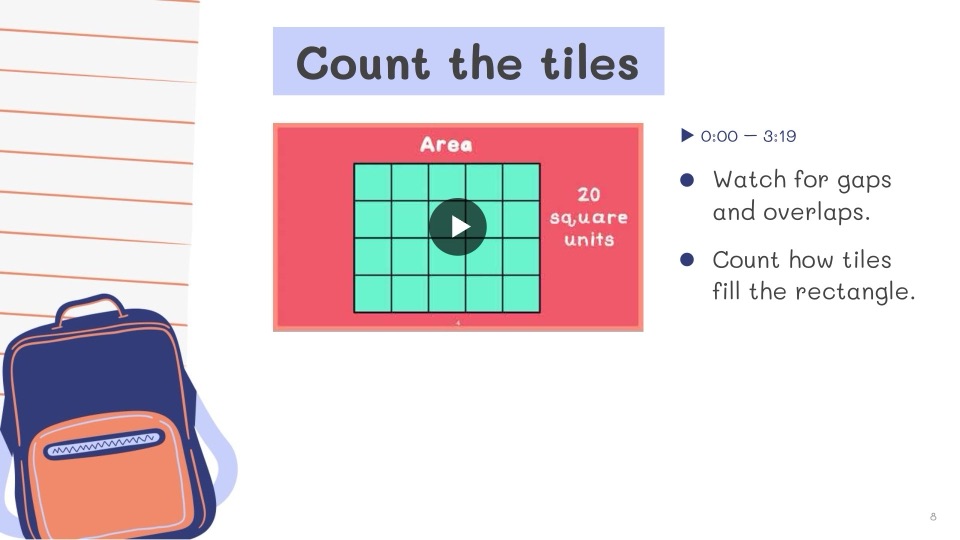
| 10 min | Teaching | Explain that area is found by covering with same-size squares. Show Slide 3 cards and point to book cover, rug, and paper as flat shapes. Teach Slide 4 words: area, plane figure, and square unit. Show Slide 7 photo and explain the floor is covered with same-size squares. Play Slide 8 video and narrate gaps and overlaps to watch for. |
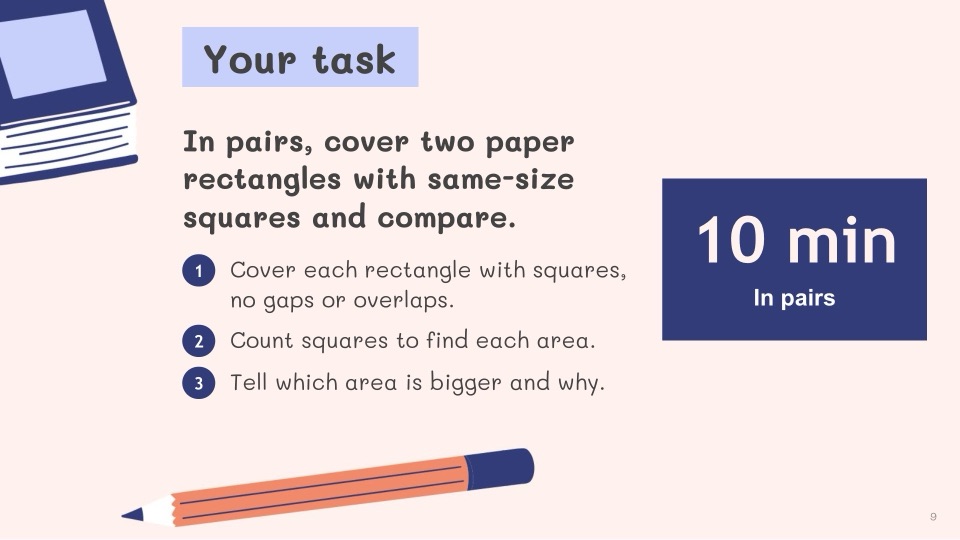
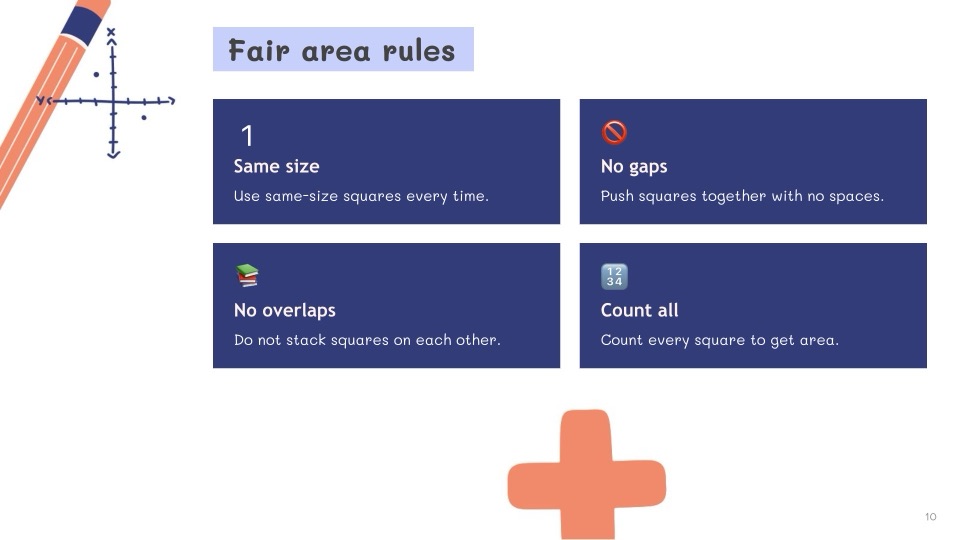
| 20 min | Main activity | Measure area by covering paper rectangles with same-size squares. Show Slide 9 task and give each pair two paper rectangles, 1-inch squares, and a tray. Show Slide 10 fair rules: same size, no gaps, no overlaps. Model lining squares along one edge, then filling the middle with no spaces. Circulate, ask for counts, and have pairs compare which rectangle has greater area. |
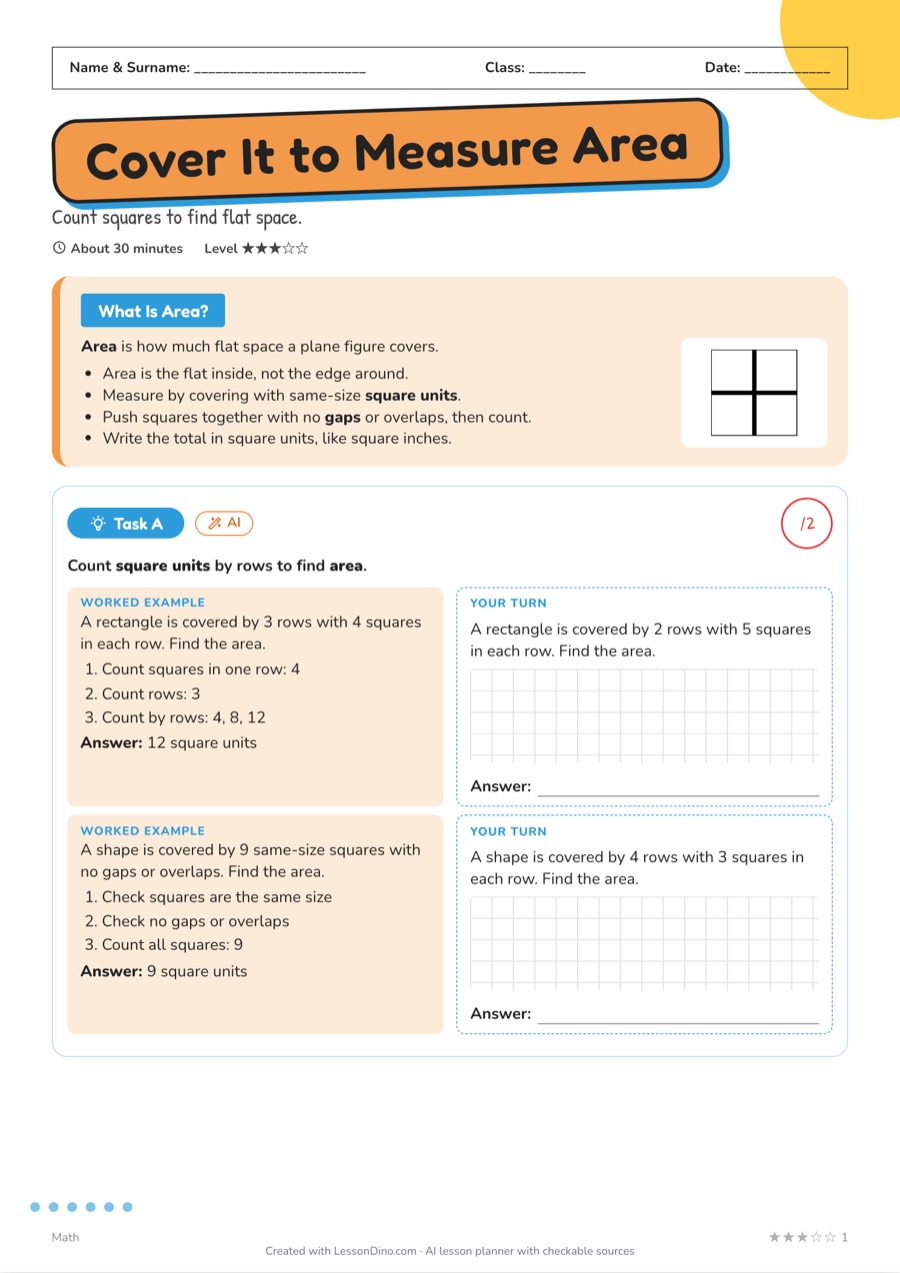
| 15 min | Practice | Practice counting squares correctly to find exact area. Give out Worksheet Task B: Count square units to find area. No gaps, no overlaps. Read the directions together and do the first shape by pointing and counting. Have students work alone to count and write each area in square units. Collect quick scan of answers and address gaps or double counts. |
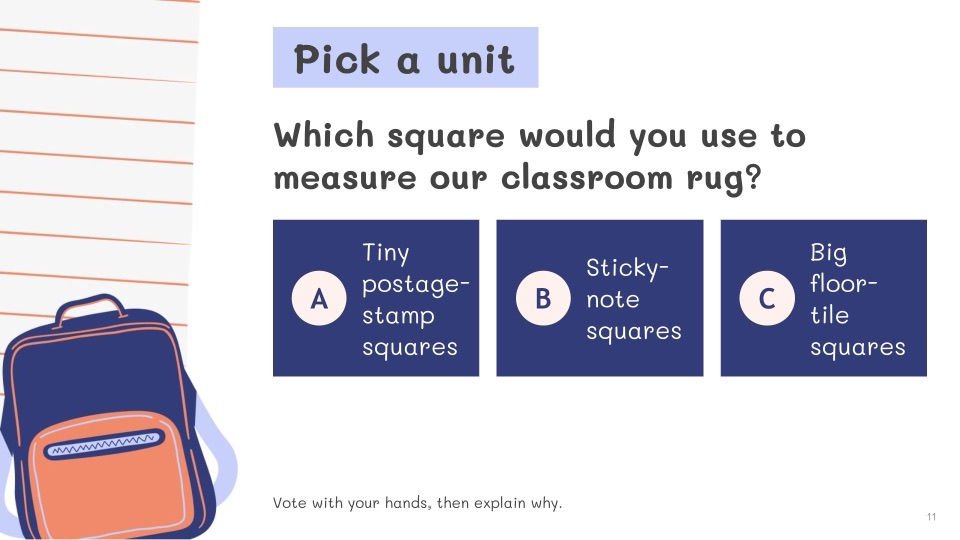
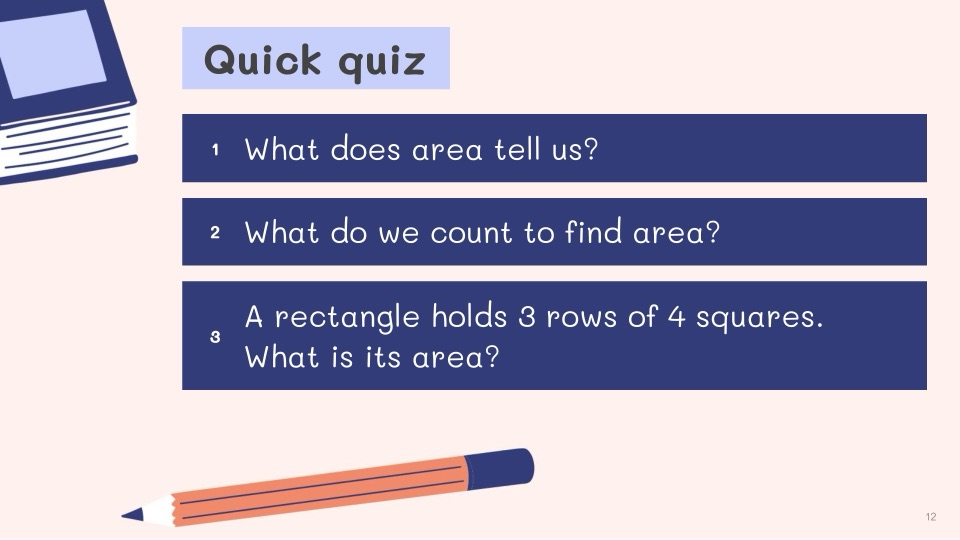
| 10 min | Plenary | Review what area means and check who can measure it. Show Slide 11 and vote on which square to use for the classroom rug. Ask why same-size squares matter for fair measurement. Show Slide 12 quiz and cold-call answers for what area tells and what we count. Restate success criteria and preview next work on rows and multiplication. |
Common mistakes
- Leaving gaps or stacking squares when covering
How to spot it: Counts differ from partner or squares show spaces or overlaps
Push squares together with no spaces and recount row by row, since area needs total same-size units without gaps or overlaps. - Confusing area with the edge around the shape
How to spot it: Student traces the border when asked to show area
Point to the flat inside for area and lay yarn on edge versus tiles inside to show linear versus area measures. - Using mixed-size squares in one measurement
How to spot it: Area count mixes large and small tiles
Replace with one same-size square unit and recount, because the square with sides of unit length is the standard unit.
Support
- Give a small rectangle that fits squares exactly and let students line the edge first, then fill the middle.
Stretch
- Give an L-shape made of squares and ask students to count and compare its area to the rectangle.
Check questions
- What does area tell us?
Answer: How much flat space a shape covers. - A paper is covered by 10 same-size squares with no gaps. What is its area?
Answer: 10 square units. - Why do we use same-size squares with no gaps or overlaps?
Answer: To measure fairly and get the true count of covering units.
Curriculum
Recognize area as an attribute of plane figures and understand concepts of area measurement.
Video clips
Clips on YouTube, from the start and end times we chose. Check each one before you show it.
-
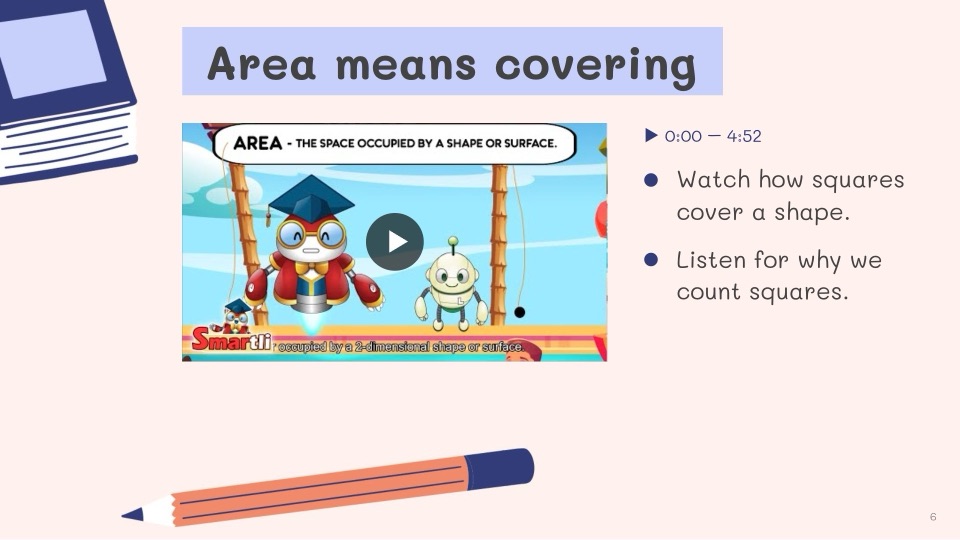
Understanding Area Grade 3 from 0:00 to 4:52
Smartli: Understanding Area | Learning Area & Perimeter | Grade 3 Math for Kids | Smartli
Made for Grade 3 ages 8-9 and explains area as covering plane figures with square units.
-
Area Using Square Tiles from 0:00 to 3:19
Teach With Mrs. J.: Area using Square Tiles
Uses square tiles to build area meaning, perfect hands-on level for ages 8-9 in Grade 3.
Worksheet
Sources
- Grade 3 » Introduction | Common Core State Standards Initiative thecorestandards.org
- Standards for Mathematical Practice thecorestandards.org
- A Pathway to Understanding Area and Perimeter teachers.yale.edu
- INVESTIGATING STUDENT'S UNDERSTANDING OF THE AREA AND ... files.eric.ed.gov
- SI Units – Area | NIST nist.gov
- How to work out an area - BBC Bitesize bbc.co.uk
- Understanding Area cdnend.americanhighschool.org
- Understanding Area - Kids Academy kidsacademy.mobi
- Area - BBC Bitesize bbc.co.uk
Picture credits
Made with Lesson Dino's AI on 17 October 2026. AI can make mistakes, so check facts against the sources before you teach.