The worksheet
About this worksheet
Students learn to find periods and groups and to sort metals from non-metals. They colour-code a blank table so the patterns stand out. This Year 9 Science worksheet gives students (ages 13–14) five pages of practice on the periodic table, part of the chemistry unit. It goes with our free The periodic table lesson, which has the slides and a timed lesson plan.
What it covers
By the end, students should be able to:
- Students will find the period and group of any element from its row and column.
- Students will classify elements as metal or non-metal using the zigzag divide.
- Students will explain why organisation helps predict physical and chemical properties.
How to use it
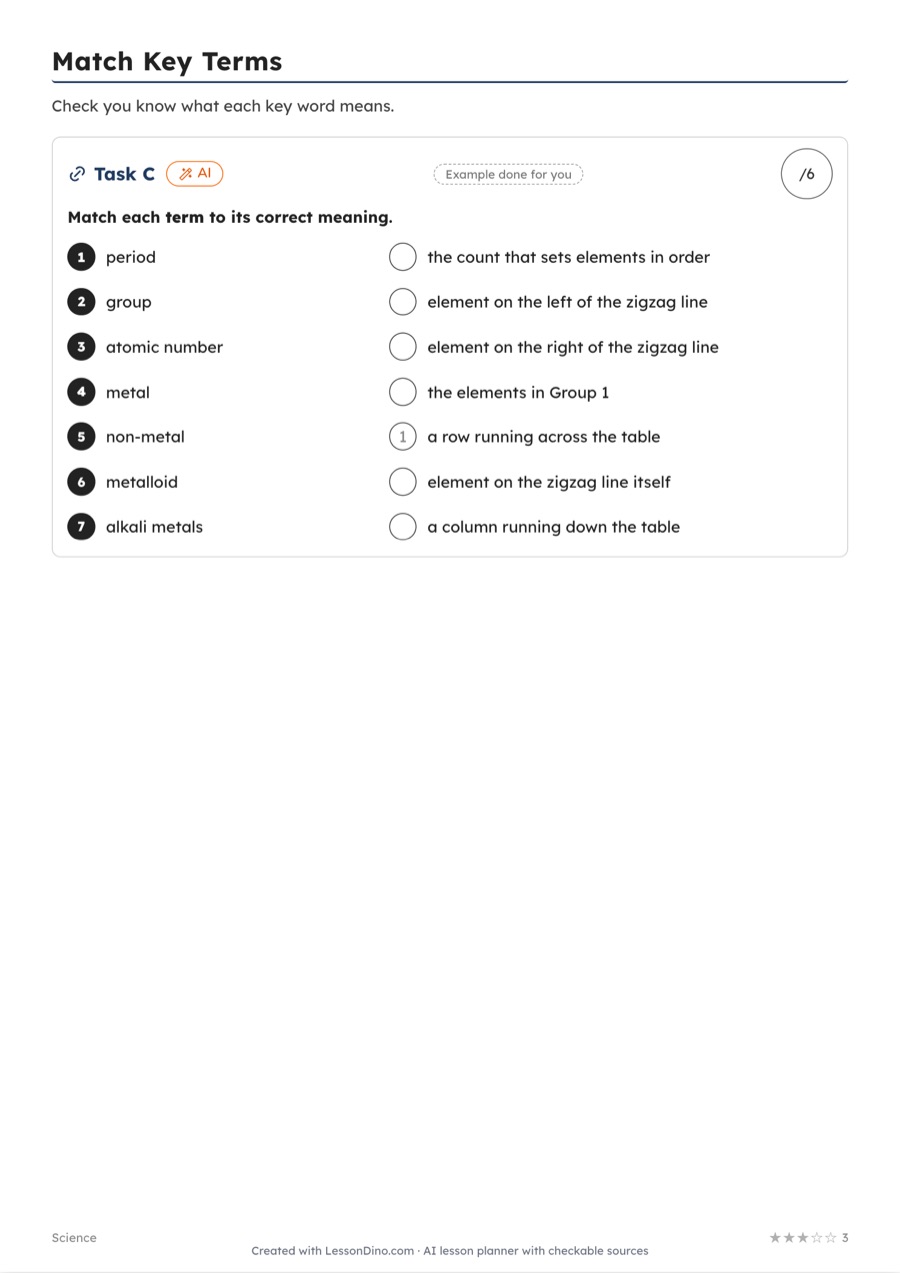
- Plenary (10 minutes): Hand out Worksheet Task C and give 2 minutes to match period, group, atomic number and metal.
- Support: Half-coloured tables with Group 1 and zigzag pre-marked plus word bank for shiny, dull, bendy and brittle.
- Stretch: Add pattern notes on reactivity or number of electron shells shared in a group.
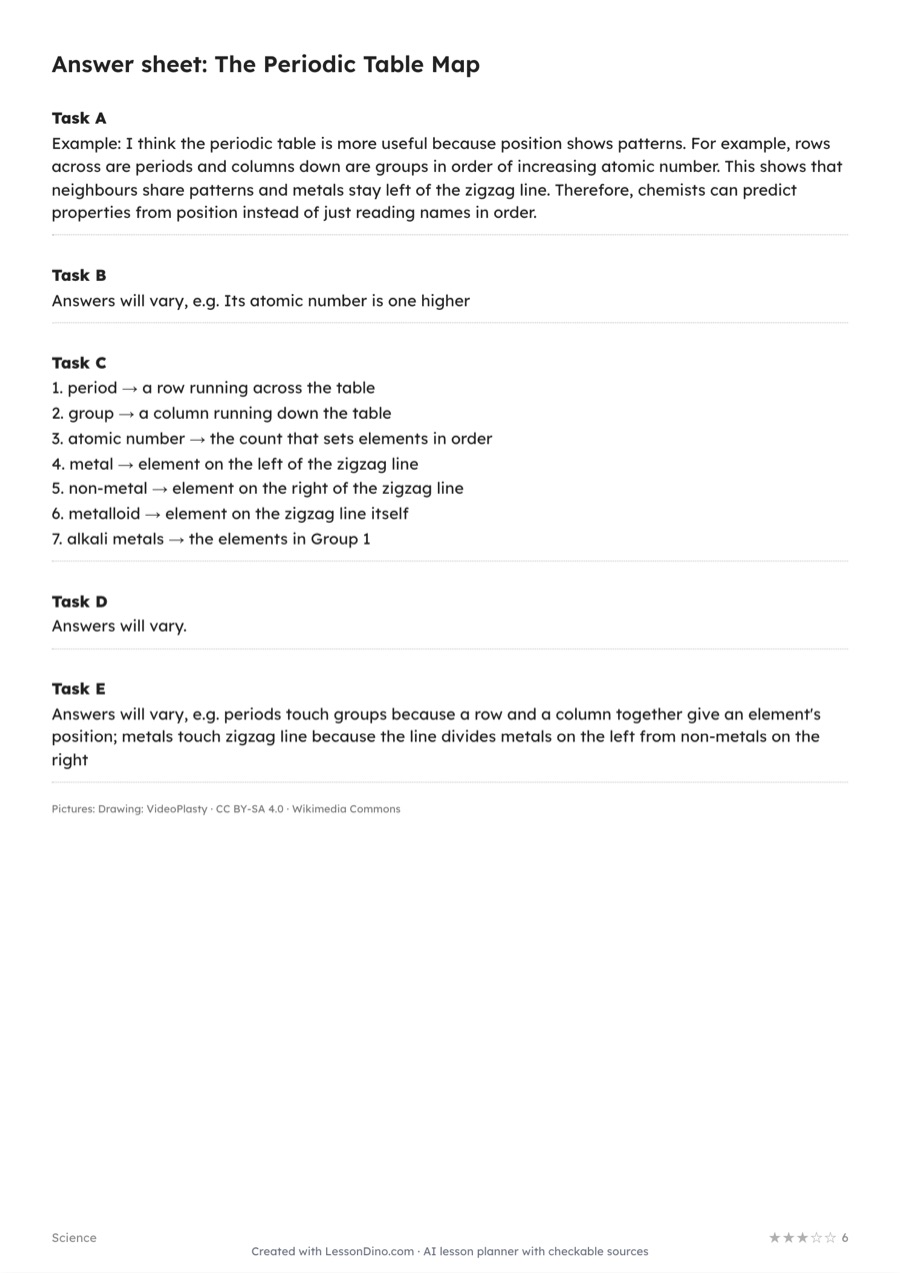
- The answer sheet is the last page, so you can print it on its own or let students check their own work.
Key vocabulary
- period: a row running across the table
- group: a column running down the table
- atomic number: the count that decides an element's place in order
- metal: shiny, bendy material that carries heat well
- non-metal: dull, breakable substance that carries heat poorly
Mistakes to watch for
- Mixing up period and group. Retrace: rows that run across are periods, columns that run down are groups. Point and say across then down.
- Thinking metals are on the right. Point to zigzag line between metals and non-metals. Left is mainly metals, right is non-metals.
- Thinking order is by mass or alphabet. Remind that the table lists elements in order of increasing atomic number and practise finding 11 then 12.
What's on the worksheet
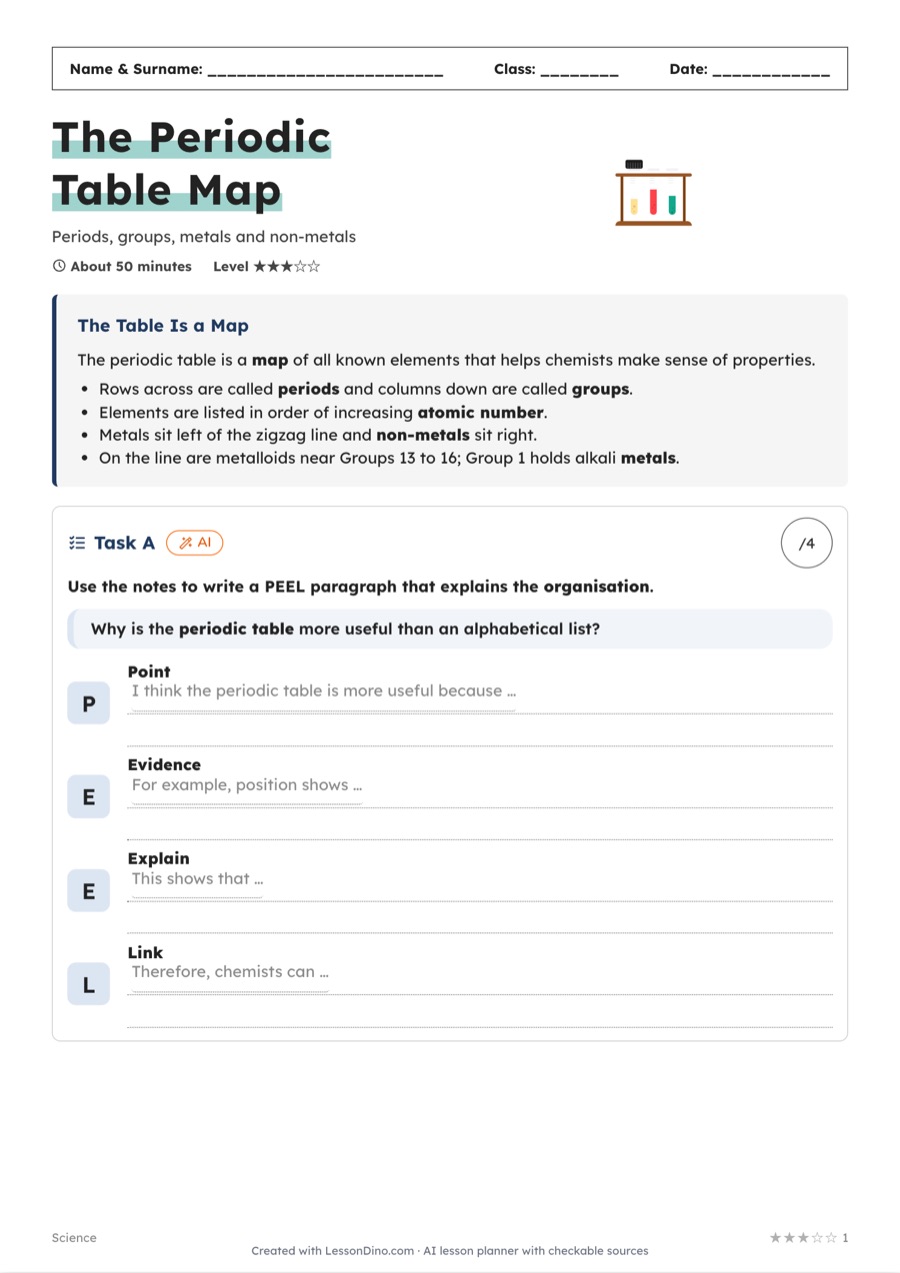
Table Map Basics
Learn the layout, then write a PEEL paragraph.
The Table Is a Map
- The periodic table is a map of all known elements that helps chemists make sense of properties.
- Rows across are called periods and columns down are called groups.
- Elements are listed in order of increasing atomic number.
- Metals sit left of the zigzag line and non-metals sit right.
- On the line are metalloids near Groups 13 to 16; Group 1 holds alkali metals.
Use the notes to write a PEEL paragraph that explains the organisation.
Across the Period
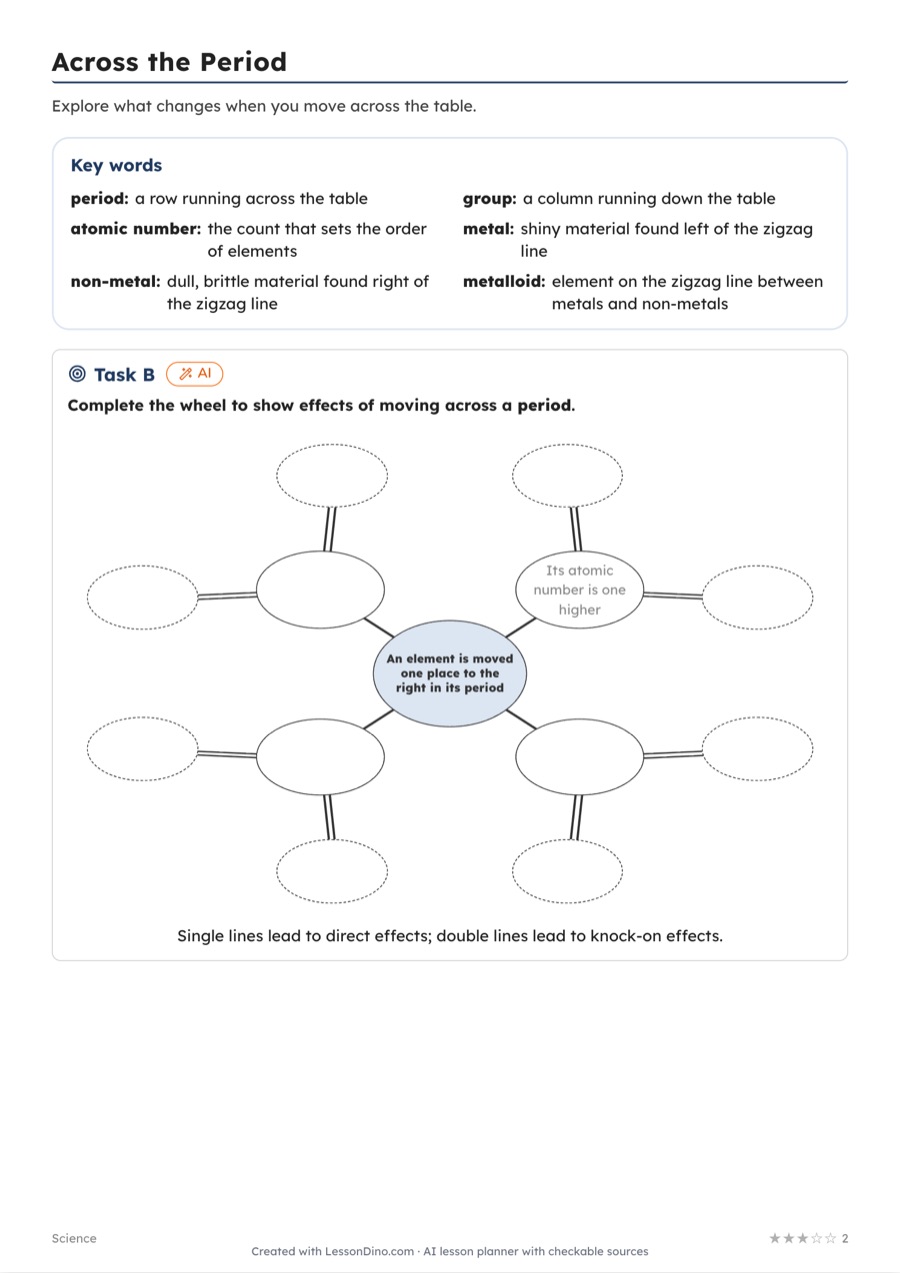
Explore what changes when you move across the table.
| Word | Meaning |
|---|---|
| period | a row running across the table |
| group | a column running down the table |
| atomic number | the count that sets the order of elements |
| metal | shiny material found left of the zigzag line |
| non-metal | dull, brittle material found right of the zigzag line |
| metalloid | element on the zigzag line between metals and non-metals |
Complete the wheel to show effects of moving across a period.
Match Key Terms
Check you know what each key word means.
Match each term to its correct meaning.
Most Useful Clues
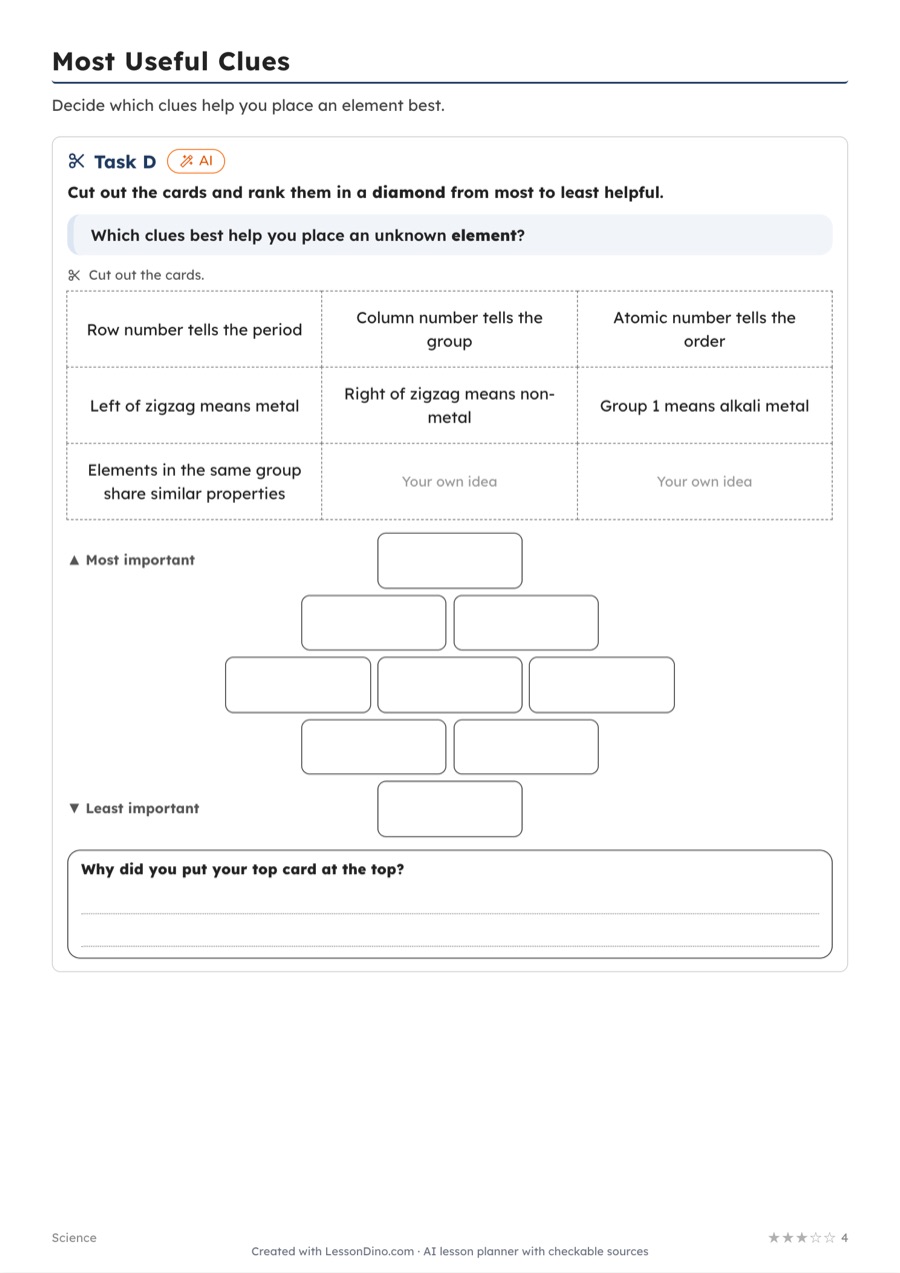
Decide which clues help you place an element best.
Cut out the cards and rank them in a diamond from most to least helpful.
Link the Ideas
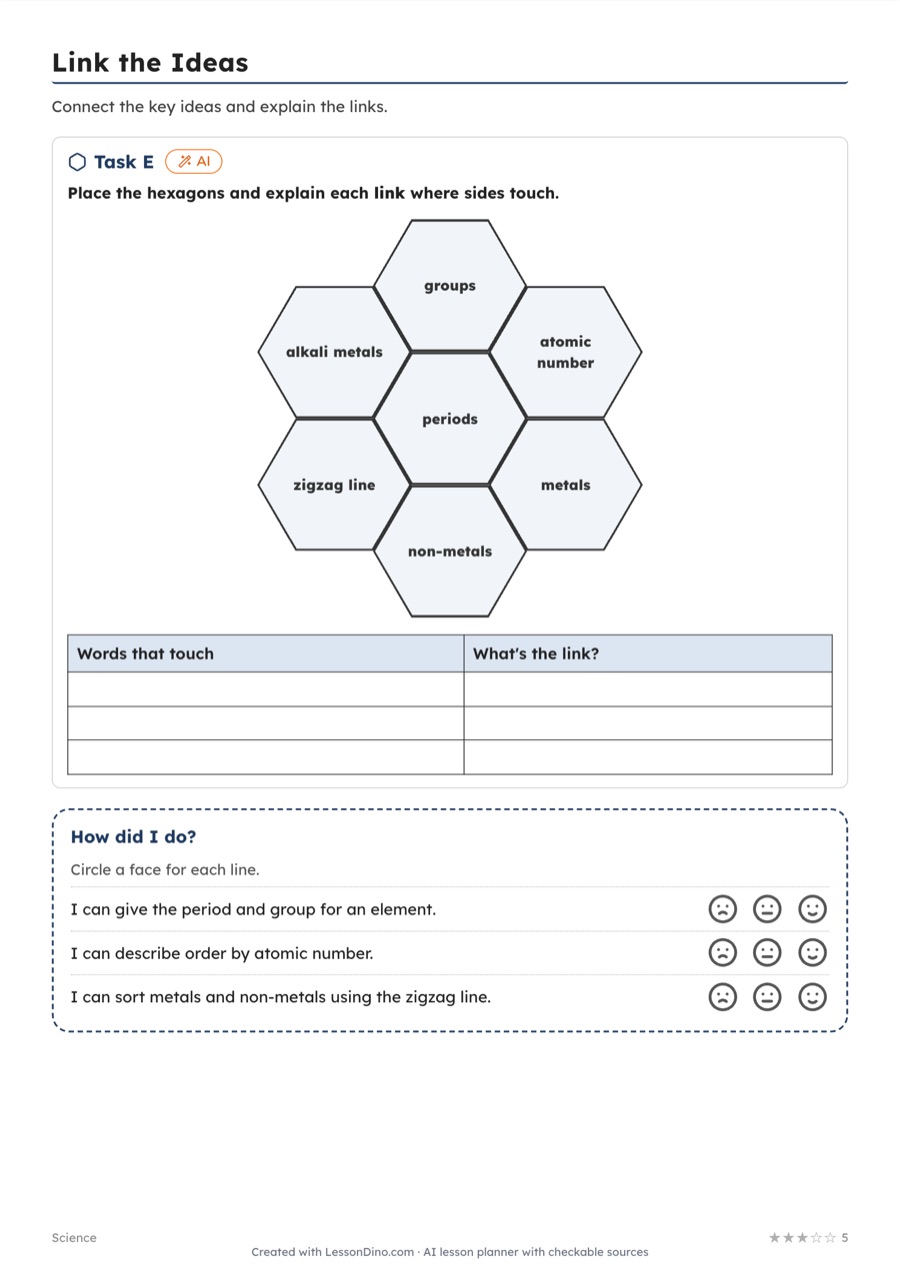
Connect the key ideas and explain the links.
Place the hexagons and explain each link where sides touch.
Answers
Show the answers
The answers are on the answer sheet, the last picture above.
Curriculum
the periodic table: periods and groups; metals and non-metals
Made with Lesson Dino's AI on 17 October 2026. AI can make mistakes, so check the answers and facts against the sources before you teach.