The worksheet
About this worksheet
Students learn to group facts to explain a topic clearly. They sort shark facts into piles and write a short informative paragraph. This Grade 5 ELA worksheet gives students (ages 10–11) six pages of practice on informative writing, part of the writing unit. It goes with our free Informative writing lesson, which has the slides and a timed lesson plan.
What it covers
By the end, students should be able to:
- Students will group facts into 2-3 focused groups to plan body paragraphs.
- Students will organize informative writing with introduction, body, and conclusion.
How to use it
- Teaching (12 minutes): Hand out Worksheet Task F and do the first two together, marking fact or opinion.
- Support: Give 6 pre-written true facts on cards so students only have to sort, not recall facts.
- Stretch: Students write a one-sentence main idea for each pile to preview the paragraph.
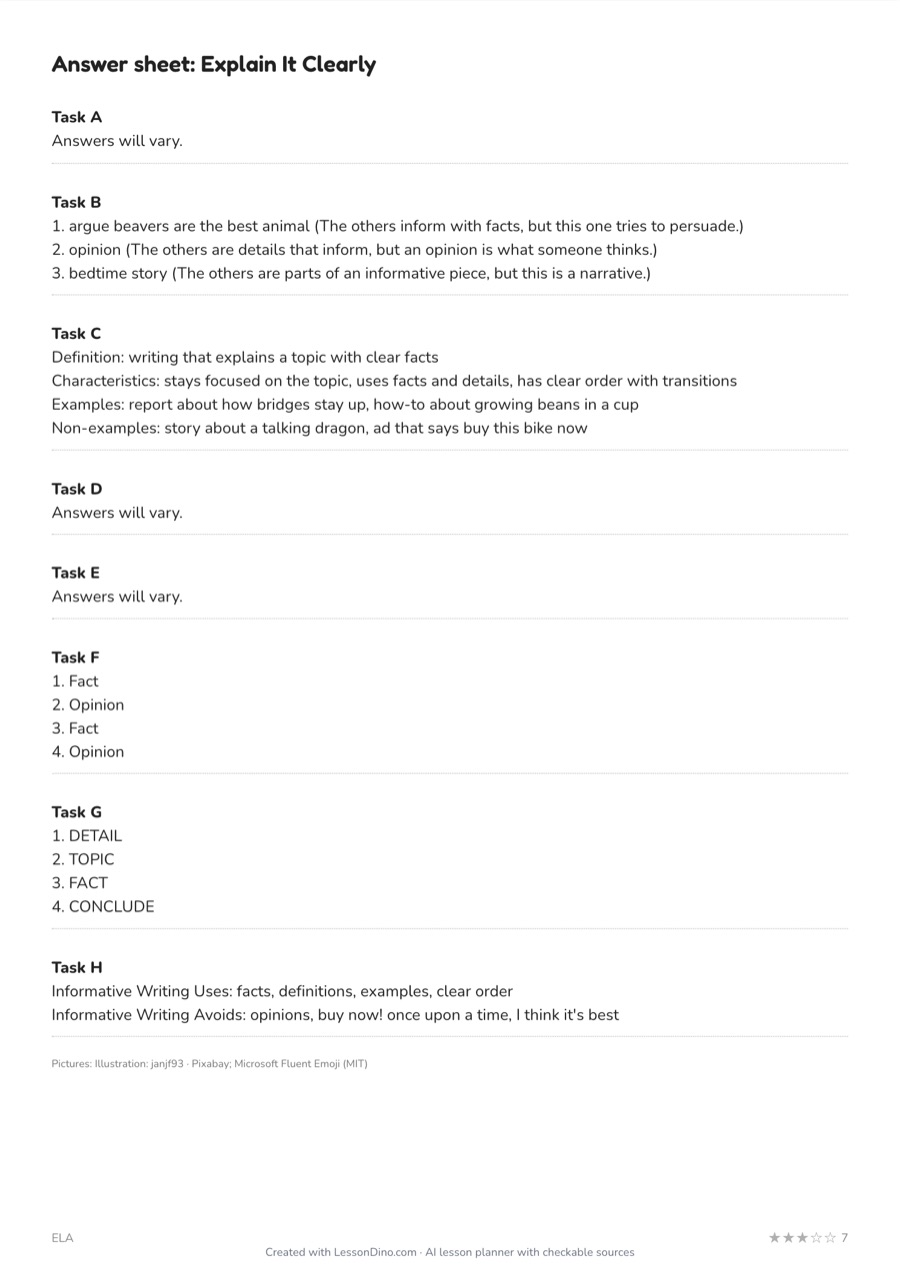
- The answer sheet is the last page, so you can print it on its own or let students check their own work.
Key vocabulary
- informative: teaching true facts about a subject so a reader learns
- fact: something true that can be checked or proved
- introduction: opening that names the subject and previews points
- body paragraph: middle part that groups related facts together
- conclusion: ending that sums up main points in new words
- transition: bridge word that shows how thoughts link
Mistakes to watch for
- Writing a fact dump of true facts in no order. Sort notes into 2-3 piles like what it is and where it lives, then write one pile at a time.
- Mixing opinion into informative writing. Cross out opinion words and replace with a checkable fact or definition.
- Weak opening that only announces the topic. Start with a surprising fact or question, such as knives, beads, cows all used as money.
What's on the worksheet
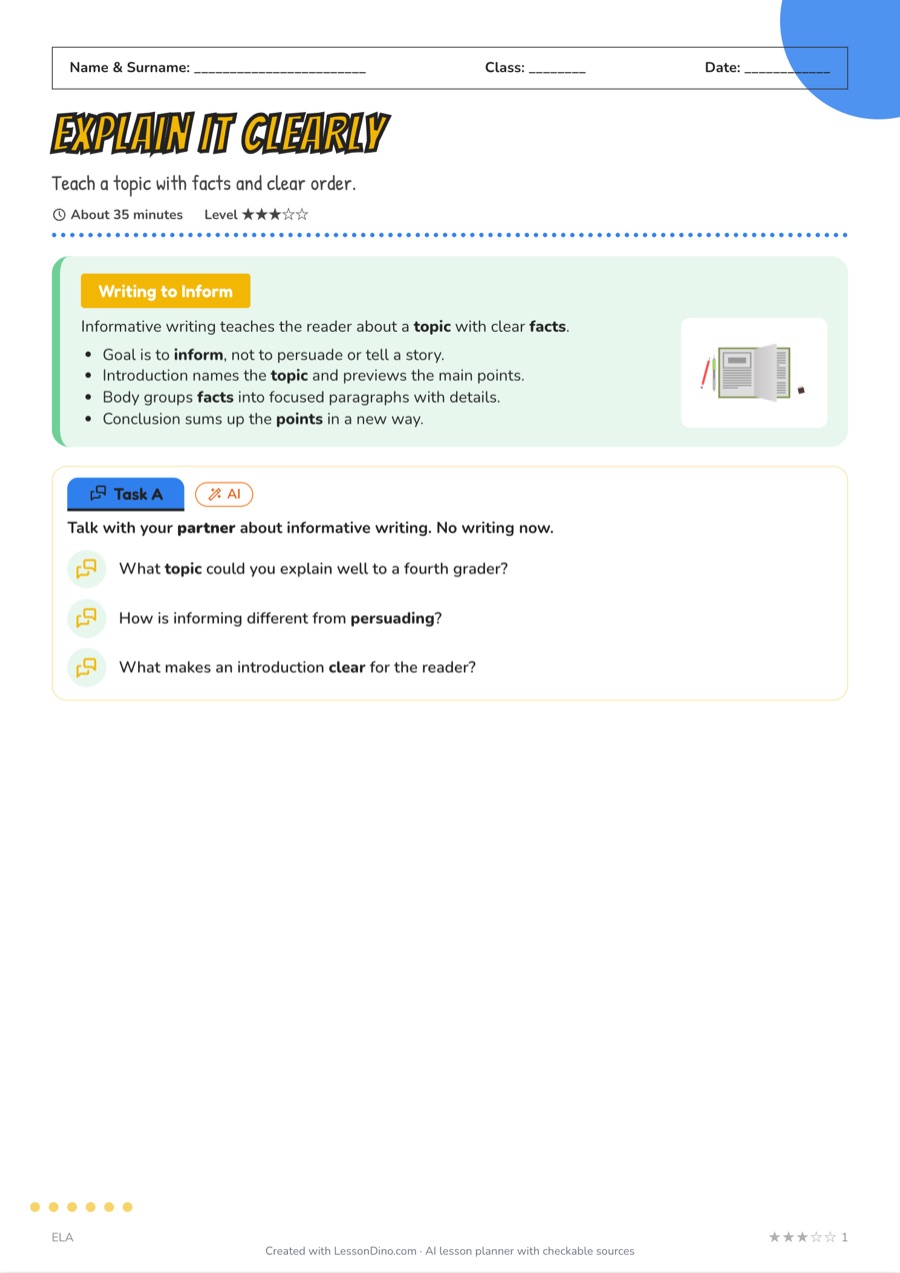
Inform to Explain
Find out what informative writing is for.
Writing to Inform
- Informative writing teaches the reader about a topic with clear facts.
- Goal is to inform, not to persuade or tell a story.
- Introduction names the topic and previews the main points.
- Body groups facts into focused paragraphs with details.
- Conclusion sums up the points in a new way.
Talk with your partner about informative writing. No writing now.
- What topic could you explain well to a fourth grader?
- How is informing different from persuading?
- What makes an introduction clear for the reader?
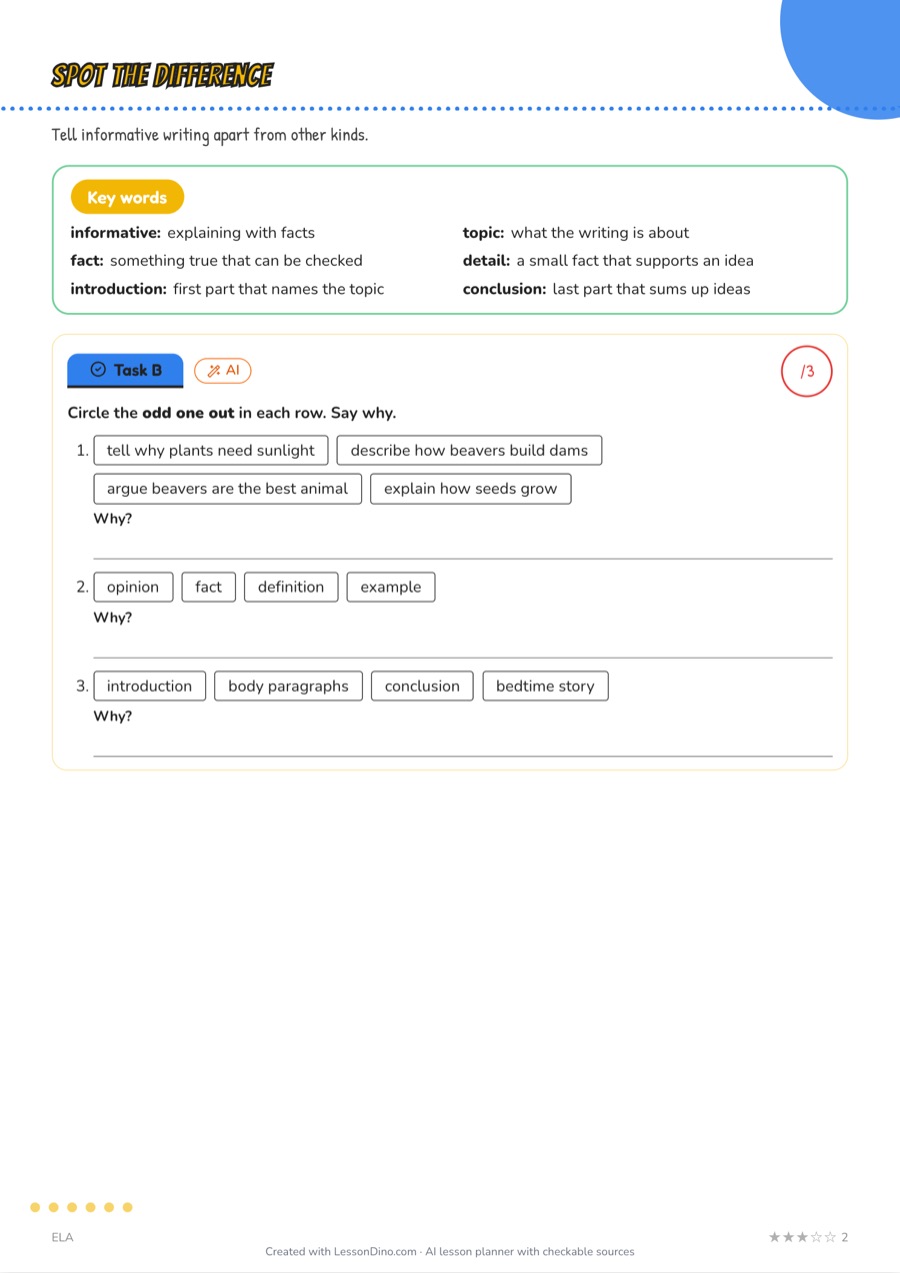
Spot the Difference
Tell informative writing apart from other kinds.
| Word | Meaning |
|---|---|
| informative | explaining with facts |
| topic | what the writing is about |
| fact | something true that can be checked |
| detail | a small fact that supports an idea |
| introduction | first part that names the topic |
| conclusion | last part that sums up ideas |
Circle the odd one out in each row. Say why.
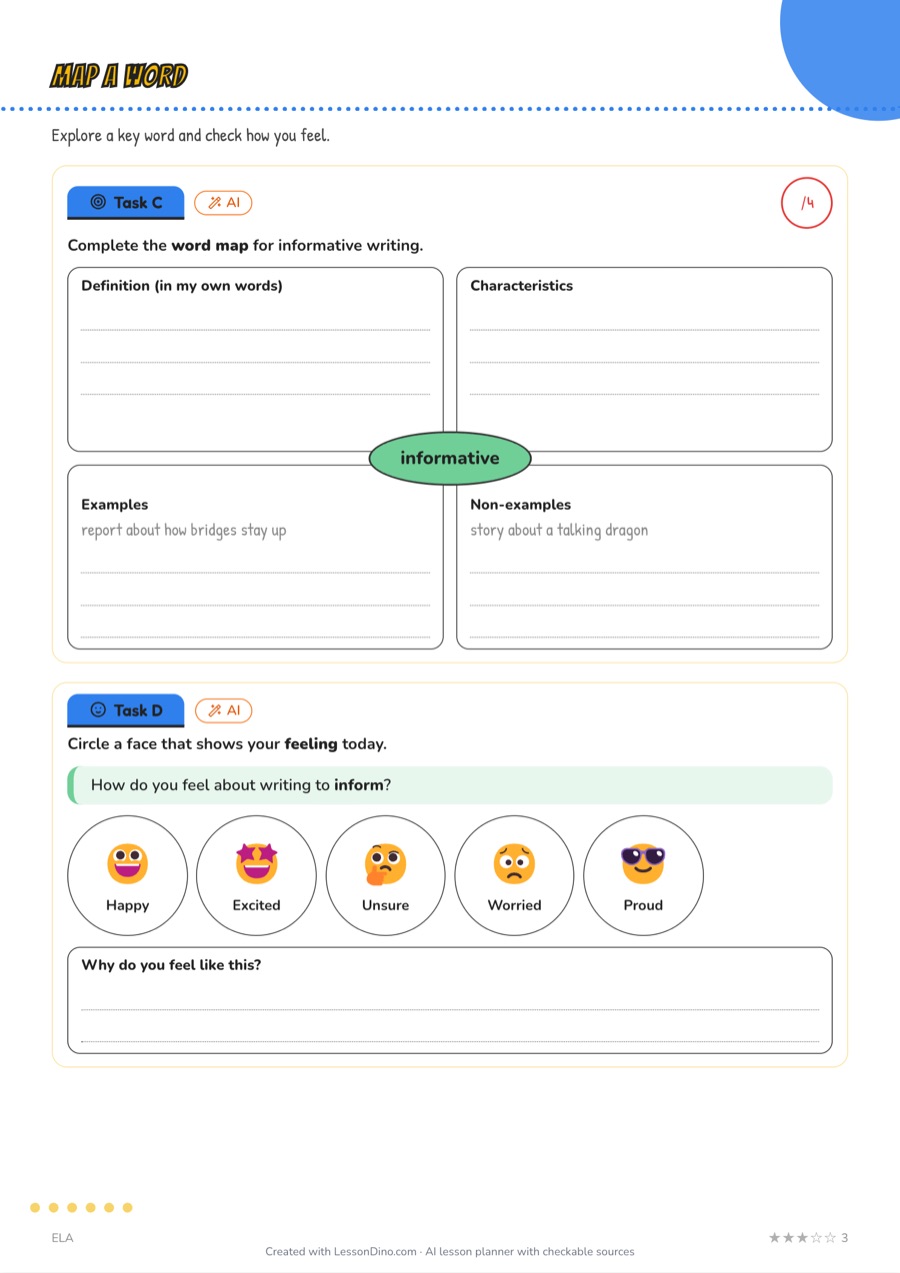
Map a Word
Explore a key word and check how you feel.
Complete the word map for informative writing.
Circle a face that shows your feeling today.
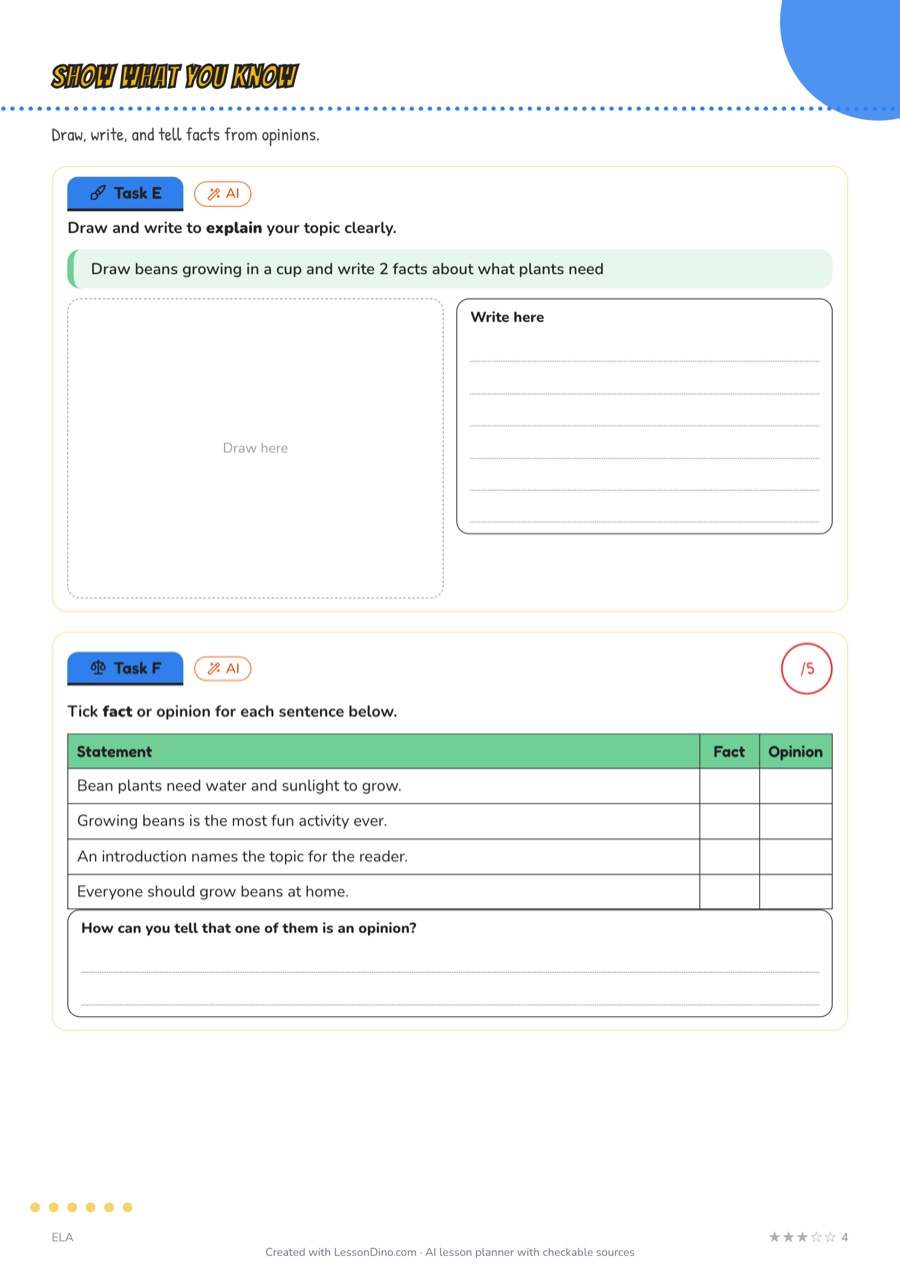
Show What You Know
Draw, write, and tell facts from opinions.
Draw and write to explain your topic clearly.
Tick fact or opinion for each sentence below.
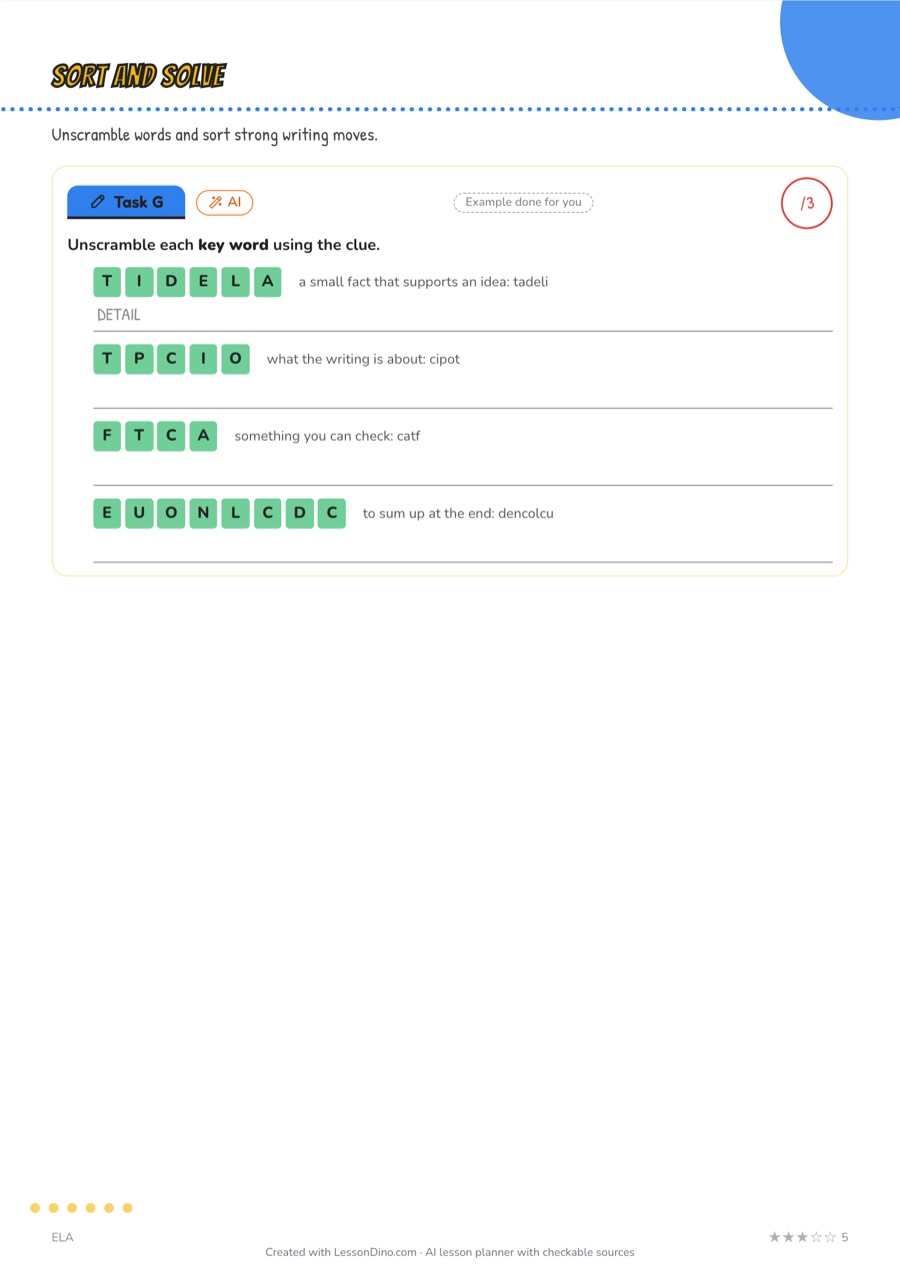
Sort and Solve
Unscramble words and sort strong writing moves.
Unscramble each key word using the clue.
Page 6
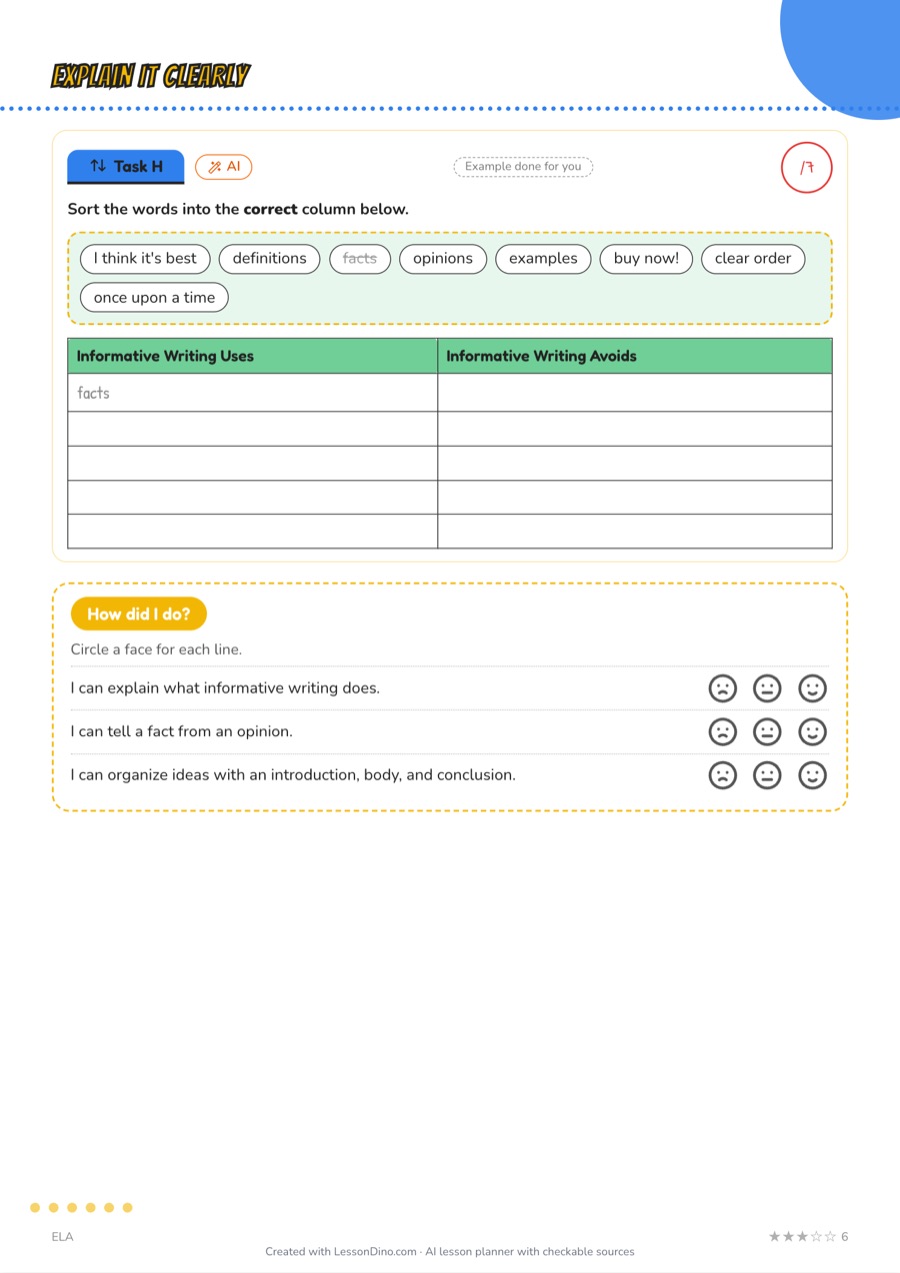
Sort the words into the correct column below.
Answers
Show the answers
The answers are on the answer sheet, the last picture above.
Curriculum
Write informative/explanatory texts to examine a topic and convey ideas and information clearly.
Made with Lesson Dino's AI on 17 October 2026. AI can make mistakes, so check the answers and facts against the sources before you teach.