The worksheet
About this worksheet
Students learn to spot similes and metaphors and explain what they mean. They play a team showdown to name and explain comparisons in context. This Grade 4 ELA worksheet gives students (ages 9–10) six pages of practice on similes and metaphors, part of the language unit. It goes with our free Similes and metaphors lesson, which has the slides and a timed lesson plan.
What it covers
By the end, students should be able to:
- Students will identify similes with like or as and metaphors with is.
- Students will explain the meaning of simple similes and metaphors in context.
How to use it
- Guided practice (12 minutes): Hand out Worksheet Task A and read directions together: Tick the correct meaning for each comparison.
- Support: Pre-highlight is and like or as on cards and allow whisper-check with partner.
- Stretch: Explain what clue helped figure out meaning and why author used comparison.
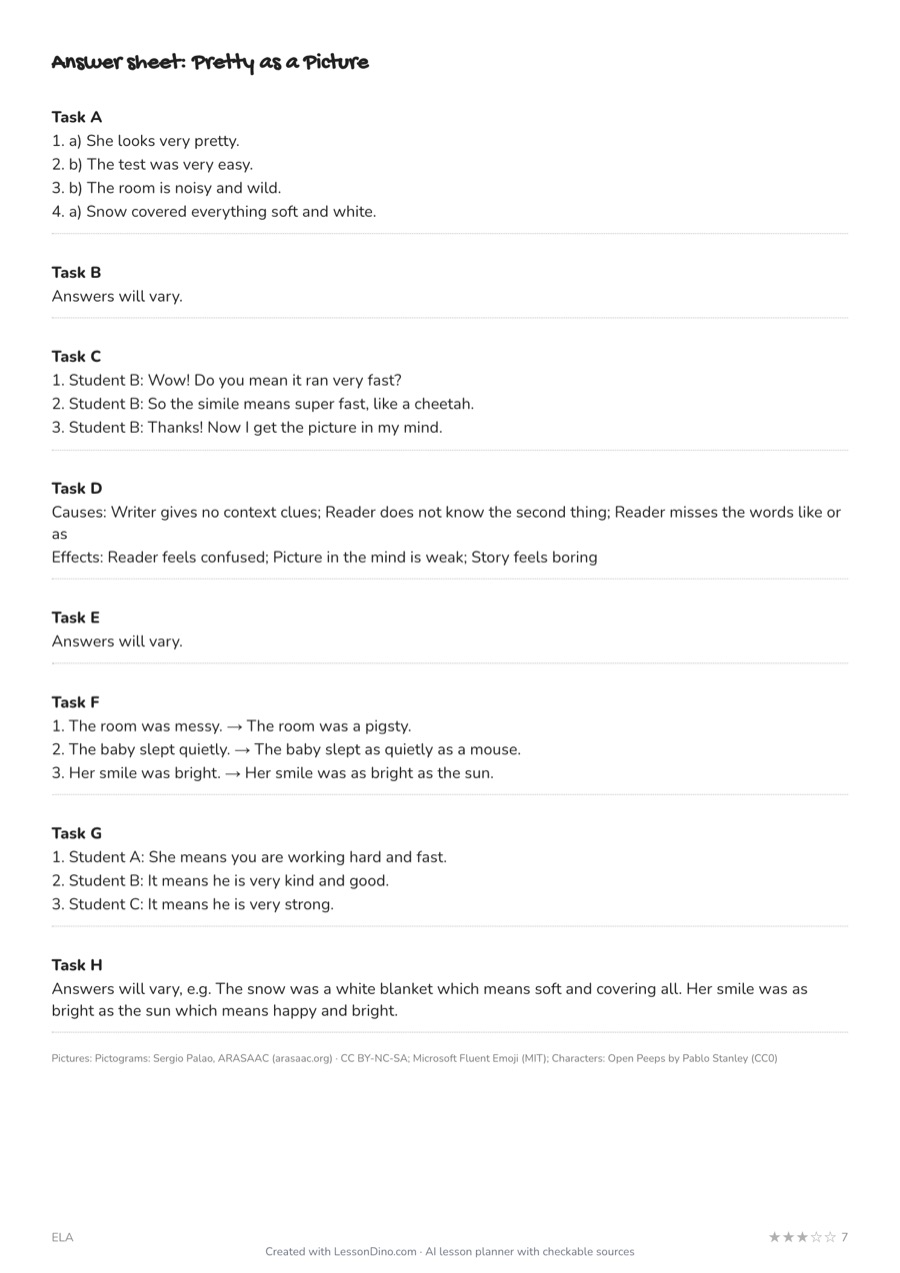
- The answer sheet is the last page, so you can print it on its own or let students check their own work.
Key vocabulary
- simile: a comparison that uses the word like or the word as
- metaphor: a comparison that says one thing is another thing without like or as
- compare: to show how two different things are alike in some way
- context: the sentences before and after that give clues to meaning
Mistakes to watch for
- Thinking a metaphor is literally true, like the room became animals. Remind that metaphors compare without like or as to show wild and noisy like one; ask what is alike.
- Calling any sentence with like a simile even when nothing is compared. Check for two different things compared using like or as; ask what two things are alike.
What's on the worksheet
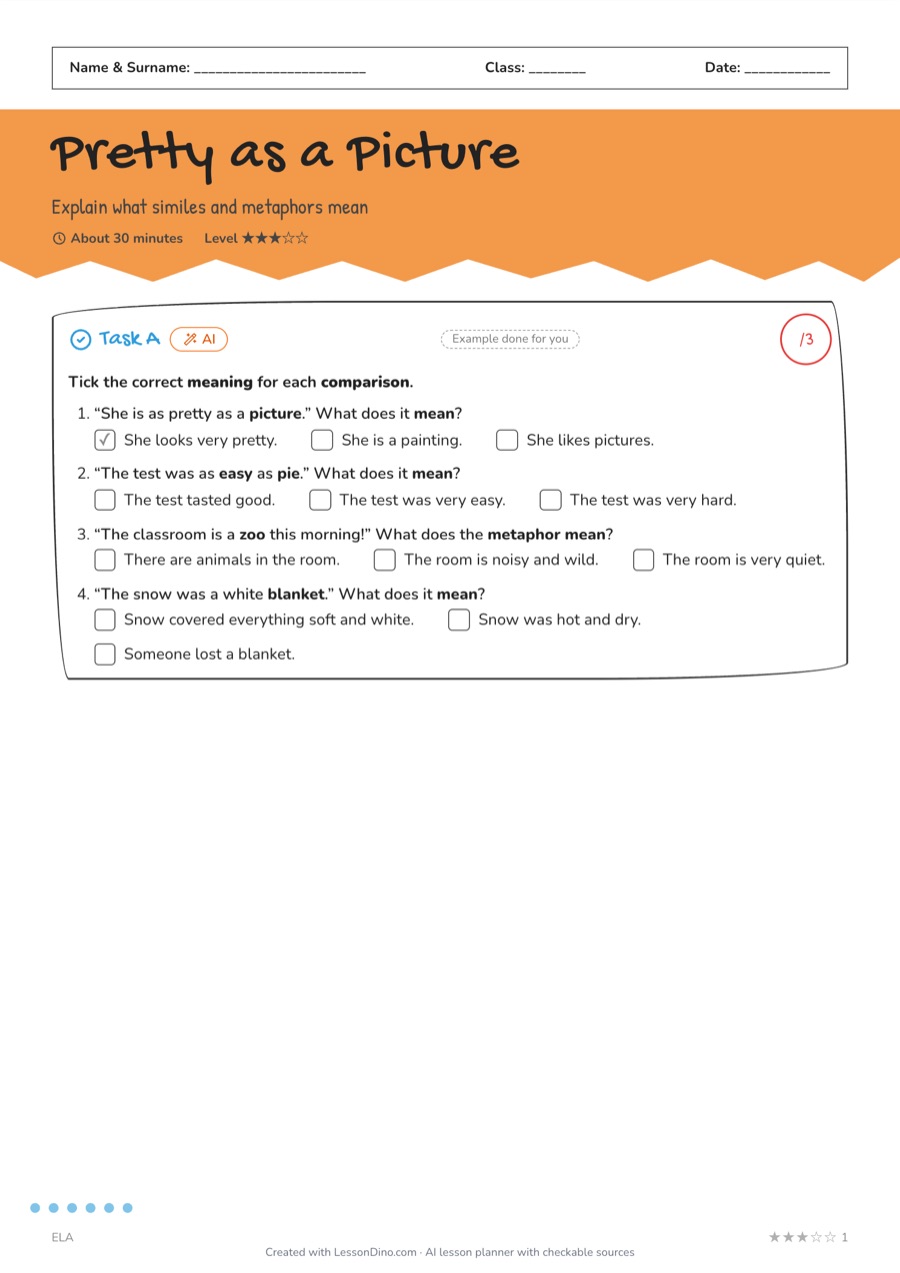
What They Mean
Learn what similes and metaphors mean in stories.
Tick the correct meaning for each comparison.
- “She is as pretty as a picture.” What does it mean?
- “The test was as easy as pie.” What does it mean?
- “The classroom is a zoo this morning!” What does the metaphor mean?
- “The snow was a white blanket.” What does it mean?
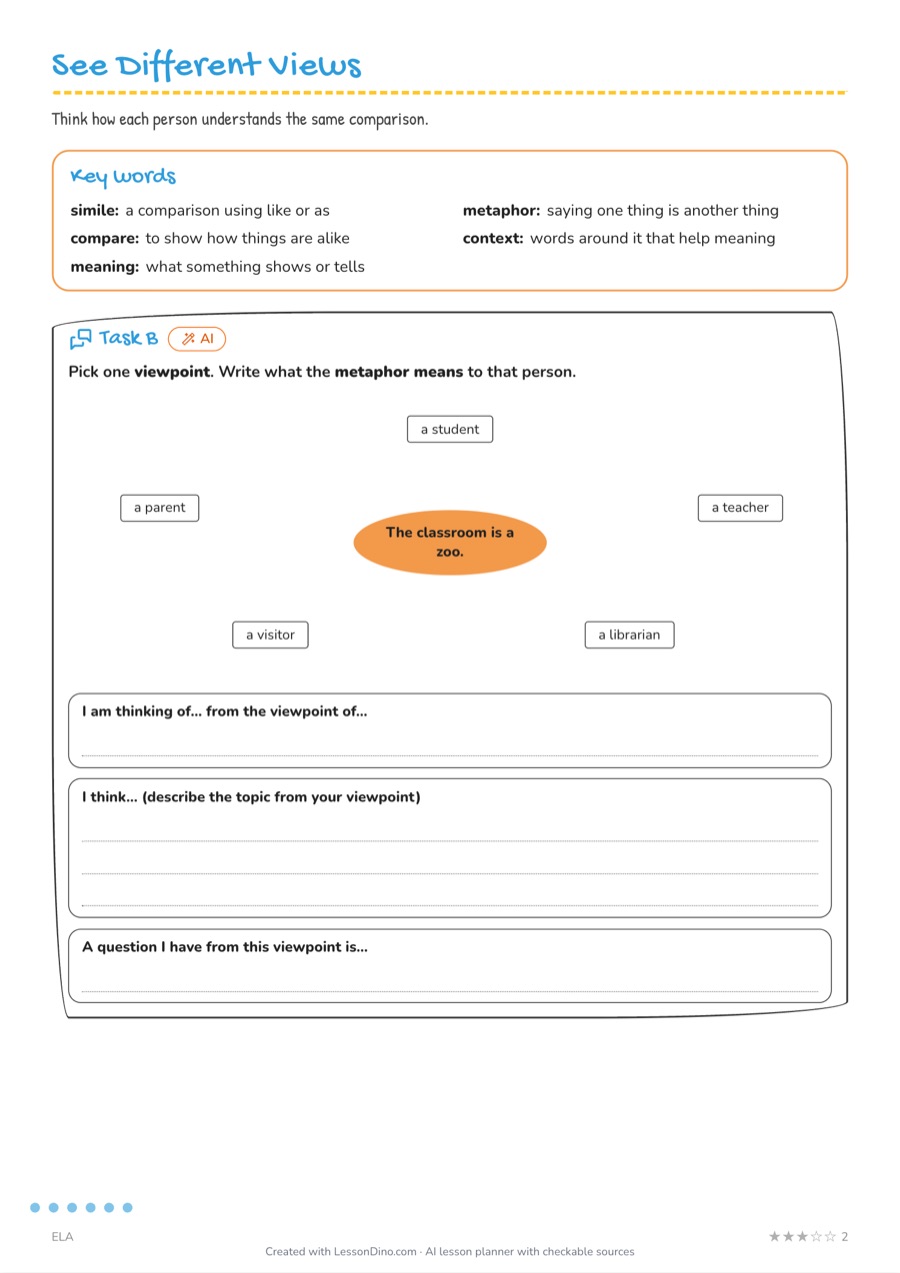
See Different Views
Think how each person understands the same comparison.
| Word | Meaning |
|---|---|
| simile | a comparison using like or as |
| metaphor | saying one thing is another thing |
| compare | to show how things are alike |
| context | words around it that help meaning |
| meaning | what something shows or tells |
Pick one viewpoint. Write what the metaphor means to that person.
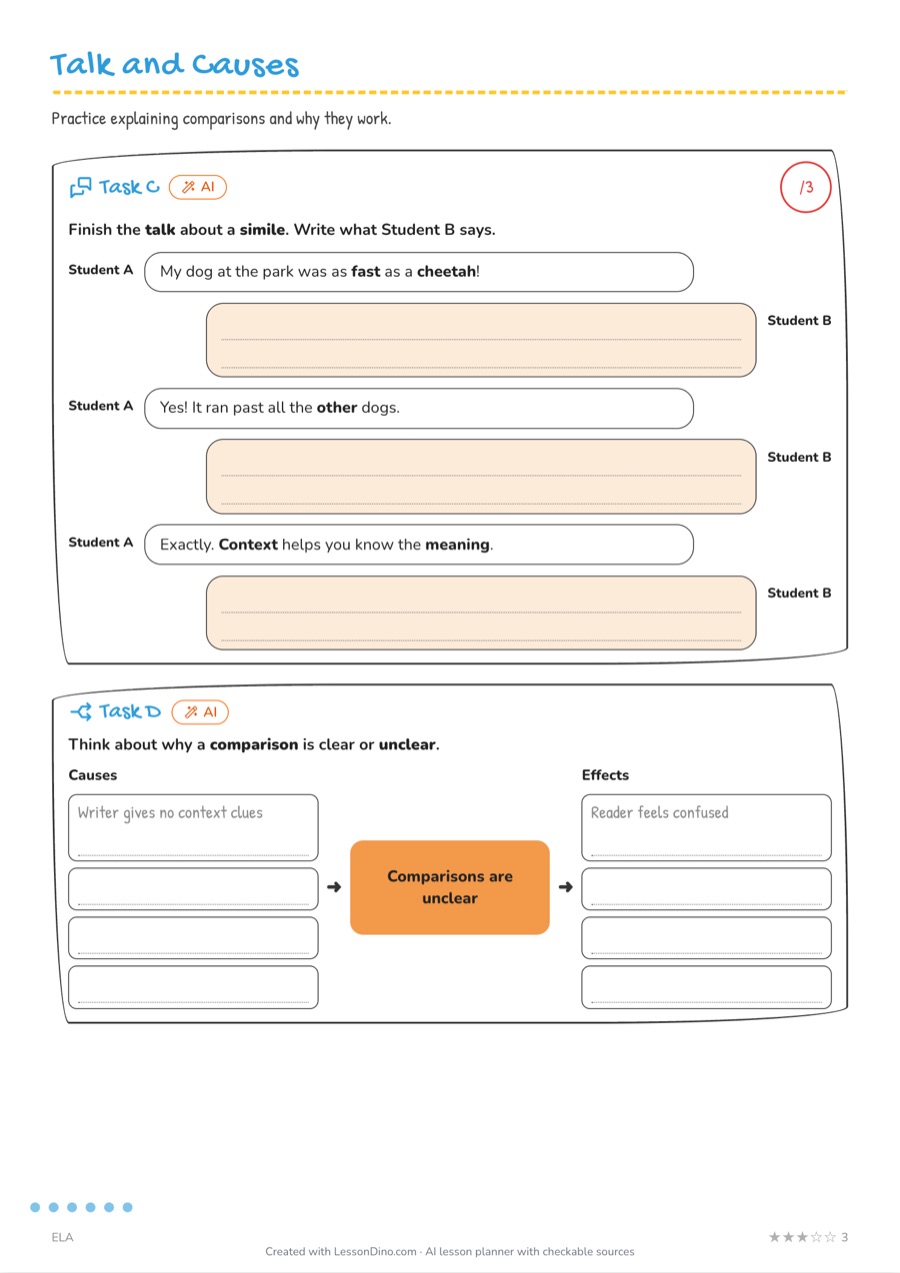
Talk and Causes
Practice explaining comparisons and why they work.
Finish the talk about a simile. Write what Student B says.
Think about why a comparison is clear or unclear.
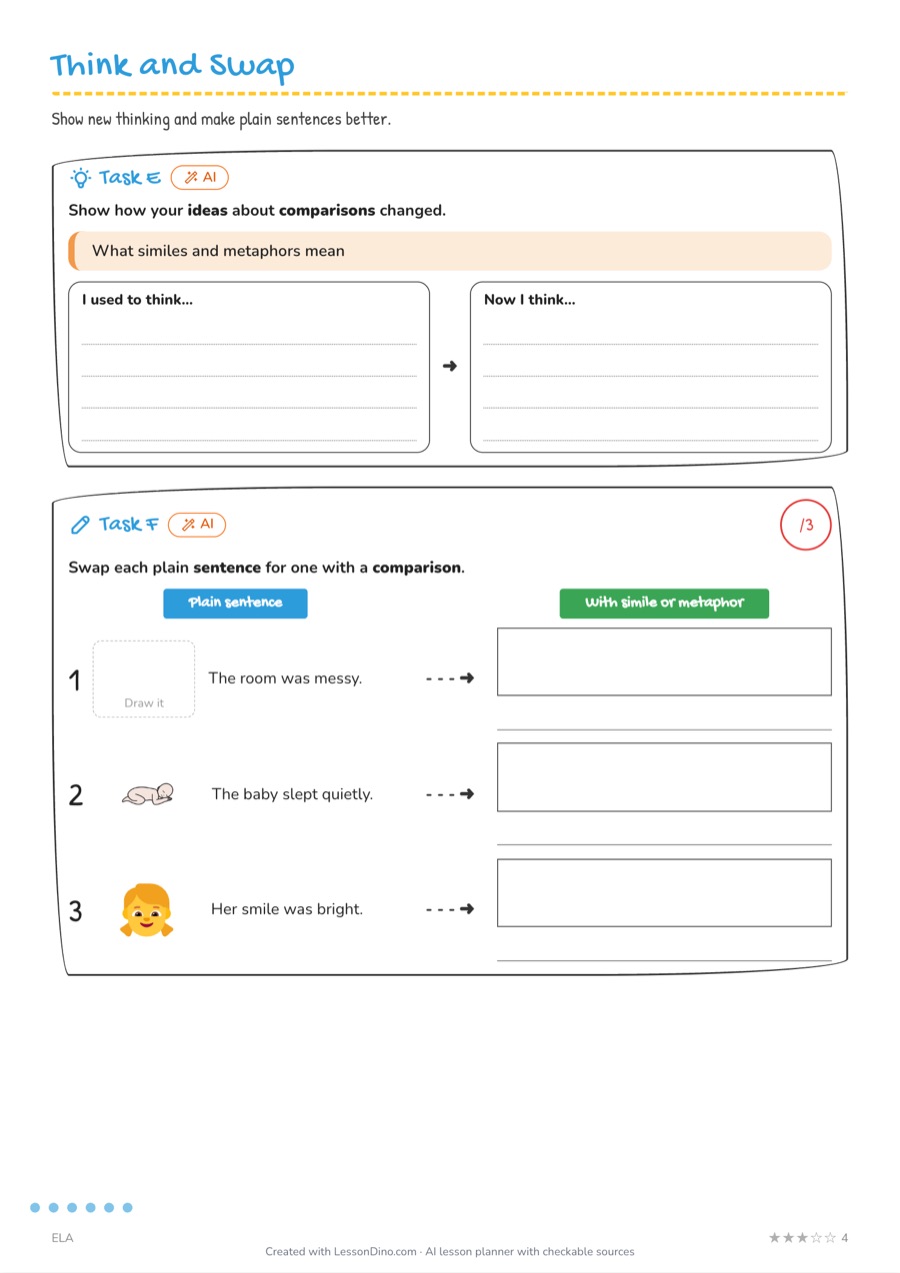
Think and Swap
Show new thinking and make plain sentences better.
Show how your ideas about comparisons changed.
Swap each plain sentence for one with a comparison.
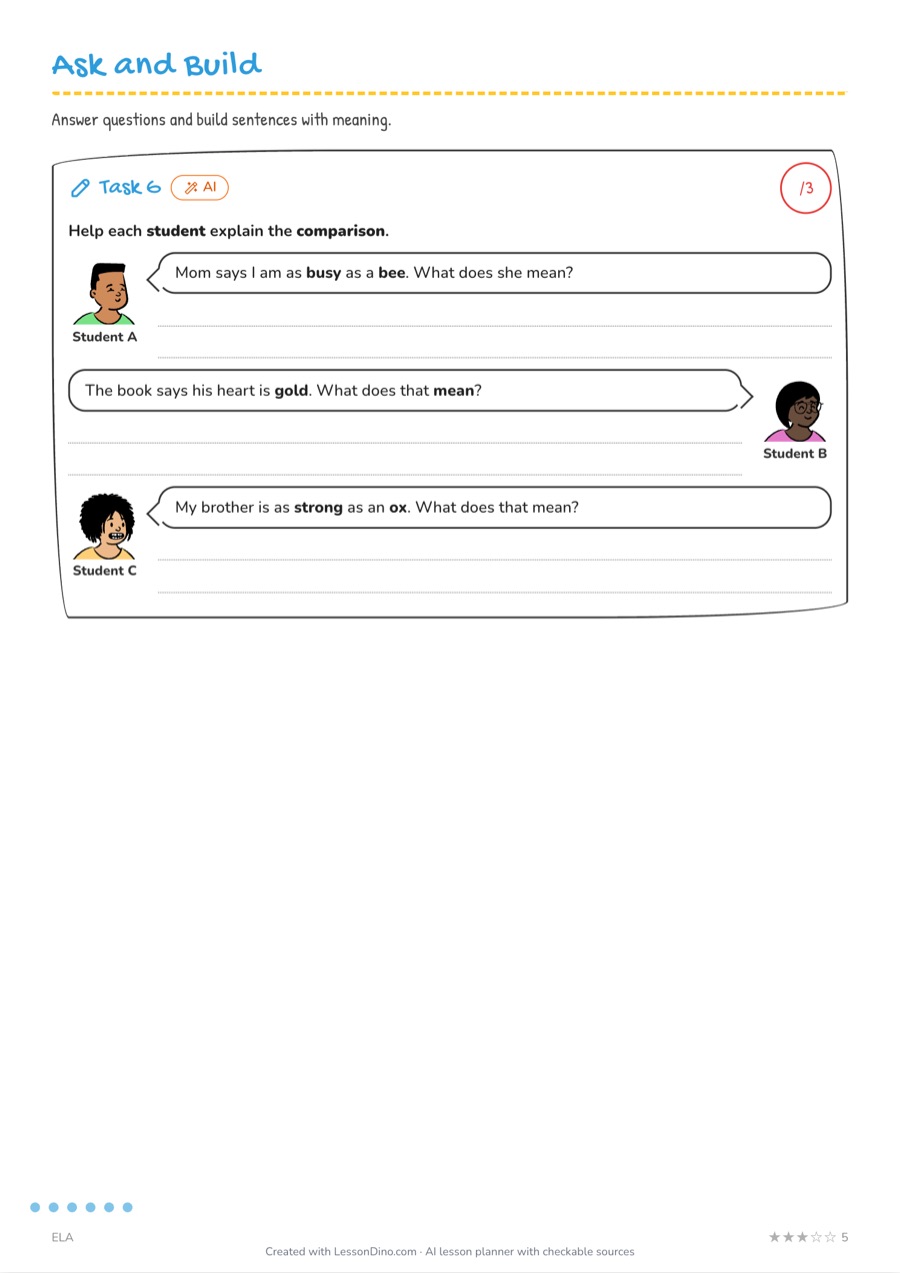
Ask and Build
Answer questions and build sentences with meaning.
Help each student explain the comparison.
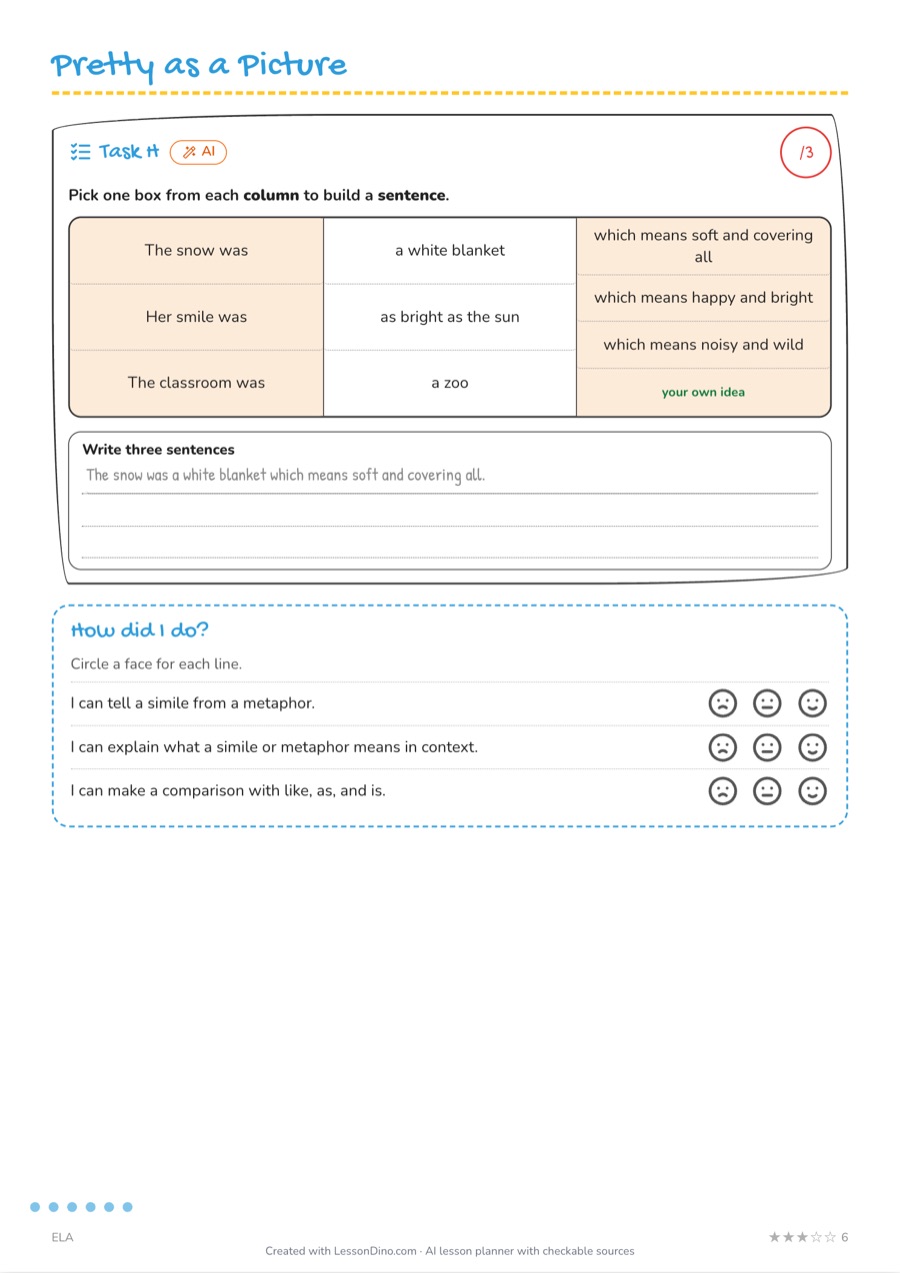
Page 6
Pick one box from each column to build a sentence.
Answers
Show the answers
The answers are on the answer sheet, the last picture above.
Curriculum
Explain the meaning of simple similes and metaphors (e.g., as pretty as a picture) in context.
Made with Lesson Dino's AI on 17 October 2026. AI can make mistakes, so check the answers and facts against the sources before you teach.