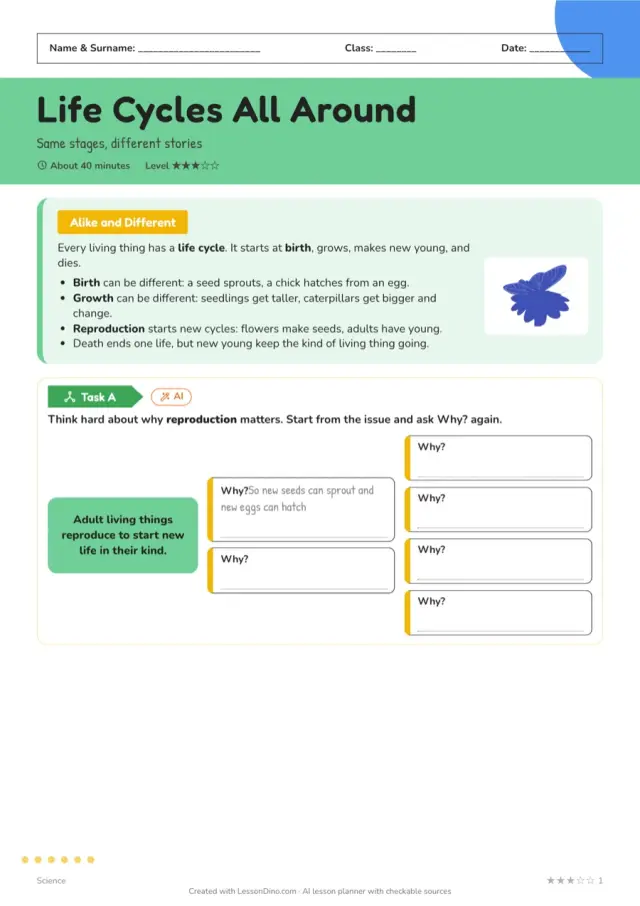
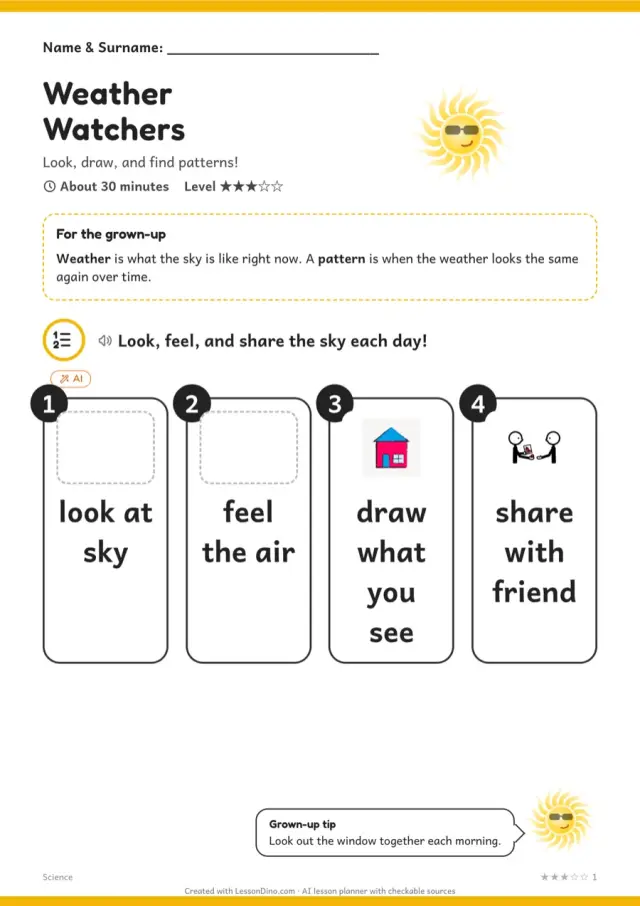
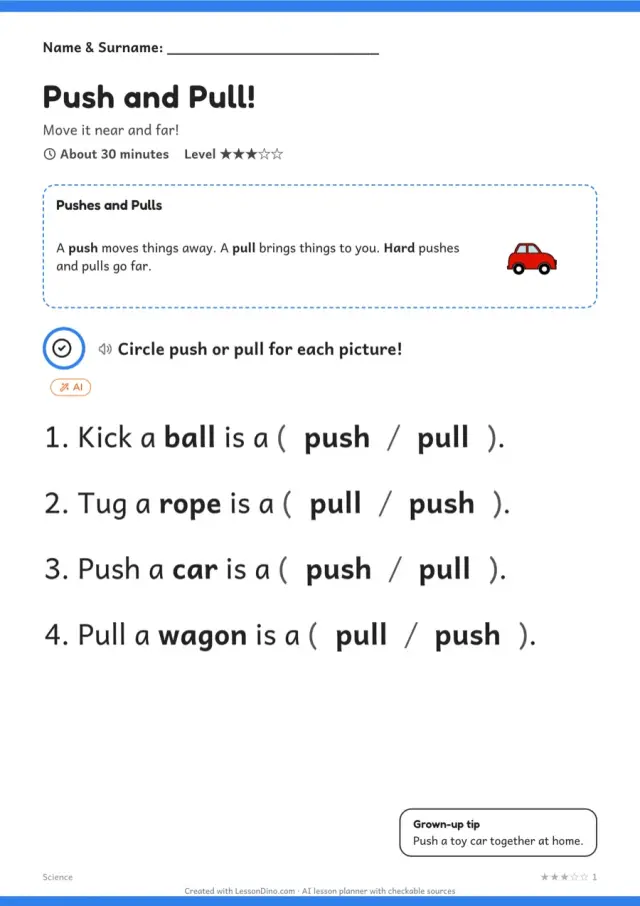
The worksheet
About this worksheet
Students learn that one habitat suits some organisms well and others poorly. They sort pond animals and argue each rank with evidence. This Grade 3 Science worksheet gives students (ages 8–9) six pages of practice on surviving in a habitat, part of the biological evolution: unity and diversity unit. It goes with our free Surviving in a habitat lesson, which has the slides and a timed lesson plan.
What it covers
By the end, students should be able to:
- Students will rank three pond organisms by how well they survive with evidence.
- Students will construct a spoken survival argument with evidence for each rank.
How to use it
- Main activity (21 minutes): Hand out sticky notes and Worksheet Task F and read the task direction together.
- Plenary (10 minutes): Collect Worksheet Task F as exit evidence and preview garden habitat.
- Support: Pair students so one points to the pond need on the poster while the partner says the evidence using the fact that habitats provide water, air, shelter, and food.
- Stretch: Have ready students argue how the penguin’s rank would change if the pond froze over in winter and gained fish.
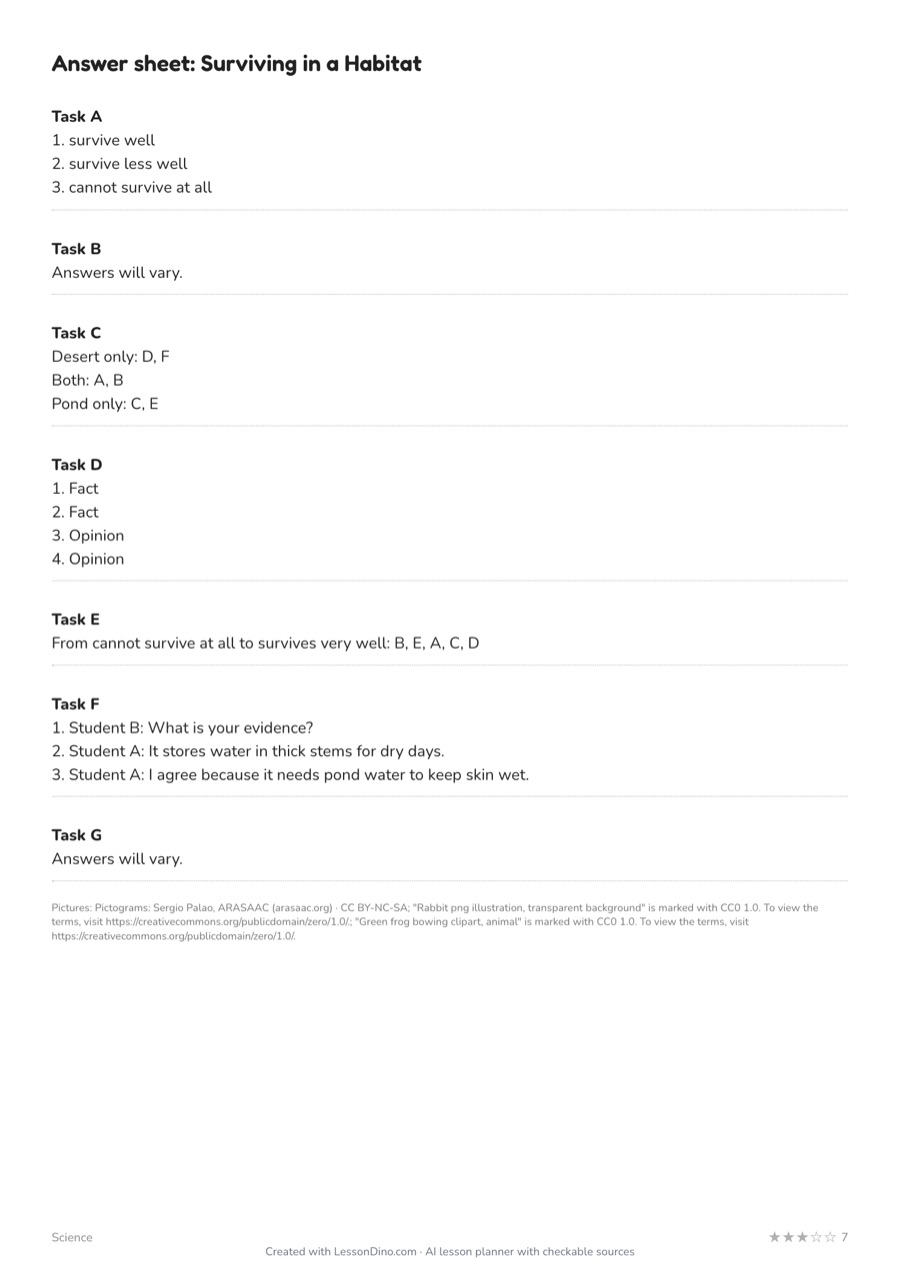
- The answer sheet is the last page, so you can print it on its own or let students check their own work.
Key vocabulary
- habitat: the home place that gives food, water, shelter, and space
- survive: keep living and growing in a place
- evidence: true facts you use to show your idea is right
- claim: an idea you say is true and can prove
- shelter: a safe hiding place to live in
Mistakes to watch for
- Thinking any animal can live well anywhere if it wants to. Match all needs: a desert animal needs hot, dry conditions and sand protection, not just water, so pond shelter and food do not fit.
- Mixing up survives less well with cannot survive at all. Ask: Can it get some needs but not live there? Rabbit can drink at pond but cannot live in water, so it struggles; camel gets almost none, so it cannot survive.
- Giving an opinion instead of habitat evidence. Point to card facts: use lays eggs in water and eats pond insects to prove food and water match.
What's on the worksheet
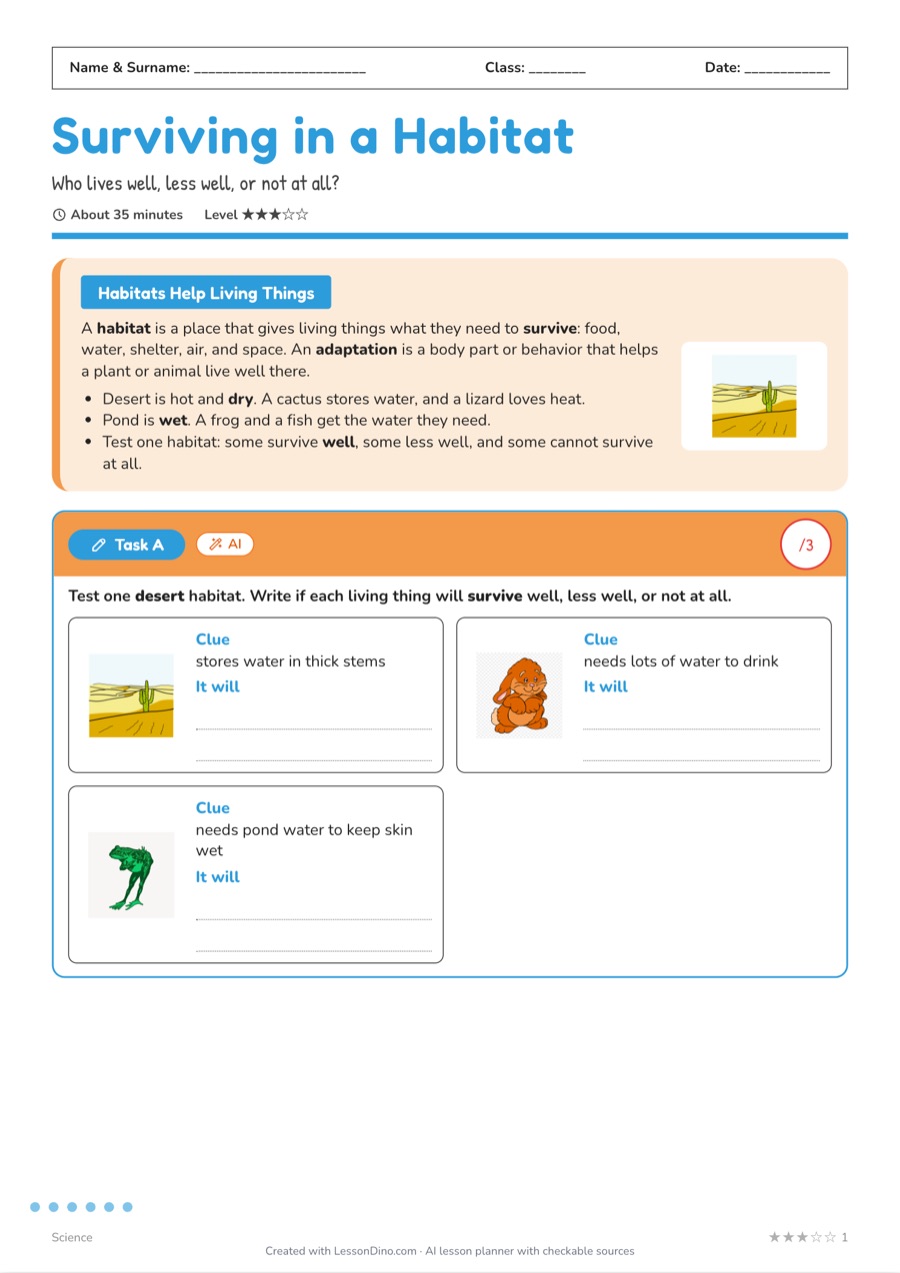
Desert Habitat Test
Learn what a habitat gives and test who survives.
Habitats Help Living Things
- A habitat is a place that gives living things what they need to survive: food, water, shelter, air, and space. An adaptation is a body part or behavior that helps a plant or animal live well there.
- Desert is hot and dry. A cactus stores water, and a lizard loves heat.
- Pond is wet. A frog and a fish get the water they need.
- Test one habitat: some survive well, some less well, and some cannot survive at all.
Test one desert habitat. Write if each living thing will survive well, less well, or not at all.
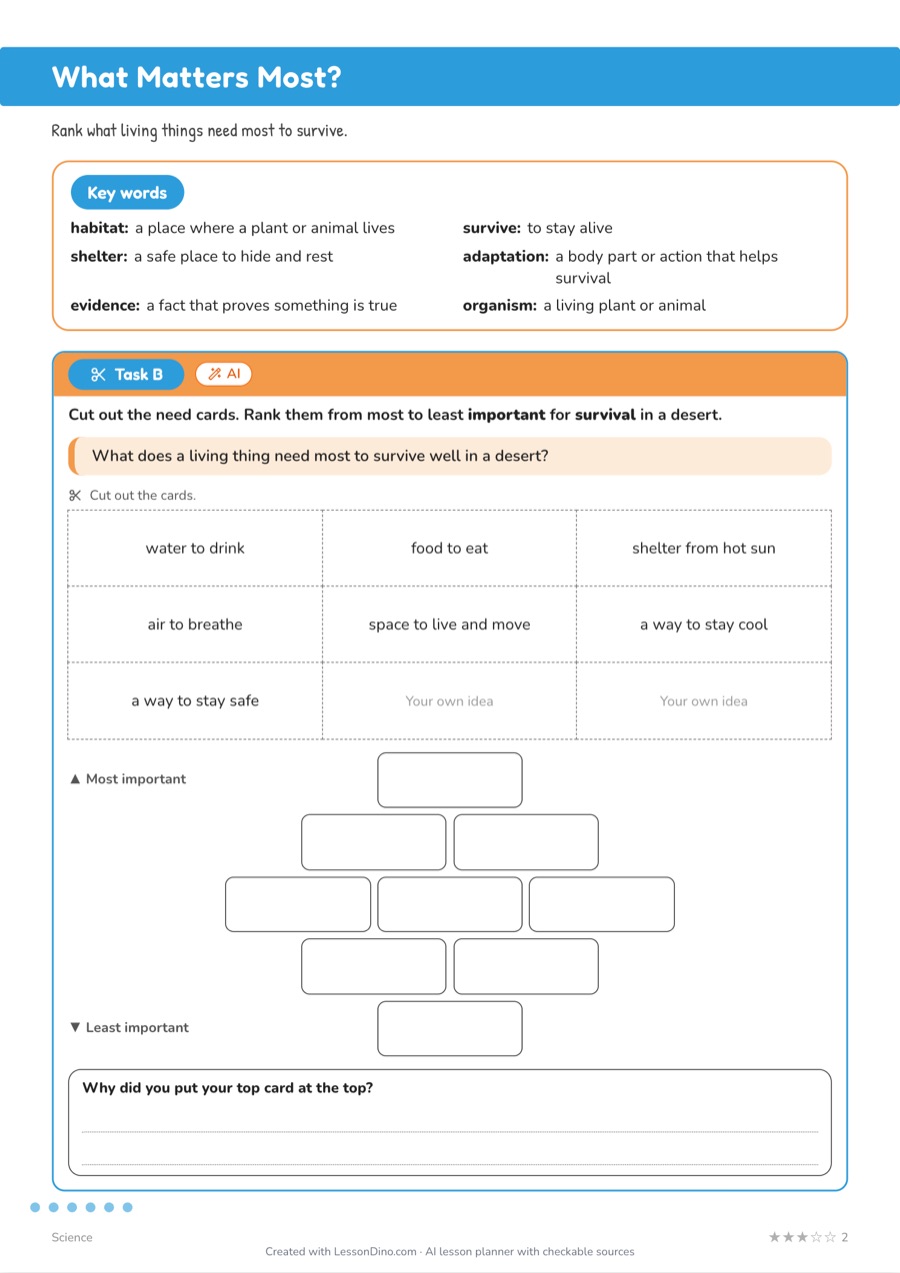
What Matters Most?
Rank what living things need most to survive.
| Word | Meaning |
|---|---|
| habitat | a place where a plant or animal lives |
| survive | to stay alive |
| shelter | a safe place to hide and rest |
| adaptation | a body part or action that helps survival |
| evidence | a fact that proves something is true |
| organism | a living plant or animal |
Cut out the need cards. Rank them from most to least important for survival in a desert.
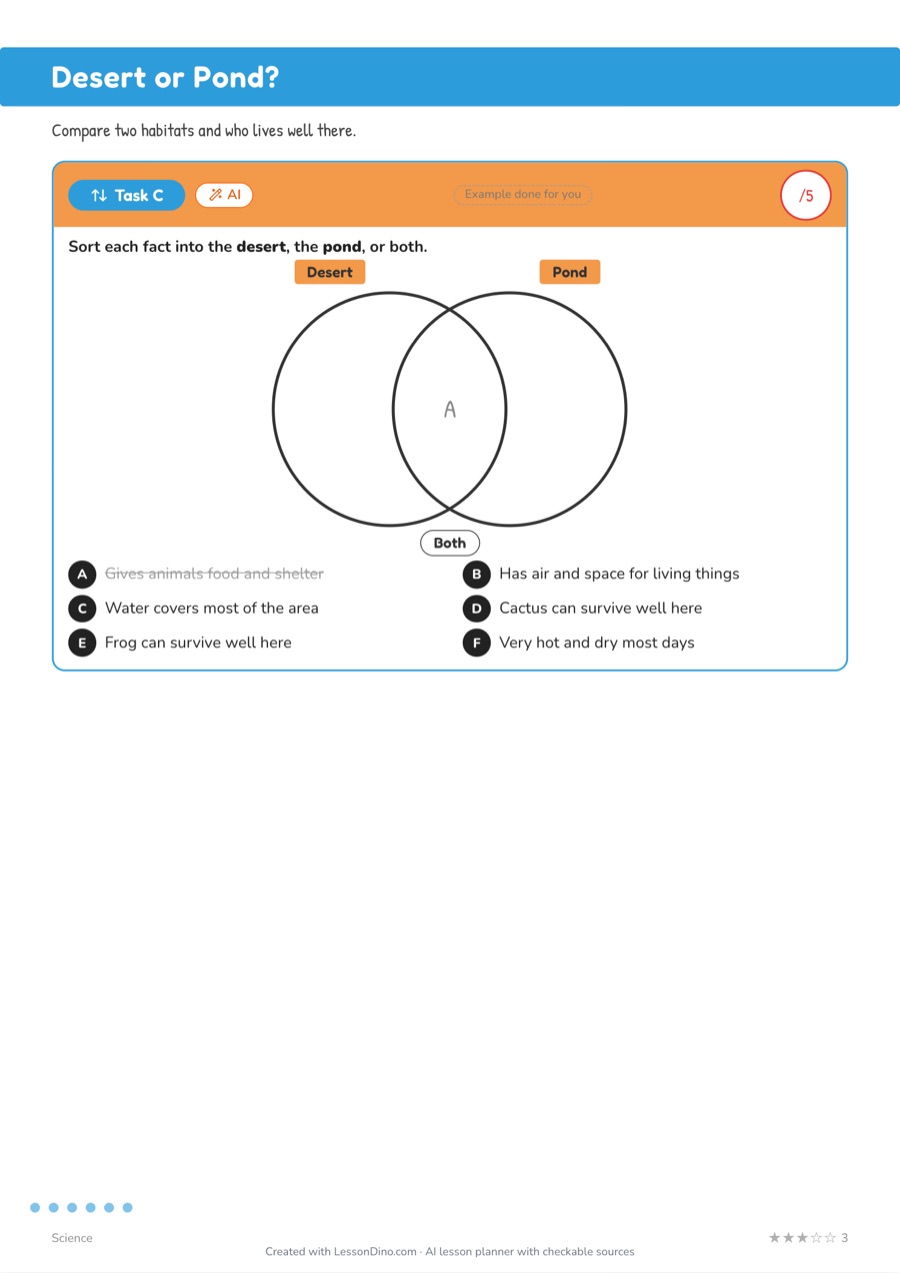
Desert or Pond?
Compare two habitats and who lives well there.
Sort each fact into the desert, the pond, or both.
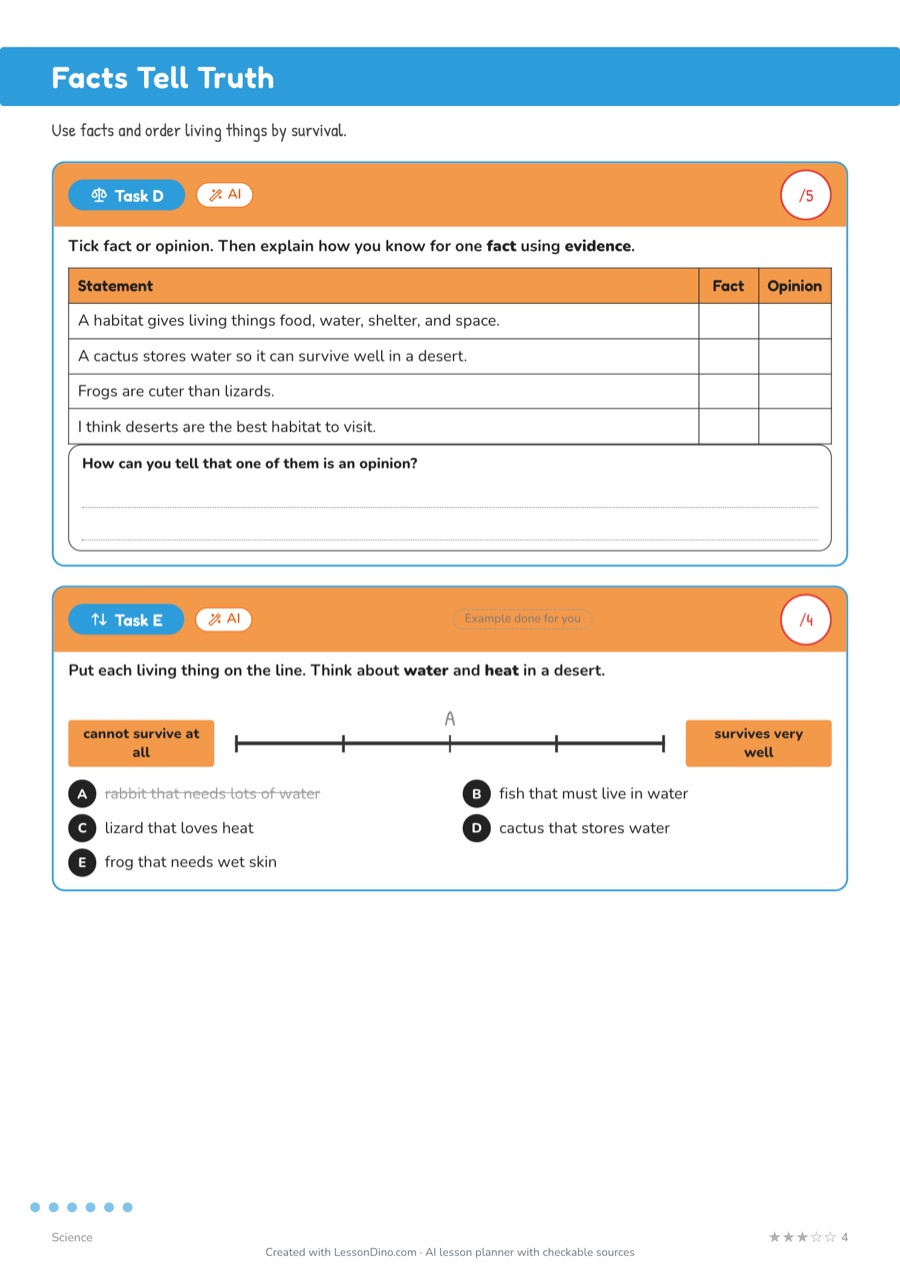
Facts Tell Truth
Use facts and order living things by survival.
Tick fact or opinion. Then explain how you know for one fact using evidence.
Put each living thing on the line. Think about water and heat in a desert.
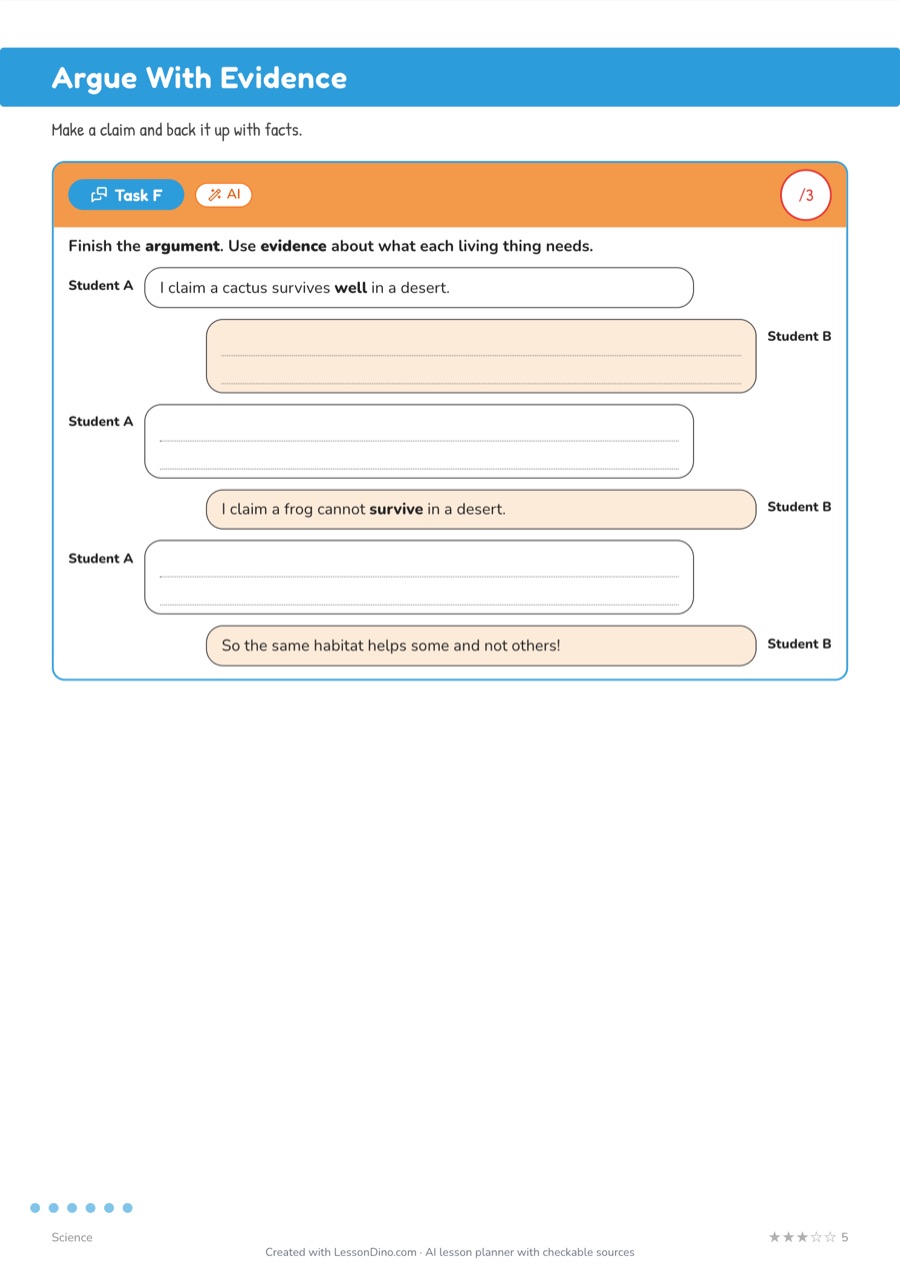
Argue With Evidence
Make a claim and back it up with facts.
Finish the argument. Use evidence about what each living thing needs.
Page 6
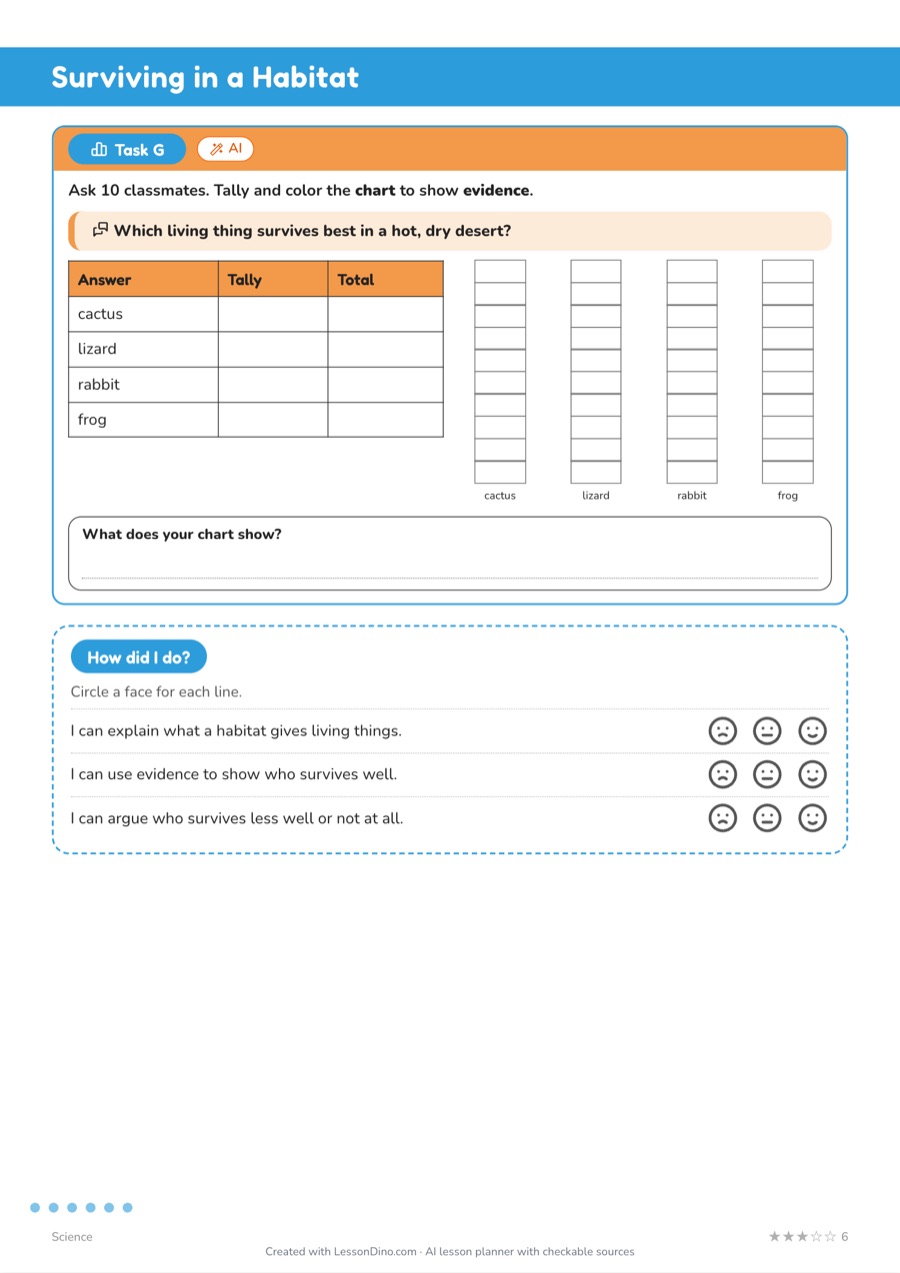
Ask 10 classmates. Tally and color the chart to show evidence.
Answers
Show the answers
The answers are on the answer sheet, the last picture above.
Curriculum
Construct an argument with evidence that in a particular habitat some organisms can survive well, some survive less well, and some cannot survive at all.
Made with Lesson Dino's AI on 17 October 2026. AI can make mistakes, so check the answers and facts against the sources before you teach.