The worksheet
About this worksheet
Students learn all life cycles share birth, growth, reproduction, and death. They build circle models to compare a butterfly and flowering plant. This Grade 3 Science worksheet gives students (ages 8–9) five pages of practice on life cycles, part of the life science unit. It goes with our free Life cycles lesson, which has the slides and a timed lesson plan.
What it covers
By the end, students should be able to:
- Students will build circle models showing birth, growth, reproduction, and death for two different organisms.
- Students will compare life cycles to explain shared steps with different details.
How to use it
- Plenary (10 minutes): Have students finish the last column of Worksheet Task B about what they modeled.
- Support: Give pre-labeled mats with the four stage words and matching color dots for each card.
- Stretch: Write one sentence comparing how two organisms reproduce in different ways.
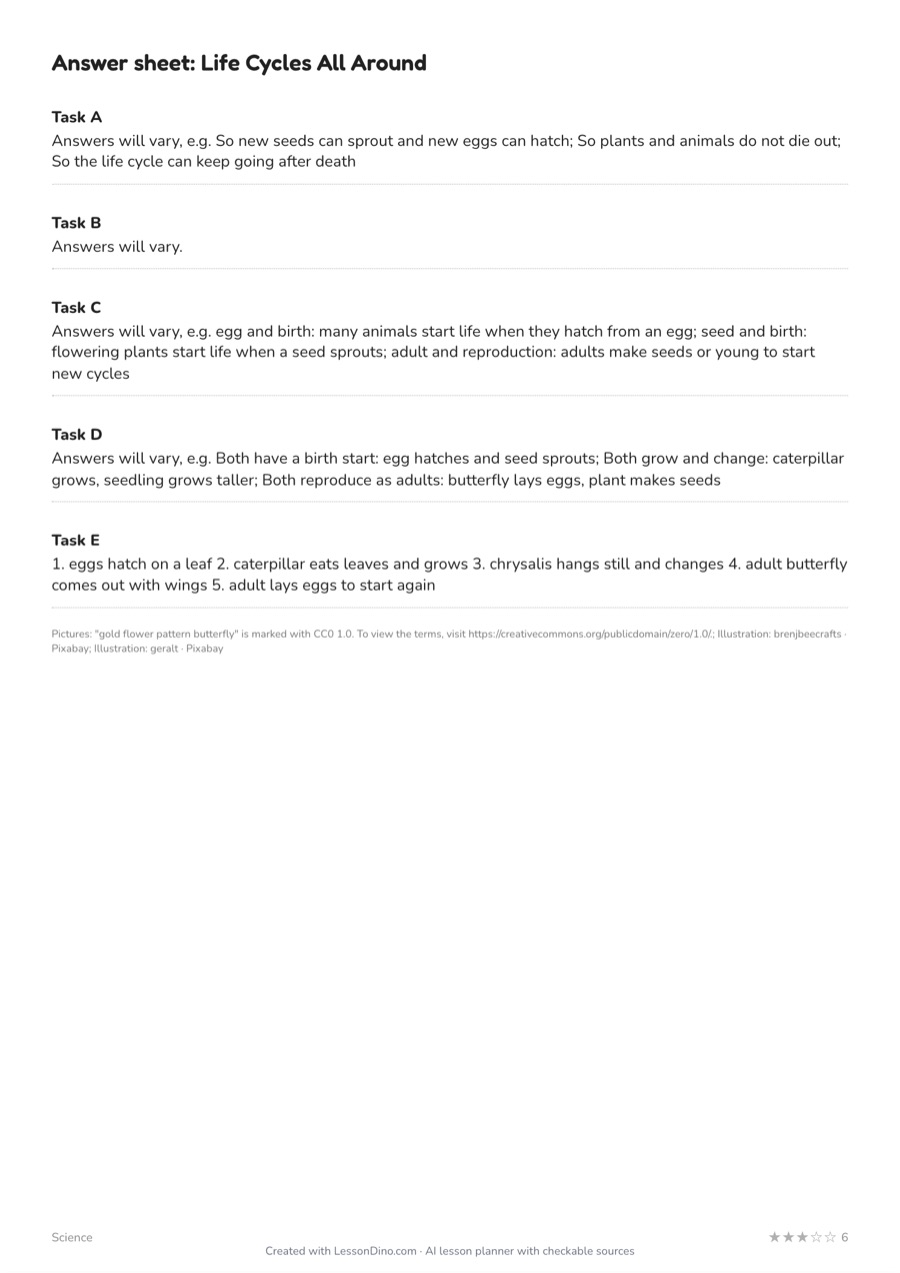
- The answer sheet is the last page, so you can print it on its own or let students check their own work.
Key vocabulary
- life cycle: steps a living thing goes through from start to end
- birth: starting life, such as hatching from an egg or sprouting from a seed
- growth: getting bigger and changing over time
- reproduction: making new young like itself, such as developing seeds or laying eggs that hatch
- death: the end of a normal life span, and length of life can differ
Mistakes to watch for
- Thinking death ends the cycle so it cannot restart. Show new birth from reproduction: new eggs that hatch or seeds that sprout start the next loop.
- Thinking all babies look like small adults. Contrast grow-bigger with change-form: some become bigger versions of the baby, others change completely through metamorphosis, a series of physical changes.
- Mixing up order of growth and reproduction. Retrace in order: birth, then increase in size and weight, then develop seeds or mate and lay eggs, then death.
What's on the worksheet
All Living Things Change
Learn what every life cycle shares.
Alike and Different
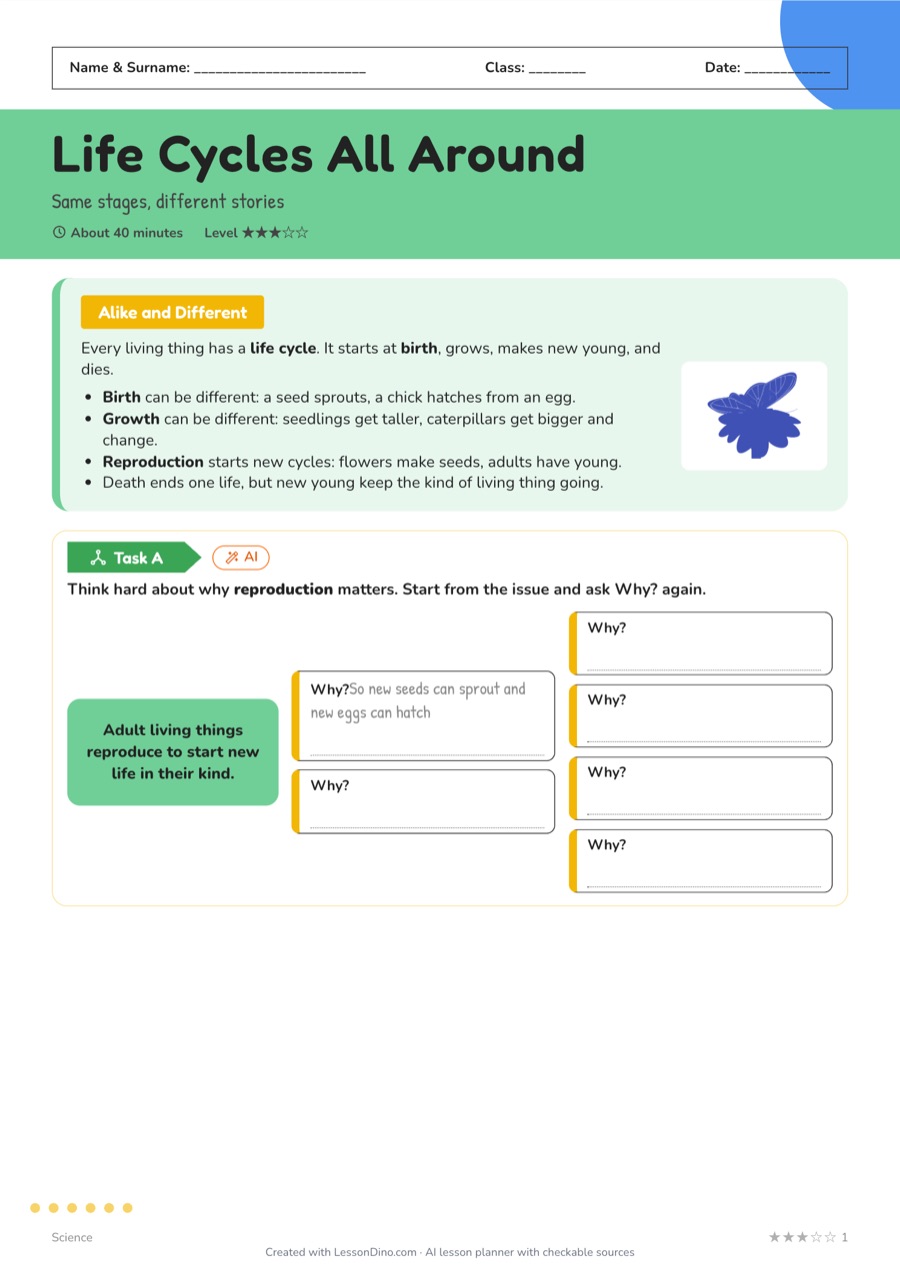
- Every living thing has a life cycle. It starts at birth, grows, makes new young, and dies.
- Birth can be different: a seed sprouts, a chick hatches from an egg.
- Growth can be different: seedlings get taller, caterpillars get bigger and change.
- Reproduction starts new cycles: flowers make seeds, adults have young.
- Death ends one life, but new young keep the kind of living thing going.
Think hard about why reproduction matters. Start from the issue and ask Why? again.
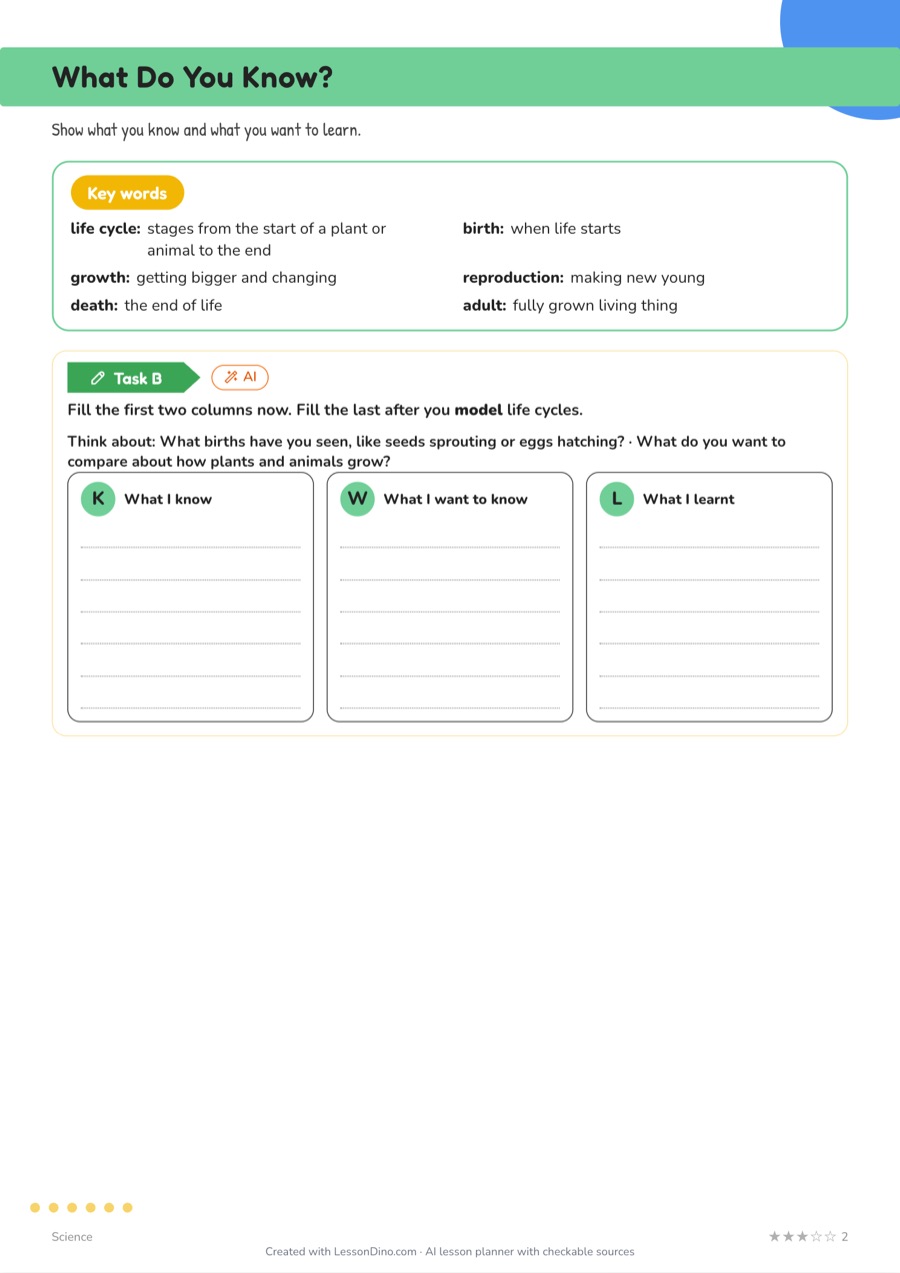
What Do You Know?
Show what you know and what you want to learn.
| Word | Meaning |
|---|---|
| life cycle | stages from the start of a plant or animal to the end |
| birth | when life starts |
| growth | getting bigger and changing |
| reproduction | making new young |
| death | the end of life |
| adult | fully grown living thing |
Fill the first two columns now. Fill the last after you model life cycles.
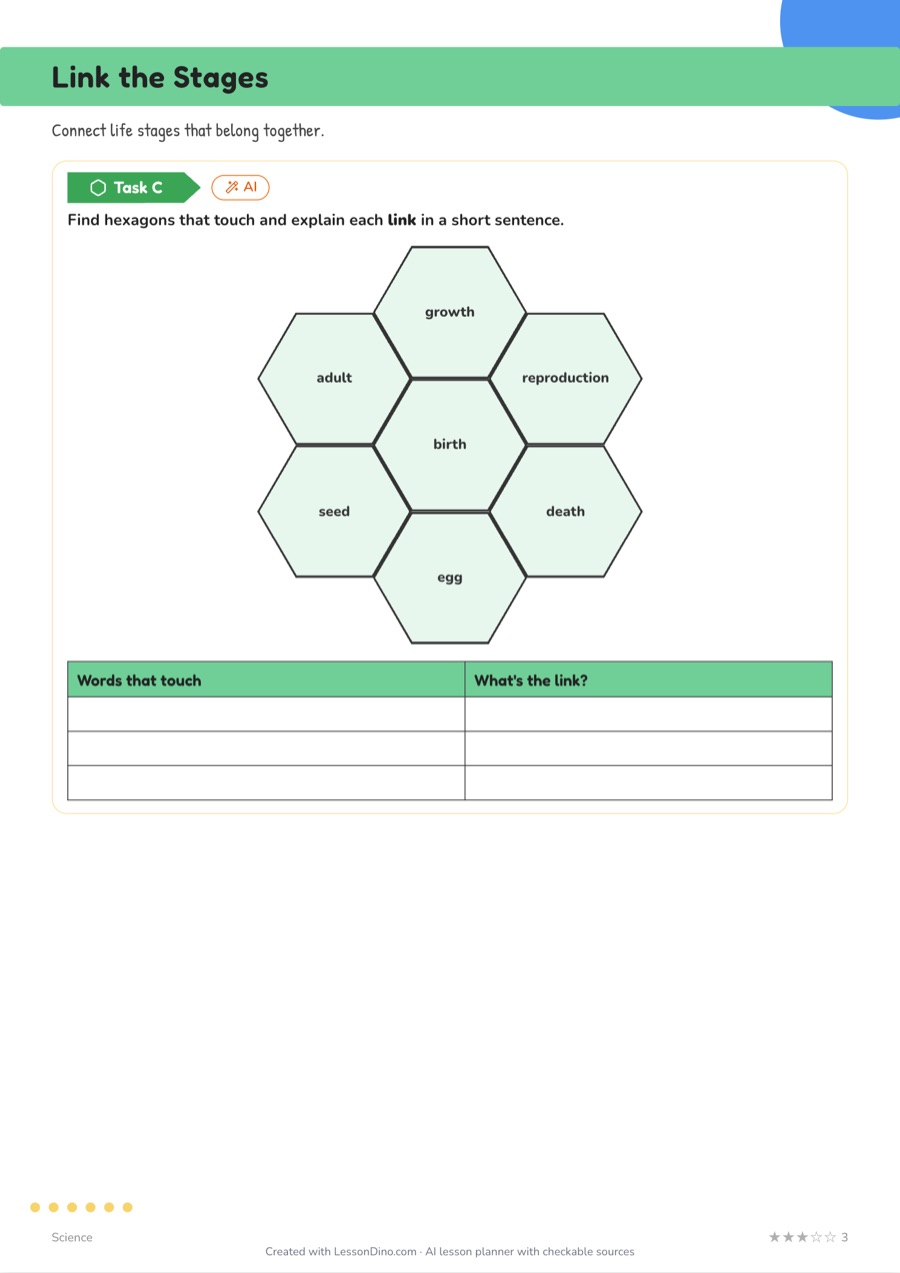
Link the Stages
Connect life stages that belong together.
Find hexagons that touch and explain each link in a short sentence.
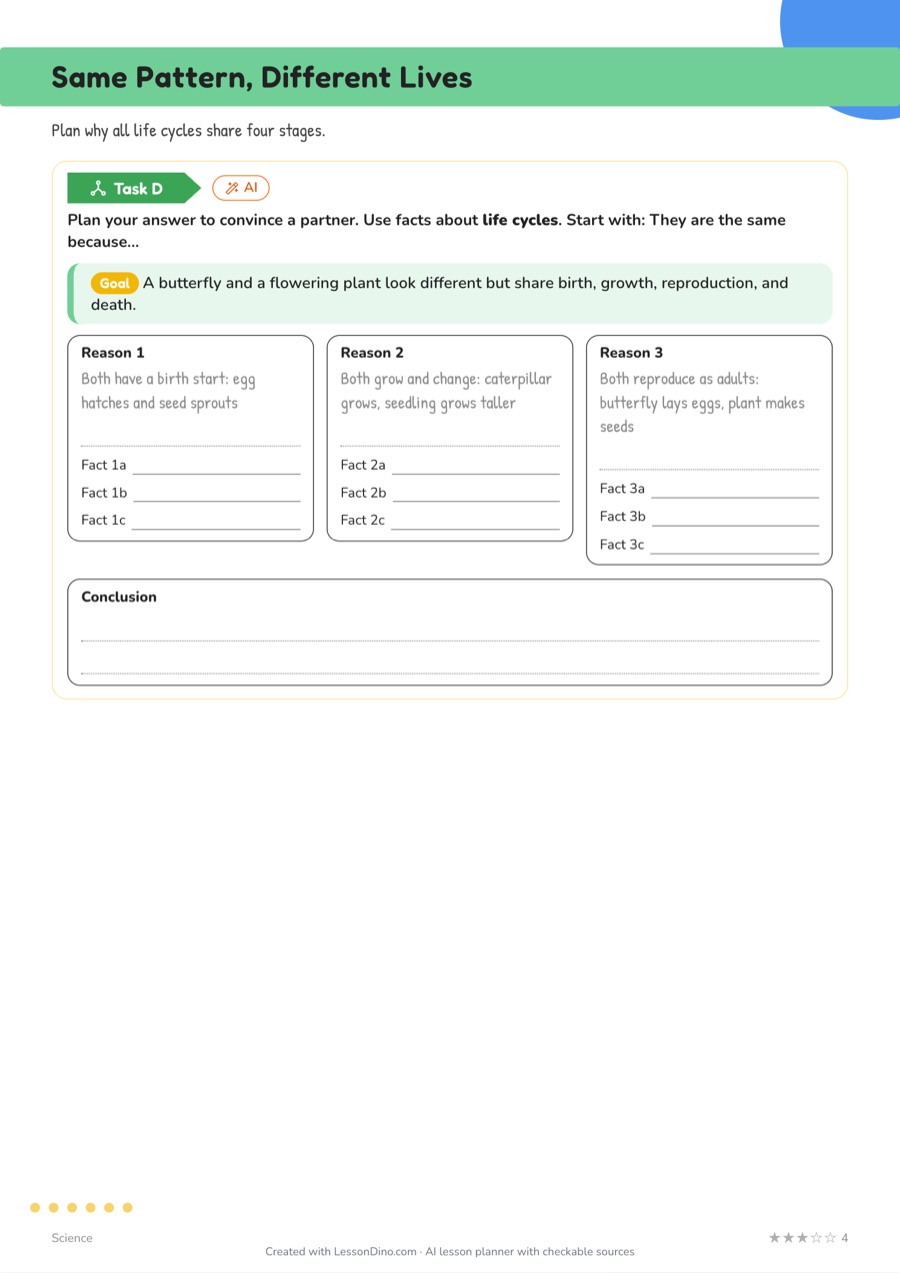
Same Pattern, Different Lives
Plan why all life cycles share four stages.
Plan your answer to convince a partner. Use facts about life cycles. Start with: They are the same because...
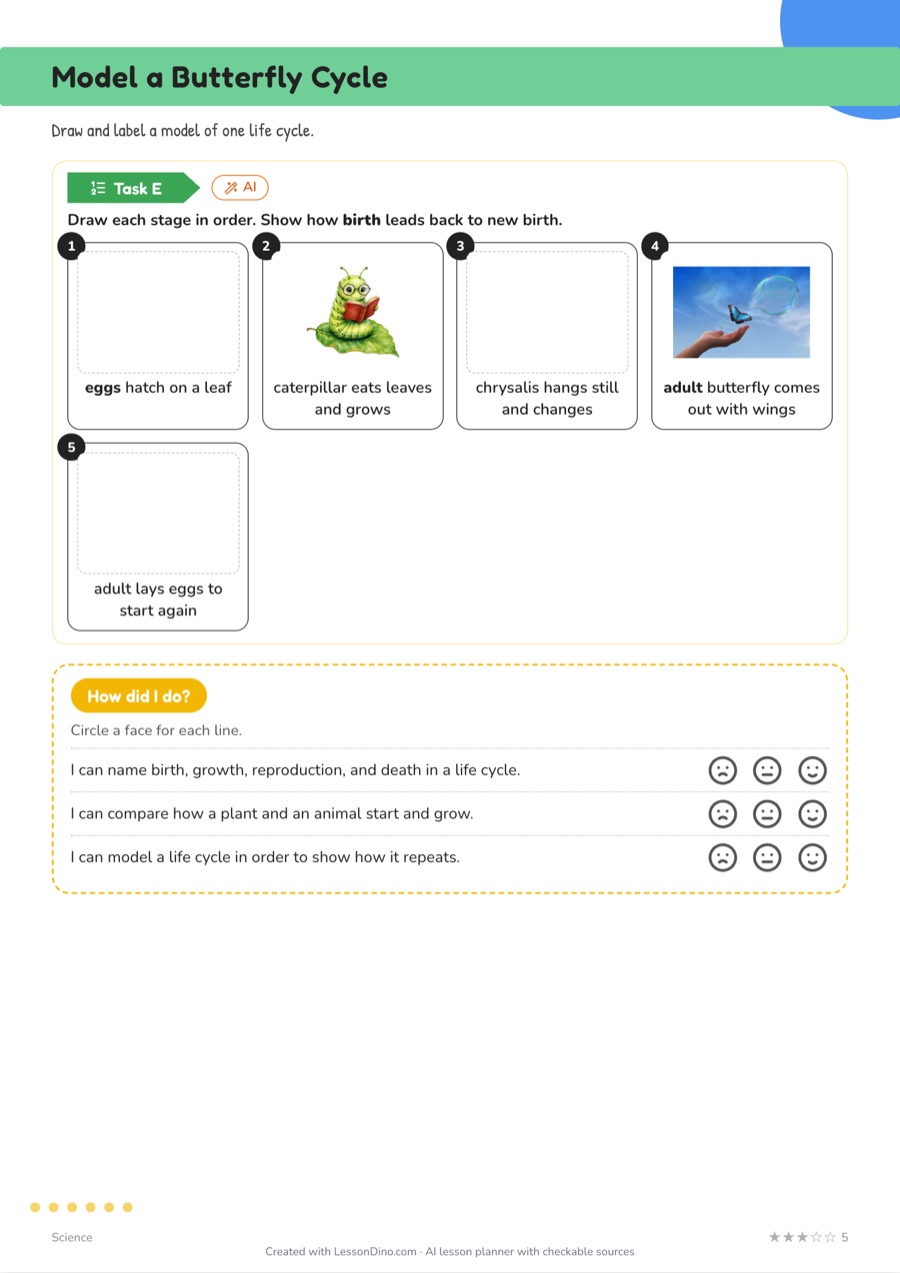
Model a Butterfly Cycle
Draw and label a model of one life cycle.
Draw each stage in order. Show how birth leads back to new birth.
Answers
Show the answers
The answers are on the answer sheet, the last picture above.
Curriculum
Develop models to describe that organisms have unique and diverse life cycles but all have in common birth, growth, reproduction, and death.
Made with Lesson Dino's AI on 17 October 2026. AI can make mistakes, so check the answers and facts against the sources before you teach.